Disclosure: We may earn a commission when you buy through links on this page, at no extra cost to you. We buy nothing, sell nothing and accept no payment for coverage — commissions never decide what we recommend. How we make money.
A massage chair may help with stress relief and better sleep by making it easier to unwind, loosen tight muscles, and follow a consistent pre-bed routine. Most people should think of it as a relaxation tool, not a treatment for insomnia: 10 to 30 minutes of comfortable use can support sleep hygiene, but it will not replace medical care for chronic sleep problems or anxiety.
Regular use works best when the chair is used gently and consistently. The goal is not to tolerate the strongest massage possible; it is to calm your body enough that the next step, whether that is reading, stretching, or going to bed, feels easier.
What regular use can realistically do in 10 to 30 minutes
A massage chair can create a repeatable relaxation break in a day that otherwise moves at full speed. In practical terms, a 10-minute session may help you pause, breathe more slowly, and ease the feeling of tightness in common stress areas such as the neck, shoulders, lower back, and calves. A 20- to 30-minute session gives the chair more time to work through multiple zones without rushing.
What you should not expect is instant, guaranteed sleep. Sleep quality depends on many factors: caffeine timing, room temperature, stress, pain, light exposure, alcohol, work schedule, medications, and health conditions. A massage chair can support the wind-down process, but it is only one part of the routine.
Many chairs use a mix of rolling, kneading, tapping, vibration, air compression, heat, and reclining positions. These features can feel relaxing because they provide steady sensory input and reduce muscle guarding. When your shoulders drop and your breathing slows, bedtime can feel less abrupt.
Keep the intensity moderate. If a session leaves you sore for more than 24 hours, the settings are probably too aggressive, the session is too long, or the roller path is not a good fit for your body. Better sleep support comes from comfort, not from forcing deep pressure.
| Use pattern | Typical session length | Best expectation | Possible downside |
|---|---|---|---|
| Quick decompression | 10 minutes | Short break after work or before dinner | May feel too brief for full-body relaxation |
| Evening wind-down | 15 to 20 minutes | Good balance for nightly relaxation | Heat or strong pressure may feel stimulating if overused |
| Full routine | 25 to 30 minutes | More complete back, hip, leg, and foot coverage | Can cut into bedtime if started too late |
How massage chairs may fit into a 30- to 60-minute sleep routine
The best time to use a massage chair for sleep is usually 30 to 60 minutes before bed. That timing gives you room to relax without getting into bed immediately after intense stimulation. For many users, the chair works well as the first step in a nightly shutdown sequence.
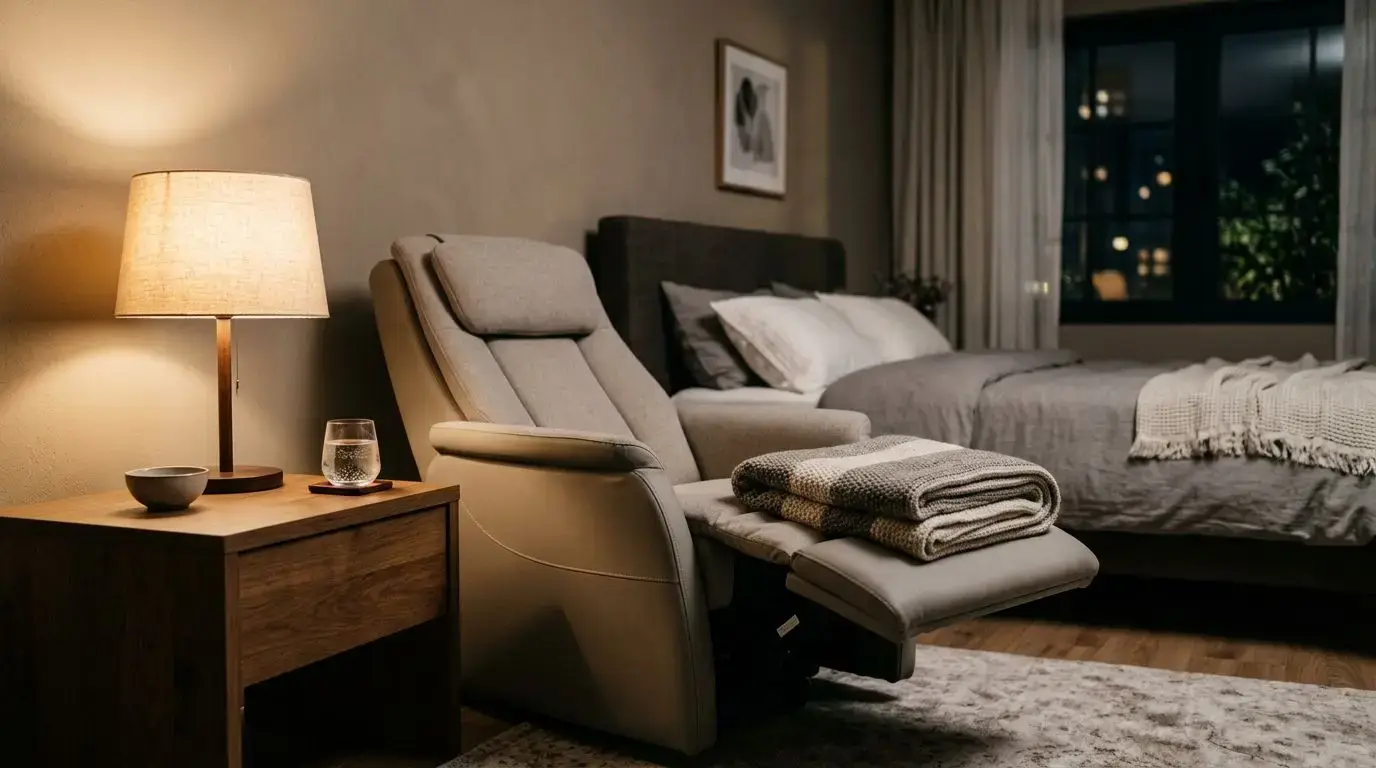
A simple routine might look like this: dim the lights, put your phone away, run a 15-minute gentle or recovery-style program, drink water if needed, then move into a quiet activity such as reading. If the chair has heat, use it lightly and give yourself a few minutes to cool down before bed. A bedroom that is too warm can make sleep harder, even if the massage itself felt good.
Nighttime sessions should feel predictable. Choose one or two favorite programs instead of experimenting with every mode at 10:45 p.m. If a tapping or percussion setting makes you feel alert, save it for daytime. If a slow kneading program and a reclined position help your breathing settle, that is the better sleep-routine choice.
Also watch your inputs. A massage chair session will not fully offset a large coffee at 5 p.m., a bright screen in bed, or a stressful work email opened right before lights out. Pair the chair with standard sleep-hygiene habits: a consistent bedtime, lower light, a cool room, and a limited late-night news or social media habit.
Feature comparison: which chair functions matter most for relaxation
Not every massage chair feature matters equally for stress relief and sleep support. A chair with 6 automatic programs may be easier to use nightly than one with dozens of complex controls, especially if you want a low-effort routine. The best relaxation features are the ones you will use consistently at comfortable settings.
Track design is a major difference. An S-track follows the curve of the back from the neck to the lower back. An L-track continues under the seat to reach the glutes and upper hamstrings. Some chairs use an SL-style path that combines a long track with a curved back profile. For bedtime relaxation, longer coverage can be helpful if you carry tension in the hips, but fit still matters more than track length alone.
Roller style also changes the feel. A 2D roller moves up and down and side to side. A 3D roller can move in and out for adjustable depth. Some chairs offer 4D-style variation, usually meaning the chair changes speed, rhythm, or depth more dynamically. Deeper is not automatically better for sleep; many people relax more with moderate, steady pressure.
| Feature | What it does | Why it may help relaxation | Best bedtime setting |
|---|---|---|---|
| S-track | Massages neck to lower back | Targets common desk and stress tension areas | Gentle full-back or upper-back program |
| L-track or SL-track | Extends massage under the seat | May help users with hip and glute tightness | Slow lower-back and hip sequence |
| 3D depth control | Adjusts roller pressure in and out | Lets different users reduce or increase intensity | Low to medium depth at night |
| Air compression | Uses airbags around arms, legs, shoulders, or feet | Creates a snug, rhythmic pressure sensation | Light or medium pressure |
| Heat | Warms the back, seat, legs, or feet depending on design | Can feel soothing for general muscle tightness | 10 to 15 minutes, not too hot |
| Zero-gravity recline | Reclines the body with legs elevated | Distributes weight and may reduce back strain while resting | One comfortable recline angle |
Foot rollers can be relaxing for some people and too intense for others. If you have sensitive feet, look for adjustable intensity or removable foot pads. Arm and calf compression can also be pleasant, but it should not feel restrictive or painful.
Who it is best for, and who should be cautious
A massage chair is best for adults who want a consistent at-home relaxation routine and have enough space for a seated recliner-style appliance, often around 30 to 36 inches wide depending on design. It is especially appealing if you carry everyday tension from desk work, long commutes, standing jobs, workouts, or caregiving responsibilities.
It may also suit people who know they will use a structured routine. If you already enjoy a warm shower, stretching, meditation, or quiet reading before bed, a chair can become another reliable cue that the day is ending. For households with multiple users, adjustable roller depth, shoulder-position scanning, and several memory or manual settings can make daily use easier.
Be more cautious if you have certain health concerns. People who are pregnant, have implanted medical devices, recent surgery, blood-clot risk, severe osteoporosis, uncontrolled high blood pressure, neuropathy, significant circulatory problems, skin injuries, or unexplained pain should check with a qualified clinician before using a massage chair. The same applies to anyone whose pain worsens during or after use.
Children should not use a massage chair without adult supervision. Even for healthy adults, the safest approach is to start with 5 to 10 minutes on a gentle setting and increase only if the session feels good during use and the next day.
- Best fit: wellness-focused users who want daily relaxation, moderate muscle comfort, and a defined sleep routine.
- Maybe not ideal: users who dislike pressure, have very limited floor space, or expect a chair to solve chronic insomnia by itself.
- Ask first: anyone with a medical condition where compression, heat, vibration, or deep pressure could be risky.
How to choose and measure before you buy
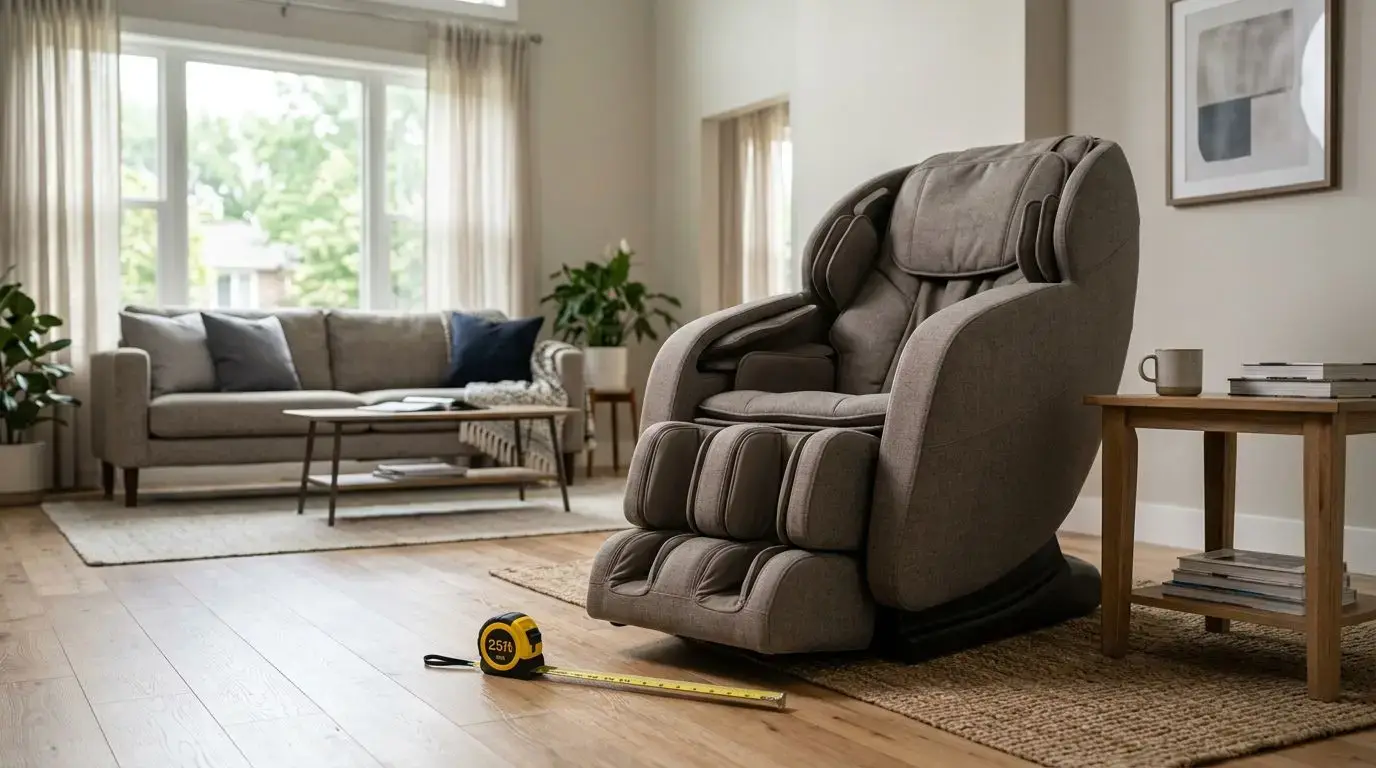
Before comparing features, measure your room, your doorway, and your body fit. Many full-size massage chairs need roughly 5 to 6 feet of floor length when reclined, although wall-hugging designs may need only a few inches behind the backrest. Always check the chair dimensions in upright and reclined positions before committing.
Start with the path from delivery to placement. Measure doorways, hallways, stair turns, and elevator openings. A chair that fits the room but cannot get through a 30-inch doorway creates an expensive problem. Also check the chair weight, because many full-size units are heavy enough that moving them safely takes 2 adults or professional delivery.
Next, match the chair to the user. Look at recommended height ranges, seat width, shoulder width, and footwell length. If the rollers do not align with your neck and shoulders, the massage can feel awkward. If the footrest is too short or too narrow, a relaxing session becomes a cramped one.
| Measurement | What to check | Why it matters |
|---|---|---|
| Room length | Upright and fully reclined footprint | Prevents the backrest or footrest from hitting walls or furniture |
| Wall clearance | Distance needed behind chair, often a few inches to over 12 inches | Important in bedrooms and apartments |
| Doorway width | Narrowest opening on the delivery path | Confirms the chair can be moved into place |
| User height | Chair height range and shoulder scan capability | Helps rollers land where they should |
| Seat and shoulder width | Interior seating space | Affects comfort during 15- to 30-minute sessions |
If sleep support is your main goal, prioritize comfort controls over flashy extras. Useful choices include quiet operation, easy remote navigation, adjustable intensity, a gentle automatic program, low heat, and a recline angle you can exit easily when relaxed. A loud motor, confusing controls, or overly aggressive default program will not help your bedtime routine.
A 7-day plan to test your response
Give your body a week before deciding whether nightly massage chair use helps your routine. A 7-day test is long enough to notice patterns without overcommitting to one setting. Keep the schedule simple and write down how you feel in the morning using a 1 to 5 scale for relaxation, soreness, and sleep quality.
For the first 2 nights, use a gentle program for 10 minutes. Skip deep pressure and intense foot rolling. On nights 3 and 4, try 15 minutes with light heat if that feels good. On nights 5 through 7, settle into the best combination you found, usually 15 to 20 minutes, and keep the rest of your bedtime routine steady.
Do not change everything at once. If you add a massage chair, a new supplement, a different bedtime, and a new workout schedule in the same week, you will not know what helped. Keep caffeine, alcohol, screen time, and bedtime as consistent as possible during your trial.
- Day 1 to 2: 10 minutes, low intensity, no need for heat.
- Day 3 to 4: 15 minutes, gentle back program, optional low heat.
- Day 5 to 7: 15 to 20 minutes, repeat the most calming setting.
- Stop or reduce: if you feel sharp pain, numbness, dizziness, or next-day soreness that affects movement.
Morning feedback matters more than how dramatic the session feels at night. A program that feels impressive but leaves you wired or sore is not the right sleep routine. A quieter program that helps you transition smoothly to bed is usually the better choice.
Limits, safety, and when to get help
Massage chairs are wellness devices, not diagnostic tools or medical treatments. If you have trouble sleeping 3 or more nights per week for several weeks, wake up gasping, have severe pain, or feel daytime sleepiness that affects driving or work, speak with a healthcare professional. A chair should not delay care for sleep apnea, chronic insomnia, anxiety disorders, injuries, or other health issues.
Heat deserves special caution. Use mild heat for limited periods, often 10 to 15 minutes, and avoid falling asleep in the chair with heat running. People with reduced sensation may not notice excessive warmth quickly enough. Compression should also feel comfortable; numbness, tingling, or throbbing is a signal to stop.
Daily use is reasonable for many healthy adults when sessions are moderate and comfortable. Still, more is not always better. Two long, intense sessions every day can irritate muscles or make relaxation feel like another task. Most wellness-focused users do better with one predictable session and a clear endpoint.
Think of the chair as a cue. When the session ends, your evening should get quieter, darker, and simpler. That pattern gives massage chair use its best chance to support better sleep.
FAQ: 5 common questions about massage chairs, stress, and sleep
Can I use a massage chair every night?
Many healthy adults can use a massage chair nightly for 10 to 20 minutes if the pressure is comfortable and there is no next-day soreness. Start gently and reduce time or intensity if your body feels irritated.
Is it better to use a massage chair before bed or after work?
Both can work. For sleep, try using it 30 to 60 minutes before bed. If evening sessions make you feel too alert, use the chair after work and keep a quieter bedtime routine later.
Does zero-gravity recline improve sleep?
Zero-gravity recline may make a session feel more restful by elevating the legs and spreading body weight across the chair. It does not guarantee better sleep, but many users find it comfortable for relaxation.
What intensity is best for stress relief?
Low to medium intensity is usually best at night. Strong pressure may feel productive, but if it causes soreness, bracing, or alertness, it is working against relaxation.
Should I fall asleep in a massage chair?
It is better to use the chair as a wind-down step and then move to bed. Avoid sleeping in the chair with heat, compression, or rollers running, especially if you have circulation concerns or reduced sensation.
Frequently asked questions
Can I use a massage chair every night? +
Many healthy adults can use a massage chair nightly for 10 to 20 minutes if the pressure is comfortable and there is no next-day soreness. Start gently and reduce time or intensity if your body feels irritated.
Is it better to use a massage chair before bed or after work? +
Both can work. For sleep support, try using it 30 to 60 minutes before bed. If evening sessions make you feel too alert, use the chair after work and keep a quieter bedtime routine later.
Does zero-gravity recline improve sleep? +
Zero-gravity recline may make a massage session feel more restful by elevating the legs and spreading body weight across the chair. It does not guarantee better sleep, but many users find it comfortable for relaxation.
What intensity is best for stress relief? +
Low to medium intensity is usually best for nighttime stress relief. Strong pressure may feel productive, but if it causes soreness, bracing, or alertness, it can work against relaxation.
Should I fall asleep in a massage chair? +
It is better to use the chair as a wind-down step and then move to bed. Avoid sleeping in the chair with heat, compression, or rollers running, especially if you have circulation concerns or reduced sensation.
Related guides
Massage Chair Benefits for Stress Relief and Relaxation at Home
11 min read
How to Use a Massage Chair Before Bed Without Overdoing It
12 min read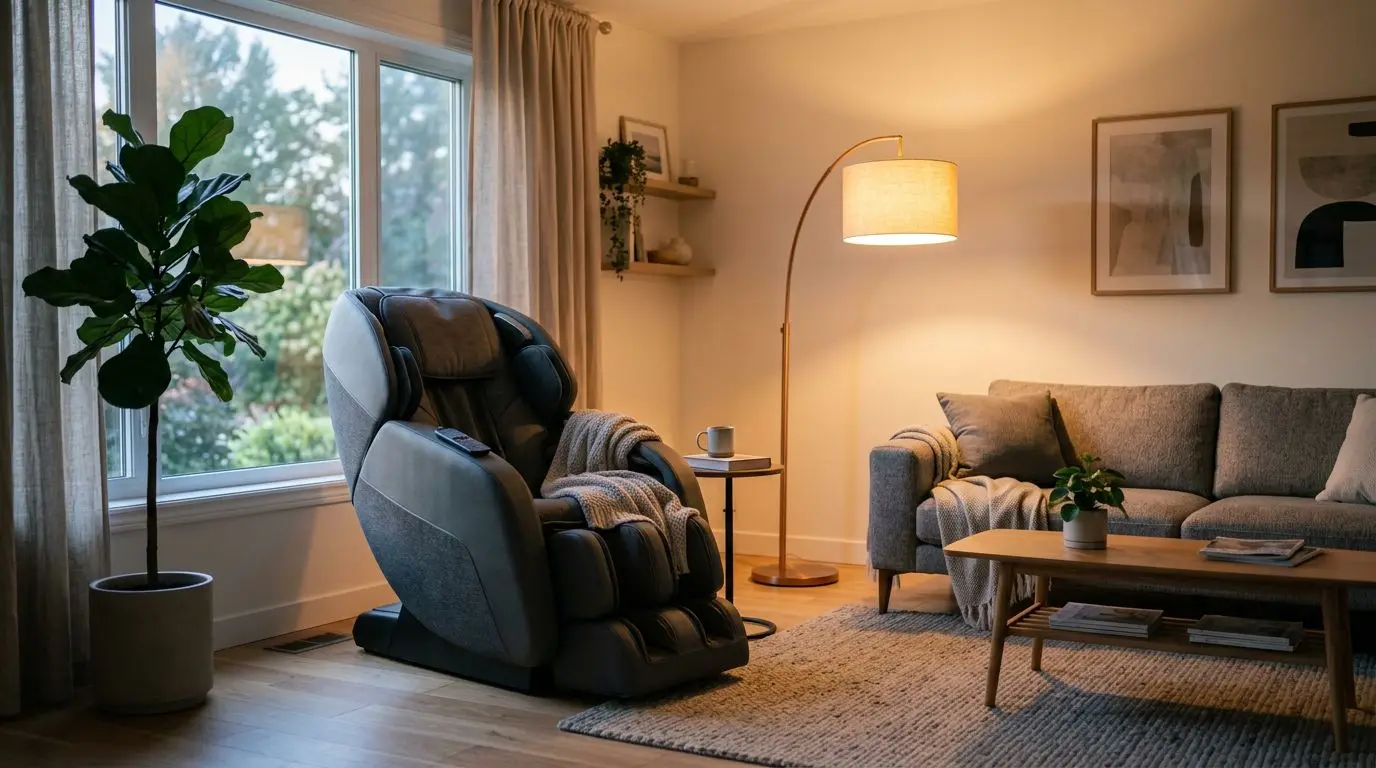
Morning, Afternoon, or Night: When Is the Best Time to Use a Massage Chair?
14 min read
Are Massage Chairs Good or Bad for You? Benefits, Risks, and Safe Use Guidelines
13 min read
Massage Chairs for Seniors: Benefits, Comfort, and Safety Considerations
13 min read