Disclosure: We may earn a commission when you buy through links on this page, at no extra cost to you. We buy nothing, sell nothing and accept no payment for coverage — commissions never decide what we recommend. How we make money.
Yes, you can sleep in some massage chairs, especially for short naps, but a massage chair is not a true bed and should not be treated like one by default. The most sleep-friendly chairs recline deeply, support your head and legs, have padding soft enough for 30 to 90 minutes, and include automatic shutoff so rollers, heat, and air compression do not run all night.
For overnight use, be more cautious. A chair that feels comfortable during a 15-minute massage may feel too firm, too narrow, or too restrictive after several hours, and people with certain medical considerations should ask a physician before sleeping in a reclined, motorized chair.
Short naps versus 8 hours overnight
A 20-minute nap in a massage chair is very different from spending 6 to 8 hours there. Most massage chairs are designed for short sessions, often with built-in programs that run for about 10 to 30 minutes before shutting off. That timing matters because moving rollers, air cells, foot rollers, and heat pads are not meant to stay active continuously while you sleep.
For many buyers, the realistic question is not, “Can I replace my bed?” It is, “Can I comfortably doze off after a session and wake up without feeling cramped?” A chair that works for this needs a stable recline, soft contact points, quiet operation, and a neutral resting position once the massage stops.
Overnight use brings different concerns. You are staying in one posture for hours, often with your knees elevated and your torso reclined. Some people like that feeling. Others wake up stiff or overheated because the chair surface is narrower and less breathable than a mattress. If overnight sleeping is the goal, prioritize chair ergonomics before massage intensity.
| Use case | Typical duration | What matters most | Main caution |
|---|---|---|---|
| Quick rest | 10 to 20 minutes | Easy recline, quiet motor, gentle program | Do not use high intensity if you expect to fall asleep |
| Nap | 20 to 90 minutes | Head support, soft padding, auto shutoff | Make sure rollers stop before you are deeply asleep |
| Occasional overnight sleep | 6 to 8 hours | Deep recline, wide seat, stable leg support, no pressure points | Ask a physician if you have relevant health risks |
| Primary bed replacement | Nightly, long term | Consistent comfort in one position for many hours | A massage chair is usually not designed for this role |
Recline angle and zero gravity: why 120 to 170 degrees matters
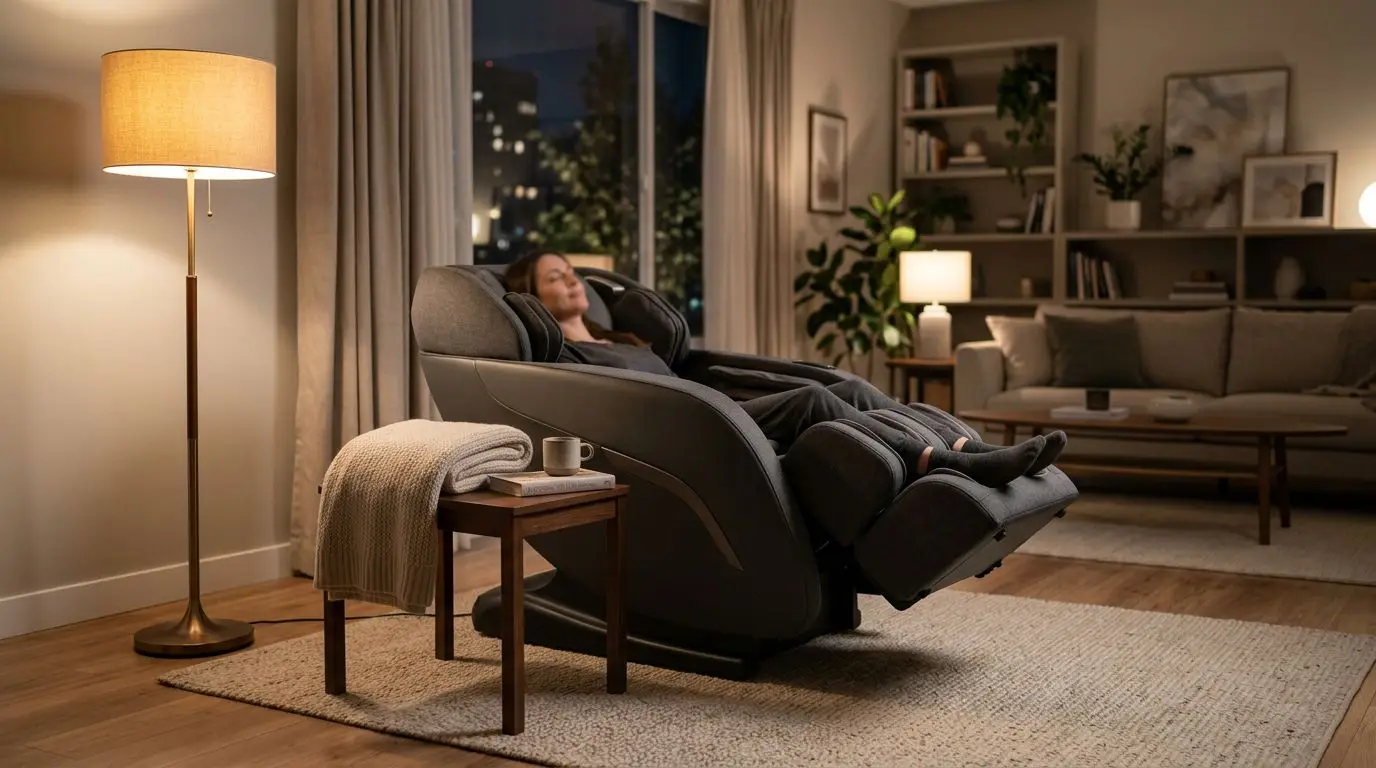
Recline angle is the first spec to check if you want a chair you can sleep in. A basic recliner-style massage chair may lean back only modestly, while a deep-recline chair may bring your torso closer to a flat or near-flat position. Many sleep-focused buyers look for a backrest range of roughly 120 to 170 degrees, depending on how the manufacturer measures the angle.
Zero gravity is another common feature. In a massage chair, it usually means the chair tilts you back while raising your legs so your body weight is spread more evenly across the backrest and seat. The position is not magic, and it is not a health guarantee. It is simply designed to feel weightless, supported, and less concentrated on one area than a standard upright seat.
If you plan to nap, look for at least two recline positions: one for active massage and one for resting after the program ends. Some chairs offer one-touch zero gravity; others let you adjust the back and leg rest separately. Separate controls can help because a comfortable massage position is not always the same as a comfortable sleeping position.
Recline types compared
| Chair type | Typical position | Best for sleeping? | What to watch |
|---|---|---|---|
| Upright massage chair | Mostly seated, slight recline | Usually no | Head may tip forward during sleep |
| Standard recline chair | Moderate lean-back | Good for short naps | May still put pressure behind knees |
| Zero gravity chair | Torso reclined, legs elevated | Often best for naps | Fit depends on leg length and shoulder width |
| Near-flat recline chair | Deep recline, closer to horizontal | Best option for longer rest | Needs more room and careful fit testing |
Cushioning and support after 30 minutes
A chair can feel impressive for the first 5 minutes and uncomfortable after 30. That is why cushioning matters as much as roller technology when sleep is part of the purchase decision. Your body stays in contact with the headrest, shoulder area, lower back, seat, calves, and foot wells the entire time, so any hard edge or tight point becomes more noticeable as the minutes add up.
Pay close attention to the head pillow. For sleep, your neck should rest naturally without your chin being pushed sharply toward your chest. A removable or adjustable pillow is useful because people vary widely in torso length and preferred head position. If the pillow is too thick, it can feel crowded. If it is too thin, your head may fall back awkwardly when the chair reclines.
The seat should also feel forgiving. Some massage chairs have firm seats because they house mechanisms, airbags, or frame supports below the upholstery. Firm is not automatically bad, but if you plan to nap for 60 to 90 minutes, you want even support rather than a hard ridge under the thighs or tailbone.
Leg support is another sleep issue. In many full-body chairs, the calf and foot section is shaped around an average user. If your legs are too long, your feet may press into the end of the foot wells. If your legs are short, your calves may not align well with the supports. Either mismatch can make a nap feel cramped.
Comfort features to compare
| Feature | Why it matters for naps | Good sign | Possible drawback |
|---|---|---|---|
| Adjustable head pillow | Helps keep the head supported | Removable or repositionable | Too thick can push the head forward |
| Soft back pad | Buffers the rollers after the massage stops | Even pressure along the back | Too much padding can reduce massage feel |
| Wide seat | Gives hips and arms room to settle | Enough space to shift slightly | Large chairs take more floor space |
| Adjustable leg rest | Matches different leg lengths | Spring-loaded or powered extension | Foot wells may still feel narrow |
| Quiet operation | Less distracting before sleep | Low motor noise during recline | Air pumps and rollers can still be audible |
Massage settings: use 10 to 30 minute timers, not all-night motion
If you fall asleep in a massage chair, the chair’s automatic shutoff becomes a core safety and comfort feature. Many consumer massage chairs stop a program after about 15, 20, or 30 minutes. That is a good thing. You do not want rollers kneading the same areas for hours while you are not awake to adjust the intensity or position.
For sleep, gentler is usually better. Look for low-intensity programs, manual intensity controls, and the ability to turn features off one by one. For example, you may like back rollers before a nap but prefer no foot rollers once you are settled. Air compression can feel snug and cocoon-like to some people, but restrictive to others. The right chair lets you reduce or disable it.
Heat needs similar caution. A heated back pad or warm leg area can feel pleasant during a short session, but it should not be left running unattended for hours. Choose a chair with a timer for heat, and avoid falling asleep with heat on if you cannot confirm it shuts off automatically.
Also consider what the chair does after the program ends. Some chairs remain reclined; others may prompt a return to the upright position. For napping, remaining reclined is usually more comfortable. For household safety, make sure you can easily wake, find the controls, and exit the chair without rushing.
Who it’s best for—and who should ask a physician first
A sleep-friendly massage chair is best for adults who want a place to unwind for short naps, read in a reclined position, or rest after a long day without committing to a bed. It can also suit people who prefer a supported seated recline rather than lying completely flat. Check the chair’s user range carefully: many full-size chairs are designed around a maximum weight somewhere in the 250 to 350 lb range, but limits vary by manufacturer.
Fit matters more than labels. A chair marketed as “full body” may still be too small for a tall user or too deep for a shorter user. If you cannot rest your head, back, calves, and feet comfortably at the same time, it is not a good nap chair for you.
Some people should not buy a massage chair for sleep without medical input. Ask your physician first if you are pregnant; have a pacemaker or other implanted cardiac device; have a history of blood clots; take anticoagulants; have osteoporosis; have neuropathy; have uncontrolled hypertension; have spinal disc problems; or recently had a fracture, procedure, or surgery. This is especially important if you plan to sleep in the chair for hours, use heat, or use strong compression and rollers.
Be realistic about mobility, too. If you have trouble standing from a low or reclined position, test how the chair returns upright and how much effort it takes to exit. A chair that feels comfortable once you are settled can still be a poor choice if getting out is difficult at 3 a.m.
How to choose and measure: 6 checks before you buy
Before buying a massage chair for naps or overnight use, measure the room, your body fit, and the chair’s movement path. A full-size chair can be roughly 28 to 36 inches wide and may need extra clearance behind it, in front of it, or both. Space-saving designs reduce the rear clearance requirement, but they still need room to recline and extend the leg rest.
1. Measure the footprint in both positions
Do not rely only on upright dimensions. Ask for or look up the chair’s fully reclined length, fully upright height, and required wall clearance. If a chair is 60 inches long when reclined, you need walking space around that footprint, not just room for the base.
2. Check your sitting fit
Sit with your hips all the way back. Your shoulders should align with the upper back area, your head should meet the pillow naturally, and your knees should bend comfortably at the edge of the seat. If you feel suspended, squeezed, or pushed forward, sleep comfort will likely be worse.
3. Check leg and foot alignment
Use the leg rest in its extended position. Your calves should sit in the calf wells without hard pressure, and your feet should not jam into the ends. Even a 1 to 2 inch mismatch can become annoying during a long nap.
4. Test the chair after the massage stops
This is the most overlooked step. Turn off the rollers and air compression, keep the chair reclined, and sit quietly for at least 10 minutes. That short test tells you whether the chair is comfortable as furniture, not just as a massage device.
5. Listen for mechanical noise
Motors, pumps, and rollers all make some sound. If you are a light sleeper, test the gentlest program and the recline motor in a quiet room. A sound that seems minor in a showroom may feel distracting at night.
6. Review timers and manual controls
Confirm that massage, heat, air compression, and foot rollers can be turned off separately. For sleep use, a clear remote, a visible display, and an automatic shutoff are more important than having dozens of preset programs.
Track design and rollers: comfort is not only about intensity
Massage chair tracks guide where the rollers travel. A shorter back track may focus on the upper and lower back, while an L-track or extended track continues under the seat area. Some chairs use a track shaped like an S to follow the curve of the spine; many full-body chairs combine longer track coverage with adjustable roller width or intensity. Exact coverage varies, but a longer track may measure around 45 to 53 inches in many full-size designs.
For sleeping, roller behavior after the session matters. If the rollers park in a spot you can feel through the back pad, that pressure point may disturb a nap. A chair with adequate padding, a gentle mode, and a smooth roller parking position is more sleep-friendly than one that focuses only on strong intensity.
Roller technology also affects feel. Two-dimensional rollers move up and down and side to side. Three-dimensional rollers add depth control, creating a stronger or softer press. Some chairs advertise four-dimensional motion, which generally refers to added speed or rhythm variation. These terms are not standardized across the industry, so judge the feel directly when possible.
| Feature | Designed feel | Sleep consideration |
|---|---|---|
| 2D rollers | Smoother, flatter contact | Often easier to tolerate for light naps |
| 3D rollers | Adjustable depth and stronger pressure range | Use low intensity before sleep |
| Extended track | More coverage down into the seat area | Check for pressure under hips when resting |
| Body scan | Attempts to map shoulder height and body position | Helpful only if it aligns well with your body |
Setup and safety: allow 2 to 12 inches of clearance
Where you place the chair affects how safe and comfortable it is for sleep. Some space-saving recliners need only about 2 to 6 inches behind the chair, while other designs may need closer to 12 inches or more. Always follow the manufacturer’s clearance instructions, because the backrest and base may move at the same time.
Place the chair on a level floor with enough room to enter and exit from at least one side. If the chair sits on carpet, confirm it remains stable when reclining. On hardwood, vinyl, or tile, use a suitable floor protector if the chair’s weight or movement could mark the surface. Full-size massage chairs are heavy, and many are not easy to reposition casually once assembled.
Keep cords out of walking paths. This is especially important if you may get up at night while groggy. The remote should have a consistent home, such as a side pocket or mounted holder, so you are not searching between cushions in the dark.
Do not let children treat the chair as a toy, and keep pets away from the moving leg rest and base. A reclining mechanism can pinch or trap if someone is too close while the chair moves. Before you recline, look around the chair just as you would before closing a powered garage door.
Bottom line: buy for resting comfort first, massage features second
If your main goal is sleeping in a massage chair, choose it like a recliner first and a massage product second. A deep recline, supportive head position, comfortable seat, properly fitting leg rest, and reliable 15 to 30 minute shutoff will matter more at midnight than the number of preset programs.
For short naps, a well-fitted zero gravity or deep-recline chair can be a comfortable place to doze after the massage stops. For overnight use, be more selective and involve your physician if you have any relevant medical concerns. The safest purchase is the one that fits your body, your room, and your real sleep habits—not the one with the longest feature list.
FAQ: 5 questions about sleeping in a massage chair
Is it safe to sleep in a massage chair all night?
It may be acceptable for some adults occasionally, but a massage chair is not designed to replace a mattress for everyone. Do not run massage, heat, rollers, or compression all night, and ask a physician first if you have pregnancy, an implanted cardiac device, blood clot history, anticoagulant use, osteoporosis, neuropathy, uncontrolled hypertension, spinal disc problems, or recent surgery or fracture.
Should I leave the massage program running while I sleep?
No. Use the chair’s automatic timer and let the program shut off after a typical 10 to 30 minute session. If you expect to fall asleep, choose low intensity and turn off any feature that feels too strong or restrictive.
Is zero gravity better for naps?
Often, yes. Zero gravity positioning raises the legs and reclines the torso in a way many people find evenly supported. It is still a comfort feature, not a health guarantee, and it only works well if the chair fits your height and leg length.
What features matter most for overnight comfort?
Look for deep recline, an adjustable head pillow, a seat that remains comfortable after at least 30 minutes, a leg rest that fits your calf and foot length, quiet operation, and automatic shutoff for massage and heat.
How much space do I need for a sleep-friendly massage chair?
Many full-size chairs are about 28 to 36 inches wide, and wall clearance can range from a few inches to 12 inches or more depending on the recline design. Measure the fully reclined footprint, not just the upright dimensions.
Frequently asked questions
Is it safe to sleep in a massage chair all night? +
It may be acceptable for some adults occasionally, but a massage chair is not a mattress replacement for everyone. Do not run massage, heat, rollers, or compression all night, and ask a physician first if you have pregnancy, an implanted cardiac device, blood clot history, anticoagulant use, osteoporosis, neuropathy, uncontrolled hypertension, spinal disc problems, or recent surgery or fracture.
Should I leave the massage program running while I sleep? +
No. Use the automatic timer and let the program shut off after a typical 10 to 30 minute session. If you expect to fall asleep, choose low intensity and turn off features that feel too strong, hot, or restrictive.
Is zero gravity better for naps? +
Often, yes. Zero gravity positioning raises the legs and reclines the torso in a way many people find evenly supported. It is a comfort feature, not a health guarantee, and it works best when the chair fits your height and leg length.
What features matter most for overnight comfort? +
Prioritize deep recline, an adjustable head pillow, comfortable seat padding, a leg rest that fits your calf and foot length, quiet operation, and automatic shutoff for massage and heat.
How much space do I need for a sleep-friendly massage chair? +
Many full-size chairs are about 28 to 36 inches wide, and wall clearance can range from a few inches to 12 inches or more depending on the design. Measure the chair’s fully reclined footprint, not only its upright size.
Related guides
Zero Gravity vs. Lay-Flat Massage Chairs: Recline Position, Comfort, and Use Cases Compared
12 min read
How to Use a Massage Chair Before Bed Without Overdoing It
12 min read
Massage Chairs for Stress Relief and Better Sleep: What to Expect from Regular Use
11 min read
How to Choose a Massage Chair for Home Use
14 min read
Massage Chair Recliner vs. Standard Recliner: Which Is Better for Everyday Comfort?
15 min read