Disclosure: We may earn a commission when you buy through links on this page, at no extra cost to you. We buy nothing, sell nothing and accept no payment for coverage — commissions never decide what we recommend. How we make money.
The best time to use a massage chair depends on what you want the session to do for your routine. Use a shorter, more upright program in the morning for a brisk start, a medium-intensity session in the afternoon or after work when your shoulders and back feel tight from the day, and a slower, gentler program at night when you want to wind down before bed.
For most adults, a 10- to 20-minute session is enough. Timing matters less than matching the chair settings to your goal: lighter pressure when you need comfort, firmer kneading when you want a stronger feel, and lower-intensity recline programs when you are close to bedtime.
Quick answer: the best time by goal in 10, 15, or 20 minutes
If you remember one rule, make it this: choose the time of day based on how you want to feel afterward. A massage chair cannot replace sleep, exercise, stretching, or medical care, but it can be a useful comfort tool within a daily routine.
A 10-minute session works well when you are short on time or new to the chair. A 15-minute session is the practical middle ground for most routines. A 20-minute session can feel more complete, especially in chairs with longer tracks, foot rollers, shoulder airbags, or multi-stage auto programs.
| Time of day | Best session length | Use this feel | Good settings to try |
|---|---|---|---|
| Morning | 10 to 15 minutes | Brisk, upright, lighter to medium pressure | Neck and shoulders, back stretch, gentle rolling |
| Midday or afternoon | 10 to 20 minutes | Reset, targeted, medium pressure | Upper back, lumbar, hip or glute coverage if available |
| After work | 15 to 20 minutes | Deeper, full-back coverage without overdoing it | SL-track program, air compression, calf and foot program |
| Night | 10 to 20 minutes | Slow, warm, low to medium pressure | Zero gravity recline, heat setting, gentle full-body program |
There is no universal perfect hour. Someone who wakes up stiff from sleeping in one position may prefer the chair at 7 a.m., while someone who sits at a desk for 8 hours may get more value from a 5:30 p.m. session. The better question is not what time is best, but which time you can repeat comfortably without disrupting work, meals, exercise, or sleep.
Morning use: best for a focused start in 10 to 15 minutes
Morning is a good time to use a massage chair when you want a short, structured start before the day gets noisy. Keep it simple: 10 to 15 minutes, moderate recline, and an intensity level that feels alert rather than sleepy.
Choose programs that emphasize rolling, kneading, or tapping through the upper back and shoulders. These settings are meant to feel more active than floaty. If your chair has a manual mode, try 3 to 5 minutes around the neck and shoulder area, then 5 to 10 minutes across the mid-back and low back.
Avoid going straight to the strongest setting first thing in the morning. Your body may feel more sensitive after sleep, especially around the ribs, low back, calves, and feet. Start one level lower than you think you need, then increase pressure after 2 or 3 minutes if the chair allows adjustments during the program.
Who morning sessions are best for
- People who like a predictable morning routine before work.
- Remote workers who sit down at a desk by 8 or 9 a.m.
- Users who prefer firmer programs when they are fully awake.
- Anyone who wants chair time without competing with evening family, chores, or screen time.
Morning is not ideal for everyone. If a chair session makes you too relaxed, save it for later. If you exercise early, many users prefer to shower and cool down first rather than climb into a warm reclined chair immediately after a workout.
Afternoon use: best for a midday reset in 10 to 20 minutes
Afternoon can be the most practical time because it catches the tension that builds during the first half of the day. A 10- to 20-minute session between lunch and late afternoon can feel like a reset, especially for people who sit, drive, stand, or look down at a laptop for long stretches.
This is the time to be targeted. If your chair lets you choose zones, focus on the area that actually feels tight instead of automatically choosing a full-body program. For desk work, that may mean neck, shoulders, and mid-back. For long standing shifts, it may mean calves and feet. For driving, low-back and hip-area coverage can feel more useful than an upper-back-only routine.
Give food some space. Many people are more comfortable waiting about 30 to 60 minutes after a large meal before using a deeply reclined program, especially if the chair compresses the abdomen or tilts into zero gravity. Upright or lightly reclined programs are usually more comfortable when time is tight.
| Afternoon situation | Common chair focus | Intensity idea | Time budget |
|---|---|---|---|
| Desk work | Neck, shoulders, mid-back | Medium kneading or rolling | 10 to 15 minutes |
| Long commute | Low back, glutes, hamstrings if covered | Medium pressure, slower rollers | 15 to 20 minutes |
| Standing shift | Calves, feet, low back | Gentle to medium foot rollers | 10 to 20 minutes |
| Low-energy afternoon | Upper back, tapping, air compression | Light to medium, not sleepy | 10 minutes |
If you work from home, protect the boundary. Set a timer or use the chair program length so a 15-minute reset does not turn into a 45-minute break. If you are returning to focused work, save the most sleep-oriented recline program for evening.
After-work sessions: best for post-shift tension in 15 to 20 minutes
For many households, after work is the best time because the need is most obvious. A 15- to 20-minute program can create a clean break between work mode and home mode without requiring a complicated routine.
After-work sessions pair well with broader coverage. If your chair has an S-track, it will usually follow the curve of the back from the neck to the lower back. If it has an L-track or SL-track, it may extend under the seat toward the glutes or upper hamstrings. That extra coverage can feel helpful after driving, sitting, or standing because the session is not limited to the upper back.
This is also a good time to use air compression features, if you enjoy them. Airbags in the shoulders, arms, calves, or feet are designed to squeeze and release in cycles. Some users like that held pressure after a long day; others find it too restrictive. If you are new to air compression, start on low for the first 5 minutes.
One caution: do not make the after-work program so intense that you feel sore or overstimulated afterward. A stronger roller setting is not automatically better. The right pressure should feel firm and tolerable while you are in the chair, and you should be able to stand up comfortably when the program ends.
Who after-work use is best for
- People who carry shoulder or low-back tightness by late afternoon.
- Commuters who want a transition ritual after 30 to 60 minutes in traffic.
- Parents or caregivers who only get a predictable window before dinner.
- Users who prefer a stronger program but do not want it right before bed.
If your evening is packed, put the session on the calendar. A chair you use 4 days a week for 15 minutes is more useful than one you plan to use for an hour and keep skipping.
Night use: best for wind-down when you keep it gentle for 10 to 20 minutes
Night can be the best time to use a massage chair if your goal is to slow down. The key is to avoid aggressive settings too close to bedtime. Choose a 10- to 20-minute program with slow rollers, low air compression, moderate recline, and heat if warmth feels comfortable.
Zero gravity positioning is popular at night because it reclines the chair and raises the legs, often around 120 to 130 degrees depending on the design. In practical terms, it spreads your weight across the chair and can reduce the feeling of pressure points compared with sitting upright. It is a comfort position, not a medical feature.
If you are sensitive to stimulation, finish your chair session 30 to 60 minutes before bed rather than using it as the last thing you do. That gives you time to drink water if you want, turn down lights, put away your phone, and move into a normal bedtime routine.
Heat settings deserve a careful note. Many chairs warm the back area, and some warm the calves or feet. Heat is designed to feel cozy and soothing, but it should never feel hot, prickly, or irritating. Use a lower heat level at night, and turn it off if you feel flushed or uncomfortable.
Who night sessions are best for
- People who want a quiet screen-free habit before bed.
- Users who prefer light pressure and slow programs.
- Households where the chair is free after dinner.
- Anyone who finds morning sessions too rushed.
Night is less ideal if the chair wakes you up, makes you tempted to nap too early, or interferes with your sleep schedule. If that happens, move your session to after work or early evening.
How to choose the right time: use a 7-day routine test
The best way to choose your timing is to test it for one week. Use the same chair, a similar program length, and a simple 1-to-5 rating so you are comparing real experience rather than guessing.
Try this 7-day method. On days 1 and 2, use the chair in the morning for 10 to 15 minutes. On days 3 and 4, use it in the afternoon or after work for 15 minutes. On days 5 and 6, use it at night for 10 to 20 minutes. On day 7, repeat the time that felt easiest to keep.
After each session, rate three things from 1 to 5: comfort during the program, how you felt 30 minutes later, and whether the timing fit your day. The best routine is usually the one with the highest fit score, not necessarily the strongest roller setting.
| Question | What to look for | Best timing clue |
|---|---|---|
| Do you feel rushed? | You keep ending programs early | Move away from morning |
| Do you get sleepy? | You want to nap afterward | Use night or early evening |
| Do you want stronger pressure? | You enjoy firmer rollers when alert | Try afternoon or after work |
| Do you forget to use it? | The chair becomes occasional furniture | Attach it to a fixed habit, like after coffee or after work |
Track design should also shape your routine. A shorter S-track chair may be excellent for a quick upper-body session before work. A longer L-track or SL-track chair may feel more complete after work because it can cover more of the seated area. If your chair has body scanning, let it finish the scan before adjusting pressure; those first 30 to 90 seconds help the rollers line up more accurately for your height.
How to match programs to energy, relaxation, and comfort settings
Most chairs offer auto programs that run about 10 to 30 minutes. Names vary, but the underlying choices are usually similar: roller style, speed, width, recline angle, air compression, foot rollers, and heat.
For morning energy, avoid the deepest recline and slowest program. Try a more upright angle, faster tapping or rolling, and light to medium air compression. Keep foot rollers mild if they feel intense; feet can be sensitive first thing in the day.
For an afternoon reset, use medium intensity and targeted zones. A shoulder-focused program for 8 minutes plus a low-back program for 7 minutes may feel better than one full-body program that spends time where you do not need it.
For evening wind-down, reduce the inputs. Slower roller speed, lower air compression, warm back heat, and a reclined position can feel calmer than rapid tapping or high-intensity kneading. If the chair has a stretch program, use caution at night; stretch modes can be more forceful than their peaceful names suggest.
| Feature | Designed to feel like | Best time to try it | Use carefully if |
|---|---|---|---|
| Kneading rollers | Hands pressing and rotating | Afternoon or after work | You are sensitive around ribs or spine |
| Tapping or percussion | Quick rhythmic pulses | Morning or midday | You startle easily or want quiet wind-down |
| Air compression | Squeeze-and-release pressure | After work or evening | You dislike restricted arms or legs |
| Heat settings | Warm contact on back or legs | Evening | You are heat-sensitive |
| Zero gravity | Reclined, legs-raised support | After work or night | You feel uncomfortable deeply reclined |
Manual controls are worth learning. Even if you usually use auto programs, knowing how to move the rollers up or down by 1 or 2 inches can make sessions more comfortable. Small adjustments matter.
How long and how often: practical limits for a 15-minute habit
A good starting point is 15 minutes, once per day, 3 to 5 days per week. If you are new to massage chairs or coming back after a long break, start with 10 minutes on low intensity for the first few sessions.
More time is not always better. Long sessions can make pressure points feel tender, especially over the shoulders, low back, calves, and feet. If your chair allows back-to-back programs, resist the urge to stack multiple 20-minute sessions until you know how your body responds later that day.
Daily use can be reasonable for many healthy adults when sessions are moderate and comfortable, but the chair should not become a way to ignore pain, numbness, dizziness, or unusual symptoms. Stop the session if anything feels sharp, burning, or wrong. Consumer massage chairs are built for comfort and relaxation, not diagnosis or medical care.
Hydration, timing with meals, and room setup also affect the experience. Keep a small table nearby for water and glasses. Leave enough clearance behind the chair; many recliners need several inches of space, while wall-hugging designs may need less. If a session ends with you feeling rushed because the chair blocks a walkway, the routine will not last.
Safety: when to ask a physician before using a massage chair
Ask your physician before using a massage chair if you are pregnant; have a pacemaker or other implanted cardiac device; have a history of blood clots or take anticoagulants; have osteoporosis; recently had a fracture or surgery; have spinal disc problems; have neuropathy; or have uncontrolled hypertension. This is not fine print. A consumer chair can apply strong pressure, compress limbs, recline the body, and use heat, so personal medical guidance matters.
Also be cautious with areas that are bruised, swollen, numb, sunburned, recently injured, or unusually sensitive. Do not use rollers directly over wounds or irritated skin. If a setting feels too strong, stop and lower the intensity rather than trying to tough it out.
Children should not use a massage chair without adult supervision. Many chairs are sized for adults and may not scan a smaller body correctly. Pets should stay clear of the leg rest and reclining mechanism; moving parts can pinch.
Read the chair manual. It usually lists weight limits, height ranges, clearance requirements, and warnings for heat, air compression, and foot rollers. Common household chairs may support users somewhere around the low-to-mid 200 lb range or higher depending on design, but the only number that matters is the rating for your specific chair.
Bottom line: build the session around your day, not the clock
The best time to use a massage chair is the time that matches your goal and fits your schedule. Morning works for a focused 10- to 15-minute start, afternoon and after work work well for targeted tension from the day, and night is best when you choose a gentle wind-down program.
If you are unsure, run the 7-day test and keep the settings moderate. The winning routine is the one you can repeat comfortably, safely, and without turning a simple wellness habit into another obligation.
FAQ
Is it better to use a massage chair in the morning or at night?
Morning is better if you want a shorter, more alert-feeling session before the day starts. Night is better if you want a slower wind-down routine with lower intensity, heat, and recline.
How long should I sit in a massage chair at one time?
Most people should start with 10 to 15 minutes. If the pressure feels comfortable and you know how you respond, a 20-minute session can be reasonable, but avoid stacking long programs back to back.
Can I use a massage chair right before bed?
You can, but keep the settings gentle. If chair use makes you feel too alert, finish 30 to 60 minutes before bedtime instead of making it the final step in your night.
Should I use heat every time?
No. Use heat when it feels comfortable, especially in the evening, and turn it off if you feel overheated, flushed, or irritated. Heat is a comfort feature, not a requirement.
Is it okay to use a massage chair every day?
Many healthy adults can use one daily when sessions are short to moderate and the pressure feels comfortable. Ask a physician first if you have pregnancy, an implanted cardiac device, blood clot concerns, anticoagulant use, osteoporosis, recent surgery or fracture, spinal disc problems, neuropathy, or uncontrolled hypertension.
Frequently asked questions
Is it better to use a massage chair in the morning or at night? +
Morning is better if you want a shorter, more alert-feeling session before the day starts. Night is better if you want a slower wind-down routine with lower intensity, heat, and recline.
How long should I sit in a massage chair at one time? +
Start with 10 to 15 minutes. If the pressure feels comfortable and you know how you respond, a 20-minute session can be reasonable, but avoid stacking long programs back to back.
Can I use a massage chair right before bed? +
You can, but keep the settings gentle. If chair use makes you feel too alert, finish 30 to 60 minutes before bedtime instead of making it the final step in your night.
Should I use heat every time? +
No. Use heat when it feels comfortable, especially in the evening, and turn it off if you feel overheated, flushed, or irritated. Heat is a comfort feature, not a requirement.
Is it okay to use a massage chair every day? +
Many healthy adults can use one daily when sessions are short to moderate and the pressure feels comfortable. Ask a physician first if you have pregnancy, an implanted cardiac device, blood clot concerns, anticoagulant use, osteoporosis, recent surgery or fracture, spinal disc problems, neuropathy, or uncontrolled hypertension.
Related guides
How Often Should You Use a Massage Chair?
12 min read
How to Use a Massage Chair at Home: A Simple First-Week Routine for Comfort and Consistency
10 min read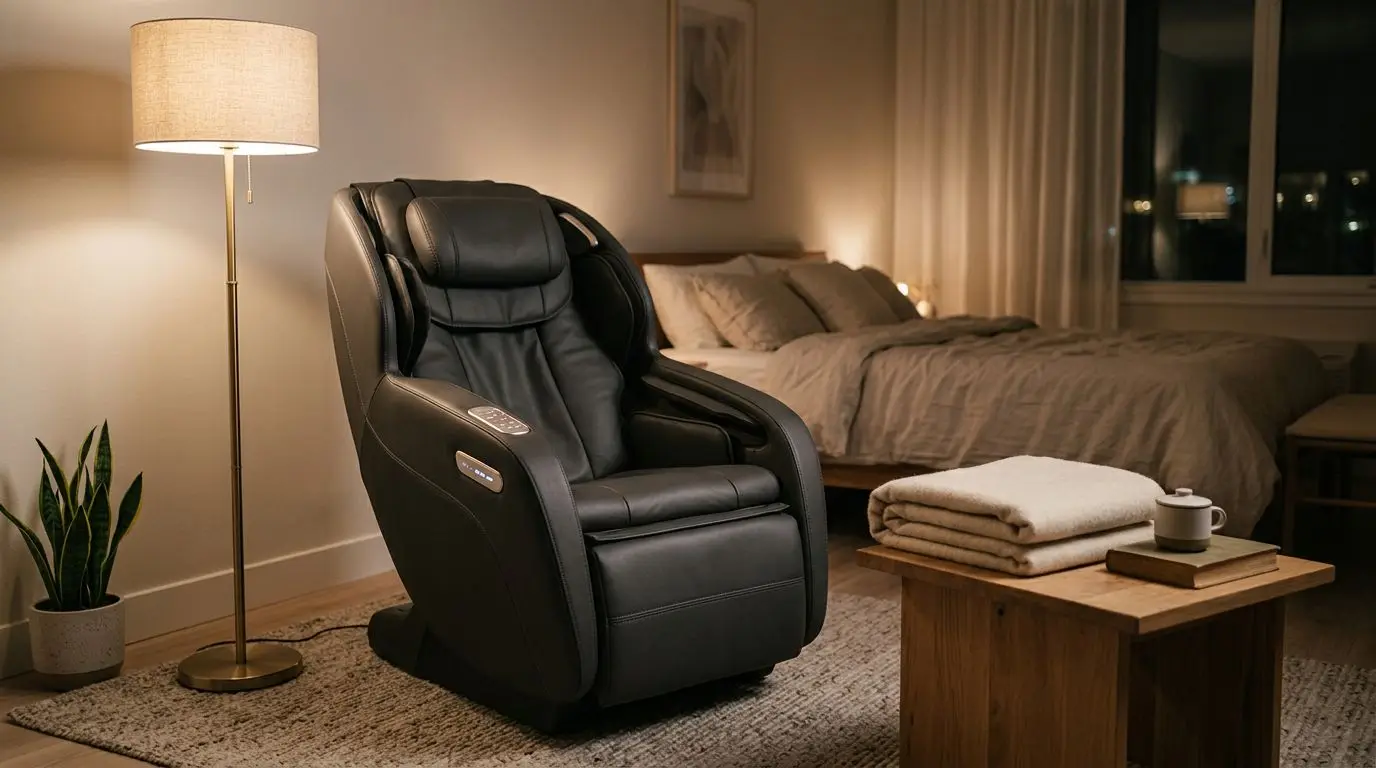
How to Use a Massage Chair Before Bed Without Overdoing It
12 min read
Massage Chair Use Before or After a Workout: Which Is Better for Recovery?
13 min read
How to Choose a Massage Chair for Home Use
14 min read