Disclosure: We may earn a commission when you buy through links on this page, at no extra cost to you. We buy nothing, sell nothing and accept no payment for coverage — commissions never decide what we recommend. How we make money.
The best way to use a massage chair at home is to begin with short, low-intensity sessions and build a predictable routine over the first 7 days. For most new users, 10 to 15 minutes per session, 3 to 4 times in the first week, is enough to learn the controls and figure out what feels comfortable without overdoing it.
Treat the first week as a setup period, not a challenge. The goal is to find the right body position, pressure level, recline angle, and timing so the chair feels easy to use consistently.
Safety first: take 10 minutes before your first session
Before you sit down, spend about 10 minutes reading the basic safety section of your manual, checking the chair’s clearance, and confirming the controls you will use most: power, pause, recline, intensity, heat, air compression, and emergency stop if included.
A massage chair is a consumer wellness product, not a medical device. Depending on its features, it is designed to provide mechanical pressure, rolling, kneading, tapping, compression, reclining, and warmth. It should not replace professional guidance if you have a health concern.
Ask your physician before using a massage chair if you are pregnant, have a pacemaker or other implanted cardiac device, have a history of blood clots or take anticoagulants, have osteoporosis, recently had a fracture or surgery, have spinal disc problems, have neuropathy, or have uncontrolled hypertension. If any position or motion causes sharp discomfort, numbness, dizziness, unusual tingling, or a sensation that feels wrong, stop the session.
Be conservative if you are new to strong pressure. Many full-size chairs can feel intense at the shoulders, lower back, calves, and soles of the feet, especially when rollers, airbags, and foot rollers run at the same time. Start lower than you think you need. You can always increase intensity later.
Your 7-day first-week massage chair routine
This 7-day plan uses short sessions and simple adjustments. It works for most home users because it leaves rest days between stronger sessions and keeps the first few uses under 15 minutes.
| Day | Session length | Suggested settings | What to notice |
|---|---|---|---|
| Day 1 | 10 minutes | Low intensity, gentle whole-body or back program | Shoulder fit, roller pressure, recline comfort |
| Day 2 | 10 to 12 minutes | Low intensity; try light air compression if available | How your arms, calves, and feet feel in the chair |
| Day 3 | Rest or 8 minutes | Use only if you feel comfortable; keep it gentle | Whether shorter sessions feel better |
| Day 4 | 12 to 15 minutes | Medium-low back program; optional zero-gravity recline | Lower back contact and neck support |
| Day 5 | Rest | No session needed | Which settings you would repeat |
| Day 6 | 15 minutes | Your favorite gentle program; adjust airbags separately | Best time of day for consistency |
| Day 7 | 10 to 20 minutes | Repeat the most comfortable setting from the week | Your personal default routine |
If your chair’s automatic programs run 20 or 30 minutes, you do not need to finish the full cycle during week 1. Use the timer, pause button, or power control to stop early. A comfortable 12-minute session is more useful than pushing through a full program that feels too strong.
Keep notes for the first 7 days. A one-line note is enough: “Day 4, 15 minutes, low airbags, heat off, good shoulder fit.” By the end of the week, you will know your default session length and the settings you prefer.
Who it’s best for during week 1: 4 common home users
A first-week routine is especially helpful for people who want the chair to become part of normal home life rather than a gadget used twice and forgotten. The right routine depends on when you will actually sit in it.
- The after-work user: Try 10 to 15 minutes after you change clothes, before dinner or screen time. This timing works well because it connects the chair to an existing habit.
- The evening wind-down user: Use a gentle program 30 to 60 minutes before bed, but avoid settings that feel too vigorous or stimulating.
- The active household user: If several people will share the chair, start with individual profiles or written notes so each person can keep intensity, recline, and footrest position separate.
- The cautious first-time user: Begin with 8 to 10 minutes, low roller strength, air compression off or at the lowest level, and no foot rollers until you know how the chair feels.
It may not be ideal for someone who wants very strong pressure right away. A better approach is to learn the chair’s baseline first, then increase one setting at a time after a few sessions.
How to place and measure the chair at home: 4 numbers to check
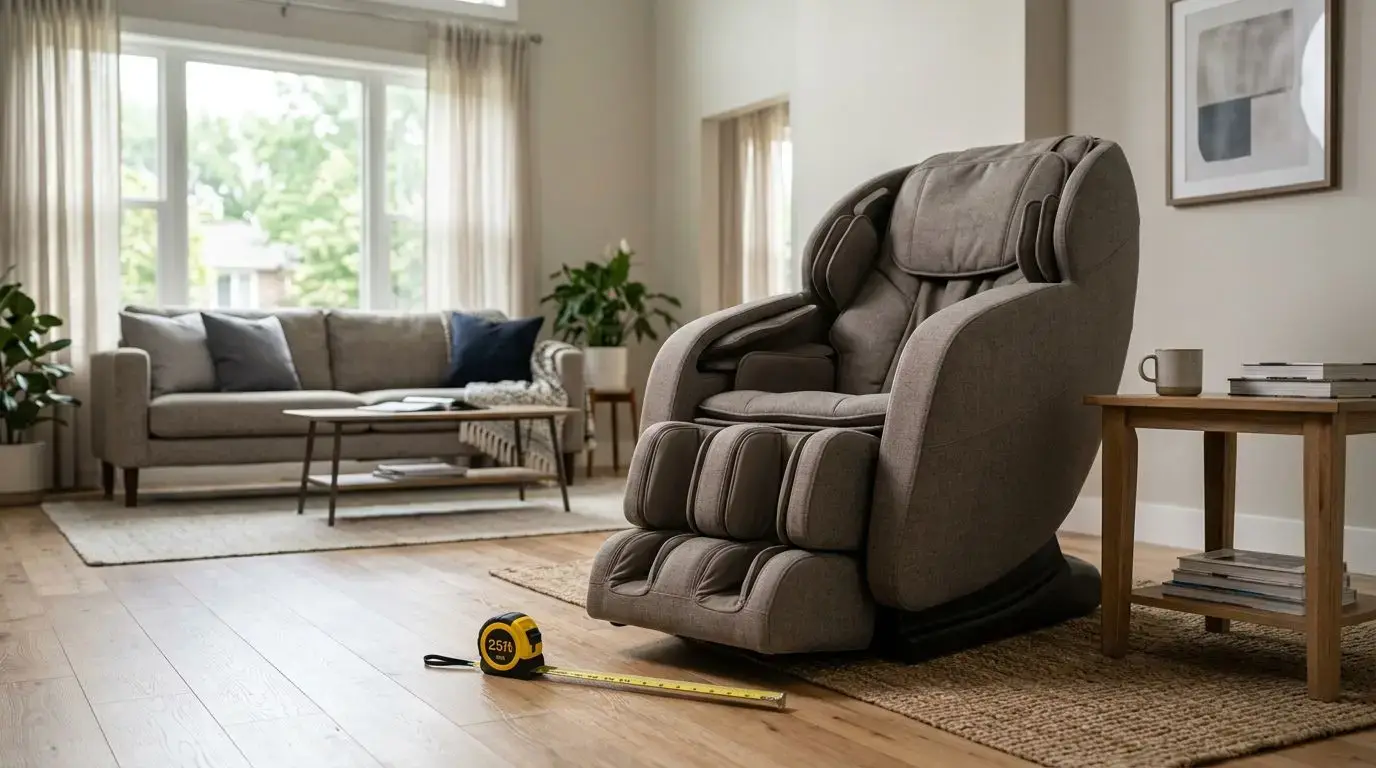
Good placement makes the chair easier to use consistently. Before choosing a final spot, check 4 numbers: wall clearance, walking space, outlet distance, and floor load.
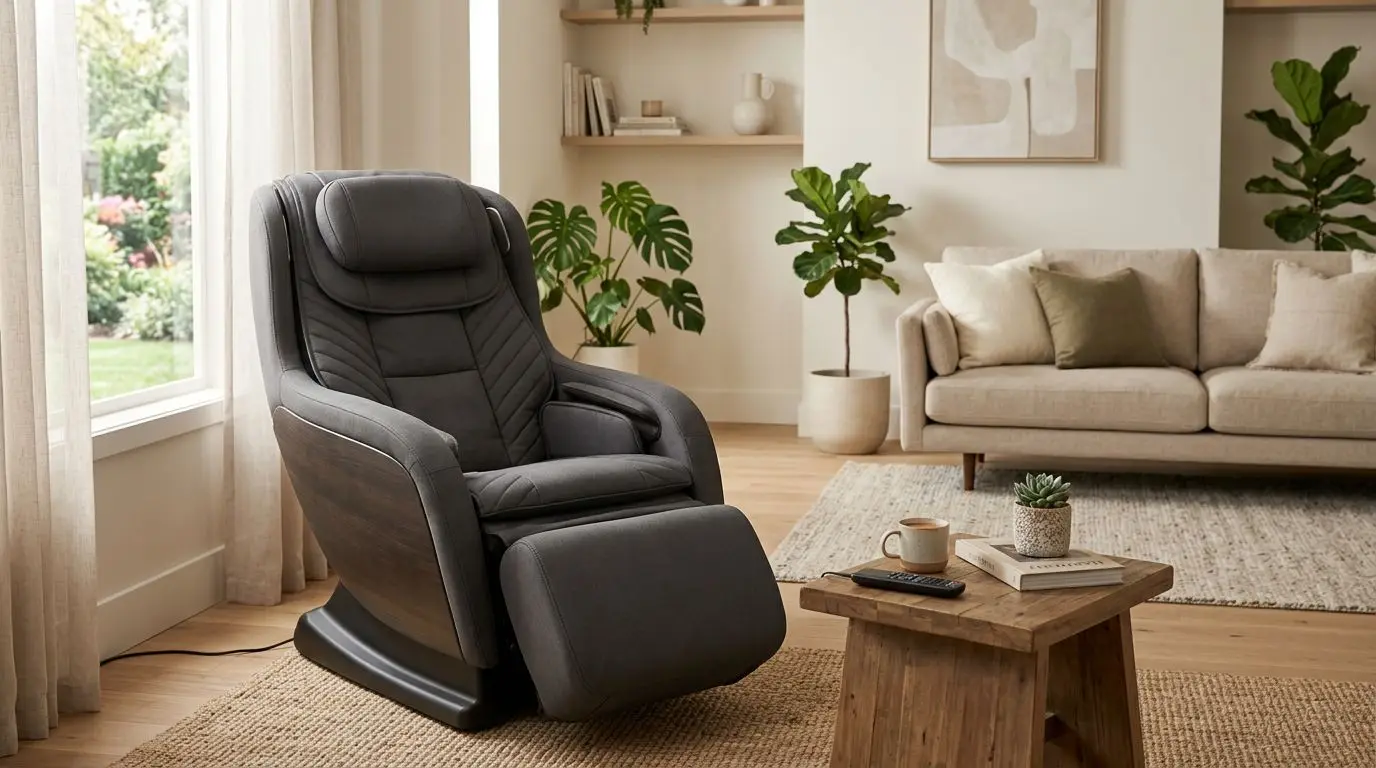
Many reclining massage chairs need several inches of clearance behind the backrest, while space-saving designs may need as little as 2 to 6 inches. Standard recliners may need more. Measure the chair fully upright and fully reclined if the manual gives both dimensions.
Leave a clear walkway of about 30 to 36 inches if the chair sits near a hallway, bed, sofa, or doorway. That matters in real homes. A chair that blocks a common path becomes irritating, and irritating furniture gets used less.
Use a grounded outlet within the power cord’s safe reach. Do not run cords where people walk, and avoid pinching the cord under the base. If you need an extension cord, follow the chair manual’s electrical guidance instead of guessing.
Massage chairs are heavy. Many full-size chairs weigh well over 150 pounds, and larger designs can weigh substantially more. If you are placing one upstairs, in an older home, or over delicate flooring, consider the combined weight of the chair and user. A rug or firm chair mat can help protect hard floors from scuffs, but it should not make the chair unstable.
How to choose settings and features in a 15-minute session
Most home users get better results from a simple 15-minute routine than from constantly changing every feature. Choose one main program, then adjust intensity, recline, airbags, heat, and foot rollers only as needed.
| Feature | What it is designed to feel like | Best first-week setting |
|---|---|---|
| S-track | Rollers follow the curve of the back from neck area toward lower back | Low to medium-low intensity |
| L-track or SL-track | Rollers continue farther under the seat area for broader coverage | Start short, especially if seat pressure feels strong |
| 2D rollers | Rollers move up, down, and side to side | Good starting point for most new users |
| 3D or 4D rollers | Rollers may press in and out, with more intensity control | Begin at the lowest depth or strength |
| Air compression | Airbags squeeze and release at arms, calves, feet, or shoulders | Use low level for 5 to 10 minutes at first |
| Foot rollers | Rolling or nodal pressure under the soles | Try last, and reduce intensity if it feels sharp |
| Heat | Gentle warmth in areas such as the back, seat, or calves | Use briefly and avoid falling asleep with heat on |
| Zero-gravity recline | A reclined position that changes how body weight rests in the chair | Try for 5 minutes before using a full session |
Do not judge a chair only by the strongest setting. Stronger is not automatically better. The setting you will actually use 3 times a week is usually the right one.
If an automatic scan misreads your shoulder height, manually adjust the rollers before the program starts. This single step can change the entire feel of the session, especially for users who are shorter or taller than average.
How to sit, adjust, and measure fit in 3 minutes
Give yourself a 3-minute setup before every session during the first week. Sit all the way back, center your hips, place both feet flat in the footrest, and let your shoulders relax into the back pad.
When the chair scans your body, stay still. If your chair allows manual shoulder adjustment, the top roller position should feel like it lines up near the upper shoulder area rather than pressing into the back of the skull or missing the shoulders completely.
Check your neck and head position. If your head is pushed forward, remove or reposition a pillow pad if the chair design allows it. If the back rollers feel too direct, use the included back pad or a thin towel only if the manual permits it. Do not add thick padding that changes how you sit in the chair.
Footrest fit matters too. Your knees should not feel jammed upward, and your calves should not feel trapped. If the footrest extends automatically, let it find your leg length before you tense up. For manual designs, adjust slowly and keep the first session short.
Use this simple fit check: after 2 minutes, ask whether the pressure feels broad and comfortable or pointed and distracting. Broad pressure is usually easier to repeat. Pointed pressure may mean the intensity is too high, the roller height is off, or your position needs adjustment.
How to build consistency after week 1: 2 to 4 sessions per week
After the first week, many people settle into 2 to 4 sessions per week, usually 10 to 20 minutes each. That is enough to make the chair part of a home routine without turning it into another task on the calendar.
Pick a trigger. Use the chair after your evening shower, after you close your laptop, on weekend mornings, or while listening to a 15-minute podcast. The more specific the cue, the easier it is to repeat.
Keep the controls simple. Save one default routine: recline angle, program, air compression level, heat on or off, and session length. If multiple people use the chair, put a small notepad nearby or use user memory settings if your chair includes them.
Give yourself permission to skip days. Consistency does not mean daily use. It means the chair has a realistic place in your week. For some homes, that is Monday, Wednesday, and Saturday. For others, it is 12 minutes whenever the house is quiet.
Common first-week mistakes to avoid: 6 easy fixes
Most problems in the first 7 days come from using too much intensity too soon or placing the chair where it is inconvenient. These 6 fixes prevent many false starts.
- Starting with the strongest program: Use the gentlest setting first, then add intensity one step at a time.
- Running a full 30-minute cycle on day 1: Stop at 10 minutes if you are new to the chair.
- Ignoring shoulder adjustment: A poor roller position can make an otherwise good session feel awkward.
- Using every feature at once: Try rollers first, then add airbags, foot rollers, heat, or deeper recline separately.
- Putting the chair in a bad location: If it blocks a 30-inch walkway or sits too far from where you relax, you will avoid it.
- Sharing one setting with everyone: A setting that fits a 6-foot user may feel very different for someone who is 5-foot-2.
Small adjustments matter. A lower airbag level, a slightly different recline angle, or a 5-minute shorter session can make the chair feel much more usable.
FAQ: 5 quick answers for home users
How long should I use a massage chair the first time?
Start with about 10 minutes on a low-intensity setting. If the pressure feels comfortable and you have no concerning sensations, you can try 12 to 15 minutes later in the week.
Can I use a massage chair every day at home?
Some people use one daily, but new users should build up gradually. During the first week, 3 to 4 short sessions is a practical starting point for learning the chair without overdoing the intensity.
Should I use heat during the first week?
Heat can feel pleasant, but use it conservatively at first. Try it for part of a 10- to 15-minute session, and avoid falling asleep while heat is on.
What if the rollers feel too strong?
Lower the intensity, reduce roller depth if your chair offers that control, add the approved back pad, or shorten the session. Also check shoulder height and sitting position.
When should I ask a physician before using a massage chair?
Ask your physician first if you are pregnant, have a pacemaker or implanted cardiac device, have blood clot concerns or take anticoagulants, have osteoporosis, recently had surgery or a fracture, have spinal disc problems, have neuropathy, or have uncontrolled hypertension.
Frequently asked questions
How long should I use a massage chair the first time? +
Start with about 10 minutes on a low-intensity setting. If it feels comfortable, try 12 to 15 minutes later in the week.
How often should I use a massage chair during the first week? +
For most new users, 3 to 4 short sessions in the first week is a practical starting point. Leave rest days between stronger sessions.
Should I use every massage chair feature right away? +
No. Start with a gentle roller program, then add air compression, heat, foot rollers, or deeper recline one feature at a time.
What should I do if the massage chair feels too intense? +
Lower the intensity, shorten the session, adjust shoulder position, reduce air compression, or use the approved pad if your chair includes one.
Who should ask a physician before using a massage chair? +
Ask your physician first if you are pregnant, have a pacemaker or implanted cardiac device, have blood clot concerns or take anticoagulants, have osteoporosis, recently had surgery or a fracture, have spinal disc problems, have neuropathy, or have uncontrolled hypertension.
Related guides

Morning, Afternoon, or Night: When Is the Best Time to Use a Massage Chair?
14 min read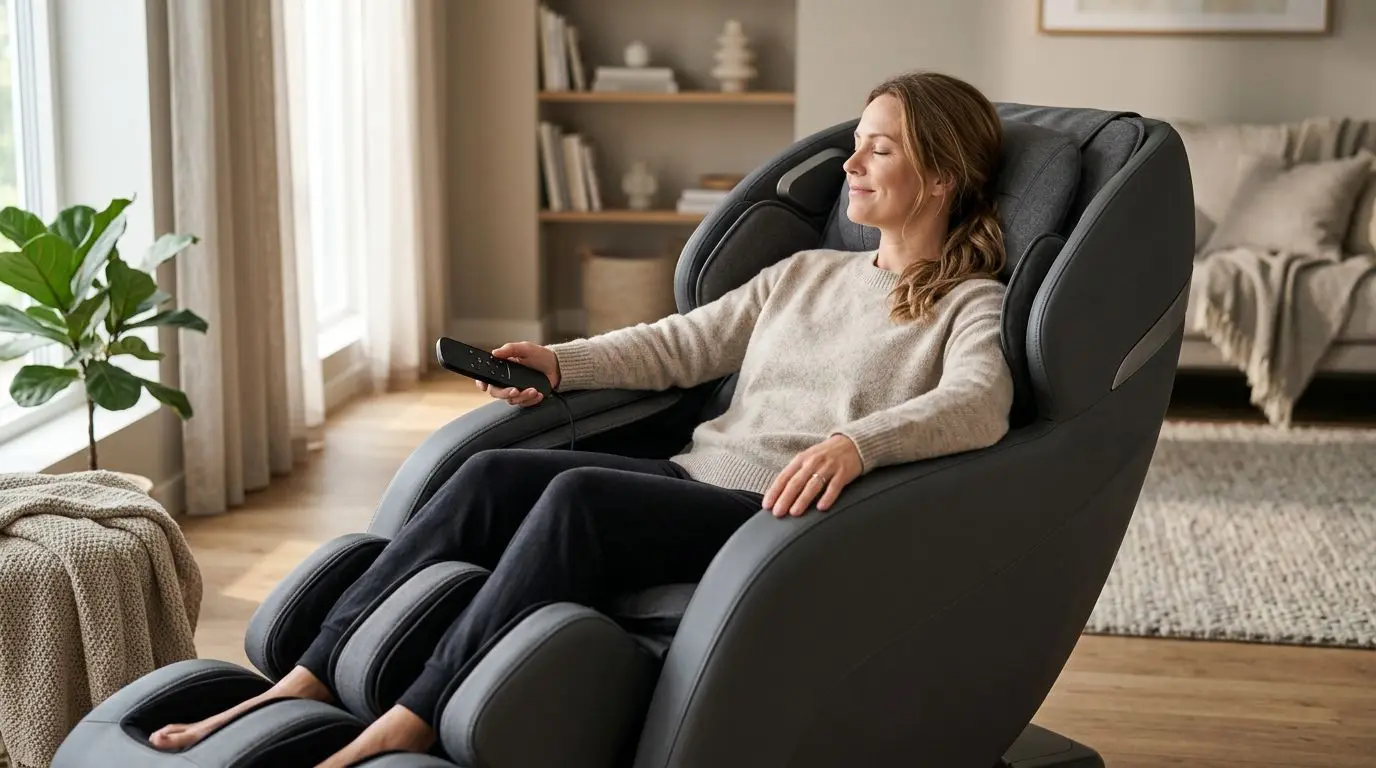
Best Massage Chair Settings for Beginners: Intensity, Roller Position, Air Pressure, Heat, and Recline
13 min read
How Often Should You Use a Massage Chair?
12 min read
Massage Chair Use Before or After a Workout: Which Is Better for Recovery?
13 min read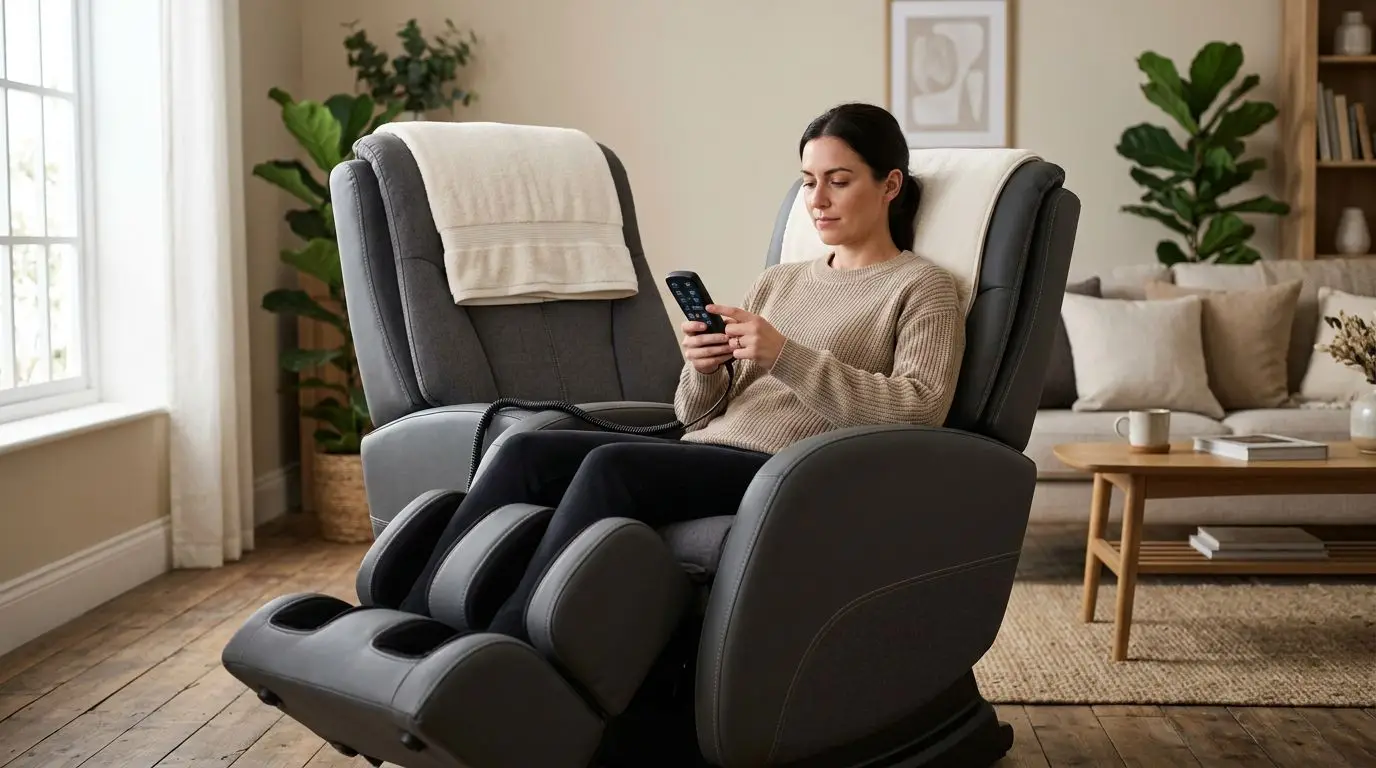
How to Adjust Massage Chair Intensity Without Overdoing It
13 min read