Disclosure: We may earn a commission when you buy through links on this page, at no extra cost to you. We buy nothing, sell nothing and accept no payment for coverage — commissions never decide what we recommend. How we make money.
Foot rollers apply focused pressure to the soles, calf kneading works around the lower legs, and air compression uses inflatable airbags to squeeze and release the feet, ankles, and calves. For most shoppers, foot rollers feel the most targeted, calf kneading feels the most hand-like, and air compression feels the broadest and easiest to adjust. The best choice depends on your sensitivity, leg size, and whether you prefer firm sole pressure, calf contact, or an all-around enveloping feel.
How the 3 lower-leg systems differ
Most full-body massage chairs use one or more of 3 lower-body systems: mechanical foot rollers, calf kneading mechanisms, and air compression airbags. A typical automatic program runs about 10 to 20 minutes, and the leg section may work at the same time as the back rollers, heat, or recline features. The key question is not which technology sounds most advanced. It is which sensation you will actually want to use several times a week.
These systems often overlap. Some chairs pair foot rollers with airbags that press the foot down onto the rollers. Others use airbags only in the calf area, while a smaller group adds mechanical kneading in the calves. That is why two chairs with similar-looking ottomans can feel very different.
| Leg feature | Main contact area | Typical feel | Best fit for | Common watchout |
|---|---|---|---|---|
| Foot rollers | Soles, arches, heels | Targeted rolling or nodal pressure | Shoppers who like firm foot contact | Can feel too intense on sensitive feet |
| Calf kneading | Back and sides of calves | Rhythmic squeezing, pinching, or rolling | People who want more lower-leg engagement | Fit depends on calf width and height alignment |
| Air compression | Feet, ankles, calves, sometimes thighs | Broad squeeze-and-release pressure | People who prefer adjustable, wraparound comfort | Small ottomans may feel tight on larger legs |
Foot rollers: best for sole pressure in 10- to 20-minute programs
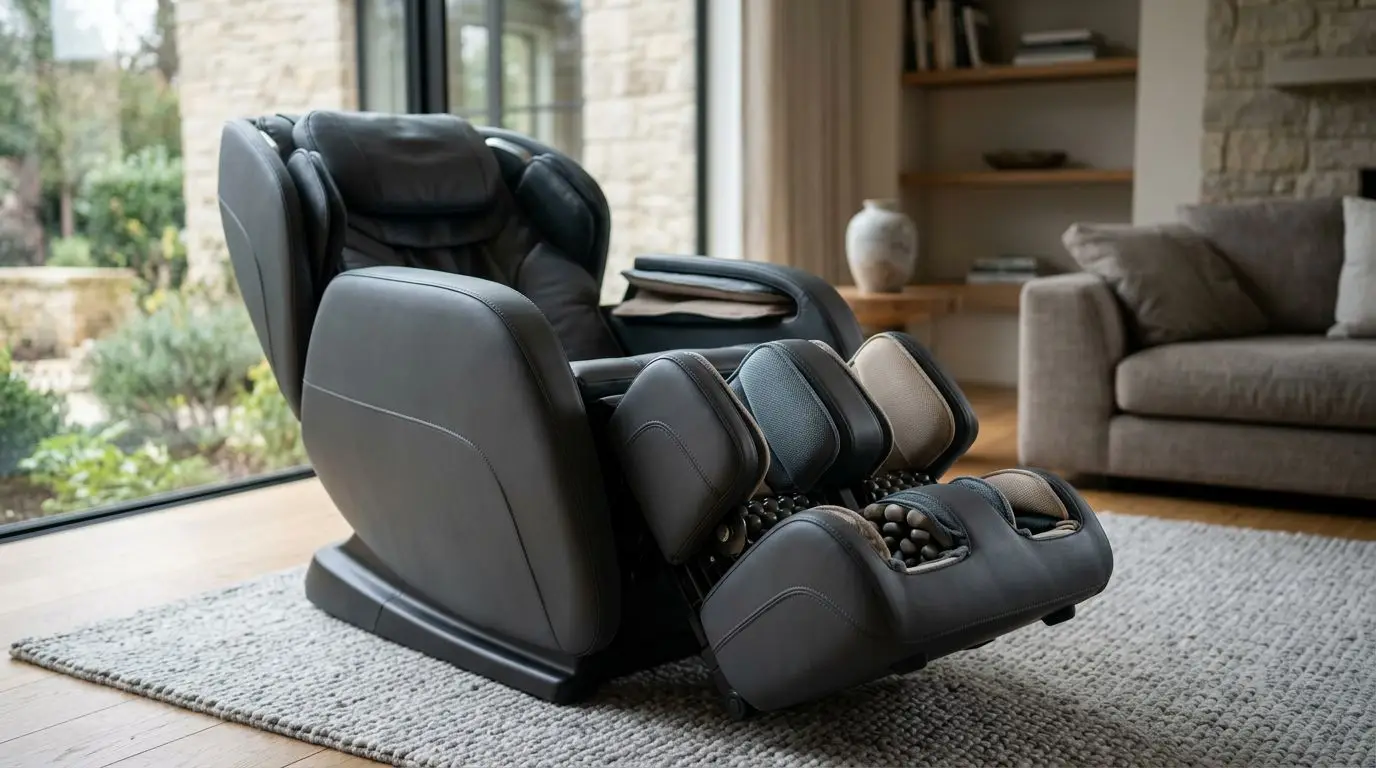
Foot rollers are mechanical components beneath the soles. They may use spinning discs, raised nodes, moving bars, or roller tracks that travel under the arch and heel. In many chairs, airbags in the foot pockets inflate at the same time, pressing the foot downward so the rollers feel stronger.
The sensation is usually more specific than air compression. Rather than a broad squeeze, you feel contact points under the foot. Some users enjoy that firm, textured pressure after standing for an 8-hour shift or spending a long day walking. Others find it too sharp, especially at higher intensity settings.
Intensity varies widely. A chair with removable foot pads, a 3-level roller setting, or a manual on/off control gives you more room to fine-tune the experience. Thick socks can also make a noticeable difference. If you are testing a chair in a store, try at least 2 settings and keep your feet in the pockets long enough to feel a full roller cycle, not just the first 30 seconds.
Who foot rollers are best for
- People who like firm pressure under the arches and heels.
- Shoppers who want the foot section to feel active, not just lightly padded.
- Users who plan to run shorter sessions, such as 10 or 15 minutes, rather than long low-intensity lounging.
- Anyone comparing chairs where the back massage feels similar but the foot experience is the deciding factor.
What to check before choosing foot rollers
Look for roller intensity control, a way to turn the rollers off, and enough foot length inside the ottoman. If your shoe size is around men’s 12 or larger, or women’s 13 or larger, pay close attention to the usable foot pocket length. A roller that sits under the wrong part of the foot can feel awkward even if the rest of the chair fits.
Calf kneading: 2 common designs and a more active lower-leg feel
Calf kneading is less standardized than foot rolling. In one chair, it may mean a true mechanical system with moving nodes or paddles near the calf. In another, it may refer to airbags that inflate in a sequence to create a kneading-like squeeze. Both can feel good, but they are not the same.
A mechanical calf system usually feels more targeted. You may notice pressure behind the calf or along the sides, depending on where the rollers or pads sit. Air-driven calf kneading feels broader and softer because the airbag pushes against a larger surface area. Neither is automatically better. The right choice depends on whether you prefer a defined contact point or a wrapped, cushioned squeeze.
Fit is critical here. The calf section usually has a fixed width, and the contact points are positioned for an average adult leg. If the lower-leg wells are too narrow, the squeeze can feel cramped. If they are too wide, the kneading may barely reach you. A difference of 1 or 2 inches in calf width can change the experience.
Who calf kneading is best for
- People who want the chair to do more than massage the soles.
- Users who like rhythmic pressure around the lower legs.
- Shoppers choosing a full-body chair where leg coverage matters as much as the back track.
- People who find foot rollers too concentrated but still want an active lower-body feature.
What to ask when a chair lists calf kneading
Ask whether the kneading is mechanical, air-driven, or a combination of both. Also check whether the calf feature has separate intensity control from the foot rollers. On some chairs, the lower-body controls are linked, so increasing calf pressure also makes the foot section more aggressive.
Air compression: 4 zones of squeeze-and-release comfort
Air compression uses inflatable airbags built into the leg rest. Depending on the chair, airbags may cover 2, 3, or 4 lower-body zones: feet, ankles, calves, and thighs. They inflate and deflate in patterns, creating a squeeze-and-release sensation instead of a rolling one.
This is the most common lower-leg feature because it fits into many chair designs and offers adjustable pressure. Many chairs provide 3 to 5 air intensity levels. Lower settings feel like a light hold. Higher settings can feel snug, especially when airbags press the feet into rollers or close around the calves.
Air compression is often the easiest leg feature to share among multiple users because it has fewer hard contact points. A person who dislikes firm sole rollers may still enjoy a gentle air setting. It also works well when you want the chair to feel relaxing rather than highly targeted.
| Airbag zone | Where it presses | How it feels | Fit note |
|---|---|---|---|
| Foot | Top and sides of feet | Holds the foot in place | Can feel tight with high insteps |
| Ankle | Around the lower ankle area | Light stabilizing pressure | May be minimal on some chairs |
| Calf | Sides or back of lower legs | Wraparound squeeze | Calf width matters |
| Thigh | Upper legs near the seat | Broad side pressure | More common on larger chairs |
Who air compression is best for
- Households with 2 or more users who prefer different intensity levels.
- People who want lower-leg coverage without sharp contact points.
- Shoppers who like a hugging sensation around the feet and calves.
- Users who want the option to run legs only or reduce lower-body intensity during a full program.
Feature comparison: 6 buying factors that matter more than labels
Feature names can be vague, so compare the chair by its actual controls and fit points. A lower-body system with 5 intensity levels and an off switch may be more practical than a more dramatic-sounding feature with only 1 setting. You want range, not just power.
| Buying factor | Why it matters | What to look for |
|---|---|---|
| Separate controls | Feet and calves may need different pressure | Independent foot roller, calf, and air settings |
| Intensity range | Sensitivity changes by user and day | At least 3 levels, plus off where possible |
| Ottoman extension | Leg length affects alignment | Manual or spring extension, often several inches of travel |
| Foot pocket size | Large feet can crowd the rollers | Enough length and toe room for your shoe size |
| Calf opening width | Airbags need room to inflate comfortably | A snug fit that does not pinch at low settings |
| Noise | Rollers and pumps have different sound profiles | Listen during a full 10-minute cycle if possible |
Noise is easy to overlook. Foot rollers often make a low mechanical sound, while airbags create pump and valve noises. Neither should be harsh, but the difference is noticeable in a quiet room. If you watch TV at a normal volume from 8 to 10 feet away, a loud ottoman can become annoying.
How to choose and measure: 5 checks before you buy
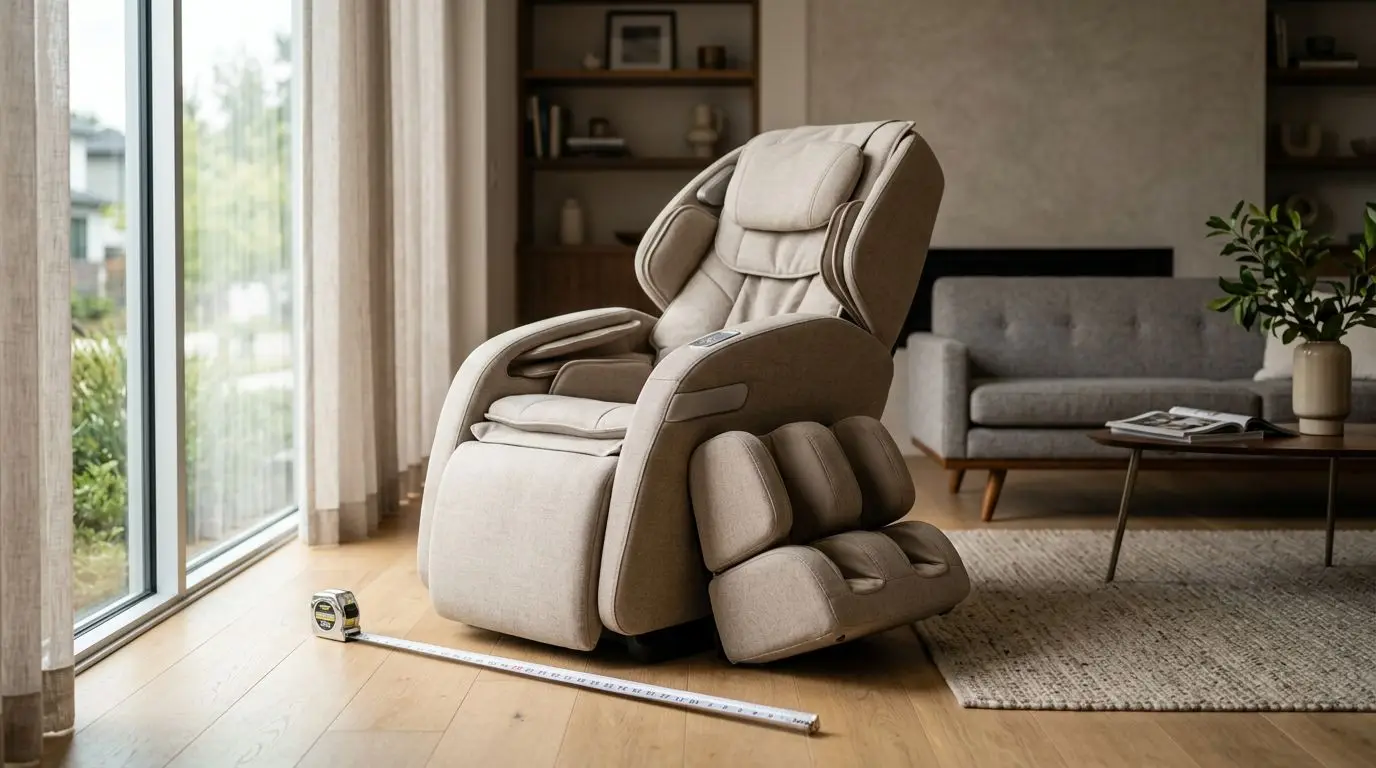
Measuring takes about 10 minutes and can prevent a poor fit. Use a tape measure while seated, because leg position changes when your knees are bent and your feet are resting forward. If more than one person will use the chair, measure the tallest and broadest regular user, not just the person placing the order.
1. Measure lower-leg length
Sit with your knees bent at about 90 degrees. Measure from the back of the knee to the bottom of the heel. This helps you judge whether the calf contact points and foot rollers will line up when the ottoman is extended.
2. Measure calf width and circumference
Measure the widest part of the calf. If you can, compare both width and circumference against the chair’s listed ottoman dimensions. A chair can technically fit your legs but still feel tight once the airbags inflate.
3. Check foot length
Measure from heel to longest toe, or use your regular shoe size as a rough guide. People with larger feet should confirm usable foot pocket length, not just exterior ottoman size. A 2-inch mismatch can move the roller from the arch toward the toes or heel.
4. Confirm recline clearance
Some chairs need only a few inches from the wall; others require much more space when fully reclined. Measure the room depth, doorways, and the path from delivery point to final placement. Also consider where the ottoman goes when raised.
5. Test control access
During a session, you should be able to lower the leg intensity, stop foot rollers, or end the program quickly. This is especially important for guests and older users who may not be familiar with the remote or side controls.
Safety and comfort: start with 10 minutes and know when to ask a physician
A massage chair is a consumer wellness product, not a medical device. It is designed to create pressure, motion, warmth, and comfort sensations. It should not be used as a substitute for professional medical advice or care.
Start conservatively. Try a 10-minute session on the lowest leg intensity the first time, especially if the chair has foot rollers and strong airbags. Stop if you feel sharp pain, numbness, unusual tingling, dizziness, or any sensation that feels wrong. More intensity is not always better.
Ask your physician before using strong leg compression, heat, or mechanical massage features if you are pregnant; have a pacemaker or other implanted cardiac device; have a history of blood clots; take anticoagulants; have osteoporosis; recently had a fracture or surgery; have spinal disc problems; have neuropathy; or have uncontrolled hypertension. These are real reasons to be cautious, and they should be addressed before you make strong lower-body features part of a routine.
Also be careful with children and pets around the ottoman. Leg rests move, airbags inflate, and foot wells can pinch small fingers. Keep the chair unplugged or powered off when it is not in use if children may climb on it.
Best lower-body feature by shopper type: 7 practical matches
There is no single best leg feature for every buyer. A person who loves firm arch pressure may rank foot rollers first, while someone with sensitive feet may want airbags only. Start with the sensation you prefer, then verify fit and controls.
| Shopper priority | Best starting point | Why |
|---|---|---|
| Firm sole pressure | Foot rollers | Most direct contact under the feet |
| Gentle lower-leg comfort | Air compression | Broad pressure with adjustable levels |
| Active calf sensation | Calf kneading | More engagement around the lower legs |
| Shared household use | Air compression with separate controls | Easier to adapt for 2 or more users |
| Sensitive feet | Air compression or rollers with off switch | Lets you avoid hard sole contact |
| Large feet or calves | Oversized or adjustable ottoman design | Fit matters more than feature count |
| TV or reading sessions | Lower-intensity air system | Less distracting than aggressive roller action |
If you cannot test a chair in person, prioritize adjustability. Look for separate lower-body controls, a clear return policy, published dimensions, and photos that show the actual foot and calf openings. A chair with fewer features but better control can be more satisfying than one with a long feature list and limited adjustment.
FAQ: 5 common questions about massage chair leg features
Are foot rollers better than air compression?
Foot rollers are better if you want firm, targeted pressure under the soles. Air compression is better if you prefer a broader squeeze around the feet and calves. Many shoppers like a combination, as long as the rollers can be adjusted or turned off.
Does calf kneading always mean real mechanical rollers?
No. Some chairs use mechanical parts in the calf area, while others use airbag sequences that create a kneading-like sensation. Check the product details for the mechanism, not just the feature name.
What if foot rollers feel too strong?
Lower the intensity, wear thicker socks, add or replace removable foot pads if the chair includes them, or turn the rollers off. If a chair does not let you reduce or disable the rollers, it may not be a good match for sensitive feet.
How much leg space should I measure before buying?
Measure lower-leg length, calf width, calf circumference, and foot length. Also measure room clearance for the reclined chair. These 4 body measurements plus floor space are more useful than relying on height alone.
Can everyone use strong leg compression?
No. Ask your physician first if you are pregnant; have an implanted cardiac device; have a history of blood clots; take anticoagulants; have osteoporosis; recently had surgery or a fracture; have spinal disc problems, neuropathy, or uncontrolled hypertension.
Frequently asked questions
Are foot rollers better than air compression? +
Foot rollers are better if you want firm, targeted pressure under the soles. Air compression is better if you prefer a broader squeeze around the feet and calves. Many shoppers like a combination, as long as the rollers can be adjusted or turned off.
Does calf kneading always mean real mechanical rollers? +
No. Some chairs use mechanical parts in the calf area, while others use airbag sequences that create a kneading-like sensation. Check the product details for the mechanism, not just the feature name.
What if foot rollers feel too strong? +
Lower the intensity, wear thicker socks, add or replace removable foot pads if the chair includes them, or turn the rollers off. If a chair does not let you reduce or disable the rollers, it may not be a good match for sensitive feet.
How much leg space should I measure before buying? +
Measure lower-leg length, calf width, calf circumference, and foot length. Also measure room clearance for the reclined chair. These four body measurements plus floor space are more useful than relying on height alone.
Can everyone use strong leg compression? +
No. Ask your physician first if you are pregnant; have an implanted cardiac device; have a history of blood clots; take anticoagulants; have osteoporosis; recently had surgery or a fracture; have spinal disc problems, neuropathy, or uncontrolled hypertension.
Related guides
Can Massage Chairs Improve Circulation? What Leg Compression, Heat, and Movement May Do
13 min read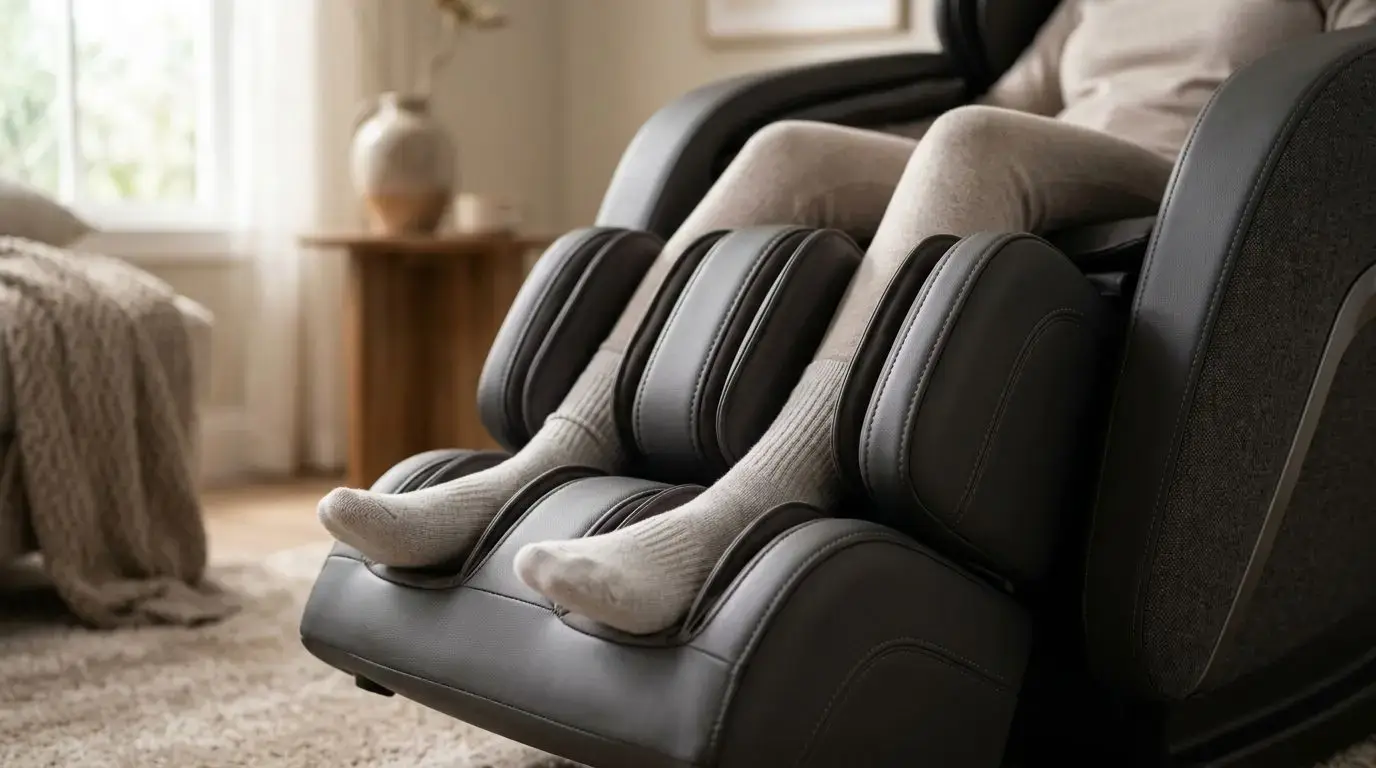
Foot and Calf Massage Chair Programs: When to Use Rolling, Kneading, and Air Compression
14 min read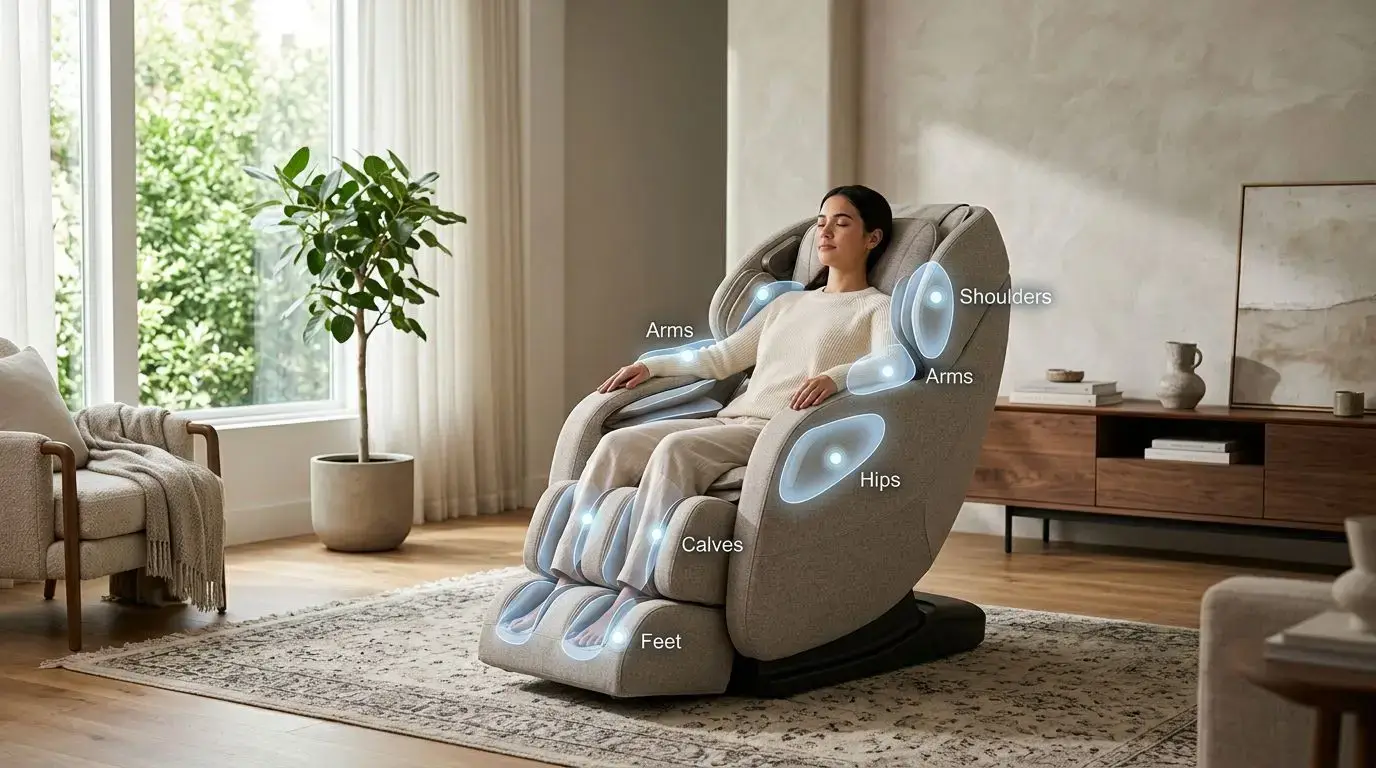
Air Compression Massage in Chairs: How It Works and Who It Helps Most
14 min read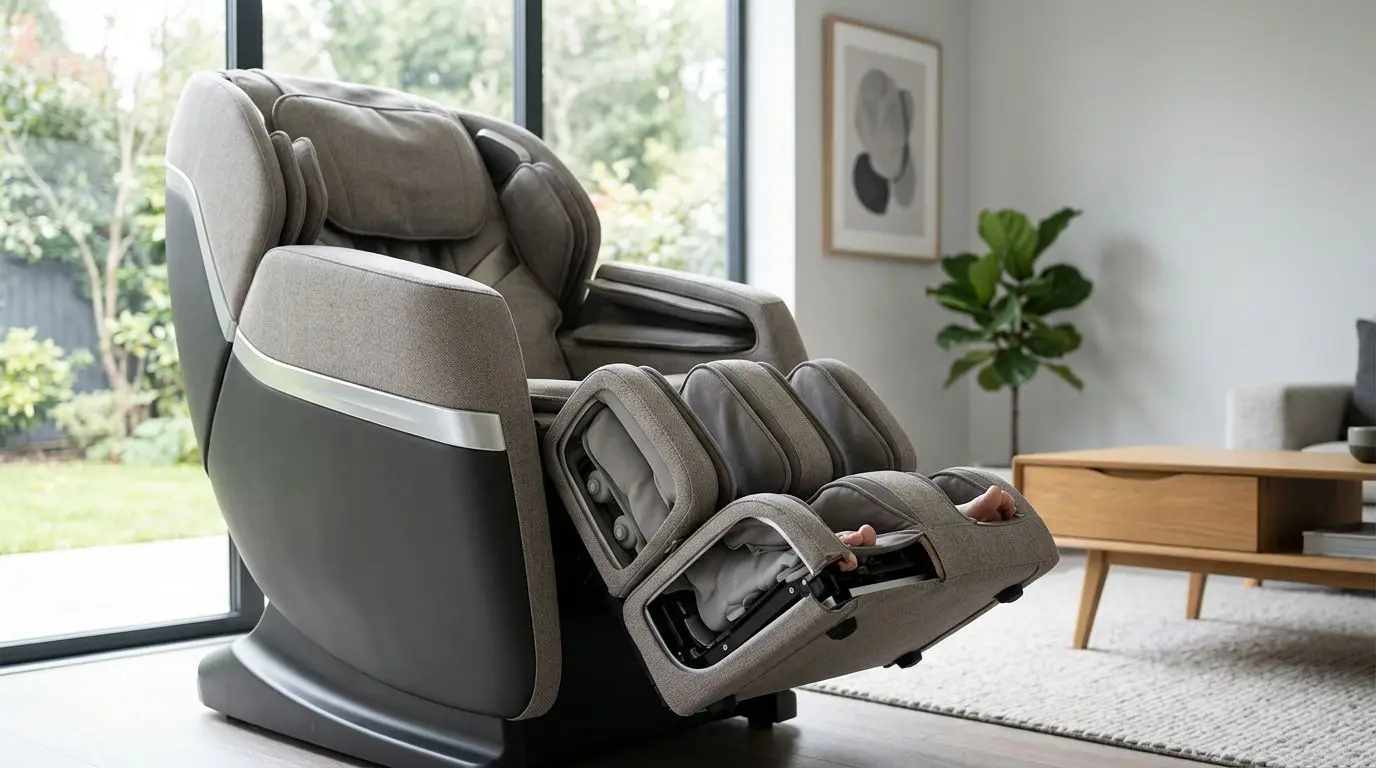
Massage Chair Footrest Features Explained: Enclosed Ottomans, Open-Toe Designs, Extensions, and Adjustability
13 min read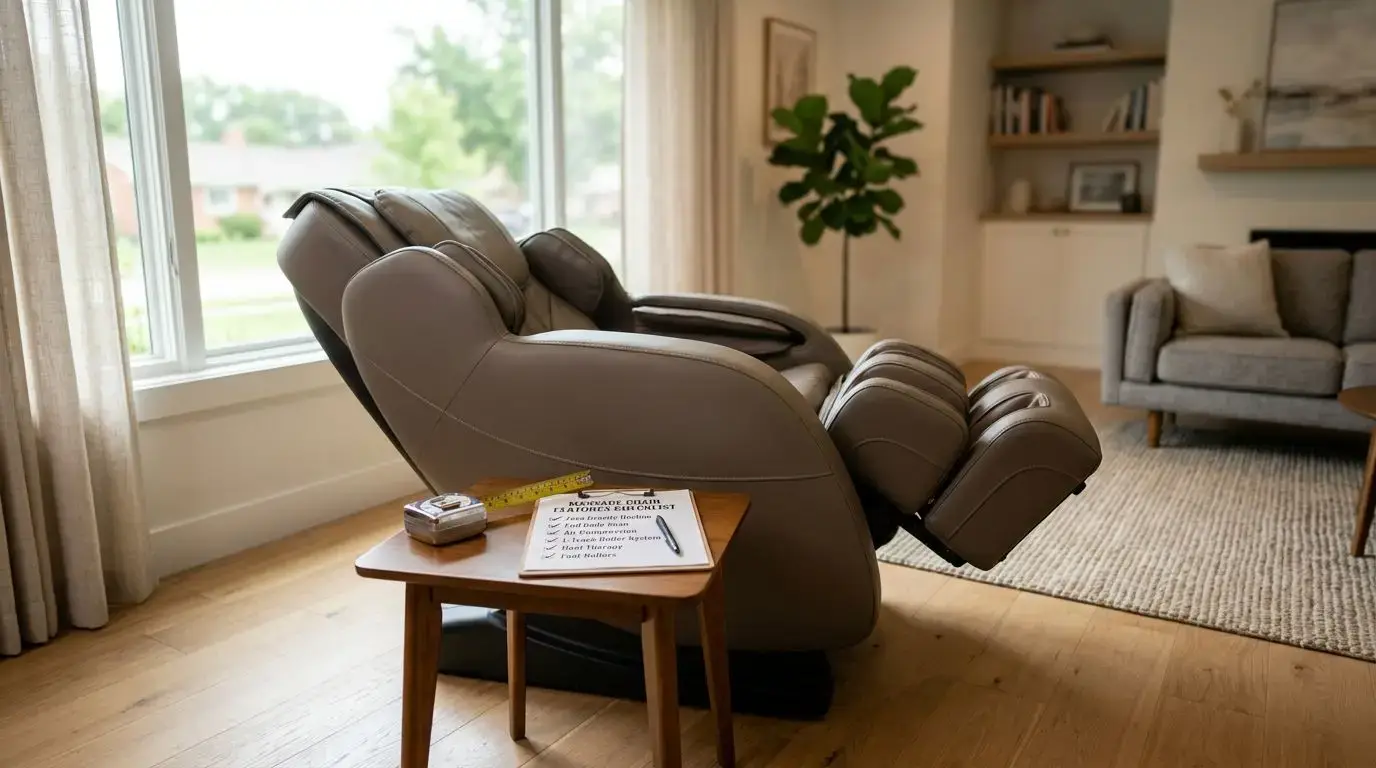
Best Massage Chair Features to Look For Before You Buy
13 min read