Disclosure: We may earn a commission when you buy through links on this page, at no extra cost to you. We buy nothing, sell nothing and accept no payment for coverage — commissions never decide what we recommend. How we make money.
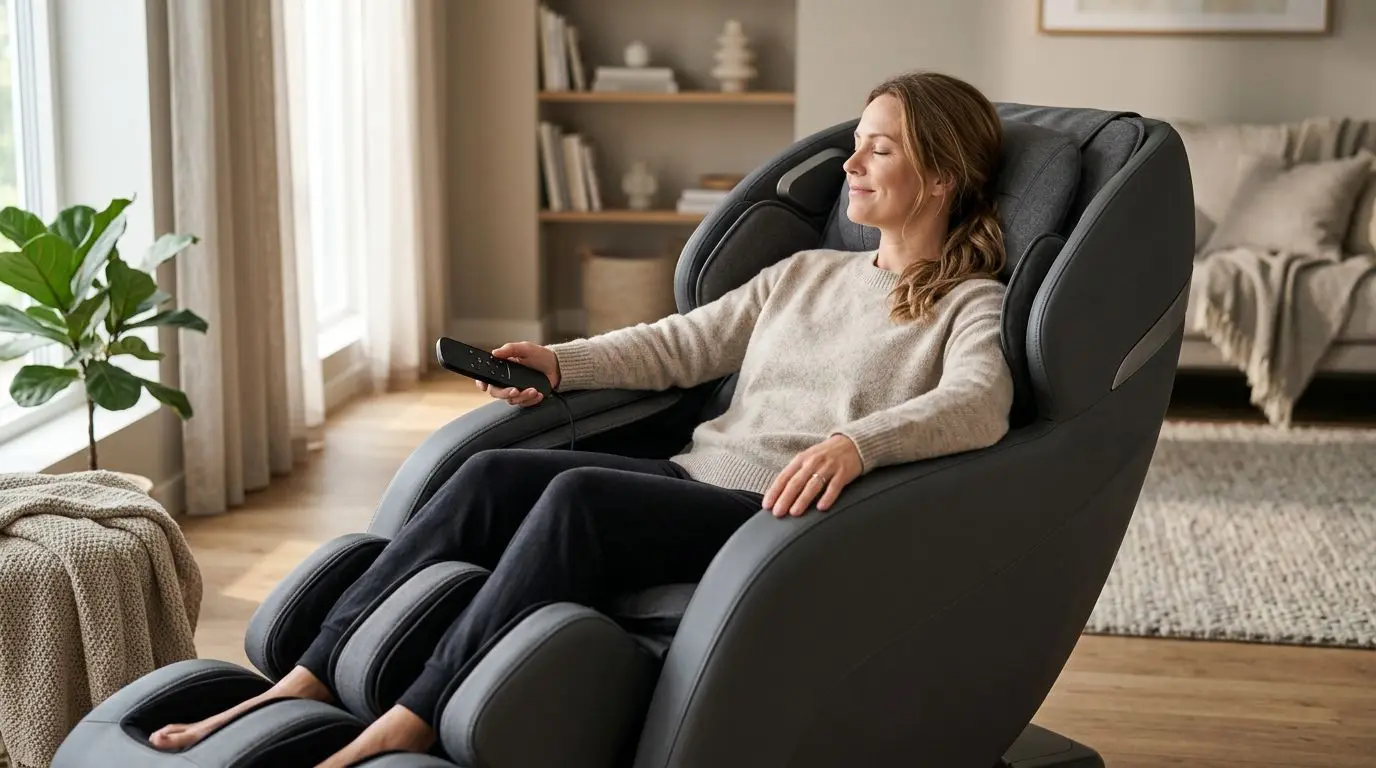
Air compression massage in a chair uses inflatable airbags to gently squeeze and release body areas such as the shoulders, arms, hips, calves, and feet. It is best for people who want broad, rhythmic pressure, especially around the limbs, and for users who prefer a circulation-focused massage feel without the pinpoint intensity of rollers.
Unlike back rollers that knead along the spine, airbags apply pressure around larger body areas for a few seconds at a time. The result is a hugging, pulsing sensation that can feel calming, supportive, and easier to tolerate than deep mechanical kneading.
How air compression massage works in 3 basic steps
Air compression systems follow a simple cycle: inflate, hold, and deflate. Small electric pumps send air through hoses into fabric or rubberized air cells placed around the chair, while valves control when each airbag fills or releases. A single compression cycle may last about 5 to 20 seconds, depending on the chair program and intensity setting.
As the airbags inflate, they press into the body or hold a limb against a massage surface. As they deflate, the pressure drops and the body relaxes. Repeating that cycle creates the familiar squeeze-and-release rhythm people associate with compression massage.
Most chairs use airbags in groups. For example, a calf section may inflate on the left and right sides of the leg, while a foot section may press down from above or squeeze from the sides. Arm pockets often use long airbags that close around the forearms and hands. Shoulder and hip airbags are usually positioned to stabilize the body while rollers work along the back.
That stabilization matters. In a chair with back rollers, airbags can hold the torso in a better position so the rollers contact the muscles more consistently. In a chair with a reclining or zero-gravity position, airbags can also help keep the body from sliding as the chair tilts backward.
Air compression is not the same as medical-grade pneumatic compression used in clinical settings. Massage chair airbags are designed for comfort and wellness, not diagnosis or treatment. They may feel helpful for tired legs or general relaxation, but they should not be treated as a medical device unless a qualified clinician specifically advises it.
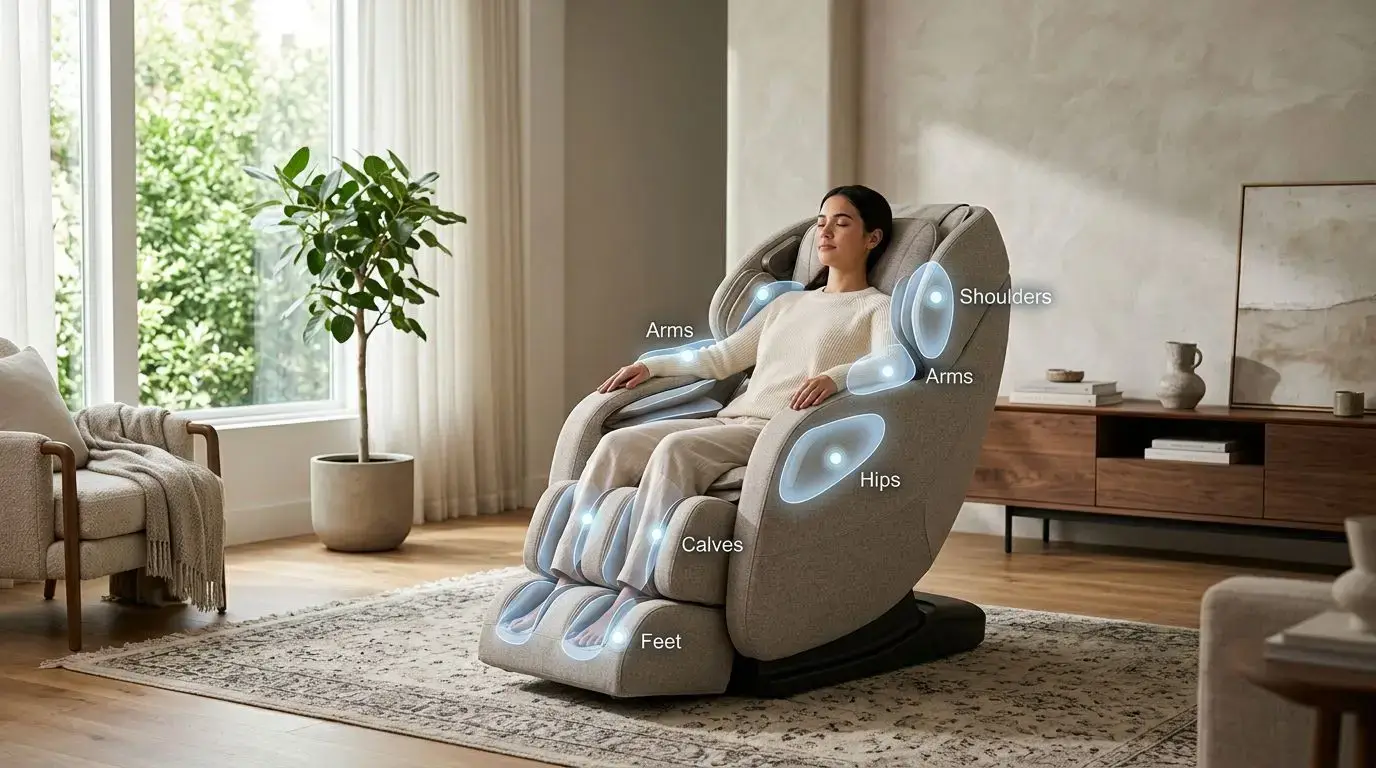
Where the airbags are located: 5 common body zones
Massage chairs vary widely, but air compression is most often used in 5 zones: shoulders, arms, hips or seat, calves, and feet. Some compact chairs use fewer zones, while full-body chairs may include dozens of individual air cells. More airbags do not automatically mean a better massage; placement and control matter more than the raw count.
| Airbag zone | Typical feel | What it is best at | Comfort notes |
|---|---|---|---|
| Shoulders | Side-to-side squeeze near the upper arms or shoulder caps | Helping position the upper body during back massage | Can feel tight on broad shoulders |
| Arms and hands | Wrapped pressure around forearms, wrists, and palms | Relaxing tired hands after typing, driving, or tool use | Remove watches and bulky bracelets first |
| Hips and seat | Side squeeze around pelvis or thighs | Stabilizing the body and adding a gentle lower-body hold | Important to check seat width before buying |
| Calves | Rhythmic side pressure along lower legs | Comfort-focused use after standing or walking | Intensity should be adjustable |
| Feet | Squeeze from top, sides, or heel area | Pairing compression with foot rollers or heat if included | May feel strong for sensitive feet |
Shoulder airbags are often misunderstood. They usually do not knead like human hands. Instead, they press the upper body inward or downward so the chair can maintain contact during a roller routine. For someone with narrow shoulders, that can feel like a secure hug. For someone with a wider upper body, it may feel restrictive unless the intensity can be lowered.
Arm airbags are among the most noticeable features because they surround the limb. Many armrests use a sleeve or channel design where the user slides the forearm into place. The pressure may cover 10 to 18 inches of the arm path, depending on chair size, and can include the palm area if the pocket extends forward.
Hip and seat airbags tend to be subtle, but they affect fit. They may squeeze the outer hips, thighs, or sides of the seat. If the chair is narrow, even low intensity can feel crowded. For this reason, buyers should look beyond the published chair width and check the usable seat width when possible.
Calf and foot airbags are popular because the lower legs are easy to compress evenly. Calf wells often use air cells on both sides of each leg, and foot wells may combine airbags with underfoot rollers. This can be relaxing, but users with sensitive arches, bunions, swelling, or neuropathy should start at the lowest setting and stop if pressure feels sharp or numb.
Who air compression helps most: 6 user profiles
Air compression is most useful for people who enjoy steady pressure across a larger area instead of concentrated kneading in one spot. It can be a good match for several common home users, as long as expectations stay realistic and comfort remains the main goal.
- People who stand for 6 to 10 hours a day. Retail workers, teachers, healthcare support staff, kitchen workers, and tradespeople often want calf and foot compression at the end of the day. The squeeze-and-release pattern may feel refreshing for tired legs.
- Desk workers with hand and forearm fatigue. Arm airbags can feel good after long sessions of typing, mouse use, gaming, or driving. They are not a cure for repetitive strain injuries, but they can support a relaxation routine.
- Users who dislike aggressive back rollers. Airbags spread pressure over a larger surface. For some people, that feels gentler than a roller head pressing directly into a knot.
- People who want a calmer massage session. A 15-minute air-focused routine can feel less intense than a deep tissue roller program and may be easier to use while reading, watching TV, or winding down.
- Buyers who want better body positioning. Shoulder, hip, and thigh airbags can keep the body aligned so back rollers do not skip contact during reclining programs.
- Households with mixed preferences. Air intensity can often be adjusted separately from roller intensity, which helps when one person likes stronger back work and another prefers a lighter squeeze.
Air compression is not ideal for everyone. If you want a highly targeted massage for a specific spot between the shoulder blades, the rollers and track design matter more. If you are mainly shopping for foot reflexology-style intensity, the underfoot roller design may matter more than the airbag count.
Comfort and circulation-focused use: start with 10 to 15 minutes
For general comfort, a good starting point is 10 to 15 minutes on low or medium air intensity. Many massage chairs default to sessions around 15 or 20 minutes, which is enough time to understand how your body responds without overdoing it. Longer is not always better.
People often describe compression as circulation-focused because it alternates pressure and release. That can feel pleasant in the calves and feet after a long day, especially when paired with reclining. Still, a massage chair should not be used to treat poor circulation, blood clots, severe swelling, or unexplained leg pain. Those issues require medical guidance.
Use the chair in a measured way. The best compression setting is firm enough to notice but not so strong that it causes tingling, pinching, bruising, or numbness. If your feet or hands fall asleep during the session, reduce the intensity or stop the program.
Hydration, movement, and fit also matter. After a compression session, stand up slowly and walk for 1 or 2 minutes before returning to normal activity. This is especially helpful after a deep recline, because the body may need a moment to readjust.
For feet, remove thick shoes and avoid bulky socks that bunch in the foot wells. For arms, remove a watch, fitness tracker, large rings, or bracelets before sliding into arm pockets. For calves, make sure pant seams or zippers are not sitting directly under the airbag pressure zone.
If you are pregnant, have a pacemaker or implanted medical device, have a history of blood clots, have uncontrolled high blood pressure, have a recent surgery, or have a diagnosed vascular condition, ask a healthcare professional before using strong compression features. The same caution applies if you have diabetes-related neuropathy or reduced sensation in the feet.
How to choose and measure before you buy: 7 checks
Fit determines whether air compression feels comfortable or annoying. Before buying a massage chair, take 7 practical measurements or checks: height, shoulder width, hip width, calf length, foot size, room clearance, and control options. A chair that looks full-featured on paper may disappoint if the air pockets do not line up with your body.
1. Check usable seat width
Measure across your hips or widest seated area, then compare that to the chair’s usable seat width, not just the outside width. Leave about 1 to 2 inches of comfort room if hip airbags are built into the side of the seat. If the seat is too narrow, the airbags may feel constantly tight even before inflation.
2. Measure shoulder width
Sit upright and measure from the outside of one shoulder to the outside of the other. Shoulder airbags can feel restrictive on broad users, particularly if the chair has fixed side panels. If possible, test the chair with the shoulder airbags on low and high settings.
3. Match calf wells to leg length
Calf air cells work best when the widest part of your calf lands near the center of the calf pocket. If your legs are much shorter or taller than the chair’s intended range, the squeeze may hit too high behind the knee or too low near the ankle.
4. Check the footrest extension range
Many full-body chairs use an extending footrest to accommodate different users. If you wear a US men’s size 12 or larger, or you have limited ankle mobility, pay close attention to foot well length and depth. Your toes should not be jammed into the front of the foot pocket.
5. Look for separate air intensity control
A useful chair should let you adjust air compression separately from roller strength, ideally with at least 3 intensity levels. This matters because calves and feet may tolerate less pressure than the arms, or the reverse may be true.
6. Confirm zone control
Some chairs allow you to turn off arms, feet, calves, or shoulders individually. Zone control is valuable in a household because one person may love foot compression while another finds it too intense.
7. Measure room clearance
Reclining chairs need space. Depending on the design, wall clearance may range from a few inches to well over 12 inches. Measure the footprint in both upright and reclined positions so you can sit down, stand up, and access the remote without squeezing around furniture.
Air compression vs rollers vs vibration: 4 feature types compared
Air compression is only one part of a massage chair. To buy wisely, compare it with rollers, heat, and vibration. Each feature creates a different sensation, and none replaces the others perfectly.
| Feature type | How it works | Best for | Limitations |
|---|---|---|---|
| Air compression | Airbags inflate and deflate around body zones | Arms, calves, feet, hips, and body positioning | Less precise than rollers for tight back spots |
| Back rollers | Mechanical nodes move along a track | Kneading, tapping, rolling, and targeted back work | May feel too intense for sensitive users |
| Foot rollers | Small rollers move under the soles | Focused pressure under arches and heels | Can be uncomfortable without adjustable speed or intensity |
| Heat | Heating pads warm selected areas | Gentle warmth in back, calves, or feet | Usually mild; not a substitute for therapeutic heat treatment |
| Vibration | Motors create rapid shaking or buzzing | Light sensory stimulation in seat or legs | Often less substantial than compression or rollers |
Track type also matters. An S-track generally follows the curve of the spine, while an L-track extends under the seat toward the glutes and upper hamstrings. Airbags can complement either design, but they do not change where the back rollers travel. If lower-body compression is your priority, look closely at calf and foot construction. If back massage is your priority, evaluate the roller track first.
Airbag quantity can be misleading. A chair with 40 air cells is not automatically more comfortable than one with 24. A better question is whether the pressure lands where you want it, whether the zones can be adjusted, and whether the chair fits your body without forcing your posture.
Common comfort problems and fixes within the first 5 sessions
Most air compression issues show up quickly, often within the first 5 sessions. That is good news because many are simple fit or setting problems rather than defects.
| Problem | Likely cause | Practical fix |
|---|---|---|
| Feet feel squeezed too hard | High air setting or small foot wells | Lower air intensity, wear thinner socks, or turn off foot air |
| Shoulders feel pinned | Shoulder airbags too narrow or strong | Reduce intensity or choose a program without shoulder air |
| Calf pressure hits behind the knee | Legs not aligned with calf pocket | Adjust footrest extension or sit deeper in the chair |
| Arms feel numb | Session too long or pressure too high | Stop, remove arms, and restart at low intensity next time |
| Hip airbags feel cramped | Seat width too narrow | Use lowest setting or prioritize a wider seat design |
Give yourself a short adjustment period. Start with low intensity for the first few sessions, then increase one zone at a time. Changing every setting at once makes it harder to know what helped or what caused discomfort.
Clothing can change the experience more than people expect. Thick jeans, seams, cargo pockets, and bulky sweatpants can create pressure points under an airbag. Soft, smooth clothing usually works best.
Safety and when to avoid strong compression: 8 caution signs
Air compression should feel comfortable, not painful. Stop using the chair and seek medical advice if you notice any of these 8 caution signs: sharp pain, new swelling, chest discomfort, shortness of breath, dizziness, numbness that persists, skin discoloration, or unexplained calf tenderness.
People with certain conditions should be especially careful. Strong compression may not be appropriate for anyone with a known or suspected blood clot, severe varicose veins, active infection, open wounds, recent fractures, recent surgery, advanced peripheral vascular disease, or reduced sensation that makes pressure hard to judge. When in doubt, ask a clinician before using the feature.
Children should not use compression programs without adult supervision. Older adults may enjoy the gentler settings, but the same rule applies: start low, keep sessions short, and stop if pressure feels wrong. A 10-minute gentle routine is a smarter first test than a full-strength full-body program.
It is also worth reading the chair’s manual. The safety section may list contraindications, maximum session times, and weight limits. Many chairs are designed around a maximum user weight, often somewhere in the several-hundred-pound range, but the exact number varies by product. Do not guess.
FAQ: 5 practical answers about chair airbags
Is air compression massage good for circulation?
It can create a circulation-focused sensation because the airbags squeeze and release the limbs rhythmically. That may feel good after standing or walking, but it should not be used as treatment for diagnosed circulation problems unless a healthcare professional approves it.
How strong should the air compression feel?
It should feel firm but comfortable. A good rule is that you should be able to relax your muscles during the squeeze. If you tense up, feel tingling, or want to pull away, the setting is too strong.
Are more airbags always better?
No. Placement, adjustability, and fit are more important than the airbag count. A well-placed 24-airbag layout can feel better than a crowded layout with more air cells but poor body alignment.
Can I use air compression every day?
Many people use gentle massage chair programs daily, often for 10 to 20 minutes. Daily use may not be appropriate for everyone, especially if you have medical conditions affecting circulation, nerves, skin, or healing.
Why do my feet feel more sensitive than my calves?
The soles of the feet have many nerve endings, and foot wells may combine airbags with underfoot rollers. Start with low air pressure and turn off foot rollers if the combination feels too intense.
Bottom line: choose adjustable compression over maximum airbag count
Air compression massage is one of the most useful chair features for arms, legs, feet, hips, and body positioning. It works best when the chair fits your body, offers separate intensity controls, and lets you turn zones on or off.
If your main goal is a gentler, circulation-focused feel after long hours sitting, standing, typing, or walking, airbags are worth prioritizing. If your main goal is deep back work, judge the roller track and roller quality first, then treat air compression as a supporting feature.
The right setup should feel steady, adjustable, and easy to relax into. Start low, use shorter sessions, and let comfort—not the number of airbags—guide your choice.
Frequently asked questions
Is air compression massage good for circulation? +
It can feel circulation-focused because the airbags rhythmically squeeze and release the limbs. It may be comfortable after standing or walking, but it should not be used to treat circulation problems without medical guidance.
How strong should massage chair airbags feel? +
They should feel firm but comfortable. If the pressure causes pain, tingling, numbness, bruising, or makes you tense up, lower the intensity or stop the session.
Are more airbags better in a massage chair? +
Not always. Airbag placement, body fit, zone control, and intensity adjustment matter more than the total number of airbags.
Who benefits most from air compression in a massage chair? +
It is often most helpful for people who want broad, rhythmic pressure around the arms, hands, hips, calves, and feet, including users who stand, walk, type, or drive for long periods.
Can I use air compression massage every day? +
Many people can use gentle programs for 10 to 20 minutes, but daily use is not right for everyone. Ask a healthcare professional first if you have circulation, nerve, skin, heart, pregnancy-related, or post-surgical concerns.
Related guides
Can Massage Chairs Improve Circulation? What Leg Compression, Heat, and Movement May Do
13 min read
Foot Roller vs. Calf Kneading vs. Air Compression: Massage Chair Leg Features Explained
12 min read
Are Massage Chairs Good or Bad for You? Benefits, Risks, and Safe Use Guidelines
13 min read
Foot and Calf Massage Chair Programs: When to Use Rolling, Kneading, and Air Compression
14 min read
How to Compare Massage Chair Features: 2D, 3D, 4D, L-Track, SL-Track, Heat, and Airbags
13 min read