Disclosure: We may earn a commission when you buy through links on this page, at no extra cost to you. We buy nothing, sell nothing and accept no payment for coverage — commissions never decide what we recommend. How we make money.
Massage chairs should not be relied on to improve circulation, treat swelling, or address vascular concerns. For healthy adults, leg airbags, heat, and gentle chair movement may make the feet and calves feel warmer, looser, or lighter, but that is not the same as proving a medical circulation benefit.
If your main concern is cold feet, heavy legs, ankle puffiness, varicose veins, diabetes-related sensation changes, blood clots, or any diagnosed vascular condition, ask your physician before using a massage chair. A consumer chair may feel comfortable, but it is not a substitute for medical evaluation.
What a 15-minute massage chair session can and cannot do
Most automatic massage chair programs run about 10 to 20 minutes, with 15 minutes being a common default. During that time, the chair may use rollers along the back, airbags around the calves and feet, vibration in the seat or footrest, heat pads, and recline positions that change how your body is supported.
Those features can change the way pressure feels on the body. Leg airbags may squeeze and release around the calves. Foot rollers may press into the soles. Heat may warm the lower back, calves, or feet. A reclined position may take some weight off the hips and legs. For many people, that combination feels good after standing, walking, commuting, or sitting at a desk.
What it cannot do is diagnose the cause of swelling, confirm whether blood flow is adequate, or safely replace guidance from a clinician. A chair also cannot tell whether calf discomfort is simple muscle tightness, a skin issue, nerve sensitivity, a vein problem, or something more serious.
Keep expectations plain. A chair may help you unwind and may leave your feet and calves feeling gently compressed, warmed, or loosened. It should not be marketed or used as a way to fix circulation problems.
Safety first: 8 situations where you should ask a physician
Do not skip this step. If any of the following apply to you, ask your physician before using leg compression, strong rollers, heat, inversion-style recline, or vigorous automatic programs:
- Pregnancy
- A pacemaker or other implanted cardiac device
- Known or suspected blood clots, or use of anticoagulant medication
- Osteoporosis or fragile bones
- Recent fracture, joint injury, or surgery
- Spinal disc problems or significant back/neck conditions
- Neuropathy, reduced sensation, or diabetes-related foot concerns
- Uncontrolled hypertension or a vascular condition under medical care
Watch for warning signs, too. New one-sided calf swelling, redness, heat, significant tenderness, sudden shortness of breath, chest discomfort, or fainting are not massage-chair shopping questions. Seek prompt medical advice.
People with reduced sensation need extra caution because heat and pressure may feel milder than they actually are. If you cannot accurately feel temperature or pressure in your feet, a heated footwell or strong foot rollers can create avoidable risk.
Leg compression: how 2 to 6 airbag zones are designed to feel
Leg compression in a massage chair usually comes from inflatable airbags built into the calf wells, foot wells, or both. A simple chair may have 2 broad compression areas, while a more involved design may use 4 to 6 zones around the calves, ankles, insteps, heels, and sides of the feet.
The sensation is a rhythmic squeeze-and-release pattern. It can feel like a firm wrap tightening around the lower leg for several seconds, then letting go. Some chairs compress both legs at once; others alternate zones in a sequence. The goal is comfort and sensation, not medical compression.
That distinction matters because chair airbags are not the same as prescription pneumatic compression equipment used in healthcare settings. A consumer chair usually does not provide medically calibrated pressure readings, and the fit changes based on calf size, foot size, clothing thickness, and how you sit in the footrest.
| Feature | Typical design | How it may feel | Buyer caution |
|---|---|---|---|
| Calf airbags | 2 to 4 zones around lower legs | Firm hugging or squeezing | Avoid high intensity if you bruise easily or have vascular concerns |
| Foot airbags | Side and instep compression | Snug pressure over the top and sides of the feet | Check fit if you wear larger shoe sizes |
| Sequential inflation | Zones inflate in a pattern | Rolling squeeze from foot toward calf or alternating left/right | May feel too active for sensitive users |
| Adjustable intensity | Usually 2 to 5 levels | From light hold to strong compression | Start at the lowest setting for the first week |
If you are healthy and simply want a “my legs feel worked on” sensation after a long day, calf and foot airbags are among the most relevant features to compare. If you are buying because of swelling or a medical concern, pause and get medical guidance first.
Heat settings: why 95°F to 120°F can feel comforting but needs caution
Massage chair heat is usually gentle surface warmth, not a hot wrap. Many chairs use heat pads in the lower back, seat, calves, or footrest, and the perceived temperature often falls in a warm range similar to a low heating pad, roughly around 95°F to 120°F depending on design, clothing, room temperature, and body position.
Heat can make a session feel more soothing. Warm feet may feel less stiff. A heated calf area can make compression feel less abrupt. A warm lower back pad may also make the reclined posture more comfortable.
Still, heat deserves respect. Do not use the highest heat setting for a long period on bare skin. If a chair allows extended use beyond the automatic timer, avoid stacking multiple heated sessions without checking your skin. A 15-minute session is different from sitting in a heated chair for an hour.
People with neuropathy, reduced sensation, circulation-related diagnoses, thin or fragile skin, or medication that changes heat sensitivity should ask a physician before using heated features. If heat feels sharp, prickly, burning, or uncomfortable, stop the session.
Movement and recline: what 120° to 170° positions may change
Recline angle is another circulation-adjacent feature that is often misunderstood. Many massage chairs recline somewhere between about 120° and 170°, depending on whether they offer a standard recline or a deeper zero-gravity-style position. Some also raise the footrest so the knees and calves are more supported.
For comfort, this can help. Reclining shifts body weight away from the feet and distributes it across the backrest and seat. Raising the legs may make the lower body feel less loaded after standing. Rocking, stretch programs, and back rollers can also add gentle movement to a body that has been sitting still.
Position is personal, though. A deep recline can feel unpleasant for people with reflux, dizziness, shortness of breath when lying back, certain spinal conditions, or limited mobility. Getting into and out of a low, reclined chair may also be difficult if you have knee, hip, or balance limitations.
Try this practical test when comparing chairs: can you sit down, recline, return upright, and stand up without grabbing the footrest or twisting sharply? If not, the chair may not be a good everyday fit, even if the feature list looks impressive.
Feet and calves: who it is best for after 6 to 8 hours on your feet
Leg-focused massage chair features are best for people who want a relaxing, pressure-based experience after normal daily fatigue, such as standing at work for 6 to 8 hours, walking a lot, traveling, or spending long stretches at a desk. The best match is a healthy adult who enjoys firm pressure and wants adjustable intensity for feet and calves.
It may also suit users who prefer structured sessions. Instead of manually using a foot massager, stretching on the floor, or setting up separate devices, the chair combines back support, leg compression, and recline in one place. Convenience matters if you will actually use it.
It is not best for everyone. Skip it or get medical clearance first if your legs are swollen for an unknown reason, if one calf is noticeably more swollen than the other, if you have open skin areas, if your feet are numb, or if your clinician has advised you to avoid compression or heat.
- Best fit: healthy users who want warm, firm, adjustable pressure on feet and calves.
- Use caution: users who are sensitive to compression, bruise easily, or dislike enclosed footrests.
- Ask a physician first: users with vascular diagnoses, clotting concerns, neuropathy, implanted cardiac devices, pregnancy, or recent surgery.
How to choose and measure: 4 fit checks before you buy
Fit determines whether leg compression feels comfortable or cramped. Before choosing a massage chair, take 4 quick measurements and compare them with the chair’s stated user fit range when available: your height, seated shoulder height, calf width at the widest point, and shoe size.
Height matters because the rollers, shoulder detection, footrest extension, and calf wells all need to line up. Many full-size chairs are built around a broad adult range, often roughly from the low 5-foot range to over 6 feet, but the exact fit varies by design. A tall user may need a longer footrest extension; a shorter user may need the chair to detect shoulder height accurately.
Calf and foot dimensions matter even more for this topic. If the calf well is narrow, airbags may feel too strong even on a low setting. If the footwell is short, toe pressure may be distracting. If the footrest does not extend far enough, your knees may stay bent awkwardly or your heels may not sit where the rollers are intended to contact.
| Measurement | How to check | Why it matters |
|---|---|---|
| Overall height | Measure barefoot from floor to top of head | Helps roller scan and footrest length align |
| Seated shoulder height | Sit upright and measure seat to top of shoulder | Helps judge neck and upper-back roller reach |
| Calf width | Measure widest part of calf with a soft tape | Helps avoid overly tight calf compression |
| Shoe size | Use your usual US shoe size | Helps check footwell length and toe clearance |
If you are between sizes or have larger calves, prioritize chairs with adjustable air intensity, a roomy leg rest, and a return policy that allows a real home trial. A spec sheet cannot fully predict pressure comfort.
Feature comparison: 5 common chair options related to leg comfort
When people ask about circulation, they often end up comparing the wrong features. Back roller style is important for overall comfort, but leg-focused details matter more if your priority is feet, calves, warmth, and lower-body pressure. Use the table below to sort the common options.
| Option | Typical range | What to look for | Who may prefer it |
|---|---|---|---|
| Air compression intensity | 2 to 5 levels | Clearly adjustable settings and ability to turn it off | Users who want control over calf and foot pressure |
| Foot rollers | Usually 1 to 3 roller areas per foot | Low setting, removable socks or liners, off switch | Users who like sole pressure |
| Calf kneading | Airbag-only or roller-assisted | Gentle mode for first use | Users who want more targeted lower-leg sensation |
| Heat | Back, calf, or foot zones | Separate heat control and auto shutoff | Users who enjoy warmth during short sessions |
| Recline and leg lift | About 120° to 170° | Easy entry, stable upright return, comfortable knee angle | Users who want weight taken off the legs while seated |
A strong feature is only useful if you can reduce or disable it. For sensitive users, the best chair is not the most intense chair. It is the one that lets you control pressure, heat, roller speed, and session length without fighting the remote.
How to use leg compression safely in the first 7 days
Start conservatively, even if you like firm massage. For the first 7 days, use shorter sessions and lower settings while you learn how your feet and calves respond. A good first session might be 5 to 10 minutes with heat off, air compression on low, and foot rollers either off or at the gentlest setting.
After the session, stand up slowly. Notice how your feet, ankles, and calves feel. Mild temporary redness from pressure can happen, much like sock marks, but discomfort, numbness, sharp pain, unusual swelling, skin irritation, or lingering soreness is a sign to stop and reassess.
Do not use leg compression over bulky items in your pockets, thick seams, braces, or medical wraps unless your physician has said it is appropriate. Avoid falling asleep in the chair with heat on. Keep sessions within the built-in timer unless you have a clear reason and know your body tolerates it well.
- Day 1: 5 to 10 minutes, low air, no heat.
- Days 2 to 3: 10 to 15 minutes, low to medium air if comfortable.
- Days 4 to 7: add gentle heat only if you tolerate warmth normally.
- Ongoing: take breaks between sessions and avoid chasing maximum intensity.
Bottom line: expect comfort, not a circulation fix
A massage chair can be a comfortable way to add warmth, pressure, and movement to your routine. Leg compression can feel like a rhythmic squeeze around the calves and feet; heat can feel soothing during a short session; recline can make the lower body feel less loaded. Those are valid comfort reasons to consider a chair.
Just keep the claim in bounds. A massage chair is a consumer wellness product, not a device for circulation problems, swelling, vascular disease, or unexplained leg symptoms. If your concern is medical, get medical advice first. If your goal is a relaxing 10- to 20-minute routine that feels good on tired feet and calves, choose for fit, adjustability, and gentle control.
FAQ: circulation, swelling, and leg compression
Can a massage chair improve circulation in my legs?
You should not count on a massage chair to improve circulation or address a circulation problem. Leg airbags, heat, and recline may create a warmer or lighter-feeling experience for healthy users, but medical circulation concerns should be discussed with a physician.
Is leg compression safe if my ankles swell?
Do not assume it is safe. Occasional puffiness after standing is different from unexplained, painful, one-sided, or persistent swelling. If swelling is new, significant, or related to a medical condition, ask your physician before using chair compression.
Should I use heat on cold feet?
Only if you can feel temperature normally and have no medical reason to avoid heat. Start with a short session and a low setting. If you have neuropathy, reduced sensation, diabetes-related foot concerns, or fragile skin, ask your physician first.
Are massage chair airbags the same as medical compression devices?
No. Massage chair airbags are comfort features and typically are not calibrated like medical compression equipment. Pressure can vary by body size, fit, clothing, and chair design.
How long should I use calf and foot compression?
For a new user, 5 to 10 minutes on low intensity is a sensible starting point. Many automatic programs run 10 to 20 minutes, but longer is not automatically better.
Who should avoid strong foot rollers?
People with reduced foot sensation, open skin areas, recent foot injury or surgery, significant foot pain, or clinician instructions to avoid pressure should not use strong foot rollers without medical guidance.
Frequently asked questions
Can a massage chair improve circulation in my legs? +
You should not count on a massage chair to improve circulation or address a circulation problem. Leg airbags, heat, and recline may create a warmer or lighter-feeling experience for healthy users, but medical circulation concerns should be discussed with a physician.
Is leg compression safe if my ankles swell? +
Do not assume it is safe. Occasional puffiness after standing is different from unexplained, painful, one-sided, or persistent swelling. If swelling is new, significant, or related to a medical condition, ask your physician before using chair compression.
Should I use heat on cold feet? +
Only if you can feel temperature normally and have no medical reason to avoid heat. Start with a short session and a low setting. If you have neuropathy, reduced sensation, diabetes-related foot concerns, or fragile skin, ask your physician first.
Are massage chair airbags the same as medical compression devices? +
No. Massage chair airbags are comfort features and typically are not calibrated like medical compression equipment. Pressure can vary by body size, fit, clothing, and chair design.
How long should I use calf and foot compression? +
For a new user, 5 to 10 minutes on low intensity is a sensible starting point. Many automatic programs run 10 to 20 minutes, but longer is not automatically better.
Who should avoid strong foot rollers? +
People with reduced foot sensation, open skin areas, recent foot injury or surgery, significant foot pain, or clinician instructions to avoid pressure should not use strong foot rollers without medical guidance.
Related guides
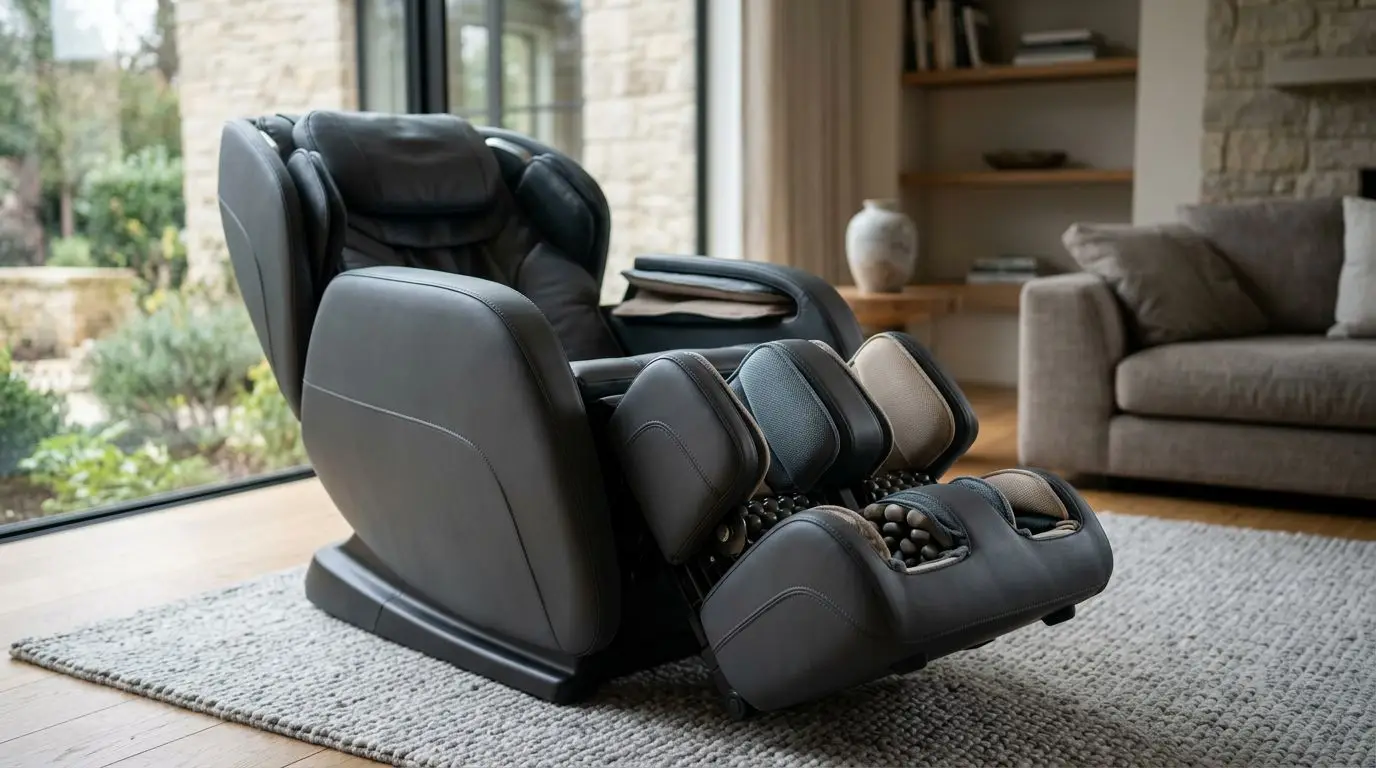
Foot Roller vs. Calf Kneading vs. Air Compression: Massage Chair Leg Features Explained
12 min read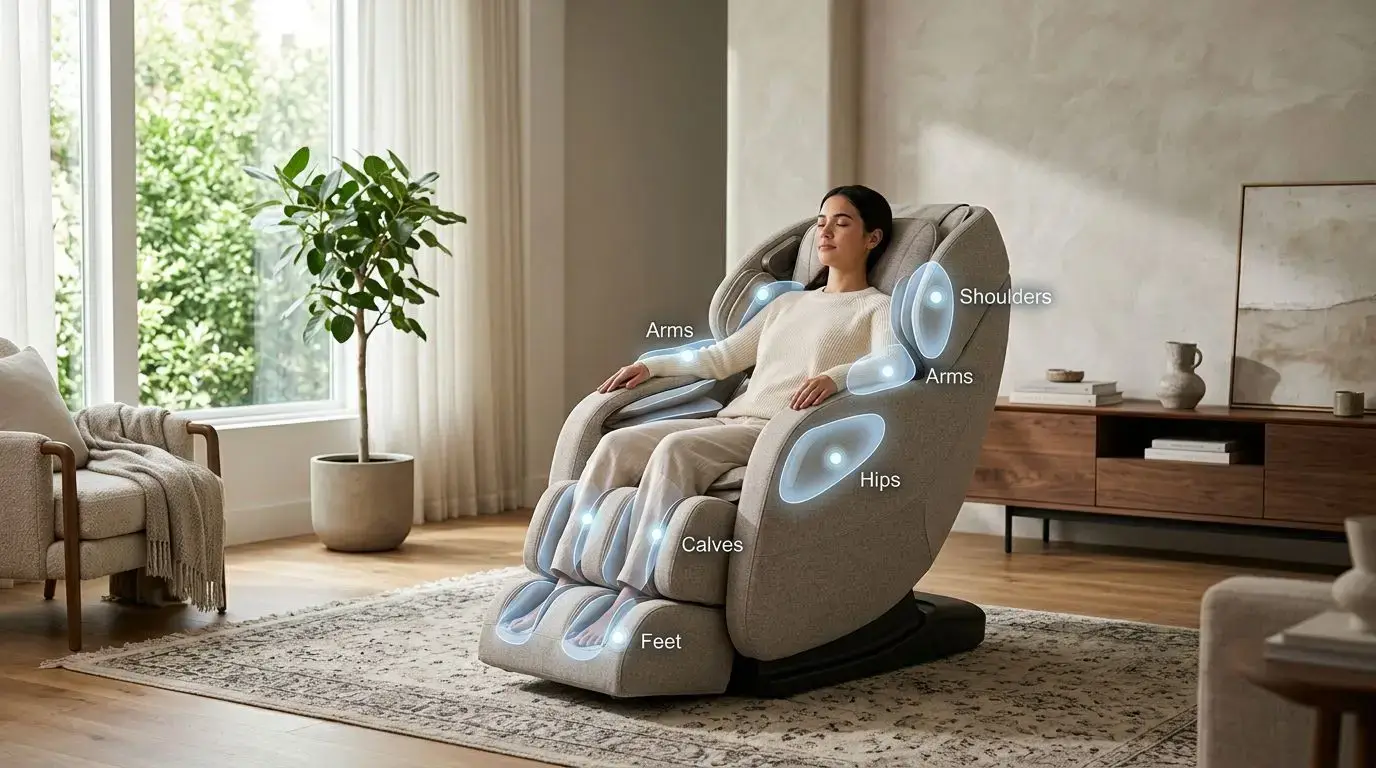
Air Compression Massage in Chairs: How It Works and Who It Helps Most
14 min read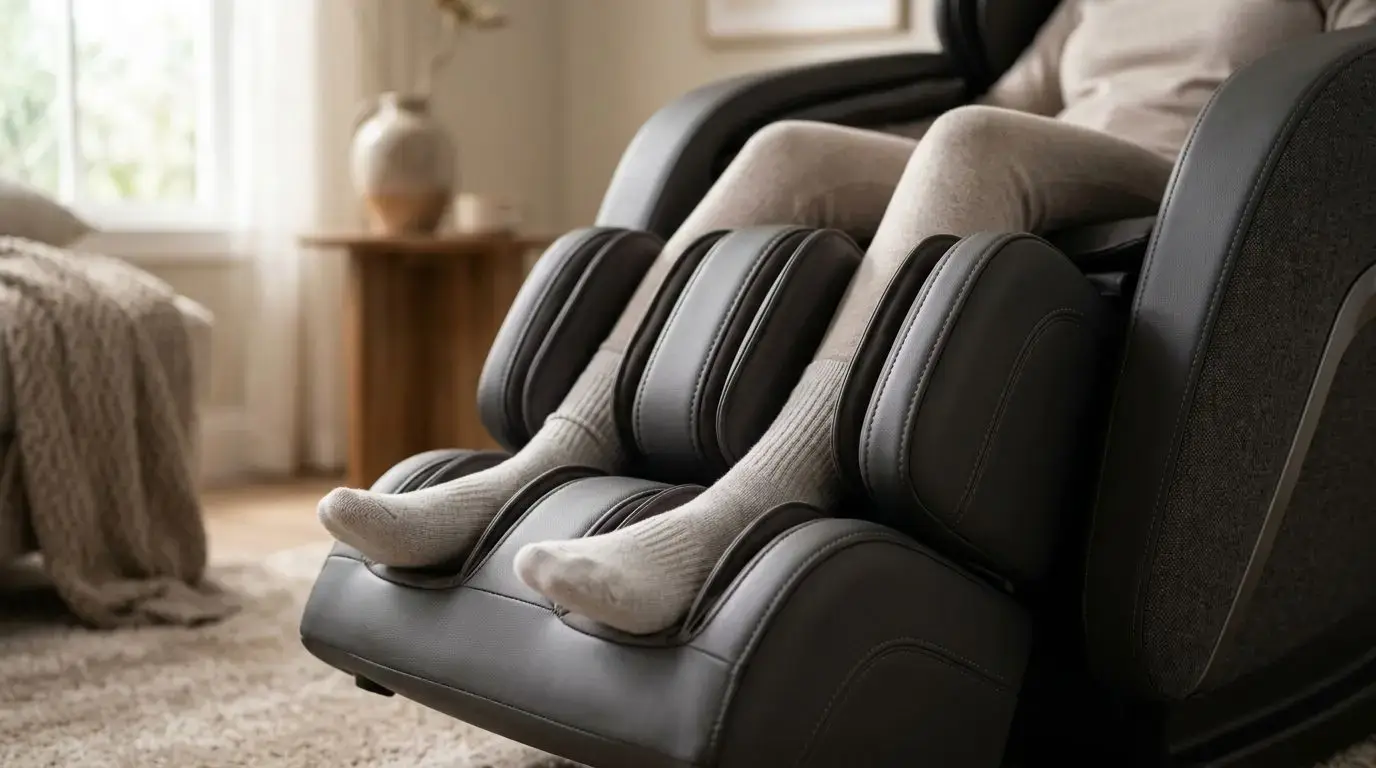
Foot and Calf Massage Chair Programs: When to Use Rolling, Kneading, and Air Compression
14 min read
Are Massage Chairs Good or Bad for You? Benefits, Risks, and Safe Use Guidelines
13 min read
Post-Workout Massage Chair Routine: Heat, Compression, and Recovery Settings
13 min read