Disclosure: We may earn a commission when you buy through links on this page, at no extra cost to you. We buy nothing, sell nothing and accept no payment for coverage — commissions never decide what we recommend. How we make money.
Massage chairs can be good for you when used conservatively: think 10 to 20 minutes per session, moderate intensity, and no pressure on painful or medically sensitive areas. They can also be bad for you if you use them too aggressively, for too long, or when you have certain health conditions that make deep pressure, heat, or compression unsafe.
The practical answer is this: a massage chair is a wellness tool, not medical treatment. For many shoppers, it can support relaxation, comfort, and recovery from everyday muscle tension. Cautious buyers should still pay close attention to fit, intensity, health history, and safe-use limits before deciding.
Good or bad? The 20-minute rule is a useful starting point
Most massage chair questions come down to dose. A short, comfortable session may leave your back, shoulders, or legs feeling looser; a 45-minute high-intensity session can leave the same person sore, irritated, or lightheaded. For everyday home use, many people do best with sessions in the 10- to 20-minute range.
That does not mean everyone should use a massage chair for 20 minutes on day one. If you are new to chair massage, start with 5 to 10 minutes on the lowest or second-lowest intensity. Notice how you feel right afterward and again the next day. Mild tenderness can happen, especially with firmer rollers, but sharp pain, bruising, numbness, dizziness, or pain that worsens after 24 to 48 hours is a signal to stop and reassess.
A massage chair is more likely to be good for you when it fits your body, lets you control pressure, and offers programs that do not force one aggressive routine. It is more likely to be bad for you when the rollers hit bone instead of muscle, the leg or foot compression squeezes too hard, or the chair encourages long sessions that feel intense rather than relaxing.
Benefits you can reasonably expect from 10- to 20-minute sessions
Massage chairs are popular because they make massage convenient. You do not have to schedule an appointment, drive across town, or coordinate with another person. For a cautious shopper, the realistic benefits are mostly related to comfort and wellness.
- Temporary relief from everyday muscle tension: Rollers can knead along the back and shoulders, while airbags may compress the arms, calves, or feet. This can feel helpful after sitting at a desk for 8 hours or standing through a long shift.
- Relaxation and stress downshifting: A quiet 15-minute routine may help some users unwind before bed or after work. The chair is not treating anxiety, but it can create a repeatable relaxation habit.
- Comfort during recovery from routine activity: After light exercise, yard work, or travel, gentle massage can be a pleasant way to loosen stiff-feeling areas. It should not be used to push through an injury.
- More consistent self-care: Because the chair is at home, a user may actually take 10 minutes to relax instead of postponing body care for weeks.
- Targeted convenience: Features such as lumbar heat, calf airbags, or foot rollers can focus on areas that commonly feel tight after work or commuting.
The important word is temporary. A massage chair may help you feel better for a while, but it should not be described as curing back pain, improving circulation in a medical sense, correcting posture, or replacing care from a licensed clinician. If you have persistent pain, weakness, swelling, or symptoms that travel down an arm or leg, get medical advice instead of trying to massage through it.
Risks and side effects to take seriously, especially after 24 hours
Massage chairs can create too much pressure. Unlike a human therapist, a chair cannot ask detailed follow-up questions, see your facial expression, or adjust instantly to a tender spot unless you use the controls. That makes your judgment important.
Common short-term side effects include muscle soreness, skin tenderness, fatigue, or a feeling that an area was overworked. These usually come from sessions that are too long, too firm, or repeated too often. If soreness lasts more than 24 to 48 hours, or if it feels sharp rather than achy, stop using the chair and consider speaking with a healthcare professional.
There are also specific risks to watch for:
- Bruising or irritation: Firm rollers, especially 3D-style rollers that protrude forward, can irritate sensitive tissue or press too hard over ribs, hips, or shoulder blades.
- Nerve irritation: Numbness, tingling, burning, or electric sensations are not normal massage feedback. Stop immediately if they occur.
- Heat sensitivity: Heated lumbar pads may feel soothing, but heat can be risky for people with reduced sensation or conditions that affect skin integrity.
- Compression concerns: Leg and foot airbags can feel intense. Anyone with a clotting history, significant swelling, vascular disease, or unexplained calf pain should ask a clinician before using compression features.
- Falls during entry or exit: Full-size chairs can be low, reclined, or bulky. Older adults and users with balance issues should pay attention to armrest height and the ease of standing up.
A simple test helps: a good session should feel comfortable enough that you can breathe normally and relax your shoulders. If you are bracing, holding your breath, or waiting for it to end, the intensity is too high.
Who it is best for, and who should ask a clinician first
A massage chair is best for generally healthy adults who want convenient relaxation, mild muscle comfort, and a consistent home routine. It may be especially useful for people who spend 6 to 10 hours a day sitting, commuters with stiff hips and backs, or workers whose legs feel tired after standing.
It is not automatically safe for every shopper. The following table is a decision tool, not a diagnosis.
| User situation | Massage chair fit | Safer approach |
|---|---|---|
| Desk worker with mild shoulder or low-back tightness | Often a good fit | Use low to medium intensity for 10 to 15 minutes |
| Frequent traveler with general stiffness | Often a good fit | Choose gentle stretching or air massage programs first |
| Older adult with balance concerns | Possible, but fit matters | Check seat height, arm support, and easy exit before buying |
| Pregnant user | Ask first | Get guidance from an obstetric clinician before using rollers, heat, or compression |
| Person with osteoporosis, recent surgery, fractures, implanted devices, clotting concerns, cancer treatment, or significant heart/vascular conditions | Medical clearance recommended | Do not use deep pressure, heat, or leg compression unless cleared |
| Person with unexplained pain, numbness, swelling, or weakness | Not a first step | Seek medical evaluation before using a chair |
If you are shopping for someone else, do not assume the chair is safe because it is marketed as relaxing. Ask about health conditions, mobility, sensitivity to pressure, and whether they can operate the remote without help. A chair that feels great to a 180-pound adult may feel overpowering to someone smaller, frailer, or recovering from a procedure.
Massage chair types compared: tracks, rollers, and compression features
Not all massage chairs feel the same. The design of the roller track and the way the rollers move can change whether a chair feels gentle, precise, or too forceful. Track length is often described in inches, and common full-back tracks may run roughly 28 to 53 inches depending on whether the chair massages only the back or continues under the seat.
| Type or feature | What it does | Best for | Watch-outs |
|---|---|---|---|
| S-track | Follows the curve of the spine from neck to lower back | Back-focused massage with a more traditional feel | Usually does not reach glutes or hamstrings |
| L-track | Extends from the back into the seat area | Users who want glute and upper hamstring coverage | May feel intense around the hips if alignment is poor |
| SL-track | Combines spinal curve tracking with seat extension | Broader coverage in one chair | Fit is important; taller or shorter users should test shoulder alignment |
| 2D rollers | Move up/down and side-to-side | Gentler, simpler massage | Less depth control |
| 3D rollers | Add in/out depth movement | Users who want adjustable pressure | Can be too firm if used at high depth |
| 4D-style rollers | Vary rhythm and speed in addition to depth | More varied massage routines | More settings can mean more trial and error |
| Air compression | Inflates airbags around limbs, shoulders, hips, or calves | Gentle squeezing sensation and full-body feel | Use caution with vascular, swelling, or clotting concerns |
| Heat | Warms areas such as the low back or calves | Comfort and relaxation | Avoid if you have reduced sensation or heat-sensitive skin |
For safety, adjustability matters more than having the longest feature list. Look for controls that let you reduce roller depth, turn off foot rollers, lower airbag intensity, skip heat, and stop the session quickly. A chair with 3 intensity levels may be enough if the lowest setting is truly gentle; a chair with 10 levels is not useful if even level 1 feels harsh.
How to choose and measure before you buy: 4 checks that prevent regret
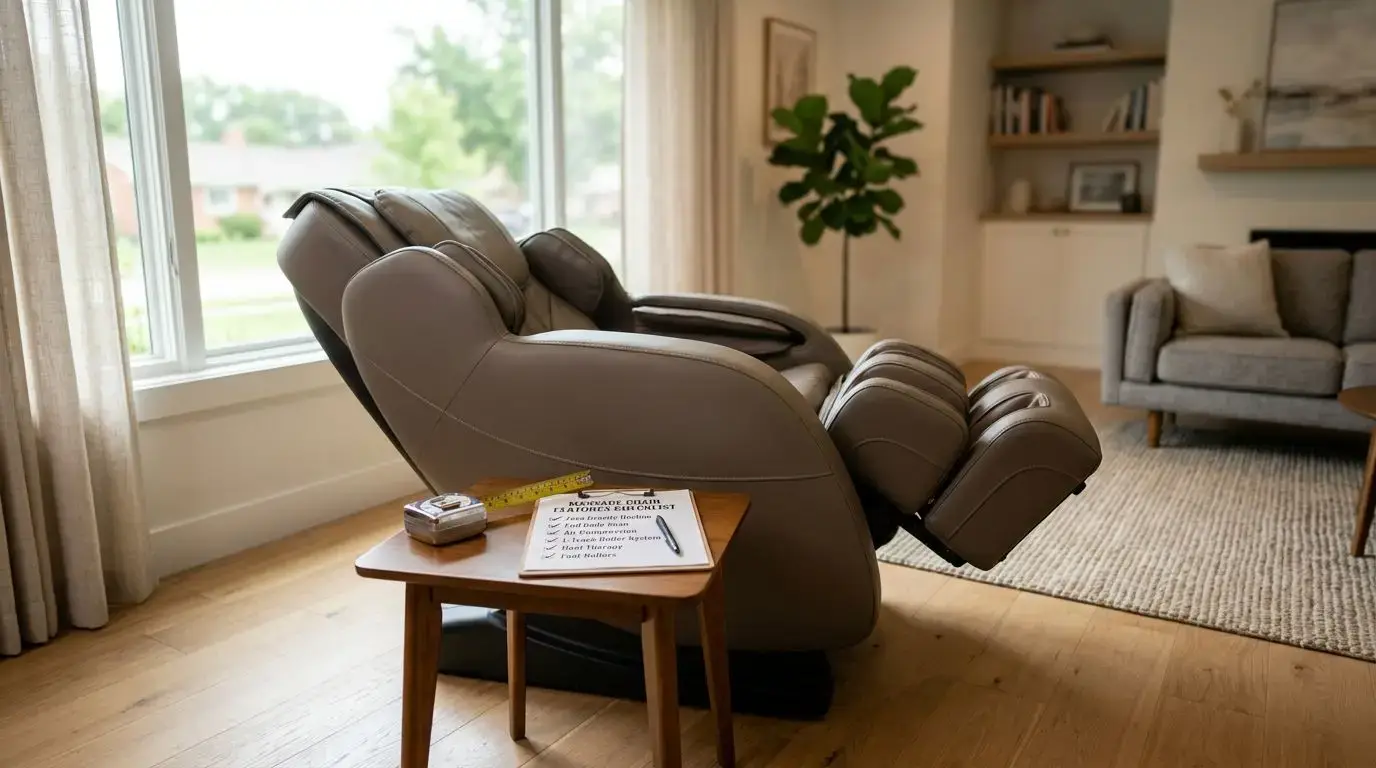
A massage chair can be good in theory and wrong in your room. Before buying, measure your body, doorway, and floor space. Many full-size chairs are large enough that a 30-inch doorway, a tight hallway turn, or a narrow stair landing can become a real delivery problem.
1. Measure the user, not just the room
Check the chair’s stated height range and weight capacity, then compare it with the primary user. Many chairs are built around average adult dimensions, and shoulder scanning systems are not perfect. If the rollers land above the shoulders or dig below the shoulder blades, the massage can feel awkward.
Also measure seated comfort. Seat width, calf well length, and footrest extension matter. A person with long legs may need an extending ottoman; a shorter person may need a chair that does not force the feet forward or lift the shoulders out of position.
2. Measure the delivery path
Measure the front door, interior doors, hallway turns, and the path to the final room. A doorway around 30 to 32 inches wide may be tight depending on chair packaging and whether the chair can be moved in sections. If stairs are involved, confirm delivery terms before you commit.
3. Measure recline and wall clearance
Some chairs need only 2 to 4 inches behind them because the base slides forward as it reclines. Others may need 10 to 18 inches or more. Measure the full reclined footprint, not just the upright footprint, and leave walking space around at least one side.
4. Match features to sensitivity
If you dislike deep tissue massage, do not choose a chair mainly because it has stronger rollers. If your calves are sensitive, prioritize adjustable or removable leg compression. If you want quiet evening use, ask about operating noise and test the chair in a low setting for at least 10 minutes when possible.
Safe use guidelines: start with 5 minutes, then build gradually
The safest massage chair routine is boring in the best way: low intensity, short duration, and gradual changes. Start with 5 minutes if you are new, then move toward 10 or 15 minutes if you feel fine the next day. Many users do not need more than one session per day.
- Use the lowest comfortable setting first. Increase intensity only after you know how your body responds.
- Keep early sessions short. Five to 10 minutes is enough for a first test, especially with rollers that reach the neck, hips, or feet.
- Do not chase pain. Pressure can feel strong, but it should not feel sharp, burning, electric, or sickening.
- Limit heat exposure. Use heat in short sessions and check skin comfort, especially if you are sensitive to temperature.
- Use compression carefully. Lower air intensity if your feet, calves, or arms feel trapped or squeezed too hard.
- Stay awake and alert. Do not use a chair while impaired by alcohol, sedatives, or exhaustion that makes you unable to respond to discomfort.
- Stop with unusual symptoms. Dizziness, chest discomfort, shortness of breath, numbness, swelling, or sudden pain are reasons to stop immediately.
Frequency depends on the user. Some people enjoy 10 minutes most evenings. Others do better with 2 or 3 sessions per week. If you feel increasingly sore, reduce the intensity, shorten sessions, or take several days off.
When a massage chair is a bad fit: red flags within the first 48 hours
A massage chair is not a good fit if it repeatedly causes pain, bruising, numbness, or anxiety about getting in and out. The first 48 hours after use are useful because they show whether the session was simply strong or genuinely irritating.
Red flags include pain that travels down the leg or arm, new weakness, swelling in one calf, headaches triggered by neck massage, bruises from normal settings, or soreness that interferes with sleep. Do not try to solve these by using the chair more often. More pressure is not a fix for poor fit or an underlying health issue.
There are alternatives. A handheld massager, heating pad used according to its instructions, stretching routine, walking break, ergonomic chair adjustment, or appointment with a licensed massage therapist may be a better option. If symptoms are persistent or unexplained, a medical evaluation is the safer first step.
For cautious shoppers, the best buying mindset is not “Will this chair fix me?” It is “Can I use this comfortably, safely, and consistently without aggravating anything?” That question leads to better decisions.
FAQ: practical answers before you sit for 15 minutes
Can I use a massage chair every day?
Many healthy adults can use a massage chair daily if sessions are short, comfortable, and not causing next-day soreness. A reasonable routine might be 10 to 15 minutes once a day on low or medium intensity. If you feel bruised, fatigued, or more painful after use, reduce frequency or stop.
Are massage chairs safe for lower back pain?
They may feel helpful for mild, everyday low-back tightness, but they are not a diagnosis or treatment. Avoid using a massage chair for severe back pain, pain after a fall, pain with fever, new numbness, weakness, or symptoms traveling down the leg unless a clinician says it is appropriate.
Is zero gravity positioning good or bad for you?
Zero gravity positioning reclines the chair and elevates the legs to spread body weight more evenly. Many users find it comfortable for a 10- to 20-minute session, but it may not suit people who feel dizzy when reclined, have reflux symptoms in that position, or struggle to get back upright.
Can a massage chair cause bruising?
Yes. Firm rollers, strong air compression, long sessions, or sensitive skin can lead to bruising. People who bruise easily or take blood-thinning medications should ask a healthcare professional before using deep pressure or strong compression features.
Should I choose stronger rollers for better results?
Not necessarily. Stronger is not automatically better. Adjustable pressure, accurate shoulder positioning, and a comfortable fit matter more than maximum intensity. A chair that you can use comfortably for 15 minutes is usually more useful than one that feels punishing after 3 minutes.
Frequently asked questions
Can I use a massage chair every day? +
Many healthy adults can use a massage chair daily if sessions are short, comfortable, and not causing soreness. Start with 5 to 10 minutes, then build toward 10 to 15 minutes if you feel fine the next day.
Are massage chairs safe for lower back pain? +
They may be comfortable for mild, everyday low-back tightness, but they should not be used as treatment for severe, unexplained, or radiating pain. Get medical advice for pain with numbness, weakness, fever, trauma, or symptoms traveling down the leg.
Can a massage chair be bad for you? +
Yes. A massage chair can be bad for you if the pressure is too strong, sessions are too long, the chair does not fit your body, or you have a condition that makes deep pressure, heat, or compression unsafe.
Who should ask a doctor before using a massage chair? +
People who are pregnant or who have osteoporosis, recent surgery, fractures, clotting concerns, significant swelling, vascular disease, implanted devices, cancer treatment, or unexplained pain should ask a clinician before use.
How long should a massage chair session last? +
For most new users, 5 to 10 minutes is a smart first session. Many regular users stay in the 10- to 20-minute range, using moderate intensity and stopping if pain, numbness, dizziness, or unusual symptoms appear.
Related guides
Can a Massage Chair Help With Lower Back Pain? Benefits, Settings, and Safety Tips
12 min read
Massage Chairs for Back Pain: When They May Help and When to Be Cautious
12 min read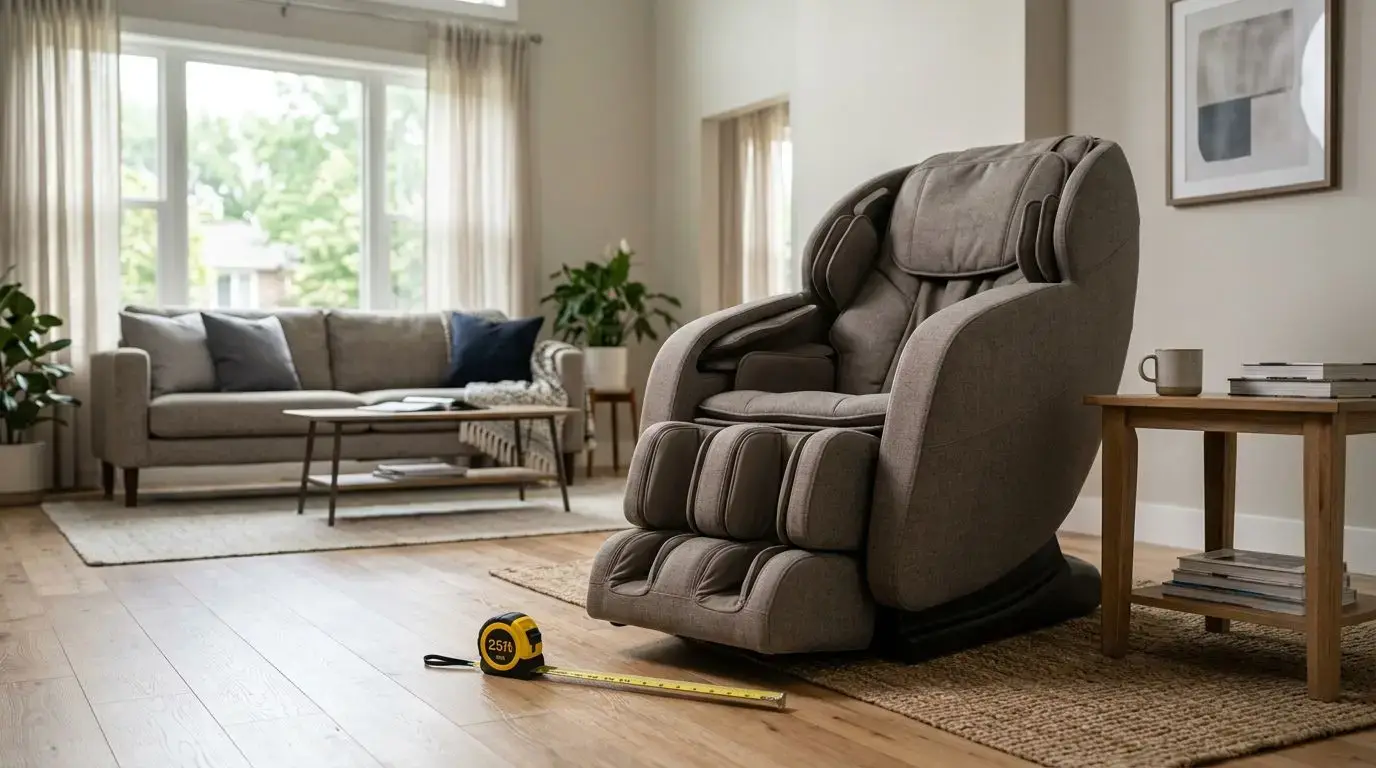
How to Choose a Massage Chair for Home Use
14 min read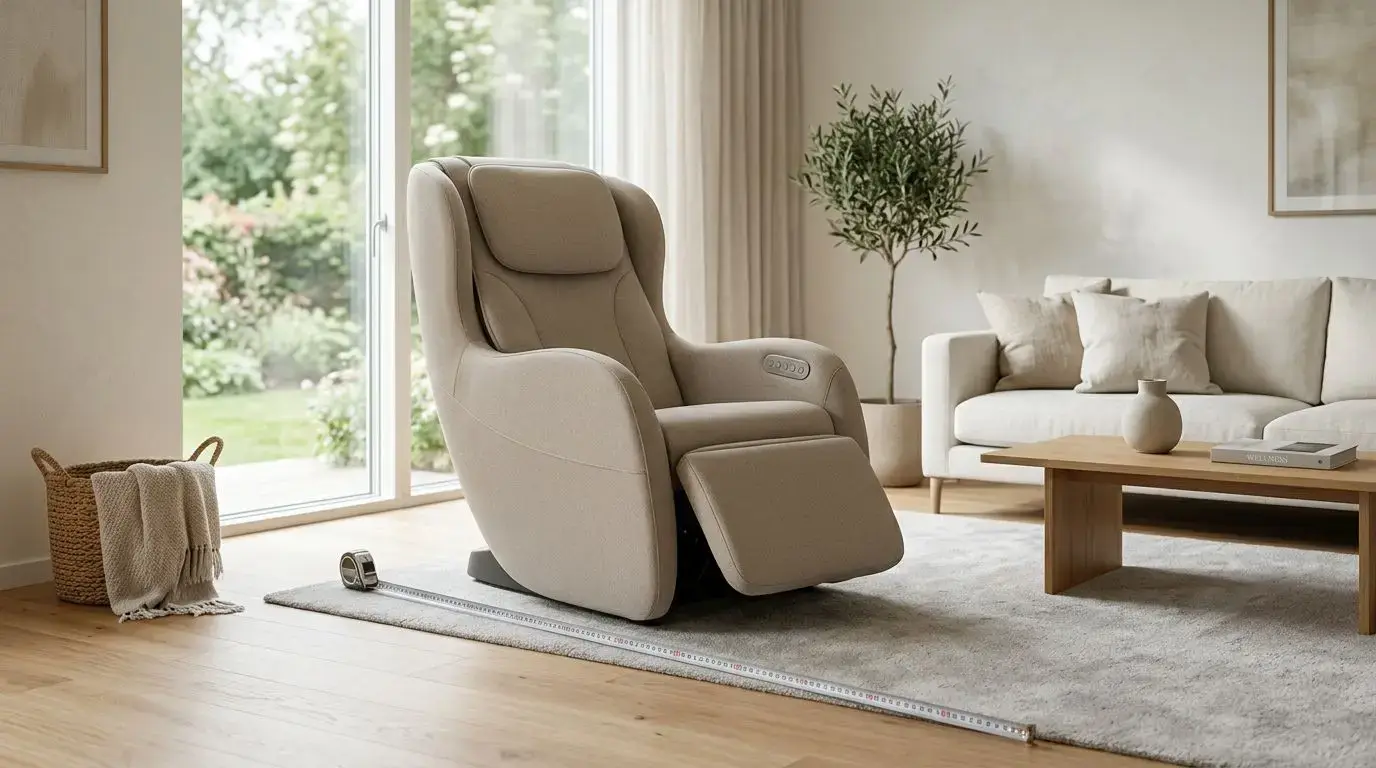
Is a Massage Chair Worth It? Benefits, Limitations, and Who Should Buy One
13 min read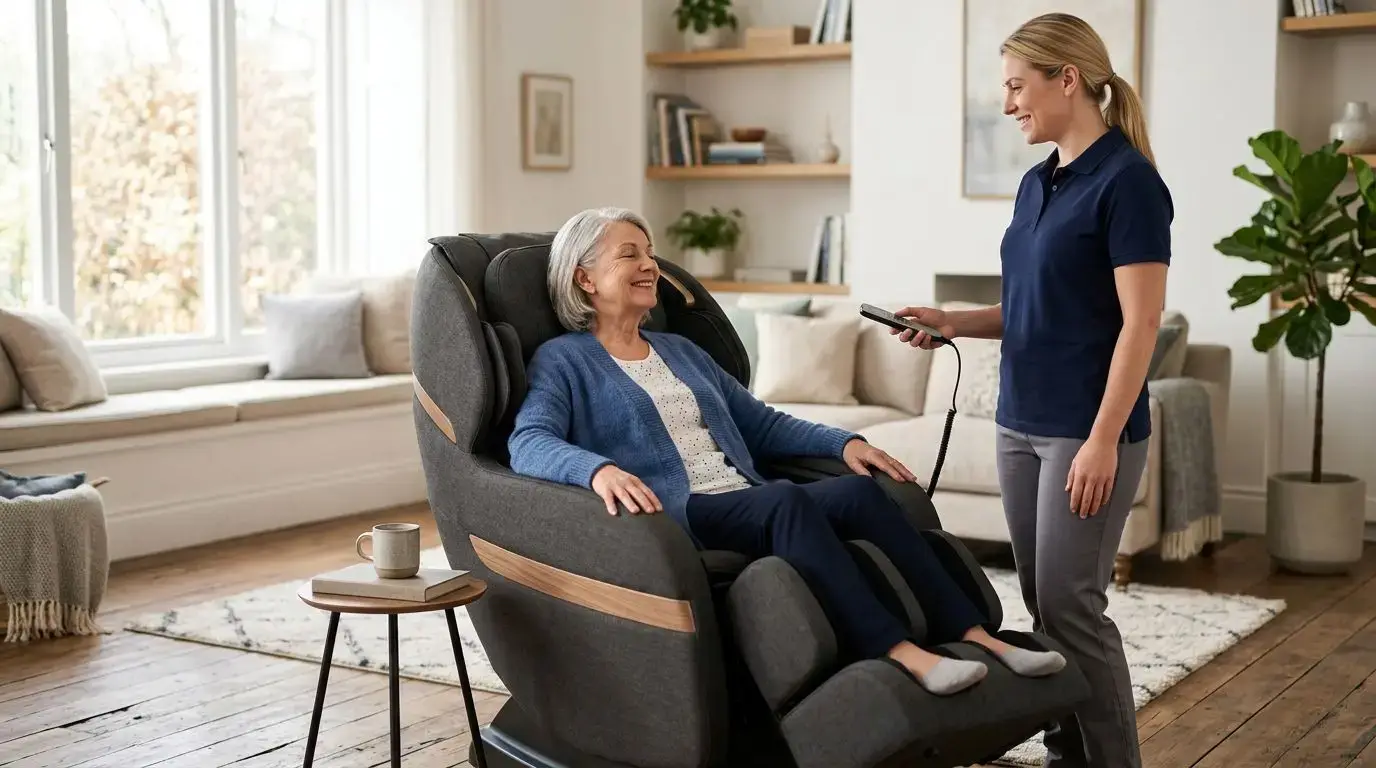
Massage Chairs for Seniors: Benefits, Comfort, and Safety Considerations
13 min read