Disclosure: We may earn a commission when you buy through links on this page, at no extra cost to you. We buy nothing, sell nothing and accept no payment for coverage — commissions never decide what we recommend. How we make money.
Massage chairs may help some people with mild to moderate back discomfort by easing muscle tension, promoting relaxation, and making short self-care sessions easier to repeat. They are not a cure for back pain, and they should not replace medical care when pain is severe, persistent, related to an injury, or accompanied by symptoms such as numbness, weakness, fever, or loss of bladder or bowel control.
The best candidates are people whose back pain feels muscular, stress-related, or stiffness-based, not sharp, worsening, or neurological. If you shop for one, focus less on flashy programs and more on fit, roller coverage, intensity control, heat placement, recline comfort, and whether you can use the chair safely for 10 to 20 minutes at a time.
Can a massage chair help back pain? The realistic 10- to 20-minute answer
A massage chair can be useful for certain types of back discomfort, especially tightness after sitting, standing, lifting, driving, or sleeping awkwardly. Most home massage chair sessions last about 10 to 20 minutes, which is long enough for many users to feel looser without overdoing pressure on sensitive tissue.
The main benefit is mechanical comfort, not medical correction. Rollers, airbags, heat, and recline can help relax overworked muscles around the upper back, mid-back, and lower back. Some people also find that a predictable evening routine helps them unwind, which may reduce the stress-related muscle guarding that often makes back pain feel worse.
Still, back pain has many causes. A chair cannot diagnose a disc problem, spinal stenosis, inflammatory condition, fracture, infection, or nerve compression. It also cannot strengthen weak muscles or improve workstation ergonomics on its own. Think of it as one tool in a broader plan that may include movement, sleep, stretching, posture changes, physical therapy, or professional medical advice.
A practical way to judge whether a chair is helping is to track simple outcomes for 2 weeks: pain level before and after use, sleep quality, stiffness the next morning, and whether daily activities feel easier. If sessions consistently leave you sorer for more than 24 hours, the intensity may be too high, or the chair may not be the right tool for your situation.
When to be cautious: 8 back pain warning signs
Massage feels harmless to many people, but pressure, heat, and aggressive kneading are not appropriate for every back problem. Use caution, pause use, and consider medical guidance if your symptoms do not behave like ordinary muscle soreness.
- Back pain after a fall, car accident, sports collision, or lifting injury.
- Pain that shoots below the knee, especially with numbness or tingling.
- New leg weakness, foot drop, or trouble walking normally.
- Loss of bladder or bowel control, or numbness in the groin or saddle area.
- Fever, unexplained weight loss, or feeling seriously ill with back pain.
- Known osteoporosis, recent fracture, spinal surgery, or implanted hardware.
- Active skin infection, open wounds, burns, bruising, or severe sensitivity on the back.
- Pain that is severe at rest or wakes you repeatedly at night.
These signs do not automatically mean something dangerous is happening, but they are reasons not to rely on a massage chair as your first step. A chair that presses firmly on the spine, hips, or ribs could aggravate certain conditions. Heat may also be a poor fit for acute inflammation, reduced sensation, or areas where you cannot accurately feel temperature.
If you are pregnant, have a pacemaker or other implanted device, take blood thinners, have a bleeding disorder, have advanced diabetes with reduced sensation, or have been told to avoid massage, ask a qualified clinician before use. The same applies after surgery; clearance timelines vary widely, and 6 weeks is not a universal rule.
Who it is best for: 5 common back discomfort patterns
A massage chair is most likely to be useful when the discomfort is predictable, mechanical, and muscular. It should feel like tension or stiffness rather than sharp, electric, or progressively worsening pain.
1. Desk-related upper back tightness
People who sit 6 to 8 hours a day often carry tension between the shoulder blades and along the neck-shoulder area. A chair with upper-back roller coverage, shoulder airbags, and adjustable intensity may help these users relax after long computer sessions.
2. Lower back stiffness after standing
Retail, healthcare, warehouse, teaching, and service jobs can leave the low back feeling compressed by the end of a shift. A chair with lumbar rollers, gentle heat, and recline can be more relevant than a model that focuses only on the neck and shoulders.
3. General muscle tension from stress
Stress can cause protective muscle tightening. For these users, the relaxation routine may matter as much as the massage mechanism. A 15-minute program at low to medium intensity is often more sustainable than a deep program used once and then avoided.
4. Post-workout soreness
Delayed muscle soreness after exercise is common, especially 24 to 48 hours after a hard session. Gentle massage may feel good, but it should not be used to mask sharp pain, swelling, or a suspected strain.
5. People who will use it consistently
The best chair is not the most complicated one. It is the one that fits your body and home well enough that you will actually use it several times per week without dreading the pressure.
Massage chair types compared: 2D, 3D, 4D, S-track, L-track, and SL-track
Back-pain shoppers often get stuck on technology terms. The important question is simple: where do the rollers travel, and how much control do you have over pressure? The table below compares common chair types without tying them to any brand or model.
| Type or feature | What it means | Back pain relevance | Best fit |
|---|---|---|---|
| 2D rollers | Rollers move up and down and side to side | Usually simpler and less intense | Users who want basic back relief |
| 3D rollers | Rollers also move inward and outward | Allows stronger or lighter pressure adjustment | Mixed households with different tolerance levels |
| 4D rollers | 3D-style depth plus variable rhythm or speed patterns | Can feel more human-like, but not always gentler | Users who want more fine-tuning |
| S-track | Roller track follows the curve from neck to lower back | Good for spinal contouring through the back | Upper and mid-back focus |
| L-track | Track continues under the seat toward the glutes | May help users whose low-back discomfort is tied to hip and glute tightness | Lower back and seat-area tension |
| SL-track | Combines spinal curve coverage with an extended seat track | Broadest common roller path | Whole-back coverage shoppers |
A longer track is not automatically better for every person. If your discomfort is mostly between the shoulder blades, a well-fitted S-track may matter more than an extended seat track. If your pain sits low near the beltline or hips, an L-track or SL-track may be worth considering because it can address surrounding glute tissue that often contributes to low-back tightness.
Intensity matters just as much. A strong roller that feels impressive for 2 minutes may be too much for a 15-minute routine. Look for multiple intensity levels, the ability to reduce roller depth if available, and manual controls that let you stay on one area briefly without forcing a full-body program.
Feature comparison: what matters most for back pain in a 15-minute session
Many massage chairs list dozens of features, but only a handful directly affect back comfort. Use this table to separate helpful functions from nice-to-have extras.
| Feature | Why it can help | What to check before buying |
|---|---|---|
| Adjustable roller intensity | Lets you reduce pressure on sensitive days | At least low, medium, and high options are useful |
| Body scan | Estimates shoulder height and back shape | Confirm you can manually adjust if the scan misses |
| Lumbar heat | May make tight low-back muscles feel more relaxed | Heat placement should match your pain area |
| Zero-gravity recline | Reclines the body to distribute weight and reduce perceived pressure | Test whether the angle feels comfortable for your low back |
| Manual zone control | Targets one section such as upper back or lumbar area | Avoid chairs that only offer preset programs |
| Air compression | Uses airbags around shoulders, hips, arms, calves, or feet | Helpful for relaxation, but not a substitute for back rollers |
| Stretch program | Uses recline and airbags to create a pulling sensation | Start gently; aggressive stretch can irritate sensitive backs |
For back pain, the most valuable features are usually adjustability and fit. Heat, recline, and air compression can improve comfort, but they cannot make up for rollers that hit the wrong place or a chair that is too large or too small for your body.
Foot rollers, Bluetooth speakers, decorative lighting, and app controls may be pleasant, but they should not drive the purchase if your main goal is back comfort. A quiet motor and easy remote can matter more in daily use than a long list of programs you never touch.
How to choose and how to measure: 7 numbers to check before buying
Fit is a back-pain issue. A massage chair that misses your lumbar area by 3 inches or presses into your shoulder blades at the wrong angle can feel uncomfortable no matter how advanced it is.
- User height range: Check the recommended range and compare it with the tallest and shortest likely users.
- Weight capacity: Many full-size chairs list limits around the mid-200s to low-300s in pounds, but you should verify the exact rating before purchase.
- Seat width: Measure across your hips while seated. Add a little room so hip airbags do not pinch.
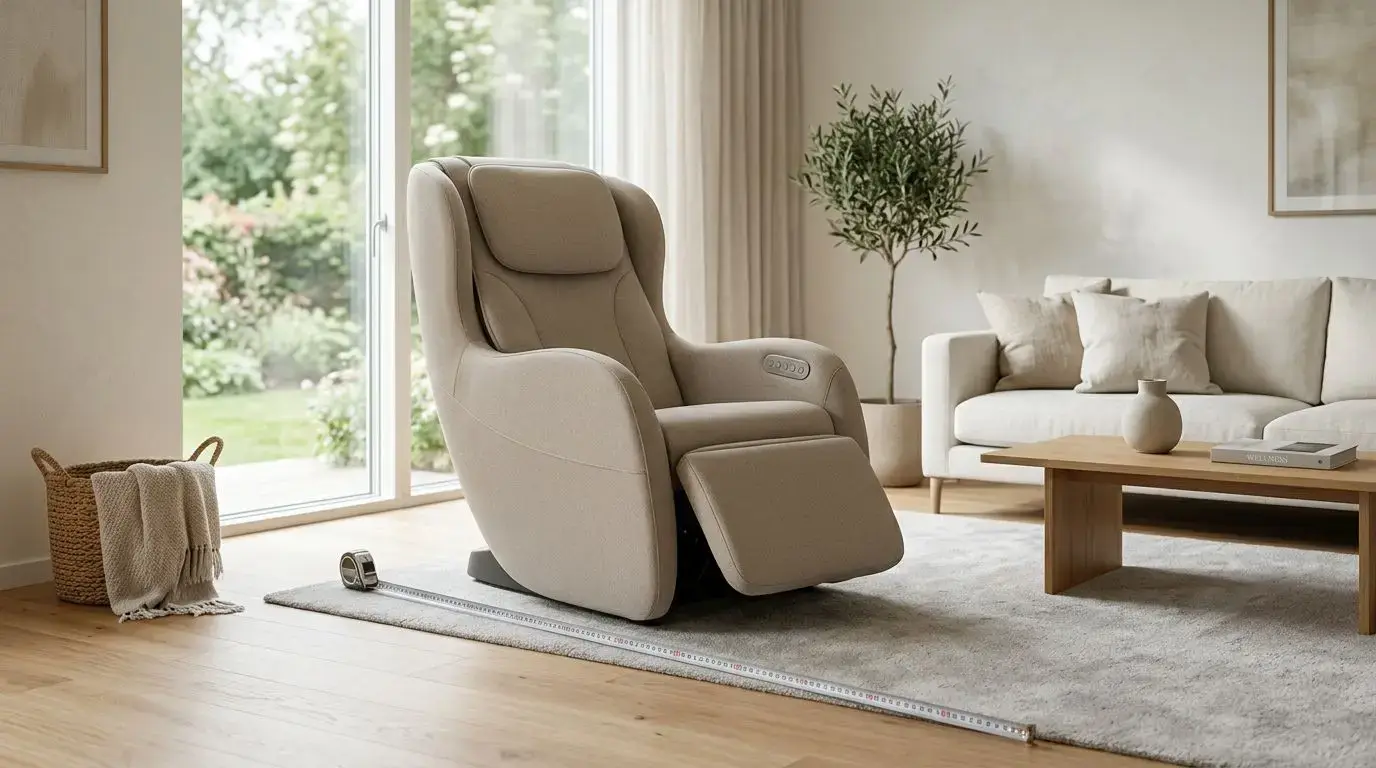
- Chair width: Full-size chairs often measure roughly 29 to 36 inches wide, so check doorways, hallways, and stair turns.
- Recline length: A reclined chair may need 60 to 75 inches of floor length, depending on design.
- Wall clearance: Some space-saving recliners need only a few inches behind them, while others need much more.
- Chair weight: Large massage chairs can weigh well over 150 pounds, so plan delivery, room placement, and future moves.
Measure the path into your home, not just the room. A chair that fits in a den may still be impossible to move through a tight 30-inch doorway if the packaging is bulky. Check whether parts detach, whether threshold delivery or in-room placement is offered, and whether stairs add complications.
Then think about your body dimensions. Sit against a wall and mark the height of your shoulders and the curve of your lower back. When comparing chairs, look for manual shoulder adjustment and lumbar targeting so the rollers can meet your actual anatomy rather than an average body map.
If possible, test a chair for a full 10 minutes, not just a quick sit. The first minute can feel impressive; by minute 8, you will know whether the rollers are soothing, tolerable, or too aggressive.
Safe use guidelines: start with 10 minutes and low intensity
Start conservatively, especially if you are buying a chair because your back already hurts. Use low intensity for about 10 minutes during the first few sessions. If you feel good later that day and the next morning, gradually work up to 15 or 20 minutes.
Avoid using the strongest setting on the same area every day. Soft tissue can become tender from repeated pressure, particularly around the spine, ribs, and shoulder blades. More pressure is not always better. The goal is to feel looser and calmer after the session, not bruised.
Keep a thin layer of clothing between your skin and the chair. Do not fall asleep with heat on. Do not use a massage chair when impaired by alcohol, sedating medication, or anything that makes it hard to judge pain and temperature accurately.
If you notice increased radiating pain, tingling, numbness, dizziness, nausea, headache, or unusual soreness, stop the session. If symptoms persist, get medical advice rather than trying to press through with a different program.
Lower back vs upper back pain: which chair features line up with each area?
Lower and upper back discomfort often need different priorities. A chair can be excellent for one and mediocre for the other, even when the spec sheet looks impressive.
For lower back discomfort, prioritize lumbar roller coverage, an extended track if hip and glute tightness is part of the pattern, gentle heat in the lower back, and recline that does not create a pinching feeling at the beltline. Users with very sensitive low backs should be able to reduce intensity or place a folded towel behind the lumbar area for a softer start.
For upper back discomfort, prioritize accurate shoulder detection, manual height adjustment, neck and shoulder coverage, and a track shape that follows the thoracic curve. If the rollers ride too high into the neck or too wide across the shoulder blades, the massage may feel irritating instead of relaxing.
For mid-back tension, look for zone controls. Being able to pause or repeat a section for 2 or 3 minutes can be more useful than a long automatic routine that spends little time where you actually hurt.
What a massage chair cannot do: 4 important limitations
A massage chair can be part of a comfort routine, but it has limits. Knowing those limits helps you avoid overspending or delaying care when something more serious is going on.
- It cannot diagnose the cause of back pain.
- It cannot reverse structural spine conditions.
- It cannot replace strengthening, mobility work, ergonomic changes, or professional treatment when those are needed.
- It cannot guarantee pain relief, even if the features sound advanced.
Back pain often improves when several small changes work together. For example, a person who sits 8 hours a day may need a better chair setup, walking breaks, core and hip strengthening, improved sleep, and occasional massage. The massage chair may help with comfort, but it is rarely the whole answer.
FAQ: 5 common questions about massage chairs and back pain
Are massage chairs good for lower back pain?
They may help lower back discomfort that feels muscular, tight, or stiffness-based, especially when used gently for 10 to 20 minutes. They are not appropriate as the only response to severe, radiating, injury-related, or worsening low-back pain.
Can a massage chair make back pain worse?
Yes. Excessive pressure, poor roller fit, aggressive stretching, or long sessions can aggravate sensitive tissue. Stop if pain increases, spreads down the leg, causes numbness, or lasts into the next day.
Is heat important for back pain relief?
Heat can make tight muscles feel more relaxed for some users, especially in the lumbar area. Avoid heat on areas with reduced sensation, acute swelling, open skin, or when a clinician has advised against it.
How often should I use a massage chair for back pain?
Many users start with 10 minutes, 3 or 4 times per week, then adjust based on comfort. Daily use may be fine for some people at low intensity, but soreness is a sign to reduce time, pressure, or frequency.
Should I choose an L-track or S-track for back pain?
Choose based on where you need coverage. An S-track can work well for neck through lower-back contouring, while an L-track or SL-track may be better if hip and glute tightness contribute to low-back discomfort.
Frequently asked questions
Are massage chairs good for lower back pain? +
They may help lower back discomfort that feels muscular, tight, or stiffness-based, especially when used gently for 10 to 20 minutes. They should not be the only response to severe, radiating, injury-related, or worsening low-back pain.
Can a massage chair make back pain worse? +
Yes. Excessive pressure, poor roller fit, aggressive stretching, or long sessions can aggravate sensitive tissue. Stop if pain increases, spreads down the leg, causes numbness, or lasts into the next day.
Is heat important for back pain relief? +
Heat can make tight muscles feel more relaxed for some users, especially in the lumbar area. Avoid heat on areas with reduced sensation, acute swelling, open skin, or when a clinician has advised against it.
How often should I use a massage chair for back pain? +
Many users start with 10 minutes, 3 or 4 times per week, then adjust based on comfort. Daily use may be fine for some people at low intensity, but soreness is a sign to reduce time, pressure, or frequency.
Should I choose an L-track or S-track for back pain? +
Choose based on where you need coverage. An S-track can work well for neck through lower-back contouring, while an L-track or SL-track may be better if hip and glute tightness contribute to low-back discomfort.
Related guides
Can a Massage Chair Help With Lower Back Pain? Benefits, Settings, and Safety Tips
12 min read
How to Use a Massage Chair for Lower Back Tightness
13 min read
Are Massage Chairs Good or Bad for You? Benefits, Risks, and Safe Use Guidelines
13 min read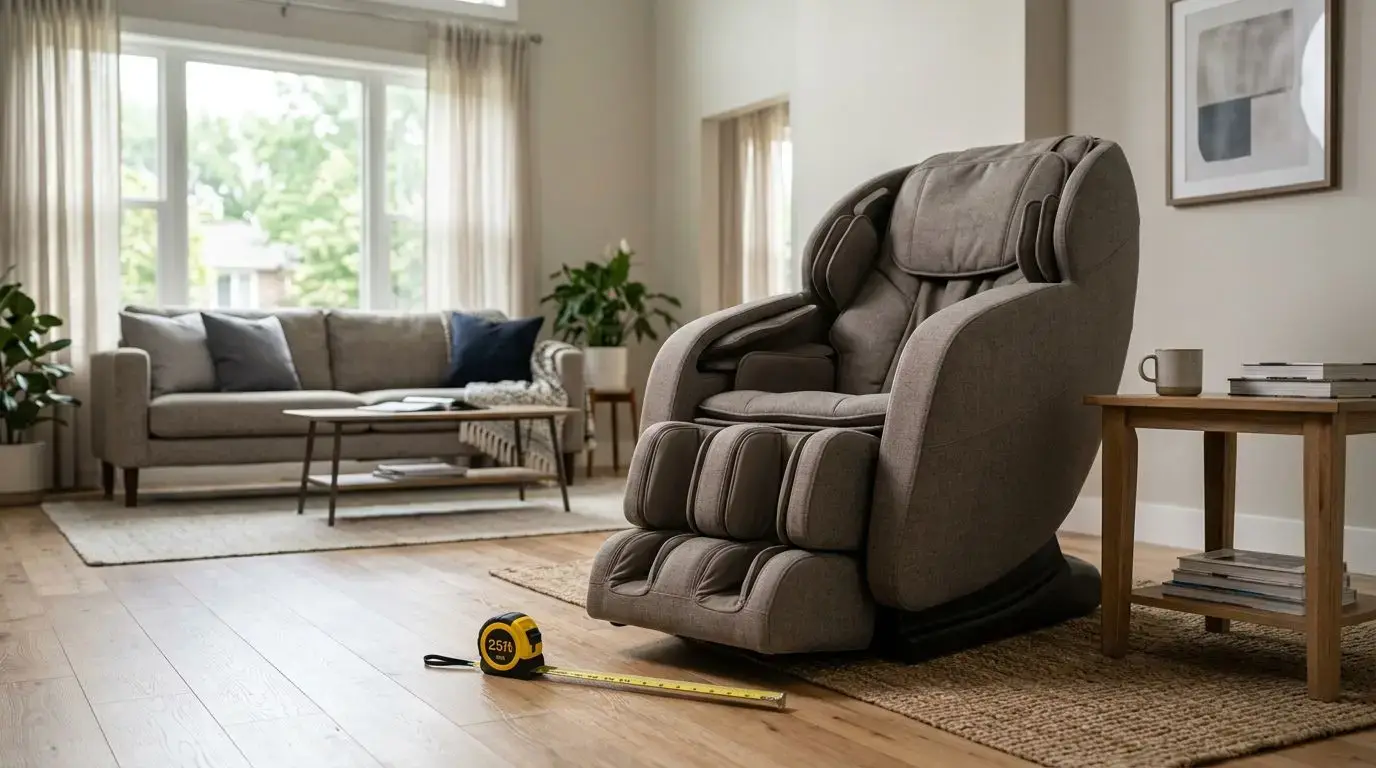
How to Choose a Massage Chair for Home Use
14 min read
Massage Chair vs. Physical Therapy or Chiropractic Care: What Each Can and Can’t Do
13 min read