Disclosure: We may earn a commission when you buy through links on this page, at no extra cost to you. We buy nothing, sell nothing and accept no payment for coverage — commissions never decide what we recommend. How we make money.
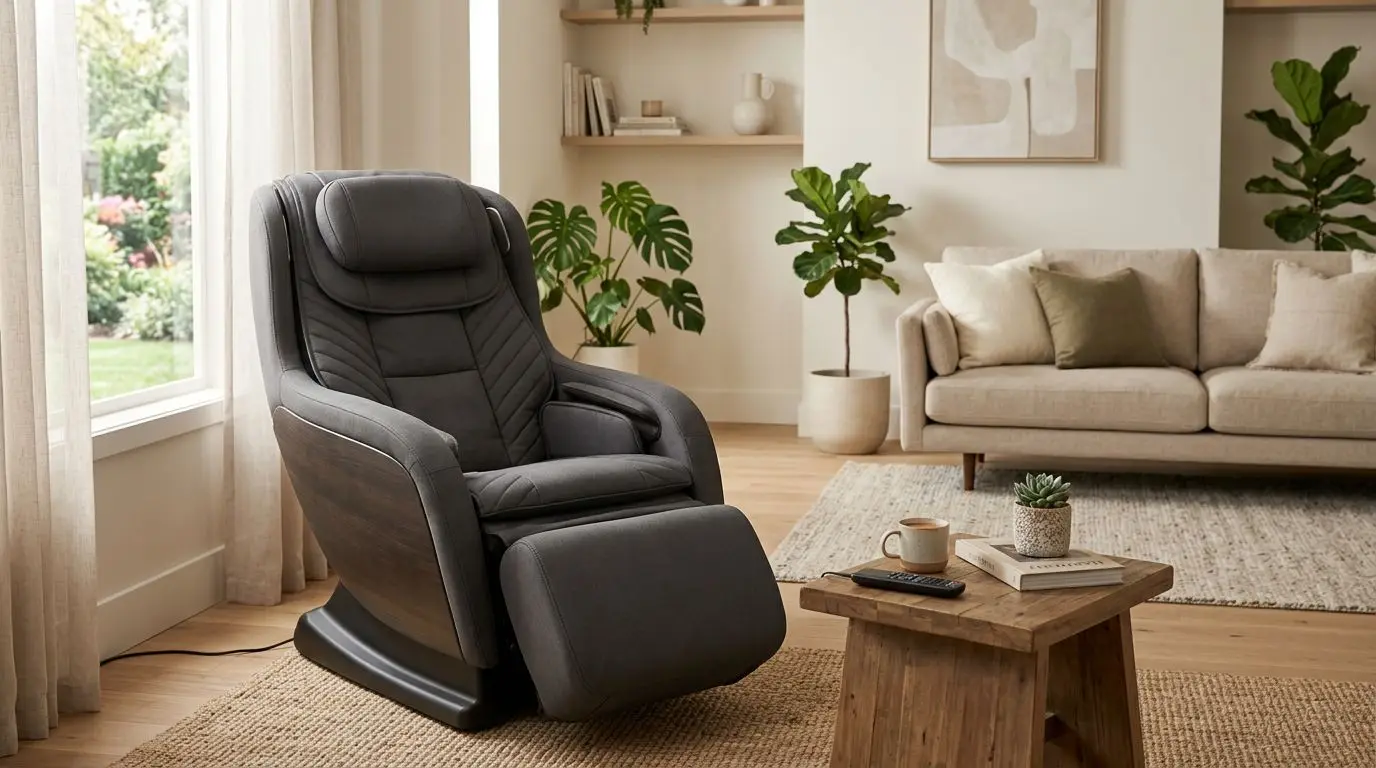
To use a massage chair for lower back tightness, sit fully back in the chair, begin with a 10- to 15-minute session, and choose a low-back, lumbar, or gentle full-back program before raising the intensity. A slight recline, targeted roller zone, and optional heat can make the pressure feel more focused and comfortable without overdoing it.
The goal is not to force your back into submission. It is to set the chair so the rollers reach the right area, the recline supports your body weight, and the program feels steady rather than sharp.
Safety check before your first 10-minute session
A massage chair is a consumer wellness product. It is designed to provide pressure, movement, warmth, and body support, but it is not a medical device and should not replace medical advice.
Ask your physician before using a massage chair if you are pregnant, have a pacemaker or other implanted cardiac device, have a history of blood clots, take anticoagulant medication, have osteoporosis, recently had a fracture or surgery, have spinal disc problems, have neuropathy, or have uncontrolled hypertension. These are not minor footnotes. Roller pressure, recline, vibration, heat, and leg compression may not be appropriate for everyone.
Stop the session if you feel sharp pain, numbness, tingling that is new for you, dizziness, unusual shortness of breath, or pressure that feels wrong rather than simply firm. A chair should feel supportive and controlled. It should not feel like a test of endurance.
Set your body position first: 3 contact points matter
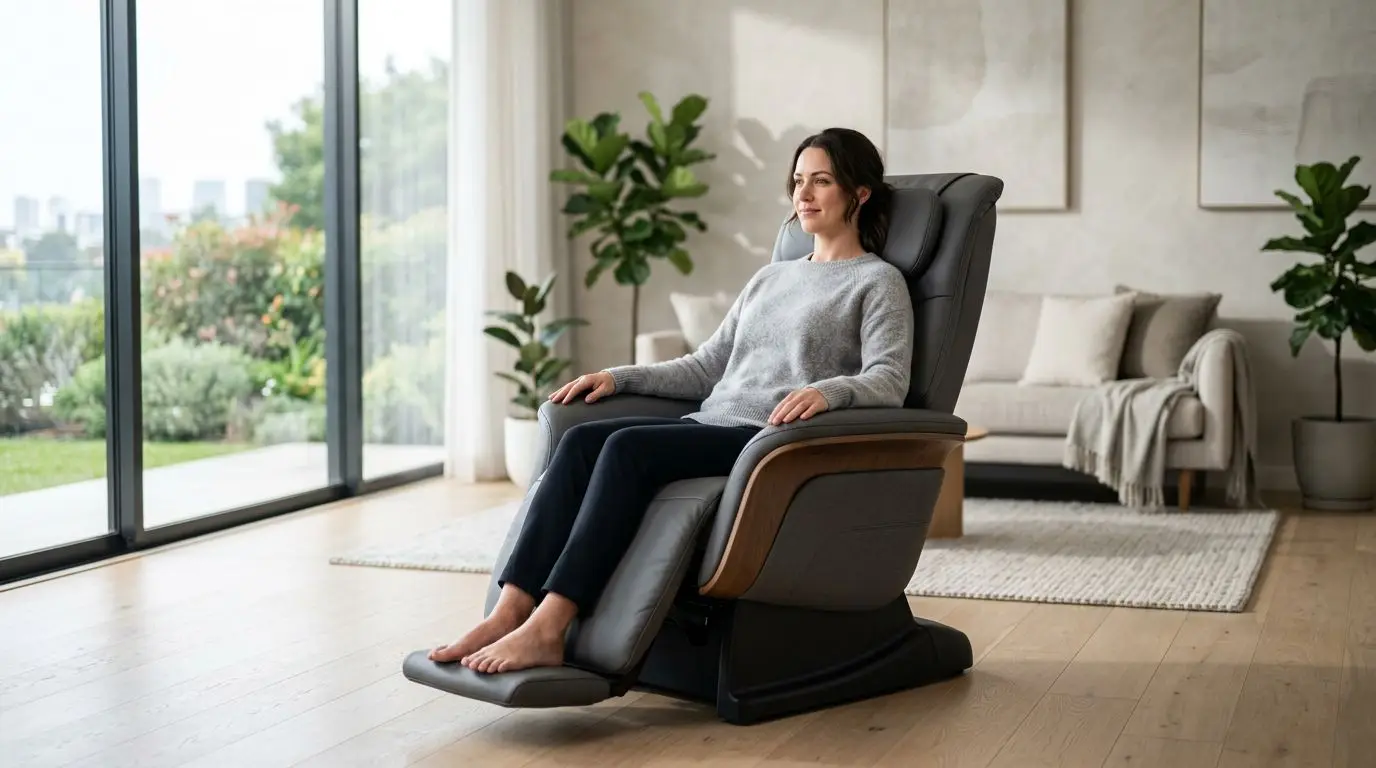
Good lower-back comfort starts before the rollers move. Aim for three contact points: hips against the backrest, shoulders relaxed against the chair, and feet supported by the footrest or floor. If your hips are scooted forward even 2 or 3 inches, the lumbar rollers may land too high or press into the wrong curve of your back.
Sit down and slide your pelvis all the way back. Let your low back rest naturally against the back pad without arching hard. Keep your knees slightly bent and your feet flat in the footwell if your chair has one. If the footrest is too long or too short, adjust it before starting the program because leg position changes how your pelvis sits.
For many adults, the lower back area the chair is trying to contact sits roughly between the top of the pelvis and the lower ribs. If the chair has a body scan, let it finish before making manual adjustments. Body scans are not perfect, but they give the rollers a starting map of your shoulder height and back length.
If the scan places the rollers too high, use the manual roller-position controls to move them down into the lumbar area. If the chair allows zone massage, set the zone to the lower third of the back rather than the whole back. A smaller zone often feels more precise.
Choose the right recline angle: start around 110 to 130 degrees
Recline changes pressure. When the chair is upright, less body weight rests into the rollers. When the chair reclines, more of your torso settles back, which usually makes roller contact feel stronger. For lower back tightness, a moderate recline often works better than going fully flat right away.
A practical starting point is about 110 to 130 degrees between your torso and thighs. That means you are reclined, but not lying back as far as the chair can go. This angle usually lets the lower back make consistent contact with the rollers while keeping the pressure easier to manage.
If your chair has a zero-gravity-style position, try the first or gentlest level before the deeper setting. These positions typically raise the legs and recline the torso, which can make the back feel more supported. For some people, that support feels excellent. For others, it makes the lumbar rollers too intense. Treat it as an adjustment, not a requirement.
Use this quick guide:
| Position | Typical feel | Best use |
|---|---|---|
| Upright, about 100 degrees | Lighter roller pressure | First-time users or sensitive backs |
| Moderate recline, 110 to 130 degrees | Balanced pressure and support | Most lower-back comfort sessions |
| Deep recline or zero-gravity-style setting | Stronger back contact | Experienced users who want more intensity |
If the chair feels too aggressive, come up a few degrees before lowering the intensity. Recline is often the simplest pressure control.
Pick the roller zone: focus on 4 to 8 inches of the low back
For lower back tightness, more coverage is not always better. A full-back program can feel good, but it may spend only a short amount of time where you want it. A lower-back zone program keeps the rollers in a smaller area, often around 4 to 8 inches tall, so the sensation is more consistent.
Use the manual controls if your chair offers them. Move the rollers to the area that feels tight, then choose a fixed-point or zone function. Fixed-point keeps the roller movement at one height, while zone mode travels a short distance above and below that point. For most people, zone mode feels more natural because the rollers are not pressing the exact same spot for the entire session.
Track shape also matters. Different chairs cover the body in different ways:
| Track type | Approximate coverage | Lower-back feel | Good to know |
|---|---|---|---|
| S-track | Often neck to low back | Contours along the spine curve | Good back focus, less seat coverage |
| L-track | Often neck to glutes | Can continue below the low back into the seat | Useful if you want pressure around the pelvis and upper glute area |
| SL-track | Often combines S-shaped back contour with L-style seat reach | Broad coverage from upper back to glutes | Common in full-body chairs with extended coverage |
If you have an L-track or SL-track chair, do not assume the longest range is always best. For a tight lower back sensation, you may prefer the rollers to stay above the seat line rather than travel deep into the glute area. Use the zone controls to narrow it down.
Start with gentle programs: 10 to 15 minutes beats 30 minutes
Massage chairs often offer automatic programs with names like relax, stretch, full body, back, or lumbar. Names vary, but the useful differences are intensity, roller pattern, airbag use, recline, and how much time is spent in the lower back area.
For a first session, choose a gentle back or lumbar program and keep it to 10 to 15 minutes. Even if the chair allows 30 minutes, a shorter session helps you judge how your back feels afterward. You can always run another short session later, but you cannot undo pressure that was too strong for too long.
Here is a practical way to compare common program types:
| Program type | Typical duration | Pressure feel | Best for |
|---|---|---|---|
| Gentle or relax | 10 to 20 minutes | Lighter, slower, more even | New users and sensitive lower backs |
| Low-back or lumbar | 10 to 15 minutes | More focused in the lower third of the back | Targeted back comfort |
| Full back | 15 to 20 minutes | Moves from upper to lower back | General back coverage |
| Stretch-style | 10 to 20 minutes | May use airbags and recline changes | People who like a pulled, lengthened sensation |
| Deep tissue-style | 10 to 20 minutes | Firm and concentrated | Experienced users only; not the best starting point |
If the low-back program feels too pointed, switch to gentle or full-back. If full-back feels pleasant but misses the lumbar area, use manual zone mode after the automatic program ends.
Use heat carefully: 5 minutes to warm up, not maximum heat
Heat in massage chairs is usually located in the backrest, seat, or calf area, depending on the chair. For lower-back comfort, backrest or lumbar heat is the most relevant. It is designed to add warmth to the contact area, which many people find soothing alongside roller movement.
Turn heat on for the first 5 minutes and keep the roller intensity low to moderate. This gives you time to see how warm the chair becomes. Some chairs feel mildly warm; others can feel hot through thin clothing. Wear a T-shirt or light layer rather than using heat directly against bare skin.
Avoid falling asleep with heat on. Also avoid heat if your physician has told you to limit heat exposure or if you have reduced sensation in the area, since it may be harder to judge temperature accurately. If warmth feels uncomfortable, turn it off and continue with rollers only.
Heat is not required. A well-positioned lower-back zone with moderate pressure can feel good without it. Think of heat as a comfort setting, not the main event.
Dial in intensity: use 1 adjustment at a time
Most chairs give you several ways to adjust intensity: roller strength, recline depth, airbag pressure, speed, width, and sometimes a removable back pad. Change only one setting at a time, then give your body 30 to 60 seconds to judge the difference.
If the rollers feel too strong, try these adjustments in order:
- Raise the backrest slightly to reduce body weight on the rollers.
- Lower the roller intensity by 1 level.
- Use a gentler program or slower roller speed.
- Add or reposition the removable back pad if your chair includes one.
- Move from fixed-point pressure to a small zone.
If the rollers feel too light, recline a little farther, remove an extra pad if the chair is designed that way, or increase intensity by 1 level. Do not jump from the lowest setting to the highest. Small steps make it easier to find the comfortable range.
Roller width is another useful control. A narrower width may feel more direct near the muscles beside the spine, while a wider width can feel broader and less pointed. Avoid placing direct, hard pressure on the spine itself. The best sensation is usually along the muscles on either side.
Who it is best for: 3 common lower-back comfort scenarios
A massage chair can be a good fit for people who want a repeatable, at-home way to enjoy firm pressure, warmth, and reclined support around the lower back. It is especially useful when you like predictable settings and do not want to set up handheld devices or floor equipment.
It may fit these scenarios:
- Desk-heavy days: If you spend 6 to 8 hours sitting, a short lower-back program can provide a different pressure and posture experience after work.
- Post-activity tight feeling: After yardwork, travel, or a long drive, a gentle 10-minute session may feel more comfortable than starting with the deepest setting.
- Preference for consistent pressure: If you like the same routine every time, a saved manual zone or automatic lumbar program is convenient.
It may not be the right tool if you strongly dislike firm back pressure, cannot comfortably get in and out of a reclined chair, or have a medical situation where your physician recommends avoiding roller pressure, heat, compression, or deep recline.
How to choose and measure: allow 2 to 6 inches of fit margin
If you are shopping for a chair with lower-back comfort in mind, fit matters as much as features. A chair that is too large may place the lumbar rollers too low or make the footrest awkward. A chair that is too small may crowd your shoulders or limit recline.
Start with your body measurements. Note your height, weight, shoulder width, and inseam. Compare them with the chair’s stated user range and seat dimensions. Many full-size massage chairs are designed around adult users, but the exact fit range varies widely. Leave at least 2 to 6 inches of practical room around the chair for recline and daily use, and check whether the chair uses a space-saving recline path.
For lower-back use, pay attention to these features:
| Feature | Why it matters for lower-back comfort | What to look for |
|---|---|---|
| Manual roller positioning | Lets you place rollers at the lumbar area | Up/down controls plus fixed-point or zone mode |
| L-track or SL-track | Can extend coverage toward the pelvis | Useful if you want lower-back and upper-glute contact |
| Adjustable intensity | Prevents pressure from being all-or-nothing | At least 3 levels is helpful |
| Heat location | Heat should be near the area you want warmed | Backrest or lumbar heat for lower-back focus |
| Removable back pad | Creates a simple pressure buffer | Helpful for sensitive users |
| Program length control | Short sessions are easier to manage | 10-, 15-, and 20-minute options |
If possible, test the chair for at least 10 minutes, not just 60 seconds. The first minute tells you whether the chair works. Ten minutes tells you whether the pressure stays comfortable.
A simple 15-minute lower-back routine to try
Use this routine as a starting template. Adjust it based on how the chair feels, your comfort level, and any guidance from your physician.
- Minute 0 to 2: Sit fully back, adjust the footrest, allow the body scan to complete, and choose a gentle recline.
- Minute 2 to 5: Turn on low or medium heat if desired. Keep roller intensity low.
- Minute 5 to 10: Switch to lower-back zone mode or a lumbar program. Keep the movement broad enough that it does not dig into one spot.
- Minute 10 to 13: If comfortable, recline slightly more or increase intensity by 1 level. If not, reduce intensity or raise the backrest.
- Minute 13 to 15: Return to a gentler full-back or relax setting, then sit upright slowly before standing.
After the session, take a minute to notice how your back feels when you stand and walk. If the area feels overly tender, use less intensity or a shorter session next time. If it felt too light, change only one variable during the next session, such as recline angle or roller intensity.
Common mistakes to avoid in the first 7 days
The biggest mistake is starting too aggressively. A new chair can make it tempting to use the deepest recline, strongest roller setting, heat, airbags, and a long program all at once. That makes it hard to know which feature helped and which one felt like too much.
Other common mistakes include sitting too far forward, skipping the body scan, using fixed-point pressure for too long, and assuming that stronger pressure is automatically better. Stronger is just stronger. Better is the setting you can use comfortably and consistently.
Give yourself a 7-day break-in period with the chair. Use short sessions, repeat settings that feel good, and write down the program, recline, heat, and intensity if you are trying to compare results. A simple note like lumbar zone, level 2, heat on, 12 minutes is enough.
FAQ: 5 practical answers about lower-back chair use
How often can I use a massage chair for lower-back tightness?
Many people start with 10 to 15 minutes, 3 or 4 times per week, then adjust based on comfort. If you feel sore or overly tender afterward, reduce the time, intensity, or frequency.
Should I use heat every time?
No. Heat is optional. Use it when warmth feels comfortable, keep a layer of clothing between your skin and the chair, and avoid it if you have reduced sensation or have been advised to limit heat exposure.
Is zero-gravity positioning better for the lower back?
It can feel supportive because it reclines the torso and raises the legs, but it can also increase roller pressure. Start with the gentlest recline setting and move deeper only if the pressure feels comfortable.
What if the rollers hit too low or too high?
Run the body scan again, sit fully back, and use manual up/down roller controls if available. If the chair still misses the area by several inches, the chair may not be an ideal fit for your torso length.
Should lower-back massage feel painful?
No. Firm pressure can feel intense, but it should not feel sharp, alarming, or numbing. Stop the session if the sensation feels wrong, and ask a physician if you are unsure whether massage chair use is appropriate for you.
Frequently asked questions
How often can I use a massage chair for lower-back tightness? +
Start with 10 to 15 minutes, 3 or 4 times per week, then adjust based on comfort. If you feel sore or overly tender afterward, reduce the time, intensity, or frequency.
Should I use heat every time? +
No. Heat is optional. Use it when warmth feels comfortable, keep a light layer between your skin and the chair, and avoid it if you have reduced sensation or have been advised to limit heat exposure.
Is zero-gravity positioning better for the lower back? +
It can feel supportive because it reclines the torso and raises the legs, but it can also increase roller pressure. Start with the gentlest recline setting and move deeper only if it feels comfortable.
What if the rollers hit too low or too high? +
Run the body scan again, sit fully back, and use manual roller-position controls if available. If the chair still misses the area by several inches, it may not fit your torso length well.
Should lower-back massage feel painful? +
No. Firm pressure can feel intense, but it should not feel sharp, alarming, or numbing. Stop the session if the sensation feels wrong, and ask a physician if massage chair use is appropriate for you.
Related guides
Massage Chair Routine for Lower Back Tightness: Settings to Try First
13 min read
Massage Chairs for Back Pain: When They May Help and When to Be Cautious
12 min read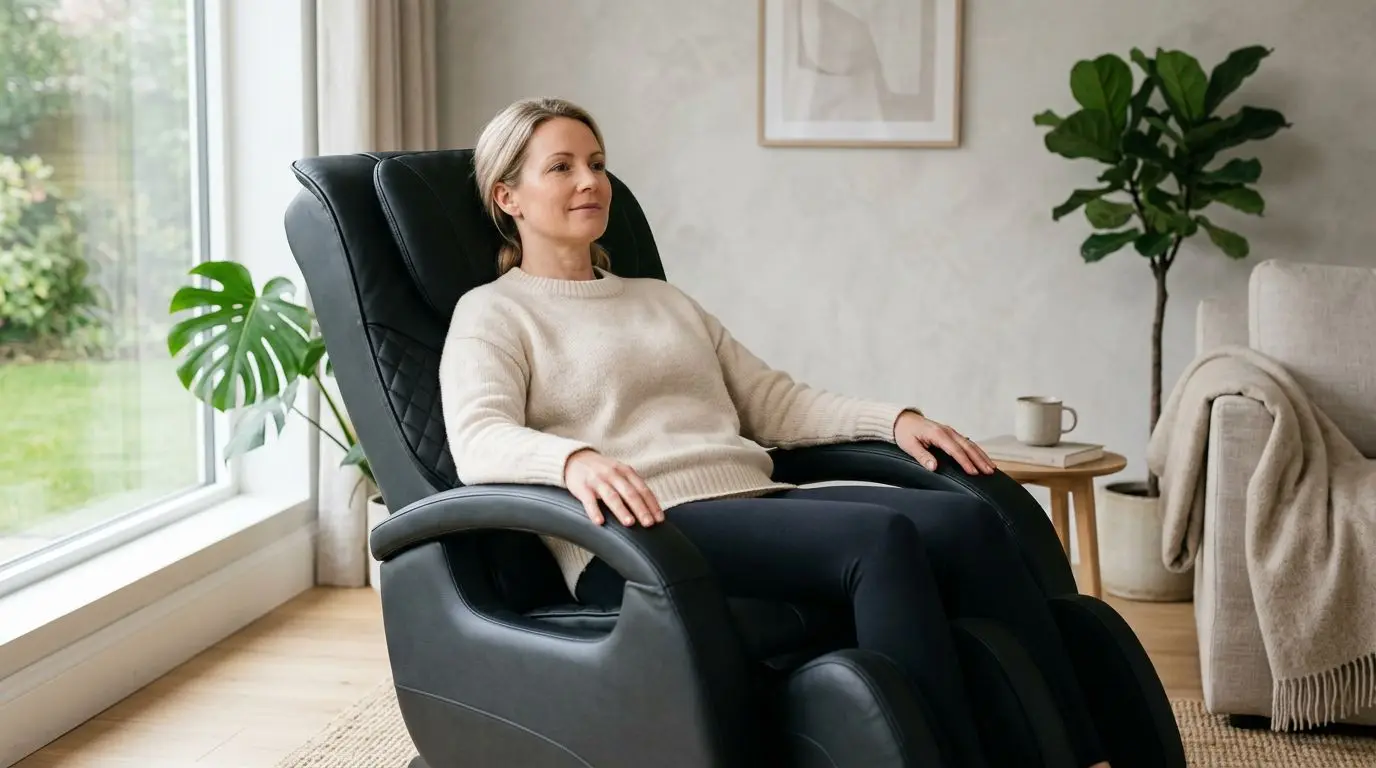
Can a Massage Chair Help With Lower Back Pain? Benefits, Settings, and Safety Tips
12 min read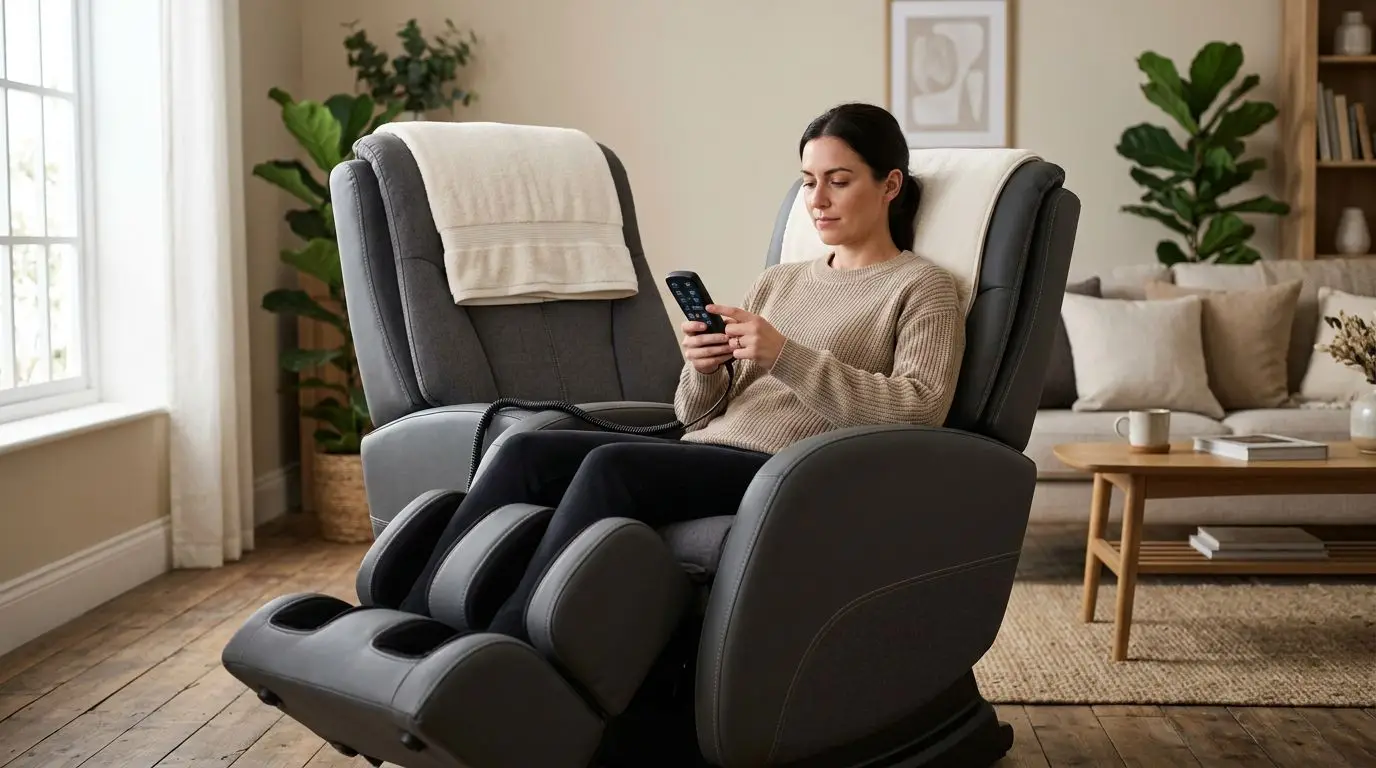
How to Adjust Massage Chair Intensity Without Overdoing It
13 min read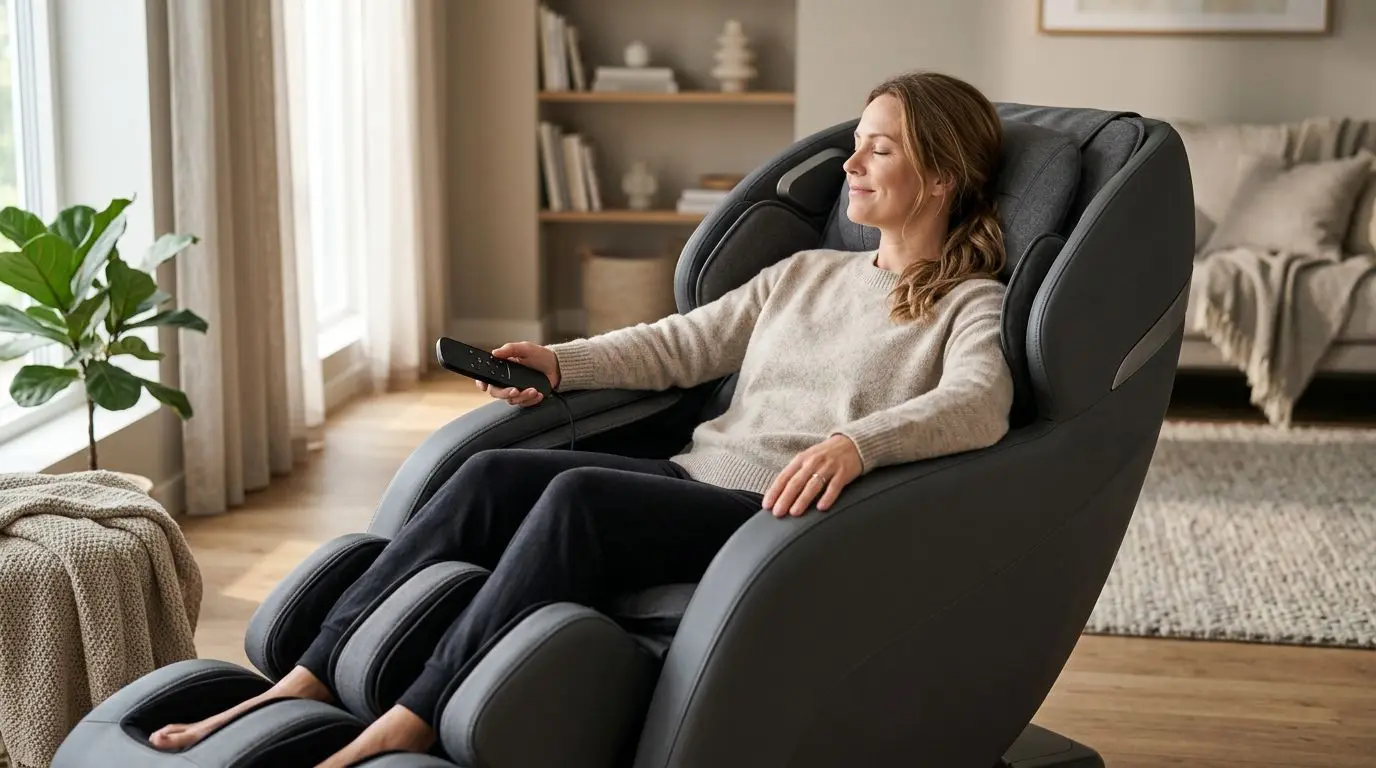
Best Massage Chair Settings for Beginners: Intensity, Roller Position, Air Pressure, Heat, and Recline
13 min read