Disclosure: We may earn a commission when you buy through links on this page, at no extra cost to you. We buy nothing, sell nothing and accept no payment for coverage — commissions never decide what we recommend. How we make money.
For most shoppers, an SL-track is the best all-around massage chair track because it follows the curve of the spine like an S-track and continues under the seat like an L-track. Choose an S-track if neck-to-lower-back accuracy is your priority, and choose an L-track if you want stronger coverage through the glutes and upper hamstrings. The best track for your body depends on where you want the rollers to travel, how tall you are, and whether you value spinal contouring or lower-body coverage more.
The track is one of the most important parts of a massage chair because it determines where the rollers can physically go. Airbags, heat, foot rollers, and preset programs matter too, but they cannot make a short back track reach your glutes or make a flatter seat track contour more closely to your upper back. Once you understand the track shape, the rest of the buying decision becomes much easier.
How massage chair tracks work: 2 jobs to understand first
A massage chair track has 2 basic jobs: it guides the roller carriage, and it limits the massage path. The rollers can only travel where the rail allows them to travel, so track length and track shape directly affect which parts of your body receive mechanical roller contact.
Most full-size massage chairs use a track hidden behind the backrest and seat padding. A roller mechanism moves along that rail while motors control kneading, tapping, rolling, or pressing actions. On more advanced chairs, the rollers may also move inward and outward for adjustable intensity, but the track still controls the route.
Think of the track like a train rail. If the rail stops at the lower back, the rollers stop there too. If the rail continues under the seat, the rollers can reach the glutes and sometimes the upper hamstrings. When the rail follows a more natural spinal curve, the rollers tend to maintain more consistent contact from the shoulders down to the lumbar area.
Track length is commonly described in inches, but the number alone does not tell the whole story. A roughly 30-inch S-track and a roughly 50-inch L-track are not just different lengths; they massage different zones. The shape of the rail changes body contact, especially around the lower back, pelvis, and seat.
S-track massage chairs: best for neck-to-lower-back contour over about 24 to 32 inches
An S-track is shaped to follow the natural S-curve of the spine. It typically runs from the neck and shoulders down through the thoracic and lumbar back, with many back-focused tracks falling in the general range of about 24 to 32 inches. The exact length varies by chair size and design, but the key point is that an S-track usually stays in the backrest rather than extending far under the seat.
This design is especially useful if you care about close contact along the neck, shoulder blades, mid-back, and lower back. Because the rail is curved, the roller carriage can stay more aligned with the body instead of pressing too hard in one area and losing contact in another. For many users, that makes the massage feel more precise along the spine.
The main limitation is coverage. A traditional S-track generally does not provide roller massage to the glutes or hamstrings. Some chairs may add seat vibration, air compression, or heat in those zones, but that is not the same as roller travel under the body.
Who an S-track is best for
- People who primarily want neck, shoulder, mid-back, and lower-back coverage.
- Shoppers who prefer a back massage that follows the body curve closely.
- Users who do not need roller contact on the glutes or upper hamstrings.
- Smaller spaces where a simpler, back-focused chair may be enough.
An S-track can be a smart choice for someone who sits at a desk 8 hours a day and mainly wants relief from upper-back tightness and lumbar stiffness. It is not the best match for a runner, cyclist, or driver who specifically wants roller pressure through the seat and hamstring area.
L-track massage chairs: best for glute and upper-hamstring reach over about 45 to 53 inches
An L-track extends farther than a traditional S-track. Instead of stopping near the lower back, it continues down into the seat area in an L-like path. Many L-track chairs advertise track lengths in the broad range of about 45 to 53 inches, though the usable feel depends on chair geometry, padding, and roller design.
The big advantage is lower-body coverage. An L-track can massage the back, pass through the lower back and glute area, and often continue toward the upper hamstrings. This helps if you want roller contact where your body meets the seat, not just airbag compression around the hips.
The trade-off is that some L-track designs may not contour as closely through the full spinal curve as a dedicated S-track or well-designed SL-track. That does not mean an L-track feels flat or uncomfortable. It simply means the long under-seat path is the defining feature, and shoppers should test or evaluate how well the chair maintains contact in the neck, shoulder, and lumbar zones.
Who an L-track is best for
- People who want roller massage on the glutes and upper hamstrings.
- Drivers, cyclists, runners, and lifters who often feel tight through the hips and seat.
- Users who like a longer massage path and broader body coverage.
- Shoppers who are less focused on highly contoured neck-to-lumbar precision.
If you frequently feel tight after long car rides or long days sitting, an L-track is worth considering. The extra under-seat travel can make the massage feel more complete from the back into the hips.
SL-track massage chairs: the best all-around option over about 45 to 55 inches
An SL-track combines the main ideas of the S-track and L-track. It follows an S-like curve along the back, then continues into an L-like path under the seat. Many SL-track chairs are listed around 45 to 55 inches of track length, with some variation based on chair size and how manufacturers measure the rail.
This is why SL-track designs are often the safest choice for shoppers who want broad coverage without giving up spinal contour. The rollers can work from the neck and shoulders through the back, then continue into the glutes and sometimes the upper hamstrings. For a household with multiple users, that flexibility matters.
SL-track chairs are not automatically better in every way. Roller quality, body scanning, padding, width, and intensity controls still matter. A poorly fitted SL-track chair may feel less useful than a well-fitted S-track chair for someone who only wants upper-back and lumbar work. Still, if you are buying without a clear single pain point, or if 2 adults with different preferences will share the chair, SL-track is usually the most versatile track design.
Who an SL-track is best for
- Shoppers who want neck, back, glute, and upper-hamstring coverage in one chair.
- Households where users have different heights or massage preferences.
- People who want spinal contouring and under-seat roller reach.
- Buyers who plan to keep the chair for several years and want flexibility.
The simplest rule is this: if you want one track design that covers the most common needs, start your search with SL-track chairs. Then narrow by fit, intensity, features, and space requirements.
Track designs compared: 5 practical differences that affect comfort
The table below compares the 3 track types across the differences shoppers usually feel first: coverage, contour, lower-body reach, intensity control, and best use. These are general patterns, not guarantees, because padding thickness and roller design can change the experience a lot.
| Track type | Typical roller path | Common coverage | Main strength | Main limitation | Best fit |
|---|---|---|---|---|---|
| S-track | About 24 to 32 inches in the backrest | Neck, shoulders, mid-back, lower back | Follows spinal curve closely | No true glute or hamstring roller travel | Back-focused users |
| L-track | About 45 to 53 inches from back into seat | Back, glutes, sometimes upper hamstrings | Longer lower-body reach | May vary in back contour precision | Hip and seat coverage |
| SL-track | About 45 to 55 inches with curved back and seat path | Neck through glutes and upper hamstrings | Best balance of contour and coverage | Fit and roller quality still matter | Most households |
Do not shop by track length alone. A longer track can reach more areas, but comfort depends on how the chair supports your body along that path. A 50-inch track in a chair that does not fit your height may miss key pressure points, while a shorter track in a better-fitting chair may feel more accurate.
How to choose and measure: 6 checks before you buy
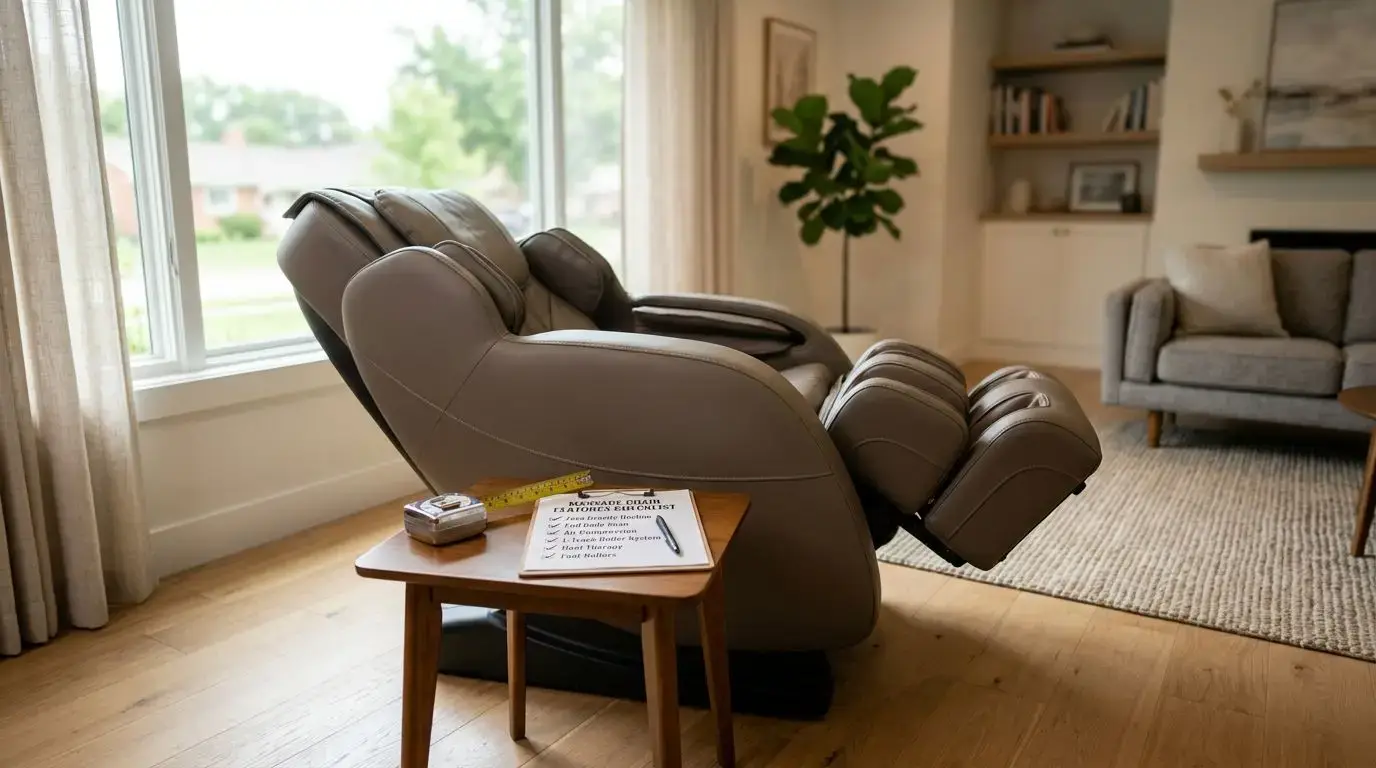
Before choosing between S-track, L-track, and SL-track designs, take 6 measurements or fit notes: your height, shoulder width, seated hip position, inseam, room space, and preferred massage zones. This takes about 10 minutes and can prevent an expensive mismatch.
1. Measure your height and compare it to the chair range
Massage chairs often list a suggested user height range, such as a span that covers many adults from the low 5-foot range to the low 6-foot range. Treat that as a starting point, not a promise. If you are near either end of the listed range, pay close attention to shoulder roller alignment and footrest adjustability.
2. Check shoulder width
Measure across your shoulders while seated naturally. If the backrest is too narrow, the rollers or airbags may feel crowded. If it is too wide, shoulder airbags may not hold you in place, and the rollers may feel less targeted.
3. Notice where your hips sit in the chair
For L-track and SL-track chairs, your seated position determines whether the rollers reach the glutes comfortably. If you slide forward or sit too high on the seat cushion, the under-seat track may not contact the intended area.
4. Measure available space
A full-size massage chair may need several inches behind it, and some space-saving recline designs reduce the rear clearance to around 2 to 6 inches. You still need room in front for the leg rest and room on the sides to get in and out safely. Measure the chair footprint in upright and reclined positions before committing.
5. Decide your top 2 massage zones
Pick your top 2 priorities before comparing features. For example, neck plus lower back points toward an S-track or SL-track. Glutes plus upper hamstrings points toward L-track or SL-track. If you want all 4 zones, SL-track should be your first filter.
6. Consider session length and intensity tolerance
Many preset massage programs run about 10 to 20 minutes. If you prefer gentle, short sessions, track type may matter less than roller softness and intensity adjustment. If you like deeper work, look for adjustable roller depth, multiple intensity levels, and a chair that lets you stop or reposition the rollers easily.
Who each track is best for: 7 real-world shopper profiles
Different bodies need different coverage. Here are 7 common shopping situations and the track type that usually makes the most sense.
| Shopper profile | Likely best track | Why |
|---|---|---|
| Desk worker with neck and upper-back tightness | S-track or SL-track | Both can focus on the neck, shoulders, and back curve |
| Driver who feels tight through hips and glutes | L-track or SL-track | Under-seat roller travel is the key feature |
| Runner or cyclist with upper-hamstring tension | L-track or SL-track | Longer tracks can reach below the glutes on some chairs |
| Household with 2 or more regular users | SL-track | It offers the widest coverage for different preferences |
| User who dislikes strong seat pressure | S-track | It avoids under-seat roller contact |
| Buyer focused on compact, simple back massage | S-track | Back-only coverage may be enough |
| Shopper unsure what they will prefer in 3 years | SL-track | More coverage gives more long-term flexibility |
These profiles are not medical advice. Massage chairs can help many people relax, reduce everyday muscle tension, and build a consistent self-care routine, but they should not be used as a substitute for professional care when pain is severe, persistent, or linked to an injury.
Features that matter as much as track shape: 8 items to compare
Track design is the foundation, but 8 other features can change how the chair feels: roller type, intensity adjustment, body scanning, air compression, heat placement, foot and calf design, recline position, and manual controls. Two chairs with the same track type can feel very different.
Roller type: 2D, 3D, and 4D
Basic 2D rollers move up and down and side to side. 3D rollers add inward and outward movement, which can increase or reduce pressure. 4D is often used to describe additional rhythm, speed, or depth variation, but the term is not standardized across the industry. Focus on whether you can adjust the strength in practical steps.
Body scanning
Body scanning helps the chair estimate shoulder height and back shape before a session. It is useful, but not perfect. A good manual adjustment option is still valuable, especially for users near the top or bottom of a chair height range.
Air compression
Airbags squeeze and release around areas like shoulders, arms, hips, calves, and feet. They do not replace rollers, but they can help hold your body in position and create a more complete sensation. If hip coverage matters to you, compare both the track and the hip airbag placement.
Heat
Heat is commonly located in the back, calves, or feet, depending on the chair. It may help you feel more relaxed during a 15-minute session, but it should be adjustable and comfortable. Avoid prolonged heat if you have reduced sensation or have been advised to limit heat exposure.
Foot and calf massage
Track type does not determine foot massage quality. Foot rollers, calf airbags, calf kneading mechanisms, and leg-rest length are separate design choices. Tall users should check whether the leg rest extends far enough for a neutral knee and ankle position.
Zero-gravity recline
Zero-gravity positioning usually reclines the body with the legs elevated, which can spread body weight across the backrest and change roller pressure. Some people find it more comfortable; others prefer a more upright angle for neck work. Try both positions if possible.
Manual zone control
Look for controls that let you pause, repeat, or target a smaller area of the back. A 3-inch adjustment can matter when you are trying to keep rollers on a tight spot near the shoulder blade or lumbar area.
Common mistakes to avoid: 5 buying traps
The first mistake is assuming the longest track is always best. A long track can add coverage, but if the chair does not fit your body, the rollers may not land where you expect.
The second mistake is ignoring seat comfort. L-track and SL-track chairs place mechanical components under the seat, so cushioning and roller retraction matter. If the seat feels too firm during non-massage sitting, you may use the chair less often.
The third mistake is buying for a single feature instead of a routine. A chair that feels good for a 5-minute showroom test may feel too intense during a 20-minute program at home. Adjustable intensity is more valuable than maximum pressure.
The fourth mistake is overlooking access and delivery. Measure doorways, hallways, stair turns, and the final room. Many full-size chairs are heavy and bulky, often requiring at least 2 adults or professional delivery to move safely.
The fifth mistake is treating a massage chair as a medical device. For general relaxation and everyday muscle tension, a massage chair can be a useful tool. For numbness, sharp pain, swelling, recent surgery, blood-clot risk, or a diagnosed medical condition, ask a qualified clinician before using deep massage or heat.
FAQ: 5 answers about massage chair track design
Is an SL-track always better than an S-track?
No. An SL-track usually offers more coverage, but an S-track may be better if you only want neck-to-lower-back massage and dislike rollers under the seat. Fit, roller quality, and intensity controls can matter more than track type alone.
Can an L-track massage the hamstrings?
Some L-track and SL-track chairs reach the upper hamstrings, but coverage varies. The rollers usually do not travel far down the back of the legs like a therapist could. If hamstring coverage is a priority, check the track path, seat depth, and how the chair positions your hips.
What track is best for lower-back massage?
Both S-track and SL-track designs are strong choices for lower-back massage because they are shaped to follow the spinal curve. L-track chairs can also massage the lower back, but compare lumbar contact and intensity adjustment before deciding.
Do taller people need a longer track?
Not always. Taller users need a chair that matches shoulder height, torso length, and leg-rest extension. A longer track helps with seat coverage, but it does not guarantee proper neck or shoulder alignment for someone over 6 feet tall.
Is a massage chair safe to use every day?
Many people use massage chairs daily for short sessions, often around 10 to 20 minutes, but comfort and health status matter. Start gently, avoid painful pressure, and follow medical guidance if you have an injury, circulation issue, implanted device, pregnancy-related concern, or other condition.
The bottom line: choose an S-track for focused back contour, an L-track for glute and upper-hamstring reach, and an SL-track for the broadest balance of both. For most shoppers who want one chair to serve multiple body areas and multiple users, SL-track is the best starting point. Then let your measurements, comfort preferences, and room space guide the final decision.
Frequently asked questions
Is an SL-track always better than an S-track? +
No. An SL-track usually offers more coverage, but an S-track may be better if you only want neck-to-lower-back massage and dislike rollers under the seat. Fit, roller quality, and intensity controls can matter more than track type alone.
Can an L-track massage the hamstrings? +
Some L-track and SL-track chairs reach the upper hamstrings, but coverage varies. The rollers usually do not travel far down the back of the legs. If hamstring coverage matters, check the track path, seat depth, and hip positioning.
What track is best for lower-back massage? +
Both S-track and SL-track designs are strong choices for lower-back massage because they follow the spinal curve. L-track chairs can also work well, but lumbar contact and intensity adjustment vary by design.
Do taller people need a longer massage chair track? +
Not always. Taller users need proper shoulder alignment, torso fit, and leg-rest extension. A longer track can improve seat coverage, but it does not guarantee good neck or shoulder positioning.
Is a massage chair safe to use every day? +
Many people use a massage chair daily for short sessions of about 10 to 20 minutes, but comfort and health status matter. Start with gentle settings and ask a qualified clinician if you have an injury, circulation issue, implanted device, pregnancy-related concern, or other medical condition.
Related guides
Full-Body Massage Chairs Explained: What They Massage, What They Miss, and Who They Fit Best
14 min read
How to Compare Massage Chair Features: 2D, 3D, 4D, L-Track, SL-Track, Heat, and Airbags
13 min read
Massage Chairs for Back Pain: When They May Help and When to Be Cautious
12 min read
How to Choose a Massage Chair for Home Use
14 min read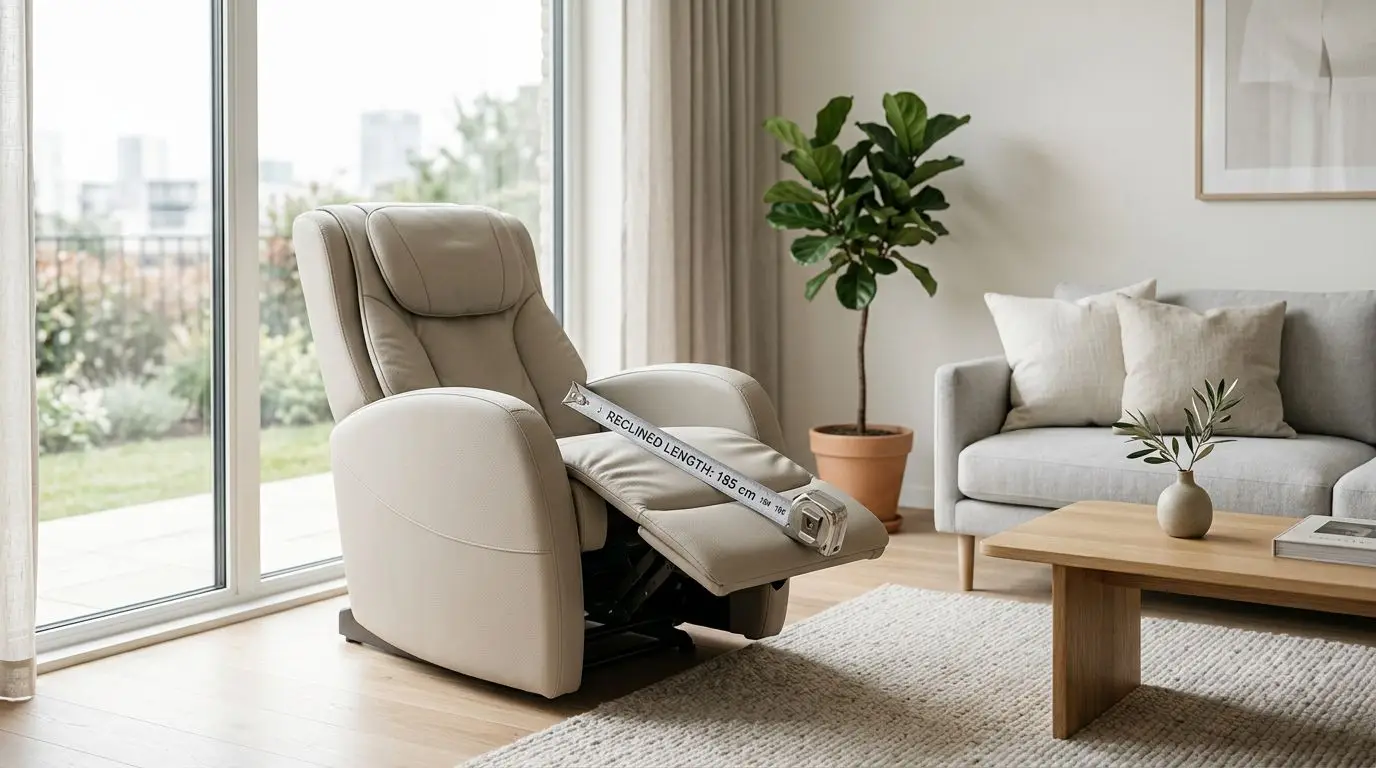
Ergonomic Massage Chairs: What “Ergonomic” Really Means Before You Buy
13 min read