Disclosure: We may earn a commission when you buy through links on this page, at no extra cost to you. We buy nothing, sell nothing and accept no payment for coverage — commissions never decide what we recommend. How we make money.
Yes, a massage chair with stretch or yoga programs can be worth buying if you want a more active, full-body experience than standard rolling massage. These programs typically use reclining angles, leg extension, and air compression to create a controlled pulling sensation through the back, hips, shoulders, and legs over a 10- to 20-minute cycle. They are not a replacement for real yoga, physical training, or medical care, but they can make a chair feel more versatile and engaging.
The key is matching the stretch style to your body and tolerance. Some stretch programs feel gentle and rhythmic; others can feel surprisingly strong, especially when the leg rest grips the calves and the backrest reclines deeply. If you have pregnancy, a pacemaker or other implanted cardiac device, blood clots or take anticoagulants, osteoporosis, a recent fracture or surgery, spinal disc problems, neuropathy, or uncontrolled hypertension, ask your physician before using these programs.
What stretch and yoga programs actually do in 10 to 20 minutes
A massage chair stretch program is an automated sequence that combines recline, rollers, air compression, and leg rest movement. The chair may hold your calves or feet with airbags, recline the backrest, extend or lower the ottoman, and run rollers along the back at the same time. A typical preset cycle lasts about 15 minutes, though many chairs offer shorter or longer options ranging from roughly 10 to 20 minutes.
The word yoga is more of a retail label than a promise of one specific movement pattern. In most chairs, a yoga program means a stronger version of stretch: deeper recline, firmer airbag holds, a more pronounced leg pull, and a slower sequence. A basic stretch program may feel like a gentle back extension and leg traction. A more assertive yoga-style program may feel as if the chair is anchoring your lower body while opening the torso and hips.
That does not mean the chair teaches poses or builds flexibility the way a floor-based yoga session can. You are passive during the program. The chair moves you within its mechanical range, not your full personal range of motion. For many buyers, that is the appeal: you press one button and get a structured, full-body routine without setting up a mat, remembering a sequence, or getting down on the floor.
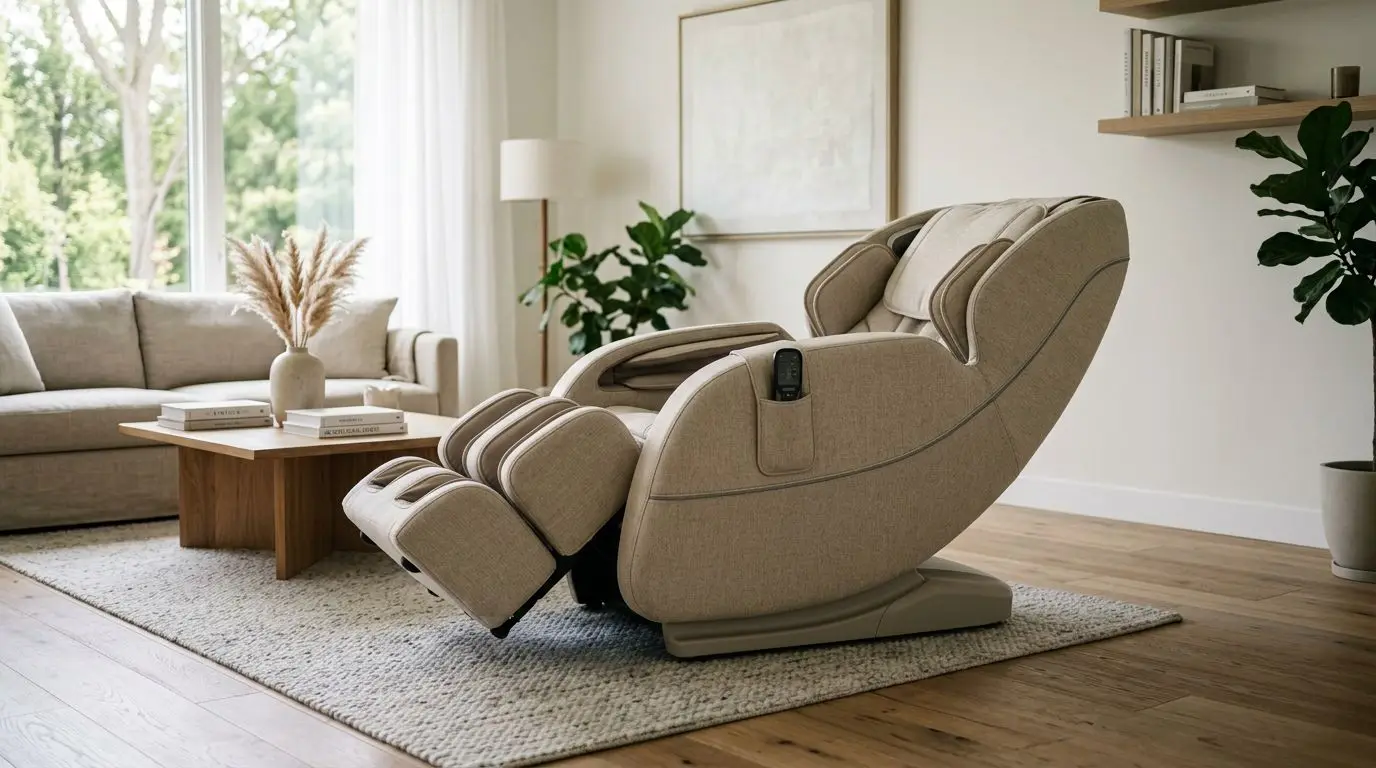
Expect the sensation to come from several sources at once. Airbags may squeeze the shoulders, arms, calves, or feet. Rollers may knead or glide along the spine area. The backrest and ottoman may move in opposite directions to create a lengthening feel. If the chair has zero gravity positioning, it may tilt you back so your weight feels more evenly supported while the stretch program runs.
Who stretch programs are best for: 5 buyer profiles
Stretch or yoga programs are most useful for people who will actually use the chair several times per week, not just once in a while. A feature that sounds exciting in a showroom is only valuable if the intensity, fit, and setup work in your home. These programs tend to suit five common buyer profiles.
- Desk workers who want a more open-feeling posture break: If you sit for 6 to 8 hours a day, a stretch cycle may feel more complete than a back-only massage because it involves the hips, legs, and shoulders.
- People who dislike getting on the floor: A chair can provide a guided stretching sensation without kneeling, lying down, or standing on one leg.
- Households with multiple users: A stretch preset gives different users a simple starting point, especially when the chair also has intensity levels.
- Buyers who find standard kneading repetitive: Stretch programs add movement and sequencing, so the chair feels less like one fixed back routine.
- Users who prefer full-body coverage: If you care about calves, feet, hips, shoulders, and back in one session, stretch modes are more likely to involve the whole chair.
They are not ideal for everyone. If you strongly dislike being held in place by airbags, have limited tolerance for reclining, or want only a light back massage while watching TV, a strong yoga-style mode may be more feature than you need. Some people use it once, decide the calf hold feels too restrictive, and go back to gentler automatic programs.
Size matters too. A stretch program depends on the chair lining up with your shoulders, hips, knees, and feet. If you are near the top or bottom of the chair’s stated height range, the pull may land in the wrong place. A person who is 5 feet 1 inch may experience the same program very differently than someone who is 6 feet 2 inches, even in the same chair.
Stretch vs. yoga mode vs. zero gravity: 3 different features
These terms are often stacked together in sales descriptions, but they are not the same thing. A chair can have zero gravity without a meaningful stretch program, and a chair can have a stretch mode that does not feel especially yoga-like. Knowing the difference helps you avoid paying extra for a label instead of a real feature.
| Feature | What it means | What it feels like | Best use |
|---|---|---|---|
| Stretch program | A preset that coordinates recline, rollers, airbags, and leg rest movement, often for 10 to 20 minutes | Gentle to moderate pulling, squeezing, and back extension | Regular full-body sessions with controlled movement |
| Yoga-style program | A stronger stretch preset with deeper holds or more dramatic positioning | More noticeable leg anchoring, torso opening, and full-body movement | Users who like firm programs and do not mind being held by airbags |
| Zero gravity position | A reclined posture where the legs are elevated and the body tilts back, commonly in 1 to 3 preset angles | Supported, reclined, weight-distributed comfort | Reducing perceived pressure points during massage or stretch sessions |
Zero gravity is a position, not a stretch by itself. It can make a stretch program feel smoother because your body is supported while the chair moves, but it does not automatically create a pull through the legs or back. The stretch sensation usually comes from the combination of airbag grip, backrest angle, and ottoman movement.
A true stretch program should be described as a sequence, not just a button that reclines the chair. Look for details such as calf hold, leg extension, shoulder airbags, hip airbags, or coordinated backrest movement. If the product description only says stretch with no explanation, try to test it in person or read the manual before you treat it as a major buying reason.
Features that make stretch programs feel better: 6 items to compare
The best stretch experience is not created by one feature. It depends on how the chair holds the body, where the rollers travel, how accurately it scans the user, and whether the intensity can be adjusted. Six features deserve close attention before you pay for a chair with stretch or yoga programs.
| Feature | Why it matters for stretch | What to check |
|---|---|---|
| SL-track or long track | Extends roller coverage from the neck and back into the glute area on many designs | Track length and whether rollers reach below the low back |
| Air compression zones | Holds shoulders, arms, calves, feet, or hips during the sequence | Number of air zones and adjustable air intensity |
| Powered ottoman | Creates leg positioning and extension during the stretch | Automatic length adjustment and calf fit |
| Body scanning | Helps place rollers near the user’s shoulder height and back shape | Whether you can manually fine-tune shoulder position |
| Intensity control | Lets a strong program become usable for more people | At least 3 air or massage strength levels is helpful |
| Program memory or favorites | Saves time if multiple users prefer different settings | Whether the chair stores custom settings or only presets |
Air compression is especially important. Without it, the chair has less ability to anchor the body during a stretch sequence. Shoulder airbags may hold the upper body while the rollers move. Calf and foot airbags may grip the lower legs while the ottoman changes angle. Hip airbags may add side-to-side support during recline.
Track design also changes the feel. An S-track focuses mainly on the back’s natural curve. An L-track or SL-track continues farther under the seat area, which can make the program feel more complete through the low back and glute area. Longer coverage does not automatically mean better comfort, but it gives the chair more contact area to work with during a full-body routine.
Heat is sometimes paired with stretch, but it should not drive the purchase by itself. Most chair heat is localized, often in the back or calves, and commonly feels warm rather than hot. Treat it as a comfort add-on, not the feature that determines whether the stretch program is good.
How to choose and measure before buying: 7 practical checks
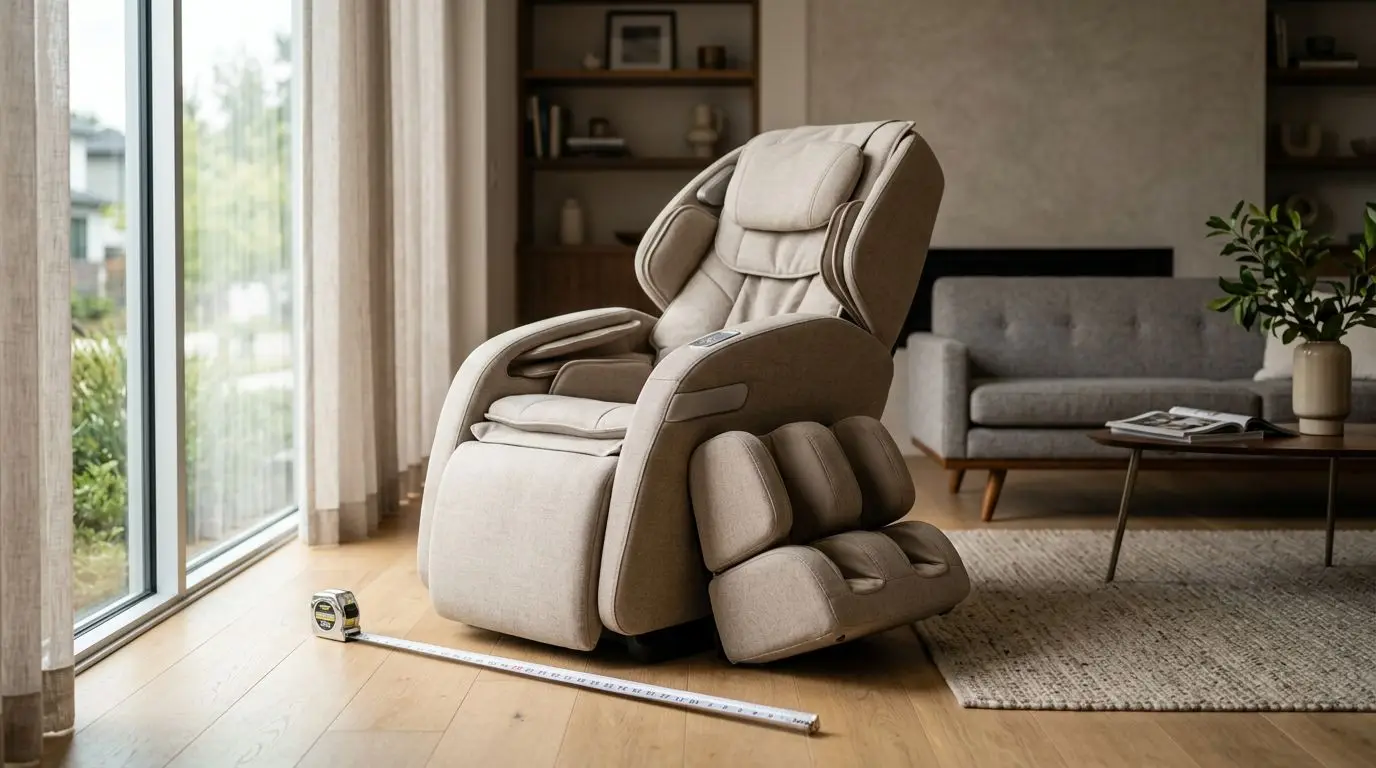
A massage chair with stretch programs must fit both your room and your body. Before buying, measure more than the chair’s width. You need to account for recline, leg extension, delivery path, and the user’s proportions. A chair that fits on paper can still feel wrong if the calf wells, shoulder airbags, or roller height do not line up.
- Measure the chair location: Many full-size chairs need about 30 to 36 inches of width and more length when reclined. Check both upright and fully reclined dimensions.
- Check wall clearance: Space-saving recline designs may need only about 2 to 6 inches behind the chair, while other designs require more. Use the manufacturer’s stated clearance.
- Measure the delivery route: Doorways, stair turns, elevators, and hallways matter. Interior doors are often around 28 to 32 inches wide, so confirm the boxed and unboxed dimensions.
- Compare height range: Check the stated user height range and read how the leg rest adjusts. A stretch program depends heavily on correct leg placement.
- Check weight rating: Full-size chairs commonly publish a maximum user weight. Do not exceed it, especially with moving stretch programs.
- Test calf and foot fit: If your calves are large or your feet are near either end of the size range, foot rollers and airbags may feel too tight or misaligned.
- Confirm return logistics: A massage chair can weigh well over 150 pounds. Understand pickup, restocking, and packaging requirements before ordering.
If you can test a chair, run the exact stretch or yoga program for at least 10 minutes. A 90-second demo is not enough. The first minute may feel comfortable, but the strongest part of the sequence may come later, when the chair reclines more deeply or grips the calves harder.
During the test, notice three body zones: shoulders, low back, and knees. Your shoulders should not feel jammed under airbags. Your low back should feel supported rather than sharply arched. Your knees should not feel as if they are being pulled into an uncomfortable angle. If a program feels slightly too strong, check whether air intensity, roller strength, or recline depth can be reduced.
What stretch programs cannot do: 4 limits to understand
Stretch and yoga programs can change how a massage chair feels, but they have limits. A chair cannot assess your mobility, teach breathing, correct form, or respond the way a human instructor could. It follows a programmed sequence, usually built around average body proportions.
First, it cannot replace active stretching or exercise. In an active stretch, you control the muscle effort, joint position, and range of motion. In a chair, you are being moved by motors and airbags. That can be pleasant and convenient, but it is not the same skill or body awareness.
Second, it cannot guarantee the same feel for every user. A 5-foot-4 user and a 6-foot user may both fit the chair’s listed range, yet the calf hold, shoulder position, and roller path may land differently. Even a good body scan may need manual adjustment.
Third, it cannot turn an uncomfortable chair into a good fit. If the seat pan is too narrow, the leg rest is too short, or the shoulder airbags press in the wrong place, the stretch program may magnify the problem. Fit comes before features.
Fourth, it cannot validate health claims. Treat broad wellness language with caution. A chair can be designed to feel relaxing, firm, gentle, or full-body. That is different from proving a health outcome. If a manufacturer makes a specific health claim, look for credible substantiation and consider discussing it with a qualified professional.
Safety: ask a physician first in these 8 situations
Most healthy adults can evaluate a massage chair as a comfort product, but stretch and yoga programs use movement, compression, and reclining positions that may not be appropriate for everyone. If any of the following apply to you, ask your physician before using a massage chair, especially a strong stretch program.
- Pregnancy
- Pacemaker or another implanted cardiac device
- Blood clots, a clotting history, or use of anticoagulant medication
- Osteoporosis
- Recent fracture, joint injury, or surgery
- Spinal disc problems or significant spine concerns
- Neuropathy or reduced sensation
- Uncontrolled hypertension
Stop a program if you feel sharp pain, numbness, dizziness, unusual shortness of breath, or a sensation that feels wrong for your body. Do not force yourself to finish a 15-minute cycle just because it is automatic. Use the stop button, sit upright slowly, and avoid restarting the same program until you understand what caused the discomfort.
Children should not use strong automatic programs without adult supervision, and pets should be kept away from moving leg rests and reclining mechanisms. These chairs have pinch points. Before reclining, check the area behind and under the chair.
Try-before-buy checklist: a 15-minute stretch test
If stretch or yoga programs are a top reason you are shopping, test them like a core feature, not a bonus. Bring the same expectations you would bring to a mattress or office chair. Fit and feel matter more than the number of preset names on the remote.
- Minute 1: Let the body scan finish and check whether the shoulder position feels accurate.
- Minutes 2 to 5: Notice the airbag grip. It should feel secure, not trapping or pinching.
- Minutes 6 to 10: Pay attention to the deepest recline or leg pull. This is where many yoga-style programs reveal their true intensity.
- Minutes 11 to 15: Decide whether you would use that program on an ordinary weeknight, not just in a showroom.
After the cycle, stand up slowly and ask yourself a practical question: would I choose this program 3 times a week? If the honest answer is no, do not pay a large premium for it. You may be better served by a chair with excellent rollers, adjustable air compression, and a gentler recline program.
Also test the quiet parts. Listen to the air pump, roller motor, and ottoman movement. Some mechanical sound is normal, but a chair used in a shared living room should not be distracting at typical TV volume. Check the remote layout too. If it takes six menu steps to lower air intensity, other household members may avoid the feature.
FAQ: 5 common questions about massage chair stretch programs
Is a yoga program in a massage chair the same as doing yoga?
No. A chair yoga program is a passive, motorized stretch sequence. It may create a full-body pulling and opening sensation, but it does not teach poses, balance, strength, breathing, or body control the way an active yoga practice can.
Are stretch programs usually too intense?
They vary a lot. Some feel gentle, while others use firm calf grip, deep recline, and strong roller pressure. Look for adjustable air compression and roller intensity, ideally with at least 3 levels, so the program can be softened.
Do I need an SL-track for a good stretch program?
You do not absolutely need one, but a longer track can make the chair feel more complete because the rollers may reach from the neck and back into the glute area. Airbag placement and ottoman movement are just as important.
How often should I use a stretch program?
Follow the chair’s manual and your own comfort level. Many automatic sessions are around 15 minutes. Start with shorter or gentler settings, especially during the first week, and stop if the program feels uncomfortable.
Is it worth paying extra for stretch or yoga modes?
It can be worth it if you enjoy full-body movement, like air compression, and can test that the chair fits your height and legs. If you only want light back massage, the extra cost may not add much value.
Frequently asked questions
Is a yoga program in a massage chair the same as doing yoga? +
No. A chair yoga program is a passive, motorized stretch sequence. It may create a full-body pulling and opening sensation, but it does not teach poses, balance, strength, breathing, or body control the way active yoga can.
Are massage chair stretch programs too intense? +
Some are gentle and some are strong. The most intense versions usually combine firm calf grip, deep recline, and strong roller pressure, so adjustable air and roller intensity are important.
Do I need an SL-track for a good stretch program? +
Not always, but a longer track can make the chair feel more complete because roller coverage may extend below the low back. Airbag placement, leg rest movement, and fit are just as important.
How long does a stretch program usually last? +
Many automatic stretch programs run about 10 to 20 minutes, with 15 minutes being common. Start with a gentler setting until you know how the chair feels.
Is it worth paying extra for stretch or yoga modes? +
It can be worth it if you like full-body movement, air compression, and a more active chair experience. If you mainly want light back massage, prioritize fit, roller comfort, and adjustability first.
Related guides
Massage Chair Stretch Programs: What They Do and Who Should Use Them
12 min read
Massage Chair Auto Programs Explained: Relax, Stretch, Recovery, Sleep, and Deep Tissue Modes
14 min read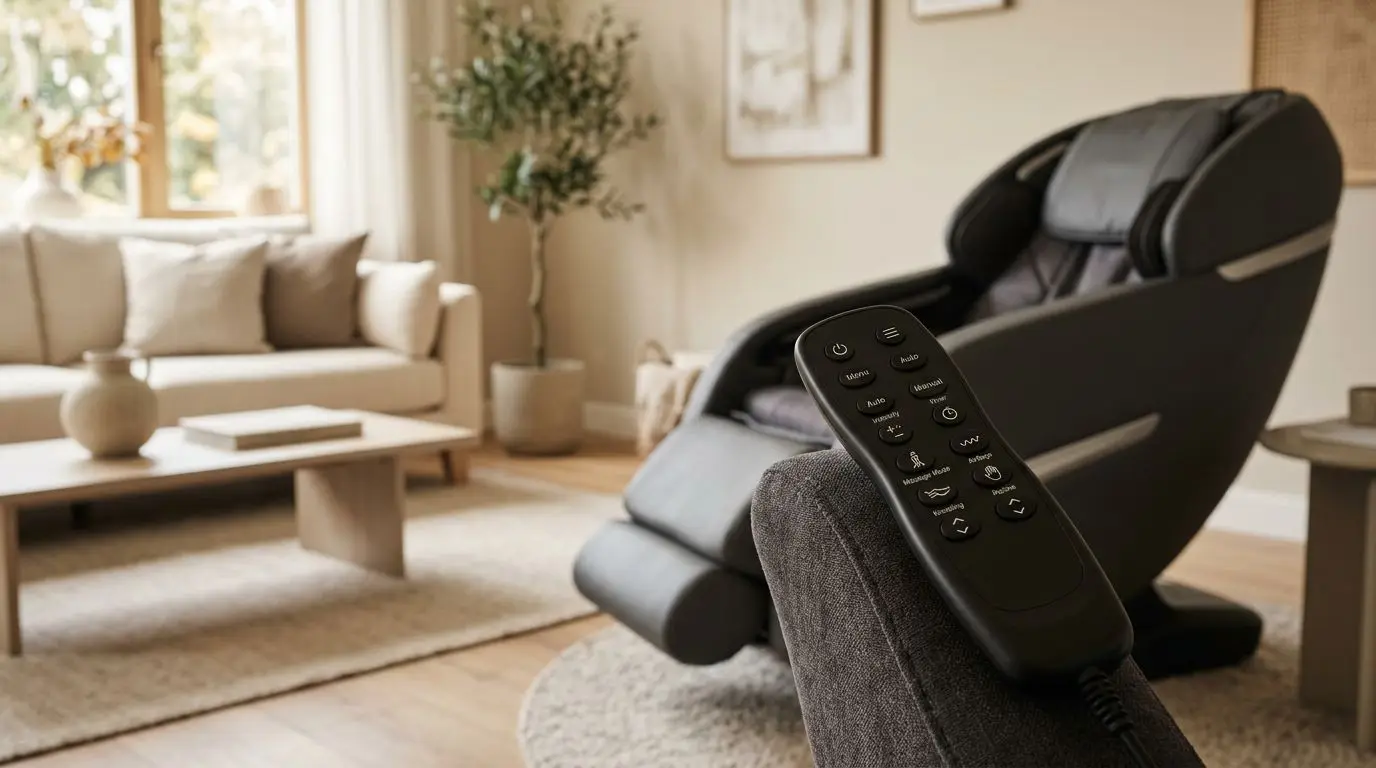
Massage Chair Programs Explained: Auto Modes, Manual Settings, Spot Massage, and Stretch Programs
12 min read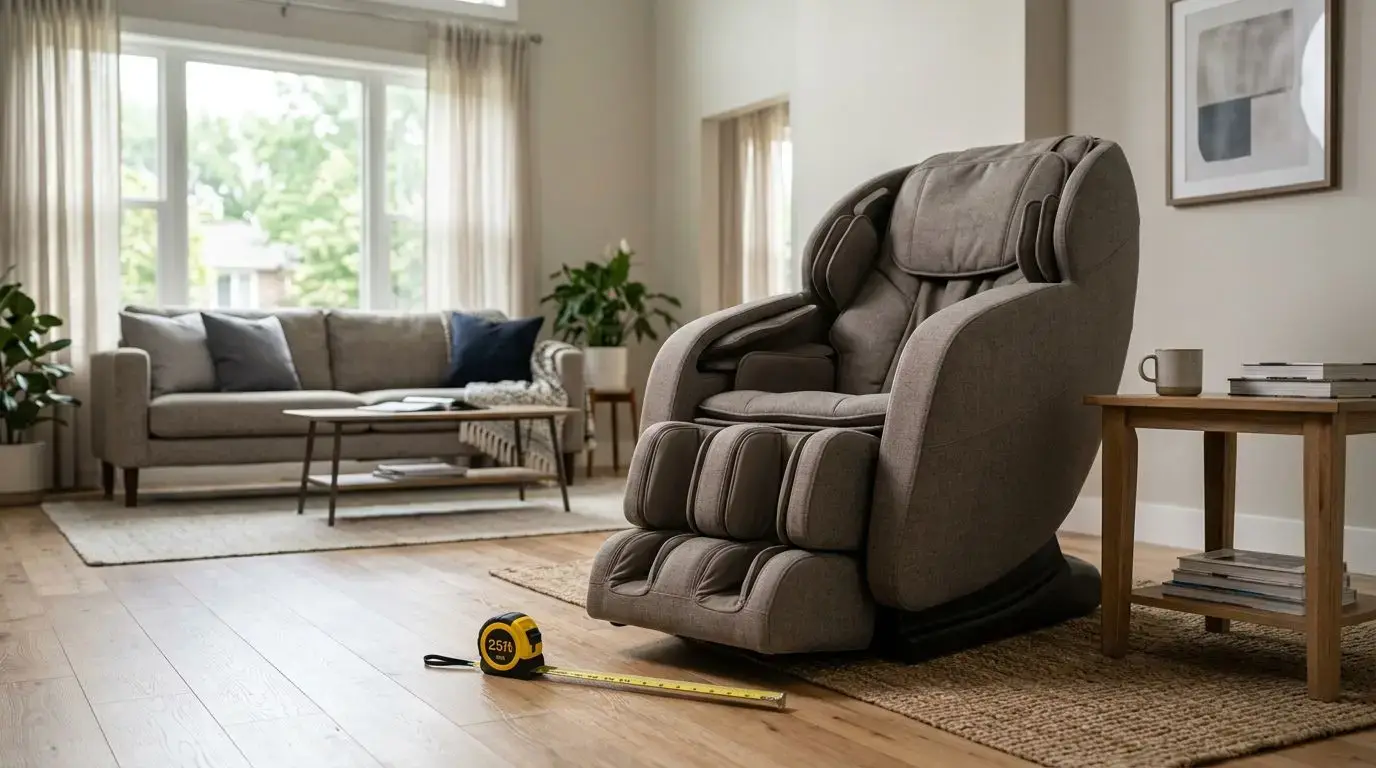
How to Choose a Massage Chair for Home Use
14 min read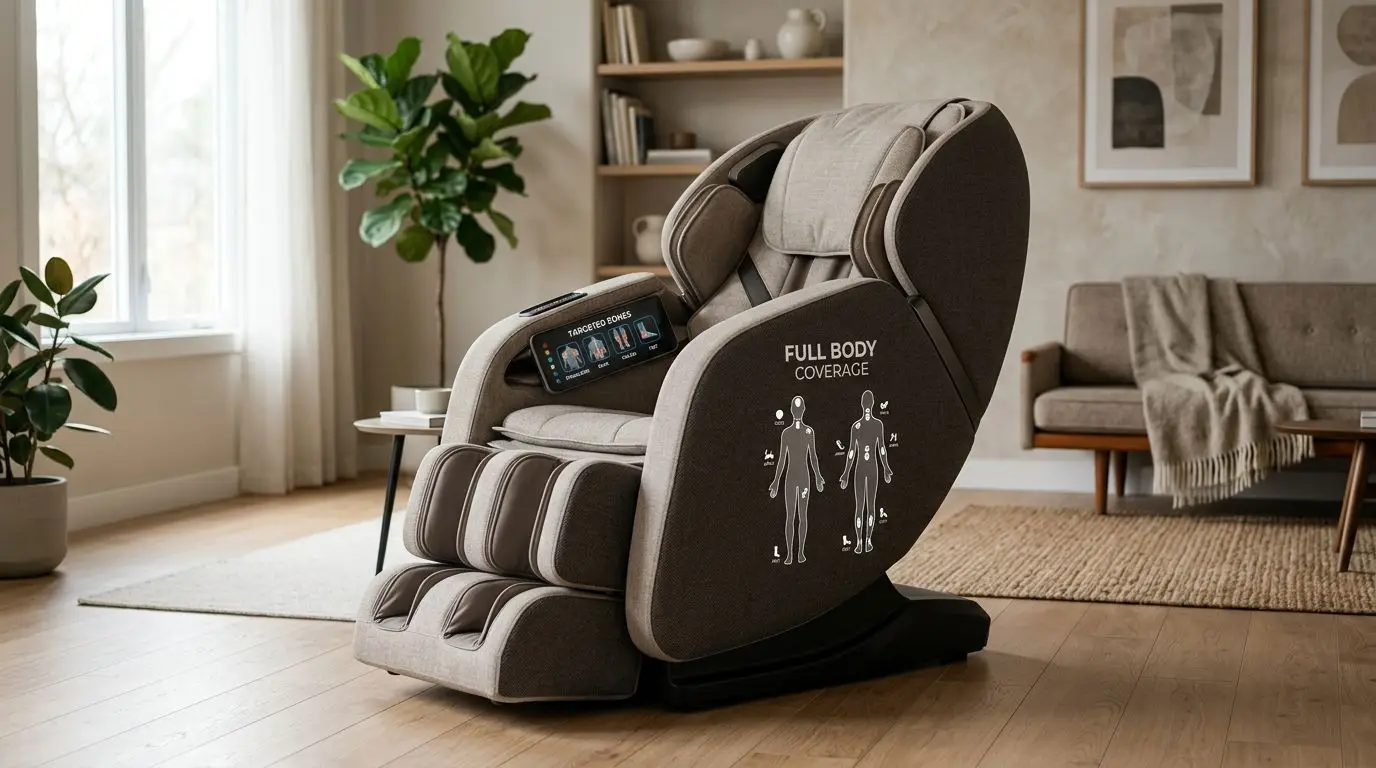
Full-Body vs. Targeted Massage Chair Programs: When to Use Each Type
14 min read