Disclosure: We may earn a commission when you buy through links on this page, at no extra cost to you. We buy nothing, sell nothing and accept no payment for coverage — commissions never decide what we recommend. How we make money.
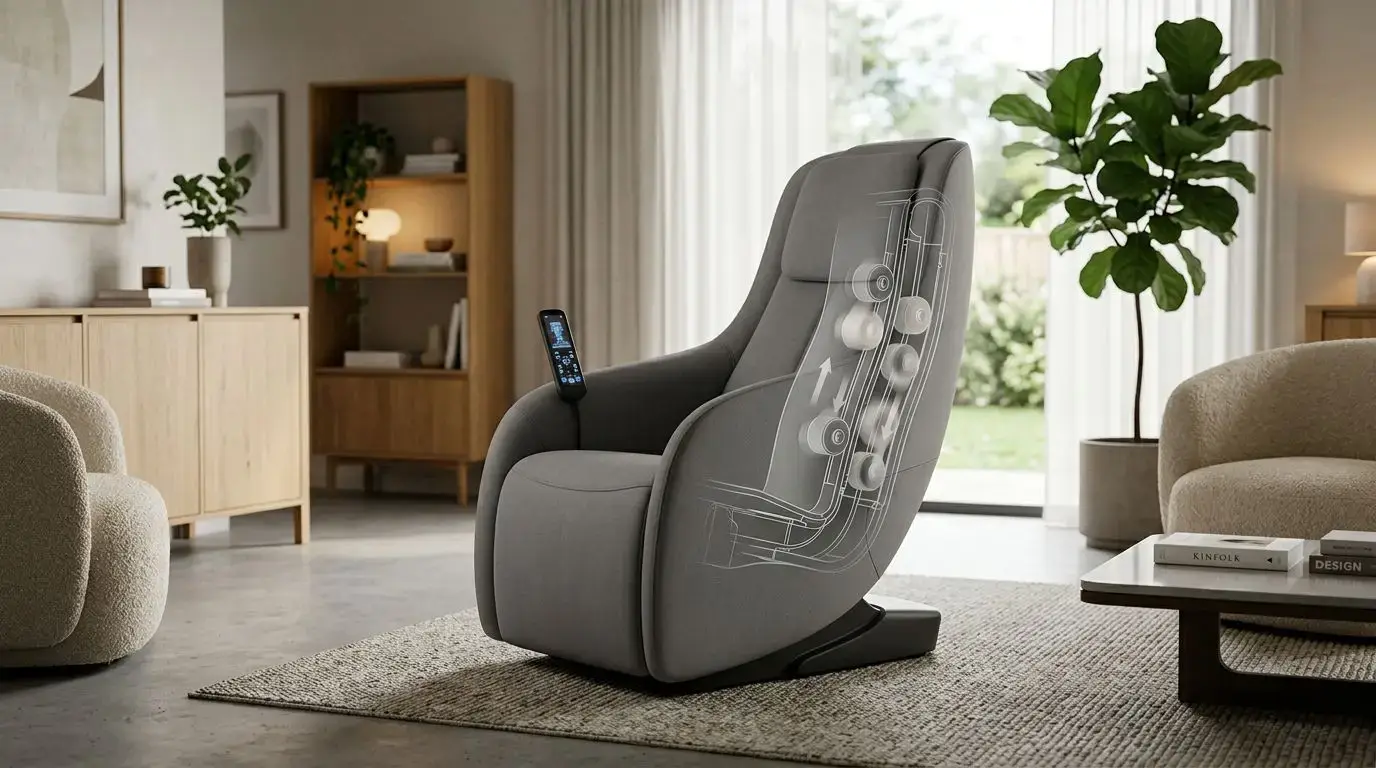
To compare massage chair features, start with the elements that affect feel the most: roller dimension, track shape, and body coverage. A 2D chair is usually simpler and gentler, 3D and 4D chairs add stronger adjustable depth, and L-track or SL-track designs extend roller coverage from the back into the glutes and upper hamstrings.
Heat and airbags are comfort add-ons, not the foundation of the massage. If your budget is limited, focus on the roller system and track first, then consider heat, air compression, foot rollers, and preset programs based on the pressure and coverage you actually enjoy.
Quick comparison: 7 features that change how a massage chair feels
Most massage chairs combine 5 to 7 major comfort systems: rollers, a track, recline, airbags, heat, foot and calf features, and software programs. The best chair for you is not the one with the longest spec sheet. It is the one that fits your pressure preference, body size, room, and tolerance for intensity.
| Feature | What it changes | Best if you want | Budget priority |
|---|---|---|---|
| 2D rollers | Rollers move up, down, left, and right | A straightforward back massage feel | Good entry point |
| 3D rollers | Add adjustable in-and-out depth | More control over pressure | High priority for intensity control |
| 4D rollers | Add rhythm and speed variation to 3D-style depth | A more varied, human-like pattern | Premium comfort upgrade |
| S-track | Follows the curve of the spine | Focused neck-to-lower-back coverage | Solid basic track |
| L-track | Extends under the seat | Glute and upper hamstring coverage | Worth it for lower-body coverage |
| SL-track | Combines spine curve and seat extension | Fuller back-to-seat coverage | Often a strong all-around choice |
| Airbags | Apply squeeze-and-release compression | Shoulder, arm, calf, or foot hold | Useful, but not always essential |
One practical rule: if two chairs cost about the same, choose the one with the better roller and track system rather than the one with the highest airbag count. A chair with 64 airbags can still feel less satisfying than a well-tuned chair with 30 airbags and better roller control.
Rollers: 2D vs. 3D vs. 4D in 1 clear decision
Roller type is the first feature to compare because it controls pressure, depth, and whether the chair feels like it is working into the muscles instead of just moving across the surface. The terms 2D, 3D, and 4D describe the movement of the roller mechanism, not medical performance or quality by themselves.
2D rollers
A 2D roller system moves vertically along the track and side to side across the back. It can knead, tap, roll, or combine motions depending on the chair. Pressure is mostly created by your body weight, the chair angle, and the roller shape.
Choose 2D if you prefer a moderate feel, want simpler controls, or are shopping in a lower budget tier. It is also a good fit for users who dislike deep pressure. The tradeoff is that you may have fewer ways to fine-tune intensity beyond changing the recline angle, adding a back pad, or selecting a gentler program.
3D rollers
A 3D roller system adds in-and-out movement. In practical terms, the rollers can press farther forward toward your body or back away for a lighter feel. Many 3D chairs offer several depth levels, often 3 to 5 settings, though the exact range varies by chair.
Choose 3D if multiple people will use the chair or you want the option to switch between gentle and firm sessions. A 3D system is one of the most useful upgrades because it changes the actual depth of pressure, not just the speed or pattern.
4D rollers
A 4D roller system typically builds on 3D movement with more variation in speed, rhythm, pause, and stroke timing. There is no single universal engineering standard for 4D across the industry, so compare how the chair feels rather than trusting the label alone.
Choose 4D if you are sensitive to repetitive motion and want a more varied pattern. It can feel more dynamic, especially in kneading and tapping programs, but it is usually a premium feature. If budget is tight, a well-adjusted 3D chair may be a smarter buy than a basic 4D chair with weaker build or poor ergonomics.
Tracks: S-track, L-track, and SL-track coverage by inches
The track is the rail the rollers travel on. Track length commonly ranges from about 28 inches on shorter S-track designs to 45 inches or more on extended L-track and SL-track designs. Longer is not automatically better, but it does change which body areas receive roller contact.
| Track type | Typical coverage | How it feels | Best for |
|---|---|---|---|
| S-track | Neck to lower back, often around 28 to 32 inches | Follows the natural back curve | Focused back massage feel |
| L-track | Back into the seat, often around 42 to 50 inches | Extends rollers under the glutes | People who want seat-area coverage |
| SL-track | Curved back path plus extended seat path | Balances spinal contour and lower extension | All-around shoppers wanting broad coverage |
An S-track can be excellent if your main goal is neck, shoulder, mid-back, and lower-back contact. Because it follows the back curve, it can feel more naturally aligned across the spine. It usually stops around the lower back or top of the seat.
An L-track continues beyond the lower back and under the seat. That extended path is useful if you want the rollers to reach the glute area and sometimes the upper hamstrings. The feel can be more intense in the seat because more body weight rests directly on the rollers.
An SL-track tries to combine both ideas: an S-shaped curve for the back and an L-style extension into the seat. For many shoppers, this is the easiest track type to justify because it gives broad coverage without giving up the contoured back path. Still, test the transition point if you can. A chair can have a long track on paper but feel awkward if the roller path does not match your body proportions.
Heat: what 95 to 115 degree warmth changes
Heat in a massage chair is designed to feel warm and comfortable. It should not be treated as a medical feature, and shoppers should be cautious with any claim that goes beyond comfort unless the manufacturer provides appropriate substantiation. In many chairs, heat is located in the lower back, seat, calves, or feet, and surface warmth may fall roughly in the 95 to 115 degree Fahrenheit range depending on design and room conditions.
Heat can make a session feel cozier, especially during a 10- to 20-minute program. It may also help firm rollers feel less abrupt because warmth changes the overall comfort experience. That said, heat does not fix a poor roller system. If the chair feels harsh, badly aligned, or too narrow, heat will not solve the core problem.
Look at 3 details. First, check the heat locations. Lower-back heat feels different from calf or foot heat. Second, ask whether heat has multiple levels or just on and off. Third, consider warm-up time. Some pads feel noticeable within a few minutes, while others remain subtle through an entire session.
Skip or use heat carefully if you have reduced sensation, neuropathy, skin sensitivity, or any condition that makes it hard to judge temperature. If you are unsure, ask your physician before using heated chair features.
Airbags and compression: 20 to 80 air cells is not the whole story
Airbags inflate and deflate to create squeeze-and-release compression around body areas such as the shoulders, arms, hands, hips, calves, and feet. Chairs may list 20, 40, 60, or 80-plus air cells, but the number alone does not tell you whether the compression will feel comfortable.
Placement matters more than raw count. A chair with well-positioned shoulder and arm airbags may feel more supportive than a chair with many small airbags that do not line up with your body. Intensity control matters too. At least 3 compression levels are helpful because air pressure can feel pleasant at level 1 and restrictive at level 3 for the same person.
| Airbag area | Designed feel | What to check |
|---|---|---|
| Shoulders | Holds upper body in place | Width and pressure around the frame |
| Arms and hands | Rhythmic squeeze along forearm or palm | Comfort with watches, rings, and sleeves removed |
| Hips | Side-to-side hold near the pelvis | Seat width and whether it feels confining |
| Calves | Compression around lower legs | Fit for calf size and height |
| Feet | Hold for foot rollers or air compression | Footwell length and instep pressure |
Airbags are especially useful when they stabilize the body for roller work. For example, shoulder airbags can keep you from shifting away from the rollers during a back program. Foot airbags can hold the feet against rollers, making the foot feature feel more direct. If you dislike being held tightly, prioritize chairs with adjustable air intensity and easy airbag shutoff by zone.
How to choose and measure: 6 checks before buying
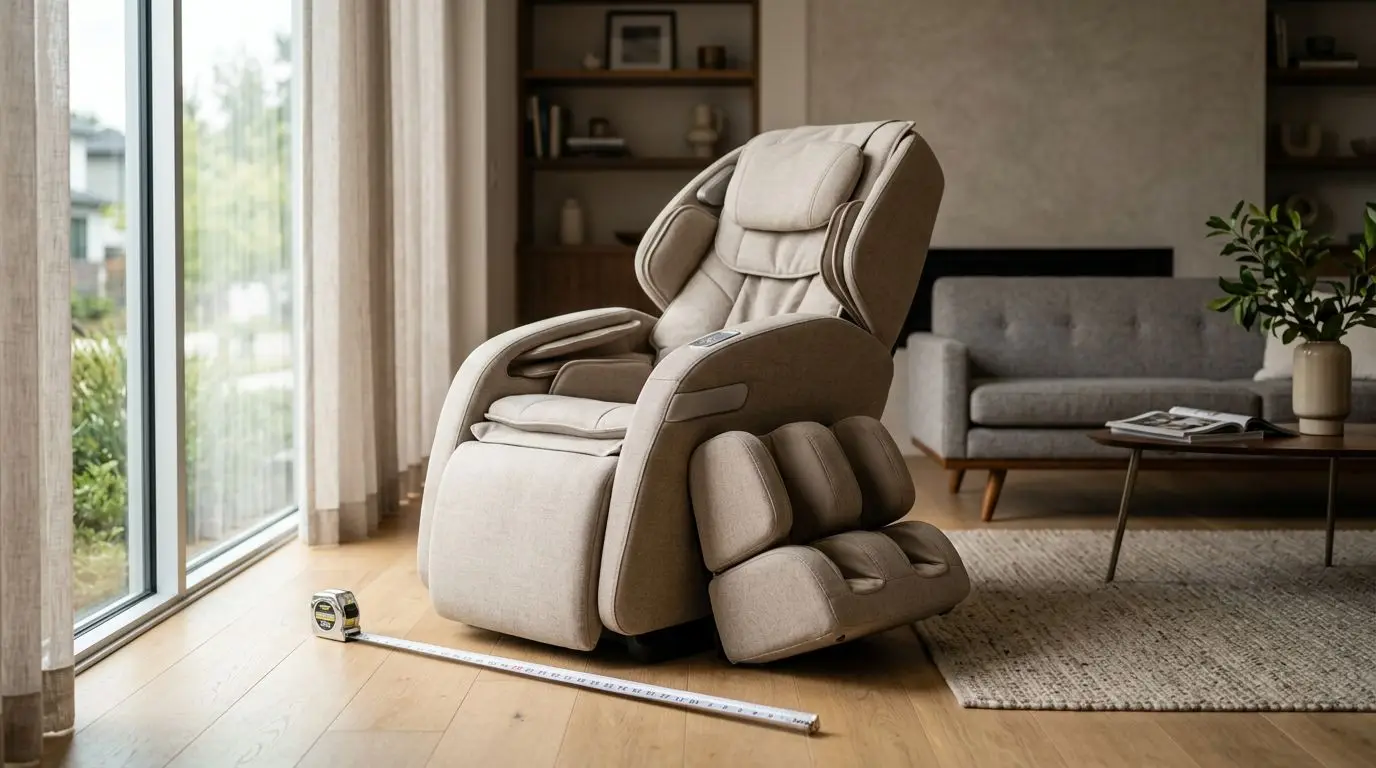
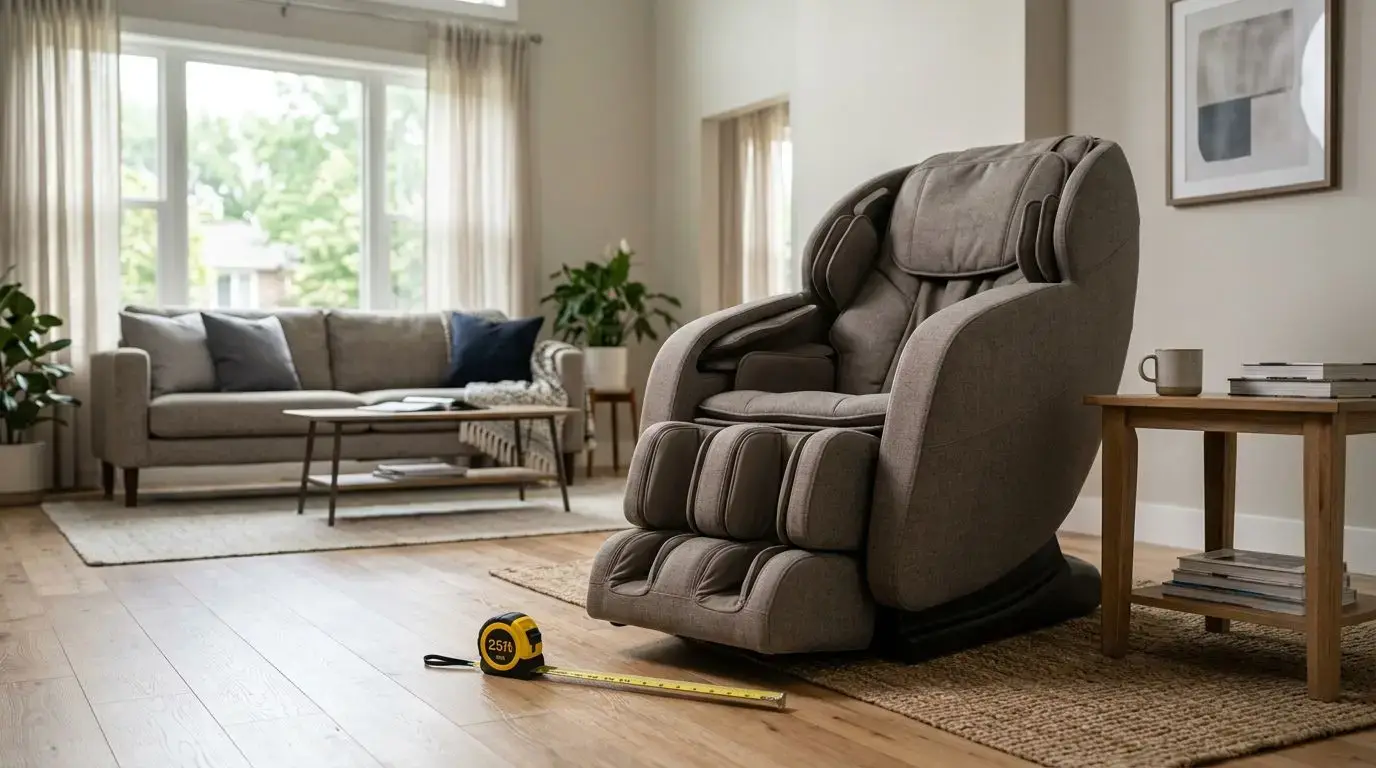
Massage chairs are large pieces of furniture. A typical full-size chair may be about 30 to 36 inches wide, 55 to 65 inches long when upright, and much longer when fully reclined. Before comparing extras, measure your body, room, doorway, and preferred recline space.
- Measure the room footprint. Leave walking space around the chair. Some chairs need only 2 to 6 inches behind them because they slide forward as they recline, while others may need 12 to 18 inches or more.
- Measure doorways and turns. Check the narrowest doorway, hallway turn, stair landing, or elevator path. A chair that fits the room still has to reach the room.
- Check user height range. Many chairs are designed around a range such as roughly 5 feet to 6 feet 3 inches, but fit varies. Shoulder rollers, calf wells, and footrests are the key areas to test.
- Check weight capacity. Many full-size chairs list capacities in the 250- to 300-pound range, with some higher or lower. Do not exceed the listed limit.
- Compare seat width. A narrow seat can make hip airbags feel too tight. If you like room to shift position, seat width matters as much as the massage programs.
- Plan electrical access. Use a grounded outlet and avoid running cords across walkways. Most chairs are meant to stay plugged in near their final location.
If possible, sit in a chair for at least one full 10- or 15-minute program before judging it. A feature that feels impressive for 30 seconds can feel too strong by minute 8. The opposite is also true: a subtle chair may feel better once the rollers finish a full scan and settle into a program.
Who it is best for: 5 shopper profiles
Different buyers should prioritize different features. A person who wants gentle evening comfort does not need the same feature set as someone who wants strong, adjustable back pressure after long workdays. Use these 5 profiles to sort the spec sheet.
Best for gentle comfort seekers
Look for 2D or mild 3D rollers, soft padding, adjustable intensity, and simple programs. Heat can be a worthwhile add-on. Avoid chairs known for aggressive roller depth unless they have low settings and removable pads.
Best for strong-pressure fans
Prioritize 3D depth control or a well-executed 4D system. A body scan, adjustable roller width, and manual spot control are more important than extra sound features or decorative lighting. A reclined position can increase perceived pressure, so test the strongest settings carefully.
Best for broad coverage
Choose an L-track or SL-track if you want roller contact beyond the lower back. Add calf and foot features if lower-body comfort matters. Check the footrest extension range, especially if users differ by 6 inches or more in height.
Best for shared households
Adjustability is the priority. Look for multiple user intensity levels, several auto programs, manual zone control, and airbag zones that can be turned off. A 3D chair often makes sense because one person can use a light setting and another can choose deeper pressure.
Best for small spaces
Look for space-saving recline and a narrower frame. Confirm rear clearance in inches, not just the phrase space saving. If your room is tight, a chair that needs 3 inches behind it may be much easier to place than one that needs 18 inches.
Budget priorities: what to pay attention to across 3 tiers
Without naming prices, it helps to think in 3 budget tiers: entry, mid-range, and premium. The right tier depends on how often you will use the chair, how many people will share it, and whether you care more about firm roller control or extra comfort features.
| Budget tier | Typical feature focus | Smart priority | Possible compromise |
|---|---|---|---|
| Entry | 2D rollers, S-track, basic recline, limited airbags | Comfortable fit and reliable controls | Less depth adjustment |
| Mid-range | 3D rollers, L-track or SL-track, more air zones, heat | Adjustable pressure and better coverage | Fewer premium rhythm options |
| Premium | 4D-style variation, advanced programs, extensive airbags, refined foot features | Fine-tuned feel and shared-user flexibility | Higher complexity and larger size |
If you expect to use the chair 4 or 5 days a week, pay closer attention to roller quality, fit, and controls. If you will use it occasionally, a simpler chair may be enough. Do not pay extra for features you will turn off. Some shoppers dislike arm airbags, strong foot rollers, voice controls, or very firm seat rollers after trying them.
A practical upgrade order is: first, better fit; second, better roller depth control; third, better track coverage; fourth, heat and airbags; fifth, convenience features such as app controls, speakers, or memory programs. Comfort comes before novelty.
Safety and comfort settings: start with 15 minutes
A massage chair is a consumer wellness product, not a medical device. Start with a 10- to 15-minute session, use the lowest intensity that feels comfortable, and stop if the pressure feels sharp, pinching, numbing, or unusually uncomfortable.
Some people should ask a physician before using a massage chair, especially one with strong rollers, heat, compression, or inversion-style recline. This includes anyone who is pregnant; has a pacemaker or other implanted cardiac device; has a history of blood clots or uses anticoagulants; has osteoporosis; has had a recent fracture or surgery; has spinal disc problems; has neuropathy; or has uncontrolled hypertension. Do not treat the chair as a substitute for professional medical advice.
For everyday comfort, adjust one setting at a time. Lower the roller depth before changing the whole program. Turn off calf or arm airbags if they feel too tight. Add a folded towel or manufacturer-approved pad behind your back if the rollers feel too direct. Small changes can make the difference between a chair you use and a chair you avoid.
FAQ: 5 common massage chair feature questions
Is 4D always better than 3D?
No. A 4D label usually means more rhythm and speed variation, but the feel depends on the chair design. A well-built 3D chair with clear depth control may be a better choice than a 4D chair that does not fit your body.
Should I choose an L-track or SL-track?
Choose an L-track if your top priority is extended coverage into the seat area. Choose an SL-track if you want that extension plus a more contoured path along the back. If possible, test how the rollers transition from lower back to seat.
How many airbags do I need?
There is no perfect number. For many shoppers, placement and adjustability matter more than count. A chair with 30 to 40 well-placed airbags and 3 intensity levels may feel better than a chair with many more airbags but limited control.
Is heat worth paying extra for?
Heat is worth considering if you like a warmer, cozier session, especially in the lower back, calves, or feet. It should be viewed as a comfort feature. It will not make up for poor fit, harsh rollers, or a track that misses your preferred areas.
What feature should I prioritize first?
Prioritize fit and roller feel first. After that, compare 3D or 4D depth control, then track coverage, then heat and airbags. A chair that fits your height, seat width, and pressure preference will usually be more satisfying than one with the longest feature list.
Frequently asked questions
Is 4D always better than 3D in a massage chair? +
No. A 4D label usually means more rhythm and speed variation, but the feel depends on the chair design and fit. A well-built 3D chair with useful depth control can be the better choice.
Should I choose an L-track or an SL-track? +
Choose an L-track if you mainly want roller coverage into the seat area. Choose an SL-track if you want extended seat coverage plus a contoured path along the back.
How many airbags should a massage chair have? +
There is no ideal number. Placement, fit, and adjustable intensity matter more than the count. A chair with fewer well-placed airbags may feel better than one with many poorly positioned air cells.
Is heat worth it in a massage chair? +
Heat can make a session feel warmer and more comfortable, especially in the lower back, calves, or feet. Treat it as a comfort feature, not as a substitute for good rollers, fit, and track coverage.
What massage chair feature should I prioritize first? +
Start with body fit and roller feel. Then compare roller depth control, track coverage, heat, airbags, and convenience features in that order.
Related guides
How to Choose a Massage Chair for Home Use
14 min read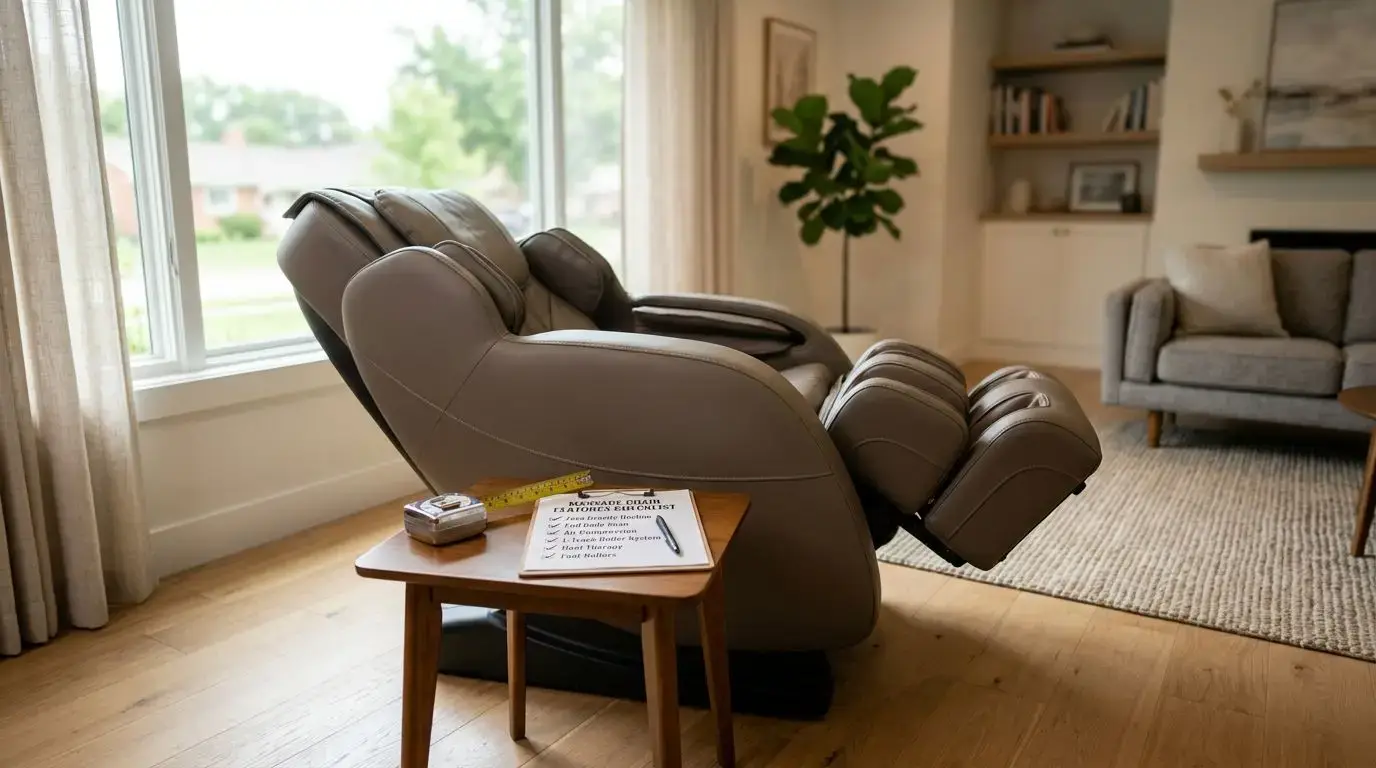
Best Massage Chair Features to Look For Before You Buy
13 min read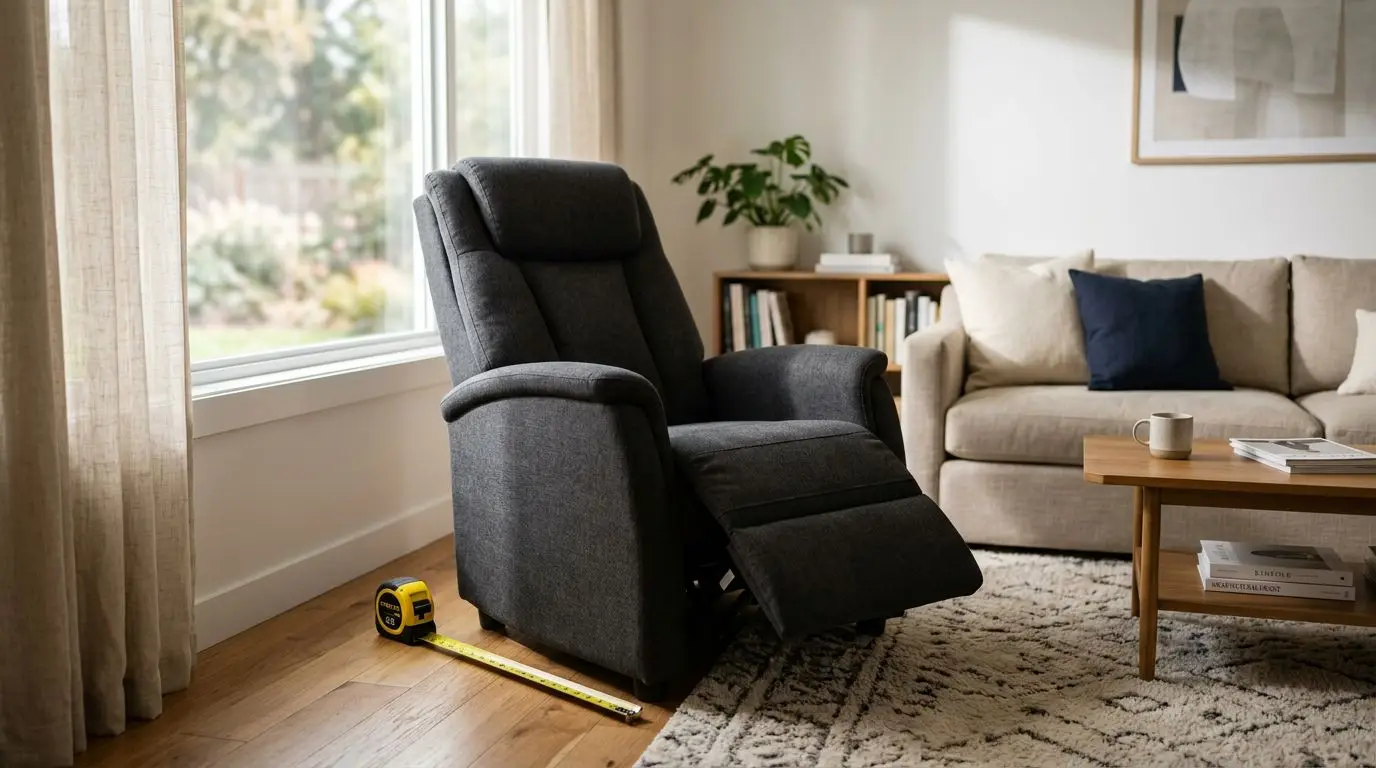
Shiatsu Massage Chairs: What the Term Means Before You Buy
13 min read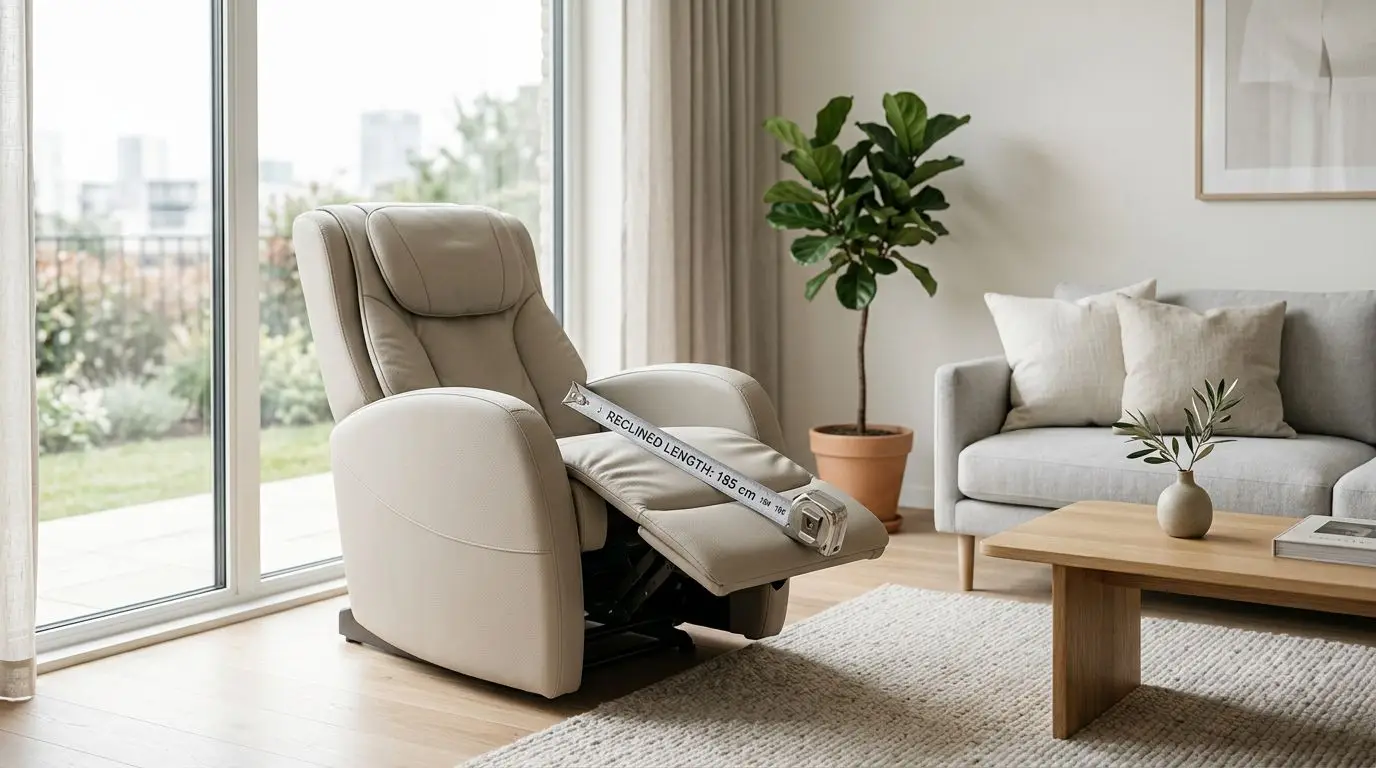
Ergonomic Massage Chairs: What “Ergonomic” Really Means Before You Buy
13 min readFull-Body Massage Chairs Explained: What They Massage, What They Miss, and Who They Fit Best
14 min read