Disclosure: We may earn a commission when you buy through links on this page, at no extra cost to you. We buy nothing, sell nothing and accept no payment for coverage — commissions never decide what we recommend. How we make money.
A shiatsu massage chair is not a separate medical category; it is a consumer massage chair programmed to mimic shiatsu-style pressing, kneading, and rolling with mechanical rollers. Compared with a basic vibration chair, it usually feels more targeted and firm, but the actual experience depends on roller depth, track length, padding, body scanning, and settings. Buy based on fit and feel, not on the word “shiatsu” printed on a spec sheet.
In retail, “shiatsu” is often used loosely. One chair may use slow circular kneading at the upper back, while another may combine pressing, tapping, and rolling from the neck to the glutes. Knowing what the term does and does not tell you makes it easier to compare chairs accurately.
What “shiatsu” means in a chair, and what it does not
Shiatsu is commonly associated with finger-pressure bodywork, but in a massage chair it refers to a style of mechanical motion rather than human hands. The chair uses rollers, arms, or nodes behind the backrest to press into the body in programmed patterns, often during automatic sessions that run about 10 to 20 minutes.
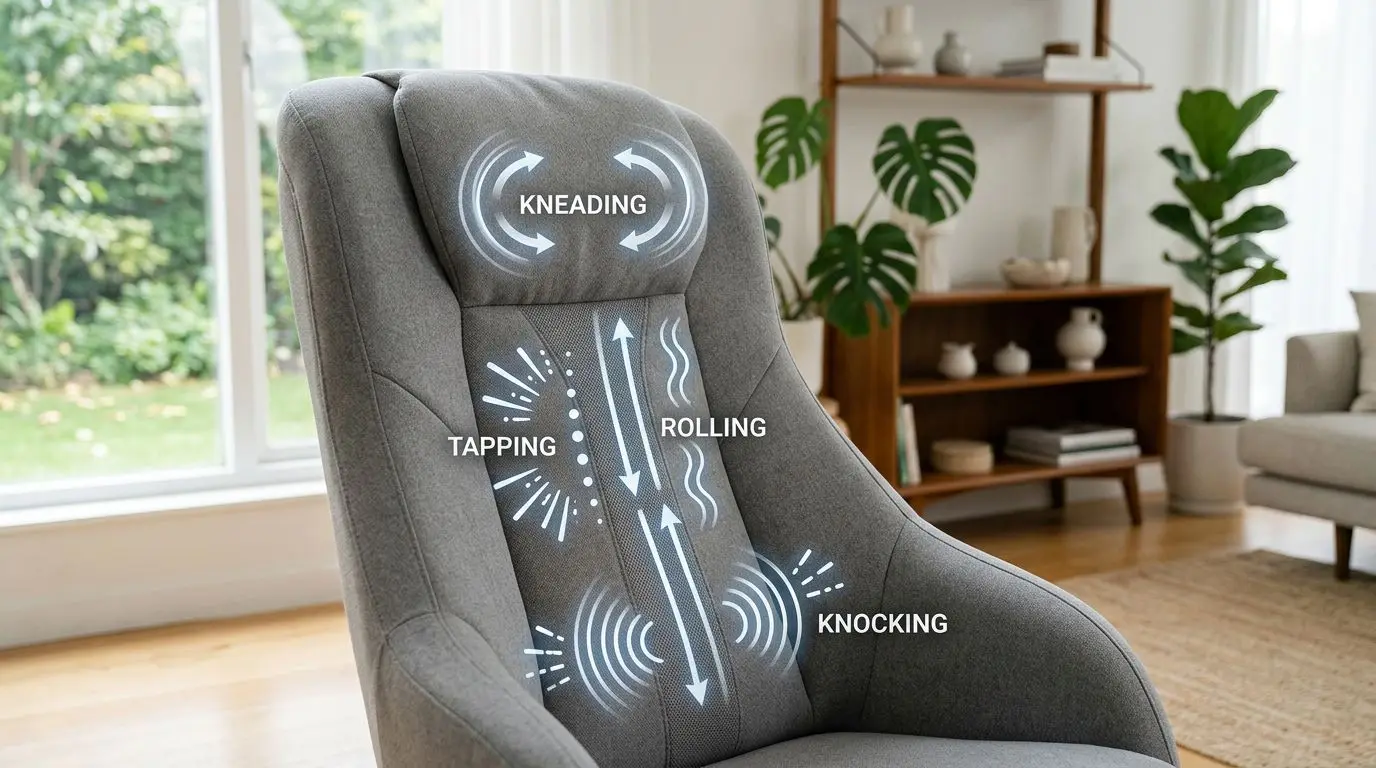
A shiatsu-style program may include kneading, small circles, firm holds, vertical rolling, tapping, or a blend of these movements. The goal is a hands-like pressure feel, especially along the back and shoulders, but the chair cannot respond with the judgment or sensitivity of a person. It follows motors, sensors, and pre-set routines.
The term also does not guarantee a specific quality level. A budget chair and a high-end chair can both advertise “shiatsu,” yet feel completely different. One may use fixed massage heads that move in a limited strip, while another uses multi-directional rollers on a long track with adjustable depth. The name is only a starting point.
It is also worth separating comfort language from health claims. A chair can be designed to feel firm, relaxing, broad, pinpoint, rhythmic, or gentle. It should not be treated as a medical device, and shoppers should be cautious when a listing makes sweeping claims about health outcomes.
How shiatsu-style roller movement feels: 2D, 3D, and 4D differences
The biggest difference between shiatsu-style chairs is roller movement. Most back mechanisms fall into 2D, 3D, or 4D categories. These labels are not perfectly standardized across the industry, but they are a useful way to compare how much pressure control and motion range you may get.
| Roller type | Typical movement | Pressure feel | What to look for |
|---|---|---|---|
| 2D rollers | Move up/down and side-to-side | Moderate, more surface-level | Good for users who want kneading and rolling without strong depth |
| 3D rollers | Move up/down, side-to-side, and in/out | Adjustable depth; can feel firmer | Look for at least 3 to 5 intensity levels |
| 4D rollers | 3D motion plus speed or rhythm variation | More lifelike pacing, depending on programming | Check whether speed and depth can be adjusted separately |
A 2D shiatsu chair can still feel good if the roller path lines up with your back and the padding is comfortable. It may press less deeply, which some buyers prefer. People who dislike strong pressure often do better with a gentler 2D design or a 3D chair kept on its lowest setting.
A 3D chair adds depth control, meaning the rollers can move outward toward the body. That is where shiatsu-style programs often feel more pronounced. A chair with 5 depth levels gives you more room to fine-tune pressure than one with only high and low settings.
4D is mostly about variation. A 4D chair may slow down during a press, speed up during a knead, or change the rhythm across the back. Some users like that more dynamic feel; others find it busy. The label alone does not prove the chair is stronger or better.
Track design changes the coverage by 15 to 20 inches or more
The massage track is the rail system that guides the rollers. This matters as much as the shiatsu program itself because it determines where the rollers can travel. A short track may cover the neck to the lower back, while a longer track may continue under the seat toward the glutes and upper hamstrings.
| Track type | Common coverage | Typical shopper expectation | Tradeoff |
|---|---|---|---|
| S-track | Follows the curve of the spine, often neck to lower back | Focused back coverage | Usually less seat-area coverage |
| L-track | Runs from upper back down under the seat | Back plus glute-area rolling | May not follow the upper-back curve as closely on some chairs |
| SL-track | Combines a spine-shaped curve with extended seat coverage | Broader neck-to-seat coverage | Often found in larger, heavier chairs |
Track length varies, but many full-size chairs fall roughly in the 40- to 55-inch range. A chair advertised as shiatsu with a 32-inch back-only track will feel very different from one with a 50-inch extended track. Neither is automatically better; the right choice depends on where you want coverage.
If your main concern is shoulder and mid-back feel, track contour and neck positioning may matter more than extra length. If you want the rollers to continue into the seat area, look for L-track or SL-track language and confirm the stated coverage zone. For taller users, also check whether the rollers reach high enough between the shoulder blades instead of stopping too low.
Shiatsu chairs compared with vibration, air compression, and stretch-style chairs
Many chairs combine several massage methods, so “shiatsu chair” can overlap with other categories. A full-size chair might use rollers for the back, air cells for the arms and legs, vibration in the seat, and a reclined stretch-style program in a single 15-minute cycle.
| Chair feature or type | How it feels | Best expectation | Possible downside |
|---|---|---|---|
| Shiatsu-style rollers | Targeted kneading, pressing, rolling | More defined back pressure | May feel too intense if padding is thin |
| Vibration | Buzzing or pulsing sensation | Light, broad comfort | Less targeted than rollers |
| Air compression | Inflating and releasing pressure around limbs | Even squeezing feel at arms, calves, or feet | Fit depends on body size and limb position |
| Stretch-style recline program | Chair holds and shifts the body while airbags secure sections | Gentle pulling or lengthening sensation | Not ideal for everyone; use caution with back or joint concerns |
| Foot rollers | Rolling pressure under the feet | Firm, localized foot sensation | Can feel sharp for sensitive feet |
If you are shopping specifically for a shiatsu feel, prioritize the back roller system first. Airbags and vibration can add comfort, but they do not replace roller quality. A chair with 30 airbags and weak rollers may feel less shiatsu-like than a simpler chair with well-tuned rollers and better depth control.
For foot and calf areas, “shiatsu” can mean rotating nodes or rollers under the feet rather than the same mechanism used in the backrest. Check whether the foot section has rollers, air compression only, or both. The difference is easy to feel: rollers create a moving pressure line, while air cells squeeze and release.
Who a shiatsu-style massage chair is best for
A shiatsu-style chair is best for shoppers who want a more defined pressure feel than vibration and expect regular back coverage in short home sessions of about 10 to 20 minutes. It is not the best choice for every body, every sensitivity level, or every room.
- Good fit: People who like kneading, rolling, and point pressure along the upper, middle, or lower back.
- Good fit: Users who want repeatable programs instead of manually adjusting a handheld massager for 15 minutes.
- Good fit: Households where multiple adults can use adjustable settings, especially chairs with 3 or more intensity levels.
- Possible mismatch: Anyone who dislikes firm pressure or startles easily when rollers move under the shoulders.
- Possible mismatch: Very small or very tall users if the chair’s body scan and shoulder position do not align well.
- Possible mismatch: Apartments or tight rooms where a full-size chair cannot recline safely.
The best users are realistic about what the chair does. It can provide a structured comfort routine and a consistent pressure pattern. It cannot think, diagnose, or replace professional advice when pain, injury, or a medical condition is involved.
If you are buying for more than one person, test adjustability carefully. A chair that feels great to a 5-foot-6 user may press awkwardly on someone who is 6-foot-2. Weight capacity also matters; many full-size chairs list limits somewhere around 250 to 300 pounds, but you should follow the exact rating for the chair you are considering.
How to choose and measure before you buy
Start with your body, then measure the room. A massage chair is furniture with moving parts, and many full-size units weigh 150 to 300 pounds. Some need several inches of wall clearance to recline, while space-saving designs may need about 2 to 6 inches behind the backrest.
Measure your body fit
- Height range: Check the stated user height range. If you are near either end, body scanning accuracy becomes more important.
- Shoulder position: The neck and shoulder rollers should not jam into the base of the skull or sit too low on the shoulder blades.
- Seat width: Compare the interior seat width with your hip width while wearing normal clothing. A difference of 1 to 2 inches can change comfort.
- Leg length: If the ottoman extends, check the maximum extension. Your knees should not be forced upward or locked straight.
- Foot size: Enclosed foot wells can be restrictive. Users with larger shoe sizes should confirm the footrest dimensions.
Measure your room
- Footprint upright: Measure width, depth, and height in the seated position.
- Footprint reclined: Confirm the full reclined length, often 70 inches or more on large chairs.
- Doorways: Measure door width, hallway turns, and stair landings. A 30-inch doorway can be a problem for bulky packaging.
- Floor surface: Use a mat on wood, vinyl plank, or delicate flooring to spread weight and reduce marks.
- Power: Place the chair near a grounded outlet. Avoid running cords across walking paths.
When comparing specs, give more weight to fit-related details than to long feature lists. A chair with 12 automatic programs is not useful if the shoulder rollers hit the wrong place. Fit comes first.
Features that change the shiatsu feel most
Two chairs can both advertise shiatsu and feel nothing alike. The features below have a larger effect on day-to-day comfort than the label itself, especially during repeated 15-minute sessions.
| Feature | Why it matters | What to check |
|---|---|---|
| Body scanning | Helps estimate shoulder height and back shape | Can you manually adjust shoulder position if the scan misses? |
| Intensity control | Changes roller depth, air pressure, or both | Look for multiple levels, not just on/off |
| Manual zone control | Lets you keep rollers in one region | Spot and partial-back modes are useful |
| Padding thickness | Softens or sharpens roller pressure | Removable pads allow more flexibility |
| Heat element | Adds surface warmth in selected areas | Confirm location; back heat and calf heat feel different |
| Recline angle | Changes how body weight rests on rollers | Deeper recline usually makes rollers feel stronger |
Zero-gravity positioning is another common feature. In retail terms, this usually means the chair reclines with the legs elevated, distributing body weight differently across the backrest. It can make rollers feel more pronounced because more of your weight rests into the chair.
Judge heat as comfort heat, not as a health feature. Many chairs place warmth in the lower back, and some add it to calves or feet. Ask where the heat is located, how warm it gets, and whether it can be turned off independently.
Manual controls matter more than many shoppers expect. Automatic programs are convenient, but the ability to adjust roller width, speed, zone, and depth is what helps you make a chair livable over time. Look for a remote or app layout you can understand without rereading the manual every session.
Safety, comfort limits, and when to ask a physician
Use a shiatsu-style massage chair conservatively at first. Start with the lowest intensity for 5 to 10 minutes, especially if you are new to mechanical rollers or if the chair has 3D depth control. Stop if the pressure feels sharp, causes numbness, or leaves you uncomfortable afterward.
Ask your physician before using a massage chair if you are pregnant or if you have a pacemaker or other implanted cardiac device, a history of blood clots, use anticoagulant medication, osteoporosis, a recent fracture or surgery, spinal disc problems, neuropathy, or uncontrolled hypertension. Do not try to “work through” pain or use strong roller pressure over an injured area.
Children should not use a full-size massage chair without adult supervision, and pets should be kept away from moving leg rests and reclining sections. The footrest, backrest, and side panels can pinch if someone reaches into the mechanism while it is operating.
Limit sessions according to the manufacturer’s instructions. Many chairs are designed around timed cycles rather than continuous all-day use. If one 15-minute session leaves you feeling overworked, lower the intensity, add padding, use a shorter program, or choose a gentler mode next time.
Common mistakes when shopping for a shiatsu massage chair
The first mistake is treating “shiatsu” as a quality rating. It is a style label, not proof of roller strength, build quality, or comfort. A better comparison looks at roller type, track design, body fit, controls, warranty terms, and delivery requirements.
The second mistake is ignoring room size. A chair that is 32 inches wide and over 60 inches deep when upright can dominate a small office or bedroom, and a reclined length around 70 inches may block doors or walkways. Measure before you fall in love with a feature list.
The third mistake is assuming more intensity is always better. Strong rollers can feel impressive in a 2-minute store demo but too aggressive during a full cycle at home. Adjustable pressure is more useful than maximum pressure.
The fourth mistake is overlooking return logistics. Massage chairs are heavy, bulky items. Before buying, understand delivery level, assembly needs, packaging disposal, trial period, return shipping rules, and whether the chair must be repacked in the original box.
FAQ: 5 quick answers before you buy
Is a shiatsu massage chair stronger than a regular massage chair?
Not automatically. Shiatsu usually refers to kneading and pressing patterns, while strength depends on roller depth, padding, recline angle, and intensity settings. A 3D chair on a high setting will often feel firmer than a basic 2D chair.
Does every shiatsu chair massage the neck and shoulders?
No. Coverage depends on the track and roller reach. Some chairs reach the upper shoulders well, while others stop lower on the back. Check the track design, user height range, and whether shoulder position can be manually adjusted.
What is the best session length for a new user?
Start with 5 to 10 minutes on low intensity. If that feels comfortable, move toward the chair’s normal automatic cycle, commonly around 15 minutes. Longer is not always better.
Are foot rollers the same as shiatsu back rollers?
No. Foot rollers are usually smaller rotating mechanisms under the feet, often paired with air compression. They can feel firm and localized, but they are separate from the back roller track.
Can a shiatsu-style chair be too intense?
Yes. Thin padding, deep 3D rollers, strong recline, or poor body alignment can make pressure feel sharp. Use lower settings, add a soft pad if allowed, or choose a gentler program.
What should I prioritize if I can’t test the chair in person?
Prioritize clear specs: roller type, track length, height range, seat width, reclined footprint, intensity levels, return policy, and warranty terms. Videos and user manuals can also show how adjustable the chair really is.
Frequently asked questions
Is a shiatsu massage chair stronger than a regular massage chair? +
Not automatically. Shiatsu usually refers to kneading and pressing patterns, while strength depends on roller depth, padding, recline angle, and intensity settings.
Does every shiatsu chair massage the neck and shoulders? +
No. Coverage depends on the track and roller reach. Check the track design, user height range, and whether shoulder position can be manually adjusted.
What is the best session length for a new user? +
Start with 5 to 10 minutes on low intensity. If that feels comfortable, move toward the chair’s normal automatic cycle, commonly around 15 minutes.
Are foot rollers the same as shiatsu back rollers? +
No. Foot rollers are usually smaller rotating mechanisms under the feet, often paired with air compression. They are separate from the back roller track.
What should I prioritize if I can’t test the chair in person? +
Prioritize roller type, track length, height range, seat width, reclined footprint, intensity levels, return policy, and warranty terms.
Related guides
How to Choose a Massage Chair for Home Use
14 min read
How to Compare Massage Chair Features: 2D, 3D, 4D, L-Track, SL-Track, Heat, and Airbags
13 min read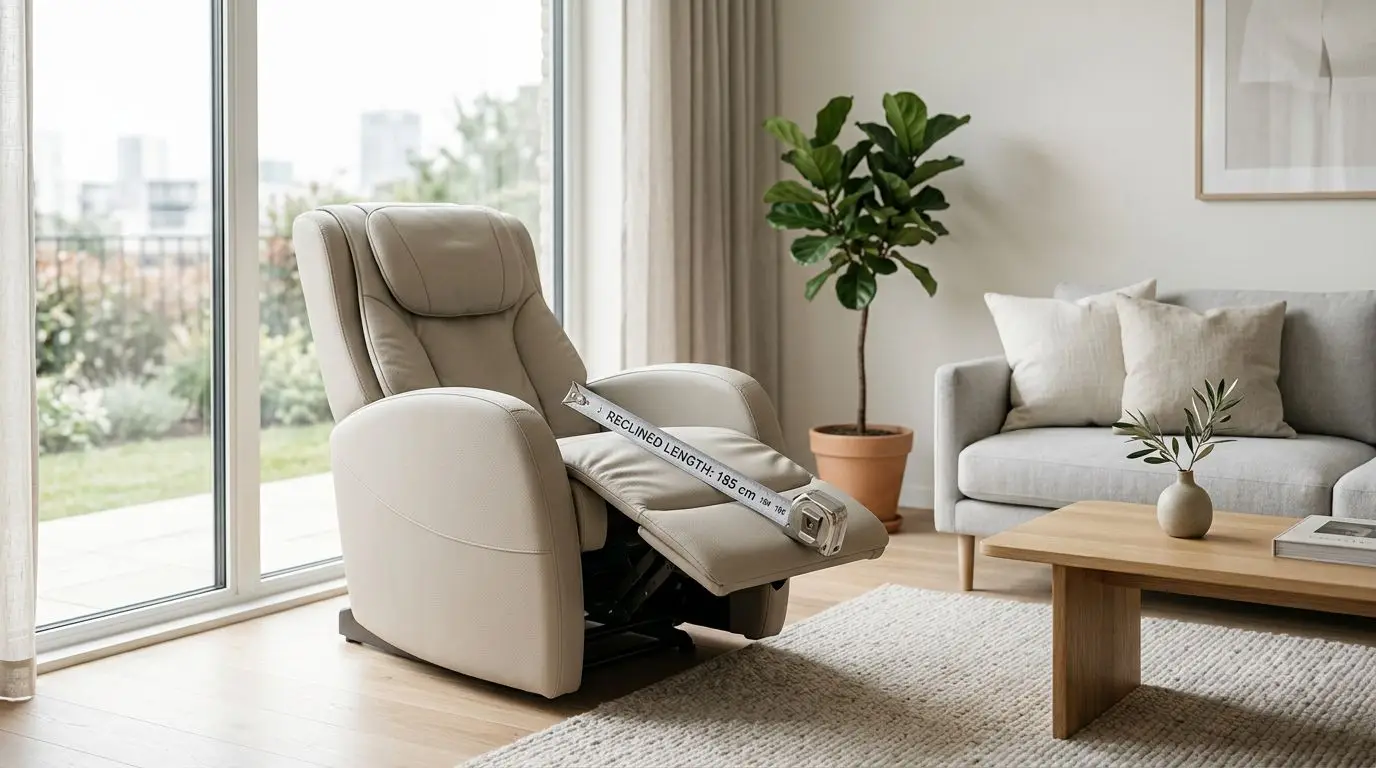
Ergonomic Massage Chairs: What “Ergonomic” Really Means Before You Buy
13 min read
How to Adjust Massage Chair Intensity Without Overdoing It
13 min read
Massage Gaming Chairs Explained: How They Compare with Real Massage Chairs
12 min read