Disclosure: We may earn a commission when you buy through links on this page, at no extra cost to you. We buy nothing, sell nothing and accept no payment for coverage — commissions never decide what we recommend. How we make money.
A full-size massage chair is the better choice if you want deeper pressure, broader body coverage, and a dedicated at-home relaxation setup. A portable massage pad is better if space is tight, your budget is smaller, or you want something you can move between a sofa, office chair, and bedroom. For many households, the choice comes down to 3 things: how much coverage you want, how much room you can spare, and whether you will use it often enough to justify the cost.
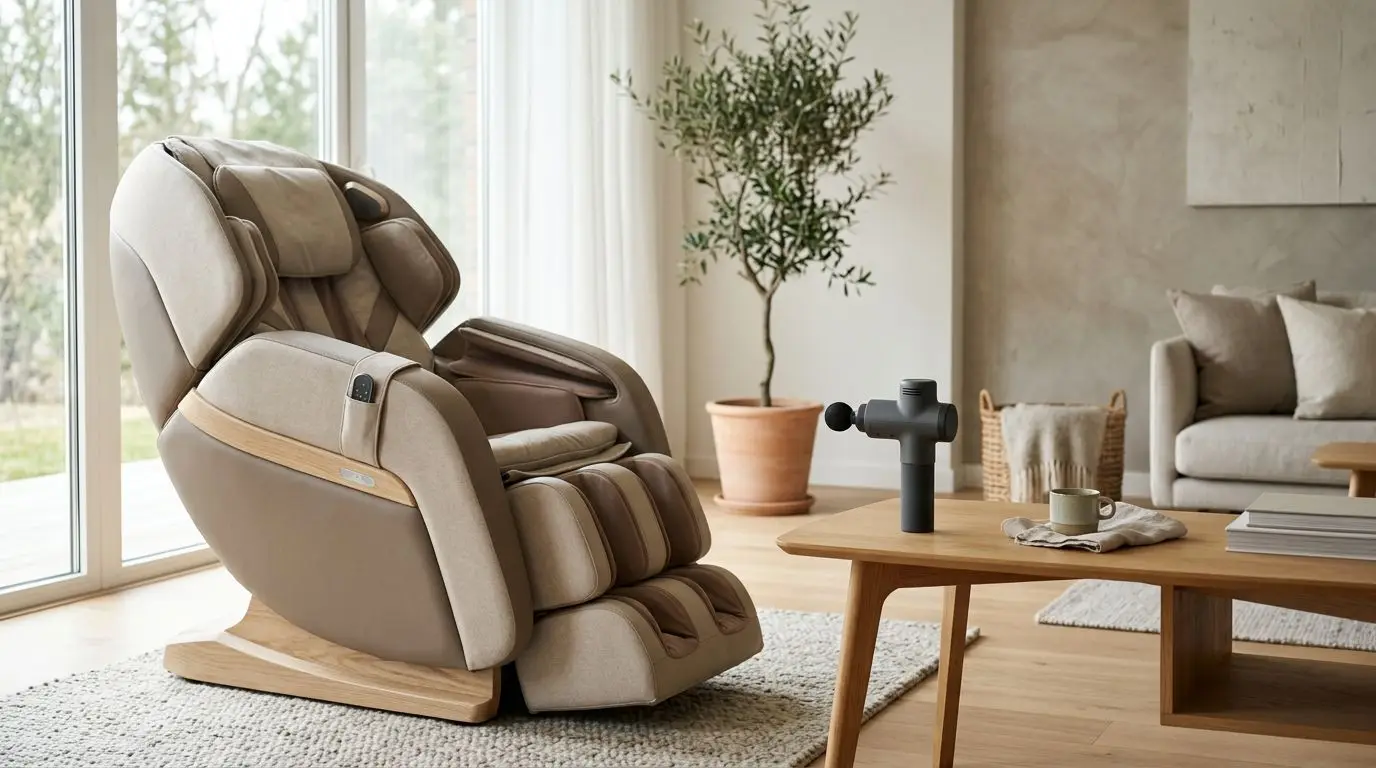
Both can feel good after a long day, but they are not interchangeable. A full-size chair is furniture with built-in rollers, airbags, recline systems, and sometimes foot-and-calf massage. A massage pad is an add-on cushion that straps to an existing seat and usually focuses on the back, with heat and vibration on some versions.
Quick comparison: 2 very different home massage options
A portable pad can weigh as little as 5 to 15 pounds, while a full-size chair commonly weighs 150 to 300 pounds or more. That one difference affects almost everything: delivery, placement, storage, cleaning, and how easily you can move it when guests come over.
| Category | Full-size massage chair | Portable massage pad |
|---|---|---|
| Typical coverage | Neck, back, seat area, calves, feet, and arms depending on features | Mostly upper and lower back; some include seat vibration |
| Pressure feel | Often stronger, broader, and more structured | Lighter to moderate, depending on chair support behind it |
| Space needed | Dedicated floor space, often 30 to 36 inches wide plus recline clearance | Fits on an existing chair; stores in a closet or under a bed |
| Setup | Delivery, assembly, placement, and power outlet planning | Unbox, strap to chair, plug in |
| Portability | Low; usually a permanent furniture piece | High; easy to move room to room |
| Typical cost | Often about $1,000 to $8,000+ depending on features | Often about $50 to $300, with premium pads higher |
| Best fit | Frequent users who want a full-body experience | Occasional users, renters, small spaces, and budget buyers |
Think of the chair as a dedicated relaxation station and the pad as a flexible accessory. Neither is automatically the smarter buy; the right choice depends on how you plan to use it.
Comfort and pressure feel: rollers, padding, and 15-minute sessions
Many built-in programs on chairs and pads run about 10 to 20 minutes, with 15 minutes being a common default. That short window matters because comfort is not only about intensity. It also depends on whether the pressure feels even, your body is supported, and you can stay relaxed for the whole cycle.
A full-size chair usually wins on body support. You sit inside a shaped frame, often with a reclining backrest, leg rest, head pillow, and side panels. The rollers move along a fixed track, so the experience tends to feel more controlled and repeatable. In higher-feature chairs, body scanning may adjust roller travel to your shoulder position, though results vary by body shape and clothing thickness.
A portable pad depends heavily on the chair underneath it. Put the same pad on a soft couch, a firm dining chair, and a deep recliner, and it can feel like 3 different products. If the seat back flexes, the rollers may not press as directly. If the chair is too narrow or curved, the pad may shift.
Pressure also feels different. Full-size chairs can combine roller kneading, tapping, rolling, air compression, recline, and foot rollers. Pads usually provide kneading nodes or rolling mechanisms in the back cushion, sometimes with vibration in the seat. Pads can be pleasant, but they rarely match the wraparound support or leverage of a dedicated chair.
- Choose a full-size chair if you prefer strong, structured pressure and full seated support.
- Choose a pad if you prefer lighter pressure or want to use your own favorite chair.
- Be cautious with heat. Built-in heat is usually gentle and localized, but you should avoid falling asleep with any heated device running.
Safety note: if you are pregnant, have a pacemaker or other implanted cardiac device, have a history of blood clots, take anticoagulants, have osteoporosis, neuropathy, uncontrolled hypertension, spinal disc problems, or have had a recent fracture or surgery, ask your physician before using a massage chair, massage pad, strong compression, vibration, or heat.
Coverage: back-only pads vs. 50-inch and 60-inch chair tracks
Coverage is where the full-size chair has the clearest advantage. Many portable pads focus on a vertical back area roughly 20 to 30 inches tall, while full-size chairs use internal tracks that may run about 30 inches on shorter S-tracks or 45 to 60 inches on longer L-track or SL-track designs.
An S-track follows the curve of the spine from the neck and shoulders down toward the lower back. An L-track continues under the seat area, adding glute and upper hamstring contact. An SL-track combines the curved feel of an S-track with extended travel under the seat. These track terms matter because they tell you where the rollers can physically go.
Portable pads do not have the same frame geometry. Most are designed for the back only. Some include a seat base with vibration, but vibration is not the same as a roller traveling underneath you. A few taller pads reach higher into the shoulder area, though very tall users may still find that the rollers stop short of the spot where they want pressure.
| Coverage area | Full-size chair | Portable pad |
|---|---|---|
| Neck and shoulders | Often available, fit varies by user height | Sometimes, but height alignment can be limited |
| Mid-back | Strong coverage on most chairs | Usually the strongest area for pads |
| Lower back | Common, often adjustable by program or zone | Common, though angle depends on the base chair |
| Seat and glutes | Available on L-track and SL-track chairs | Usually vibration only, if included |
| Calves and feet | Available on many full-size chairs | Not included |
| Arms and hands | Available on some chairs with air cells | Not included |
If your priority is back-only comfort while watching TV or working from home, a pad may be enough. If you want your legs, feet, arms, and back included in one seated routine, a full-size chair is the more complete format.
Cost: $50 pads vs. $1,000+ chairs
Portable massage pads often fall in the roughly $50 to $300 range, while full-size massage chairs commonly start around $1,000 and can climb well beyond $8,000 when they include advanced tracks, multiple motors, air compression zones, foot rollers, premium upholstery, and delivery services. Prices vary widely, but the gap is real.
A pad is the lower-risk purchase. If you use it twice a week for a year, the cost per session can be quite low. If it ends up in a closet after 3 weeks, the financial sting is limited. That makes pads appealing for people who are testing whether at-home massage fits their routine.
A full-size chair is more like buying furniture or an appliance. You are paying for a frame, motors, rollers, electronics, upholstery, recline hardware, and shipping weight. You may also need to think about in-home delivery, stairs, room access, and warranty service. A chair can be a good value for a household that uses it regularly, but it is harder to justify as an impulse purchase.
Cost questions to ask before buying
- Will at least 1 person use it 3 or more times per week?
- Do you need full-body coverage, or mostly back contact?
- Can you try a similar chair or pad before buying?
- Is delivery included, or is curbside drop-off the only option?
- What does the warranty cover: parts, labor, motors, upholstery, or remote controls?
- If it breaks, can you realistically move it for service?
One practical strategy is to start with a pad if you are unsure. If you use it consistently for 2 or 3 months and keep wishing for leg, foot, recline, and stronger roller coverage, a full-size chair becomes easier to evaluate.
Space and storage: measure 36 inches wide, then check recline clearance
A full-size massage chair often needs a footprint around 30 to 36 inches wide and 55 to 70 inches long when reclined, depending on design. Some space-saving chairs can sit closer to a wall, sometimes needing only a few inches behind them, but you still need room for the leg rest to extend and for a person to enter and exit comfortably.
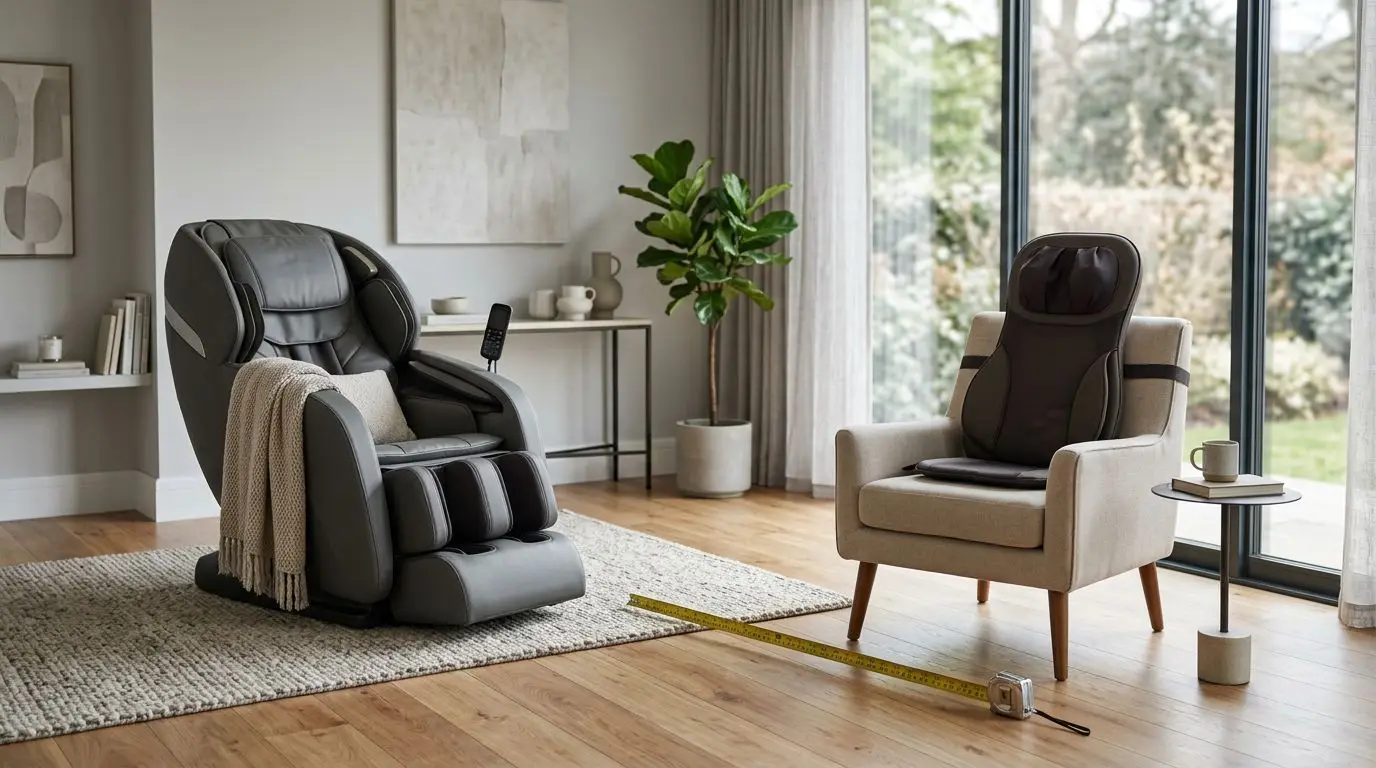
Measure the room before you shop. Use painter’s tape on the floor to outline the chair’s expected footprint. Then add walking space. A chair that technically fits but blocks a closet, walkway, or sliding door will become annoying fast.
Delivery access matters too. Measure doorways, stair turns, hallway width, and elevator clearance. Many chairs are delivered in large cartons, and some require partial assembly. If the room is upstairs, confirm whether the delivery service includes stairs. Curbside delivery means the box may be left outside or in a garage, which is a major issue for a 200-pound item.
A portable pad is much simpler. Most can be lifted with 1 hand or carried under an arm. You can place it on a dining chair, office chair, sofa, or recliner, then move it when you are done. It may still need a nearby outlet, and the cord should not cross a walking path.
| Home situation | Better fit | Why |
|---|---|---|
| Studio apartment under 600 square feet | Portable pad | No dedicated floor space required |
| Dedicated den or bedroom corner | Full-size chair | Permanent placement is easier |
| Frequent moves or renting | Portable pad | Lower weight and easier packing |
| Household with multiple daily users | Full-size chair | Better durability and wider coverage |
| Shared living room with tight walkways | Portable pad | Stores away after use |
Space is not just square footage. It is whether the product can live in your home without feeling like an obstacle.
Features compared: heat, airbags, zero gravity, and 3D rollers
Feature lists can get long, so focus on what you will actually feel during a 15-minute session. Full-size chairs typically offer more features because they have more room for motors, airbags, tracks, and leg assemblies. Pads focus on compact back contact.
| Feature | What it does | Common in chairs? | Common in pads? |
|---|---|---|---|
| 2D rollers | Move up/down and side-to-side along the back | Yes | Yes, in simplified form |
| 3D rollers | Add in/out depth adjustment for pressure control | Yes, often on midrange and higher chairs | Less common |
| 4D rollers | Vary rhythm or speed in addition to depth and movement | Available on some chairs | Rare |
| Air compression | Inflatable cells squeeze areas such as calves, arms, or shoulders | Common on full-size chairs | Rare |
| Foot rollers | Roll under the soles | Common on many full-size chairs | No |
| Heat | Warmth in the back, seat, calves, or feet depending on design | Common | Common in the back area |
| Zero gravity recline | Reclines the body with legs elevated for a cradled feel | Common in many chairs | No, depends on your chair |
| Body scanning | Attempts to map shoulder height and back position | Common on many chairs | Limited or absent |
Zero gravity is worth explaining. In massage chairs, it usually means a reclined position where your knees are elevated and your body weight settles back into the chair. It can make roller pressure feel more even because you are not sitting fully upright. It is a comfort position, not a medical feature.
3D rollers can also matter. If multiple people will use the same chair, depth adjustment lets one person choose lighter pressure while another chooses a firmer feel. Pads may offer intensity settings, but they usually have less mechanical range.
Who it is best for: 5 common buyer profiles
If 2 adults and 1 teenager plan to use the device several times a week, the math and convenience may favor a full-size chair. If 1 person wants occasional back massage at a desk or sofa, a pad is usually the more practical pick.
Choose a full-size massage chair if:
- You want coverage beyond the back, such as calves, feet, arms, and seat area.
- You have a dedicated spot that can stay clear every day.
- You prefer a reclined, supported position rather than sitting upright.
- You expect frequent use, such as 3 to 7 sessions per week.
- You are comfortable with a larger upfront purchase and delivery planning.
Choose a portable massage pad if:
- You are working with a smaller budget.
- You live in an apartment, dorm, or rental home.
- You want back-focused contact and do not need foot or calf features.
- You want to store it after each use.
- You are buying for occasional use or testing the habit before committing to a chair.
There is also a middle-ground buyer: someone who wants a full-size chair someday but is not sure which features matter. A pad can help you learn your pressure preferences, heat tolerance, and preferred session length before spending much more.
How to choose and measure: a 10-minute checklist
You can avoid most buyer’s remorse with a tape measure, a chair test, and 10 minutes of honest planning. Do this before you compare feature lists.
Step 1: Measure your body fit
For a full-size chair, check the stated user height range and weight limit. Many chairs are designed around a broad adult range, but fit can vary at the very short and very tall ends. Shoulder roller alignment is especially important; if the rollers land too high or too low, the chair may never feel right.
For a pad, measure the back height of the chair you plan to use. A pad that is 28 inches tall may not sit well on a low lounge chair. Also check seat depth. If the pad pushes you forward, your lower back may not stay against the rollers.
Step 2: Measure your room
- Chair width: allow roughly 30 to 36 inches for many full-size chairs.
- Reclined length: plan for about 55 to 70 inches unless the manufacturer states otherwise.
- Wall clearance: verify the exact requirement; space-saving designs still need front clearance.
- Outlet location: avoid extension cords across walkways.
- Delivery path: measure doorways, stairs, and turns.
Step 3: Decide which features you will actually use
Do not pay for a long feature list if you only want lower-back kneading while reading. At the same time, do not buy a basic pad and expect it to mimic foot rollers, calf compression, recline, and long-track coverage.
Step 4: Check controls and noise
Controls should be readable and simple. Some people like app controls, but a physical remote can be easier for quick adjustments. Noise varies, but any chair or pad with motors will make sound. If you plan to use it during TV time, look for comments about motor hum, air pump noise, and beeping controls.
Durability, cleaning, and daily use after 1 year
A product that feels good on day 1 still has to work with your life on day 365. Full-size chairs have more moving parts, which can mean better capability but also more components that may need service over time. Pads are simpler, cheaper to replace, and easier to store, though they may show wear sooner if used heavily every day.
Upholstery is a key difference. Full-size chairs often use synthetic leather or fabric panels over thick padding. Wipe-down care is usually simple, but cracks, peeling, and seam wear can happen, especially in sunny rooms or dry indoor air. Pads use fabric, mesh, vinyl, or synthetic coverings and may collect lint or pet hair more easily because they move around the house.
Daily usability matters more than impressive specs. If the chair is buried in a spare room, you may stop using it. If the pad has to be untangled, strapped on, and repositioned every time, it may also get ignored. The best choice is the one you can use without turning relaxation into a chore.
FAQ: 6 practical questions before you buy
Is a full-size massage chair always stronger than a portable pad?
Usually, but not always. A full-size chair often has better leverage, deeper roller mechanisms, and more body support, while a pad’s feel depends on the chair behind it. Some people still prefer a pad because it can feel simpler and less intense.
Can a portable massage pad replace a massage chair?
It can replace a chair for back-focused use, especially in small spaces. It will not duplicate full-body features such as foot rollers, calf sections, arm airbags, long-track seat coverage, or zero gravity recline.
How much space do I need for a massage chair?
Plan for about 30 to 36 inches of width and up to 55 to 70 inches of length when reclined, unless the specific chair lists different measurements. Also measure the delivery path, not just the final room.
Are heated massage pads safe to use every day?
Many people use heated pads regularly, but follow the time limits in the manual and avoid sleeping on them. If you have reduced sensation, neuropathy, pregnancy, an implanted cardiac device, recent surgery, or other medical concerns, ask your physician before using heat, vibration, or strong pressure.
Which is better for an apartment?
A portable pad is usually better for an apartment because it stores easily and does not require permanent floor space. A compact full-size chair can work if you have a dedicated corner, elevator access, and enough recline clearance.
Should I buy a pad first before a chair?
If you are unsure you will use at-home massage often, a pad is a sensible starting point. If you already know you want frequent full-body sessions and have the space, a full-size chair may be the better long-term purchase.
Bottom line: buy for use, not the longest feature list
A full-size massage chair is best for frequent users who want strong, structured pressure, recline, and wider body coverage from shoulders to feet. A portable massage pad is best for budget-conscious buyers, renters, smaller rooms, and anyone who mainly wants back contact without adding a large piece of furniture.
If you have the space, budget, and habit, the chair offers the more complete experience. If you want flexibility and low commitment, the pad is the smarter place to start. Measure first, be honest about how often you will use it, and choose the option that fits your home as well as your body.
Frequently asked questions
Is a full-size massage chair always stronger than a portable pad? +
Usually, but not always. A full-size chair often has better leverage, deeper roller mechanisms, and more body support, while a pad’s feel depends on the chair behind it.
Can a portable massage pad replace a massage chair? +
It can replace a chair for back-focused use, especially in small spaces. It will not duplicate foot rollers, calf sections, arm airbags, long-track seat coverage, or zero gravity recline.
How much space do I need for a massage chair? +
Plan for about 30 to 36 inches of width and up to 55 to 70 inches of length when reclined, unless the specific chair lists different measurements. Measure the delivery path too.
Are heated massage pads safe to use every day? +
Follow the time limits in the manual and avoid sleeping on a heated pad. If you are pregnant, have reduced sensation, an implanted cardiac device, recent surgery, or other medical concerns, ask your physician first.
Which is better for an apartment? +
A portable pad is usually better for an apartment because it stores easily and does not require permanent floor space. A compact full-size chair can work if you have a dedicated corner and enough clearance.
Should I buy a pad first before a chair? +
If you are unsure you will use at-home massage often, a pad is a sensible starting point. If you already know you want frequent full-body sessions and have the space, a full-size chair may be the better long-term purchase.
Related guides
Massage Chair Pad, Cushion, or Full-Size Chair: Which Type Should You Choose?
15 min read
Heated Massage Chair vs. Heating Pad: Which Is Better for Sore Muscles?
14 min read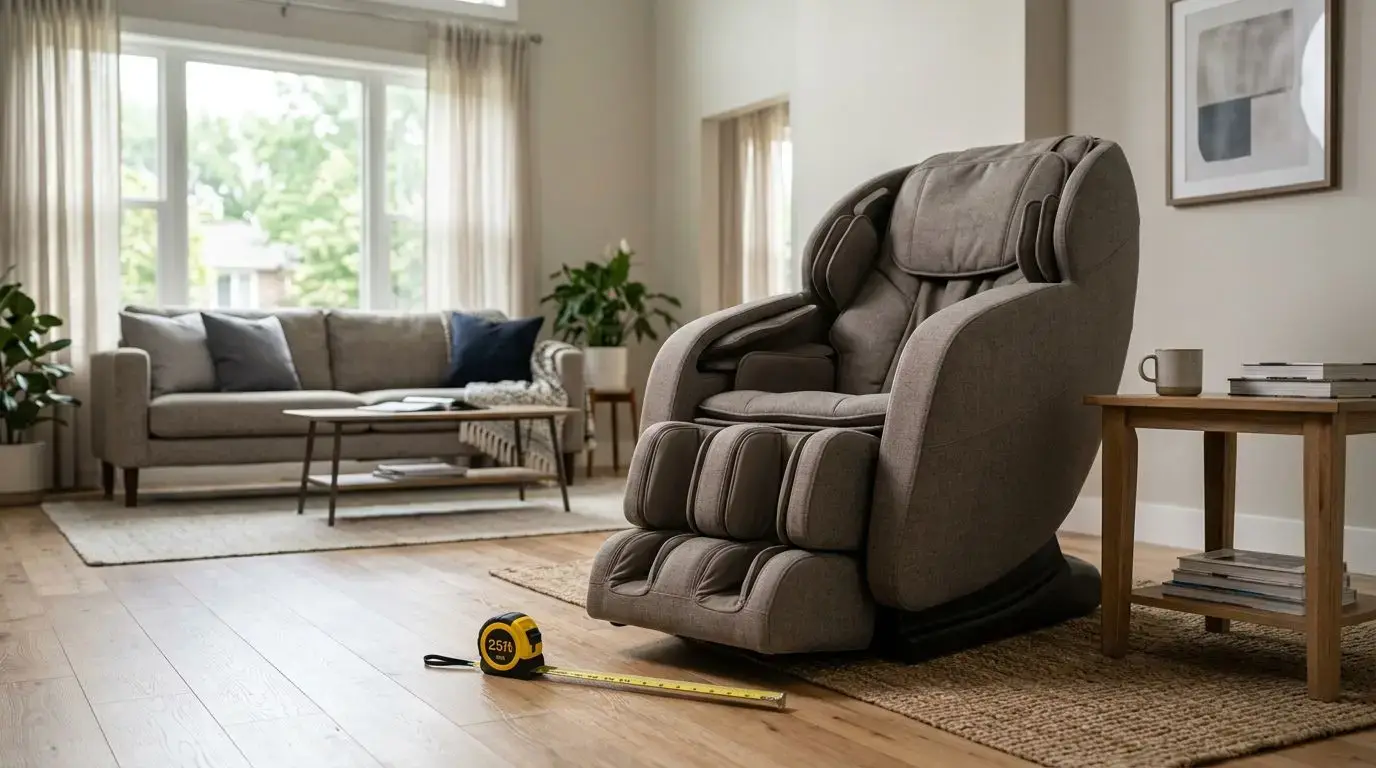
How to Choose a Massage Chair for Home Use
14 min read
Massage Chair vs. Heat Pad, TENS Unit, or Stretching Routine: Which At-Home Option Fits Your Goal?
13 min read
Best Massage Chair Features to Look For Before You Buy
13 min read