Disclosure: We may earn a commission when you buy through links on this page, at no extra cost to you. We buy nothing, sell nothing and accept no payment for coverage — commissions never decide what we recommend. How we make money.
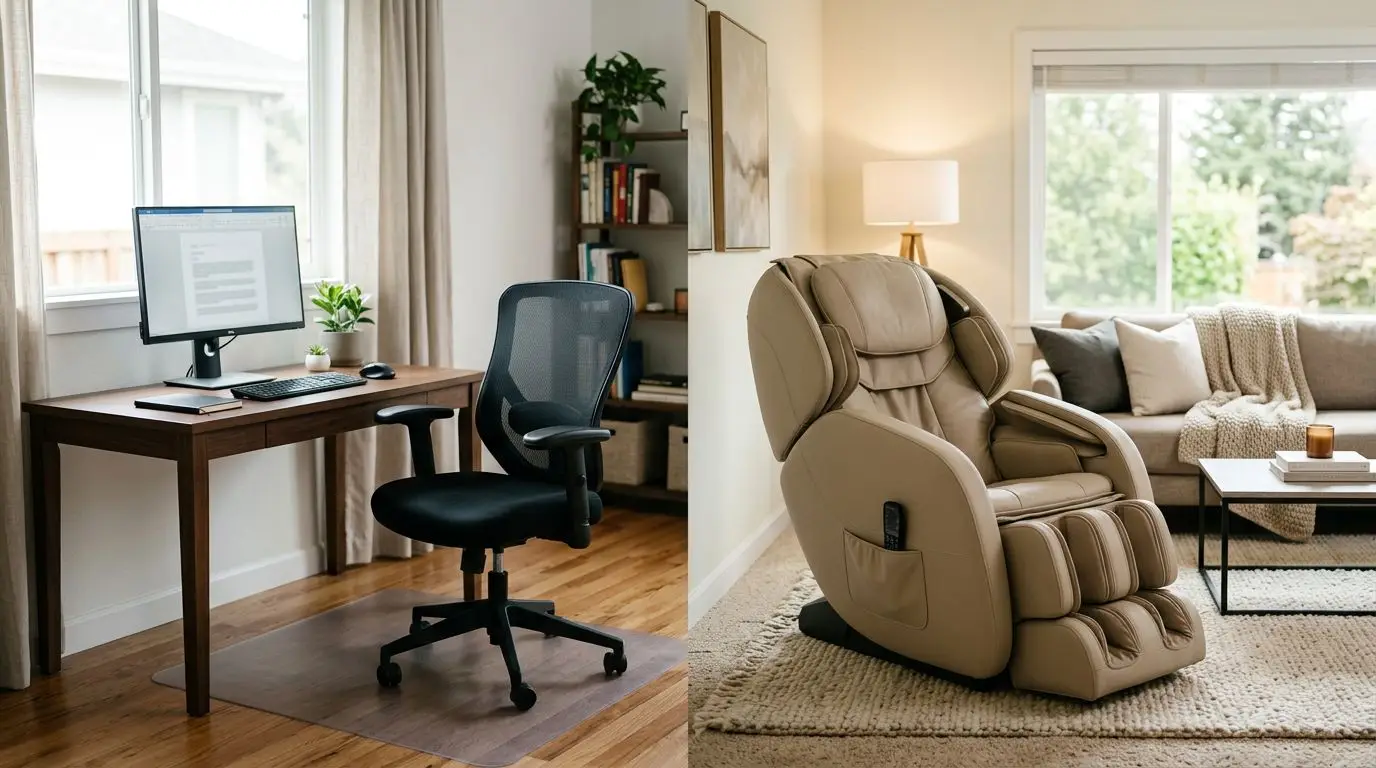
A massage chair pad or cushion is usually the better choice if you want a lower-cost, compact way to add kneading, vibration, or warmth to an existing chair. A full-size massage chair makes more sense if you want head-to-thigh coverage, built-in recline, stronger roller movement, and a dedicated relaxation seat you will use several times a week. The right choice depends on coverage, intensity, storage space, body fit, and how much setup you are willing to live with.
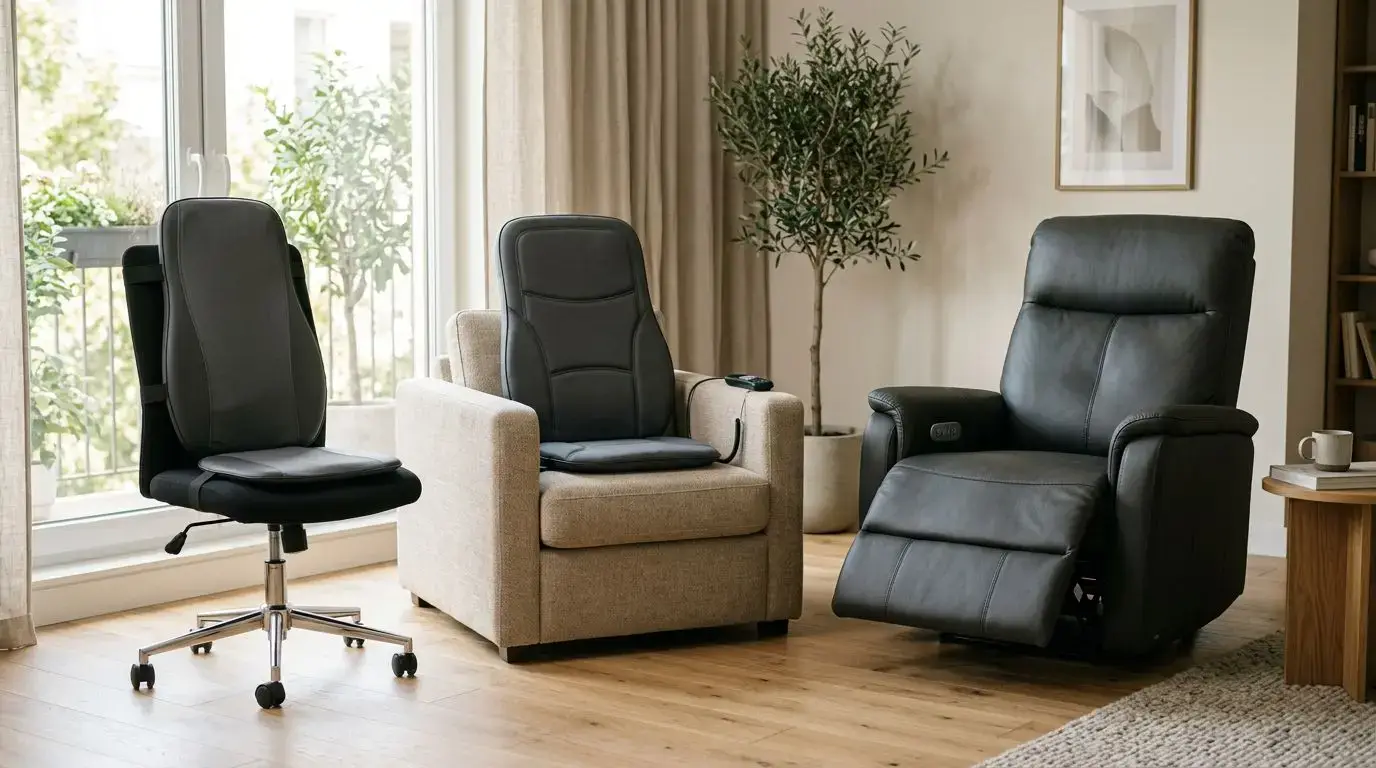
Think of these products as three levels of commitment. A pad is an attachment. A cushion is a more structured seat-and-back accessory. A full-size chair is furniture with motors, tracks, airbags, and recline built in. None is a medical device, and none should replace professional care, but each can be designed to feel comfortable, firm, warm, or relaxing in very different ways.
Quick comparison: 3 formats, 1 practical decision
The biggest difference is not just price. It is how much of your body the product can reach and how much room it takes up. A typical pad may be 15 to 20 inches wide and light enough to carry between rooms, while a full-size chair can weigh roughly 150 to 300 pounds and may need a permanent spot.
| Type | What it is | Typical coverage | Best fit | Main trade-off |
|---|---|---|---|---|
| Massage chair pad | A thin attachment strapped to an existing chair | Upper or full back, sometimes seat vibration | Small spaces, occasional use, office chairs | Depends heavily on the chair underneath |
| Massage cushion | A thicker seat-and-back unit with more structure | Back, seat, sometimes neck or thigh areas | Shoppers wanting better comfort without buying furniture | Bulkier than a pad, still limited by chair angle |
| Full-size massage chair | A dedicated recliner with built-in rollers and features | Neck, back, glutes, legs, and feet depending on design | Frequent users, households sharing one chair | Needs floor space, delivery planning, and a higher budget |
Terminology can be messy. Some retailers call any portable back unit a pad, while others use cushion for a thicker version with a seat base. For shopping purposes, focus less on the label and more on the build: how thick it is, whether it has moving rollers or only vibration, whether it includes a seat section, and whether it can be secured safely to your chair.
Massage chair pads: 2 to 4 moving nodes, slim storage, limited depth
A massage chair pad is the simplest option. It usually hangs over the back of a dining chair, desk chair, or recliner and secures with straps. Many pads use rotating nodes, rolling tracks, vibration motors, or a mix of these. Some include mild heat in the back area. Others focus on vibration only, especially in very thin designs.
Expect a lighter, shallower feel than you would get from a full-size chair. A pad has to press through its own fabric while staying stable on furniture it was not built into. If your chair back is too soft, the pad may sink in. If the chair back is too curved, the rollers may not line up well with your spine. A firm, straight chair usually works better than a deep sofa.
Coverage is narrower too. Many pads focus on the upper, middle, and lower back, with a massage path that may be around 20 to 28 inches tall. If you are very tall, the neck area may sit too low. If you are shorter, the rollers may reach higher than you like unless the pad has height adjustment or zone control.
What pads do well is convenience. They can be moved from a home office to a living room in under 1 minute, and many fit in a closet. They are also easy to unplug and put away when guests come over. For apartment dwellers or anyone who does not want another large piece of furniture, that matters.
Who a pad is best for
- People who want occasional 10- to 20-minute sessions at a desk or in a reading chair.
- Shoppers with very limited floor space.
- Anyone who wants a lighter product that can be stored between uses.
- Users who prefer moderate pressure rather than a deep, enveloping recliner feel.
Choose a pad if you value flexibility more than full-body coverage. Skip it if you expect a padded attachment to feel like a dedicated recliner. It will not.
Massage cushions: 3 to 8 inches thicker, more support than a pad
A massage cushion sits between a basic pad and a full-size chair. It typically has a back panel plus a seat section, and it may be several inches thick. That added structure can make it feel more stable, especially when the seat base helps anchor the unit while you lean back.
Cushions often include kneading rollers in the back, vibration in the seat, and sometimes a neck pillow or adjustable upper-back nodes. The seat section may not massage the same way the back does; many portable cushions use vibration in the seat rather than mechanical rollers. That is not automatically a flaw, but it is worth knowing before you buy.
Comfort depends on both the cushion and the chair underneath. A cushion that is 4 inches thick can raise your seating height enough to change knee angle, armrest position, and desk ergonomics. On a dining chair, that may feel fine. On an office chair with fixed arms, it may make you sit too high. On a soft sofa, it may tilt backward and reduce contact with your lower back.
Cushions are also more noticeable when stored. A thicker unit may not fold flat, and the seat base can make it awkward to slide under a bed. If portability is your top priority, check product dimensions and weight before choosing a cushion over a thin pad.
Who a cushion is best for
- Users who want a more secure seat-and-back setup than a hanging pad.
- Shoppers who like back kneading plus seat vibration in one unit.
- People who have a firm chair with enough seat depth to support the cushion.
- Anyone not ready for a large recliner but wanting more structure than a pad.
A cushion is the sensible middle ground. It will not wrap your calves, recline your body, or scan your shape like some larger chairs, but it can feel more substantial than a simple pad while staying movable.
Full-size massage chairs: 45 to 65 inches long and a permanent footprint
A full-size massage chair is a dedicated piece of furniture. Instead of attaching to an existing chair, the rollers, track, frame, recline system, footrest, and controls are built together. That integrated design is why a full-size chair can usually provide more consistent contact and broader coverage than a portable accessory.
The track is one of the most important differences. A shorter back track focuses on the neck and back. An L-track continues under the seat toward the glutes. An S-track follows the natural curve of the back. Some chairs combine these ideas in an extended curved track. Track length is often described in inches, and shoppers commonly see figures in the 40- to 50-inch range for extended designs, though exact measurements vary by chair type.
Full-size chairs can also include airbags in the shoulders, arms, calves, or feet. Air compression is designed to squeeze and release. Foot sections may use rollers, airbags, or both. Zero-gravity-style recline positions the body at a tipped-back angle, usually by raising the legs and reclining the torso, which can make the roller pressure feel more evenly distributed. Treat it as a comfort position, not a health claim.
The trade-offs are real. Many full-size chairs need a doorway path, careful placement, and a nearby outlet. Some are shipped in large cartons and may require two adults to move safely. Even compact versions can dominate a room. If the chair reclines, you also need to check wall clearance. Space-saving designs may need only a few inches behind the chair, while standard recliners may need considerably more.
Who a full-size chair is best for
- Frequent users who expect to sit for 15 to 30 minutes at a time.
- Households where more than one adult will use the same product.
- Shoppers who want back, seat, calf, and foot coverage in one place.
- People with enough room for a dedicated recliner and a clear delivery path.
Buy a full-size chair when you want the chair itself to do the positioning. If you want something you can store in a closet, this is the wrong category.
Types and features compared: 6 specs that change the feel
Two products can look similar online and feel completely different in person. A vibration-only cushion and a roller-based cushion are not the same experience. A chair with a short back track and a chair with an extended track also differ in coverage. Use the feature list below to separate comfort details from marketing language.
| Feature | Common in pads | Common in cushions | Common in full-size chairs | What to check |
|---|---|---|---|---|
| Vibration | Yes | Yes | Sometimes | Number of zones and intensity settings |
| Moving rollers | Sometimes | Often | Yes | Whether they move vertically or stay fixed |
| Heat | Often mild | Often mild | Often in back or legs | Location, auto shutoff, and whether heat works alone |
| Air compression | Rare | Rare | Common | Areas covered and pressure levels |
| Foot and calf section | No | Rare | Common | Fit for shoe size, calf length, and intensity |
| Body scan or auto fit | No | Limited | Common on advanced designs | Whether manual adjustment is also available |
Roller design matters. Fixed rotating nodes feel different from rollers that travel up and down a track. A 2D roller moves in basic directions, while more advanced roller systems may vary depth or rhythm. Do not assume more labels always mean better comfort. Some people prefer a simple, predictable kneading pattern over a complicated program with too many changes.
Controls also affect daily use. Look for an easy remote, readable buttons, and a timer. Many products use automatic shutoff after about 15 or 20 minutes. That is useful because it encourages shorter sessions and prevents the unit from running unattended.
How to choose and measure: 7 checks before you buy
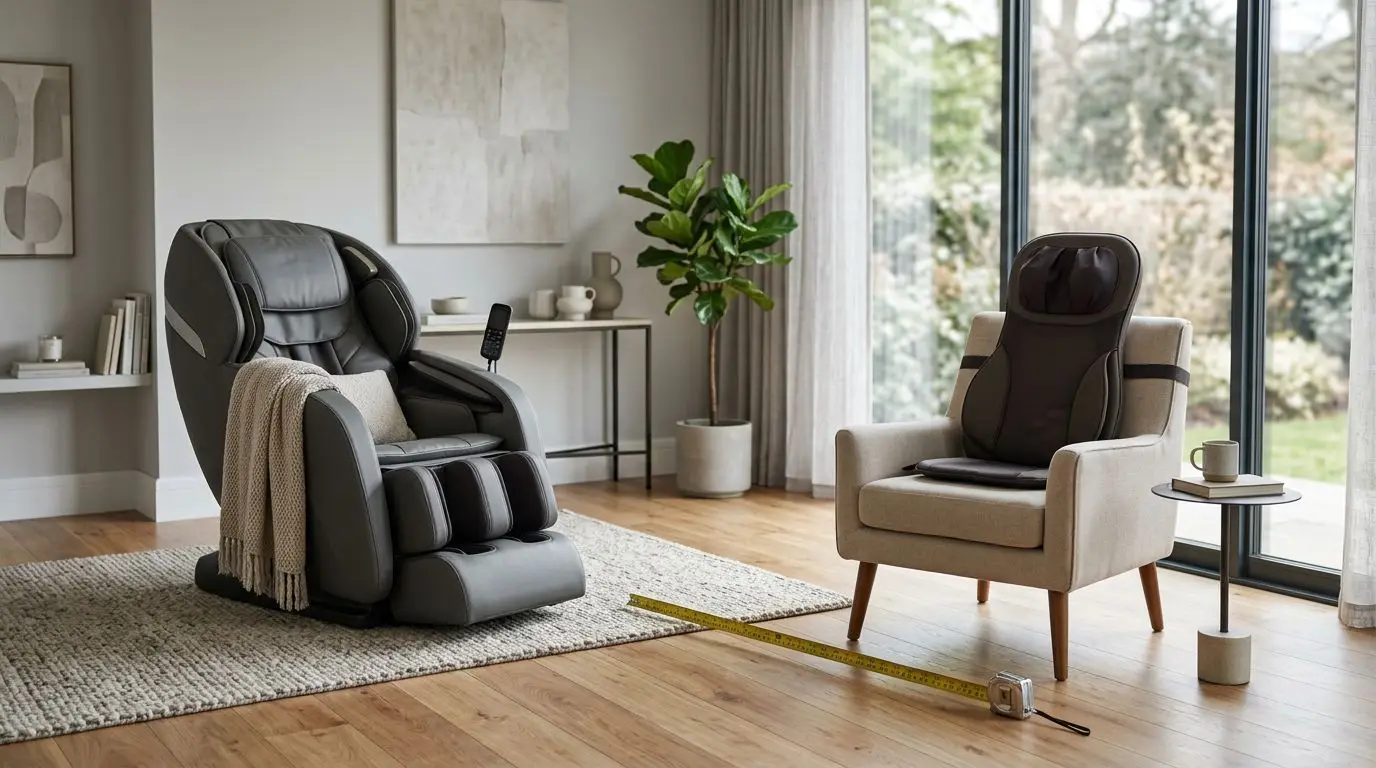
Before comparing features, measure the place where the product will actually be used. A portable pad can fail simply because the host chair is too soft or too narrow. A full-size chair can fail because it cannot clear a hallway turn. Five minutes with a tape measure can prevent a frustrating delivery or return.
1. Measure seat width
For pads and cushions, measure the flat usable seat area between arms. Many dining and office chairs have about 17 to 21 inches of usable width. If the cushion is wider than that, it may buckle or sit unevenly. For full-size chairs, compare the internal seat width with the largest user, not just the outside dimensions.
2. Measure back height
Sit in the chair you plan to use and measure from the seat surface to the top of your shoulders. If a pad has a 24-inch massage path, a tall user may find the upper nodes stop below the preferred shoulder area. A shorter user may need adjustable zones so the rollers do not press too high.
3. Check seat depth
A thick cushion can reduce usable seat depth by 2 to 4 inches. If your knees already sit close to the front edge, adding a cushion may push you forward. For a full-size chair, make sure the footrest length works for both shorter and taller users.
4. Confirm weight limits
Portable pads usually depend on the weight rating of the chair underneath. Full-size massage chairs often publish a user weight limit, commonly somewhere in the 250- to 300-pound range, though this varies. Follow the stated limit for the product you are considering.
5. Plan outlet location
Most electric pads, cushions, and chairs need a standard outlet. Avoid stretching cords across walkways. If the product will live in a home office, check that the cord does not interfere with chair wheels.
6. Check recline clearance
For a full-size chair, measure the chair both upright and reclined. If the listing provides a required wall clearance, add a few extra inches for comfort and cleaning. Also measure doorways, stair turns, and elevator openings before delivery.
7. Read the return rules
Comfort is personal. A product that feels gentle to one person may feel too intense to another after 10 minutes. Check return windows, restocking fees, packaging requirements, and whether freight return costs apply to large chairs.
Who it is best for: 5 real shopping scenarios
Different shoppers need different amounts of chair. A person in a studio apartment has a different problem than a household furnishing a finished basement. Use these scenarios to narrow the category before you compare features.
| Shopper situation | Best starting point | Why |
|---|---|---|
| You work from a desk 5 days a week and want short breaks | Pad or slim cushion | Easy to place on an office chair and store after work |
| You rent a small apartment and move often | Pad | Lower weight and easier packing |
| You want a more substantial back-and-seat feel without buying furniture | Cushion | More structure than a pad, less commitment than a chair |
| Two adults will use it several nights a week | Full-size chair | Better durability expectations and broader fit options |
| You want feet, calves, arms, and back covered | Full-size chair | Portable accessories rarely cover all those areas |
If you are unsure, start with the smallest product that covers your main use case. If your main goal is a kneading feel across the back while reading, a pad may be enough. If you want a dedicated evening recliner with leg and foot features, skipping straight to a full-size chair may be more logical than buying two portable products first.
Safety and comfort: start with 10 minutes, and know when to ask a physician
Massage chairs, pads, and cushions are consumer wellness products. They are designed to create pressure, motion, warmth, vibration, squeezing, or a rocking sensation. They are not designed to diagnose, treat, cure, or prevent medical conditions.
Start low. Use the gentlest setting for about 10 minutes the first time, especially with a roller-based product. Add time or intensity only if the feel remains comfortable. More pressure is not automatically better, and a strong roller can feel unpleasant if it hits a bony area or if you are sitting at the wrong angle.
Ask your physician before using a massage pad, cushion, or full-size chair if you are pregnant; have a pacemaker or other implanted cardiac device; have a history of blood clots or take anticoagulants; have osteoporosis; recently had a fracture or surgery; have spinal disc problems; have neuropathy or reduced sensation; or have uncontrolled hypertension. If a specific product manual lists additional warnings, follow those instructions.
Heat deserves caution too. Mild warmth can feel pleasant, but people with reduced sensation may not notice discomfort quickly. Do not fall asleep with a heated product running, and do not use heat through heavy blankets that can trap warmth unless the manual specifically allows it.
Placement matters. Keep portable pads flat and secured so they do not slide. Do not place a hard roller pad on a bed or deep couch where your body sinks unevenly into it. For full-size chairs, keep children and pets away from moving footrests and reclining mechanisms.
Bottom line: choose by coverage, space, and 15-minute habits
If you will use the product occasionally and mainly want back contact, a massage chair pad is the most practical starting point. If you want a more stable seat-and-back setup but still need portability, a cushion is the better middle option. If you expect regular 15- to 30-minute sessions, want leg and foot coverage, and have the room, a full-size chair is the stronger long-term fit.
The smartest purchase is not always the largest one. Match the product to the chair you already own, the space you can spare, and the body areas you actually care about. A compact pad used three times a week is a better buy than a large recliner nobody wants to sit in.
FAQ: 5 common questions before choosing a massage chair pad, cushion, or chair
Is a massage chair pad strong enough compared with a full-size chair?
A pad can feel useful for targeted back kneading or vibration, but it usually will not match the depth, stability, or body coverage of a full-size chair. The host chair affects the feel a lot. A firm, upright chair usually gives the pad better contact than a soft sofa.
Can I use a massage cushion on any chair?
Not always. Use a chair with a stable base, a firm back, and enough seat width for the cushion to sit flat. If the cushion is 18 inches wide and your chair narrows at the arms, it may bunch, tilt, or press unevenly.
Are full-size massage chairs worth it for one person?
They can be worth it if one person will use the chair often, has enough space, and wants features a portable unit cannot provide, such as an integrated recline, extended roller track, calf section, or foot rollers. If use will be rare, a smaller product may be more sensible.
What is the difference between a pad and a cushion?
A pad is usually thinner and attaches mostly to the back of an existing chair. A cushion is typically thicker and may include both a back panel and a seat base. Retailers use the terms loosely, so compare dimensions, roller type, and seat construction instead of relying on the name.
How long should I sit in one?
Many products use 15- or 20-minute automatic timers, which is a reasonable range for typical comfort use. Start with about 10 minutes on a low setting the first time, then adjust based on how it feels. Stop if the pressure, heat, or position feels uncomfortable.
Frequently asked questions
Is a massage chair pad strong enough compared with a full-size chair? +
A pad can feel useful for targeted back kneading or vibration, but it usually will not match the depth, stability, or body coverage of a full-size chair. The chair underneath makes a big difference.
Can I use a massage cushion on any chair? +
Not always. Use a stable chair with a firm back and enough seat width for the cushion to sit flat. If the cushion is too wide or the chair is too soft, it may tilt or press unevenly.
Are full-size massage chairs worth it for one person? +
They can be worth it if one person will use the chair often, has enough space, and wants features portable units usually lack, such as recline, extended tracks, calf sections, or foot rollers.
What is the difference between a pad and a cushion? +
A pad is usually thinner and straps to the back of an existing chair. A cushion is typically thicker and may include both a back panel and a seat base, but retailers use the terms loosely.
How long should I sit in a massage pad, cushion, or chair? +
Many products have 15- or 20-minute timers. Start with about 10 minutes on the lowest comfortable setting, then adjust based on feel. Stop if pressure, heat, or position is uncomfortable.
Related guides
Full-Size Massage Chair vs. Portable Massage Pad: Comfort, Coverage, Cost, and Space Compared
15 min read
Heated Massage Chair vs. Heating Pad: Which Is Better for Sore Muscles?
14 min read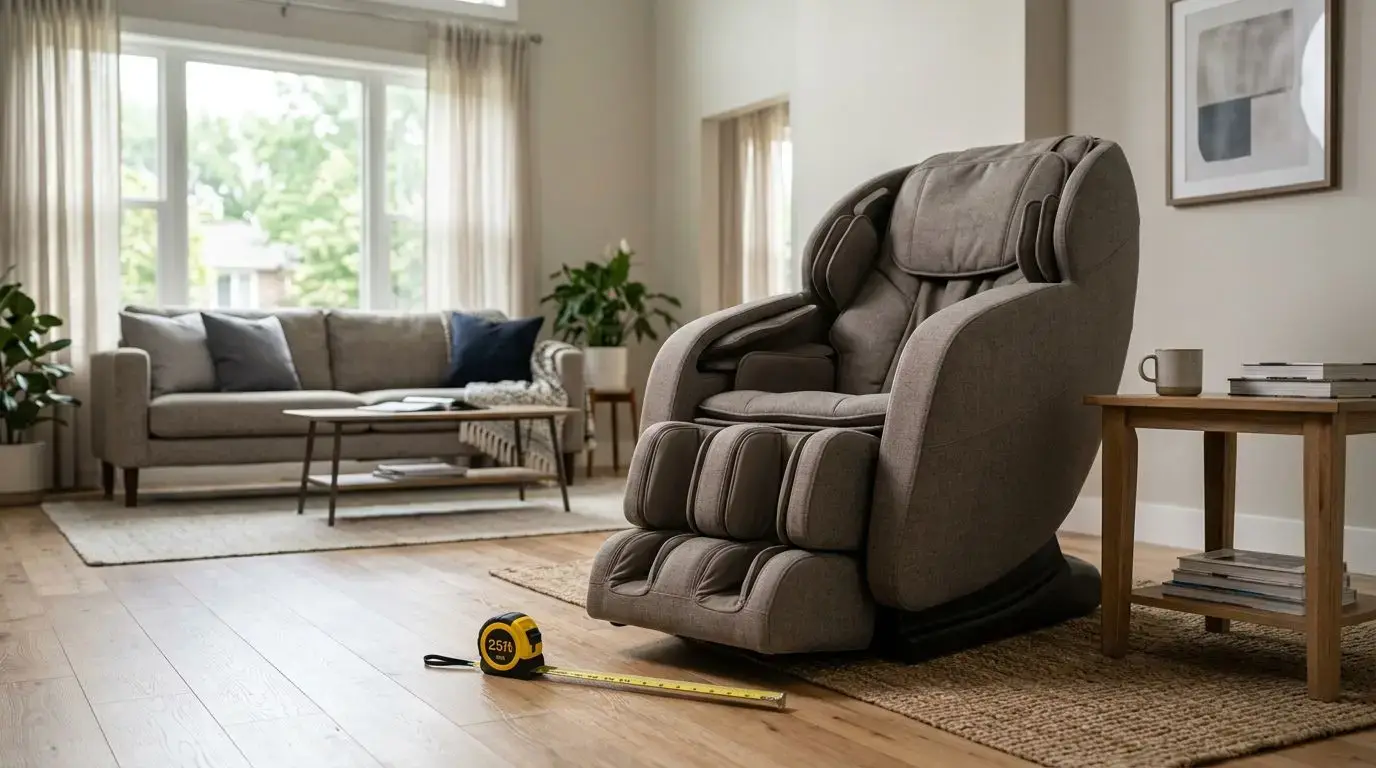
How to Choose a Massage Chair for Home Use
14 min read
Car Massage Seats vs. Home Massage Chairs: Comfort, Safety, and Realistic Expectations
12 min read
Massage Chair vs. Heat Pad, TENS Unit, or Stretching Routine: Which At-Home Option Fits Your Goal?
13 min read