Disclosure: We may earn a commission when you buy through links on this page, at no extra cost to you. We buy nothing, sell nothing and accept no payment for coverage — commissions never decide what we recommend. How we make money.
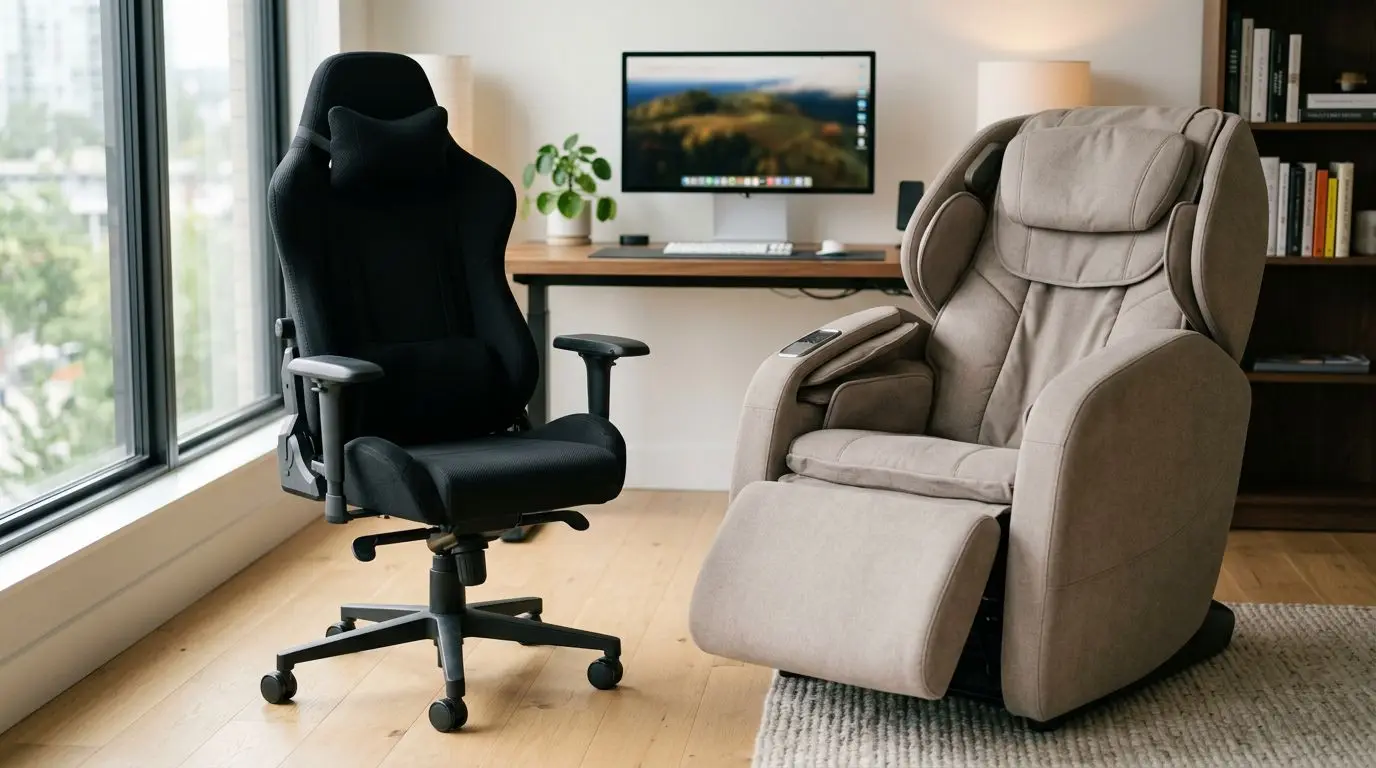
A massage gaming chair is usually a gaming chair with small vibration motors, not a roller-based massage chair. It can add a buzzing sensation around the lower back, seat, or upper back while you sit, but it does not knead along a track or move rollers from the shoulders toward the glutes. Choose one if you want gaming-chair seating with light vibration; choose a full-size massage chair if you want mechanical roller coverage, deeper pressure, and more adjustable programs.
What a massage gaming chair usually means: 2 to 8 vibration motors
Most massage gaming chairs are desk or gaming seats first. The massage feature is typically a set of small vibration motors sewn into the backrest, seat, or a removable lumbar pillow. A common layout is 2, 4, 6, or 8 vibration points, often controlled by a wired remote with a few intensity or mode buttons.
That design matters. Vibration feels like pulsing, buzzing, or rhythmic shaking against the body. It does not grab, roll, press, or trace the muscles the way a mechanical roller carriage does in a full-size massage chair. If you see a gaming chair described with words like vibrating, USB-powered, lumbar massage, or multi-point vibration, assume the massage action is vibration-only unless the specifications clearly describe moving rollers.
The power source is another clue. Many gaming chairs with massage use low-voltage USB power or a small wall adapter. That is enough for light vibration, but not for a motorized roller system that travels up and down a long back track. A full-size massage chair usually plugs directly into a standard household outlet and uses multiple motors to recline, move rollers, inflate airbags, and run leg or foot features.
There is nothing wrong with vibration if that is what you want. It can feel pleasant during a 20-minute break or while sitting at a desk. The problem is expectation. A shopper who expects kneading, tapping, shiatsu-style pressure, body scanning, or shoulder-to-seat coverage will probably find a vibration gaming chair too limited.
Vibration vs. rollers: the 30-to-55-inch difference
The biggest dividing line is the mechanism. A vibration gaming chair vibrates in place. A roller-based massage chair moves a roller assembly along a track, and that track may be roughly 30 inches on a shorter back-only design or over 50 inches on an extended SL-track chair that reaches under the seat area.
| Comparison point | Massage gaming chair | Full-size roller-based massage chair |
|---|---|---|
| Main mechanism | Small vibration motors in fixed locations | Moving rollers that travel along a track |
| Typical coverage | Lumbar, seat, sometimes upper back | Neck, shoulders, back, and sometimes glutes or thighs depending on track |
| Pressure style | Buzzing or pulsing sensation | Kneading, rolling, tapping, knocking, or pressing feel |
| Track length | No roller track | Often about 30 to 55 inches depending on type |
| Body scanning | Usually not included | Common on midrange and higher full-size chairs |
| Space use | Similar to an office chair | Large recliner footprint, often 55 to 75 inches long when reclined |
Roller-based chairs are more adjustable, too. Many let you choose a zone, such as upper back, lower back, or full back. Some allow spot positioning in small increments, so the rollers can stay near one area. Gaming chairs with vibration usually offer broad zones, not precision placement.
Intensity also feels different. Vibration may feel more noticeable on bony areas or through thin padding, but it is not the same as depth. Roller depth depends on roller design, backrest shape, 2D/3D/4D movement, padding thickness, and how much body weight settles into the chair when reclined. If you want a chair that feels like it is mechanically working along the back, vibration alone will not deliver that experience.
Common massage chair types compared in 5 minutes
Not every full-size massage chair is the same. When shoppers say real massage chair, they often mean one of several roller-based types. The main categories are easiest to understand when you compare the track and roller movement first.
| Type | How it is built | How it is designed to feel | Best fit |
|---|---|---|---|
| Vibration gaming chair | Desk-style chair with fixed vibration motors | Light buzzing in set zones | Gaming, office seating, light sensory comfort |
| 2D roller chair | Rollers move up/down and side-to-side on a back track | Basic kneading and rolling with fixed depth | Shoppers who want roller action without many depth controls |
| 3D roller chair | Rollers move up/down, side-to-side, and in/out | More adjustable pressure from gentler to firmer | Households with different intensity preferences |
| 4D roller chair | 3D movement plus speed or rhythm variation | More variation in tempo and pressure pattern | Users who want more program nuance |
| S-track chair | Curved track follows the back from neck to lower back | Focused back coverage with a contoured path | Smaller spaces or users focused on the back |
| L-track or SL-track chair | Track extends down and under the seat area | Coverage can continue into glutes or upper hamstrings | Users who want longer roller travel |
A gaming chair can still be the better purchase if your main need is a desk chair. A full-size massage chair is furniture you sit in for a session, then leave. A gaming chair stays at a desk, swivels, rolls, and fits under many work surfaces. The tradeoff is that its massage feature is usually the simplest part of the product.
Pay close attention to wording. Marketing pages may use broad terms like full body or deep massage even when the mechanism is vibration-only. Read the specifications. If the chair has rollers, the product information should state the track type, roller dimensions or movement type, and supported massage styles. If the specs only list vibration points and modes, it is not a roller chair.
Who a massage gaming chair is best for during 1-to-3-hour sitting blocks
A massage gaming chair makes the most sense for someone who wants a gaming-style seat first and a light vibration feature second. Think of it as an office chair with an extra sensation option, not as a substitute for a dedicated massage chair.
- Gamers who want a single desk chair: If the chair must roll, swivel, and sit at a computer desk every day, a full-size massage chair is the wrong shape. A gaming chair is built for that environment.
- People who like light vibration: Some users enjoy a low-level buzz while watching a stream, taking a break, or sitting between matches. Sessions of 10 to 20 minutes are common on simple controllers.
- Small rooms: A gaming chair may take about the same footprint as a large office chair. A full-size massage chair can need several feet of recline clearance unless it has a wall-hugging design.
- Budget-focused shoppers: Vibration gaming chairs are usually simpler products with fewer motors and less structure than full-size massage chairs. The feature set reflects that.
- Users who do not want strong pressure: Vibration is often gentler than roller pressure, especially compared with firm 3D roller settings.
It is not the best fit if you want targeted shoulder work, roller travel along the spine, foot rollers, calf airbags, or a reclined zero gravity posture. It is also not ideal if several people in the home need very different body fit settings, because most gaming chairs have limited massage adjustment.
Seat comfort still comes first. A chair can have 8 vibration points and still be uncomfortable if the seat pan is too narrow, the backrest angle does not suit your desk setup, or the armrests do not align with your keyboard height. For daily use, support, fit, and adjustability matter more than the vibration button.
How to choose and measure: 4 checks before you buy
Before comparing features, measure your space and your body fit. Four checks can eliminate many bad options in less than 15 minutes: seat width, seat depth, backrest height, and recline clearance.
1. Measure seat width
Measure across the usable seat surface, not just the outside bolsters. Gaming chairs often have raised side bolsters, and a listed 21-inch outside width may feel much narrower if the flat sitting area is closer to 15 or 16 inches. If you dislike pressure from seat edges, choose a flatter seat shape.
2. Check seat depth
Sit in a chair you already own and measure from the back of your hips to about 2 inches behind the knee. That gives you a practical target for seat depth. Too much depth can push you forward; too little can leave the thighs unsupported. Many desk chairs fall around 18 to 21 inches deep, but the usable shape varies.
3. Compare backrest height to your torso
If the vibration points are in the lumbar pillow, make sure that pillow can actually sit where you want it. A fixed pillow may land too high or too low for shorter or taller users. For taller shoppers, also check whether the headrest is adjustable instead of sewn into one position.
4. Allow recline and swivel room
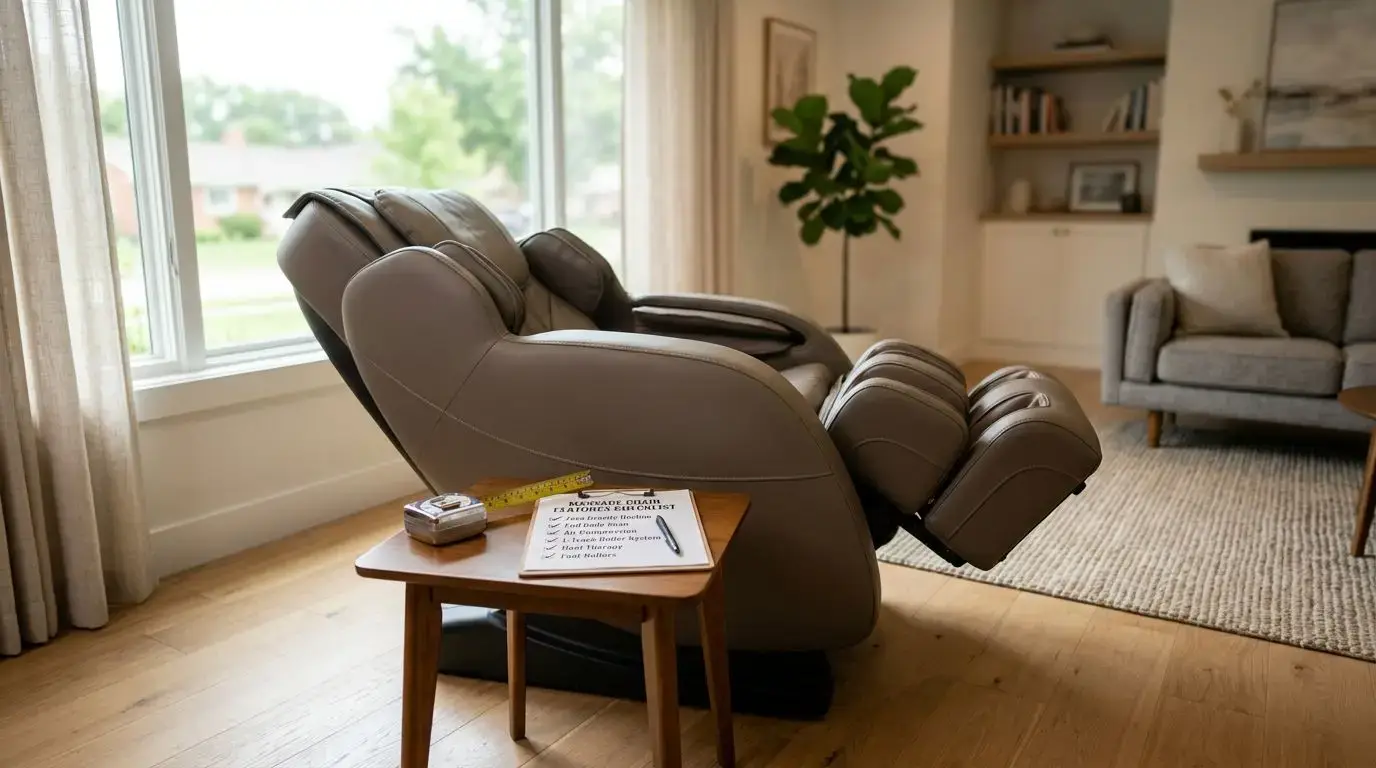
A reclining gaming chair may tilt back to 135 degrees or more, but that does not mean it fits your room. Leave space behind the chair and check whether the armrests hit the desk when you swivel. Full-size massage chairs need a different kind of measurement: overall upright length, fully reclined length, width at the arms, and wall clearance. Some recliners need only a few inches behind them; others need much more.
For any chair, confirm the user height range and weight capacity in the specifications. Do not treat those numbers as suggestions. A chair used near or over its rated limit may feel unstable, wear faster, or fail to recline as intended.
Features worth comparing: heat, recline, airbags, and power in 6 rows
Feature names can blur the line between categories, so compare what each feature physically does. A heating pad, for example, is not the same as a heated roller system, and a vibrating lumbar pillow is not the same as an L-track roller carriage.
| Feature | In a massage gaming chair | In a full-size massage chair | What to check |
|---|---|---|---|
| Heat | Often a small lumbar heating pad, if included | May be in the back, seat, calves, or feet depending on design | Location, temperature control, auto shutoff |
| Recline | Backrest recline, often manual or lever-based | Powered recline, sometimes with leg rest movement | Angle, locking positions, required clearance |
| Airbags | Rare | Common in arms, shoulders, calves, feet, or hips | Number of zones and pressure control |
| Foot features | Usually none, sometimes a pull-out footrest | May include calf squeezing, foot rollers, or adjustable leg length | Fit for shoe size and calf height |
| Programs | Vibration modes such as pulse or wave | Auto programs combining rollers, airbags, recline, and heat | Manual controls and session length |
| Power | USB or small adapter on many designs | Standard wall outlet with higher motor load | Cord length, controller type, power rating |
Auto shutoff is worth looking for in either category. Many chairs use session timers around 10, 15, 20, or 30 minutes. A timer is practical because it prevents the vibration or roller program from running indefinitely if you fall asleep or walk away.
Noise is another real-world detail. Vibration motors can hum against the chair frame, especially on hard floors. Roller chairs make mechanical sounds from the track, airbags, and recline motors. If you share a room, shop for clear return terms and read owner feedback about noise rather than relying on product photos.
Safety and comfort limits: ask a physician if any of these 8 situations apply
Massage chairs are consumer wellness products, not medical devices. They are designed to feel relaxing, stimulating, firm, gentle, warm, or supportive depending on the feature. They should not be used as a substitute for medical advice.
Ask your physician before using a vibration gaming chair or a roller-based massage chair if you are pregnant; have a pacemaker or other implanted cardiac device; have a history of blood clots or take anticoagulants; have osteoporosis; recently had a fracture or surgery; have spinal disc problems; have neuropathy or reduced sensation; or have uncontrolled hypertension. If a chair feels painful, causes numbness, pinches, overheats, or leaves you feeling unwell, stop using it.
Start conservatively. Use the lowest setting for 5 to 10 minutes the first time, especially with heat, strong vibration, foot rollers, or 3D roller depth. Check your skin after heated sessions, and do not use heat if you cannot reliably sense temperature in the contact area.
Fit is part of safety. A roller chair that places shoulder rollers at the neck or a gaming chair with a hard lumbar motor pressing into the spine can feel wrong quickly. The best chair is not the one with the longest feature list; it is the one that fits your body and lets you control intensity.
Bottom line: pick the mechanism before the marketing label
If the chair uses only vibration motors, think of it as a gaming chair with a comfort feature. It may be enjoyable for short sessions, and it may be the right choice when desk function, swivel movement, and compact size matter most.
If you want a massage chair experience built around moving rollers, focus on track type, roller dimension, intensity control, body fit, recline clearance, and manual zone control. An S-track, L-track, or SL-track chair is a very different product from a vibrating gaming chair, even if both are advertised with the same word: massage.
The simplest buying rule is this: read the mechanism line first. Vibration points mean buzzing in fixed zones. Rollers on a track mean mechanical movement across a defined path. Once you understand that difference, the rest of the comparison becomes much easier.
FAQ: 5 quick answers about massage gaming chairs
Do massage gaming chairs have real rollers?
Most do not. Most massage gaming chairs use 2 to 8 fixed vibration motors, usually in the lumbar, back, or seat area. If a chair has rollers, the specifications should clearly mention a roller track, roller movement, and massage styles such as kneading or tapping.
Is vibration the same as kneading?
No. Vibration buzzes or pulses in place. Kneading uses moving rollers or mechanical nodes that press and move in patterns. The two sensations are very different, even when both are described as massage features.
Can a gaming chair replace a full-size massage chair?
Only if you want light vibration while sitting at a desk. It will not replace roller travel, body scanning, airbag zones, foot rollers, powered recline, or the longer coverage available on many full-size massage chairs.
How long should I use the massage feature?
Follow the chair manual. Many built-in timers run about 10 to 30 minutes. For a first session, start with 5 to 10 minutes on the lowest setting and stop sooner if the sensation feels uncomfortable.
What is the most important spec to check?
Check the mechanism first: vibration motors or roller track. After that, check seat dimensions, user height range, weight capacity, recline clearance, and whether the controller lets you adjust intensity or zones.
Frequently asked questions
Do massage gaming chairs have real rollers? +
Most do not. Most massage gaming chairs use fixed vibration motors in the backrest, lumbar pillow, or seat. A roller-based chair should clearly list a roller track and roller movement in its specifications.
Is vibration the same as kneading? +
No. Vibration buzzes or pulses in place, while kneading uses moving rollers or mechanical nodes that press and move in patterns. The sensations are very different.
Can a massage gaming chair replace a full-size massage chair? +
Only if you mainly want light vibration while sitting at a desk. It will not replace roller travel, body scanning, airbag zones, powered recline, foot rollers, or extended track coverage.
How long should I use a massage gaming chair? +
Follow the manual for your chair. Many timers run about 10 to 30 minutes. For the first use, start with 5 to 10 minutes on the lowest setting and stop if it feels uncomfortable.
What should I check before buying? +
Check whether the mechanism is vibration-only or roller-based. Then measure seat width, seat depth, backrest height, recline clearance, user height range, and weight capacity.
Related guides
How to Choose a Massage Chair for Home Use
14 min read
Office Massage Chairs vs. Home Massage Chairs: Key Differences Before You Buy
13 min read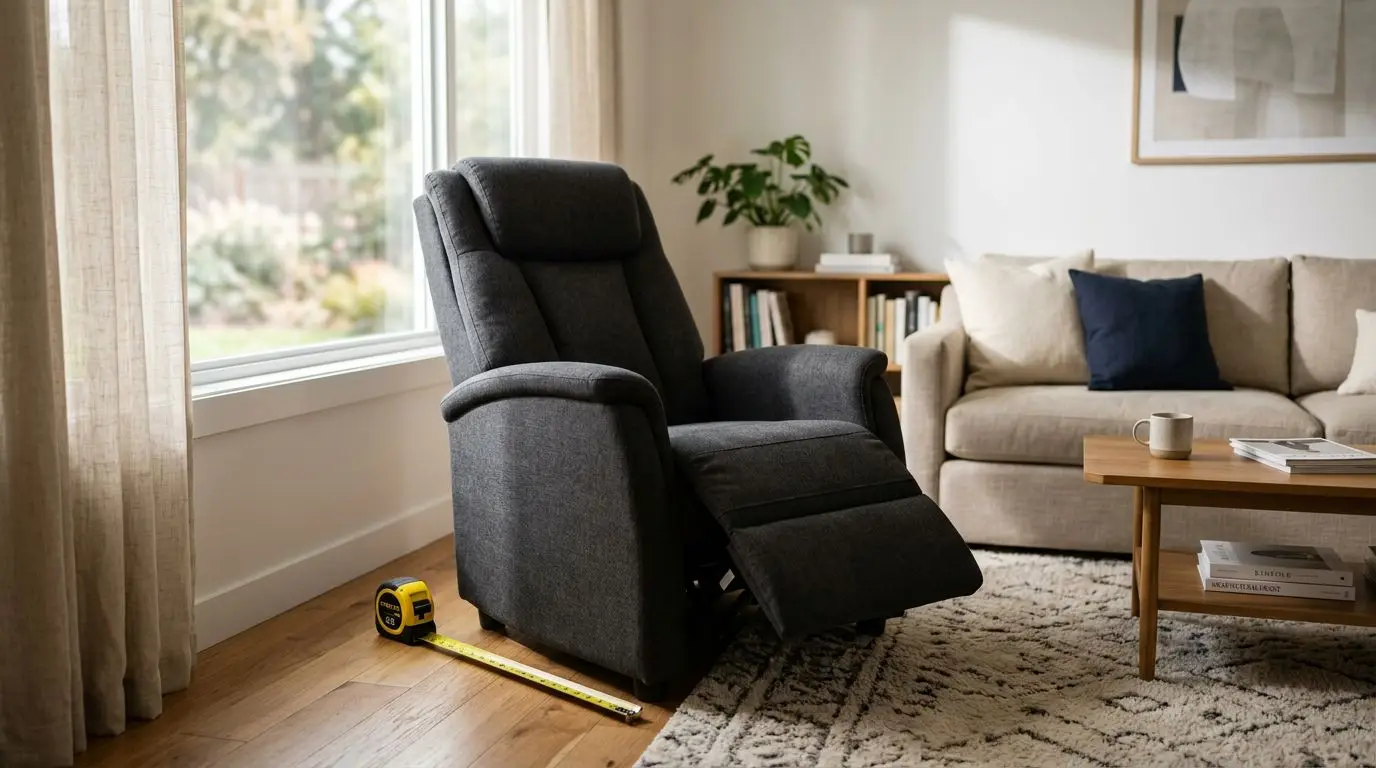
Shiatsu Massage Chairs: What the Term Means Before You Buy
13 min read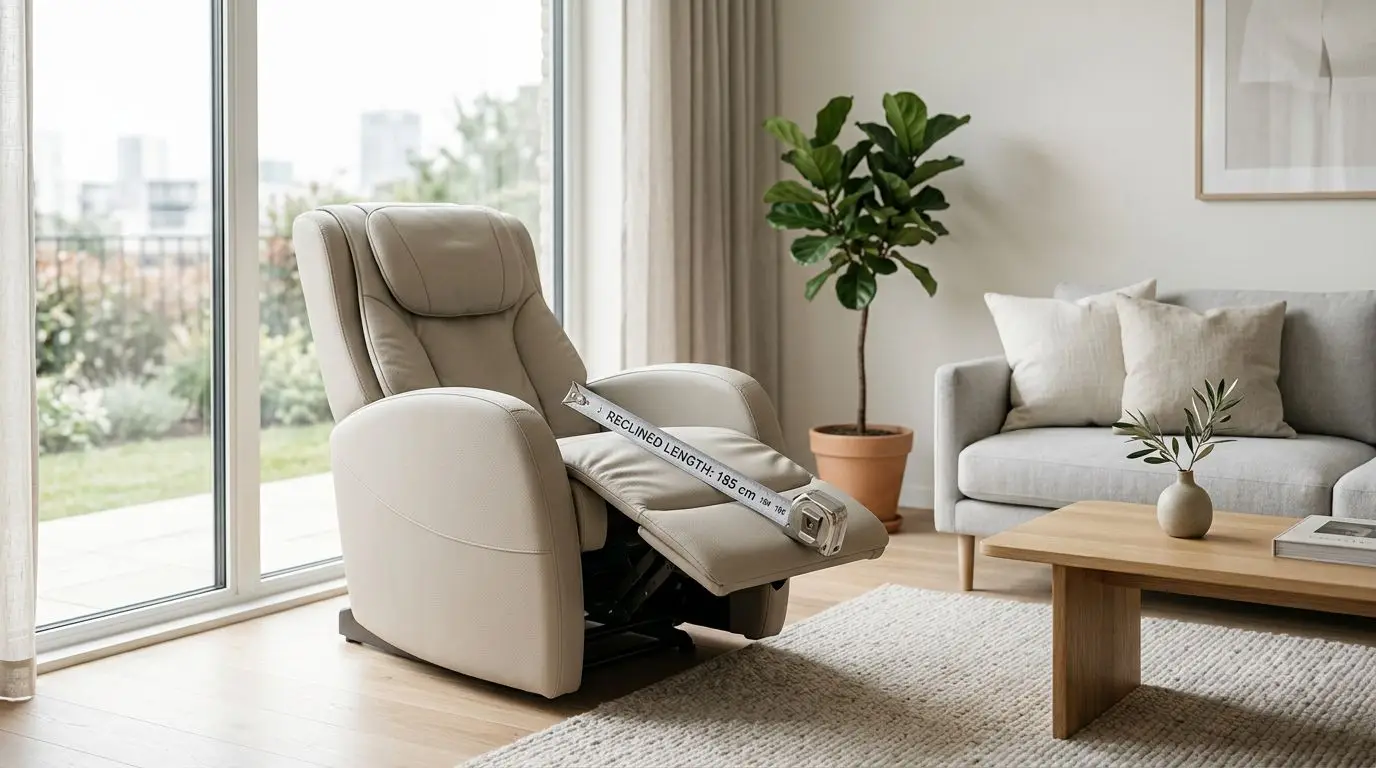
Ergonomic Massage Chairs: What “Ergonomic” Really Means Before You Buy
13 min read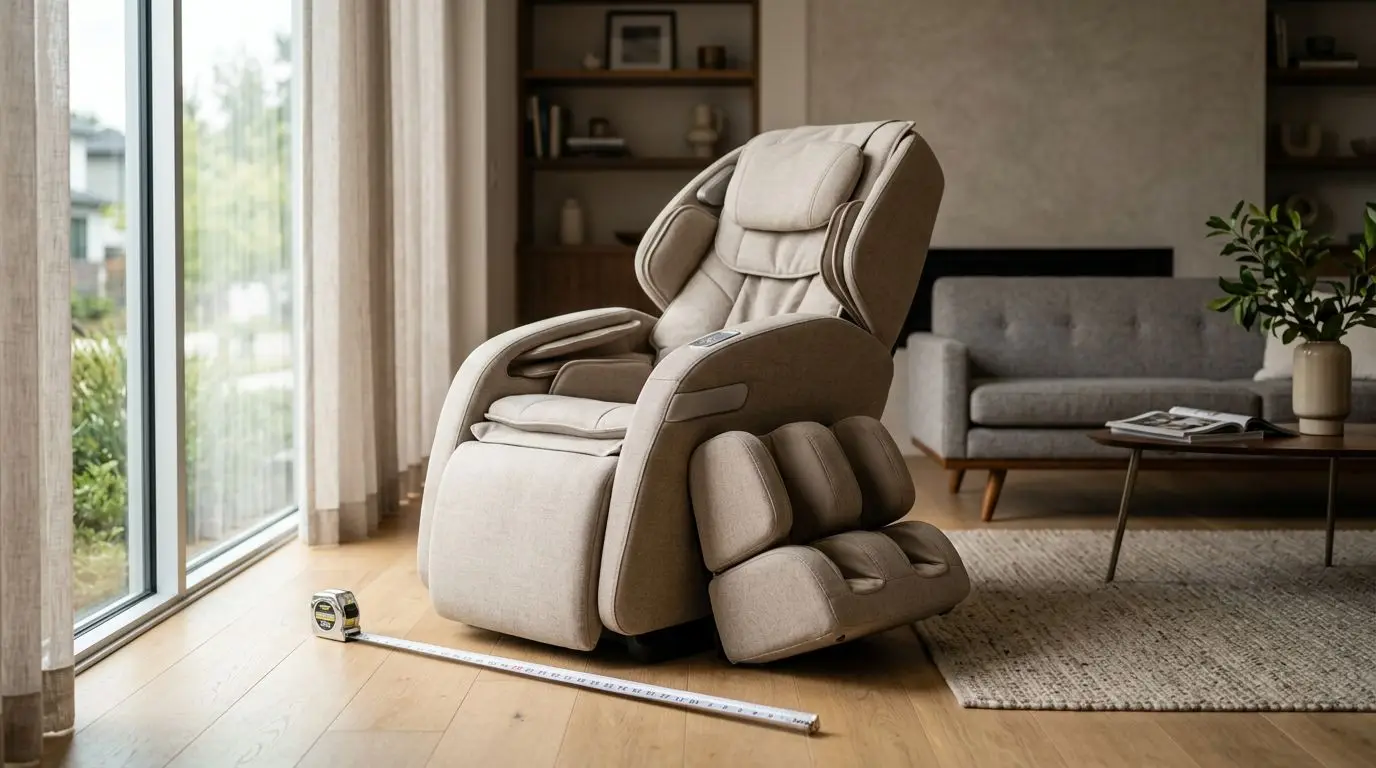
How to Compare Massage Chair Features: 2D, 3D, 4D, L-Track, SL-Track, Heat, and Airbags
13 min read