Disclosure: We may earn a commission when you buy through links on this page, at no extra cost to you. We buy nothing, sell nothing and accept no payment for coverage — commissions never decide what we recommend. How we make money.
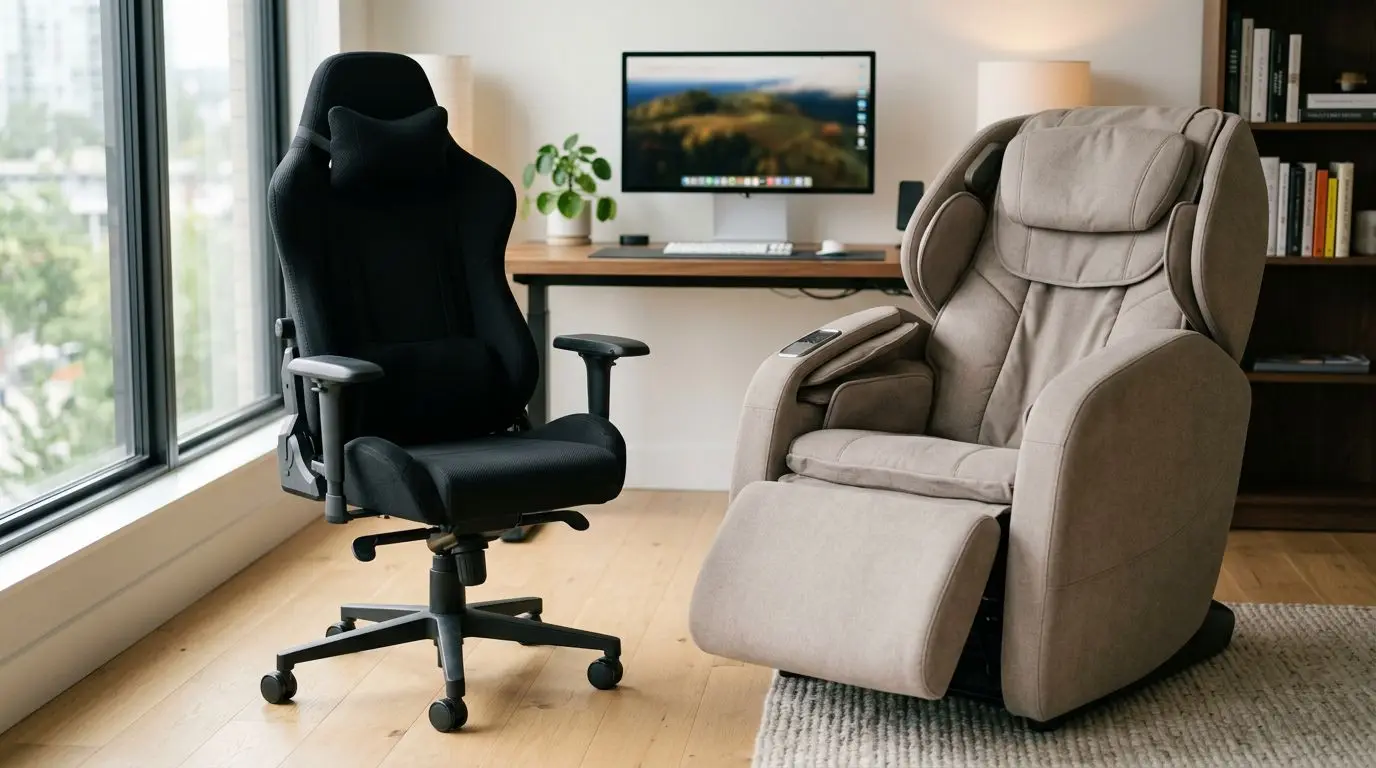
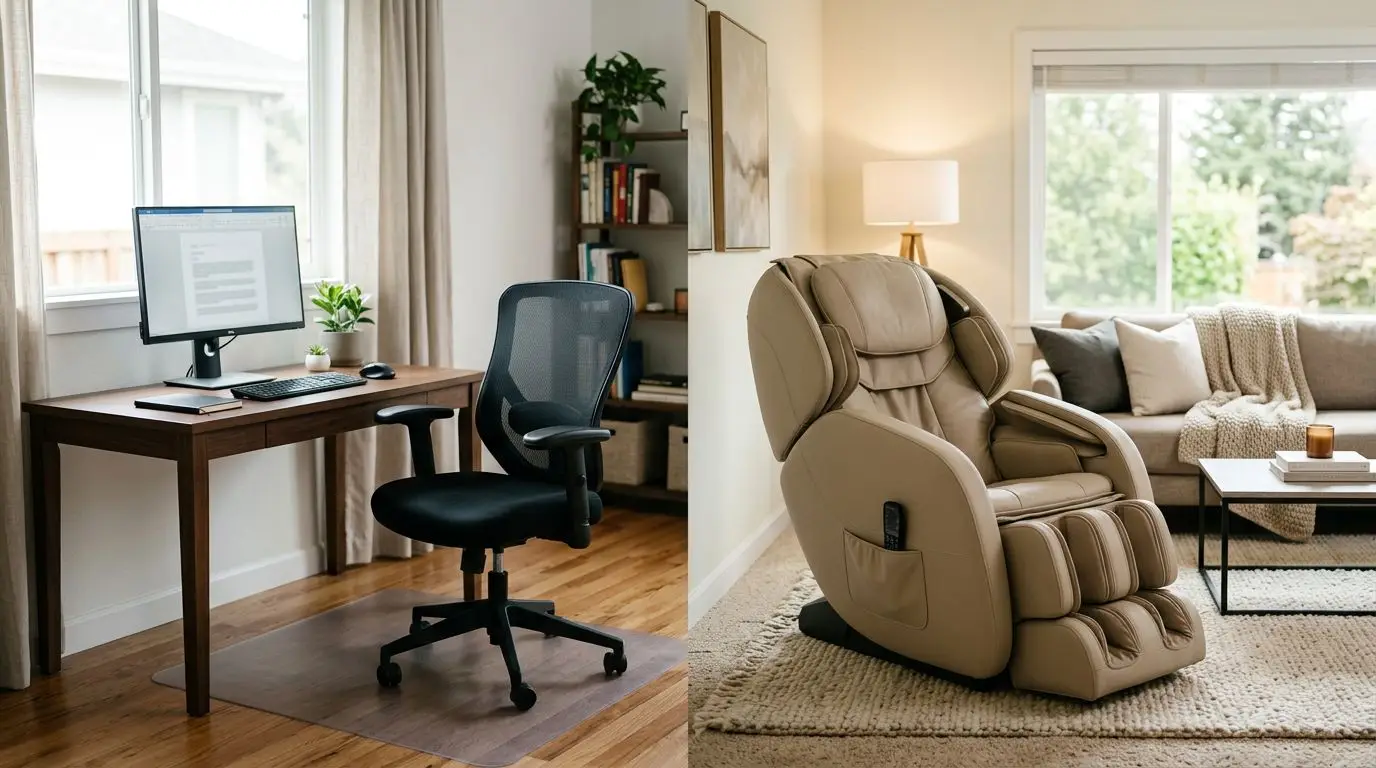
Office massage chairs are usually designed for short, practical use in a workspace, while home massage chairs are made for longer relaxation sessions in a living room, bedroom or media room. The main differences are footprint, noise, recline, adjustability, upholstery feel, controls and how often multiple people will use the chair in a day.
If you need a chair for a desk, shared office or employee break area, prioritize compact size, quiet operation, easy cleaning and simple controls. If you are buying for home, focus more on body coverage, recline comfort, roller track design, foot and calf fit, and whether the chair can remain in one dedicated spot.
Office vs. home massage chairs at a glance: 5 buying differences
The word office can mean two different things: a desk chair with built-in vibration or kneading, or a dedicated massage chair placed in a private office or break room. Home massage chairs are more often full-body recliners with roller tracks, leg rests and deeper recline. That difference alone can change the footprint by 2 to 3 feet.
| Buying factor | Office massage chair | Home massage chair |
|---|---|---|
| Typical use time | 5 to 15 minutes between work tasks | 15 to 30 minutes during personal downtime |
| Footprint priority | Compact base, desk clearance, easy walkways | Full recline space and a permanent location |
| Noise priority | Low motor sound for calls and nearby coworkers | Less critical, though still important in apartments |
| Adjustability | Seat height, arms, tilt and basic intensity matter most | Body scan, recline, roller position and leg length matter most |
| Best setting | Desk, private office, reception area or break room | Living room, bedroom, den or home office corner |
Neither type is automatically better. A compact office chair can be the smarter buy if the user needs to keep working at a 29- to 30-inch-high desk. A full-size home chair makes more sense when the goal is wider body coverage and a slower end-of-day routine.
Footprint and room fit: plan for 24 to 36 inches of clearance
Size is usually the first real constraint. A typical desk chair may be about 24 to 30 inches wide and can roll under many desks. A full-size home massage chair is often closer to a recliner in scale, commonly around 30 to 36 inches wide, with extra depth needed when the back reclines and the leg rest extends.
Some home chairs are designed to slide forward as they recline, often described as space-saving recline. Even then, check the actual clearance requirement. A chair that needs only a few inches behind the back may still require several feet in front for the footrest and for safe entry and exit.
In an office, the chair has to share space with a desk, monitor arms, filing cabinets and walking paths. In a shared workspace, a 36-inch-wide full recliner can feel oversized even if it technically fits. In a living room, the same chair may look normal beside a sofa, as long as you leave room to walk around it.
- For a desk setup: measure desk height, knee clearance, armrest height and caster movement.
- For a private office: allow enough turning space so the chair does not block the door swing.
- For a break room: leave at least a 30-inch walking path where people pass behind or beside the chair.
- For a living room: measure the full reclined length, not just the upright footprint.
Doorways matter too. Before buying a full-size chair, measure the narrowest doorway, hallway turn and stair landing. A chair that is 34 inches wide may not move easily through a 30-inch doorway unless parts are removable.
Comfort and adjustability: 15-minute breaks vs. 45-minute wind-downs
Office comfort and home comfort are not the same. At work, the chair must support an upright posture for typing, reading and meetings. At home, the chair can prioritize recline, leg support and a more enveloping feel because the user is not trying to sit at a keyboard.
For an office chair, start with ergonomic basics. Seat height should let the user keep feet flat or supported, with knees near a 90-degree bend. Armrests should not force the shoulders upward. The back should support the torso without pushing the head forward toward the screen.
Home massage chairs use different adjustability. Many rely on a reclining shell, a roller track and a leg rest. Common roller tracks include S-track designs that follow the curve of the back, L-track designs that extend under the seat, and SL-track designs that combine a back contour with longer seat coverage. The feel can range from broad and gentle to firm and targeted, depending on roller design, padding and intensity settings.
| Adjustment | Why it matters in an office | Why it matters at home |
|---|---|---|
| Seat height | Helps align with a desk and keyboard | Less important if the chair is a dedicated recliner |
| Armrest height | Can affect typing comfort over an 8-hour workday | Mainly affects getting in, getting out and resting arms |
| Recline angle | Usually limited so the user stays work-ready | Often central to the experience, especially with leg support |
| Roller position | May be basic or absent on desk-style chairs | Important for matching shoulder, back and seat coverage |
| Leg extension | Rare on desk chairs | Important for taller or shorter users, often within several inches of adjustment |
If the chair will be shared by people of very different heights, adjustability becomes more important. A 5-foot-2 user and a 6-foot-2 user may need different shoulder positions, calf support and footrest length. A chair that feels great for one person may feel awkward for the other.
Noise and workplace etiquette: aim for conversation-level sound
Noise matters more at work because it affects other people. A massage chair can create sound from rollers, air compression pumps, vibration motors, recline mechanisms and footrest movement. Even a modest hum can become distracting during a video call if the chair is within 6 to 10 feet of a microphone.
For office use, look for simple controls that do not beep loudly, motors that do not buzz against the floor, and upholstery that does not squeak when the user shifts weight. If the chair has air compression around the calves, arms or shoulders, expect a soft pump sound as the air cells inflate and deflate. That may be perfectly acceptable in a break room but annoying in an open-plan office.
Home use gives you more flexibility. A low mechanical sound may not matter in a den, but it can matter in a small apartment, nursery-adjacent room or shared TV space. If someone plans to use the chair at 10 p.m., quieter operation becomes part of household courtesy.
- Best office locations: private office, wellness room, unused corner or break area away from phones.
- Risky office locations: open desk rows, reception desks and rooms used for client calls.
- Best home locations: rooms with a door, thick rug or enough distance from bedrooms.
A simple test helps: imagine the chair running while someone nearby speaks in a normal voice. If the chair would compete with that conversation, it may be better suited to home use or a private room.
Daily-use expectations: 2 users in an office vs. 1 household chair
A home chair is often used by one or two regular people. An office chair may be used by a rotating group of coworkers, clients or staff. That changes what you should value. In a shared setting, durability, cleaning and simple operation can matter more than having 20 automatic routines.
Think about session length and frequency. In a workplace, shorter sessions of 5, 10 or 15 minutes are more realistic because people are stepping away from work. A home user may prefer a longer, slower routine after dinner or before bed, often around 15 to 30 minutes depending on the chair and personal preference.
Shared chairs also need clearer rules. If five people want to use one chair during a lunch break, long sessions create friction. A posted 10-minute limit is practical. At home, that issue is usually less formal, although households with several users may still care about quick presets and easy height adjustment.
Cleaning is another difference. Office upholstery sees more clothing types, skin products, hair products and spills. Smooth synthetic upholstery is common because it wipes down more easily, but it can still wear at seams and high-contact areas. At home, fabric feel, color and decor fit may carry more weight.
Features worth comparing: tracks, rollers, heat and controls
Features should match the setting. A home buyer may want a longer roller track, foot rollers, air compression zones, heat, memory settings and a remote with detailed manual control. An office buyer may prefer fewer settings if the chair is easy for anyone to understand in under 60 seconds.
| Feature | Better for office? | Better for home? | What to check |
|---|---|---|---|
| Vibration-only massage | Often practical for desk chairs | May feel too limited for a dedicated chair | Number of zones and noise level |
| S-track rollers | Works in compact recliners | Good back-focused coverage | Shoulder and lower-back fit |
| L-track or SL-track rollers | Usually too large for a desk setting | Good for broader back-to-seat coverage | Full reclined footprint |
| Air compression | Useful if quiet and easy to clean | Common for arms, calves and feet | Intensity levels and pump sound |
| Heat | Nice but not essential | Popular for a cozy feel | Location, warmth level and auto shutoff |
| App or touchscreen controls | Can be awkward for shared use | Useful for personal presets | Ease of use without a learning curve |
Be careful with feature overload. More zones and more programs do not always mean better comfort. The best chair is the one that fits the person, the room and the routine. A simple chair used every workday may be a better buy than a complicated recliner that no one wants to adjust.
Heat deserves a plain explanation. In massage chairs, heat is designed to add gentle warmth, often in the back, seat or leg area. It is not a substitute for professional care, and it should not be used over numb areas or where a person cannot comfortably sense temperature.
Who each chair type is best for: 3 common buyer profiles
An office massage chair is best for someone who wants short breaks without leaving the desk area, a small business adding a break-room amenity, or a home office user with limited space. It is also the better fit when the chair needs to roll, tuck under a desk or stay upright for 6 to 8 hours of work tasks.
A full-size home massage chair is best for someone who has a dedicated spot and wants a recliner-style experience with more body coverage. It is a stronger match for users who care about track length, recline feel, foot support and quiet personal time rather than office ergonomics.
A compact reclining massage chair is best for buyers who sit between those two categories. For example, a person with a 10-by-12-foot spare room may not want a large chair, but may still want more coverage than a vibrating desk chair provides. Compact recliners can be a compromise, though they still need recline clearance and an electrical outlet.
Here is the practical dividing line: if you need to work in the chair, treat it like an office chair first and a massage product second. If you plan to sit back, close your eyes and not type, treat it like a recliner first.
How to choose and measure before you buy: use a 7-step checklist
Measure before you compare features. A chair that does not fit the room, the desk or the user will disappoint no matter how advanced the controls look.
- Measure the space. Record width, upright depth and fully reclined depth. Include at least 24 to 36 inches for comfortable access where possible.
- Check doorways and stairs. Measure the narrowest path from delivery point to final location, including hallway turns.
- Confirm desk fit if used for work. Measure desk height, knee clearance and armrest height. Many desks are about 29 to 30 inches high.
- Match the chair to user height. Pay attention to shoulder roller range, headrest position and leg rest extension for the shortest and tallest regular users.
- Test the controls. A shared office chair should be understandable in 1 minute. A home chair can have more detailed controls if the main user likes customization.
- Listen for operating sound. If possible, hear the chair recline, run rollers and inflate air zones before buying.
- Plan the power setup. Avoid cords across walkways. Use a grounded outlet and follow the manufacturer instructions for surge protection and extension cords.
Also think about weight capacity and seat width. Manufacturers usually publish maximum user weight and recommended height ranges. Do not treat those as suggestions. They affect fit, comfort and long-term wear.
If buying for an office, assign responsibility for cleaning, time limits and basic care. If buying for home, decide whether the chair needs to match furniture, move occasionally or sit in one place year-round.
Safety considerations: ask a physician in these 8 situations
Massage chairs are consumer wellness products, not medical devices. They are designed to create pressure, movement, warmth and a relaxing seating experience. They should not be used as a substitute for medical advice or professional care.
Ask your physician before using a massage chair if you are pregnant, have a pacemaker or other implanted cardiac device, have a history of blood clots, take anticoagulants, have osteoporosis, have had a recent fracture or surgery, have spinal disc problems, have neuropathy, or have uncontrolled hypertension. If any setting causes sharp pain, numbness, dizziness, unusual symptoms or a sensation that feels wrong, stop using the chair and seek appropriate guidance.
Use shorter sessions at first. A 5- to 10-minute trial is sensible when trying a new chair or a stronger setting. Avoid falling asleep in the chair with heat on, and do not let children use powered recline or leg mechanisms without supervision.
FAQ: 5 common questions before choosing a chair
Can I use a home massage chair in an office?
Yes, if the space is private, the chair fits safely and the noise will not bother others. A full-size chair is usually not ideal for a standard desk because the seat height, arm position and recline shell are designed more like a recliner than a task chair.
Are office massage chairs comfortable enough for all-day sitting?
Some desk-style chairs with massage features can work for long workdays, but only if the ergonomic basics are right. Check seat height, lumbar shape, armrest adjustment and cushion support before caring about vibration or kneading features.
How much space does a home massage chair need?
Many full-size chairs need roughly 30 to 36 inches of width, plus room for recline and leg extension. Always use the manufacturer measurements for upright and fully reclined positions, because space-saving designs vary.
Is a quieter chair always less powerful?
No. Sound and intensity are not the same thing. A chair can feel firm because of roller shape and positioning while still using a relatively quiet motor, and a noisy chair can still feel uneven or poorly padded.
What is the biggest mistake buyers make?
The most common mistake is buying for features before fit. Measure the room, match the chair to the user height and decide whether the chair is for working upright or relaxing reclined before comparing extras.
Frequently asked questions
Can I use a home massage chair in an office? +
Yes, if the room is private, the chair fits safely and the operating sound will not disturb calls or coworkers. A full-size home chair is usually not a good replacement for a desk chair.
Are office massage chairs comfortable enough for all-day sitting? +
Only if the chair works well as an office chair first. Check seat height, armrest adjustment, back support and cushion feel before considering the built-in massage features.
How much space should I plan for a home massage chair? +
Many full-size chairs are about 30 to 36 inches wide and need extra room for recline and leg extension. Always confirm the upright and fully reclined measurements.
What features matter most in a shared office chair? +
Prioritize quiet operation, simple controls, wipeable upholstery, short session options and a compact footprint. Shared settings usually need practicality more than complex presets.
Who should ask a physician before using a massage chair? +
Ask a physician if you are pregnant, have an implanted cardiac device, blood clot concerns, use anticoagulants, have osteoporosis, recent surgery or fracture, spinal disc problems, neuropathy or uncontrolled hypertension.
Related guides
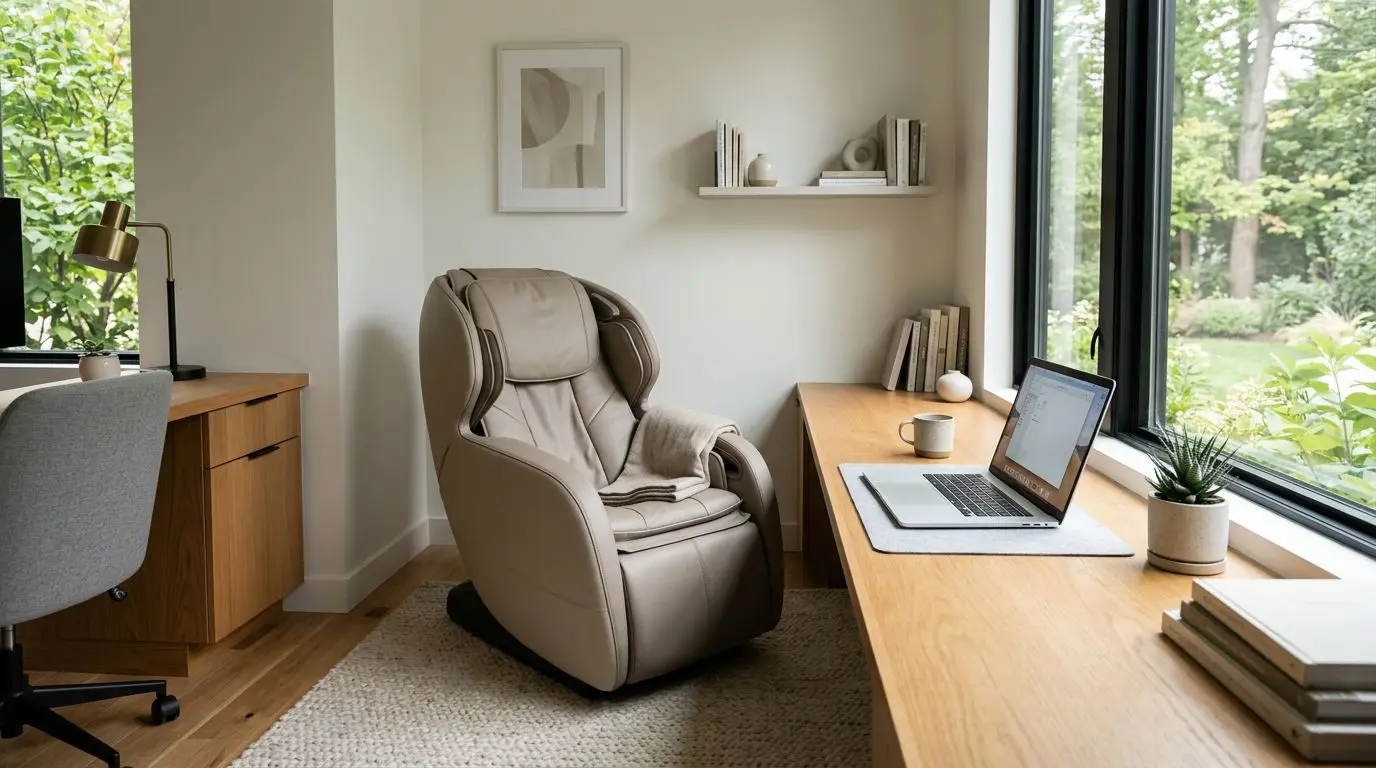
Massage Chairs for Office Use: What to Consider for a Workplace or Home Office
13 min read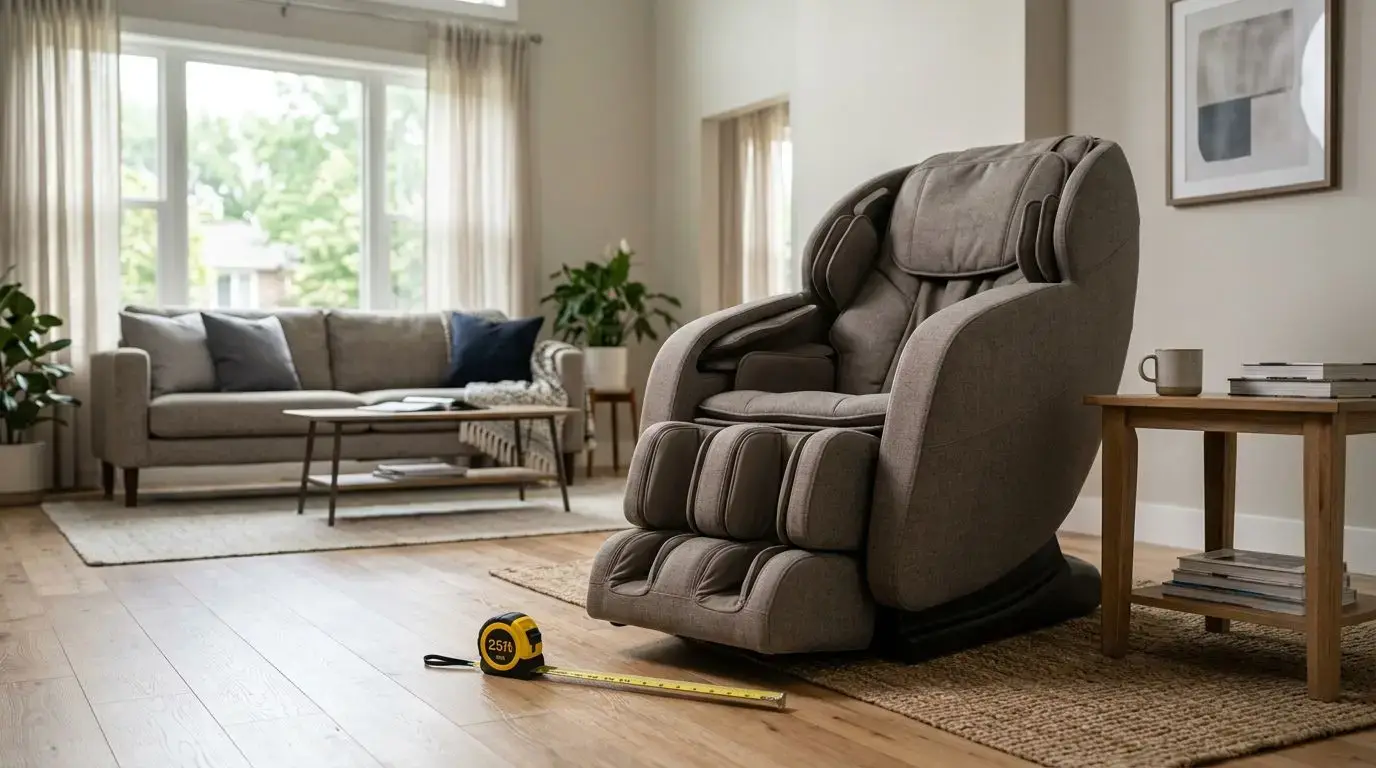
How to Choose a Massage Chair for Home Use
14 min read
Is a Massage Chair Worth It? Benefits, Limitations, and Who Should Buy One
13 min read
Where Should You Put a Massage Chair at Home? Room-by-Room Placement Guide
13 min read
Massage Chair Recliner vs. Standard Recliner: Which Is Better for Everyday Comfort?
15 min read