Disclosure: We may earn a commission when you buy through links on this page, at no extra cost to you. We buy nothing, sell nothing and accept no payment for coverage — commissions never decide what we recommend. How we make money.
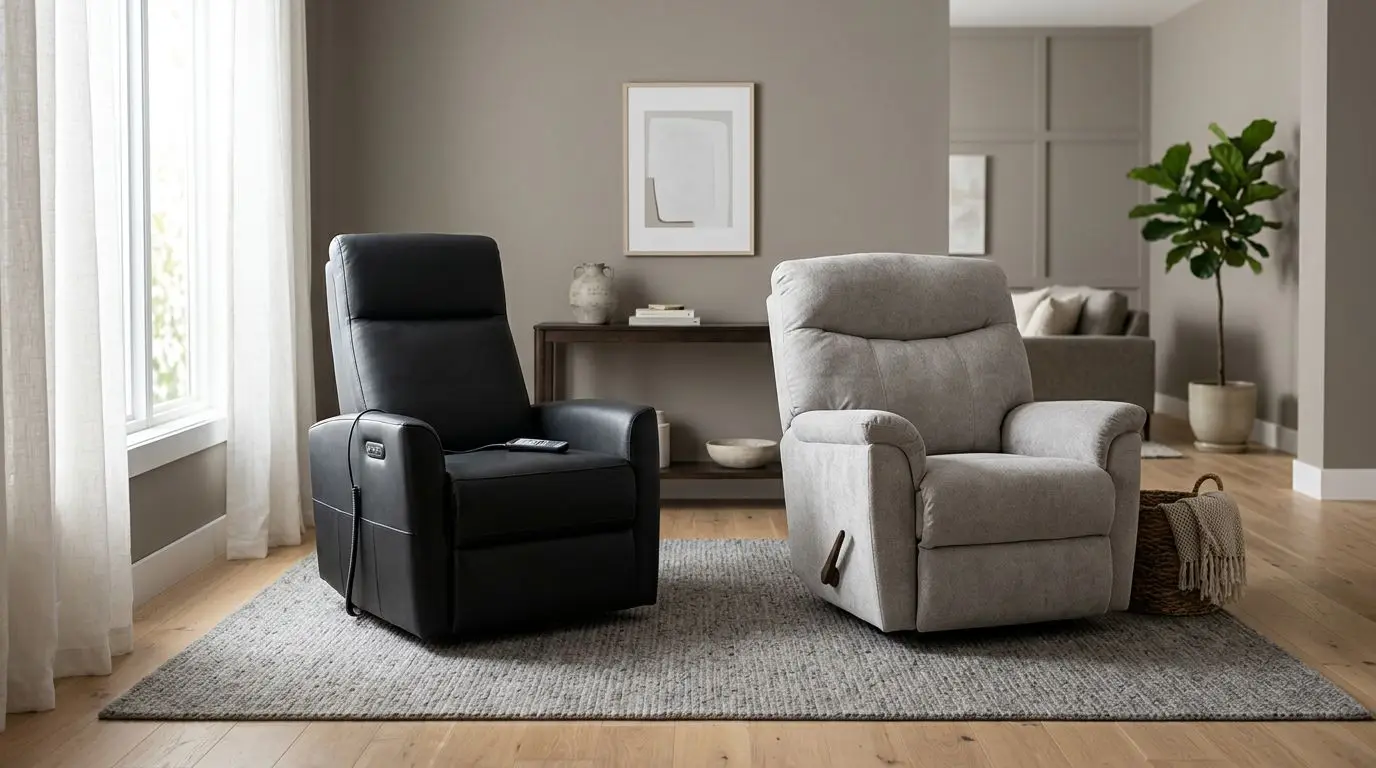
A massage chair recliner is better if you want a seat that combines reclining comfort with built-in rolling, kneading, air compression, heat, or foot massage features. A standard recliner is better if your top priorities are soft seating, simpler controls, lower weight, easier room placement, and a more furniture-like look. Built-in massage is worth the upgrade when you expect to use it several times a week and have enough space, but it is not automatically the more comfortable everyday chair for everyone.
The right choice depends on how you sit, how much room you have, how sensitive you are to pressure, and whether you want a powered wellness feature or a straightforward lounging chair. This guide compares both options in practical terms: comfort, support, fit, features, maintenance, and safety.
Quick comparison: 2 recliner types, 1 everyday comfort decision
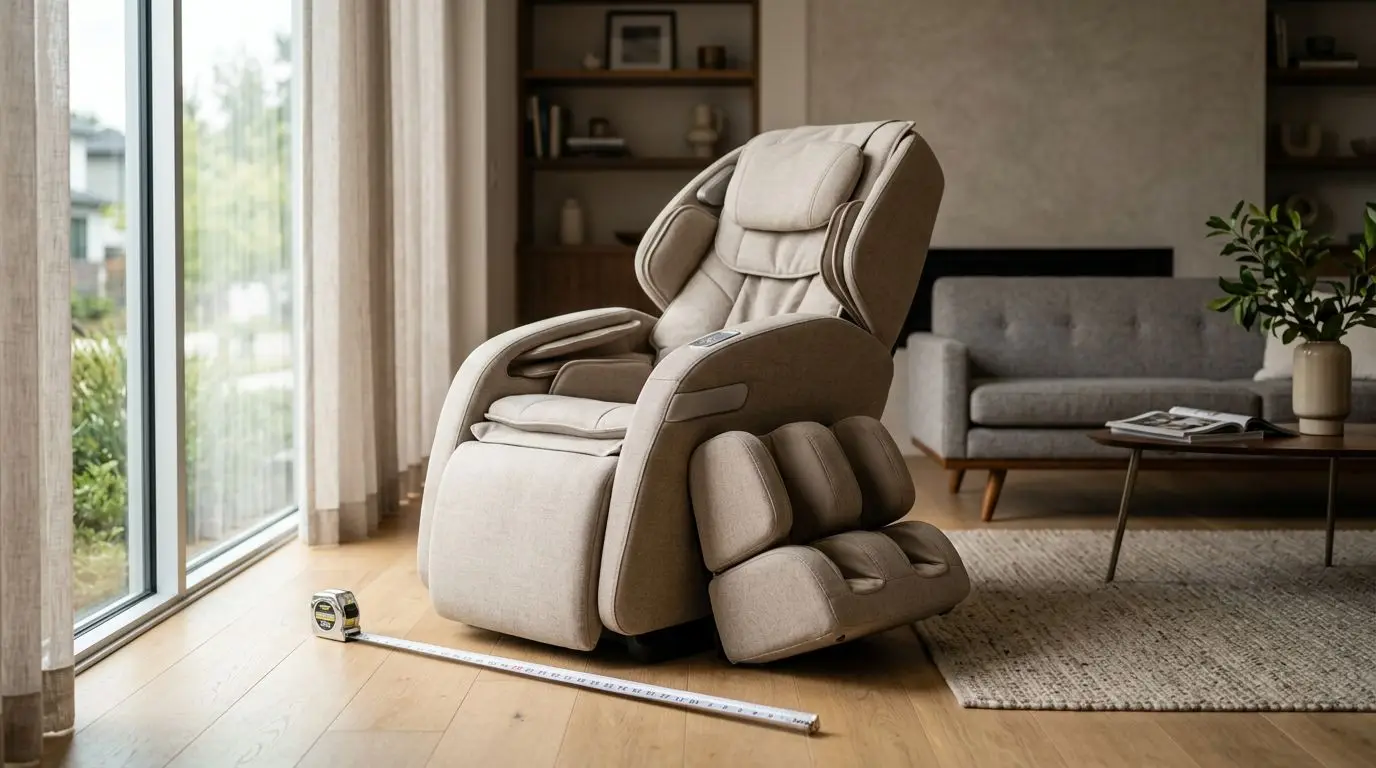
At a glance, both chairs may look like living room recliners, but they are built around different priorities. A standard recliner is primarily furniture. A massage chair recliner is part furniture and part powered mechanical system, often with rollers, motors, airbags, wiring, and a programmed controller inside the frame.
| Category | Massage chair recliner | Standard recliner |
|---|---|---|
| Main purpose | Reclining plus built-in massage-style motion and pressure | Lounging, reading, TV, and general seating |
| Typical weight | Often about 150 to 300 lb, depending on features | Often about 70 to 150 lb, depending on frame and mechanism |
| Comfort feel | More structured, with firmer zones around rollers and airbags | Softer, more cushioned, and easier to sink into |
| Space needs | May need extra side, front, and delivery clearance | Usually easier to fit into small rooms |
| Controls | Remote, control panel, app, or preset programs | Manual handle, push button, or simple power recline |
| Best everyday use | Short sessions of 10 to 20 minutes plus casual sitting | Long lounging, naps, TV, and conversation seating |
That last row matters. Many massage programs run in preset cycles of roughly 10, 15, or 20 minutes. A standard recliner, by contrast, is made for sitting through an entire evening without the chair doing anything active.
Everyday comfort: cushioning, pressure, and 15-minute sitting habits
Standard recliners usually win on soft, passive comfort. If comfort to you means a plush seat, padded arms, a broad back cushion, and a footrest that simply supports your legs, a regular recliner is hard to beat. It can feel more natural for a 2-hour movie, reading, phone calls, or a weekend nap.
Massage chair recliners feel different. They are often firmer because the frame has to hold rollers, tracks, airbags, and motors in consistent positions. Some people like that structured feel. Others notice that the chair has less cushion in the back or seat than a traditional recliner.
Pressure is the biggest comfort divider. A massage chair recliner may use rollers that move along the back, airbags that squeeze the shoulders, arms, calves, or feet, and nodes under the soles. Even on a low setting, that is a more active sensation than sitting still. For daily use, many owners prefer a short 10- to 15-minute program, then turn the feature off and keep reclining.
Pay close attention to seat dimensions. A seat width around 20 to 24 inches works for many adults, but larger users may want more room through the hips and shoulders. Seat depth matters too. If the seat pan is too long, your knees may not bend comfortably at the edge; if it is too short, your thighs may feel under-supported.
A standard recliner is also more forgiving when multiple people share the chair. A massage chair recliner can be more size-sensitive because rollers and airbags are designed to line up with the body. A tall person and a shorter person may have very different reactions to the same chair.
Support and recline angles: 120 to 170 degrees can feel very different
Both chair types can provide good back and leg support, but they do it in different ways. A standard recliner relies on padding, springs, frame shape, and footrest position. A massage chair recliner adds mechanical structure, and in some designs, the roller track itself affects how the back feels.
Recline angle is one of the most practical details to compare. Many recliners sit upright around 100 to 110 degrees and recline somewhere between about 120 and 170 degrees, depending on design. A shallow recline is better for reading and conversation. A deeper recline feels more laid back and may be preferred for resting, but it can be awkward for people who do not like climbing out of a low, tilted position.
Massage chair recliners often advertise track style. An S-track follows the natural curve of the back and commonly focuses on the neck, shoulders, mid-back, and lower back. An L-track extends under the seat, often reaching the glute area and upper hamstrings. Some longer tracks are roughly 45 to 55 inches, though exact length varies by chair type and size. A longer track gives more coverage, but it can also make the chair feel more structured under the body.
Standard recliners have their own support advantages. Many offer a softer lumbar area, a taller back cushion, or a wide head pillow without the hard edges that can come with internal components. If you want a chair that disappears beneath you, the standard recliner may feel more comfortable.
For everyday posture, neither option is automatically best. The better chair lets your feet rest, your shoulders settle, and your head stay supported without forcing your chin forward. Sit for at least 10 minutes during a showroom test if you can. The first 30 seconds rarely tells the full story.
Space and delivery: measure doorways, wall clearance, and 30-inch paths
Massage chair recliners usually ask more from your room. They are often wider, deeper, heavier, and more complex to move than standard recliners. Some have a space-saving recline that slides forward as the backrest tilts, while others need significant clearance behind and in front.
Start with the path into your home. Measure the narrowest doorway, hallway turn, stair landing, and elevator opening. A clear path of about 30 inches is a useful target for many chairs, but do not assume. Some chairs arrive partially assembled; others are bulky even when boxed.
Wall clearance can vary a lot. A standard recliner may need 4 to 12 inches behind it, depending on the mechanism. Some space-saving massage chair recliners may need only a few inches from the wall, while larger full-body designs may still require generous space when the footrest extends. Measure forward clearance too. A raised footrest can add 15 to 25 inches of length in front of the seat.
Weight is another real-world issue. A standard manual recliner can often be shifted by two adults. A fully featured massage chair recliner may weigh 200 lb or more, and moving it across wood floors or upstairs can become a project. If you rent, move often, or rearrange furniture seasonally, a lighter standard recliner may be the smarter everyday choice.
Do not forget outlet placement. A massage chair recliner needs power, and the cord should not cross a walkway. If the only outlet is behind a sofa or across the room, the setup may become annoying or unsafe.
Built-in massage features: what is worth paying for in a 10- to 20-minute session?
The value of a massage chair recliner comes down to whether its features match how you actually like pressure to feel. Some shoppers want gentle rolling across the back. Others want firm kneading, air compression around the calves, or foot rollers. More features are not always better.
Look for adjustability first. Intensity levels, roller position control, width adjustment, and the ability to turn off individual zones can make a chair more useful to different people. A chair with 5 intensity levels is not automatically superior to one with 3, but having some control is important.
| Feature | Designed to feel like | Best for shoppers who want | Watch-outs |
|---|---|---|---|
| Back rollers | Moving pressure along the back | A more active backrest experience | May feel too firm through thin padding |
| 2D roller system | Up, down, side-to-side movement | Basic rolling and kneading sensations | Less depth control than more advanced systems |
| 3D or 4D-style roller system | Variable depth and rhythm | More control over pressure intensity | Higher complexity and usually higher cost |
| Air compression | Inflating cushions that squeeze and release | Shoulder, arm, calf, or foot pressure | Can feel restrictive if set too high |
| Heat | Localized warmth, often in the back area | A cozy feel during short sessions | Coverage and temperature vary widely |
| Foot rollers | Pressure under the soles | A focused foot sensation | Can be intense for sensitive feet |
| Zero-gravity style recline | A reclined position with legs elevated | A floating, weight-distributed feel | Not everyone likes the tilted position |
Preset programs are convenient, but manual control matters more for long-term comfort. If the automatic program always presses too hard in one area, you may stop using it. A useful chair should let you reduce intensity, skip a zone, pause movement, or choose a shorter cycle.
Standard recliners can include comfort features too: power recline, power headrest, lumbar adjustment, cup holders, storage arms, USB charging, swivel bases, rocking mechanisms, or lift assistance. These features may matter more than built-in massage if your main use is sitting for 1 to 3 hours at a time.
Who it is best for: 6 shopper profiles to consider
A massage chair recliner is not a universal upgrade. It is a different kind of chair. Matching the chair to the person matters more than choosing the longer feature list.
| Shopper profile | Better fit | Why |
|---|---|---|
| You want active pressure after work or workouts | Massage chair recliner | Built-in rollers and airbags create a changing pressure experience |
| You mainly watch TV for 2 or more hours | Standard recliner | Softer passive comfort is usually easier for long sitting |
| You share the chair with 2 or 3 family members | Depends | Adjustability becomes critical because body sizes differ |
| You live in an apartment or move often | Standard recliner | Lower weight and simpler delivery are major advantages |
| You like firm, structured seating | Massage chair recliner | The internal frame may feel supportive rather than plush |
| You want a furniture-first living room look | Standard recliner | More upholstery styles, silhouettes, and compact options are available |
Choose a massage chair recliner if you will actually use the massage functions at least a few times per week. If you only try them during the first month, the chair may become an expensive, heavy recliner that is less plush than the standard option you could have bought.
Choose a standard recliner if you want a dependable seat for everyday lounging and do not want to manage programs, remotes, power cords, or mechanical parts. Simpler can be more comfortable.
How to choose and measure: a 7-step fit check before you buy
Use measurements, not guesswork. A chair can look reasonable online and still feel too narrow, sit too low, or block a walkway once it arrives.
- Measure the user first. Note height, shoulder width, hip width, and preferred seat height. A common recliner seat height is around 18 to 21 inches, but comfort depends on leg length.
- Check seat width. Add at least 2 inches of wiggle room beyond the user’s hip width. If two people will share it, fit the larger user first.
- Check seat depth. When seated, you want support under the thighs without the front edge pressing hard behind the knees.
- Measure full recline length. Include the back tilt and extended footrest. Many chairs need well over 60 inches of total floor length when fully reclined.
- Measure delivery access. Record door widths, hallway widths, stair turns, and elevator dimensions. A tight 90-degree hallway turn is often harder than the doorway itself.
- Plan the power source. For a massage chair recliner or power recliner, the outlet should be nearby enough that the cord stays out of foot traffic.
- Test the controls. If possible, use the remote or buttons for at least one full 10- to 15-minute cycle. Controls should be readable, reachable, and easy to stop quickly.
When comparing online specifications, look for chair width, depth upright, depth fully reclined, seat width, recommended user height range, maximum user weight, and clearance from wall. If any of those are missing, ask the retailer before ordering.
Ask about returns and delivery as well. A comfort product is personal, and a 250 lb chair is not easy to repack. Know whether the chair can be returned after assembly, who pays return freight, and whether delivery includes room-of-choice placement.
Safety and everyday use: start with 10 minutes and know when to ask a physician
Massage chair recliners are consumer wellness products, not medical devices. They are designed to create sensations such as rolling, kneading, tapping, squeezing, warmth, and reclined support. They should not be used as a substitute for medical advice or care.
Start gently. Use the lowest intensity for about 10 minutes the first time, especially if the chair has firm rollers, foot massage, or strong air compression. If the pressure feels sharp, pinching, numbing, or uncomfortable, stop the session and adjust the settings or do not use that feature.
Some people should speak with a physician before using a massage chair recliner, especially if they are pregnant; have a pacemaker or other implanted cardiac device; have a history of blood clots or take anticoagulant medication; have osteoporosis; have had a recent fracture, surgery, or significant injury; have spinal disc problems; have neuropathy or reduced sensation; or have uncontrolled hypertension. Do not bury this step. If any of these apply, ask your physician before using a powered massage chair.
Heat also deserves caution. Built-in heat is usually designed for comfort, but people with reduced temperature sensation should be careful. Never fall asleep with a heated or moving program running, and follow the chair’s manual for session limits.
For children and pets, keep the chair unplugged or locked when not in use if the design allows it. Moving footrests, reclining backs, and airbags can pinch small hands, tails, or objects left near the mechanism.
Cost, maintenance, and ownership: think beyond the first 12 months
Even without naming prices, it is fair to say massage chair recliners are usually more expensive and more complex than standard recliners. They contain motors, circuit boards, rollers, airbags, pumps, heaters, and controls. More parts can mean more comfort options, but also more potential service issues.
A standard recliner may need basic upholstery care, occasional tightening, or mechanism repair after years of use. A massage chair recliner may also require troubleshooting for error codes, remote problems, airbag performance, roller movement, or power supply issues. Check warranty length for the frame, parts, labor, and in-home service separately. A 3-year parts warranty is different from 3 years of in-home labor coverage.
Upholstery matters for both. Fabric can feel warmer and softer but may hold pet hair. Faux leather wipes clean easily but can feel warm against skin and may show wear in high-friction areas. Genuine leather varies widely by grade and finish, and it still needs care. If you plan to sit daily, ask how the material handles sweat, sunlight, cleaning products, and pets.
Noise is another ownership detail. Massage motors, air pumps, and foot rollers are not silent. If you plan to watch TV at low volume or use the chair in a bedroom while someone sleeps, listen for pump cycling and roller movement during a full program.
Final verdict: choose based on 3 comfort priorities
If your top 3 priorities are soft lounging, easy placement, and a living-room furniture look, a standard recliner is probably the better everyday comfort choice. It is simpler, usually lighter, and often more pleasant for long passive sitting.
If your top 3 priorities are adjustable pressure, short relaxation sessions, and a more structured full-body seating experience, a massage chair recliner may be the better upgrade. The best candidates are shoppers who like the feel of mechanical rollers and will use the feature consistently, not just occasionally.
The practical answer is this: buy the chair you will enjoy on an ordinary Tuesday night, not the one with the longest feature list. Sit in it, measure for it, and make sure the comfort still makes sense when the massage function is turned off.
FAQ: 5 questions about everyday recliner comfort
Is a massage chair recliner comfortable as a regular chair?
It can be, but it usually feels firmer and more structured than a standard recliner because of the rollers, airbags, and internal frame. If you want plush, sink-in seating for long periods, test carefully before choosing a massage chair recliner as your main seat.
How long should you sit in a massage chair recliner?
For the active massage function, many people start with about 10 minutes on a low setting and then work up only if it remains comfortable. Always follow the manufacturer’s session limits. Sitting in the chair with the massage turned off is different and depends on normal seating comfort.
Do massage chair recliners take more room than standard recliners?
Often, yes. They may be heavier, deeper, and bulkier, and the footrest can add 15 to 25 inches in front when extended. Some space-saving designs reduce rear wall clearance, but you still need to measure the full reclined footprint.
Is zero-gravity style recline necessary?
No. It is a reclined position designed to distribute body weight differently and elevate the legs, but not everyone prefers that angle. Try it for at least 5 to 10 minutes if possible before deciding it is a must-have.
What matters more: more programs or better adjustability?
Better adjustability usually matters more. A chair with fewer programs but clear intensity control, zone control, and manual roller positioning may be more comfortable than one with many presets that cannot be fine-tuned.
Frequently asked questions
Is a massage chair recliner comfortable as a regular chair? +
It can be, but it usually feels firmer and more structured than a standard recliner because of the rollers, airbags, and internal frame. If you want plush, sink-in seating for long periods, test carefully before choosing one as your main seat.
How long should you sit in a massage chair recliner? +
For the active massage function, many people start with about 10 minutes on a low setting and increase only if it remains comfortable. Follow the manufacturer’s session limits and stop if pressure feels sharp, pinching, numbing, or uncomfortable.
Do massage chair recliners take more room than standard recliners? +
Often, yes. They may be heavier, deeper, and bulkier, and the footrest can add 15 to 25 inches in front when extended. Some space-saving designs reduce rear wall clearance, but you still need to measure the full reclined footprint.
Is zero-gravity style recline necessary? +
No. It is a reclined position designed to distribute body weight differently and elevate the legs, but not everyone prefers that angle. Try it for at least 5 to 10 minutes if possible before treating it as a must-have.
What matters more: more programs or better adjustability? +
Better adjustability usually matters more. A chair with fewer programs but clear intensity control, zone control, and manual roller positioning may be more comfortable than one with many presets that cannot be fine-tuned.
Related guides
Is a Massage Chair Worth It? Benefits, Limitations, and Who Should Buy One
13 min read
How to Choose a Massage Chair for Home Use
14 min readZero Gravity Massage Chairs Explained: Benefits, Limitations, and When It Matters
16 min read
Office Massage Chairs vs. Home Massage Chairs: Key Differences Before You Buy
13 min read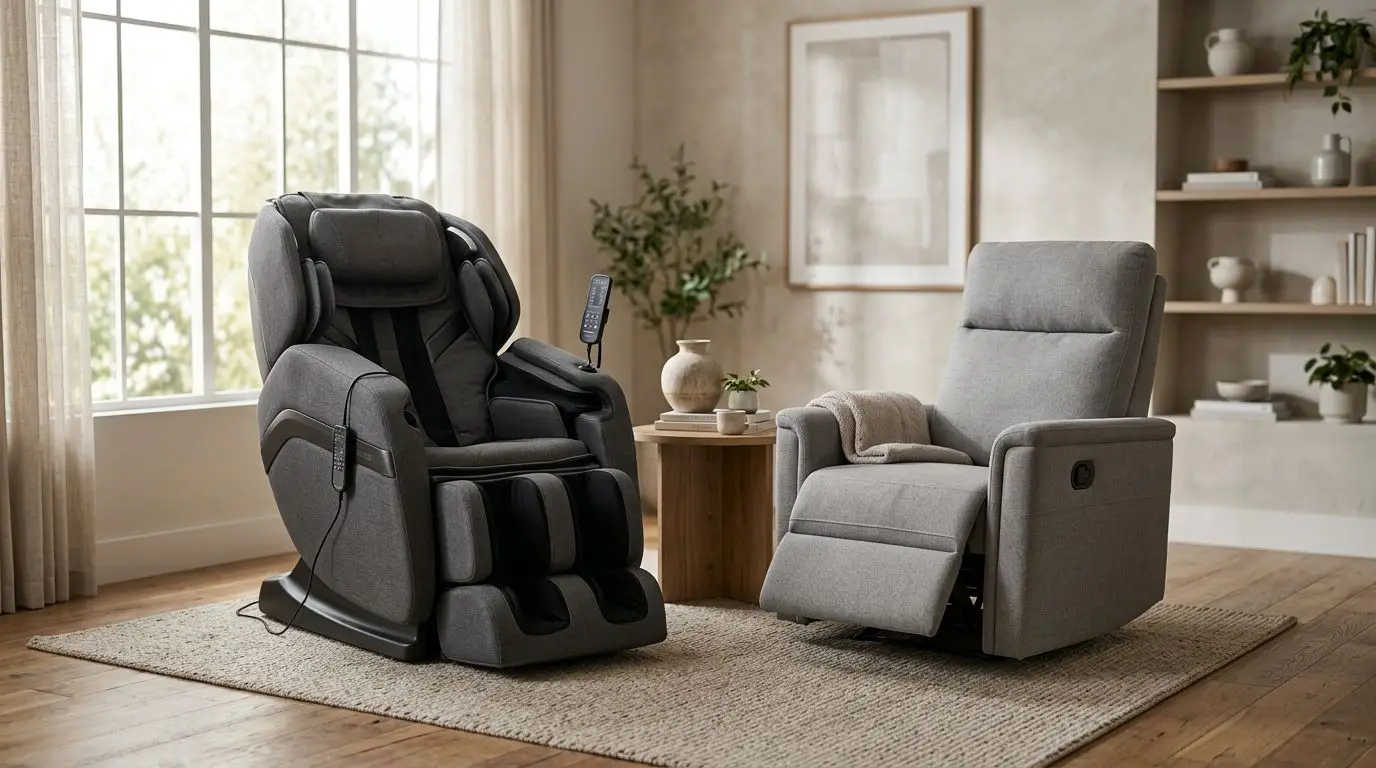
Electric Massage Chairs vs. Manual Massage Recliners: What’s the Difference?
13 min read