Disclosure: We may earn a commission when you buy through links on this page, at no extra cost to you. We buy nothing, sell nothing and accept no payment for coverage — commissions never decide what we recommend. How we make money.
A massage chair is worth it if you will use it consistently, have room for it, and want convenient at-home relaxation instead of occasional hands-on massage. It is less likely to be worth it if you expect medical treatment, need highly personalized bodywork, or would only use it a few times a month.
The best way to judge value is to look at your routine, body size, pain or tension patterns, budget, and expectations. A good chair can make short daily sessions easy, but it cannot replace a clinician, physical therapist, or skilled massage therapist when you need diagnosis, rehab, or targeted manual work.
Is a massage chair worth it after 15 minutes a day?
For many shoppers, the math starts with use. A chair used for 15 minutes most days has a very different value than one that becomes a laundry rack after 3 weeks. Massage chairs are convenience products first: they remove appointment scheduling, travel time, tipping, and the need to leave home when you are already tired.
That convenience can matter. If you get home with tight shoulders at 8 p.m., a chair is ready right away. Many people use one while listening to music, watching a show, or winding down before bed. Short sessions can feel manageable, especially compared with setting aside 60 to 90 minutes for an appointment.
The catch is expectation. A massage chair follows programmed movements along a track; it does not assess your tissues, adjust technique based on feedback the way a person can, or work around a medical condition with clinical judgment. It can help you relax, reduce a feeling of stiffness, and make recovery routines easier to maintain. It should not be viewed as a cure for chronic pain, injury, nerve symptoms, or circulation problems.
A simple test: if you can picture yourself using the chair at least 3 to 5 times per week, and you have a clear place for it, the purchase deserves serious consideration. If you only want a luxury item for occasional use, compare it with smaller tools, stretching, heat therapy, or professional massage before committing floor space.
The real benefits: 5 practical advantages shoppers notice
Massage chair benefits are best understood as everyday wellness and convenience benefits, not guaranteed medical outcomes. The biggest advantage is often routine. A 10- to 20-minute session is easy to repeat, and repeated relaxation habits often matter more than one intense session every few months.
- Convenience: The chair is available at home, often every day, with no appointment or travel time.
- Consistency: Built-in programs make it easier to follow a regular relaxation routine.
- Whole-back coverage: Many chairs massage from the neck and shoulders to the lower back, and L-track designs may continue under the glutes.
- Heat and compression: Common features include lumbar heat and air compression around the calves, feet, arms, or shoulders.
- Shared household use: One chair may serve multiple adults if the size range, intensity, and controls work for everyone.
Some people also appreciate the privacy. You do not need to explain where you feel tense, and you can stop the session at any time. For users who feel awkward during hands-on massage, that alone can make a chair more appealing.
There are real limits, though. A chair cannot feel muscle texture, adapt pressure with human sensitivity, or perform specialized manual techniques. Even advanced chairs still depend on rollers, airbags, motors, and preset logic. Think of the chair as a reliable wellness appliance, not a substitute for care from a licensed professional when care is needed.
Limitations to know before a 200 lb chair arrives
Full-size massage chairs are large pieces of furniture. Many weigh well over 200 pounds, and even smaller units can be awkward to move through halls, stairways, and tight turns. Before buying, think about the delivery path, not just the final room.
Comfort is not universal, either. Roller pressure that feels excellent to one person may feel too intense to another. A tall user may find the neck rollers land too low, while a shorter user may feel the shoulder area is too aggressive. Body scanning helps, but it is not perfect, and some chairs fit average-height users better than people at the edges of the size range.
Noise is another trade-off. Massage chairs are not silent; motors, pumps, airbags, and reclining mechanisms all make sound. Most are quiet enough for a living room, but not everyone wants mechanical movement during a movie or while someone else is sleeping nearby.
There are health considerations as well. People who are pregnant, have implanted medical devices, blood clot concerns, recent surgery, fractures, osteoporosis, severe varicose veins, uncontrolled medical conditions, or unexplained pain should ask a qualified health professional before using a massage chair. If a session causes numbness, sharp pain, dizziness, bruising, or symptoms that persist, stop using it and seek guidance.
Finally, a massage chair can make a room feel crowded. Reclining models need clearance behind or in front, depending on the mechanism. Wall-hugging designs reduce that requirement, but you still need room to enter, exit, clean around it, and extend the footrest.
Who it is best for: 4 shopper profiles
A massage chair is not for everyone, but it fits certain buyers especially well. The strongest match is someone who values repeated, low-friction use. If you already know you enjoy mechanical massage, the decision gets easier.
1. The daily tension user
This person ends the day with tight shoulders, a stiff lower back, or tired legs after sitting, standing, driving, or training. A 15-minute chair session may become part of a wind-down routine. The key is realistic relief: comfort, relaxation, and a looser feeling, not a promise to fix an underlying condition.
2. The busy appointment avoider
If scheduling bodywork is the barrier, a chair solves that specific problem. Parents, shift workers, remote workers, and frequent travelers may value access more than customization. The chair is there at 6 a.m. or 11 p.m.
3. The household wellness buyer
A chair can make sense when 2 or more adults will use it. Shared use improves value, but only if the chair fits different body sizes and preferences. Look for adjustable intensity, manual zone control, and a track length that suits the tallest and shortest primary users.
4. The tech-comfort shopper
Some buyers like guided programs, body scanning, zero-gravity recline, foot rollers, heat, and air compression. If you enjoy structured routines and do not want to assemble multiple small devices, an all-in-one chair may be attractive.
Who should be cautious? Anyone with limited mobility should test how easy it is to sit down and stand up from a reclined position. People with very small rooms, frequent moves, or uncertain long-term housing may prefer portable massage devices until their setup is stable.
Chair types compared: 2D, 3D, 4D, S-track, and L-track
Massage chair terminology can get confusing fast. The most important terms describe how the rollers move and where they travel. A chair with better fit and control usually matters more than a long feature list.
| Type or feature | What it means | Best for | Watch-outs |
|---|---|---|---|
| 2D rollers | Rollers move up/down and side-to-side along the back. | Basic back massage and lower intensity users. | Less depth control than 3D or 4D designs. |
| 3D rollers | Rollers also move inward and outward to vary pressure depth. | Users who want stronger or more adjustable pressure. | Can feel intense if not adjustable enough. |
| 4D rollers | Usually adds more variation in speed, rhythm, and depth timing. | Shoppers who want a more dynamic massage feel. | The term is used differently, so test the actual feel. |
| S-track | Track follows the curve of the spine from neck to lower back. | Back-focused massage in a traditional recliner layout. | Typically does not extend under the seat. |
| L-track | Track continues from the back down under the glute area. | Users who want lower-back and glute coverage. | May reduce stretch range compared with some S-track designs. |
| SL-track | Combines an S-shaped back path with an extended L-style track. | Broad coverage from neck toward the upper hamstrings. | Fit still depends on your height and body shape. |
Zero-gravity positioning is another common term. It typically means the chair reclines so your legs are elevated and your body weight is distributed across the backrest. Many users find this position relaxing, though it is not the same thing as medical traction or clinical decompression.
Air compression uses inflatable airbags to squeeze and release around areas such as calves, feet, arms, shoulders, or hips. Foot rollers may knead the soles, which some people love and others find too aggressive. Heat is usually concentrated in the lumbar area, calves, or feet, and it is generally mild compared with a heating pad.
How to choose and measure: allow 30 inches for the path in
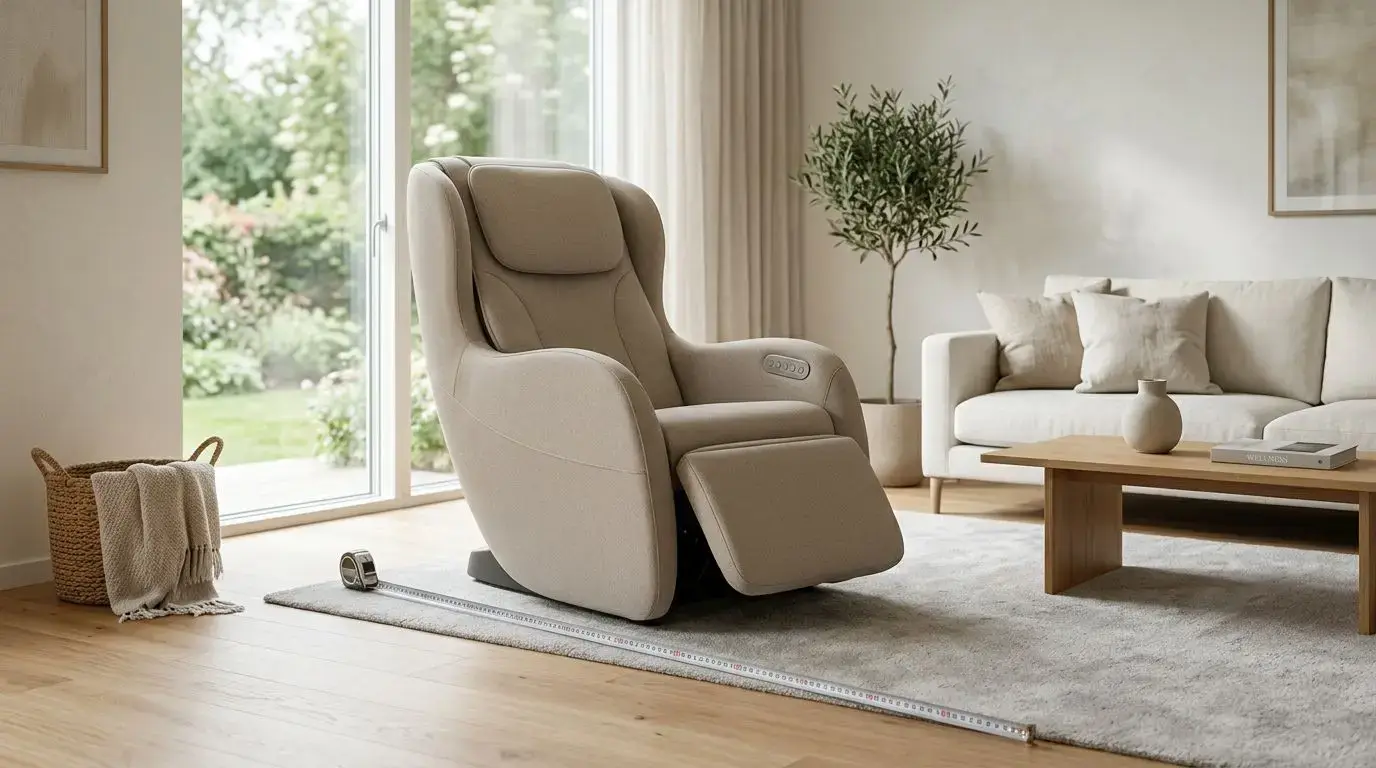
Start with the room and the delivery path. Measure doorways, hallways, stair turns, elevator openings, and the final footprint. A practical rule is to confirm at least 30 inches of clear width along the route, but always compare your measurements with the chair’s actual boxed and unboxed dimensions.
Next, measure the use area. Include the upright footprint, reclined footprint, footrest extension, and walking space around the chair. Wall-hugging recline can reduce rear clearance, sometimes to only a few inches, but the front of the chair may still move forward as it reclines.
Fit matters as much as space. Check the stated user height and weight range, then be conservative if you are near either end. Seat width, shoulder width, calf opening size, and footwell length can affect comfort. If two people will use the chair, measure both.
| What to check | Why it matters | Practical target |
|---|---|---|
| Doorway and hallway width | Prevents delivery problems. | Measure the narrowest point; 30 inches is a useful starting check. |
| Recline clearance | Chair needs room to move. | Check both rear clearance and front footrest extension. |
| User height range | Rollers must align with neck, shoulders, and back. | Prioritize fit for the most frequent user. |
| Seat and shoulder width | Affects comfort and airbag pressure. | Allow room for relaxed posture, not a tight squeeze. |
| Controls | Determines daily usability. | Look for clear buttons, manual zone control, and easy stop access. |
If you can try a chair in person, use it for at least 10 minutes. A 60-second sit is not enough. Test a gentle program, a stronger program, the foot rollers, heat, reclining, and the emergency stop or power button. Notice whether the rollers hit your shoulder tops, shoulder blades, spine, or hip bones uncomfortably.
If you cannot test before buying, read the return policy carefully. Pay attention to the return window, pickup requirements, restocking terms, original packaging rules, and who pays freight. Massage chairs are expensive and difficult to ship back, so the policy is part of the purchase decision.
Cost and value: think in 3 buckets, not just the sticker
Because pricing changes by retailer, feature set, delivery method, and promotions, it is smarter to compare value in 3 buckets: initial purchase, ownership costs, and actual use. The cheapest chair is not a bargain if it fits poorly or feels harsh. The most feature-heavy chair is not automatically better if you only use one gentle program.
Initial purchase includes the chair, delivery, possible in-home setup, taxes, and any optional protection plan. Ownership costs may include electricity, cleaning supplies, eventual repairs, and the hassle of moving it. Use value depends on how often you sit in it and whether it reduces your desire for other paid relaxation services.
A simple way to frame it: estimate your likely sessions per week. If you expect 5 sessions weekly, that is about 260 sessions per year. If you expect 1 session weekly, that is about 52 sessions per year. The same chair feels very different financially under those two patterns.
Do not overbuy for features you will not use. Voice control, app control, mood lighting, speakers, and elaborate program menus may be nice, but they rarely matter as much as roller comfort, body fit, intensity control, warranty clarity, and easy everyday operation.
Safety, setup, and maintenance: 10-minute checks matter
Massage chairs are generally simple to use, but safe setup still matters. Put the chair on a level surface, keep cords out of walkways, and make sure children and pets are clear of the reclining mechanism and footrest. Moving parts can pinch.
Before a session, take 10 seconds to check your body position. Sit fully back, align your shoulders, keep your feet properly placed, and start with a lower intensity if you are tired, sore, or new to the chair. More pressure is not always better. If the chair allows manual intensity changes, increase gradually.
Session length should be moderate. Many built-in programs run about 10 to 30 minutes, which is plenty for most users. Long back-to-back sessions can lead to soreness or irritation, especially with strong rollers or aggressive foot massage. Follow the manual’s guidance.
Maintenance is mostly common sense. Wipe upholstery with approved cleaners, vacuum dust from seams, keep vents unobstructed, and avoid placing the chair in direct sun or damp spaces. Every few months, inspect cords, listen for unusual motor sounds, and confirm bolts or panels are not loose if the manual recommends it.
Warranty terms deserve careful reading. Look for what is covered, how long labor is included, whether in-home service is available, and what actions void coverage. A massage chair has multiple motors, airbags, pumps, sensors, and moving structures, so service logistics matter more than they do with a simple recliner.
FAQ: 5 common questions before you buy
Can a massage chair replace a massage therapist?
No. A massage chair can provide convenient relaxation and temporary comfort, but it cannot assess your body, adjust technique with clinical judgment, or treat medical conditions. It is best viewed as an at-home wellness tool.
How long should you sit in a massage chair?
Many programs run 10 to 30 minutes. New users should start shorter, especially with stronger rollers, foot massage, or air compression. Stop if you feel sharp pain, numbness, dizziness, or unusual discomfort.
Are massage chairs safe for older adults?
They can be, but fit, mobility, and health status matter. Older adults should make sure they can enter and exit safely, use gentle settings first, and ask a healthcare professional if they have osteoporosis, circulation concerns, recent surgery, or other medical issues.
What features are most worth paying attention to?
Prioritize fit, track type, roller adjustability, intensity control, clear controls, return policy, and warranty support. Extras such as speakers or lighting are secondary unless you know you will use them often.
Do massage chairs use a lot of space?
Yes, compared with ordinary seating. Measure the upright footprint, reclined footprint, footrest extension, doorway width, and walking space. A wall-hugging design can help, but it still needs room to operate safely.
Bottom line: A massage chair is worth it for shoppers who want frequent, convenient relaxation and can choose a chair that fits their body and home. It is not worth it if you need medical treatment, cannot spare the space, dislike mechanical massage, or are unlikely to use it consistently.
Frequently asked questions
Can a massage chair replace a massage therapist? +
No. A massage chair can provide convenient relaxation and temporary comfort, but it cannot assess your body, adjust technique with clinical judgment, or treat medical conditions.
How long should you sit in a massage chair? +
Many built-in programs run 10 to 30 minutes. New users should start with shorter sessions and stop if they feel sharp pain, numbness, dizziness, or unusual discomfort.
Who is a massage chair best for? +
It is best for people who will use it several times per week, want at-home relaxation, have enough space, and prefer convenient mechanical massage over scheduling frequent appointments.
What should I measure before buying a massage chair? +
Measure doorways, hallways, stair turns, the final chair footprint, recline clearance, footrest extension, and the body dimensions of the main users.
Which massage chair features matter most? +
Fit, track type, roller adjustability, intensity control, easy controls, return policy, and warranty coverage matter more than extras such as speakers or lighting.
Related guides
How to Choose a Massage Chair for Home Use
14 min read
Is a Massage Chair Worth It? Cost, Use Frequency, and Break-Even Math for U.S. Buyers
12 min read
Massage Chair vs. Professional Massage: Which Is Better for Your Routine and Budget?
10 min read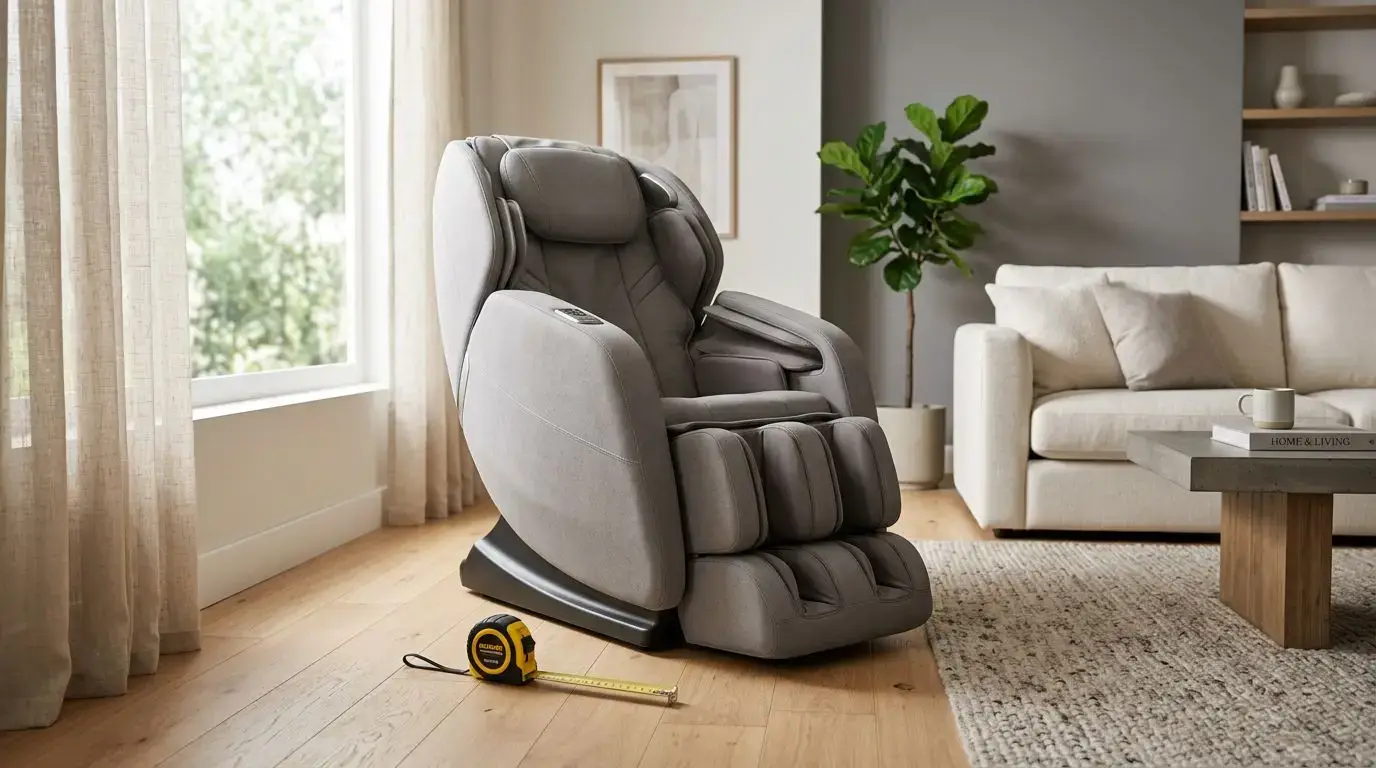
How Much Does a Massage Chair Cost? Price Ranges, Features, and Value
13 min read
Massage Chair Recliner vs. Standard Recliner: Which Is Better for Everyday Comfort?
15 min read