Disclosure: We may earn a commission when you buy through links on this page, at no extra cost to you. We buy nothing, sell nothing and accept no payment for coverage — commissions never decide what we recommend. How we make money.
A new massage chair typically costs about $800 to $1,500 for a basic budget chair, $1,500 to $4,000 for a stronger mid-range chair, and $4,000 to $8,000 or more for a premium chair with advanced body scanning, longer tracks, quieter motors, and more refined massage programs. The best value is not always the highest price; it is the chair that fits your body, your room, and the kind of massage you will actually use several times per week.
At any price, you are paying for a blend of mechanical quality, track design, roller movement, airbag coverage, heat, recline hardware, controls, warranty support, and delivery setup. Use the ranges below as a practical guide rather than a fixed rule, because sale pricing, shipping, and service coverage can change the real cost by hundreds of dollars.
Massage chair cost ranges: $800 to $8,000+
Most full-size massage chairs fall into three broad price tiers. Entry-level chairs often start below $1,500, mid-range chairs commonly sit between $1,500 and $4,000, and premium chairs frequently run from $4,000 to $8,000 or more. Compact pad-style massagers and seat cushions cost far less, but they are not the same category as a full-body reclining massage chair with rollers, airbags, and an internal frame.
The price range is wide because a massage chair is part furniture, part appliance, and part mechanical device. A chair with a short fixed roller path, limited air compression, and a simple remote costs much less to build than one with a long SL-track, multiple motors, dozens of airbags, foot rollers, heat zones, and sensors that adjust to the user.
| Price tier | Common range | Typical feature level | Best fit |
|---|---|---|---|
| Budget | About $800 to $1,500 | Basic rollers, limited programs, simple recline, some airbags | Occasional use, smaller budgets, first-time buyers |
| Mid-range | About $1,500 to $4,000 | Better tracks, body scanning, more airbags, foot massage, heat | Regular home use and balanced value |
| Premium | About $4,000 to $8,000+ | Advanced roller movement, quieter operation, refined programs, upscale materials | Daily users, households sharing one chair, buyers who want maximum adjustability |
Used or open-box chairs can cost less, but weigh the savings against transport, missing parts, battery-backed remotes if applicable, wear on motors, and warranty transfer rules. A 250-pound chair is not simple to move, and a cheap used chair can become expensive if it needs professional service.
What changes as price rises: 3 systems matter most
As massage chairs get more expensive, the biggest differences usually come from 3 systems: the roller mechanism, the track, and the control/sensing package. Upholstery, speakers, lighting, and app controls may add appeal, but the massage experience starts with how the rollers travel and how accurately the chair fits your body.
Roller technology shapes how the massage feels. Basic chairs may use 2D rollers, which move up and down and side to side along the back. More advanced chairs may use 3D rollers that can also move inward and outward, changing intensity. Some higher-end chairs use 4D-style programming, where the chair varies rhythm, speed, depth, and timing to create a more human-like pattern. The label is not enough on its own; a well-tuned 3D system can feel better than a poorly tuned chair with more marketing terms.
Track length matters too. An S-track follows the curve of the spine and typically focuses on the neck through lower back. An L-track extends under the seat to reach the glutes and upper hamstrings. An SL-track combines a spine-shaped curve with an extended path. Many full-size tracks are roughly 30 to 50 inches long, though exact dimensions vary by design.
| Feature | Lower-cost version | Higher-cost version | Why it matters |
|---|---|---|---|
| Rollers | 2D movement | 3D or 4D-style variable movement | More control over pressure and massage pattern |
| Track | Short S-track or fixed path | Long L-track or SL-track | More coverage through hips and seat area |
| Body scanning | Basic shoulder detection | More detailed height and shoulder mapping | Better roller placement for users of different sizes |
| Airbags | Few zones | Arms, calves, feet, shoulders, hips | Compression massage and limb support |
| Controls | Simple remote | Screen remote, memory settings, app or voice control | Easier adjustment and repeatable routines |
Do not judge value by feature count alone. A chair with 40 airbags is not automatically better than one with 24 if the fit is poor, the compression is uneven, or the massage programs do not suit you.
Budget massage chairs under $1,500: who they are best for
Budget massage chairs under about $1,500 are best for buyers who want a convenient back massage, simple recline, and basic relaxation features without paying for advanced customization. They can be a reasonable choice for occasional use, such as 10 to 20 minutes after work a few times per week.
In this tier, expect trade-offs. The chair may have a shorter massage path, fewer automatic programs, less precise body scanning, thinner padding, and louder mechanical operation. Airbags may be limited to calves or arms instead of full-body compression. Heat may be available only in the lower back rather than across multiple zones.
Budget chairs often work best for one primary user whose height and build match the chair well. If a household includes a 5-foot-2 user and a 6-foot-3 user, a low-cost chair may struggle to place the rollers correctly for both people. Weight capacity also deserves attention; many home massage chairs are rated somewhere around 250 to 300 pounds, but limits vary and should be confirmed before purchase.
Who budget chairs are best for
- First-time buyers testing whether they will use a chair regularly.
- People who mainly want back and lower-back massage, not highly targeted therapy-style settings.
- Smaller rooms where a compact footprint matters more than full feature coverage.
- Buyers who can accept shorter warranties, fewer adjustments, and simpler materials.
A budget chair is not a bad chair by definition. It is simply less adjustable. If it fits your body, has a comfortable recline angle, and delivers the pressure you prefer, it can be a practical buy.
Mid-range massage chairs from $1,500 to $4,000: the value zone
For many shoppers, the $1,500 to $4,000 range is the value zone. Chairs in this tier often add better body scanning, longer tracks, more automatic programs, foot and calf massage, zero gravity recline, and enough adjustment to serve more than one user in a household.
This is where you are more likely to see L-track or SL-track designs, which extend roller coverage beyond the lower back and into the seat area. That can make a noticeable difference if you want attention around the hips and glutes rather than only the spine. You may also see stronger foot rollers, adjustable air compression, calf kneading, and multiple heat zones.
Mid-range chairs usually feel more finished than budget chairs. The remote may be easier to navigate. The frame may recline more smoothly. The padding may better balance comfort with roller access. Programs may run 15, 20, or 30 minutes and offer choices such as stretch, relax, neck and shoulders, lower back, or recovery-style routines. These labels vary, and they should be viewed as comfort programs rather than medical treatments.
Who mid-range chairs are best for
- Households expecting to use the chair 3 to 7 days per week.
- Buyers who want both back rollers and lower-body features.
- People who need more adjustability for different heights.
- Shoppers who want solid comfort without paying for luxury finish details.
If you are comparing two chairs in this tier, focus on fit before extras. Sit in the chair if possible, or check the published height range, seat width, shoulder width, and reclined footprint carefully. A chair that fits correctly will usually outperform a feature-heavy chair that misses your shoulders by 2 inches.
Premium massage chairs from $4,000 to $8,000+: where the extra money goes
Premium massage chairs from about $4,000 to $8,000 or more generally cost more because they combine stronger mechanical systems with more refined software, quieter movement, better upholstery, and broader adjustability. They are most likely to make sense for daily users, shared households, and buyers who are sensitive to massage placement and intensity.
The biggest practical gain is often refinement. Premium chairs may offer deeper 3D roller control, more lifelike rhythm changes, smoother transitions between programs, and more accurate shoulder detection. They may also provide a wider intensity range, which matters when one user wants gentle compression and another wants firm pressure.
Higher-end chairs can also include more complete lower-body systems. That may mean enclosed foot wells, adjustable leg length, calf rollers, sole rollers, heel pressure, ankle compression, and separate intensity settings. Some chairs include full-body stretch routines using airbags and recline movement. These can feel good for general mobility and relaxation, but they should not be treated as a substitute for medical care, physical therapy, or diagnosis.
Build quality is another reason prices climb. Better chairs may use sturdier recline mechanisms, smoother motors, thicker upholstery, and more carefully padded contact points. These details are not flashy, but they matter if the chair will run 30 to 60 minutes per day across multiple users.
Who premium chairs are best for
- Daily users who want the chair to feel comfortable after hundreds of sessions.
- Families with different body sizes and massage preferences.
- People who value quieter operation in a living room or bedroom.
- Buyers who want the longest track coverage, most intensity control, and strongest service package they can reasonably afford.
Premium pricing does not guarantee the best chair for you. A larger luxury chair can be the wrong purchase if it overwhelms a 10-by-10-foot room or if the roller pressure is too intense even on the lowest setting.
How to choose and measure: 3 space checks before you buy
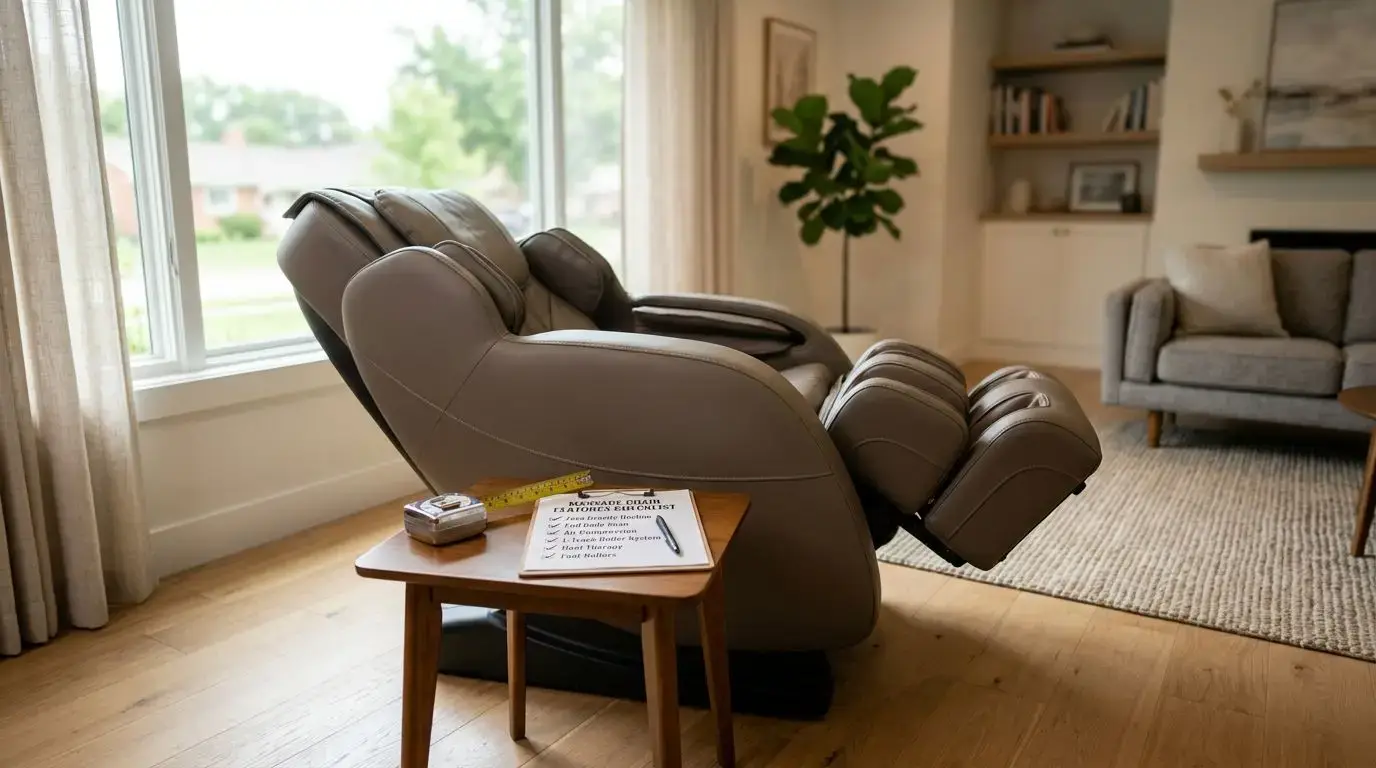
Before comparing features, measure your space. A full-size massage chair is often around 30 to 36 inches wide and can be 50 to 65 inches long when upright, with a much longer footprint when fully reclined. Exact dimensions vary, but the room must fit both the chair and the way people walk around it.
Start with 3 checks: floor footprint, recline clearance, and doorway access. Floor footprint is the upright size of the chair. Recline clearance is the space needed behind and in front when the chair moves into position. Doorway access is whether the chair can physically enter your home, hallway, stair turn, or elevator.
Some chairs are space-saving designs that need only about 2 to 6 inches behind the backrest because the seat glides forward as the chair reclines. Others need 12 inches or more. Do not assume a chair will fit just because the room has open floor space. The reclined length and footrest extension can change the layout quickly.
| Measurement | What to check | Practical tip |
|---|---|---|
| Doorway width | Interior door, hallway, stair turn | Measure the narrowest point, not the widest doorway |
| Chair width | Arm-to-arm outside width | Add at least 2 inches of handling room when moving |
| Rear clearance | Wall space behind chair | Confirm whether it needs 2 inches or more than 12 inches |
| Reclined length | Backrest plus footrest fully extended | Mark the floor with painter's tape before buying |
| User fit | Height, shoulder width, weight rating | Compare your body size to the listed recommended range |
Think about flooring as well. A heavy chair may leave marks on soft wood, thick carpet, or vinyl. Furniture sliders, a low-pile rug, or a protective mat can help, but they should not interfere with ventilation or moving parts.
Total cost of ownership: delivery, warranty, and electricity over 5 years
The chair price is only one part of the cost. Delivery, in-room placement, assembly, return shipping, extended service plans, and repairs can change the total by a meaningful amount over 5 years. Electricity use is usually modest compared with major appliances, but service logistics can be expensive because massage chairs are large and heavy.
Delivery options matter. Curbside delivery may leave the boxed chair at your driveway or building entrance. Threshold delivery may bring it just inside the door. White-glove delivery typically includes room placement and basic setup. The more help you need, the more you should budget, especially for stairs or tight access.
Warranty terms are worth reading line by line. Look for separate coverage periods for parts, labor, and the structural frame. A chair may advertise multi-year coverage while offering only 1 year of in-home labor. Also check whether upholstery, remotes, airbags, and wear items are covered. If the chair must be shipped for service, freight can be a major issue.
Return policies deserve the same scrutiny. A 30-day trial is less useful if you must keep all packaging, pay return freight, and cover a restocking fee. Since a boxed chair can weigh well over 200 pounds, return shipping is not like mailing back a small appliance.
- Ask about delivery level: curbside, threshold, room-of-choice, or full setup.
- Confirm return costs: freight, restocking fees, and packaging requirements.
- Read warranty categories: parts, labor, frame, electronics, upholstery, and exclusions.
- Plan for maintenance: keep the chair clean, avoid overloading it, and follow time limits in the manual.
Most home users will not see a large electric bill from normal 15- to 30-minute sessions. The bigger long-term question is whether the chair remains comfortable, supported, and repairable after regular use.
Which price tier is best for you? A 5-question decision guide
To choose the right budget, answer 5 questions: how often you will use the chair, who will use it, where it will go, what body areas matter most, and how much service coverage you want. These questions are more useful than chasing the longest feature list.
| If this describes you | Likely best tier | Why |
|---|---|---|
| You want occasional back massage after work | Budget | Basic rollers and recline may be enough |
| You plan to use it most days | Mid-range | Better comfort and adjustability are worth paying for |
| Two or more adults will share it | Mid-range to premium | Body scanning and adjustable intensity become more important |
| You care about feet, calves, hips, and glutes | Mid-range to premium | Look for L-track or SL-track coverage plus lower-body massage |
| You want the quietest, most customizable experience | Premium | Refined motors and deeper controls usually cost more |
A good rule is to buy the least expensive chair that fits your body well, covers the areas you care about, and comes with service terms you can live with. Do not pay extra for features you will ignore after the first week. Bluetooth speakers, colored lights, and decorative trim may be pleasant, but they should not outweigh roller quality, fit, comfort, and warranty support.
If possible, test chairs in person for at least 15 minutes. Short demos can be misleading because any massage may feel impressive at first. Notice whether the rollers hit your neck or shoulders correctly, whether the foot wells fit without cramping your toes, whether the calf area squeezes too hard, and whether the lowest intensity is gentle enough.
For online purchases, study measurements and user requirements carefully. Compare your height, weight, shoulder width, and room dimensions with the chair specifications. If the seller cannot clearly explain delivery, warranty, and return terms, treat that as a cost risk.
FAQ: 5 common massage chair cost questions
Is a $1,000 massage chair worth it?
A $1,000 massage chair can be worth it if you want basic back massage, simple recline, and occasional use. It is less likely to offer strong body scanning, premium materials, or highly adjustable intensity, so fit matters even more at this price.
How long should a massage chair last?
A well-kept chair can last several years, but lifespan depends on build quality, user weight, session frequency, and service support. A chair used 20 minutes a day by one person faces very different wear than one used by 4 people every evening.
Do massage chairs use a lot of electricity?
For typical 15- to 30-minute sessions, electricity use is usually modest. Motors, heat, airbags, and electronics draw power, but the larger ownership costs are more often delivery, repairs, and warranty limitations.
Is 3D or 4D massage worth paying more for?
It can be worth it if you want stronger control over intensity and a more varied massage feel. Still, the terms are not standardized across the entire category, so judge the chair by comfort, adjustability, and fit rather than the label alone.
What is the best price range for most buyers?
Most regular home users should start by comparing chairs in the $1,500 to $4,000 mid-range. This tier often offers the strongest balance of track coverage, body scanning, lower-body features, and overall value without moving into luxury pricing.
Frequently asked questions
Is a $1,000 massage chair worth it? +
A $1,000 massage chair can be worth it for basic back massage and occasional use, but expect fewer adjustments, simpler materials, and less precise body scanning than higher-priced chairs.
What price range is best for most massage chair buyers? +
Many regular home users find the best balance in the $1,500 to $4,000 range because it often includes better track coverage, body scanning, foot and calf massage, heat, and more useful programs.
Why do some massage chairs cost over $4,000? +
Higher-priced chairs usually add more advanced roller movement, longer tracks, quieter motors, better body scanning, more complete air compression, upgraded materials, and stronger service coverage.
Do massage chairs cost a lot to run? +
Normal 15- to 30-minute sessions usually do not add much to an electric bill. Delivery, repairs, warranty limits, and return freight are often more important ownership costs.
Should I buy a used massage chair to save money? +
A used chair can save money, but check wear, missing parts, warranty transfer rules, moving costs, and repair availability. Because full-size chairs are heavy, transport and service can reduce the savings.
Related guides
How to Choose a Massage Chair for Home Use
14 min read
Is a Massage Chair Worth It? Benefits, Limitations, and Who Should Buy One
13 min read
Is a Massage Chair Worth It? Cost, Use Frequency, and Break-Even Math for U.S. Buyers
12 min read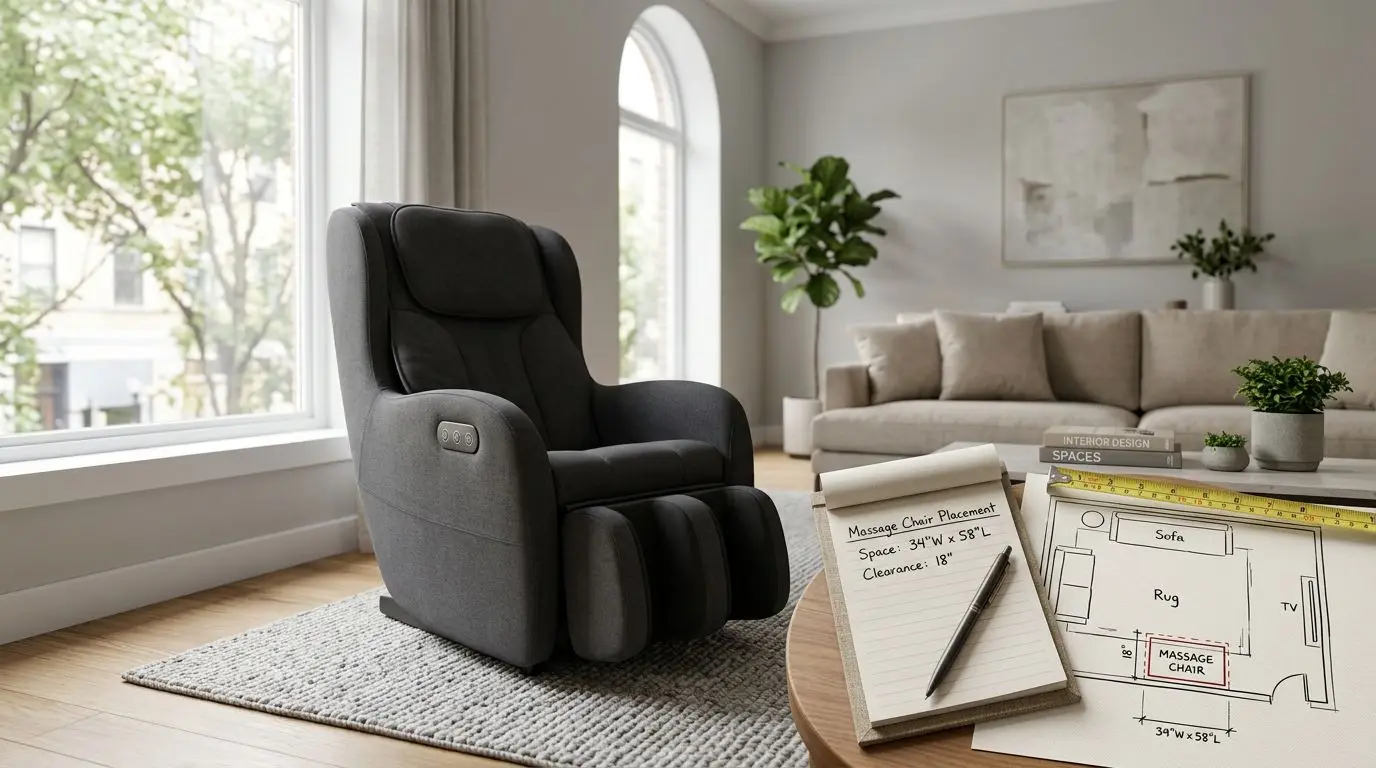
Cheap Massage Chairs: When a Budget Chair Makes Sense and What You May Give Up
12 min read
Massage Chair vs. Professional Massage: Which Is Better for Your Routine and Budget?
10 min read