Disclosure: We may earn a commission when you buy through links on this page, at no extra cost to you. We buy nothing, sell nothing and accept no payment for coverage — commissions never decide what we recommend. How we make money.
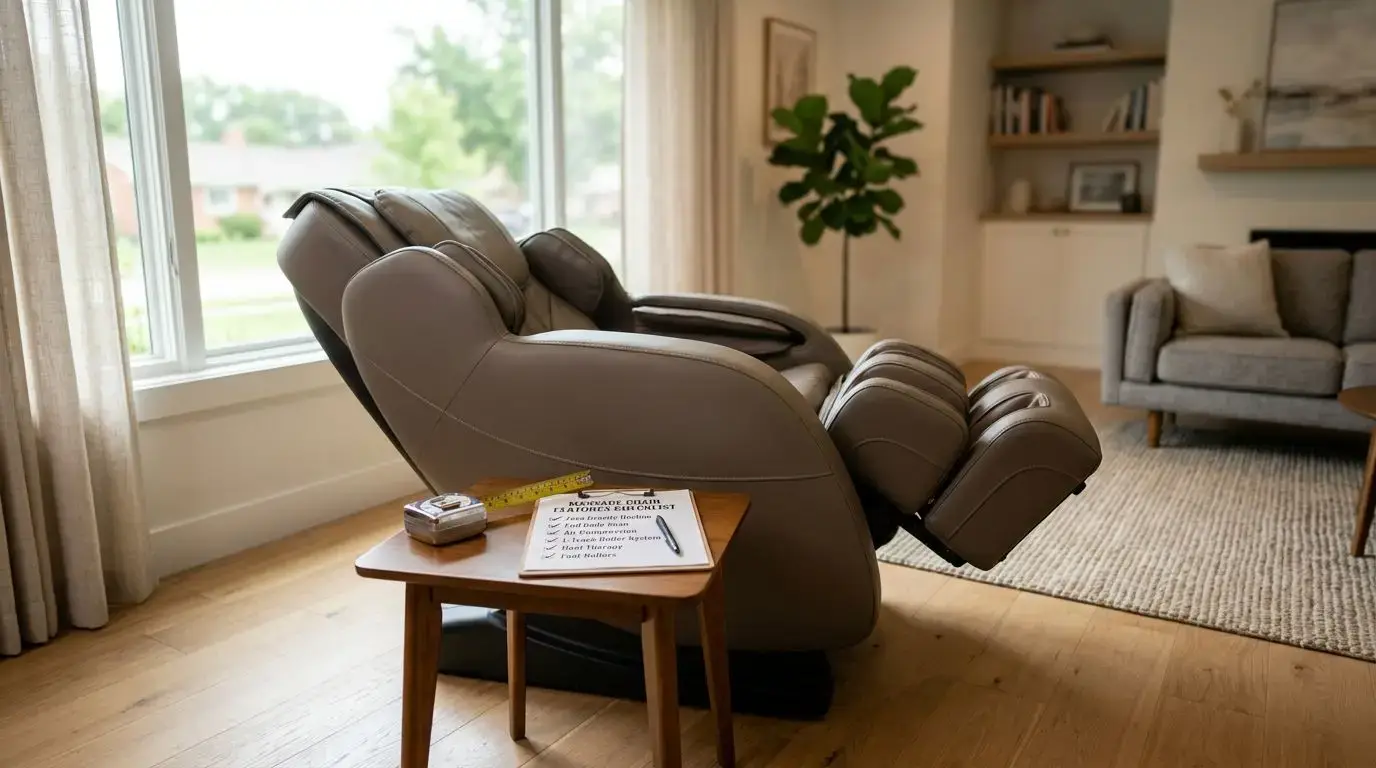
The best massage chair features to prioritize are fit, track design, roller type, body scanning, zero gravity, heat, foot rollers, and air compression. If your budget is limited, spend first on a chair that fits your body and has the right track and roller system. Then consider comfort features like heat, calf massage, and preset programs.
A massage chair should feel precise, supportive, and repeatable after a 15- to 20-minute session. The right features can be the difference between a chair you use every week and one that turns into expensive living room furniture.
Start With the 3 Features That Change Massage Quality Most
Before comparing extras, focus on the core mechanics: track length, roller movement, and body scanning. These 3 features determine where the chair can reach, how deeply it can work, and whether the massage lines up with your shoulders, back, hips, and legs.
Long feature lists can easily distract shoppers. That makes sense. Massage chairs often advertise dozens of programs, multiple intensity levels, music, lighting, and app controls. Some of those features are useful, but they matter much less if the rollers miss your shoulders or the chair is too narrow for your frame.
A practical priority order looks like this:
- Fit and measurements: The chair must match your height, shoulder width, leg length, and available floor space.
- Track type: The track controls how far the rollers travel from the neck down the back and, in some chairs, under the glutes.
- Roller type: 2D, 3D, and 4D roller systems change depth, intensity, and massage realism.
- Body scanning: A scan helps the rollers locate your shoulders and adjust the massage path.
- Zero gravity: Reclining can reduce body weight pressure against the backrest and improve comfort.
- Heat, foot rollers, and compression: These add comfort and coverage, especially for people who want full-body relaxation.
Think of the chair like a tool. The frame, track, and rollers are the tool itself. Everything else is an attachment.
Zero Gravity: Useful if You Want a More Supported 120-Degree Recline
Zero gravity is a reclined position that raises the legs and angles the torso back, often creating a hip-to-torso angle around 120 to 130 degrees. The goal is to distribute body weight across the chair instead of concentrating pressure on the lower back and seat.
This feature is not a medical treatment, and it should not be marketed as one. For many users, though, zero gravity makes a massage feel more comfortable because the back settles more evenly into the rollers. It can also make a lighter massage feel deeper, since your body weight presses into the mechanism.
Some chairs offer 1 zero gravity position, while others offer 2 or more recline presets. The number matters less than how comfortable the actual angle feels. A smooth recline, stable leg rest, and easy return-to-upright control matter more than a label on the remote.
Who zero gravity is best for
- People who like a reclined, cradled feel during a 15- to 30-minute massage.
- Users who find upright back massage too sharp or uneven.
- Shoppers choosing between a compact chair and a full-size chair, since recline changes the required floor space.
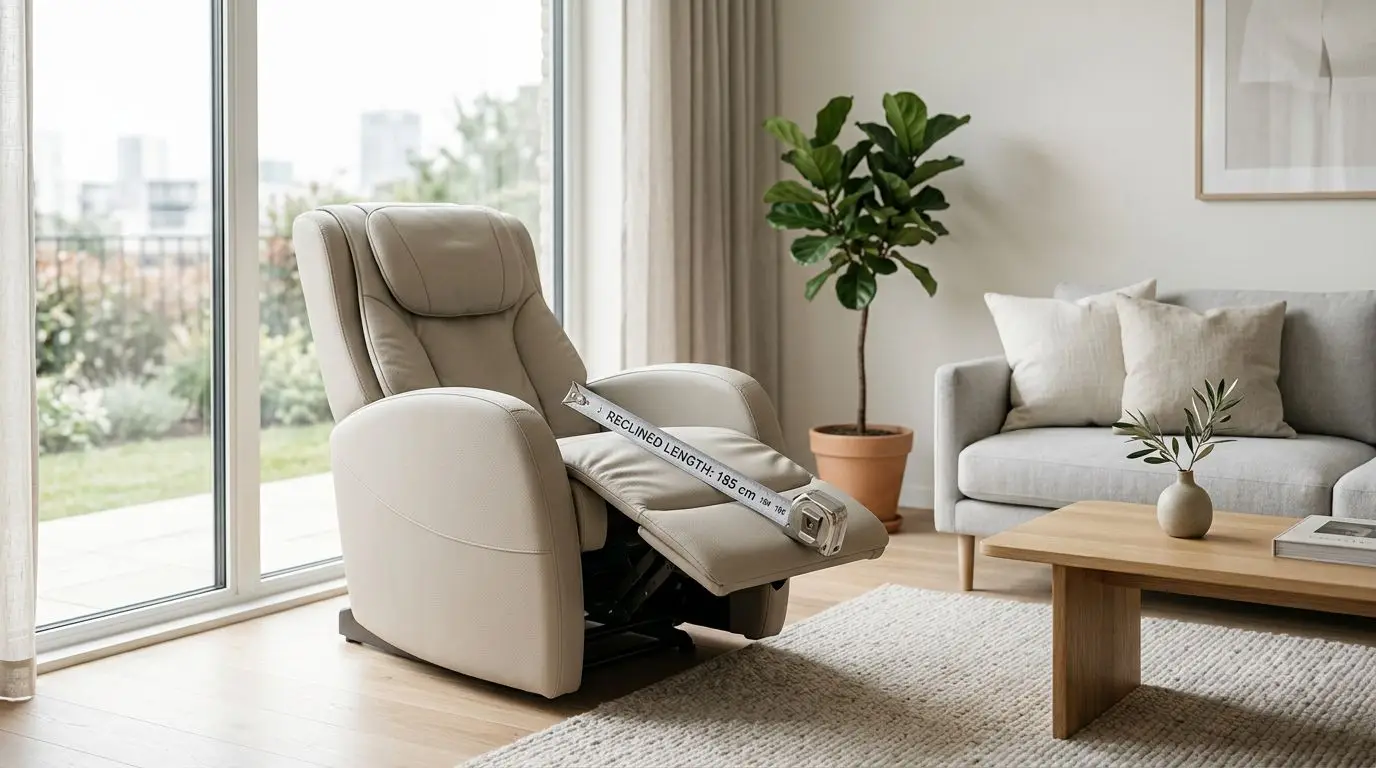
Measure carefully. A full recline may require roughly 70 to 80 inches of total length, depending on chair design. Space-saving designs may need only a few inches behind the backrest, while non-space-saving designs can require much more clearance from the wall.
Tracks Compared: S-Track, L-Track, and SL-Track Ranges From About 28 to 53 Inches
The track is the rail system that guides the massage rollers. In many chairs, track length ranges from roughly 28 inches on a shorter back-only design to 45 to 53 inches on longer tracks that extend below the lower back and into the seat area.
This is one of the most important features to understand because it determines massage coverage. Even a great roller system on a short track may leave out areas you care about, such as the glutes or upper hamstrings.
| Track type | Typical coverage | Best for | Trade-off |
|---|---|---|---|
| S-track | Neck to lower back, following the spine curve | Back-focused massage and smaller spaces | Usually does not roll under the seat |
| L-track | Neck down the back and under the glutes | Users who want seat and glute coverage | May feel less naturally contoured in the upper back if poorly designed |
| SL-track | Curved back path plus extended seat coverage | Most shoppers who want broad coverage | Often found in larger, more complex chairs |
An S-track follows the natural curve of the spine and is often strong for neck, shoulder, and back work. An L-track extends farther down, usually reaching the seat area. An SL-track combines a curved spinal path with extended lower-body reach, which is why it is often the most versatile choice.
If you mainly want upper-back and shoulder relief after desk work, an S-track may be enough. If you want a more complete posterior-chain massage from neck to glutes, an SL-track is usually worth prioritizing.
Roller Technology: 2D, 3D, and 4D Systems Change Depth and Control
Massage chair rollers are commonly described as 2D, 3D, or 4D. The simplest comparison is this: 2D rollers move along the track and side to side, 3D rollers add adjustable depth, and 4D systems add more variation in rhythm, speed, or motion patterns.
The right choice depends on how much intensity control you want. Someone who wants a gentle daily massage may be completely satisfied with a good 2D system. Someone who likes stronger pressure around the shoulder blades or lower back may prefer 3D or 4D rollers because the depth can be adjusted across multiple levels.
| Roller type | What it does | Good choice if | Watch for |
|---|---|---|---|
| 2D | Moves up, down, left, and right | You want basic kneading and rolling | Depth may feel too light or too fixed |
| 3D | Adds in-and-out depth adjustment | You want stronger or softer pressure on demand | Maximum intensity may be too much for sensitive users |
| 4D | Adds more variation in speed, rhythm, or technique | You want a more human-like, customizable feel | Quality depends on tuning, not the label alone |
Do not buy based only on the number. A well-tuned 3D chair may feel better than a poorly tuned 4D chair. Look for clear intensity controls, manual spot massage, shoulder adjustment, and the ability to reduce depth when you are sore.
For shared households, adjustability matters. A 120-pound user and a 220-pound user may need very different settings to get the same comfort level. If more than 1 person will use the chair, prioritize depth control over flashy programs.
Body Scanning: A 30- to 60-Second Setup Can Improve Roller Placement
Body scanning uses sensors, roller movement, or pressure feedback to estimate shoulder position, back length, and sometimes body contour. A typical scan may take about 30 to 60 seconds at the start of a session.
This feature is valuable because massage chairs are built for a range of bodies, not one exact body. If the chair starts kneading 2 inches too high or too low, the session can feel awkward. Good body scanning helps the chair place the neck and shoulder massage where it belongs.
Scanning still is not perfect. Thick clothing, slouched posture, or sitting too far forward can affect the result. The best chairs let you manually adjust shoulder height after the scan. That manual correction is worth looking for, especially if you are shorter or taller than average.
How to use body scanning well
- Sit all the way back before the scan begins.
- Keep your head against the headrest if the chair design allows it.
- Avoid bulky coats or thick hoodies during the scan.
- Use the remote to move the shoulder position up or down if it feels off.
A good scan does not guarantee a perfect massage, but it improves the odds that the rollers follow your body instead of a generic path.
Heat, Foot Rollers, and Compression: Comfort Features for 10- to 20-Minute Sessions
Heat, foot rollers, and air compression are not as central as the track and rollers, but they can make a 10- to 20-minute session feel more complete. These features are especially useful if you want relaxation rather than a back-only massage.
Heat is most common in the lower back area, though some chairs add calf, foot, or seat heat. Treat it as gentle warmth, not a therapeutic heating pad. If you have reduced temperature sensation, diabetes-related nerve concerns, circulation issues, or are pregnant, ask a healthcare professional before using heat regularly.
Foot rollers can be a deciding feature for people who stand for long shifts, walk a lot, or wear stiff shoes. They usually combine rolling nodes under the soles with air compression around the feet. Some users love the intensity; others find it too sharp. Removable or adjustable foot padding is a plus.
Air compression uses inflatable airbags around the shoulders, arms, calves, feet, or hips. The feeling is squeezing and releasing rather than kneading. It can help hold you in place during the roller massage and adds coverage to areas rollers cannot reach.
| Feature | Common location | Best for | Key buying tip |
|---|---|---|---|
| Heat | Lower back, calves, feet, or seat | Gentle warmth and relaxation | Look for on/off control by zone |
| Foot rollers | Soles of the feet | People on their feet for hours | Check intensity and padding options |
| Air compression | Arms, calves, feet, shoulders, hips | Full-body coverage and a snug feel | Choose multiple intensity levels |
Compression count is not everything. More airbags do not automatically mean a better chair. Placement, timing, adjustability, and comfort matter more than a high number in a spec sheet.
How to Choose and Measure Before You Buy: Check 5 Numbers First
Before buying any massage chair, measure 5 things: your doorway width, available floor length, wall clearance, user height range, and user weight capacity. This step helps prevent the most expensive mistakes.
Massage chairs are large, heavy items. Many full-size chairs weigh roughly 200 to 350 pounds and may be around 30 to 36 inches wide before packaging. Some arrive in large boxes that are hard to move through narrow halls, sharp turns, or upstairs spaces.
Measure your room
- Doorways: Measure the narrowest doorway or hallway turn, not just the front door. Many interior doorways are around 30 to 32 inches wide.
- Upright footprint: Check the chair width and depth in the seated position.
- Reclined length: Confirm the full recline length, often much longer than the upright footprint.
- Wall clearance: Space-saving designs can sit closer to a wall, but every chair still needs room to move safely.
- Ceiling and nearby furniture: Make sure the footrest and backrest will not hit tables, shelves, or low windowsills.
Measure the users
- Height: Check whether the chair supports the shortest and tallest regular user.
- Shoulder width: Narrow shoulder wells can feel restrictive.
- Leg length: An extendable ottoman helps users with longer legs.
- Weight capacity: Do not exceed the stated limit; it affects safety and chair durability.
- Mobility: Make sure the user can enter and exit a reclined chair comfortably.
If you are between sizes, fit should beat feature count. A chair with fewer extras that fits correctly will usually outperform a feature-packed chair that pinches your shoulders or misses your neck.
Feature Priorities by Buyer Type: 6 Common Shopping Scenarios
Different buyers should rank features differently. A 5-foot-2 user in an apartment does not need the same chair as a 6-foot-3 user with a large home gym. Use the table below to narrow your list before comparing specifications.
| Buyer type | Top priorities | Features to be cautious about |
|---|---|---|
| Small apartment user | Compact footprint, space-saving recline, quiet operation | Oversized frames and long full-recline lengths |
| Tall user | Long track, extendable footrest, high shoulder scan range | Fixed ottomans and short back tracks |
| Shared household | Body scanning, multiple intensity levels, adjustable roller depth | Single-intensity massage programs |
| Back-focused buyer | 3D or 4D rollers, SL-track or well-contoured S-track, spot massage | Paying extra for features you will not use |
| Foot-care focused buyer | Foot rollers, calf compression, adjustable foot intensity | Very aggressive sole rollers without padding |
| Relaxation-first buyer | Zero gravity, heat, gentle compression, quiet programs | Chairs tuned mainly for deep intensity |
This is where a feature checklist helps. Pick your top 3 needs before shopping. If a chair does not meet those needs, do not let secondary features talk you into it.
Nice-to-Have Features: Useful Extras, but Not the First 7 Things to Buy For
After the essentials, compare convenience features. These may include remote style, app control, Bluetooth audio, voice control, memory settings, stretch programs, adjustable timers, and automatic programs that run for 5, 10, 15, 20, or 30 minutes.
Preset programs are helpful when they are clearly labeled by goal, such as relax, stretch, upper back, lower back, or night mode. Vague program names are less useful. Manual controls also matter because your body may want something different from the preset.
Stretch programs can feel good, but use them carefully. A chair that grips the legs and reclines the backrest can create a strong pulling sensation. Start on the lowest intensity, especially if you have limited flexibility, recent injuries, or joint concerns.
Audio and ambient lighting are personal preferences. They may make the chair more enjoyable, but they should not outrank fit, roller quality, track coverage, or warranty terms. If two chairs feel equally good, convenience features can break the tie.
Also consider service practicalities. A massage chair has motors, airbags, wiring, upholstery, and moving footrest parts. Clear warranty coverage, accessible customer support, and replacement-part availability are more important than a decorative feature you may use once.
FAQ: 5 Questions to Ask Before Choosing Massage Chair Features
Is an SL-track better than an S-track?
An SL-track is usually better if you want coverage from the neck down through the glutes because it combines a curved back path with an extended lower track. An S-track can still be a good choice for people who mainly want neck, shoulder, and back massage in a smaller chair.
Are 4D rollers always worth the extra cost?
No. 4D rollers can feel more varied and realistic, but tuning matters more than the label. A high-quality 3D system with good depth control may be better for many users than a rough or poorly programmed 4D system.
How long should I use a massage chair per session?
Many built-in programs run about 10 to 20 minutes. Start shorter if you are new to massage chairs or using high intensity, then adjust based on comfort. More time is not always better, especially with deep roller pressure.
Do I need foot rollers?
Foot rollers are worth prioritizing if your feet feel tired after standing, walking, or working long shifts. If you are sensitive on the soles of your feet, look for adjustable intensity or removable padding.
What feature should I skip if I am on a tight budget?
Skip cosmetic or entertainment extras before you skip fit, track quality, roller adjustability, or body scanning. A chair that fits well and massages accurately will be more useful than one with more lights, speakers, or novelty programs.
Frequently asked questions
Is an SL-track better than an S-track? +
An SL-track is usually better if you want coverage from the neck down through the glutes, because it combines a curved back path with an extended lower track. An S-track can still be a good choice for people who mainly want neck, shoulder, and back massage in a smaller chair.
Are 4D rollers always worth the extra cost? +
No. 4D rollers can feel more varied and realistic, but tuning matters more than the label. A high-quality 3D system with good depth control may be better for many users than a rough or poorly programmed 4D system.
How long should I use a massage chair per session? +
Many built-in programs run about 10 to 20 minutes. Start shorter if you are new to massage chairs or using high intensity, then adjust based on comfort. More time is not always better, especially with deep roller pressure.
Do I need foot rollers? +
Foot rollers are worth prioritizing if your feet feel tired after standing, walking, or working long shifts. If you are sensitive on the soles of your feet, look for adjustable intensity or removable padding.
What feature should I skip if I am on a tight budget? +
Skip cosmetic or entertainment extras before you skip fit, track quality, roller adjustability, or body scanning. A chair that fits well and massages accurately will be more useful than one with more lights, speakers, or novelty programs.
Related guides
How to Choose a Massage Chair for Home Use
14 min read
How to Compare Massage Chair Features: 2D, 3D, 4D, L-Track, SL-Track, Heat, and Airbags
13 min read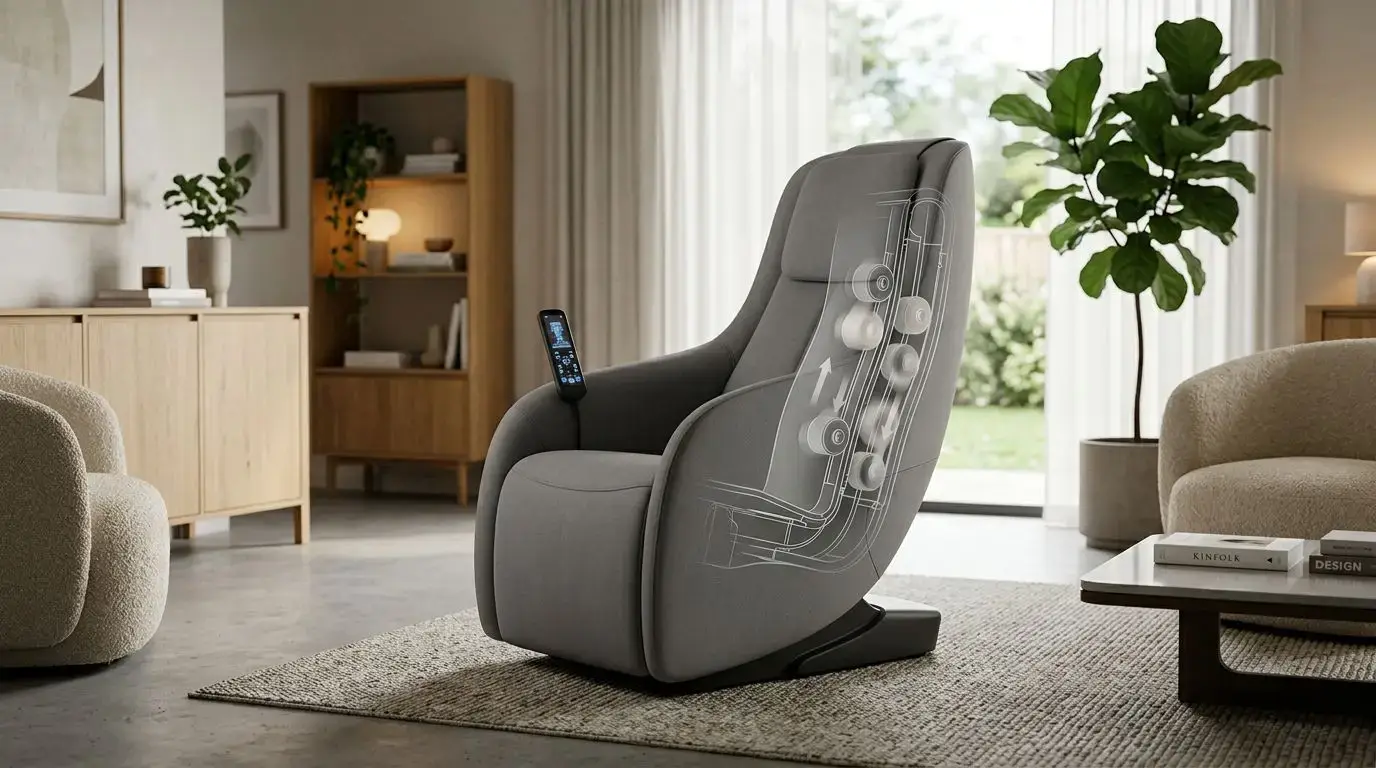
2D vs. 3D vs. 4D Massage Chairs: What the Roller Technology Really Means
13 min read
Are Massage Chairs Good or Bad for You? Benefits, Risks, and Safe Use Guidelines
13 min read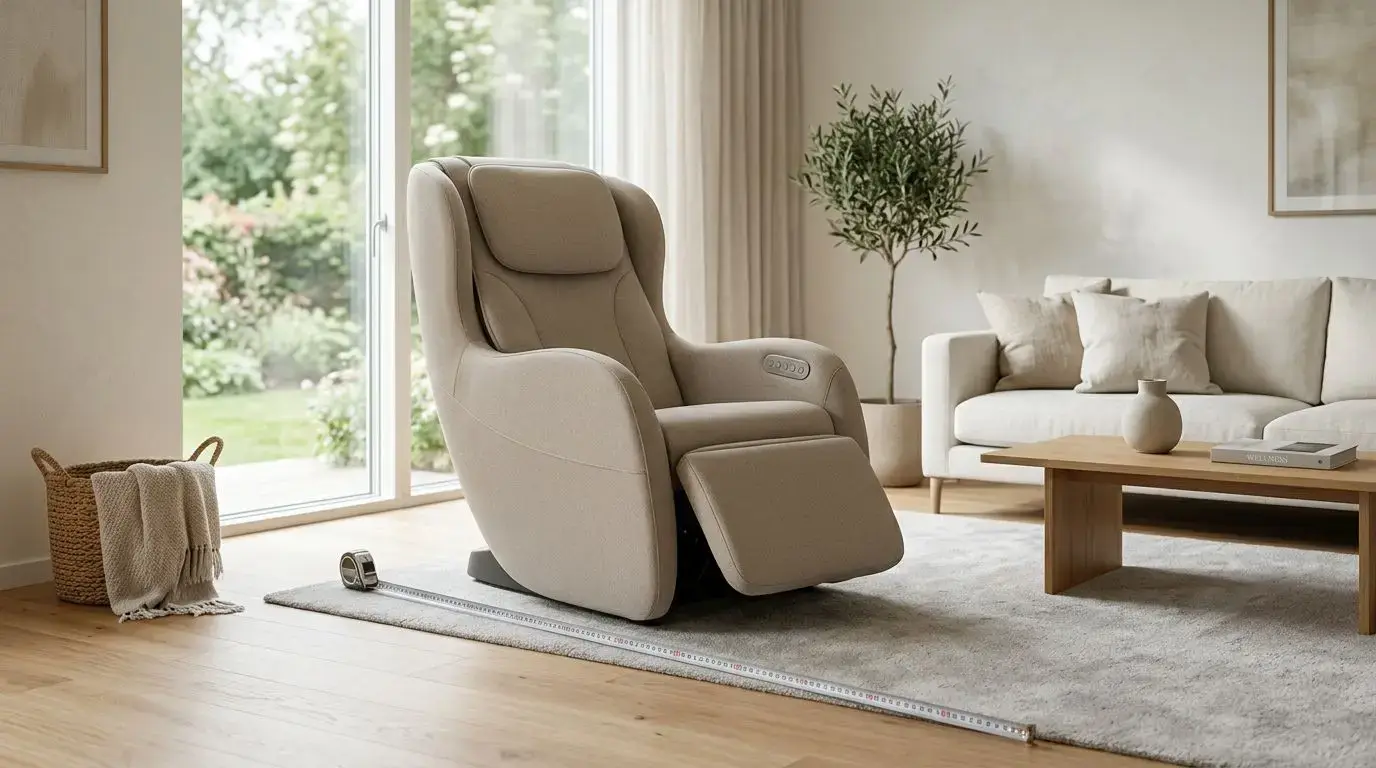
Is a Massage Chair Worth It? Benefits, Limitations, and Who Should Buy One
13 min read