Disclosure: We may earn a commission when you buy through links on this page, at no extra cost to you. We buy nothing, sell nothing and accept no payment for coverage — commissions never decide what we recommend. How we make money.
Zero gravity in a massage chair means the chair reclines your torso and raises your legs so your weight is distributed more evenly across the backrest and seat. It is worth prioritizing if you want a deeper-feeling back massage, less pressure through the lower back, and a more relaxed reclined position for 15- to 30-minute sessions. It matters less if floor space is limited, your budget is tight, or you mainly want a simple upright neck-and-back massage.
The phrase can sound more dramatic than the feature really is. A zero gravity massage chair does not remove gravity, and it should not be treated as medical equipment unless a qualified clinician has advised you to use a specific type of positioning. For most shoppers, it is a comfort and body-positioning feature that can make rollers, airbags, heat, and stretching programs feel more effective.
What zero gravity means in a massage chair
In massage chairs, zero gravity usually describes a reclined position with the back tilted roughly 120 to 130 degrees from the seat and the legs raised so the knees and feet are at or above heart level. The idea is inspired by neutral body posture research used in aerospace seating, but consumer massage chairs use the term more loosely. There is no single industry-wide standard that every chair must meet.
Most zero gravity chairs move in 1 of 2 ways. A single-stage design reclines to one preset position, often labeled zero gravity. A multi-stage design may offer 2 or 3 recline depths, so you can choose a milder lounge angle or a deeper position with more leg elevation. Some chairs pair this with a power leg rest that adjusts length automatically or manually, usually to fit users across a height range of about 5 feet to 6 feet 3 inches, depending on the chair.
The main change is how your body loads against the chair. In a standard upright seat, more pressure gathers around the hips, tailbone, and lower spine. When the chair reclines and lifts the legs, more body weight rests against the back pad. That can make the roller path feel more consistent across the shoulders, mid-back, and lumbar area because your back is lying into the mechanism rather than leaning away from it.
Zero gravity is not the same as inversion. A massage chair should not tip you upside down, and most do not place the head lower than the feet. It is also different from a flat recliner. The best version keeps the knees slightly bent, supports the calves and feet, and holds the body in a cradled position instead of simply laying the chair back.
Benefits you can realistically expect during a 20-minute session
The main benefit is comfort. Many users find a 20-minute massage more relaxing in zero gravity because the position reduces the need to hold the body upright. Your shoulders can settle back, your hips are supported, and your legs do not have to hang downward.
Zero gravity can also change the intensity of the massage. When your back presses more evenly into the chair, fixed-depth rollers may feel stronger than they do in an upright position. With adjustable 3D or 4D rollers, that recline angle can help you use a lower intensity setting while still getting good contact. This is one reason two chairs with similar roller systems can feel different when one has a well-designed zero gravity position and the other has only a basic recline.
Lower-back comfort is another common reason shoppers look for this feature. Elevating the legs can reduce pulling through the hips and lumbar area for some people, especially after standing or sitting at a desk for 8 hours. The effect is usually temporary and comfort-based; it should not be described as treating back pain, correcting posture, or improving circulation in a medical sense. If you have a diagnosed condition, swelling, recent surgery, blood pressure concerns, or pregnancy-related restrictions, ask a medical professional before using deep recline, heat, or compression massage.
Zero gravity may also improve the feel of other features. Air compression around the calves and feet tends to feel more secure when the leg rest is lifted. Heat in the back pad may feel more evenly distributed because more of the back is in contact with the chair. Stretch programs can feel smoother when the chair controls your angle instead of tugging while you sit upright.
| Potential benefit | What you may notice | What it does not prove |
|---|---|---|
| Better weight distribution | Less concentrated pressure at the hips and tailbone during a 15- to 30-minute session | It does not medically decompress the spine for every user |
| Stronger roller contact | Back rollers may feel more consistent from shoulders to lumbar area | It does not make weak roller hardware high-end |
| More relaxed leg position | Calves and feet feel supported instead of dangling | It does not replace treatment for swelling or vascular conditions |
| Improved program comfort | Heat, airbags, and stretch routines may feel more coordinated | It does not guarantee you will like every auto program |
Limitations buyers should know before paying for it
Zero gravity is useful, but it is not automatically the most important feature in a massage chair. A chair with poor roller coverage, a short track, weak padding, or a cramped leg rest will not become a great chair just because it reclines. Think of zero gravity as a multiplier: it can make good massage mechanics feel better, but it cannot fix a bad fit.
Space is the first limitation. A non-wall-hugging massage chair may need 12 to 24 inches behind it to recline fully. Some space-saving designs need only about 2 to 6 inches because the base slides forward as the back reclines. Those numbers vary by chair type, but they show why the recline system matters in apartments, bedrooms, and small home offices.
Fit is another issue. If the shoulder scanner does not detect your height accurately, or if the leg rest is too short, the zero gravity position may place the rollers slightly high or low on your back. Taller users may feel their knees are not supported. Shorter users may slide forward if the seat is too deep. A good zero gravity position should feel stable within the first 60 seconds, without you gripping the armrests or bracing your feet.
Some users simply dislike the posture. People prone to dizziness, reflux discomfort, claustrophobia, or anxiety in enclosed chairs may prefer a milder recline. Deep recline can also make it harder to get in and out of the chair, especially for users with limited mobility. If standing up from a low sofa is difficult, test the chair's return-to-upright speed and armrest support before making zero gravity a must-have.
There is a budget tradeoff as well. At any given price level, money spent on a more complex recline mechanism may mean fewer adjustments elsewhere. For example, a chair might include zero gravity but use a shorter S-track instead of a longer L-track, or it may offer fewer intensity levels. The best choice depends on what you value most.
Zero gravity vs. standard recline, track type, and roller depth
Zero gravity is only one part of the chair. For many shoppers, the track and roller system affect the massage experience more than the recline label. A typical S-track follows the curve of the back from neck to lower back, while an L-track extends under the glutes and sometimes toward the upper hamstrings. Track lengths commonly range from about 28 inches on shorter S-track layouts to 45 inches or more on extended L-track designs.
Roller depth matters too. A 2D roller moves up, down, left, and right, but the depth is mostly fixed. A 3D roller adds in-and-out depth adjustment, often across several levels. Some chairs market 4D movement, usually meaning the chair also varies speed, rhythm, or depth more dynamically. Naming varies, so focus on what you can adjust: intensity, width, speed, and whether the chair lets you reduce pressure when reclined.
A standard recline chair may still be perfectly comfortable for users who mainly want a light massage while watching TV. It can also be easier to place in a room. Zero gravity becomes more valuable when the chair has a roller system that benefits from better body contact and when you plan to use full-body programs rather than quick 5-minute sessions.
| Feature | Typical range or design | Why it matters | When to prioritize it |
|---|---|---|---|
| Zero gravity recline | Often about 120 to 130 degrees with elevated legs | Spreads body weight and improves roller contact | Prioritize if you want deeper-feeling back massage and reclined comfort |
| Standard recline | Partial recline with legs supported or slightly lifted | Comfortable, simpler, often easier to fit in a room | Prioritize if space, access, or simplicity matters most |
| S-track | Usually neck to lower back, often around 28 to 32 inches | Follows spinal curve for focused back massage | Good for users who do not need glute or hamstring coverage |
| L-track | Often extends to glutes, sometimes 45 inches or longer | Adds coverage below the lower back | Useful if hip and glute massage are important |
| 3D depth control | Multiple depth levels, commonly 3 to 5 or more | Lets you fine-tune pressure, especially when reclined | Prioritize if users in the home prefer different intensities |
| Air compression | Airbags in calves, feet, arms, shoulders, or hips | Adds squeezing pressure and full-body sensation | Useful if you like compression more than kneading rollers |
Who zero gravity is best for
Zero gravity is best for buyers who plan to use a massage chair several times per week, typically for 15 to 30 minutes at a time, and who care about full-body relaxation rather than a quick upright back rub. If you are comparing chairs in the same general quality tier, a well-executed zero gravity recline can be a deciding feature.
It is especially worth considering for desk workers, drivers, caregivers, retail workers, and anyone who spends long stretches in one posture. After 6 to 10 hours of sitting or standing, a supported reclined position can feel more restorative than sitting upright again. It may also help users who find that regular recliners put too much pressure on the tailbone.
Households with multiple users can benefit, but only if the chair also offers good body scanning, adjustable leg length, and intensity control. A zero gravity position that fits one 5-foot-4 user may not fit a 6-foot-2 user equally well. If 2 or more adults will share the chair, adjustability should rank nearly as high as the recline feature itself.
Zero gravity may be less important for buyers who only want occasional foot massage, have trouble transferring in and out of reclined furniture, or are placing the chair in a narrow room where every inch counts. It may also be a lower priority if you prefer very gentle massage. Since recline can increase roller contact, some users need to lower intensity when switching from upright to zero gravity.
Make it a high priority if:
- You want better back contact from the rollers.
- You plan to use full programs lasting 15 minutes or more.
- You enjoy recliners and do not mind a deep lounge angle.
- You want your legs elevated during calf and foot massage.
- You have enough room for full recline and safe access.
Make it a lower priority if:
- You need the smallest possible footprint.
- You strongly prefer sitting upright.
- You are sensitive to dizziness or deep recline.
- You mainly care about foot rollers or light vibration.
- Your budget is better spent on roller quality or fit.
How to choose and measure for zero gravity recline
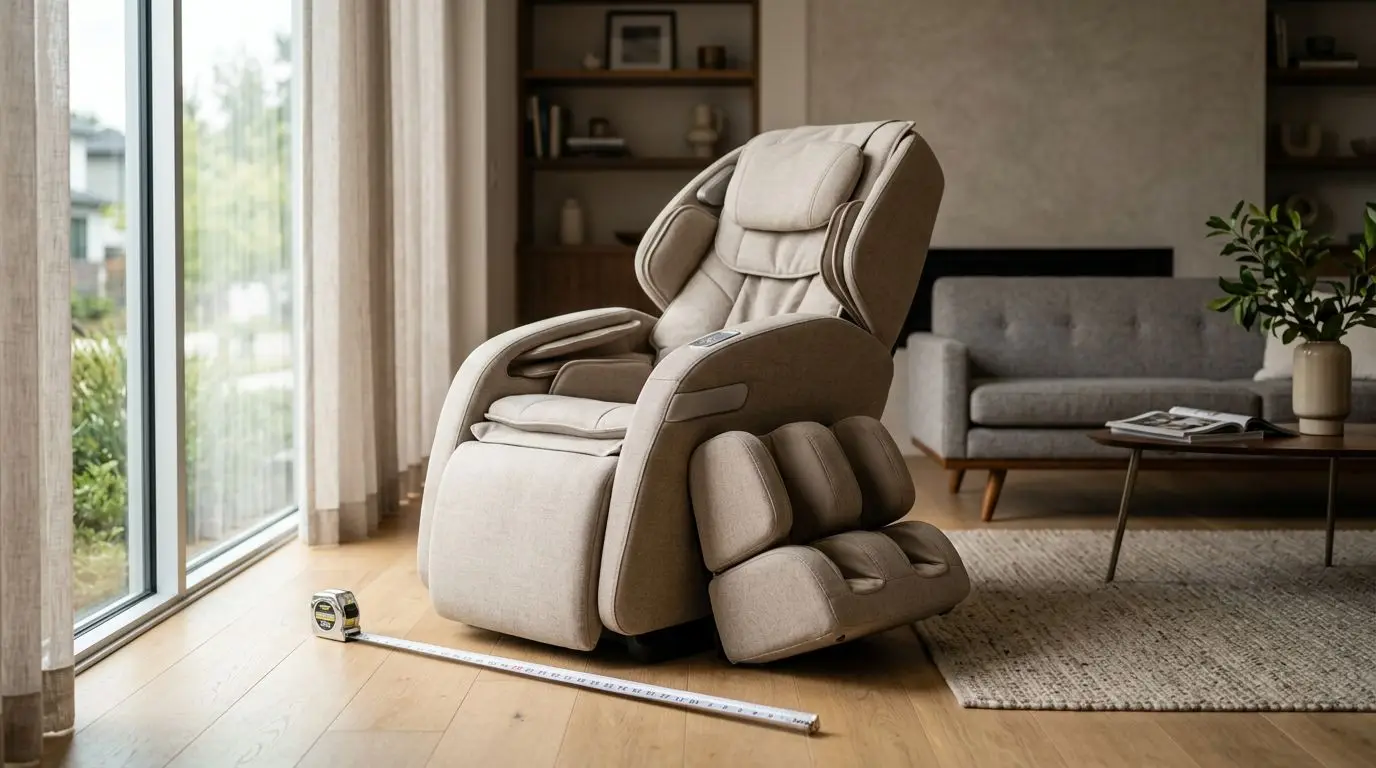
Before comparing feature lists, measure the room. Start with the chair's fully upright footprint, then account for recline clearance behind and in front. As a practical planning range, allow 2 to 6 inches behind a space-saving chair and 12 to 24 inches behind a conventional reclining design. You also need walking space around it, ideally at least 24 inches on one side so a user can enter and exit without twisting.
Doorway and delivery measurements matter as much as daily use. Many interior doorways in the U.S. are about 30 to 32 inches wide, while some exterior doors are 36 inches. Massage chairs can be bulky, and the listed width may not include packaging. Check whether the chair can be moved in sections, whether the back or side panels detach, and whether the path includes stairs, tight landings, or 90-degree hallway turns.
Next, measure the user, not just the room. Height, shoulder width, calf length, and preferred sitting posture affect comfort. If possible, sit in the chair for a full 10 minutes, not just 30 seconds. Test the deepest recline, then return upright. Notice whether your head is supported, whether your lower back stays in contact with the rollers, and whether your knees feel lifted without strain.
If shopping online, read the specifications with a skeptical eye. Look for actual dimensions in upright and reclined positions, recommended user height, maximum user weight, track type, and roller depth settings. A maximum weight rating of 250 to 300 pounds is common in many consumer chairs, but you should follow the specific chair's published limit. Do not assume a larger-looking chair supports more weight.
| Measurement | What to check | Why it matters |
|---|---|---|
| Back clearance | About 2 to 6 inches for many wall-hugging designs; 12 to 24 inches for many standard designs | Prevents the chair from hitting the wall during recline |
| Side access | At least 24 inches on one side when possible | Makes entry, exit, cleaning, and service easier |
| Doorway width | Common interior doors are about 30 to 32 inches | Helps avoid delivery surprises |
| User height range | Compare your height to the published range, often spanning roughly 12 to 15 inches | Affects shoulder scanning and leg-rest fit |
| Session length | Common auto programs run 15 to 30 minutes | Comfort problems become more obvious over a full program |
When zero gravity matters less than other features
There are several cases where zero gravity should not be your top filter. If you want a targeted neck massage, shoulder fit and upper-track design are more important. If you want deep low-back and glute coverage, an L-track or extended track may matter more. If multiple people will use the chair, adjustable intensity can be more valuable than a fixed zero gravity position.
Foot massage is another example. A chair with strong foot rollers, calf airbags, and an adjustable footwell can satisfy someone who mainly wants end-of-day foot relief, even if the zero gravity mode is basic. On the other hand, a beautifully reclined chair with a cramped footwell may disappoint a user with size 12 feet.
Heat is often misunderstood. Many chairs use localized heat pads in the lumbar area, sometimes with a warm-up period of 3 to 5 minutes. Heat can feel pleasant in zero gravity because the back stays in contact with the pad, but heat coverage and temperature control vary. If warmth is a priority, look at where the heat is located, not just whether the feature appears on a checklist.
Noise may matter too. In a quiet living room, a massage chair with pumps, motors, and rollers can be noticeable from 6 to 10 feet away. Recline quality does not guarantee quiet operation. If you plan to use the chair while watching TV, ask about return policies or test a comparable chair in person.
How to use zero gravity safely and comfortably
Start with shorter sessions. Many auto programs run 15 minutes, which is a sensible first test for a new user. If the massage feels intense in zero gravity, reduce roller depth or choose a gentler program before increasing the session time. More pressure is not always better.
Enter and exit the chair only when it is upright or in the manufacturer's recommended position. Keep pets, children, blankets, and cords away from the moving base and leg rest. A reclining chair has pinch points, and the mechanism can move farther than it appears when empty.
Use the remote or control panel slowly the first few times. Try one change at a time: recline angle, roller intensity, air compression, heat, and foot rollers. This helps you learn whether discomfort comes from the position or from a specific massage feature. If you feel sharp pain, numbness, dizziness, chest discomfort, or unusual symptoms, stop the session and seek appropriate medical advice.
For many households, the sweet spot is simple: a 15- to 20-minute reclined program after work, with moderate air compression and heat if desired. That routine is realistic, easy to repeat, and less likely to leave you sore than an aggressive deep-tissue setting used for too long.
FAQ: 5 questions buyers ask about zero gravity chairs
Is zero gravity in a massage chair the same as a medical zero gravity position?
No. Consumer massage chairs use zero gravity as a comfort and recline term, not as a regulated medical standard. The position often raises the legs and reclines the torso, but the exact angle and support vary by chair.
Does zero gravity make the massage stronger?
It can. Because your back rests more fully against the rollers, the same setting may feel more intense in zero gravity than it does upright. If the pressure feels too strong, reduce the roller depth or choose a gentler program.
How much space do I need behind a zero gravity massage chair?
Many space-saving chairs need about 2 to 6 inches behind them, while more traditional reclining designs may need 12 to 24 inches. Always check the chair's upright and fully reclined dimensions before buying.
Is zero gravity worth it for a small apartment?
It can be, but only if the chair has a true space-saving recline path and you still have safe walking clearance. In a tight room, compact dimensions and delivery access may matter more than the recline label.
Can everyone use zero gravity recline?
No. Some users dislike deep recline or should be cautious because of dizziness, mobility limits, pregnancy, recent surgery, reflux, circulation concerns, or other medical issues. When in doubt, ask a qualified healthcare professional before use.
Bottom line: when zero gravity is worth prioritizing
Zero gravity is worth prioritizing when it improves the whole massage experience: better back contact, comfortable leg elevation, stable support, and a recline path that fits your room. It becomes especially valuable when paired with a good track, adjustable roller depth, a well-fitting leg rest, and programs you will actually use for 15 to 30 minutes.
It should not be the only reason you buy a chair. Fit, roller quality, track coverage, intensity control, delivery clearance, and ease of getting in and out all deserve equal attention. If two chairs are otherwise close, choose the one with the more comfortable and better-measured zero gravity position. If the zero gravity chair compromises fit or space, you are usually better off choosing the chair that supports your body and room more naturally.
Frequently asked questions
Is zero gravity in a massage chair a real medical feature? +
No. In consumer massage chairs, zero gravity is a comfort recline position, not a regulated medical treatment. It typically reclines the torso and elevates the legs, but exact angles vary.
Does zero gravity make a massage chair feel more intense? +
Often, yes. Reclining places more of your back against the rollers, so the same roller setting can feel stronger than it does when you sit upright.
How much wall clearance does a zero gravity chair need? +
Many space-saving designs need about 2 to 6 inches behind the chair, while conventional reclining chairs may need 12 to 24 inches. Always verify the fully reclined dimensions.
Who should prioritize zero gravity recline? +
It is most useful for people who want better back contact, comfortable leg elevation, and full 15- to 30-minute massage programs. It is less important for quick upright massages or very tight rooms.
What features matter besides zero gravity? +
Track type, roller depth adjustment, user height fit, leg-rest comfort, air compression, heat placement, delivery clearance, and ease of entry can matter as much as the recline position.
Related guides
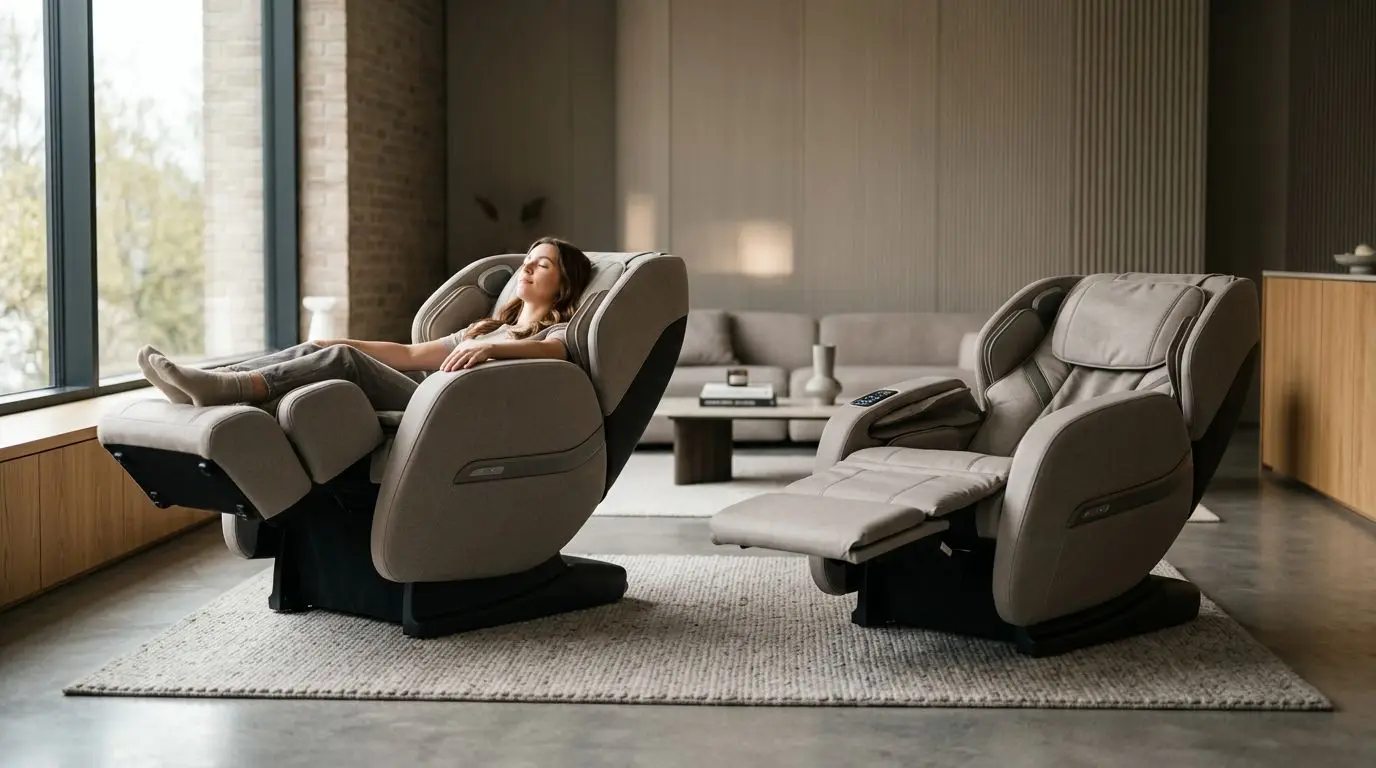
Zero Gravity vs. Lay-Flat Massage Chairs: Recline Position, Comfort, and Use Cases Compared
12 min read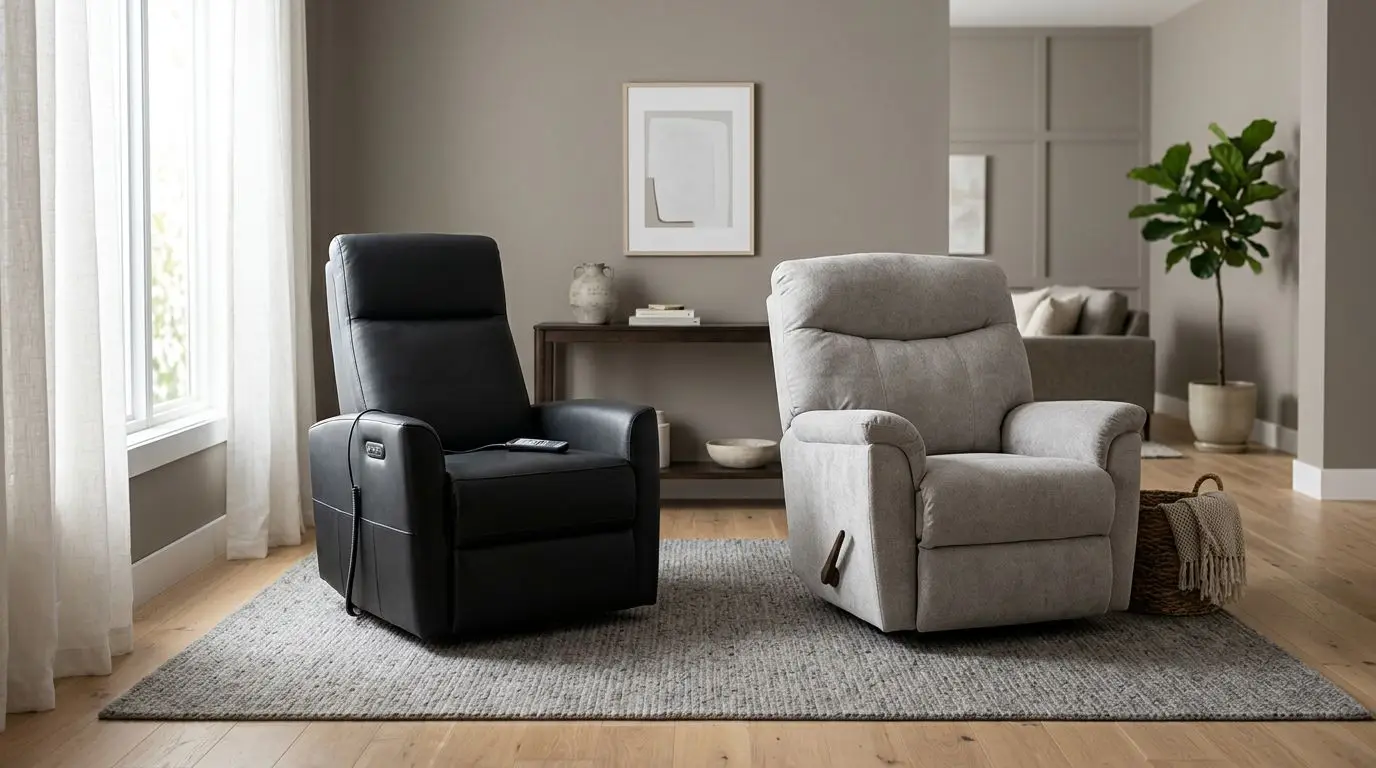
Massage Chair Recliner vs. Standard Recliner: Which Is Better for Everyday Comfort?
15 min read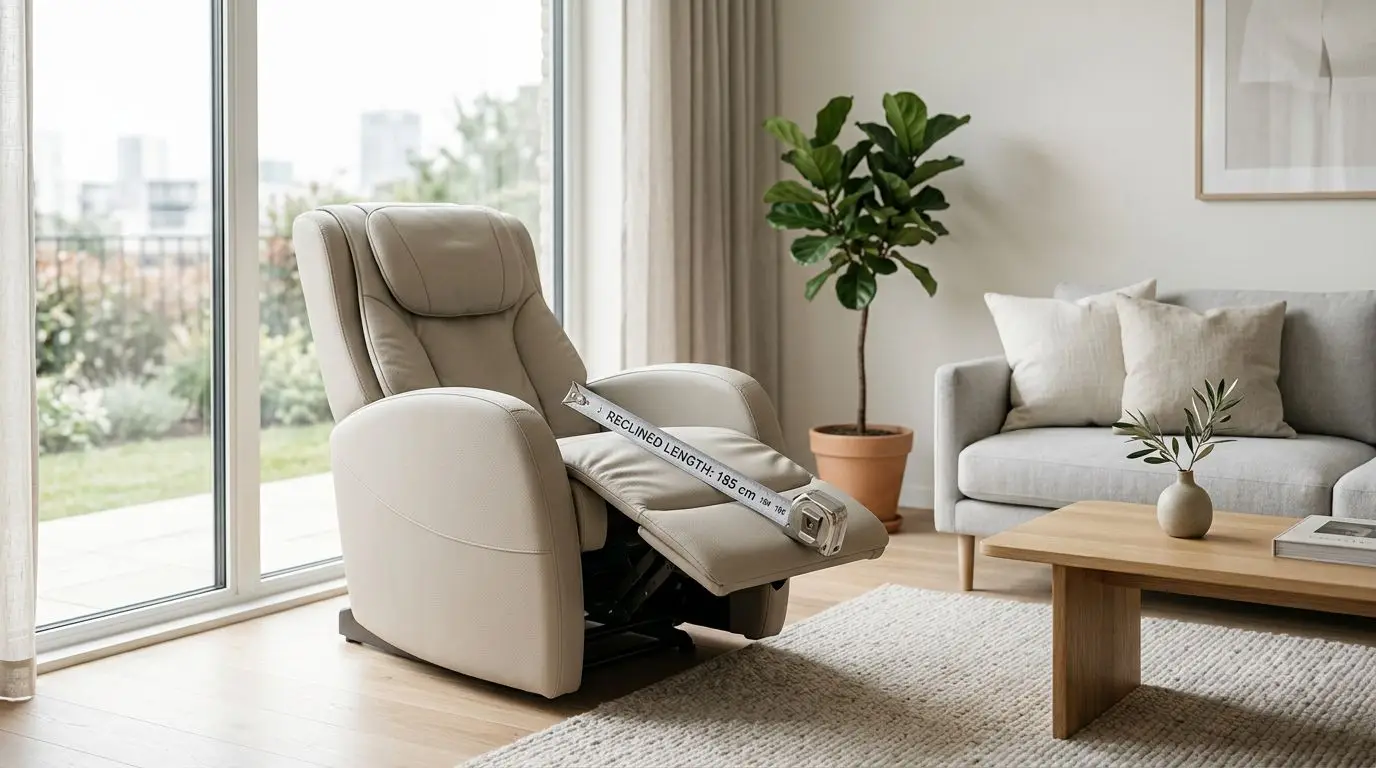
Ergonomic Massage Chairs: What “Ergonomic” Really Means Before You Buy
13 min read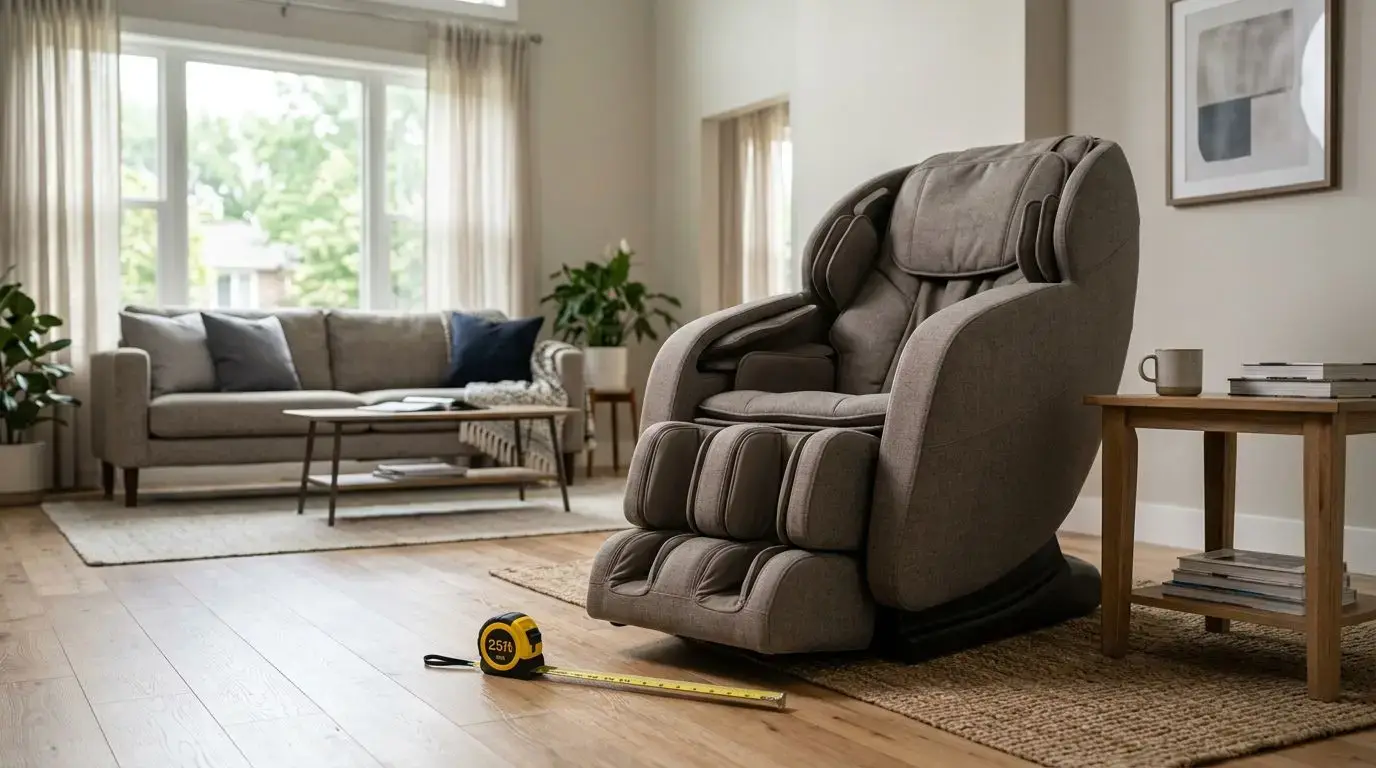
How to Choose a Massage Chair for Home Use
14 min read
Is a Massage Chair Worth It? Benefits, Limitations, and Who Should Buy One
13 min read