Disclosure: We may earn a commission when you buy through links on this page, at no extra cost to you. We buy nothing, sell nothing and accept no payment for coverage — commissions never decide what we recommend. How we make money.
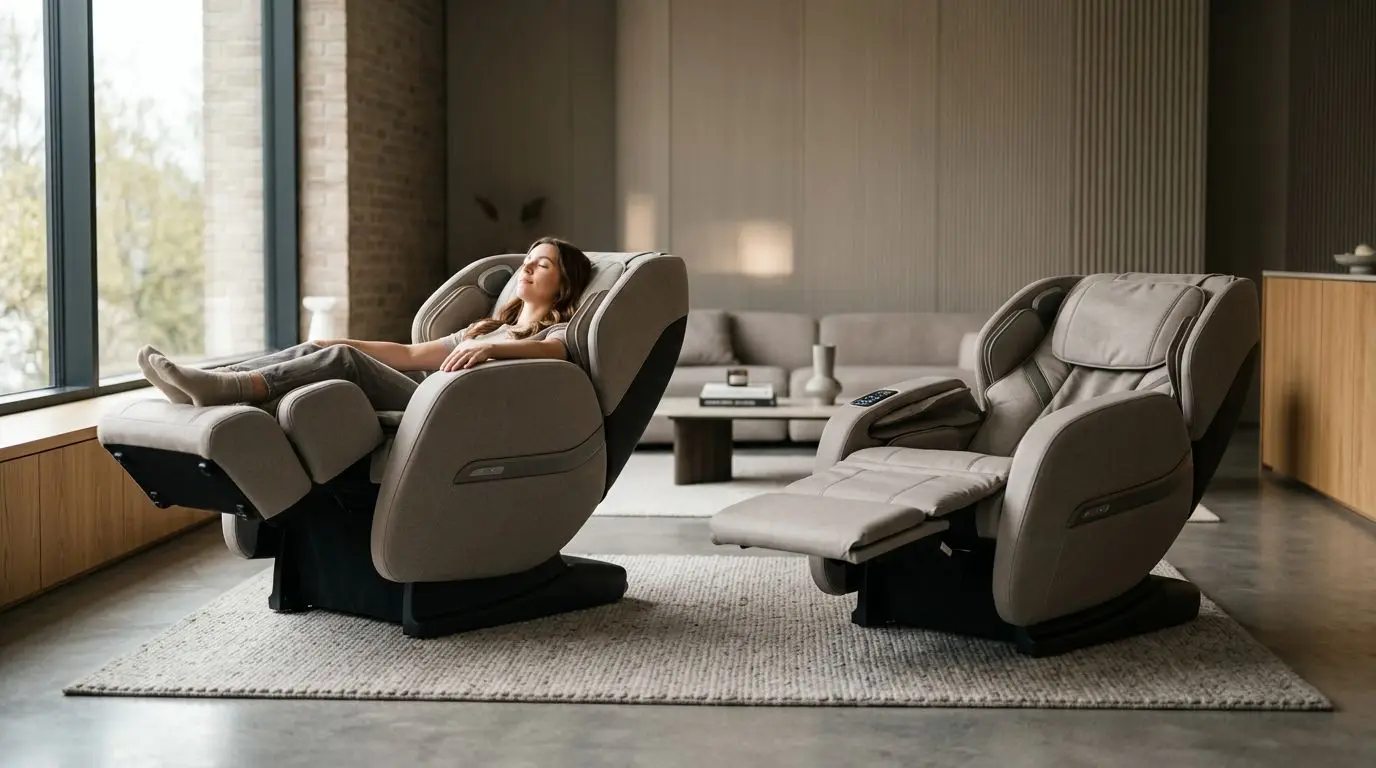
Zero gravity massage chairs are usually the better choice if you want a cradled, weight-distributed recline with your legs elevated and more support through the lower back. Lay-flat massage chairs are usually better if you want a bed-like position for resting, stretching out, or taking a short nap. The right choice depends on how you plan to use the chair, how much room you have, and whether you prefer an angled recline or a nearly horizontal one.
Both styles can be comfortable. They just solve different problems. Zero gravity positions your body in a tucked, reclined shape, while lay-flat recline emphasizes length and openness.
Quick comparison: 2 recline styles at a glance
The easiest way to compare these chairs is by body angle. Many zero gravity positions place the torso and thighs at about a 120 to 130 degree relationship, while lay-flat chairs often recline close to 170 to 180 degrees. Exact angles vary by chair design, upholstery thickness, and the user’s height.
| Category | Zero gravity recline | Lay-flat recline |
|---|---|---|
| Typical body position | Reclined with knees elevated and hips tucked | Nearly horizontal, closer to lying on a bed |
| Common angle range | About 120 to 130 degrees between torso and thighs | About 170 to 180 degrees overall recline |
| Best everyday use | Focused relaxation, seated unwinding, compact comfort | Napping, stretching out, longer rest periods |
| Back contact feel | Firm, cradled contact across the chair back | More open and flat; contact depends on cushion design |
| Room planning | Often available with 2 to 6 inch wall-clearance designs | May need more length when fully reclined |
| Nap friendliness | Good for dozing, less bed-like | Usually more nap-friendly because the body lies flatter |
Think of zero gravity as a deep recliner position. Think of lay-flat as a lounge or daybed position. That one difference affects almost everything else about comfort, fit, and daily use.
What zero gravity recline feels like at about 120 to 130 degrees
Zero gravity recline is designed to make the chair feel as if it is holding you in place. Your back tilts backward, your knees rise, and your body settles into a pocket instead of lying straight. Many chairs offer 1 to 3 zero gravity stages, with the deeper stage lifting the calves and feet higher than the lighter stage.
The main comfort advantage is body contact. Because you are tilted into the backrest, rollers and air cells can feel more consistent across the shoulders, mid-back, low back, hips, calves, and feet, depending on the chair’s layout. Pressure can feel more direct than it does in an upright position, so intensity settings matter.
Zero gravity is not a medical feature. It is a consumer comfort position. It is often marketed around the idea of distributing body weight across the chair, but shoppers should judge it by the practical feel: Does the chair cradle you? Do your knees feel comfortably supported? Does the headrest place your neck at a natural angle? Can you breathe, read, or watch TV without feeling folded too tightly?
This style can also work well in living rooms because some zero gravity chairs use space-saving recline hardware. A wall-hugging design may need only 2 to 6 inches behind the chair, though the front footrest still extends. Always check the full reclined footprint, not just the rear clearance.
What lay-flat recline feels like near 170 to 180 degrees
A lay-flat massage chair reclines until your body is almost horizontal, commonly in the 170 to 180 degree range. Some feel completely flat; others stop just short of flat because of cushion shape, armrest position, or the way the footrest angles upward. The feel is more open than zero gravity because your hips and knees are not tucked as much.
For many shoppers, this is the more nap-friendly style. If you want to rest for 20 or 30 minutes after work, a flatter chair usually feels less like sitting and more like lying down. It can also be easier to change arm position, relax your shoulders, or use a small neck pillow if the headrest design allows it.
The trade-off is contact consistency. In a very flat position, your body may not press into every massage zone the same way it does in a cradled recline. Some users prefer that softer, less compressed feel. Others may find that rollers feel less pronounced at the upper back or that their lower back needs a cushion to feel fully supported. Track type matters here: an S-track follows the spine-shaped curve of the back, while an L-track or SL-track continues farther under the seat to cover the glute area. In a lay-flat chair, track geometry and padding can noticeably change the experience.
Lay-flat chairs may also take more room front to back. A fully reclined massage chair can easily need a total operating length in the 70 to 85 inch range, depending on chair size and footrest extension. Measure with the footrest out and the back down, not just the upright footprint.
Comfort and back support during a 15 to 30 minute session
Most people use a massage chair in short sessions, often 15 to 30 minutes. In that window, the recline style changes how pressure feels. Zero gravity tends to settle the body deeper into the chair, which can make rollers, airbags, and foot rollers feel stronger at the same intensity setting. Lay-flat spreads the body longer, which can make the session feel calmer and less compressed.
For back support, zero gravity usually wins if you like a hugged-in feeling through the lower back and hips. The raised-leg position can make the lower body feel better supported by the chair structure, especially when the calf and footrest line up correctly with your leg length. A poor fit, however, can ruin the effect. If your calves are too long for the ottoman or your shoulders sit above the roller path, the chair may feel awkward no matter how advanced the recline is.
Lay-flat support depends heavily on cushion shape. A good lay-flat design supports the head, shoulders, pelvis, and legs without forcing the chin forward or leaving a gap under the low back. If the chair feels like a narrow cot with hard armrests, the flatter angle will not automatically be more comfortable. Judge support in three positions: upright, partially reclined, and fully reclined.
Intensity is another deciding factor. If you already know you prefer gentle pressure, a lay-flat chair may make it easier to keep the session soft. If you want a more pronounced roller feel and like being held in position, zero gravity may feel more satisfying. Neither style is objectively better; the better one is the one you will use regularly without fidgeting.
Who each style is best for: 6 common use cases
Use case matters more than the feature label. Two shoppers can sit in the same chair for 20 minutes and describe it very differently because one wants a nap and the other wants strong back contact.
Choose zero gravity if you want a cradled recliner feel
Zero gravity is best for people who like to feel tucked into the chair. It suits evening relaxation, TV watching, and focused massage programs where stable body contact matters. It is also a strong fit for shoppers who prefer a recliner-like posture over lying flat.
Choose zero gravity if space is tight
If your room gives you only 3 or 4 inches behind the chair, look for a space-saving zero gravity design and confirm the listed wall clearance. Just be careful: rear clearance is only half the measurement. You still need enough room in front for the footrest to extend.
Choose lay-flat if you want the better nap setup
For a 20 minute nap or a quiet reset, lay-flat usually feels more natural. The straighter position gives the body more length and can feel less restrictive around the hips and knees. Add a soft throw or small pillow, if the chair design allows it and the pillow does not interfere with moving parts.
Choose lay-flat if you dislike a tucked knee position
Some users do not enjoy having their knees raised high. If that position feels cramped after 5 minutes, a lay-flat chair may be the better match. This is especially relevant for tall users whose thigh length does not align well with compact ottomans.
Choose based on user height if more than 1 person will share it
For a household with users ranging from 5 feet 2 inches to 6 feet 2 inches, fit testing is important. A chair with automatic shoulder detection and an adjustable footrest may accommodate more users, but the recline style still has to feel right for the shortest and tallest person.
Choose based on session style
If you usually run a 15 minute program and get up, zero gravity can feel focused and efficient. If you tend to sit for 30 minutes, doze, or use the chair as a lounge seat, lay-flat may fit your routine better.
How to choose and measure before you buy: 5 checks
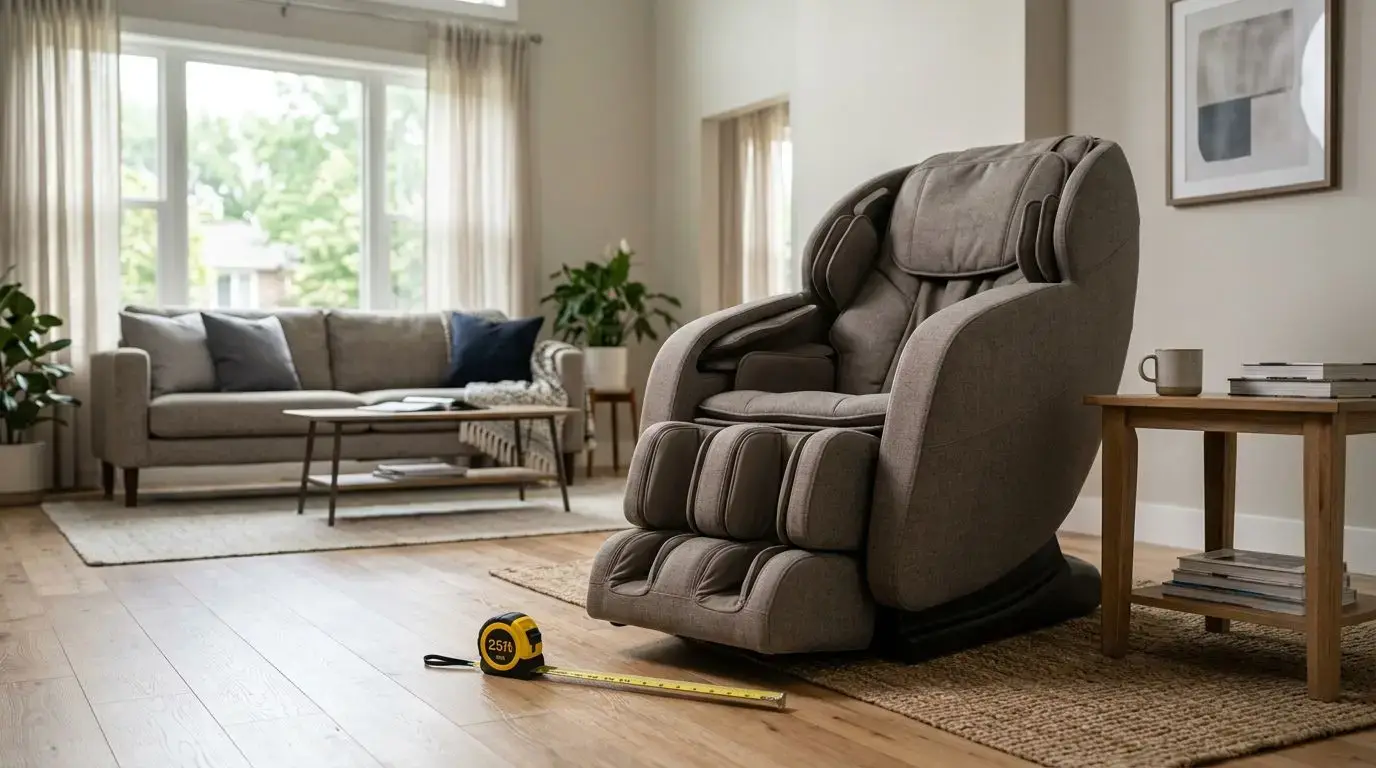
Start with the room, not the feature list. A massage chair that cannot fully recline in your space will always be frustrating. Measure the intended location in three dimensions: width, depth, and clearance around moving parts.
- Measure the full reclined length. Many chairs need roughly 70 to 85 inches from the back of the chair to the fully extended footrest. Compact models may need less, oversized models may need more.
- Check rear wall clearance. Space-saving chairs may need 2 to 6 inches behind them. Traditional recline designs can need much more, sometimes well over 12 inches.
- Confirm doorway and hallway access. Interior doorways in many US homes are about 30 to 36 inches wide. Compare that with the chair’s shipping and assembled dimensions, and remember that tight turns can be harder than straight openings.
- Match seat width to the user. Look at usable seat width, not just outside chair width. A chair can be 32 inches wide overall but feel narrow if the inner arm space is tight.
- Check user height and weight ranges. Many consumer massage chairs publish recommended height and weight ranges. Treat them as fit guidance, not decoration. A chair that is too small can put the shoulder rollers, calf airbags, and foot rollers in the wrong place.
If you cannot sit in the chair before buying, read the return policy closely. Reclining furniture is expensive to ship, and return freight can be a real cost. Also check whether the chair arrives fully assembled, partially assembled, or in multiple boxes. A 200 pound chair may be manageable with delivery support but difficult for one person to move safely.
Feature trade-offs that matter after 30 days
After the first week, the recline label matters less than the details you touch every day: controls, noise, cushioning, footrest adjustment, and how quickly the chair gets you into your preferred position. A 30 day ownership test is simple: do you still choose the chair when you are tired, or do you avoid it because setup takes too long?
| Feature | Why it matters | Zero gravity note | Lay-flat note |
|---|---|---|---|
| Track design | Determines roller coverage along the back and seat | Strong contact can make roller coverage feel more pronounced | Padding and angle affect whether rollers stay evenly noticeable |
| Footrest adjustment | Helps align calves and feet with airbags or rollers | Important because knees are elevated | Important for tall users when lying straighter |
| Wall clearance | Controls where the chair can be placed | Often available in 2 to 6 inch wall-hugging designs | Can need more total floor length when flat |
| Remote and presets | Reduces setup time for daily use | Look for 1-touch zero gravity position buttons | Look for easy recline control and memory positions if available |
| Cushion firmness | Changes pressure feel during 15 to 30 minute sessions | Firm padding can intensify the cradled feel | Softer padding can make resting more comfortable |
| Noise level | Affects TV watching, reading, and naps | Air pumps and motors may be more noticeable near the head | Quiet operation matters if napping is a main use |
Do not overbuy features you will not use. Heat zones, foot rollers, Bluetooth speakers, lighting, and body scanning can be pleasant, but they should not distract from fit and recline comfort. A simpler chair that fits your body is often more enjoyable than a loaded chair with the wrong geometry.
Safety notes before your first 20 minute session
A massage chair is a consumer wellness product, not a medical device. Use it for comfort, relaxation, and the pressure sensation it provides. Do not use a recline feature as a substitute for professional medical advice.
Ask your physician before using a massage chair if you are pregnant; have a pacemaker or other implanted cardiac device; have a history of blood clots or take anticoagulants; have osteoporosis; recently had a fracture or surgery; have spinal disc problems; have neuropathy; or have uncontrolled hypertension. These are not minor footnotes. The combination of pressure, vibration, heat, airbags, and recline may not be appropriate for every person.
For everyday use, start conservatively. Try 10 minutes on a low-intensity setting before jumping into a 30 minute full-body program. Keep the remote within reach, stop if the position feels wrong, and make sure pets and children are away from moving footrests and reclining parts. If the chair includes heat, use a moderate setting and pay attention to skin comfort, especially if you have reduced sensation in any area.
FAQ: 5 questions shoppers ask
Is zero gravity better than lay-flat for back support?
Zero gravity often feels more supportive because the chair cradles the body and keeps the back pressed into the backrest. Lay-flat can still feel supportive, but it depends more on cushion shape, track design, and whether your lower back stays comfortably in contact with the chair.
Is lay-flat better for sleeping?
For short naps, lay-flat is usually the better choice because the body is closer to horizontal. It is not the same as a bed, though, and armrests, footrests, and head pillows can affect how natural the position feels.
Do zero gravity chairs take less space?
Some do. Many space-saving zero gravity chairs need only about 2 to 6 inches behind the backrest, but you still need to measure the extended footrest and full reclined length. A chair can save wall space and still require a long front clearance.
Can a chair have both zero gravity and lay-flat recline?
Yes, some massage chairs offer multiple recline positions, including a zero gravity angle and a nearly flat angle. If both matter to you, check whether the chair can pause at intermediate positions rather than only using preset stops.
Which style is better for tall users?
Neither style automatically wins. Tall users should focus on shoulder detection range, footrest extension, seat depth, and total reclined length. If your legs feel cramped in zero gravity, lay-flat may feel more natural, but fit testing is still the best guide.
Frequently asked questions
Is zero gravity better than lay-flat for back support? +
Zero gravity often feels more supportive because the chair cradles the body and keeps the back pressed into the backrest. Lay-flat can still feel supportive, but cushion shape, track design, and body fit matter more.
Is lay-flat better for sleeping? +
Lay-flat is usually more nap-friendly because the body is closer to horizontal. It is still a chair, not a bed, so headrest shape, armrests, and footrest comfort can affect how natural it feels.
Do zero gravity massage chairs take less space? +
Some space-saving zero gravity chairs need only about 2 to 6 inches behind the backrest, but you still need front clearance for the footrest and the full reclined footprint.
Can one massage chair have both zero gravity and lay-flat recline? +
Yes. Some chairs offer multiple recline positions, including a zero gravity angle and a nearly flat position. Check whether the chair can pause between presets if adjustability matters.
Which recline style is better for tall users? +
Neither is automatically better. Tall users should check shoulder detection, footrest extension, seat depth, and total reclined length. The best choice is the one that aligns with your body.
Related guides
Zero Gravity Massage Chairs Explained: Benefits, Limitations, and When It Matters
16 min read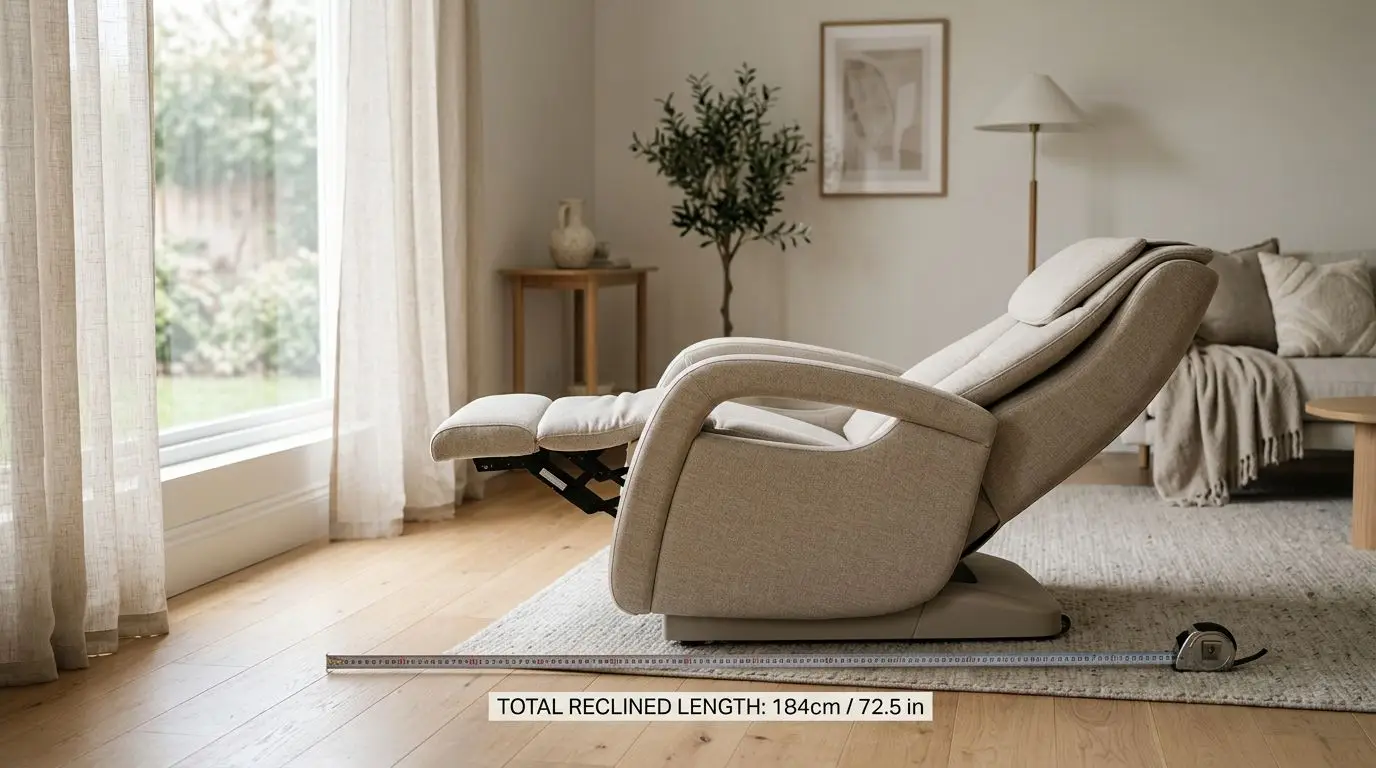
Lay-Flat Massage Chairs: Recline, Comfort, and When This Chair Type Makes Sense
15 min read
Massage Chair Recliner vs. Standard Recliner: Which Is Better for Everyday Comfort?
15 min read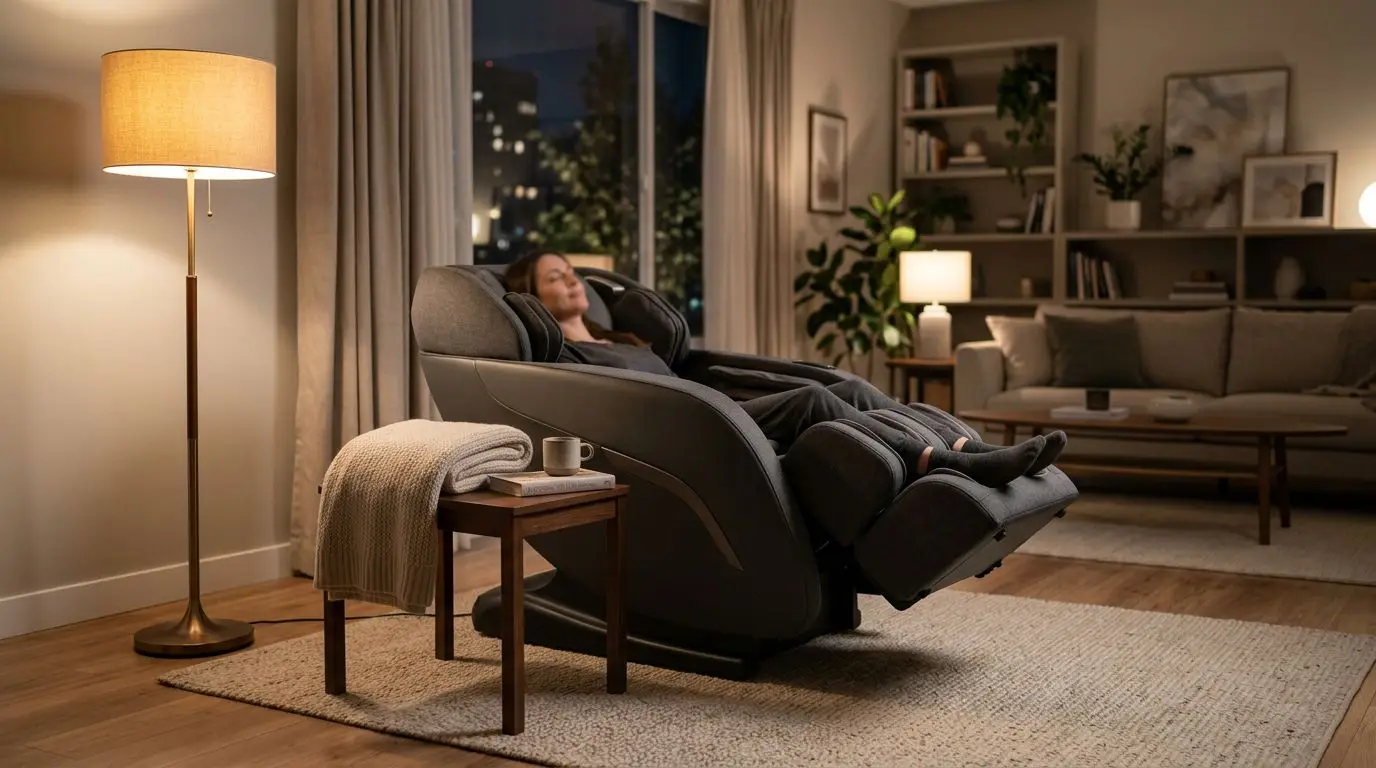
Can You Sleep in a Massage Chair? What to Consider Before Buying One for Naps or Overnight Use
14 min read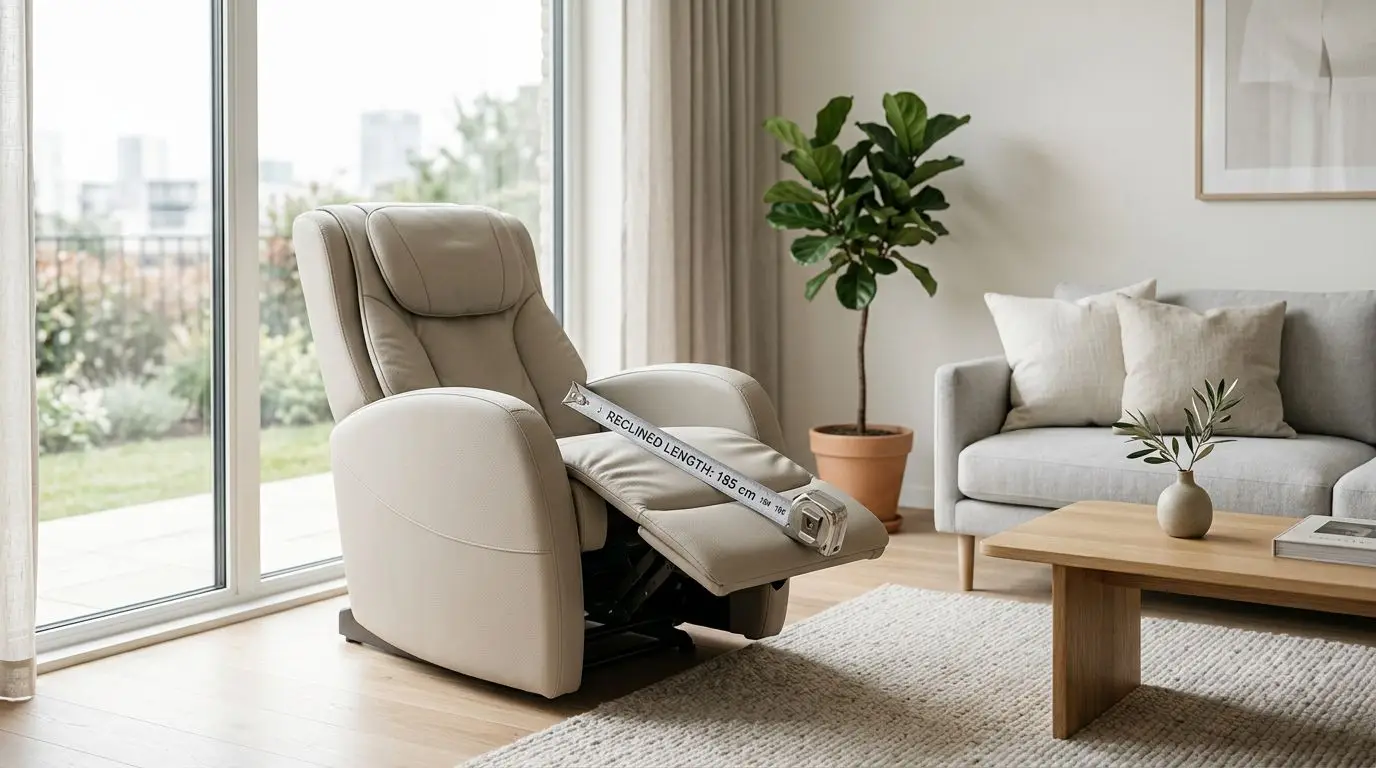
Ergonomic Massage Chairs: What “Ergonomic” Really Means Before You Buy
13 min read