Disclosure: We may earn a commission when you buy through links on this page, at no extra cost to you. We buy nothing, sell nothing and accept no payment for coverage — commissions never decide what we recommend. How we make money.
Use rolling when you want targeted pressure under the feet, kneading when you want a more muscle-focused action around the arches or calves, and air compression when you prefer gentler, broader squeezing around the legs. Most users do best with a 10-minute session at the lowest intensity, then adjusting pressure one step at a time based on comfort.
Foot and calf programs can feel very different, even inside the same massage chair. The right setting depends on your sensitivity, your goal, your foot size, and whether the chair uses rollers, airbags, nodes, or a mix of all three.
The 3 Main Foot and Calf Program Types
Most lower-body massage chair programs use 3 basic techniques: rolling, kneading, and air compression. Some chairs combine them in automatic routines, while others let you turn each function on or off manually. A typical lower-body session lasts about 10 to 20 minutes, which is enough for most people to judge comfort without overdoing pressure.
The key is understanding what each technique does. Foot rollers work under the sole, usually around the heel, arch, and ball of the foot. Kneading uses rotating nodes or mechanical movement to mimic a circular pressing motion. Air compression uses inflatable airbags that squeeze and release around the calves, ankles, or feet.
| Program type | How it feels | Best use | Intensity range |
|---|---|---|---|
| Rolling | Focused pressure under the sole | Foot fatigue, arch tension, standing all day | Medium to strong |
| Kneading | Circular pressing or rubbing motion | General muscle tightness in feet or calves | Light to strong |
| Air compression | Broad squeezing and release | Gentle leg relaxation, calf comfort, lighter pressure | Light to medium |
| Combination program | Rollers plus airbags or kneading | Full lower-leg routine | Varies by setting |
None of these settings should feel sharp, electric, or painful. A good lower-body program feels firm and controlled. If you brace your body, pull your feet away, or feel discomfort after the session, the intensity is too high or the program is not a good match for your sensitivity.
Rolling Programs: Best for 10-Minute Foot-Focused Relief
Rolling is usually the most targeted foot massage option. In many massage chairs, rollers sit under the footbed and move along fixed zones, often contacting the heel, arch, and forefoot. Some systems use 2 or more roller heads per foot, while simpler designs may use fixed rotating nodes instead of traveling rollers.
Choose rolling when your main issue is foot tiredness rather than calf tightness. For example, someone who stands for an 8-hour retail shift may prefer rolling because it puts pressure directly under the soles. It can feel especially noticeable under the arch, where many people carry tension after walking on hard floors.
Rolling is not always the best starting point for sensitive feet. Because the pressure is concentrated into smaller contact points, it can feel intense even on a low setting. Thin socks, tender arches, bony feet, or a high arch can all make rollers feel stronger than expected.
When rolling makes sense
- You want direct contact under the sole.
- Your feet feel tired after long standing or walking.
- You like firmer pressure and can tolerate focused contact.
- You want a shorter 5- to 10-minute foot-only routine.
When to use caution
- Your feet are very ticklish or pressure-sensitive.
- You have foot pain that has not been evaluated.
- You feel numbness, tingling, burning, or unusual swelling.
- The rollers press directly on a sore spot or recent injury.
If the chair allows adjustment, start with the lowest roller speed or intensity. Wearing medium-thickness socks can soften the feel. Some users also place the feet slightly forward or backward in the footwell to change which part of the sole gets the most pressure.
Kneading Programs: Best for 15-Minute Muscle Loosening
Kneading programs are designed to feel more like a repeated circular press than a straight rolling track. In the foot area, kneading may work around the arch or forefoot. In the calf area, it may come from mechanical nodes, moving paddles, or a combination of airbags that hold the leg while rollers or nodes press into the muscle.
This type of program is often a better middle ground than strong foot rolling. It can feel active and muscle-focused without the same narrow pressure point under the sole. A 15-minute kneading session is a reasonable upper limit for many users, especially if the program includes both calves and feet.
Use kneading when your goal is to address general tightness rather than one specific sore spot. It can be useful after light exercise, a long commute, or a day spent climbing stairs. The effect should feel like rhythmic pressure, not pinching.
| Area | What kneading may feel like | Good starting setting |
|---|---|---|
| Foot arch | Small circular pressure under the midfoot | Low intensity for 5 minutes |
| Heel area | Firm rotating contact near the back of the foot | Low to medium if comfortable |
| Calves | Broad pressing along the lower leg | Low intensity for 10 minutes |
| Ankles | Light holding or squeezing near the sides | Use gentle compression only |
Calf kneading deserves extra attention. The calf has larger muscles than the sole of the foot, but it can still become tender quickly if the program is too aggressive. If you are new to lower-leg massage, avoid stacking maximum kneading with maximum compression during your first few sessions.
Do not use kneading as a substitute for medical care if you have unexplained calf pain, one-sided swelling, redness, warmth, or pain after an injury. Massage chairs are wellness products, not diagnostic tools.
Air Compression Programs: Best for Gentle 5-Level Adjustments
Air compression is the most common lower-body feature in full-size massage chairs. Instead of using a roller, the chair inflates airbags around the calves, ankles, or feet. Many chairs offer 3 to 5 compression levels, although the exact number varies by design.
Compression feels different from rolling because the pressure is spread over a larger area. That makes it a better first choice for many sensitive users. It is also useful when you want a calming leg program while reading, watching TV, or using a reclined position.
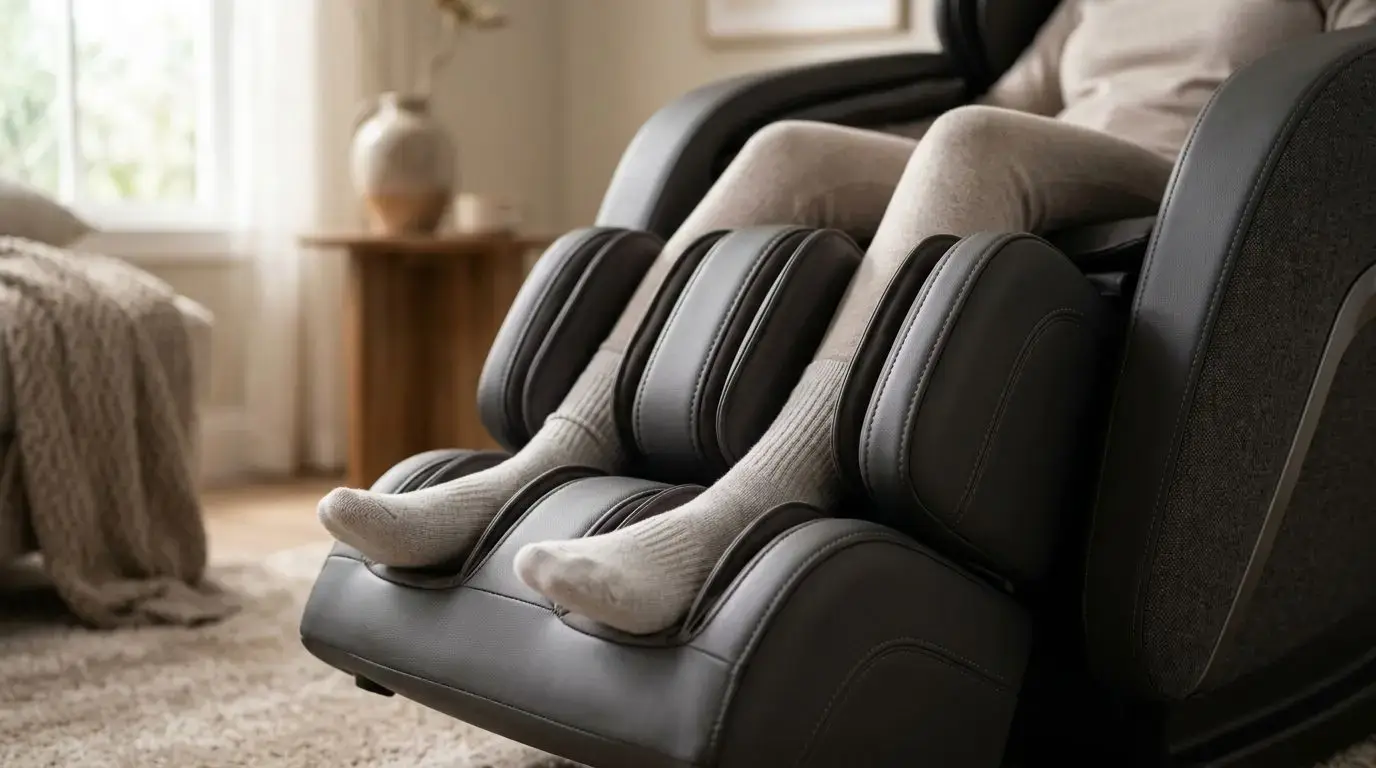
Airbags may squeeze the calves from the sides, press the feet down toward rollers, or hold the ankles in place. This matters. Compression alone can feel gentle, but compression combined with foot rollers can make the rollers feel much stronger because the airbags push your feet into the massage mechanism.
Use air compression when you want:
- A broader, less pinpoint lower-leg massage.
- A gentler setting for the calves and ankles.
- A quiet routine before bed, usually 10 to 15 minutes.
- Supportive pressure without aggressive sole rolling.
If a chair allows separate control, try compression by itself before turning on rollers. Start at level 1 or the lowest available setting. If that feels too mild after 3 to 5 minutes, move up one level. Jumping straight to the highest compression can make the calves feel trapped or overly squeezed.
People with circulation concerns, diabetes-related foot sensitivity, blood clot risk, varicose vein discomfort, recent surgery, or pregnancy should ask a qualified healthcare professional before using strong leg compression. This is especially important if symptoms are new, one-sided, or painful.
Who It Is Best For: 5 Common Lower-Body Relief Goals
Foot and calf programs are not one-size-fits-all. A person with tired soles after walking 12,000 steps has a different goal than someone who wants a light calf squeeze while relaxing at night. Matching the program to the job makes the chair more comfortable and more useful.
| Your goal | Best first program | Why | Suggested starting time |
|---|---|---|---|
| Tired feet after standing | Foot rolling | Targets the sole and arch directly | 5 to 10 minutes |
| General calf tightness | Low kneading or compression | Works larger lower-leg muscles more broadly | 10 minutes |
| Sensitive feet | Air compression only | Avoids pinpoint pressure from rollers | 5 minutes |
| Post-workout relaxation | Light kneading plus compression | Provides rhythmic pressure without needing maximum intensity | 10 to 15 minutes |
| Evening wind-down | Low compression | Feels steady and less stimulating than strong rollers | 10 minutes |
If you are buying a massage chair mainly for leg and foot comfort, pay close attention to independent control. The best setup for many households is not the most intense one; it is the one that lets different users turn rollers, kneading, and air compression on or off separately.
Shared chairs need flexibility. One person may love strong arch rolling, while another may only tolerate calf airbags on low. If the chair has only one lower-body mode, someone in the household may avoid using it altogether.
How to Choose and Measure: 6 Fit Checks Before You Buy
Lower-body comfort depends heavily on fit. Before choosing a massage chair, measure your lower leg and foot rather than relying only on height recommendations. A difference of 2 inches in calf length or shoe size can change where the rollers and airbags land.
Start with your shoe size, calf width, and the distance from the back of your knee to the bottom of your heel while seated. Many foot and calf wells are designed to accommodate a range of users, but very tall users, short users, wide calves, and large shoe sizes may need more careful checking.
Fit checks to make
- Foot length: Check whether your full foot fits without toes pressing hard against the front of the footwell.
- Calf height: In a seated position, measure from the floor to the crease behind your knee; this helps estimate where calf airbags will land.
- Calf width: Measure the widest part of the calf. If you have muscular or larger calves, look for roomier leg wells and adjustable compression.
- Footwell depth: Your heel should sit naturally without forcing your ankle into a sharp angle.
- Ottoman extension: An extendable leg rest can help users who are several inches taller than average.
- Manual controls: Separate buttons for foot rollers, calf airbags, and intensity levels make the chair easier to tune.
Try to sit in a neutral position when measuring. Your knees should not be jammed upward, and your feet should not dangle. If the leg rest is too short, rollers may hit the wrong part of the arch. If it is too long, the calves may miss the intended airbag zone.
Also consider sock thickness and daily use. Bare feet can make rollers feel more intense and may raise hygiene concerns in shared households. Medium socks often create a better balance between feel and comfort.
Sensitivity Settings: Start Low for the First 3 Sessions
The safest way to learn a lower-body program is to test it over your first 3 sessions instead of judging it in the first minute. Some pressure feels comfortable at first but becomes too strong after 8 or 10 minutes, especially under the arch or along the calves.
For the first session, use the lowest intensity and limit the program to 5 to 10 minutes. For the second session, keep the time the same and increase only one variable, such as compression level. For the third session, decide whether to add rollers, kneading, or a longer duration.
| Session | Time | Recommended setting | What to watch for |
|---|---|---|---|
| 1 | 5 to 10 minutes | Lowest compression or light program | Sharp pressure, numbness, lingering soreness |
| 2 | 10 minutes | Add low rolling or kneading if comfortable | Arch tenderness or calf squeezing |
| 3 | 10 to 15 minutes | Adjust one level higher if needed | Comfort during and after the session |
A little post-massage awareness is normal, similar to noticing a muscle after stretching. Lingering pain, bruising, numbness, or worsening symptoms are not signs of a better massage. Stop using that setting and choose a gentler program.
Heat, if available in the lower-body area, should be treated as another intensity layer. Use it carefully, especially if you have reduced sensation in the feet. You should be able to feel temperature clearly and turn it off easily.
Feature Comparison: 7 Lower-Body Controls Worth Having
When comparing massage chairs for foot and calf use, look beyond the phrase lower-body massage. Two chairs can both advertise foot and calf functions but feel completely different because of control layout, roller coverage, and leg rest design. At least 7 feature categories are worth checking before you buy.
| Feature | Why it matters | Most useful for |
|---|---|---|
| Separate foot roller control | Lets you turn off intense sole pressure | Sensitive feet, shared households |
| Adjustable air compression | Changes squeeze strength | Calf comfort and daily use |
| Extendable leg rest | Improves alignment for different heights | Taller users or multi-user homes |
| Removable or washable foot liners | Helps with hygiene | Frequent use, multiple users |
| Manual lower-body mode | Avoids being locked into full auto routines | Targeted foot or calf relief |
| Multiple intensity levels | Allows gradual changes | New users and sensitive users |
| Pause or quick-stop button | Lets you end pressure immediately | Anyone testing stronger settings |
Do not assume more features automatically mean a better lower-body massage. A chair with aggressive rollers and limited adjustment may be less comfortable than a simpler chair with better intensity control. Control matters more than raw strength.
If you can test a chair, spend at least 10 minutes in the lower-body program. A 60-second demo rarely shows whether rollers line up with your arches or whether the calf squeeze becomes too strong.
Simple Program Recipes: 4 Practical Starting Points
If your chair allows manual settings, you can build simple lower-body routines instead of relying only on automatic programs. Keep the first version short: 10 minutes is a practical starting point for most users.
For tired feet after work
Use foot rolling on low or medium for 5 minutes, then add light compression for another 5 minutes if comfortable. This works well when the soles feel tired but the calves are not especially tight.
For sensitive feet
Use air compression only for 5 to 10 minutes. Skip rolling at first. If you later add rollers, wear socks and keep compression low so your feet are not pushed hard into the mechanism.
For calf-focused relaxation
Use low compression with gentle calf kneading for 10 minutes. Avoid strong foot rollers unless you also want sole pressure. Keep your legs relaxed rather than tensing against the airbags.
For a balanced lower-body routine
Use 5 minutes of low rolling, 5 minutes of calf compression, and 5 minutes of combined low kneading if the chair allows it. Stop sooner if pressure feels too strong. Longer is not always better.
These recipes are starting points, not rules. The best setting is the one you can use comfortably and consistently without feeling sore afterward.
Safety Notes: Stop If Symptoms Last More Than 24 Hours
Foot and calf massage chair programs are intended for comfort and relaxation. They may help some users feel less tight or more relaxed, but they are not a treatment for medical conditions. If soreness, swelling, numbness, or unusual pain lasts more than 24 hours after use, stop the program and consider medical advice.
Be especially careful with strong calf compression. Do not use it over a suspected injury, unexplained swelling, skin infection, open wound, or area with reduced sensation. If you have a diagnosed circulation issue, neuropathy, clotting risk, or recent surgery, get professional guidance before using leg compression.
Children should not use strong lower-body programs without adult supervision. Older adults may also prefer shorter sessions and lower settings, especially if skin is fragile or sensation is reduced.
A massage chair should leave you feeling comfortable, not beaten up. The right program is usually the one that feels controlled at level 1 or 2 before it feels impressive at level 5.
FAQ: 5 Questions About Foot and Calf Programs
Is rolling or air compression better for sore feet?
Rolling is usually better for direct sole pressure, especially around the arch and heel. Air compression is better if your feet are sensitive or you prefer a broader squeeze without pinpoint contact.
How long should I use a foot and calf massage program?
Start with 5 to 10 minutes. If you feel comfortable during and after the session, many users can move to 10 to 20 minutes depending on the chair and intensity level.
Why do foot rollers feel too strong?
Foot rollers concentrate pressure into small contact points. They can feel stronger if you have high arches, tender soles, thin socks, or airbags pressing your feet down onto the rollers.
Can I use calf compression every day?
Many healthy users tolerate gentle daily compression, but intensity matters. Use low settings, avoid pain, and ask a healthcare professional first if you have circulation concerns, swelling, neuropathy, or clotting risk.
Should I use heat with foot and calf massage?
Heat can make a lower-body program feel more relaxing, but it should be mild and easy to turn off. Avoid heat if you cannot clearly feel temperature in your feet or lower legs.
Frequently asked questions
Is rolling or air compression better for sore feet? +
Rolling is usually better for direct sole pressure around the arch, heel, and ball of the foot. Air compression is better for sensitive feet or when you want a broader squeeze without pinpoint pressure.
How long should I use a foot and calf massage chair program? +
Start with 5 to 10 minutes at the lowest intensity. If it feels comfortable during and after the session, you can gradually increase to 10 to 20 minutes depending on the chair and your sensitivity.
Why do foot rollers feel too intense? +
Foot rollers focus pressure into small contact points. They may feel stronger if you have tender arches, thin socks, high arches, bony feet, or airbags pushing your feet down into the rollers.
Can I use calf air compression every day? +
Many healthy users can use gentle calf compression daily, but keep the setting low and stop if it causes pain, numbness, or swelling. Ask a healthcare professional first if you have circulation issues, neuropathy, clotting risk, or recent surgery.
Should I choose kneading or rolling for calf tightness? +
For calf tightness, start with low kneading or air compression rather than strong foot rolling. Rolling mainly targets the soles, while kneading and compression are usually better suited to the larger lower-leg muscles.
Related guides
Foot Roller vs. Calf Kneading vs. Air Compression: Massage Chair Leg Features Explained
12 min read
Can Massage Chairs Improve Circulation? What Leg Compression, Heat, and Movement May Do
13 min read
Air Compression Massage in Chairs: How It Works and Who It Helps Most
14 min read
Full-Body vs. Targeted Massage Chair Programs: When to Use Each Type
14 min read
Massage Chair Programs Explained: Auto Modes, Manual Settings, Spot Massage, and Stretch Programs
12 min read