Disclosure: We may earn a commission when you buy through links on this page, at no extra cost to you. We buy nothing, sell nothing and accept no payment for coverage — commissions never decide what we recommend. How we make money.
Massage chair stretch programs are preset routines that use reclining angles, airbags, rollers, and footrest movement to gently pull, extend, and decompress parts of the body. They feel different from a standard massage because the chair is doing more than kneading muscles; it is also holding the hips, legs, arms, or shoulders while the backrest and legrest move through a controlled range. They are best for people who want a more mobilizing session after sitting, travel, light exercise, or general stiffness. Anyone with injuries, recent surgery, osteoporosis, severe back pain, or circulatory concerns should be cautious and ask a clinician first.
Think of stretch mode as a guided positioning program, not a substitute for physical therapy or a cure for pain. Used well, it can be a helpful wellness feature. Used too aggressively, especially at high intensity or for too long, it can leave you sore or irritate an existing condition.
What a Stretch Program Does in 10 to 30 Minutes
Most stretch-style programs run for about 10 to 30 minutes, depending on the chair and the selected intensity. During that time, the chair may recline, lift the legs, inflate airbags around the calves or feet, pin the shoulders or arms, and run rollers along the back. The goal is a controlled feeling of lengthening through the back, hips, legs, and shoulders.
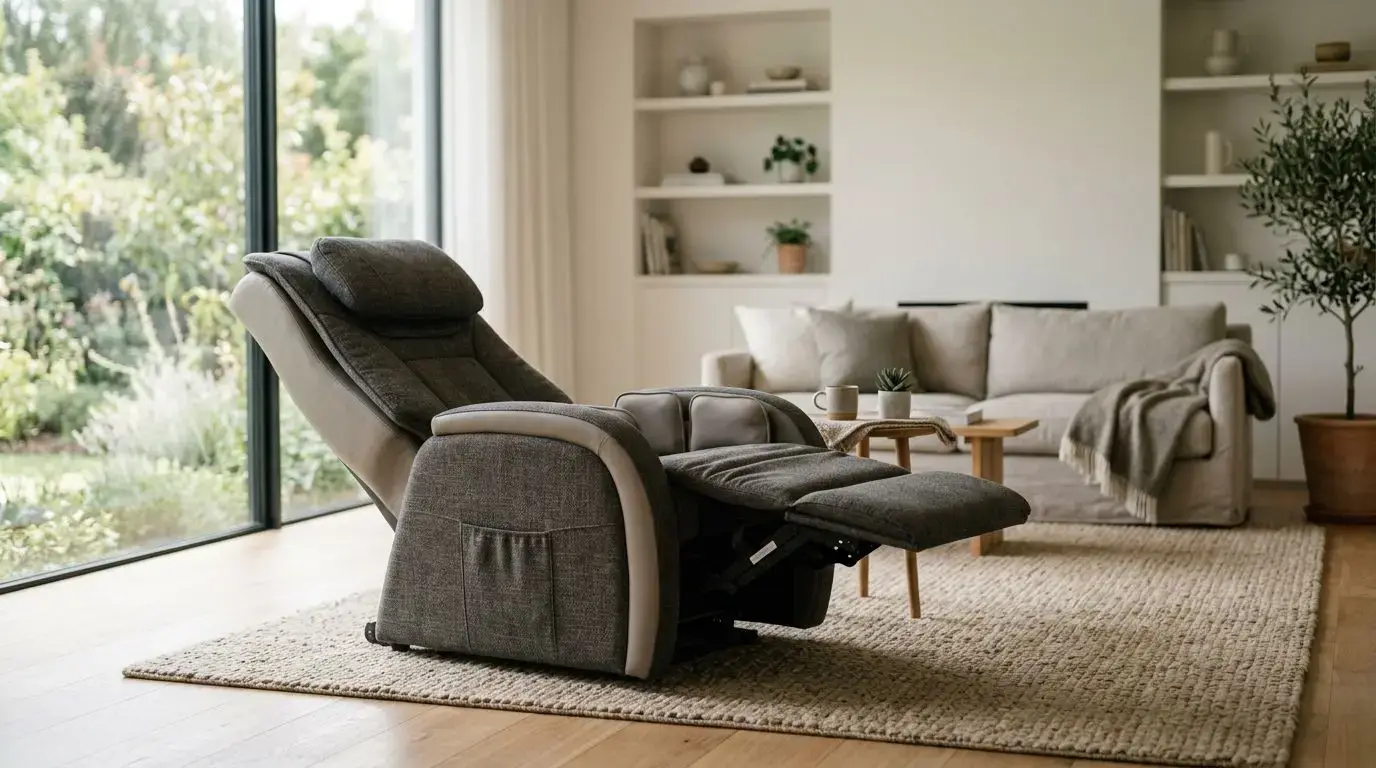
The exact movement depends on the chair design. In many full-body chairs, airbags around the calves and feet inflate first to hold the lower body in place. The backrest may then recline while the footrest lowers or extends, creating a traction-like sensation through the legs and low back. Some chairs also use side, hip, or shoulder airbags to stabilize the upper body, which can make the stretch feel more complete.
Rollers play a supporting role. On a 2D roller system, the rollers mainly move up and down and side to side along the back. A 3D or 4D roller system can usually adjust how far the rollers press forward, so the stretch routine may feel more active or deeper. The track matters too. An S-track follows the curve of the spine and usually stops around the lower back, while an L-track or SL-track continues under the seat toward the glutes and hamstrings. That longer track can make stretch programs feel more connected from the shoulders to the hips.
Stretch mode is not the same as a person-assisted stretch. A chair cannot evaluate joint restriction, muscle guarding, or nerve symptoms in real time. It follows a preset routine, which is why fit, intensity control, and your own feedback matter more than marketing language.
Stretch Programs vs. Standard Massage: 5 Key Differences
A standard massage program usually focuses on kneading, rolling, tapping, or pressing muscles for relaxation. A stretch program adds whole-chair movement and body anchoring. The difference is easiest to understand side by side.
| Feature | Standard massage program | Stretch-style program |
|---|---|---|
| Main action | Rollers knead, tap, roll, or press along the back | Chair reclines, airbags hold, and the legrest moves to lengthen the body |
| Typical session length | About 10 to 20 minutes | About 10 to 30 minutes |
| Body position | Mostly fixed recline position | Position changes throughout the routine |
| Best sensation | Muscle compression and release | Gentle pulling, extension, and opening |
| Fit sensitivity | Important, especially shoulder height | Very important, especially leg length, shoulder position, and hip alignment |
The most noticeable difference is anchoring. If calf or foot airbags hold your legs while the backrest reclines, the chair can create a mild traction feeling. If shoulder airbags hold your upper body while the seat and backrest shift, the stretch may feel more like a chest-opening or spinal extension routine.
Because the chair is moving your body, the intensity can feel higher than the same roller pressure in a regular massage. A low-intensity stretch may feel relaxing and spacious. A high-intensity stretch can feel strong, especially for users with tight hip flexors, stiff calves, or sensitive low backs. Start lower than you think you need.
Who It’s Best For: 6 Common Use Cases
Stretch programs can make sense for many everyday users, especially as a short, low-to-moderate intensity routine. A typical 15-minute session may be enough for most people to decide whether the feature feels helpful or too strong.
- Desk workers who sit 6 to 8 hours a day. Sitting can leave the hips, low back, shoulders, and neck feeling stiff. A stretch routine may help users unwind from a flexed sitting posture without getting on the floor.
- Frequent drivers or travelers. After a long drive or flight, the combination of leg airbags, recline, and roller movement can feel refreshing. Keep the first session short after travel, especially if your legs feel swollen.
- People who prefer mobilizing pressure over spot massage. Some users do not enjoy deep kneading in one area. Stretch mode spreads the sensation across the whole body, which can feel less poky than a strong roller program.
- Light exercisers on recovery days. After walking, recreational cycling, golf, or a low-intensity gym session, a gentle stretch routine may feel good. It should not be used to push through sharp pain after a workout.
- Users who feel stiff in the morning. A low setting for 10 minutes may be more approachable than a high-intensity massage. Morning users should let the body warm up gradually.
- Households with mixed preferences. One person may want strong kneading, while another wants a gentler opening sensation. Stretch mode offers a different style without needing a second chair.
The best candidates are people who can clearly tell when a stretch feels good versus too much. Comfort should improve during the session, not decline. If you find yourself bracing, holding your breath, or shifting to escape pressure, reduce the intensity or stop.
When to Be Cautious: 8 Situations to Check First
A massage chair stretch program can involve repeated movement, compression, and mild pulling forces. That is not appropriate for everyone. If any of the following situations apply to you, get medical guidance before using stretch mode, especially for sessions longer than 10 minutes.
- Recent surgery or injury. This includes back, hip, knee, shoulder, abdominal, or joint procedures. Healing tissue may not tolerate traction or compression.
- Osteoporosis or known bone fragility. Strong pressure or forced positioning may be risky for people with fragile bones.
- Severe or unexplained back, neck, or leg pain. Pain that radiates, causes weakness, or changes sensation should be evaluated.
- Disc problems, spinal instability, or diagnosed nerve compression. Some people may tolerate gentle massage but not stretching forces.
- Pregnancy. Body position, abdominal pressure, circulation, and joint laxity require extra caution. Ask a qualified clinician.
- Blood clot risk or significant circulation problems. Leg airbags apply compression. That can be inappropriate in certain vascular conditions.
- Pacemakers, implanted devices, or medical equipment concerns. Ask your medical provider and read the chair manual before using powered massage features.
- Reduced sensation or difficulty communicating discomfort. If you cannot reliably feel pressure, heat, or joint strain, a moving stretch routine is harder to use safely.
Do not use stretch mode to diagnose or treat a medical problem. A chair can support relaxation, comfort, and a sense of mobility for some users, but it cannot replace an exam, a treatment plan, or supervised rehabilitation.
How to Choose and Measure Before You Buy or Use One
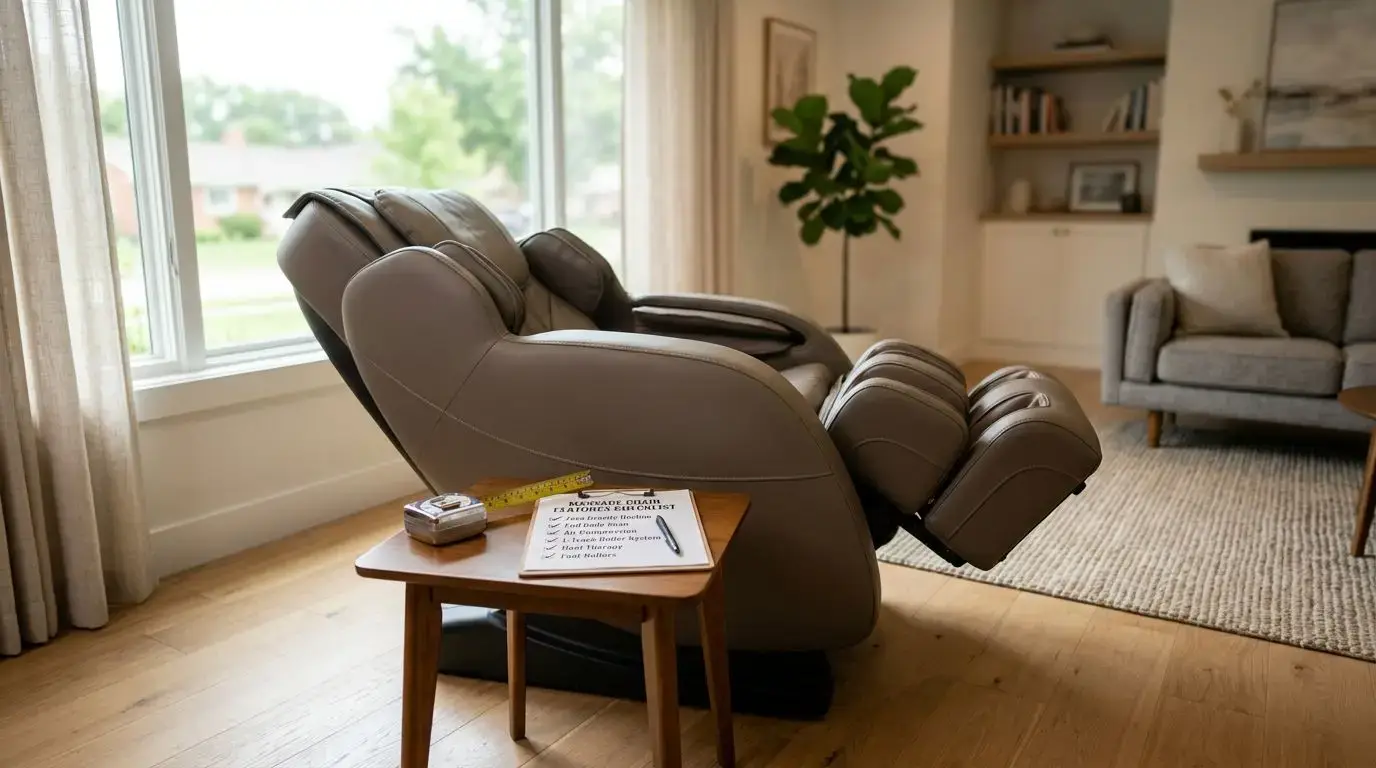
Fit is the difference between a good stretch and an awkward one. Before choosing a chair with stretch programs, measure your space, your body, and the chair’s adjustment range. Many massage chairs are roughly 28 to 36 inches wide and can need 2 to 12 inches of rear clearance, depending on whether they use a space-saving recline design.
Measure the room first
Check the chair’s full recline footprint, not just its upright dimensions. Leave walking space around it. A practical target is at least 24 inches of clear path on the main access side so users can get in and out without twisting. If the chair has a sliding base, confirm how close it can sit to the wall when fully reclined.
Measure the user next
Stretch programs are sensitive to height. If the shoulder airbags hit too high or too low, they may press the neck or miss the shoulders. If the footrest does not extend far enough, taller users may feel cramped through the knees. If it extends too far or does not hold the calves well, shorter users may not get much stretch at all.
- Measure standing height in inches.
- Measure seated shoulder height from the seat surface to the top of the shoulder.
- Measure hip-to-heel length while seated, especially if the user is tall or short.
- Check the chair’s stated user height range and maximum user weight.
- Confirm whether the footrest has spring-loaded or powered extension.
Weight capacity also matters. Many full-size chairs list a maximum user weight somewhere around the mid-200s to low-300s in pounds, but the correct number depends on the specific chair. Do not guess. A chair used beyond its rated capacity may not recline or stretch correctly, and it can wear out faster.
Look for manual control
A good stretch chair should let you reduce air intensity, roller intensity, recline angle, or program duration. Auto-only programs can be convenient, but manual adjustment is what makes the feature usable for more people in the same household.
How to Use Stretch Mode Safely in the First 2 Weeks
Treat the first 2 weeks as a trial period. Even if you are comfortable with standard massage, stretch mode is different because it changes joint position and uses airbags to hold parts of the body.
Start with the lowest air setting and a short program, ideally 10 to 15 minutes. Keep heat off for the first session if you are unsure how your body responds; heat can make pressure feel more comfortable in the moment, but it may also encourage you to stay in a position longer than you should. Use zero gravity recline if it feels supportive, but do not assume a deeper recline is always better.
Pay attention to the next 24 hours. Mild post-session soreness can happen, similar to trying a new stretch routine. Sharp pain, numbness, tingling, headache, dizziness, or pain that lasts more than a day is a sign to stop and reassess. If symptoms are significant or repeated, ask a clinician before trying again.
- Use stretch mode no more than once per day at first.
- Leave at least 24 hours between strong sessions.
- Keep intensity at low or medium until you know your response.
- Stop immediately if the chair pins a joint in an uncomfortable angle.
- Do not combine the strongest air setting, deepest recline, and maximum roller depth on day one.
Breathing is a simple safety check. If you can breathe slowly and stay relaxed, the intensity is probably reasonable. If you are clenching your jaw or waiting for the program to end, it is too much.
Feature Comparison: 7 Stretch-Related Features That Matter
Not every chair with a stretch label offers the same experience. The 7 features below are more useful to compare than vague terms like full body or advanced.
| Feature | Why it matters for stretch | What to look for |
|---|---|---|
| Airbag zones | Airbags hold the body while the chair moves | Calf, foot, hip, arm, and shoulder zones with adjustable intensity |
| Footrest extension | Leg fit controls how much lower-body stretch you feel | Extension range that matches your height and leg length |
| Track type | The roller path affects back, glute, and hamstring coverage | S-track for spinal focus; L-track or SL-track for seat and glute coverage |
| Roller depth | Depth affects how strong the stretch routine feels | Adjustable 3D or 4D intensity if multiple users will share the chair |
| Recline control | The angle changes how much traction you feel | Manual recline adjustment or several preset recline positions |
| Program duration | Longer is not always better | Short options around 10 to 15 minutes plus longer options if tolerated |
| Pause and exit controls | You need a quick way out if a stretch feels wrong | Easy-to-reach remote, stop button, and smooth return to upright |
Airbag control deserves special attention. In stretch mode, airbags are not just comfort features; they create leverage. If the calf airbags are too strong, the leg pull may feel intense. If shoulder airbags are too strong, the upper body may feel trapped. Adjustable air intensity makes the chair easier to share and safer to personalize.
Heat is optional. It can make a routine feel more relaxing, especially around the low back, but heat does not make an aggressive stretch safer. If you use heat, keep sessions moderate and drink water as you normally would after a relaxing heat session.
FAQ: 5 Questions About Massage Chair Stretch Programs
Do massage chair stretch programs really stretch your body?
They can create a stretch-like effect by holding parts of the body with airbags while the backrest, seat, and legrest move. The effect is usually gentler and less targeted than a therapist-assisted stretch, and it depends heavily on body fit.
How often should I use stretch mode?
For most healthy adults, starting with 10 to 15 minutes, 2 to 3 times per week is a reasonable way to test tolerance. If you feel good the next day, you can gradually use it more often, but daily high-intensity stretching is not necessary for most users.
Is stretch mode good for lower back tightness?
Some people with general low-back tightness enjoy the gentle traction and hip-opening feel. It should not be used for severe pain, pain traveling down the leg, numbness, weakness, or a known spinal condition without medical guidance.
Can older adults use massage chair stretch programs?
Some older adults can use gentle stretch settings comfortably, especially with low air pressure and short sessions. People with osteoporosis, balance issues, recent falls, joint replacements, blood clot risk, or fragile skin should check with a clinician first.
What should a stretch program feel like?
It should feel like a controlled pull, gentle opening, or firm hold, not sharp pain or joint strain. You should be able to relax your breathing during the session. If the chair makes you brace or feel trapped, lower the settings or stop.
Massage chair stretch programs are worth considering if you want more than kneading and tapping. With the right fit, the routine can feel like a gentle reset on stiff days. With the wrong fit, or too much intensity, a helpful feature can become uncomfortable. Measure carefully, start low, and treat stretch mode as a wellness tool rather than a medical treatment.
Frequently asked questions
Do massage chair stretch programs really stretch your body? +
They can create a stretch-like effect by holding parts of the body with airbags while the backrest, seat, and legrest move. The result is generally gentler and less targeted than a therapist-assisted stretch, and it depends on how well the chair fits your body.
How often should I use stretch mode? +
Start with 10 to 15 minutes, 2 to 3 times per week. If you feel comfortable during the session and the next day, you can gradually increase frequency, but daily high-intensity stretch sessions are not necessary for most users.
Is stretch mode good for lower back tightness? +
Some users with general low-back tightness like the gentle traction and hip-opening feel. Do not use it for severe pain, numbness, weakness, radiating leg pain, or a diagnosed spine condition unless a clinician says it is appropriate.
Can older adults use massage chair stretch programs? +
Some older adults can use gentle stretch settings safely, especially at low air pressure and shorter durations. Anyone with osteoporosis, recent falls, joint replacements, blood clot risk, fragile skin, or major health concerns should ask a clinician first.
What should a massage chair stretch program feel like? +
It should feel like a controlled pull, gentle opening, or firm hold. It should not feel sharp, pinching, or forceful, and you should not feel trapped. If you start bracing or holding your breath, reduce intensity or stop the program.
Related guides
Should You Buy a Massage Chair With Stretch or Yoga Programs?
14 min read
Massage Chair Programs Explained: Auto Modes, Manual Settings, Spot Massage, and Stretch Programs
12 min read
Are Massage Chairs Good or Bad for You? Benefits, Risks, and Safe Use Guidelines
13 min read
Massage Chair Auto Programs Explained: Relax, Stretch, Recovery, Sleep, and Deep Tissue Modes
14 min read
Best Massage Chair Settings for Beginners: Intensity, Roller Position, Air Pressure, Heat, and Recline
13 min read