Disclosure: We may earn a commission when you buy through links on this page, at no extra cost to you. We buy nothing, sell nothing and accept no payment for coverage — commissions never decide what we recommend. How we make money.
Massage chair auto programs are preset routines that combine roller motion, air compression, recline angle, heat, and timing so you do not have to adjust every feature by hand. Relax, Stretch, Recovery, Sleep, and Deep Tissue modes are not medical programs; they are comfort-focused settings meant to differ in pressure, pace, and body coverage. The best mode depends on how intense you want the session to feel, which body areas you want covered, and how much time you have.
Most shoppers see these names on spec sheets and assume every chair uses them the same way. They do not. One chair's Relax mode may be a gentle 15-minute back-and-calf routine, while another may run 30 minutes with shoulder airbags, foot rollers, and heat. The names are helpful, but the real decision comes from understanding the mechanics behind each preset.
What an auto program does in 15 to 30 minutes
An auto program is a timed sequence. In many full-size massage chairs, the default session length is 15, 20, or 30 minutes, with some chairs offering shorter 5- or 10-minute quick programs. During that time, the chair changes roller speed, roller width, airbag timing, recline angle, and sometimes footrest position without requiring manual control.
Most programs begin with a body scan that may take about 30 to 90 seconds. The chair estimates shoulder height, back length, and where the rollers should travel. More advanced chairs may let you fine-tune shoulder position after the scan, which matters because a 2-inch mismatch can make a neck-and-shoulder routine feel too high or too low.
The program then follows a pattern. A gentle mode may use slow kneading and rolling along the back. A stretch mode may hold the legs with airbags while reclining the chair in stages. A deep pressure mode may use slower roller movement, narrower roller width, and stronger air compression. The chair is not deciding what your body needs in a clinical sense. It is running a prebuilt comfort routine.
Auto programs are useful for two groups: shoppers comparing chairs in a showroom and owners who want repeatable sessions at home. If you test the same 15-minute Relax program on two chairs, differences in track length, roller feel, and airbag layout become easier to notice.
Mode comparison: 5 common presets and what they feel like
The table below compares five common auto programs found on many mid-size and full-size massage chairs. Exact names vary, but these categories are widely used. A typical program runs 10 to 30 minutes and may include the back, glutes, calves, and feet depending on the chair's track and lower-body hardware.
| Auto program | Designed to feel like | Common chair actions | Who it is best for | Watch-outs |
|---|---|---|---|---|
| Relax | Gentle, steady, lower intensity | Slow rolling, light kneading, mild airbags, optional heat | First-time users, evening wind-down, low-pressure preference | May feel too mild for users who want strong pressure |
| Stretch | Held, elongated, mobilizing sensation | Leg and arm airbags, recline changes, calf hold, back extension | Users who like a whole-body pull and do not mind being firmly held | Not ideal if you dislike restraint or have limited joint tolerance |
| Recovery | Moderate, rhythmic, broad coverage | Back rollers, calf airbags, foot rollers, alternating pressure | After routine activity, long standing days, general tired-feeling muscles | Should not be used to work around an injury or medical concern |
| Sleep | Slow, quiet, predictable, low stimulation | Soft rolling, low air pressure, reduced speed, reclined posture | Users who want a calmer 10- to 20-minute session before bed | A chair cannot guarantee better sleep; focus on comfort and routine |
| Deep Tissue | Firm, focused, high pressure | Slower rollers, stronger kneading, narrow roller spacing, stronger airbags | Experienced users who want intensity in the back, hips, calves, or feet | Too much pressure can feel unpleasant; start low and increase gradually |
Use the names as shortcuts, not promises. The same word can describe very different hardware. A chair with an S-track may focus mainly on the neck-to-low-back area, while an SL-track may carry the rollers under the glutes and toward the upper hamstrings. That one design difference can change how a Recovery or Deep Tissue program feels more than the program name itself.
Relax mode: a gentle 15- to 20-minute starting point
Relax mode is usually the safest first program to test because it tends to use lower roller speed, wider roller spacing, and lighter air compression. Many chairs pair it with a reclined position and mild back heat, often in the 15- to 20-minute range. It is designed to feel steady rather than aggressive.
Expect long rolling passes up and down the back, light kneading around the shoulders, and modest calf or arm compression if the chair has airbags in those zones. If the chair includes heat, it is usually concentrated in the lower back, though some models also warm the calves or footwell. Heat in a massage chair is a comfort feature, not a health feature, and it can take several minutes to become noticeable through clothing.
Relax mode works well for new owners, guests, and anyone comparing chairs for the first time. It gives you a baseline: Do the rollers feel too sharp? Does the shoulder scan land in the right place? Are the airbags too tight even on a low setting? If Relax mode feels harsh, the chair may be too intense for your preference, or it may need adjustment.
A useful test is to run Relax mode for at least 5 minutes before changing anything. Many chairs start with scanning and setup movements, then settle into the real routine. Judging the chair after only 60 seconds can be misleading.
Stretch mode: airbag-assisted movement in about 10 to 20 minutes
Stretch mode usually uses the chair's airbags and recline motor more actively than other presets. A typical routine may hold the calves, feet, arms, or shoulders while the backrest reclines or returns upright in stages. The sensation can feel like a gentle pull through the front of the body, hips, legs, or shoulders, depending on the chair design.
This mode depends heavily on fit. If your feet do not reach the footrest sensors, or if the calf wells are too short for your leg length, the stretch can feel awkward. A 5-foot-2 user and a 6-foot-3 user may have very different experiences in the same chair, especially if the ottoman travel range is limited.
Stretch mode is best for people who enjoy being held by the chair and want a more active routine than Relax mode. It may also appeal to users who spend long hours seated and like the sensation of changing posture. It is not the best choice for anyone who feels trapped by airbags, dislikes strong calf compression, or has limited joint comfort.
Start with the lowest air setting. Many chairs allow 3 to 5 air intensity levels, and the difference between level 1 and level 5 can be substantial. If the stretch feels like the chair is pulling too hard, stop the session and reduce intensity rather than waiting for the program to finish.
Recovery mode after activity: broad coverage for 15 to 30 minutes
Recovery mode is commonly marketed for use after exercise, yard work, travel, or a long day on your feet. In practical terms, it usually means moderate pressure, broad body coverage, and a rhythm that alternates between the back, calves, and feet. Many routines run 15, 20, or 30 minutes.
This preset often uses more lower-body features than Relax mode. If the chair has calf airbags, foot rollers, or an SL-track that reaches under the seat, Recovery mode may spend extra time on the legs and glute area. The intended feel is steady and restorative in the everyday comfort sense: less like a targeted intense session and more like full-chair coverage.
It is best for owners who want one reliable program after routine exertion. Think of a weekend walk, standing through a trade show, or carrying groceries up stairs. It should not be used as a workaround for a suspected injury, unusual swelling, numbness, or any medical concern. If something feels wrong in your body, skip the chair and ask a physician.
For shoppers, Recovery mode is a good way to compare lower-body design. Pay attention to foot roller texture, calf width, and whether airbags squeeze evenly. Some users love firm foot rollers; others find them too sharp unless they wear thicker socks.
Sleep mode: low stimulation for a 10- to 20-minute wind-down
Sleep mode is typically the quietest, slowest, and least intense routine on a massage chair. It may use soft roller passes, reduced air compression, a deeper recline angle, and fewer abrupt transitions. Many chairs set this type of program at 10 to 20 minutes so it can fit into an evening routine.
The design goal is simple: make the session feel calm and predictable. A good Sleep mode should avoid sudden strong squeezes, rapid tapping, or aggressive foot rolling. If the chair has Bluetooth speakers, bright display lights, or voice prompts, consider turning those off if they make the session feel more stimulating.
Sleep mode is best for users who prefer low pressure and want a consistent end-of-day habit. It can also be a better choice for households where multiple people share a chair because it is less likely to surprise a first-time user. That said, a massage chair cannot guarantee sleep quality, and it should not be presented as a solution for sleep disorders.
Use the timer. If your chair allows 30-minute sessions, that may be longer than you need before bed. Many owners find a shorter 10- or 15-minute preset more practical, especially if the chair returns upright with a motor sound at the end.
Deep Tissue mode: firm pressure for experienced users in 10 to 25 minutes
Deep Tissue mode is the high-intensity option on many chairs. The phrase is borrowed from hands-on massage language, but in a chair it usually means stronger roller pressure, slower passes, narrower roller spacing, and more focused work around the back, hips, calves, or feet. Typical session lengths range from 10 to 25 minutes.
The strongest programs are not automatically the best. A chair can feel intense because it has powerful 3D or 4D rollers, because the rollers protrude farther from the track, because the user is deeply reclined, or because the body scan placed the rollers directly over a sensitive spot. Even clothing thickness matters. A sweatshirt can soften a back routine; thin athletic wear can make the same program feel sharper.
Deep Tissue mode is best for experienced users who already know they like firm pressure. It is less suitable for first-time users, smaller-framed users who feel the rollers too prominently, or anyone who tends to tense up when pressure increases. If you brace against the chair, the program is too strong for that moment.
A smart approach is to start at the lowest roller intensity, run 5 minutes, then decide whether to continue. If the chair has spot controls, use them carefully. Holding strong pressure on one area for too long can become uncomfortable, especially along the spine, ribs, calves, or the bottoms of the feet.
How to choose and measure fit in 5 steps
Choosing an auto program starts with your body, your room, and your pressure preference. Before you rely on any preset, take 5 practical measurements or checks. These steps help you avoid blaming a program when the real issue is fit.
- Measure user height against the chair's stated range. Many full-size chairs are designed for users somewhere around 5 feet to 6 feet 3 inches, but ranges vary. If you are near either end, test shoulder scan and footrest extension carefully.
- Check shoulder position after the scan. If the rollers land more than about 1 to 2 inches above or below your shoulders, adjust the scan if the chair allows it.
- Measure sitting width. Airbag shoulder and hip areas can feel tight. Compare your seated shoulder and hip width with the chair's interior space, not just the outside dimensions.
- Confirm leg and footrest reach. Your heels should sit naturally in the footwell without forcing your knees too high or leaving your calves unsupported.
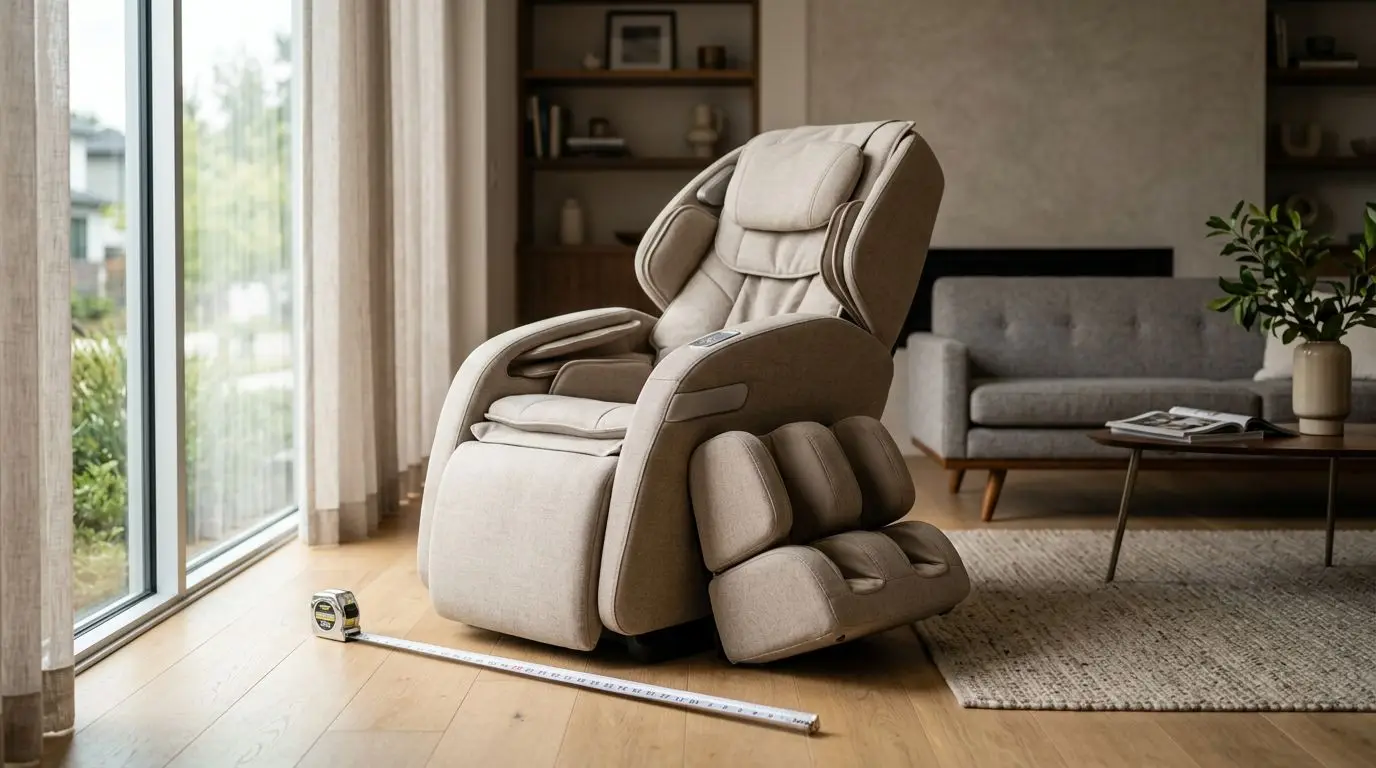
- Measure room clearance. Some zero-gravity chairs need only about 2 to 6 inches behind the backrest, while others need more. Also check doorway width before delivery; many interior doorways are around 30 to 32 inches wide.
After fit, choose by intensity. If you want gentle pressure, start with Relax or Sleep. If you want active movement, try Stretch at low air pressure. If you want broad coverage after normal activity, try Recovery. If you want firm, focused pressure and already know you like it, try Deep Tissue.
Keep a simple note for the first week: program name, time, intensity level, and what felt good or too strong. After 3 to 5 sessions, patterns become clear. You may find that Relax with higher foot intensity fits you better than Recovery, or that Deep Tissue is useful only when shortened to 10 minutes.
Feature table: 6 chair features that change auto programs
Two chairs can share the same five preset names and feel completely different. The reason is hardware. These 6 feature categories have the biggest effect on how auto programs feel.
| Feature | Common options | How it changes presets | What to test |
|---|---|---|---|
| Track shape | S-track, L-track, SL-track | Controls roller travel from neck to back, seat, or upper hamstrings | Whether the rollers cover the areas you care about |
| Roller depth | 2D, 3D, 4D-style control | Changes how far rollers press outward and how varied the motion feels | Lowest and highest intensity settings |
| Airbags | Arms, shoulders, hips, calves, feet | Adds squeezing, holding, and stretch support | Whether compression feels even, not pinchy |
| Foot rollers | Fixed nodes or moving rollers | Makes Recovery and Deep Tissue modes feel much stronger in the feet | Try with thin and thick socks if possible |
| Heat | Low back, calves, feet, or multiple zones | Adds warmth during slower programs | How long it takes to notice through clothing |
| Recline | Standard recline or zero-gravity-style recline | Changes body weight on the rollers and overall pressure | Same program upright versus reclined, if adjustable |
When comparing chairs, run the same type of program for the same length of time. A 20-minute Relax mode on a 3D roller chair may feel stronger than a 20-minute Deep Tissue mode on a milder 2D design. Names help you navigate the menu; hardware decides the feel.
Safety checks: 8 situations where you should ask a physician first
A massage chair is a consumer wellness product, not a medical device. Most healthy adults can use gentle programs comfortably, but there are situations where you should ask your physician before using strong rollers, heat, airbags, inversion-like recline, or stretch routines.
- Pregnancy
- Pacemaker or other implanted cardiac device
- Known or suspected blood clots, or use of anticoagulant medication
- Osteoporosis or unusually fragile bones
- Recent fracture, recent surgery, or implanted hardware
- Spinal disc problems or significant back or neck concerns
- Neuropathy, reduced sensation, or inability to judge pressure accurately
- Uncontrolled hypertension or any condition where your physician has advised caution with heat, compression, or reclined positions
Do not ignore discomfort. Stop the session if you feel sharp pressure, dizziness, numbness, shortness of breath, unusual symptoms, or anxiety from being held by the airbags. Use the chair's stop button and return to an upright position slowly.
For everyday use, moderation is sensible. Many owners do best with one 10- to 20-minute program at a time rather than stacking several intense routines back to back. If you share the chair with family, set a low-intensity default so guests are not surprised by a firm program.
FAQ: 5 common questions about auto programs
Are massage chair auto programs customizable?
Often, yes. Many chairs let you adjust air intensity, roller strength, heat, recline, foot rollers, or session length while an auto program is running. Some presets are more locked down than others, so check whether manual changes stay active or reset when the program ends.
Which program should a first-time user try?
Start with Relax mode for about 15 minutes at the lowest intensity. If the chair has separate controls for airbags and foot rollers, keep those low too. Once you know the roller feel and body scan accuracy, you can try Stretch, Recovery, Sleep, or stronger routines.
Is Deep Tissue mode better than Relax mode?
Not necessarily. Deep Tissue mode is firmer and more focused, but better depends on your comfort preference. If you tense up, shift around, or want the session to end early, the program is too intense for that use.
Can I use Sleep mode every night?
Many people use a gentle 10- to 20-minute routine as part of an evening wind-down, but comfort and safety matter more than frequency. Keep pressure low, avoid falling asleep in a position that feels awkward, and ask a physician if you have a condition that makes recline, heat, or compression a concern.
Why does the same mode feel different on different chairs?
Program names are not standardized. Track length, roller depth, airbag placement, foot roller texture, recline angle, and body scan accuracy all change the feel. That is why testing the same 15- or 20-minute routine is more useful than comparing menu names alone.
Frequently asked questions
Are massage chair auto programs customizable? +
Often, yes. Many chairs let you adjust air intensity, roller strength, heat, recline, foot rollers, or session length while an auto program is running.
Which program should a first-time user try? +
Start with Relax mode for about 15 minutes at the lowest intensity. It gives you a gentle baseline for roller feel, air compression, and body scan accuracy.
Is Deep Tissue mode better than Relax mode? +
Not automatically. Deep Tissue mode is firmer and more focused, while Relax mode is gentler. The better choice is the one that feels comfortable and repeatable.
Can I use Sleep mode every night? +
Many people use a gentle 10- to 20-minute routine as an evening wind-down. Keep intensity low and ask a physician if heat, compression, or recline may be a concern for you.
Why does the same mode feel different on different chairs? +
Program names are not standardized. Track shape, roller depth, airbag placement, foot rollers, recline angle, and body scan accuracy all affect how a preset feels.
Related guides
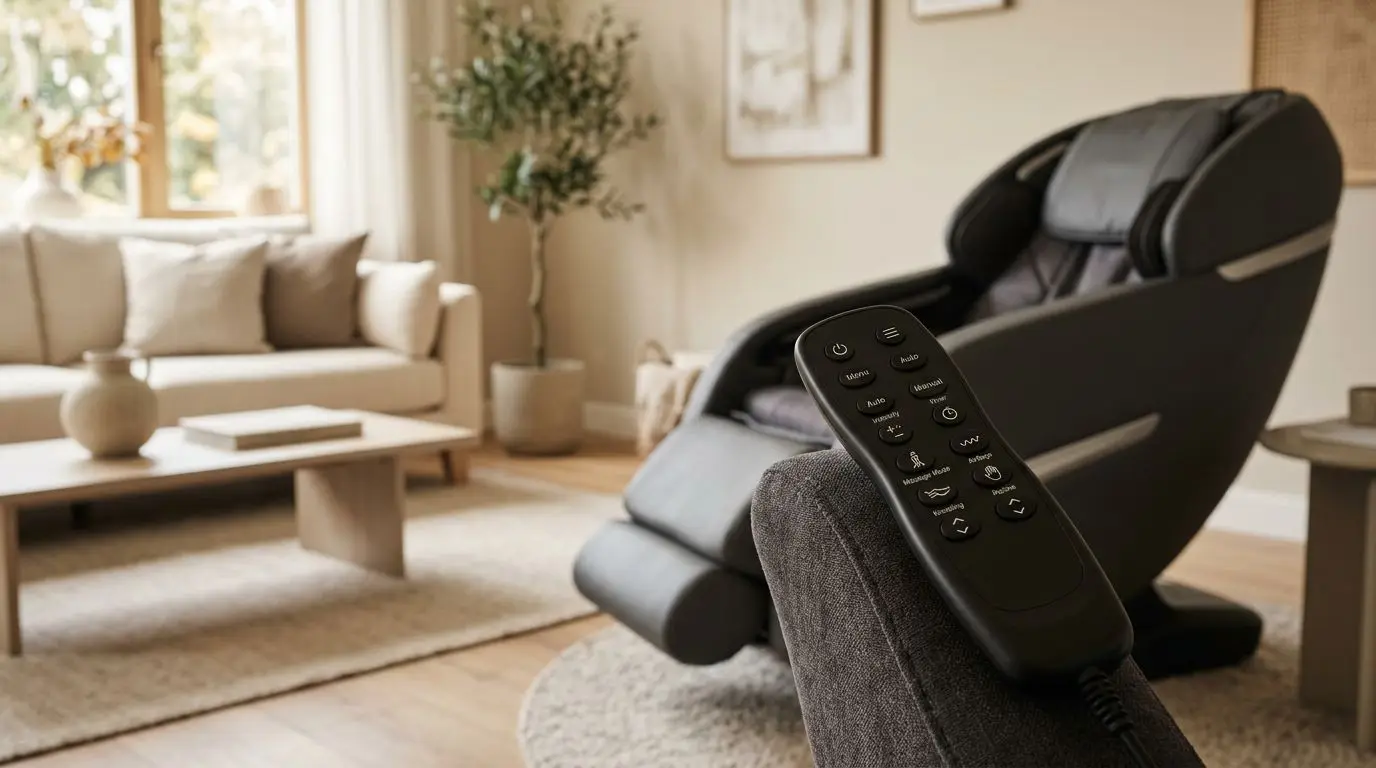
Massage Chair Programs Explained: Auto Modes, Manual Settings, Spot Massage, and Stretch Programs
12 min read
How to Adjust Massage Chair Intensity Without Overdoing It
13 min read
When to Use Manual Massage Chair Settings Instead of Auto Programs
14 min read
Full-Body vs. Targeted Massage Chair Programs: When to Use Each Type
14 min read
How to Choose a Massage Chair for Home Use
14 min read