Disclosure: We may earn a commission when you buy through links on this page, at no extra cost to you. We buy nothing, sell nothing and accept no payment for coverage — commissions never decide what we recommend. How we make money.
A massage chair is worth it financially if the all-in cost, divided by the massage spending you avoid, reaches break-even within a time frame you are comfortable with, usually 2 to 5 years for frequent users. It is less likely to make sense if you only get an occasional professional massage, do not have the space, or would stop using the chair once the novelty wears off.
The real question is not whether massage chairs feel good. Many do. The better question is whether your household will use one often enough, and whether the chair you buy matches the pressure, fit, and everyday convenience you actually want.
The 3-number test: price, avoided spend, and weekly use
Start with 3 numbers: your all-in chair cost, what you currently spend on massage in a typical month, and how many times per week someone in your home will realistically sit in the chair. In many U.S. markets, a 60-minute professional massage can cost roughly $80 to $150 before or after tip, depending on location, setting, and practitioner. A home chair has a different value proposition: shorter sessions, no appointment, and repeat access.
Be honest with the inputs. If you currently schedule one paid massage every 2 months, a chair has to deliver convenience and daily comfort, not just savings. If two adults in the home each pay for massage once or twice a month, the math changes quickly.
Here is the simplest break-even formula:
Break-even months = all-in chair cost ÷ monthly paid massage spending you expect to replace
All-in cost means the chair price plus delivery, setup, sales tax, optional floor protection, and any extended service plan you actually buy. Monthly replaced spending means only the paid appointments you would truly skip because the chair is at home. Do not count sessions you still plan to keep.
Break-even math: examples using $100, $200, and $400 per month
Use a range instead of chasing a perfect number. A household that replaces $100 per month breaks even much more slowly than one replacing $400 per month. That sounds obvious, but it is the difference between a purchase that feels practical and one that feels like an expensive living-room experiment.
| All-in chair cost | Replaced spend: $100/month | Replaced spend: $200/month | Replaced spend: $400/month |
|---|---|---|---|
| $2,000 | 20 months | 10 months | 5 months |
| $4,000 | 40 months | 20 months | 10 months |
| $6,000 | 60 months | 30 months | 15 months |
| $8,000 | 80 months | 40 months | 20 months |
This table is not a recommendation to spend more. It shows the pressure the purchase puts on your habits. If you are replacing $100 per month, a lower all-in cost has a much better chance of making sense. If your household replaces $300 to $400 per month, you can justify a higher budget more easily, but only if the chair is comfortable enough to use consistently.
Also account for shared use. If one person uses the chair 4 times per week and another uses it 3 times per week, that is about 30 sessions per month at home. Even if each session is only 15 minutes, the convenience value can be meaningful. Still, convenience is not the same as cash savings unless it actually reduces paid appointments.
Use frequency: what 2, 4, or 7 sessions per week really means
Use frequency is where many shoppers overestimate. A massage chair used 7 times the first week and twice a month after that is not a strong financial buy. A chair used 15 to 20 minutes, 4 or more times per week, has a much better chance of earning its space.
| Realistic use pattern | Approximate sessions per month | Financial outlook | Best interpretation |
|---|---|---|---|
| 1 session per week | 4 | Weak unless replacing paid appointments | Buy for convenience, not savings |
| 2 sessions per week | 8 to 9 | Moderate if the chair is shared or replaces some appointments | Works for routine relaxation habits |
| 4 sessions per week | 16 to 18 | Strong if comfort and fit are right | Good target for a primary user |
| Daily use | 28 to 31 | Strongest value, but only if intensity feels good | Best for households that like short sessions |
Most built-in programs run about 10 to 30 minutes. That matters because a chair is not a 60-minute appointment at home. Think of it instead as a repeatable 15-minute comfort routine after work, before bed, or after sitting at a desk.
If you are unsure, run a 30-day habit test before buying. Put a reminder on your calendar for the times you imagine using the chair. If you ignore the reminder most days, the chair may become furniture. If you keep wishing you had access at those exact times, your case is stronger.
Upfront and ownership costs over 3 to 10 years
The sticker price is only one part of the cost. A large massage chair can weigh 150 to 300 pounds, may ship in multiple boxes, and may require threshold delivery or room-of-choice setup. Depending on the seller and delivery method, setup, returns, and restocking rules can matter as much as a discount.
Budget for these ownership items:
- Delivery and placement: curbside delivery is not the same as carrying a heavy chair into a room.
- Sales tax: a 6% to 10% tax rate can add a noticeable amount to a large purchase.
- Floor protection: a mat may be useful on hardwood, vinyl plank, or delicate flooring.
- Electrical access: most chairs need a standard household outlet nearby, without a cord crossing a walkway.
- Warranty length: compare parts, labor, and in-home service periods separately.
- Potential repairs: rollers, airbags, motors, remote controls, and upholstery are all wear points.
A chair that lasts 7 years and is used weekly has a different cost per use than one that lasts 3 years but is used daily. Do the math both ways. For example, a $4,000 all-in purchase used 16 times per month for 5 years equals 960 sessions, or about $4.17 per home session before electricity and any repairs. If the same chair is used 4 times per month, the cost is about $16.67 per session.
That cost-per-use figure does not make the home session equivalent to a professional appointment. It simply shows whether the appliance is being used enough to justify the money and space.
What a chair does well, and what a 60-minute appointment still does better
A massage chair is a programmed appliance. It can provide consistent rolling, kneading, tapping, compression, heat, recline, and foot rollers, depending on the design. A person can adjust pressure, technique, draping, positioning, and focus area in real time. These are different experiences.
| Category | Massage chair | Professional appointment |
|---|---|---|
| Convenience | Available at home, often in 10 to 30 minute programs | Requires scheduling, travel, and a set appointment time |
| Consistency | Repeats the same motions and programs | Varies by practitioner and session |
| Customization | Limited to controls, body scan, zones, and intensity settings | Can be adjusted moment by moment through conversation |
| Coverage | Depends on track length, airbags, and foot/calf design | Can focus on areas a chair may not reach well |
| Privacy | At home, no appointment interaction needed | Involves a practitioner and treatment room setting |
| Cash flow | Large upfront cost | Pay per visit |
If you value human adjustment, quiet time away from home, and a full hour set aside, include that in your calculation. Some buyers get the best value by reducing paid appointments from 2 per month to 1 per month, rather than trying to replace them completely.
Who it is best for: shoppers replacing 2 or more paid sessions a month
A massage chair tends to make the most sense for people who already spend money on massage at least 2 times per month, households with more than 1 regular user, and anyone who prefers short, frequent sessions instead of occasional long appointments. It can also be practical for people who work from home and want a repeatable break without driving anywhere.
It may be a good fit if you:
- Will use it at least 3 to 4 times per week.
- Have 2 adults in the home who both enjoy chair massage.
- Want a consistent pressure pattern rather than a customized appointment.
- Have a dedicated spot where the chair can stay plugged in.
- Are comfortable with a large appliance that may weigh over 200 pounds.
It is usually a weaker fit if you:
- Only pay for massage a few times per year.
- Move often or live in a tight upstairs apartment.
- Dislike firm mechanical pressure along the back.
- Expect a chair to duplicate a skilled human session.
- Have safety concerns that require medical guidance before use.
For gift buyers, be especially careful. A chair is too large and personal to choose based only on features. If the intended user cannot test similar chair types, measure the space, and weigh in on intensity, the odds of a mismatch go up.
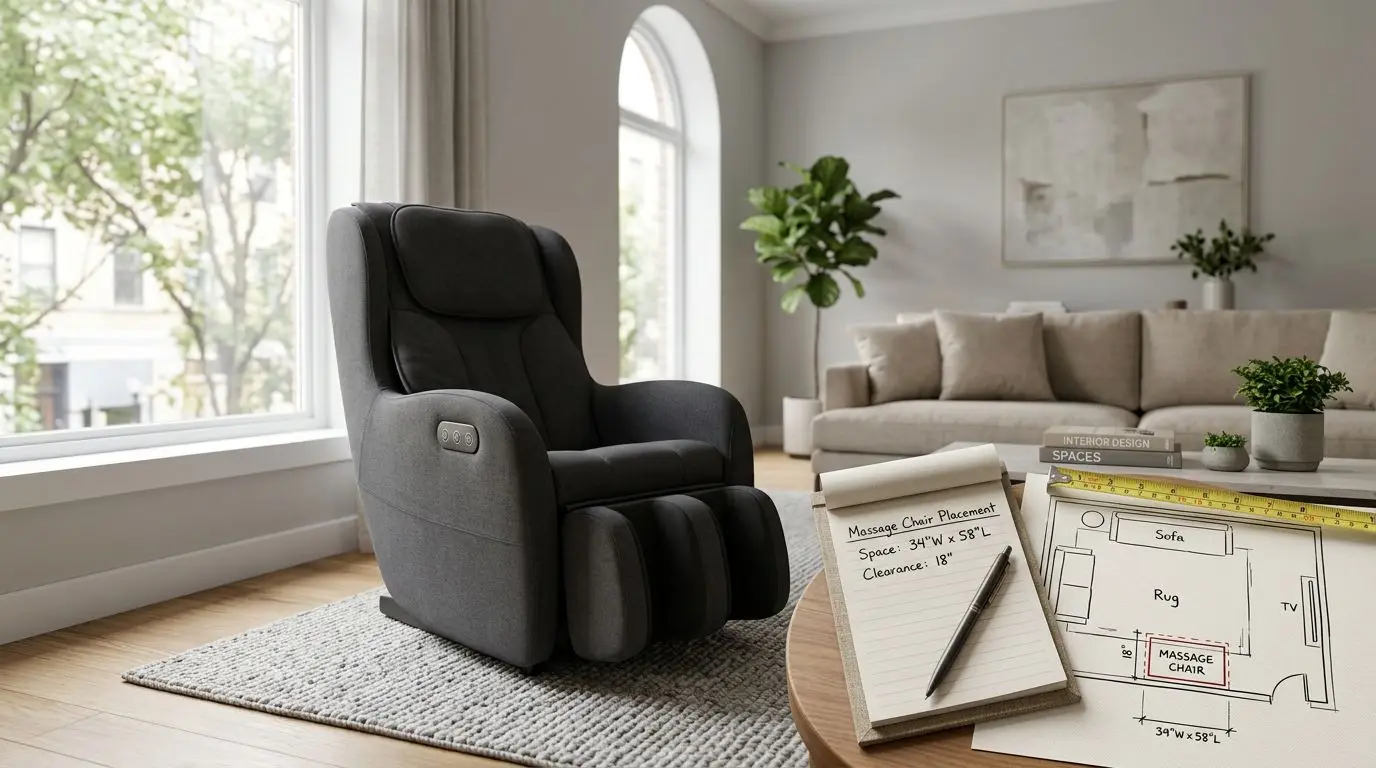
How to choose and measure before buying a 200-pound chair
Measurement prevents expensive surprises. Before comparing features, confirm that the chair can get through your home and operate in the room you have. Many full-size chairs need a doorway path around 30 inches wide, though exact requirements vary by chair and packaging. Some chairs also need several inches behind them to recline, while space-saving designs may need as little as a few inches.
Measure these 5 areas:
- Doorways: measure the narrowest point, including trim and door swing.
- Hallways and turns: tight 90-degree turns can be harder than a narrow door.
- Stairs or elevators: check width, landing depth, and whether delivery includes stairs.
- Operating footprint: measure upright and fully reclined space, not just the base.
- User fit: compare height range, shoulder width, seat width, and footrest adjustment.
Fit matters as much as price. A taller user may need a longer track and footrest extension. A shorter user may need the rollers to align properly at the neck and shoulders. A broad-shouldered user may find some airbag systems tight, while another person may like that snug feeling.
Also consider noise. If the chair will sit near a TV, bedroom, or shared office, listen for motor sound, air pump cycling, and foot roller noise during a demo when possible. A 15-minute session feels less relaxing if the machine is louder than expected.
Feature value: tracks, rollers, airbags, heat, and zero gravity
Features only matter if they change comfort, coverage, or use frequency. A long feature list can look impressive, but a simple chair that fits your body and gets used 5 times per week is a better buy than a loaded chair nobody likes.
| Feature type | What it changes | Value note |
|---|---|---|
| S-track | Follows the curve of the back from neck toward lower back | Often enough for shoppers focused on back coverage |
| L-track or SL-track | Extends roller travel under the seat area | Useful if you want more coverage beyond the back |
| 2D rollers | Move up/down and side-to-side with basic pressure control | Can be a good value if intensity is comfortable |
| 3D or 4D rollers | Add more depth adjustment and sometimes speed variation | Worth considering if multiple users prefer different pressure levels |
| Air compression | Uses airbags around shoulders, arms, calves, or feet | Check snugness; more airbags are not always more comfortable |
| Heat | Adds warmth in zones such as the back or calves | Look for placement and temperature feel, not just the word heat |
| Zero gravity recline | Reclines the body with legs elevated | Often feels more weightless and can increase roller pressure |
| Foot rollers | Apply rolling pressure under the feet | Highly personal; some users love them, others turn them down |
Do not pay for features you will turn off. If foot rollers feel too sharp, air compression feels too tight, or deep roller pressure feels aggressive, those upgrades do not add value for you. Adjustable intensity is especially important in shared households because one person’s ideal setting can feel excessive to another person.
Safety checks: ask a physician before use in these situations
A massage chair is a consumer wellness product, not a medical device. If you are pregnant, have a pacemaker or other implanted cardiac device, have a history of blood clots or take anticoagulants, have osteoporosis, a recent fracture or surgery, spinal disc problems, neuropathy, or uncontrolled hypertension, ask your physician before using a massage chair. Do the same if a manufacturer’s manual lists a warning that applies to you.
Start conservatively. A first session of 5 to 10 minutes on a low setting is smarter than testing every intense feature at once. Stop if the pressure feels sharp, pinching, numb, or uncomfortable. Children should not use a chair without adult supervision, and pets should be kept away from moving leg rests, foot wells, and reclining parts.
Read the manual before use, especially the sections on weight limits, electrical safety, cleaning, and where not to place hands or feet during movement. A chair with rollers, airbags, hinges, and motors deserves the same caution you would give any large powered appliance.
Bottom line: when the break-even period is under 36 months
For many shoppers, the cleanest financial green light is a break-even period under 36 months, regular expected use of 3 or more sessions per week, and a room where the chair can stay ready to use. If your break-even period is closer to 60 months, the purchase can still be worthwhile, but the case depends more on convenience, shared household use, and how much you enjoy the chair.
Use this quick decision rule:
- Strong yes: you replace at least $200 per month, have 2 regular users, and will use it 4 or more times per week.
- Maybe: you replace about $100 per month and want home convenience more than fast payback.
- Probably no: you rarely pay for massage, have limited space, or expect a chair to match a fully customized appointment.
The best purchase is not the chair with the longest feature list. It is the one that fits your body, your room, your budget, and your real weekly habits.
FAQ: 5 common questions before spending $2,000 or more
How long should a massage chair last?
There is no universal lifespan, but many buyers think in terms of a 3 to 10 year ownership window. Longevity depends on build quality, user weight, frequency, maintenance, upholstery wear, and whether replacement parts and service are available.
Is a massage chair cheaper than paying for massage?
It can be, but only if it replaces enough paid appointments. Divide the all-in chair cost by your monthly avoided spend. If a $4,000 chair replaces $200 per month, the simple break-even point is 20 months.
How often do I need to use it for it to be worth it?
A practical target is 3 to 4 sessions per week for a primary user, or similar combined use across a household. If you use it once per week, the purchase may still be enjoyable, but the financial case is weaker.
Should I buy a chair without trying one first?
Only if the return policy is clear and acceptable. Roller intensity, shoulder fit, foot roller feel, and recline comfort are personal. If you cannot test the exact chair, try similar track and roller types before buying.
What is the biggest mistake shoppers make?
The biggest mistake is buying for features instead of fit and habits. A chair with 20 automatic programs is not a good value if it is too intense, too large for the room, or inconvenient to use daily.
Frequently asked questions
How long should a massage chair last? +
There is no universal lifespan, but many buyers use a 3 to 10 year ownership window for planning. Longevity depends on build quality, user weight, frequency, maintenance, upholstery wear, and access to parts and service.
Is a massage chair cheaper than paying for massage? +
It can be if it replaces enough paid appointments. Divide the all-in chair cost by your monthly avoided spending. For example, a $4,000 chair that replaces $200 per month reaches simple break-even in 20 months.
How often do I need to use a massage chair for it to be worth it? +
A practical target is 3 to 4 sessions per week for a primary user, or similar combined use across a household. Lower use can still be enjoyable, but the financial case becomes weaker.
Should I buy a massage chair without trying it first? +
Only if the return policy is clear and acceptable. Roller intensity, shoulder fit, foot roller feel, and recline comfort are personal, so testing similar chair types is helpful before buying.
Who should ask a physician before using a massage chair? +
Ask a physician first if you are pregnant, have a pacemaker or other implanted cardiac device, have a history of blood clots or take anticoagulants, have osteoporosis, a recent fracture or surgery, spinal disc problems, neuropathy, or uncontrolled hypertension.
Related guides
Is a Massage Chair Worth It? Benefits, Limitations, and Who Should Buy One
13 min read
Massage Chair vs. Professional Massage: Which Is Better for Your Routine and Budget?
10 min read
How to Choose a Massage Chair for Home Use
14 min read
Massage Chair vs. Regular Massage Appointments: Cost Comparison and Break-Even Point
13 min read
How Much Does a Massage Chair Cost? Price Ranges, Features, and Value
13 min read