Disclosure: We may earn a commission when you buy through links on this page, at no extra cost to you. We buy nothing, sell nothing and accept no payment for coverage — commissions never decide what we recommend. How we make money.
A cheap massage chair makes sense when you want basic kneading, rolling, vibration, or air compression at a lower upfront cost, and you are realistic about fit, intensity, and long-term durability. It is usually not the right choice if you need precise body scanning, broad glute and hamstring coverage, very quiet operation, or a chair several people will use every day. The best budget buy is the one that fits your body, your room, and your expectations before it impresses you with a long feature list.
Safety comes first. If you are pregnant, have a pacemaker or other implanted cardiac device, have a history of blood clots or take anticoagulants, have osteoporosis, recent fracture or surgery, spinal disc problems, neuropathy, or uncontrolled hypertension, ask your physician before using a massage chair.
What cheap usually means: 3 common budget tiers
Cheap is a slippery word because a floor-standing massage chair can cost several times more than a small massage cushion, yet both may be called budget products. In many US retail settings, a price-sensitive shopper is usually looking at one of 3 categories: portable pads and seat massagers, compact recliner-style chairs, or entry-level full-size massage chairs. Each step up typically adds structure, body coverage, and weight.
A portable unit may weigh under 25 lb and sit on an existing chair. A compact massage recliner may land around 100 to 170 lb. A full-size chair can run well over 200 lb, especially if it has a long track, many airbags, and a heavy reclining frame. That weight affects delivery, stairways, flooring, and returns.
| Budget option | Typical feel | Common tradeoff | Best use |
|---|---|---|---|
| Massage pad or cushion | Localized rolling, vibration, or shiatsu-style nodes | Limited body fit and little lower-body coverage | Small spaces and occasional use |
| Compact massage recliner | Back massage plus recline, sometimes calf or foot features | Shorter track and lighter padding | One primary user with modest expectations |
| Entry-level full-size chair | More coverage, air compression, preset programs | Fewer refinements than premium chairs | Regular home use on a tighter budget |
The point is not that one tier is automatically better. It is that the cheapest format may solve a different problem. A pad can be convenient, but it cannot copy the fit, recline geometry, and leg positioning of a dedicated chair.
Who a budget massage chair is best for: 5 good-fit buyers
A budget massage chair works best for buyers who can say exactly what they want it to do in 1 or 2 sentences. If your goal is a 15-minute wind-down after work with medium pressure on the back, you may not need a premium feature set. If you expect a chair to adapt perfectly to 4 different adults, give deep foot roller pressure, and stay quiet enough for late-night use near a bedroom, a low-cost chair may disappoint you.
- One-person households where the main user is within the chair's height and weight guidance.
- Apartment or condo buyers who need a compact footprint more than maximum coverage.
- First-time shoppers who want to learn what features they actually use before spending more.
- Occasional users who expect 2 to 4 sessions per week, not multiple sessions every day.
- Buyers who prefer simple controls, fewer programs, and predictable pressure.
Budget chairs can also make sense for a guest room, home office, or TV room where the chair is a comfort upgrade rather than the main piece of seating. They are less ideal for tall users, very short users, broad-shouldered users, or households where the chair has to fit people who differ by 10 inches in height.
What you may give up: 8 tradeoffs behind the lower price
Lower cost usually comes from fewer moving parts, simpler sensors, lighter upholstery, a smaller frame, or less sophisticated programming. None of those are automatically bad. They become a problem only when the chair's shortcuts land exactly where you need performance.
| Tradeoff | What it can feel like | Why it matters |
|---|---|---|
| Shorter track | Rollers stop around the lower back instead of traveling under the seat | Less coverage for hips and upper glutes |
| Basic body scan | Rollers start too high, too low, or miss shoulder position | More manual adjustment during a session |
| Fewer airbags | Less compression around arms, calves, shoulders, or feet | Less enveloping feel |
| Simple foot area | Vibration or air compression instead of rolling nodes | Less texture under the feet |
| Lighter padding | More direct roller pressure through the backrest | May feel too sharp for sensitive users |
| Less refined recline | More wall clearance or fewer angle choices | Harder placement in a tight room |
| Basic controls | Preset-heavy menus with limited custom control | Less ability to fine-tune intensity and zone |
| Shorter warranty or service support | More risk after the first year | Higher ownership uncertainty |
Track design is one of the biggest differences. An S-track follows the curve of the back and commonly focuses on neck-to-lower-back coverage. An L-track continues under the seat and may reach the glute area. Some chairs advertise a longer SL-style path that combines a curved back section with under-seat travel. Longer is not always better, but a track that is 10 to 15 inches shorter than expected can change the entire experience.
How to choose and measure: 6 checks before you buy
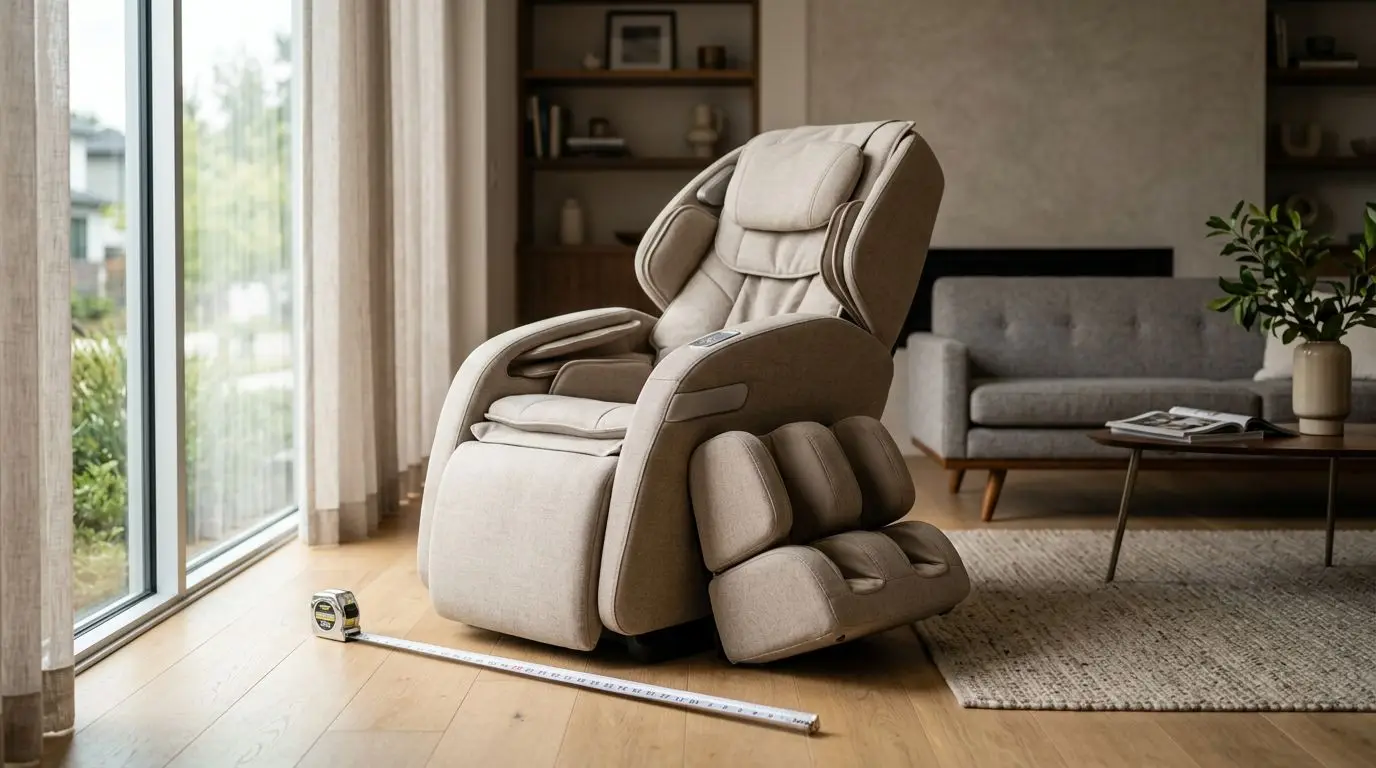
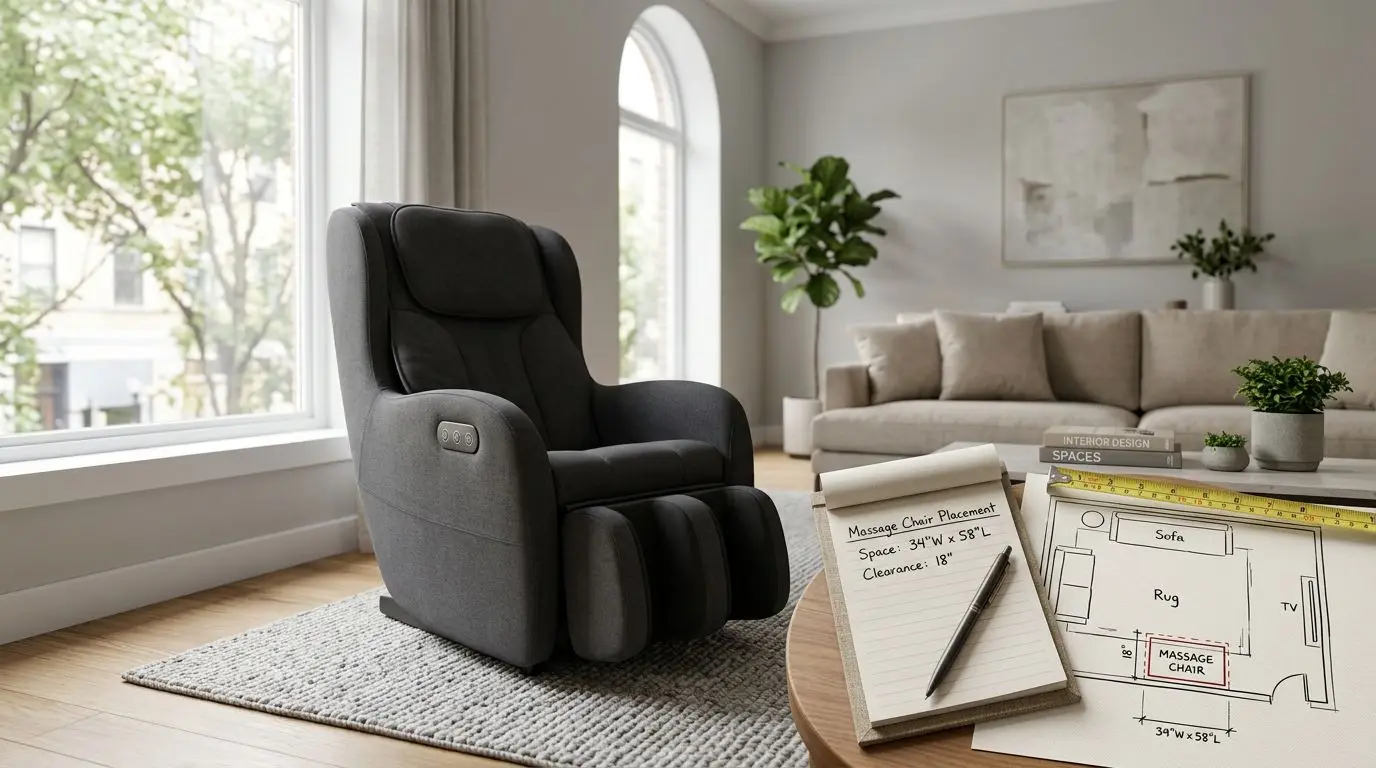
Before buying any budget massage chair, measure the user, the room, and the delivery path. A chair that looks comfortable in a product photo can be frustrating if the shoulders do not line up, the leg rest is too short, or the box will not clear a 30-inch doorway. Fit is not a detail. It is the purchase.
1. Measure user height and seated shoulder position
Compare your height to the published user range, but do not stop there. Two people who are both 5 ft 10 in can have different torso lengths, which changes where the rollers meet the neck and shoulders. If possible, sit in a similar chair style and note whether the top rollers reach the base of the neck without pushing into the head.
2. Check weight capacity with a buffer
Look for the chair's stated maximum user weight and leave a sensible margin. If a chair is rated for 250 lb and the main user is near that number, the motorized recline, leg rest, and frame may feel more strained than they would for a lighter user. Budget frames often have less tolerance for hard daily use.
3. Measure wall clearance
Some chairs need only a few inches behind them, while others may need 12 inches or more as they recline. Measure from the wall to the back of the chair, then add walking space around the footrest. A chair that technically fits but blocks a doorway or closet will become annoying fast.
4. Measure the delivery route
Check doorways, stair turns, hallway width, and elevator depth. A boxed massage chair can be wide, heavy, and awkward. If your narrowest doorway is 29 inches, confirm the boxed and unboxed dimensions before ordering, especially if the chair arrives by freight truck.
5. Confirm seat width and shoulder room
Airbag systems can narrow the usable seating area. A listed outside width of 30 inches does not mean the inner seat feels roomy. If you have broad shoulders or prefer to sit with arms relaxed outward, look closely at the inside dimensions and arm-rest design.
6. Plan the electrical location
Most chairs need a standard household outlet nearby. Avoid stretching cords across walkways. If you use a surge protector, follow the chair maker's instructions and do not overload the outlet with heaters, treadmills, or other high-draw devices.
Budget chair types compared: 4 ways to spend less
There are at least 4 practical ways to keep cost down: buy a smaller chair, buy fewer features, buy a chair with simpler roller coverage, or buy a portable product instead of a full chair. Each path fits a different home. The mistake is choosing only by discount percentage and ignoring how the chair will be used after day 30.
| Type | Space needed | Coverage | Good reason to choose it |
|---|---|---|---|
| Portable back massager | Uses an existing chair | Back only or back plus seat vibration | You need storage and low commitment |
| Compact recliner-style chair | Similar to a small recliner | Back, sometimes calves or feet | You want furniture-like seating in a small room |
| Entry-level S-track chair | Dedicated floor space | Neck to lower back | You care most about back roller feel |
| Entry-level L-track chair | Dedicated floor space plus footrest room | Back through seat area | You want broader lower-body contact |
If you mainly want shoulder and mid-back pressure, an S-track budget chair may be a cleaner buy than a crowded low-cost chair loaded with weaker extras. If you want contact through the seat area, prioritize track shape before lighting, speakers, or phone app controls. The parts you feel should beat the parts you look at.
Features worth paying for: 7 specs that matter more than extras
A low price is less risky when the core specifications are solid. Before caring about 20 preset programs, look at the 7 features that shape daily comfort: track type, roller style, intensity control, heat placement, leg rest adjustment, recline design, and warranty terms. One useful manual intensity setting can matter more than 10 programs that all feel similar.
- Track type: S-track for back-focused coverage; L-track or SL-style track for under-seat travel.
- Roller style: 2D rollers move up and down and side to side; 3D rollers can also vary in depth for stronger or softer pressure.
- Intensity control: Look for at least low, medium, and high levels if more than one person may use the chair.
- Heat placement: Many budget chairs warm only the lower back. Treat heat as a comfort feature, not a health promise.
- Leg rest adjustment: Spring-loaded or powered adjustment helps users with different leg lengths fit better.
- Recline design: Zero-gravity-style positioning is intended to distribute body weight differently and change how roller pressure feels.
- Warranty: Read parts, labor, and in-home service terms separately; they are often not the same length.
Be careful with feature stacking. A chair can advertise Bluetooth audio, colored lighting, heat, airbags, foot rollers, voice control, and 30-minute programs while still having a short track or stiff padding. Nice extras are not a substitute for correct fit.
Durability and ownership: plan for 3 practical limits
Budget chairs are not disposable, but they often have 3 practical limits: lighter materials, simpler service coverage, and less tolerance for heavy multi-user schedules. If a chair is used twice a day, 7 days a week, that is more than 700 sessions in a year. A chair used twice a week sees a very different workload.
Pay close attention to upholstery. Synthetic leather and coated fabrics are common because they are easier to shape and clean, but cheap coverings can peel, crack, or stretch earlier when exposed to sweat, sunlight, pet claws, or harsh cleaners. A simple wipe with a slightly damp cloth is usually safer than strong household chemicals, unless the manual says otherwise.
Noise is another ownership issue. Budget chairs may click, hum, or pump air more audibly because the motors, valves, and insulation are less refined. Try to learn whether the chair can be used while watching TV at a normal volume. If it will sit near a bedroom, shared wall, or downstairs neighbor, vibration through the floor may matter as much as motor sound.
Return logistics can be expensive even when a retailer accepts returns. A 180 lb chair is not like returning a toaster. Keep the packaging until you know the chair fits, works, and feels acceptable. Photograph the delivery condition, inspect seams and moving parts, and test every program during the return window.
Safety checks: ask a physician if any of these 8 situations apply
A massage chair is a consumer wellness product, not a medical device. It is designed to create sensations such as kneading, rolling, tapping, vibration, compression, warmth, and reclined comfort. It should not be used as a substitute for medical advice, diagnosis, care, or prescribed activity restrictions.
Ask your physician before using a massage chair if you are pregnant; have a pacemaker or other implanted cardiac device; have blood clots or take anticoagulants; have osteoporosis; recently had a fracture or surgery; have spinal disc problems; have neuropathy or reduced sensation; or have uncontrolled hypertension. Also stop using the chair if pressure feels sharp, causes numbness, or feels wrong for your body.
Start conservatively. A first session of 5 to 10 minutes on low intensity tells you more than jumping straight into the strongest 30-minute program. If the chair has removable pads or intensity layers, use them. Comfort should feel controlled, not like you are enduring the chair.
FAQs: 5 budget massage chair questions
Are cheap massage chairs worth it?
They can be worth it when the chair fits your body, has the coverage you actually want, and will be used at a modest pace. They are less compelling when the low price comes with poor fit, vague warranty support, or features you will rarely use.
What is the biggest thing I give up with a budget chair?
Fit refinement is often the biggest sacrifice. Lower-cost chairs may have simpler body scanning, shorter tracks, fewer intensity levels, and less padding control, which can make the same chair feel fine for one person and awkward for another.
Is an L-track budget chair always better than an S-track chair?
No. An L-track can provide more under-seat coverage, but a well-fitting S-track can feel better if your main priority is back and shoulder contact. Track length matters only if the roller path matches your body and preferences.
How long should I use a budget massage chair per session?
Follow the manual. Many preset sessions run about 10 to 30 minutes, but new users should start shorter, around 5 to 10 minutes, on a low setting to judge comfort and pressure.
Should I buy the cheapest chair I can find?
Usually not. The cheapest option is smart only if it fits, has clear specifications, can be delivered safely, and has return and warranty terms you can live with. A slightly simpler chair with better fit often beats a feature-heavy chair that feels wrong.
Frequently asked questions
Are cheap massage chairs worth it? +
They can be worth it if the chair fits your body, provides the coverage you want, and will be used at a modest pace. They are less appealing when low cost comes with poor fit, vague warranty terms, or features you will not use.
What do budget massage chairs usually give up? +
Common tradeoffs include shorter tracks, simpler body scanning, fewer intensity settings, lighter padding, fewer airbags, more motor noise, and less generous service coverage.
Is an L-track budget chair better than an S-track chair? +
Not always. An L-track can add under-seat coverage, while an S-track may be enough if you mainly want back and shoulder contact. The better choice is the one that matches your body and preferred pressure zones.
How should I measure before buying a cheap massage chair? +
Measure user height, shoulder position, weight capacity, seat width, wall clearance, footrest space, doorway width, hallway turns, and the distance to a safe electrical outlet.
Who should ask a physician before using a massage chair? +
Ask a physician first if you are pregnant; have a pacemaker or other implanted cardiac device; have blood clots or take anticoagulants; have osteoporosis, recent fracture or surgery, spinal disc problems, neuropathy, reduced sensation, or uncontrolled hypertension.
Related guides
How Much Does a Massage Chair Cost? Price Ranges, Features, and Value
13 min read
How to Choose a Massage Chair for Home Use
14 min read
Massage Chair vs. Professional Massage: Which Is Better for Your Routine and Budget?
10 min read
Is a Massage Chair Worth It? Cost, Use Frequency, and Break-Even Math for U.S. Buyers
12 min read
Is a Massage Chair Worth It? Benefits, Limitations, and Who Should Buy One
13 min read