Disclosure: We may earn a commission when you buy through links on this page, at no extra cost to you. We buy nothing, sell nothing and accept no payment for coverage — commissions never decide what we recommend. How we make money.
For frequent, low-friction relaxation at home, a massage chair is usually the better fit. You can use it in short sessions several times a week without scheduling an appointment. For highly personalized hands-on work, unusual body proportions, or a one-time reset where human judgment matters, a licensed massage professional is still the stronger choice. The budget answer depends on use: a chair makes more sense when several people use it often, while professional massage is easier to justify for occasional sessions.
Neither option should be treated as a medical device or a substitute for care from a physician. Think in practical terms: how often you want the experience, how much control you need, how much space you have, and whether you prefer mechanical consistency or human adaptation.
Quick comparison: at-home chair vs. 60-minute professional appointment
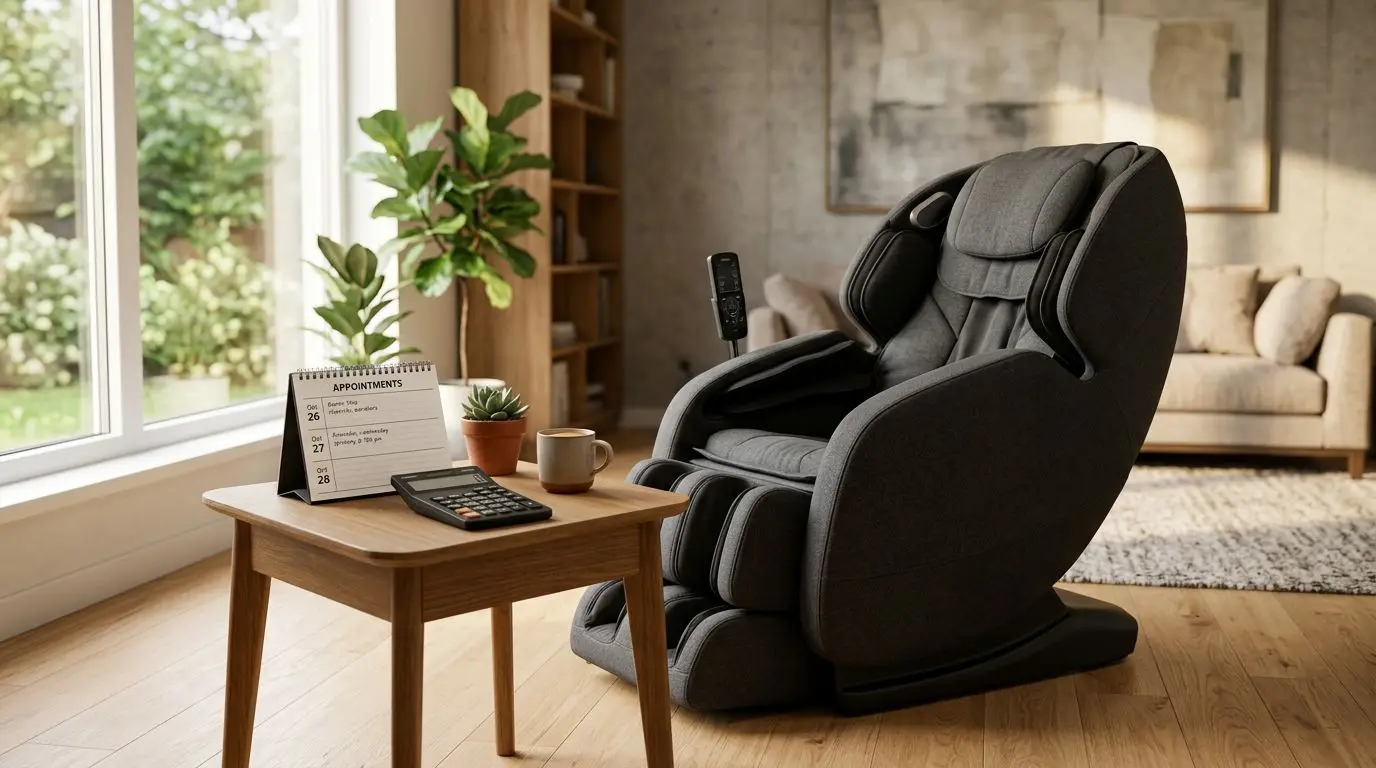
The biggest difference is not just price. It is access. A chair can be used for a 10-, 15-, or 30-minute session whenever you are home. A professional appointment commonly takes 60 minutes plus travel, parking, check-in, and tip. That extra time can easily turn one appointment into a 90- to 120-minute outing.
| Factor | Massage chair | Professional massage |
|---|---|---|
| Convenience | Available at home, often for 15-minute sessions | Requires scheduling and travel |
| Consistency | Same roller path and air compression each time | Varies by practitioner, style, and communication |
| Customization | Preset programs, intensity levels, track type, airbags | Real-time hands-on adjustment and conversation |
| Upfront cost | Higher purchase cost, plus space commitment | Pay per appointment |
| Best use case | Frequent home relaxation and routine unwinding | Occasional personalized sessions or complex preferences |
A chair is not automatically cheaper, and a professional is not automatically better. Someone who uses a chair 4 times a week will judge value differently from someone who schedules 6 professional sessions a year.
Cost per session: the math changes after 50, 100, or 200 uses
Cost per session is where massage chairs become interesting. Rather than compare a chair price to a single appointment, divide the total ownership cost by the number of times you realistically expect to use it. If a chair costs $3,000 delivered and is used 300 times over several years, the equipment cost works out to $10 per use before electricity, any protection plan, or future service. If it is used only 30 times, the cost is $100 per use.
Professional massage costs vary widely by city, appointment length, practitioner, setting, and gratuity. In many US markets, a 60-minute appointment can land somewhere around the cost of a nice dinner for two, and a 90-minute appointment can cost substantially more. The key is not to chase a national average. Use the real all-in price you would pay locally, including tip, commute cost, parking, and time.
Here is a simple worksheet:
- Chair cost per use: purchase price + delivery + warranty or service costs, divided by expected uses.
- Professional cost per visit: appointment price + tip + travel costs + parking or rideshare, if any.
- Time cost: at-home session length versus appointment plus round-trip travel.
For a household of 2 adults using a chair 3 times per week each, that is roughly 312 sessions a year. For a single person using it twice a month, that is only 24 sessions a year. Same chair, very different value.
Convenience and consistency: 15 minutes at home can beat 2 hours out
The strongest argument for a chair is routine. If the choice is a 15-minute session after work or no session at all, the chair wins on access. Many owners use preset programs the way others use a recliner: sit down, press a button, and let the chair run its cycle.
Consistency matters too. Rollers follow programmed paths along the back, while air cells apply repeatable compression around areas such as calves, feet, arms, or shoulders depending on the chair design. Once you find a setting that feels right, you can repeat it tomorrow with the same general timing and intensity.
Professional massage is less predictable, in both good and bad ways. A skilled licensed practitioner can adapt to your feedback during the session, change pressure, avoid areas you dislike, and spend more time where you ask. Your experience can also vary by practitioner, appointment length, communication, and personal preference. A chair gives repetition. A human gives judgment.
There is also the scheduling gap. A home chair can be used at 7 a.m. or 10 p.m. A professional appointment may require booking days in advance, and popular times often fill quickly.
Customization and feel: rollers, tracks, airbags, heat, and human hands
A massage chair customizes through hardware and software. The most important pieces are the track, roller system, intensity settings, body scan, recline position, and air compression layout. A 2D roller moves up, down, left, and right. A 3D roller can also move in and out to change depth. Some chairs add 4D-style speed variation, though the exact feel depends on the manufacturer and program design.
Track length changes coverage. An S-track follows the curve of the back. An L-track continues under the seat toward the glutes and hamstrings. An SL-track combines a curved back path with extended seat coverage. Typical extended tracks are often described in the 45- to 55-inch range, though exact measurements vary.
| Feature | What it changes | Who may prefer it |
|---|---|---|
| 2D rollers | Flatter, more basic back feel | People who like lighter, predictable pressure |
| 3D rollers | Adjustable depth into the back | Users who want stronger or softer settings by day |
| L-track or SL-track | Coverage extends below the lower back | People who want seat and upper hamstring contact |
| Air compression | Squeezing sensation around limbs or shoulders | Users who like enveloping pressure |
| Foot rollers | Rolling sensation under the feet | People who stand often and enjoy firm foot contact |
| Heat | Warm surface feel in limited zones | Users who like a cozier session |
A licensed professional customizes differently. They can notice your feedback, change hand position, skip sensitive spots, and adjust pacing from minute to minute. That can feel more personal than any preset. The trade-off is repeatability: the exact same session is hard to duplicate.
Who a massage chair is best for: 3 or more short sessions a week
A massage chair is best for people who value access, routine, and predictable mechanical pressure. If you already know you want a 10- to 20-minute reset several times a week, a chair can fit naturally into your day. It is also appealing for households, because 2 or 3 users can share the same purchase.
- Busy home users: You prefer a short session without driving anywhere.
- Routine builders: You like using the same program on a predictable schedule.
- Shared households: Two adults using a chair 3 times weekly create more than 300 annual sessions.
- Privacy-focused users: You would rather relax at home than book an appointment.
- People who like controls: You want to adjust recline, intensity, heat, and footrest position yourself.
A chair is less ideal if you dislike mechanical pressure, need a very quiet living room, move often, or have limited floor space. Many full-size chairs weigh well over 200 lb and can be difficult to move through narrow stairs or tight doorways. If you rent a small apartment, that matters.
It is also not a good purchase if you are unsure you like the feel. Test at least 15 minutes if possible, because the first 2 minutes do not tell you much about shoulder fit, footwell length, or roller intensity.
When a licensed professional is the better choice: targeted 60- or 90-minute sessions
A licensed professional is the better choice when you want a fully personalized experience, prefer human touch, or need someone to respond to detailed feedback. If you want a 60- or 90-minute appointment centered on exact pressure preferences, areas to avoid, draping comfort, and pacing, a chair cannot match that level of interaction.
Professional massage also makes sense when you do not want the commitment of buying furniture. If you want only 4 to 8 sessions a year, paying per visit may be simpler than buying, storing, and maintaining a chair. It also avoids the risk of owning a chair that one household member loves and another finds too intense.
There are times to pause and ask a physician before using either option. If you are pregnant, have a pacemaker or other implanted cardiac device, have a history of blood clots or take anticoagulants, have osteoporosis, recently had a fracture or surgery, have spinal disc problems, neuropathy, or uncontrolled hypertension, get medical guidance first. Do not rely on a chair manual, a salesperson, or a front desk employee to make that call for you.
If you are cleared to book professional massage, tell the practitioner about comfort limits and areas to avoid. Clear communication is part of the value you are paying for.
How to choose and measure: allow 30 inches of width and check recline clearance
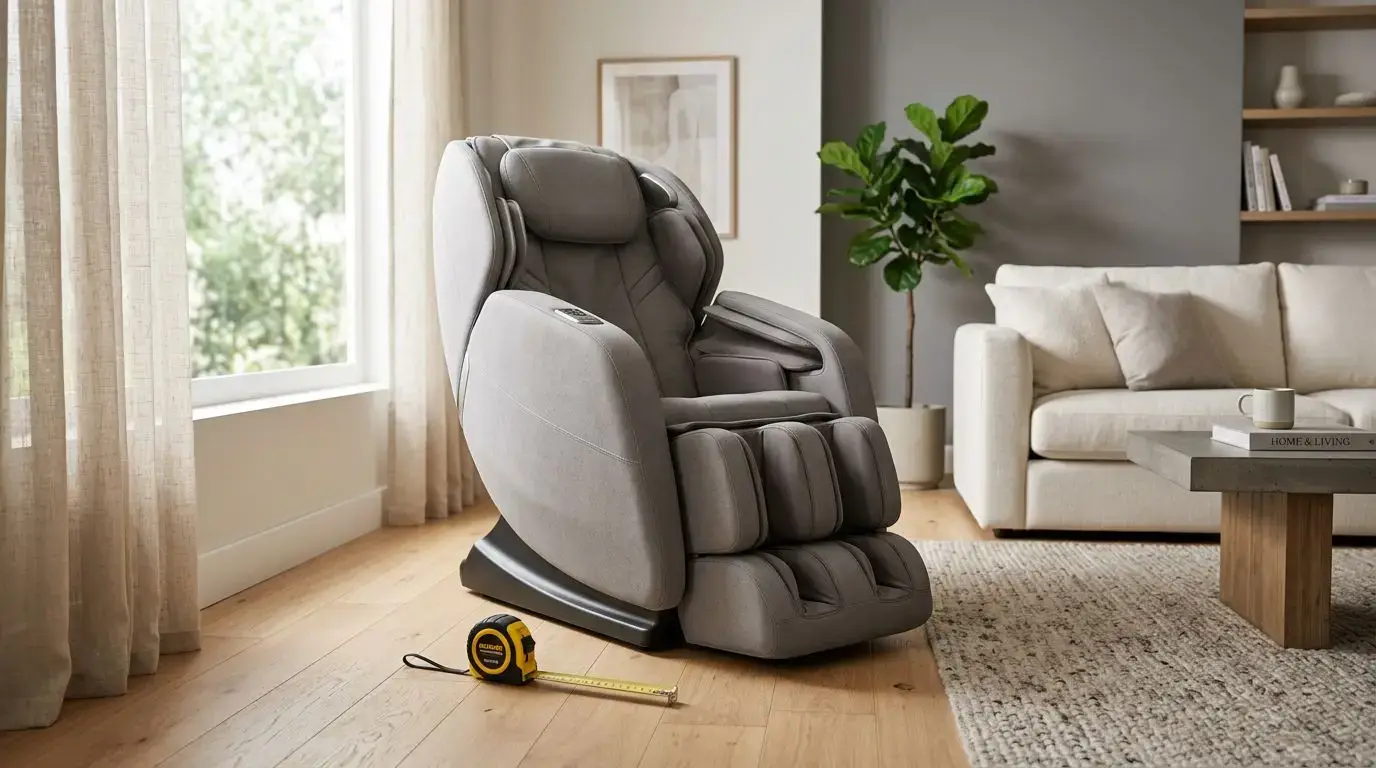
If you are considering a chair, start with measurements before features. Full-size massage chairs are large appliances, not accent chairs. Many need roughly 28 to 35 inches of width, and some require several inches behind the backrest even if they use a space-saving recline design. Check the chair fully upright, fully reclined, and with the footrest extended.
Measure 5 things:
- Doorways: Measure the narrowest door, hallway turn, and stair landing in inches.
- Room footprint: Mark the chair outline on the floor with painter's tape.
- Recline clearance: Confirm wall distance with the backrest fully reclined.
- User height range: Make sure shoulder rollers and footrest extension suit each person.
- Floor load and protection: Plan for a heavy chair, often 200 lb or more, on hard floors or carpet.
Then choose based on feel. If you want stronger back pressure, look for adjustable depth rather than only stronger preset names. If you want lower-body coverage, compare L-track or SL-track designs. If you dislike tight squeezing, pay close attention to air compression intensity and whether it can be turned down or off by zone.
For professional massage, choose by credentials, communication style, session length, and setting. Ask about appointment duration before you book; a 60-minute appointment may include intake and changing time in some settings, while others give the full hands-on time. Cancellation policies matter too, especially if your schedule changes often.
Routine and budget examples: 24 vs. 300 sessions a year
Two people can make opposite choices and both be right. A single person who wants a professional appointment every other month is looking at about 6 visits a year. That person may not need a chair taking up space every day. The flexibility of paying as needed is valuable.
Compare that with a household where 2 adults each use a chair 3 times per week. That is about 312 sessions a year. Even if the chair is expensive upfront, the per-use cost can drop quickly, and the convenience may be the main reason it actually gets used.
A hybrid routine is often the most practical. Use a chair for regular short sessions at home, then book a licensed professional when you want a longer, more personalized experience. This avoids treating the decision as all-or-nothing. The chair handles consistency. The professional handles nuance.
Before buying, be honest about your habits. If you do not use exercise equipment, stretching tools, or wellness gadgets after the first month, a chair may become costly furniture. If you already have a nightly wind-down routine, it may fit easily.
FAQ: 5 practical questions before you decide
Is a massage chair cheaper than professional massage?
It can be, but only with frequent use. Divide the total chair cost by expected sessions. A chair used 300 times has a very different per-use cost than one used 30 times.
Can a massage chair replace a licensed massage professional?
Not completely. A chair can provide consistent mechanical pressure at home, but it cannot observe, communicate, or adjust with the same judgment as a licensed person.
How long should a chair session be?
Many preset programs run about 10 to 30 minutes. Start shorter, especially with firm rollers or strong air compression, and choose settings that feel comfortable rather than intense for its own sake.
Who should ask a physician first?
Ask your physician before using a chair or booking massage if you are pregnant, have an implanted cardiac device, take anticoagulants, have a history of blood clots, osteoporosis, recent surgery or fracture, spinal disc problems, neuropathy, or uncontrolled hypertension.
What matters more, track type or number of programs?
Track type usually matters more because it determines coverage. Programs change the routine, but an S-track, L-track, or SL-track changes where the rollers can physically travel.
Frequently asked questions
Is a massage chair cheaper than professional massage? +
It can be, but only if you use it often. Divide the total chair cost by the number of sessions you expect over several years, then compare that with the all-in local cost of appointments, tips, and travel.
Can a massage chair replace a licensed massage professional? +
Not completely. A chair can provide consistent mechanical pressure at home, but it cannot communicate, observe, or adapt moment by moment the way a licensed professional can.
How often should I use a massage chair? +
Many people use short 10- to 20-minute sessions a few times per week, but comfort should guide the routine. Start with lower intensity and shorter programs until you know how the chair feels.
Who should ask a physician before using a massage chair or booking massage? +
Ask your physician first if you are pregnant, have a pacemaker or other implanted cardiac device, take anticoagulants, have a history of blood clots, osteoporosis, recent fracture or surgery, spinal disc problems, neuropathy, or uncontrolled hypertension.
What is the best setup for a household with multiple users? +
Look for adjustable intensity, a footrest that fits different heights, zone controls for airbags, and an easy way to save or repeat preferred settings. Also confirm the chair fits your room and doorways before buying.
Related guides

Is a Massage Chair Worth It? Cost, Use Frequency, and Break-Even Math for U.S. Buyers
12 min read
How to Choose a Massage Chair for Home Use
14 min read
Is a Massage Chair Worth It? Benefits, Limitations, and Who Should Buy One
13 min read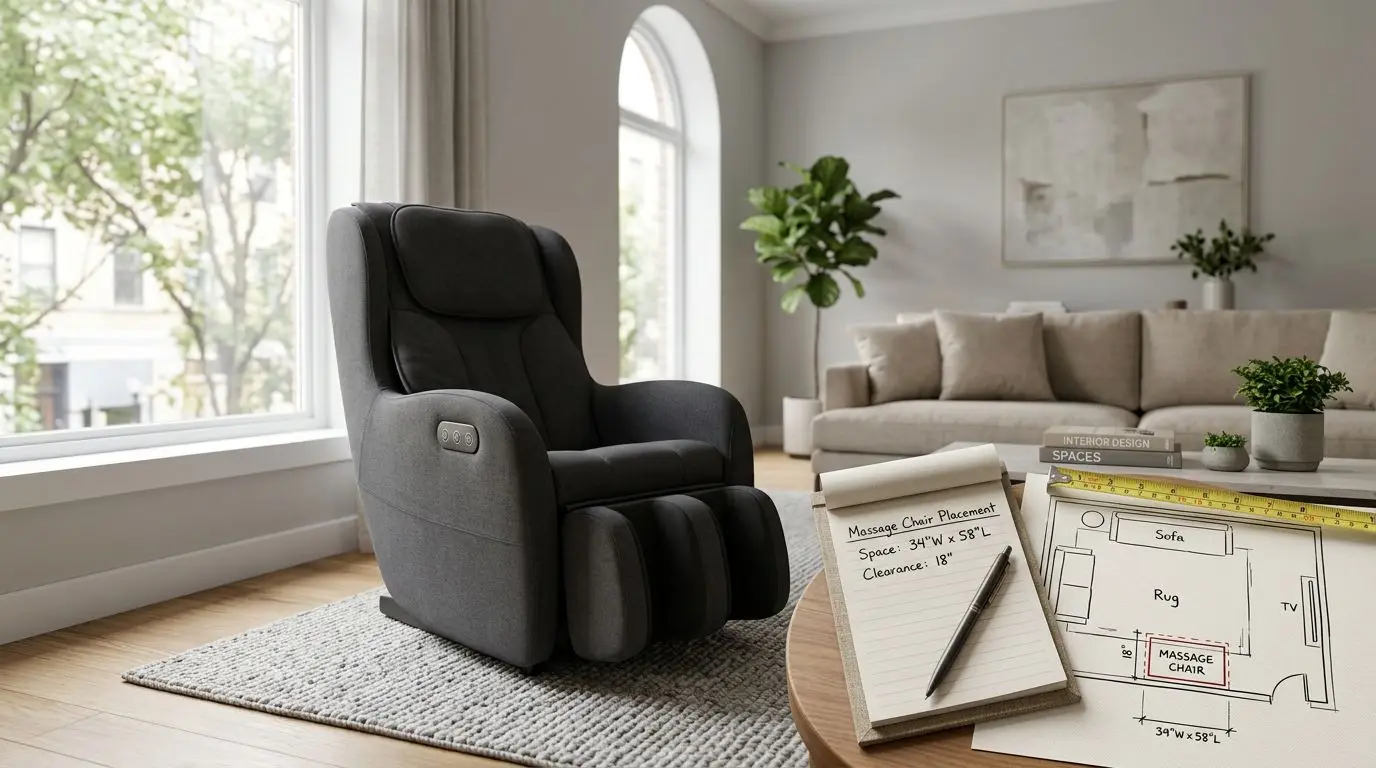
Cheap Massage Chairs: When a Budget Chair Makes Sense and What You May Give Up
12 min read
Are Massage Chairs Good or Bad for You? Benefits, Risks, and Safe Use Guidelines
13 min read