Disclosure: We may earn a commission when you buy through links on this page, at no extra cost to you. We buy nothing, sell nothing and accept no payment for coverage — commissions never decide what we recommend. How we make money.
A massage chair usually breaks even when its purchase price matches the cost of the professional massage appointments it replaces. For many shoppers, that can happen in about 1 to 3 years, depending on the chair cost, local massage rates, tip habits, and how often the chair is actually used.
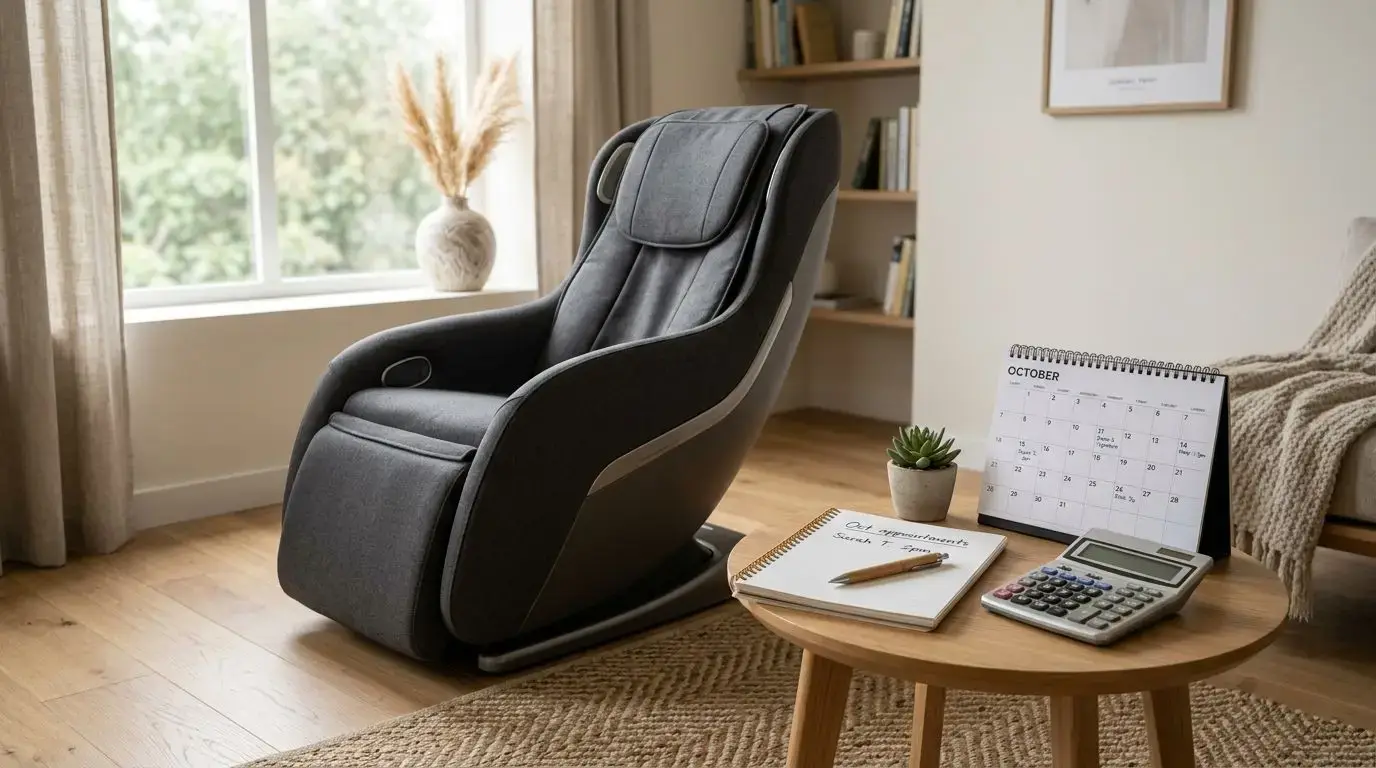
The simple formula is: chair total cost divided by the all-in cost of one massage appointment. A $3,500 chair compared with a $120 all-in appointment breaks even after about 29 sessions. If that replaces two appointments per month, the break-even point is roughly 15 months.
Cost basics: comparing a 60-minute appointment with a one-time chair purchase
Professional massage appointments are usually priced by session length, with 60 minutes and 90 minutes being the most common choices. In many US markets, a 60-minute massage can land around $80 to $150 before or after tip, depending on the setting, location, therapist experience, and whether you visit a spa, clinic, franchise, hotel, or independent practitioner.
A massage chair works differently. You pay most of the cost up front, then use it at home in shorter sessions, commonly 10 to 30 minutes at a time. Full-size home massage chairs often fall into broad retail tiers: basic models in the lower four figures, midrange chairs around several thousand dollars, and advanced chairs that can cost significantly more. The range is wide because tracks, rollers, air cells, heat, body scanning, zero-gravity recline, and upholstery quality all affect price.
For a fair comparison, look at the all-in appointment cost, not just the posted menu price. Add tip if you normally tip, plus parking, travel, childcare, or time off work if those are real costs for you. If a posted 60-minute session is $100 and you tip 20%, your working number is $120 before any travel cost.
| Cost item | Regular massage appointment | Home massage chair |
|---|---|---|
| Typical payment pattern | Per visit, often every 1 to 4 weeks | Mostly one-time purchase |
| Common session length | 60 or 90 minutes | 10 to 30 minutes per cycle |
| Cost driver | Therapist time, location, tip, travel | Track type, rollers, air massage, heat, build quality |
| Flexibility | Appointment-based | Available at home, often daily |
| Best cost metric | All-in cost per visit | Total ownership cost divided by replaced visits |
Break-even formula: the 29-session example
The break-even calculation is straightforward:
Break-even sessions = total chair cost ÷ all-in cost per appointment replaced.
If the chair costs $3,500 delivered and your usual massage appointment costs $120 all in, the chair breaks even after 29.2 replaced sessions. Round up to 30 sessions because real life is not perfectly exact. Frequency determines the pace. At one replaced massage per month, 30 sessions take 30 months. At two per month, they take 15 months. At one per week, they take about 7 months.
| Chair total cost | All-in appointment cost | Break-even sessions | If replacing 2 visits/month |
|---|---|---|---|
| $2,000 | $100 | 20 sessions | 10 months |
| $3,500 | $120 | 30 sessions | 15 months |
| $5,000 | $150 | 34 sessions | 17 months |
| $7,000 | $120 | 59 sessions | 30 months |
This table assumes the chair replaces appointments one for one. That is not always how people use them. Some buyers still keep a professional massage every month or two and use the chair between visits. In that case, the chair may reduce your appointment frequency instead of eliminating it. The math still works; calculate the savings from the appointments you no longer book.
For example, if you drop from two $120 appointments per month to one, the chair saves $120 per month. A $3,500 chair then takes about 29 months to break even. If you stop four $100 appointments per month, a $3,500 chair breaks even in under 9 months. Use your real pattern.
What changes the total cost after purchase: 3 often-missed items
The chair sticker price is not always the true total cost. Delivery, setup, warranty coverage, returns, and moving logistics can change the number by hundreds of dollars. Before comparing against massage appointments, use the delivered price sitting in your room, not only the advertised price.
First, check the delivery type. A large massage chair may weigh 150 to 300 pounds, and some are delivered curbside unless upgraded service is included. If you need it carried upstairs, placed in a second-floor room, or assembled inside, verify that before purchase. A low chair price can become less attractive if delivery does not match your home.
Second, read the warranty terms. Many massage chairs separate parts, labor, and in-home service into different coverage periods, such as 1 year for labor and longer parts coverage. That is a general pattern, not a rule. The important point is to know who pays for diagnosis, shipping parts, and technician visits if something fails.
Third, consider how practical a return would be. Returning a massage chair is not like returning a pillow. Because of size and weight, return freight can be expensive, and packaging may be required. If you are uncertain about fit or comfort, a showroom test, retailer return policy, or trial period with clear written terms has real financial value.
- Delivery and setup: confirm room-of-choice delivery if stairs or tight hallways are involved.
- Warranty: compare parts, labor, and in-home service separately.
- Electricity: most sessions are short; the cost is usually small compared with appointments, but powered heat and motors do use energy.
- Space cost: a full-size chair can occupy roughly the footprint of a recliner plus rear or front clearance.
- Repair risk: advanced chairs have more motors, air pumps, sensors, and moving parts than simple recliners.
Chair experience vs. therapist appointment: value beyond dollars
A massage chair and a professional massage are not the same service. A chair can provide consistent mechanical kneading, rolling, tapping, compression, stretching programs, heat, and recline at home. A licensed or trained massage professional provides hands-on work, communication, judgment, pressure adjustments, and techniques a chair cannot truly duplicate.
Keep that difference in mind when estimating value. If your main goal is convenient daily relaxation for your back, neck, glutes, calves, or feet, a chair can be financially compelling after enough use. If you rely on a practitioner for highly specific hands-on work, sports recovery routines, or a therapeutic relationship, a chair may be a supplement rather than a replacement.
| Need or preference | Massage chair | Regular appointments |
|---|---|---|
| Immediate access | High: use at 7 a.m. or 10 p.m. | Lower: depends on scheduling |
| Human assessment | None; uses preset programs and sensors | Strong; therapist can adapt during the session |
| Consistency | Very consistent program to program | Varies by therapist and visit |
| Session length | Often 10 to 30 minutes | Usually 60 or 90 minutes |
| Privacy | At home, fully private | Professional setting with intake and draping |
| Targeted technique | Limited by roller path and air cell placement | More adaptable to specific areas |
Be careful with health expectations. Massage chairs may help some people feel looser, calmer, or less tense, and heat or gentle movement can be pleasant after long workdays. They should not be treated as a cure for pain, injury, circulation problems, or medical conditions. If you have a pacemaker, blood clot risk, recent surgery, osteoporosis, pregnancy concerns, neuropathy, or unexplained pain, ask a qualified healthcare professional before using intense massage, heat, compression, or inversion-style recline.
Who it is best for: people replacing at least 1 appointment per month
A massage chair makes the most financial sense for shoppers who already pay for massage regularly or who expect multiple household members to use the chair. One person using it three times per week creates far more value than a chair used twice in the first month and then ignored. Usage is the whole break-even story.
Best fit
- You book massage at least monthly. Replacing 12 or more visits per year creates a real path to payback.
- Two adults will use it. If two people each replace one $100 appointment per month, that is $200 in monthly avoided cost.
- You prefer short, frequent sessions. A 15-minute chair session after work may fit better than a 60-minute appointment across town.
- You value convenience highly. No travel, no scheduling, no waiting room.
- You like mechanical pressure. Rollers and air compression feel different from hands; some people strongly prefer one over the other.
Less ideal fit
- You only get a massage 2 or 3 times per year. Break-even could take many years.
- You need highly specific manual work. A chair cannot palpate tissue or make professional judgment calls.
- You have a small apartment or tight stairs. A 150- to 300-pound chair is not easy to move.
- You dislike firm mechanical rollers. Even adjustable intensity may not solve a poor comfort match.
- You are unsure you will use it. A low-use chair has a weak cost case.
How to choose and measure before buying: doorway, height, and recline clearance
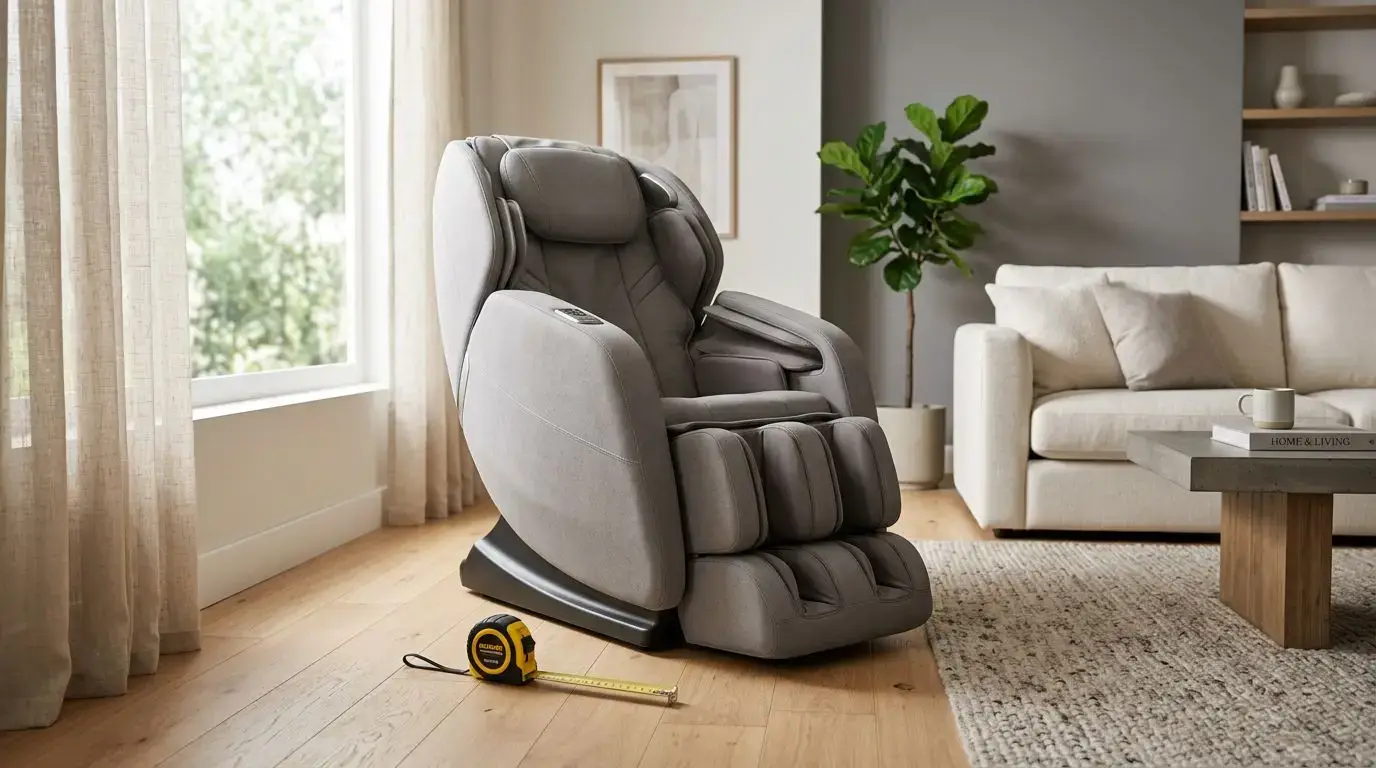
Before comparing features, measure your home. Many full-size massage chairs require a doorway or hallway path around 30 inches wide or more, though exact needs vary by chair design and whether parts are removable. Measure every turn, stair landing, elevator door, and the final room space, not just the front door.
Next, check user fit. Massage chairs are built around height and shoulder-width assumptions. A chair that fits someone 5 feet 4 inches tall may not place rollers well for someone 6 feet 3 inches tall. Body scanning can help, but it cannot overcome a chair that is physically too short, too narrow, or too shallow. Compare the listed user height and weight guidance with the actual people who will use it.
Recline clearance matters too. Some space-saving designs need only a few inches behind the chair, while traditional recliners may need much more rear clearance. Also check front clearance if the footrest extends. A chair can technically fit in a room and still be annoying if it blocks a walkway when reclined.
| Measurement | What to check | Why it matters |
|---|---|---|
| Doorway and hallway width | Measure in inches at the narrowest point | Prevents delivery failure |
| Room footprint | Chair width, depth, and reclined length | Ensures daily usability |
| Rear clearance | Space needed from wall when reclining | Affects placement options |
| User height range | Compare with tallest and shortest users | Keeps neck, back, and leg rollers aligned |
| User weight limit | Check manufacturer guidance | Protects motors, frame, and safety |
Feature choice should follow your body priorities, not a longest-feature-list mindset. If you mostly want back work, track type and roller quality matter more than extra lighting or speakers. If calves and feet matter, look closely at ottoman adjustability, foot rollers, and air compression layout. If you are sensitive to pressure, confirm intensity controls and whether the rollers can be softened with a pad or reduced setting.
Feature value comparison: 2D, 3D, 4D, S-track, and SL-track
Roller and track design strongly influence comfort and cost. The terms can be confusing, but the basics are manageable. A 2D roller generally moves up and down and side to side along the back. A 3D roller adds in-and-out depth adjustment, which can make pressure more customizable. A 4D system usually adds more variation in rhythm or speed, though definitions are not perfectly standardized across the industry.
Track shape matters because it controls where the rollers travel. An S-track follows the curve of the spine from neck through lower back. An L-track extends under the seat toward the glutes and hamstrings. An SL-track aims to combine spinal contouring with a longer route into the seat area. Longer tracks can cover more body area, but they are not automatically better for every user.
| Feature type | Typical value | Cost impact | Best for |
|---|---|---|---|
| 2D rollers | Basic kneading and rolling | Usually lower | Budget-focused users who like moderate pressure |
| 3D rollers | Adjustable depth | Moderate to high | Households with different pressure preferences |
| 4D-style control | More rhythm and speed variation | Often higher | Users who want a more varied mechanical feel |
| S-track | Neck-to-lower-back contour | Varies | Back-focused shoppers |
| L-track or SL-track | Back plus seat-area coverage | Often higher | People who want glute and upper hamstring coverage |
| Air compression | Inflating cuffs at shoulders, arms, calves, or feet | Varies by number of air cells | People who like squeezing pressure |
| Heat | Localized warmth, often back or calves | Usually modest | Users who find warmth relaxing |
Pay for features you will use weekly. A buyer replacing two monthly appointments may justify a better roller system if it improves comfort and keeps usage high. A rarely used feature has almost no break-even value, even if it sounds impressive in a spec sheet.
Five-year cost examples: monthly, twice-monthly, and weekly use
A longer time frame makes the difference clearer. Five years equals 60 months. If you pay $120 per massage once per month, that is $7,200 over 5 years. Twice per month is $14,400. Weekly at the same all-in cost is about $31,200 over 260 weeks.
Now compare a chair. Suppose your all-in chair cost is $3,500. If it replaces one $120 appointment per month, the five-year gross savings is $7,200 minus $3,500, or $3,700 before considering any repairs, resale value, or occasional professional sessions you still choose to keep. If it replaces two per month, the gross savings rises to $10,900. If it replaces weekly appointments, the chair pays back quickly on paper.
| Use pattern replaced | Appointment cost | 5-year appointment spend | $3,500 chair gross difference |
|---|---|---|---|
| 1 visit/month | $120 | $7,200 | $3,700 less than appointments |
| 2 visits/month | $120 | $14,400 | $10,900 less than appointments |
| 1 visit/week | $120 | About $31,200 | About $27,700 less than appointments |
Those numbers are not a promise. They are a planning tool. The real difference depends on chair lifespan, warranty experience, whether you finance the purchase, and whether your appointment habits truly change. Financing can also alter the math if interest or fees are involved, so compare the total paid over the financing term rather than the monthly payment alone.
When keeping regular appointments still makes sense after buying
Many owners do not choose one option forever. They use a chair for convenient 15- or 20-minute sessions and still schedule a professional massage every 4 to 8 weeks. That hybrid approach can reduce costs while keeping the benefits of hands-on work.
Keeping appointments may be worthwhile if you want focused manual techniques, prefer a quiet dedicated environment, or need guidance on pressure and positioning. A professional can ask questions, adjust throughout the session, avoid areas that should not be worked, and use techniques a chair cannot perform. A chair follows its programmed path.
The hybrid math is easy. If you previously booked four $110 appointments per month and cut back to one, you avoid three appointments, or $330 per month. A $4,000 chair breaks even in about 13 months under that pattern. If you only reduce from one appointment every month to one every other month, the avoided cost is smaller and payback is slower.
Think of the chair as a convenience tool first and a cost tool second. If it is comfortable, well fitted, and easy to access, you are more likely to use it often enough to justify the purchase.
FAQ: 6 cost questions shoppers ask before buying
Is a massage chair cheaper than getting massages?
It can be cheaper if you replace enough paid appointments. Divide the total chair cost by your all-in appointment cost. If a chair costs $3,000 and your appointment costs $100, the break-even point is 30 replaced visits.
How many times per week should I use a chair for it to be worth it?
There is no required number, but 3 to 5 short sessions per week creates much stronger value than occasional use. Many built-in programs run about 10 to 30 minutes. Start conservatively and follow the chair instructions, especially if you are sensitive to pressure.
Should I compare a 20-minute chair session to a 60-minute appointment?
Not exactly. A chair session is shorter and mechanical, while a 60-minute appointment is hands-on and adaptive. For cost comparison, count only the appointments you would realistically skip because the chair satisfies that need.
Do massage chairs have resale value?
Some do, but resale is unpredictable because chairs are large, heavy, and expensive to move. Condition, age, warranty transfer rules, and local demand all matter. Do not rely on resale value to make a weak break-even case work.
Is a more expensive chair always a better value?
No. A higher-priced chair may have better fit, stronger rollers, longer track coverage, or more adjustments, but it only becomes a better value if those features increase comfort and use. A simpler chair used daily can beat an advanced chair that no one likes sitting in.
What is the fastest way to estimate my break-even point?
Use this quick formula: total chair cost divided by your all-in appointment cost, then divide the result by the number of appointments replaced per month. Example: $4,800 ÷ $120 = 40 sessions; at 2 replaced visits per month, break-even is 20 months.
Frequently asked questions
Is a massage chair cheaper than getting massages? +
It can be cheaper if you replace enough paid appointments. Divide the total chair cost by your all-in appointment cost. For example, a $3,000 chair compared with a $100 appointment breaks even after 30 replaced visits.
How many times per week should I use a massage chair for it to be worth it? +
There is no required number, but frequent use improves the value case. Three to five short sessions per week usually creates stronger value than occasional use, especially if it helps you replace paid appointments.
Should I compare a 20-minute chair session to a 60-minute massage appointment? +
Not directly. A chair session is shorter and mechanical, while a professional appointment is hands-on and adaptive. Count only the appointments you would realistically skip because the chair meets that need.
Do massage chairs have resale value? +
Some chairs can be resold, but resale value is unpredictable because massage chairs are large, heavy, and costly to move. Age, condition, warranty transfer rules, and local demand all affect resale.
Is a more expensive massage chair always a better value? +
No. A higher price may bring more adjustments, longer track coverage, or stronger rollers, but it is only better value if those features improve comfort and increase real use.
What is the fastest way to estimate massage chair break-even? +
Divide the total chair cost by your all-in appointment cost, then divide that result by the number of appointments replaced per month. A $4,800 chair divided by a $120 appointment equals 40 sessions; at 2 replaced visits per month, break-even is 20 months.
Related guides

Is a Massage Chair Worth It? Cost, Use Frequency, and Break-Even Math for U.S. Buyers
12 min read
Massage Chair vs. Professional Massage: Which Is Better for Your Routine and Budget?
10 min read
Is a Massage Chair Worth It? Benefits, Limitations, and Who Should Buy One
13 min read
Massage Chair Rental vs. Buying: Which Makes More Financial Sense?
14 min read