Disclosure: We may earn a commission when you buy through links on this page, at no extra cost to you. We buy nothing, sell nothing and accept no payment for coverage — commissions never decide what we recommend. How we make money.
A massage chair warranty is worth a close look because repairs can involve electronics, motors, rollers, airbags, upholstery, and sometimes a technician visit to your home. The best value usually comes from strong manufacturer coverage on parts and labor for the first 1 to 3 years, plus in-home service if the chair is heavy, complex, or difficult to move. An extended protection plan may be worth it for premium chairs, heavy daily use, or households that cannot comfortably manage a repair call or shipping logistics.
Not every plan is worth your money. A long term warranty that excludes wear items, cosmetic damage, labor, freight, or in-home service may sound better than it really is. The goal is to know exactly who pays for the part, who pays for the technician, and what happens if the chair needs service after the first year.
Warranty basics: the 4 coverage buckets that matter
Most massage chair warranty promises fall into 4 practical buckets: parts, labor, in-home service, and structural frame coverage. The headline length, such as 3 years or 5 years, does not tell the full story because each bucket can expire at a different time.
Parts coverage usually applies to components such as motors, control boards, remotes, wiring harnesses, rollers, track mechanisms, air pumps, airbags, heaters, and speakers if equipped. Labor coverage pays for the time a technician spends diagnosing and repairing the chair. In-home service means the technician comes to your location instead of requiring you to box up parts or ship the chair. Frame coverage applies to the structural support system, which is less likely to fail than moving parts but can be expensive if it does.
Here is the practical difference: a 5-year warranty may cover the frame for 5 years, parts for 3 years, labor for 1 year, and in-home service for only 90 days. That is very different from 3 full years of parts, labor, and in-home repair.
| Coverage bucket | What it means | Why it matters |
|---|---|---|
| Parts | Replacement components such as motors, boards, rollers, airbags, and remotes | Parts are often the core cost after year 1 |
| Labor | Technician time to diagnose and install parts | A covered part can still cost money if labor is excluded |
| In-home service | Repair visit at your home | Important for chairs weighing 200 to 350 pounds |
| Frame | Structural metal or wood support system | Long coverage sounds good, but frame failures are less common than electronic or moving-part issues |
What 1-year, 3-year, and 5-year massage chair warranties usually cover
Massage chair warranties often use tiered coverage. A basic plan may include 1 year of parts and labor. A stronger manufacturer warranty may include 3 years of parts with 1 year of labor. Some warranties advertise 5 years, but the fifth year may apply only to the frame or to a limited set of structural components.
A 1-year warranty is short but meaningful because many manufacturing defects or early electronic failures tend to appear during the first months of regular use. If the chair works properly through daily or weekly use during the first year, later repairs are more likely to involve wear, usage, or out-of-warranty components.
A 3-year warranty is a better baseline for a full-size chair with a long roller track, foot and calf components, air compression zones, heating elements, automatic body scan, and multiple motors. More features mean more components. More components mean more possible repair points.
A 5-year warranty can be valuable, but only if the fine print covers parts you actually expect to use. If years 4 and 5 cover the frame only, that may not protect you from common annoyances such as a failed remote, unresponsive control board, weak air pump, uneven foot roller, torn airbag, or noisy reclining motor.
| Advertised warranty length | Often strongest for | Watch for |
|---|---|---|
| 1 year | Early defects, electronics, initial labor | Coverage may end before normal wear appears |
| 3 years | Parts coverage on complex chairs | Labor may stop after year 1 |
| 5 years | Frame or limited structural coverage | Years 4 and 5 may exclude the parts most likely to need service |
Labor and in-home service: why 90 days versus 1 year can change the math
Labor and in-home service matter more than many shoppers expect. Many full-size massage chairs weigh about 200 to 350 pounds, and some are more than 55 inches long when upright. If the warranty requires you to package a chair, move it, or coordinate freight, the process can become inconvenient before any repair cost even appears.
In-home service is strongest when it covers both diagnosis and repair. Some plans cover only the first visit. Others may ship a part to you and expect basic self-installation, such as replacing a remote or attaching a panel. That may be reasonable for simple parts, but it is not the same as having a technician handle the repair.
A 90-day labor window helps with delivery damage, setup issues, and early defects, but it leaves you exposed for most of the first year. A 1-year labor term gives you more time to use the chair regularly and notice intermittent issues, such as a recline motor that sticks, an air zone that fails to inflate consistently, or a roller mechanism that becomes unusually loud.
Before you pay extra for protection, ask 3 plain questions: Is in-home service included? How long is labor covered? Who pays travel fees if the nearest technician is far away?
Parts that cost the most attention after 12 months
After the first 12 months, the warranty conversation usually shifts from early defects to parts availability and service logistics. Massage chairs are not one-piece products. They combine moving hardware, upholstery, sensors, wiring, and electronics inside a large furniture frame.
Common service-related parts include control boards, handheld remotes, power supplies, recline actuators, roller carriage assemblies, foot and calf motors, air pumps, valves, airbags, heat pads, speakers, and track sensors. Not all of these fail often, but they are the types of components you want named or clearly included in the coverage.
Airbags and upholstery deserve special attention. Air compression zones flex every time they inflate. Upholstery experiences friction from clothing, body weight, heat, and foot movement. Some warranties treat upholstery, synthetic leather, stitching, zippers, and cosmetic surface wear as limited or excluded items. That is normal, but it should be clear before you buy.
Foot and calf areas can also take harder use than the backrest. Shoes, socks, body weight, pet hair, and dust can affect that section. If the chair has foot rollers, calf kneading, or automatic leg extension, check whether those mechanisms are covered the same way as the back massage system.
Common exclusions: 10 limits that can make a long plan weaker
Warranty exclusions are not automatically unfair. They define normal consumer responsibility. The problem comes when a plan looks generous on the sales page but excludes the failures you are most likely to care about.
Read the exclusions before you compare prices. Look for these 10 items:
- Normal wear and tear: Softening cushions, surface wear, and gradual appearance changes are often excluded.
- Cosmetic damage: Scuffs, scratches, peeling, stains, and discoloration may not be covered.
- Upholstery and fabric: Covers, stitching, zippers, and synthetic leather may have shorter terms than electronics.
- Misuse or overloading: Using the chair outside published height, weight, or setup limits can void coverage.
- Commercial use: Home warranties may not apply in offices, gyms, salons, rentals, or waiting rooms.
- Unauthorized repair: Opening panels or using nonapproved parts can create a denial risk.
- Improper electrical setup: Damage from unsuitable outlets, extension cords, or power surges may be excluded.
- Moving damage: Damage during relocation, storage, or transport is often not covered.
- Freight and packaging: You may be responsible for cartons, return shipping, or curbside pickup logistics.
- Incidental costs: Lost time, missed appointments, or room damage are usually outside the warranty.
The most important exclusion is commercial use. A chair used by several people for many hours per day has a different wear pattern than a chair used at home for 15 to 30 minutes in the evening. If the chair will be used outside a private residence, get the correct warranty in writing.
Extended protection plans: when 3 to 5 extra years may be worth it
An extended protection plan can make sense when the chair is expensive, feature-heavy, used daily, or difficult to service without help. It is less compelling for a simple chair, a lightly used chair, or a plan that mainly duplicates the manufacturer warranty for the same first 1 to 3 years.
The best extended plans add something concrete: longer labor coverage, longer in-home service, accidental damage coverage if clearly stated, power surge coverage, or a direct replacement option if repair is not practical. A weaker plan merely adds limited parts coverage after the manufacturer warranty ends while excluding upholstery, labor, freight, and diagnosis.
Timing matters. Some plans begin on the purchase date, not after the manufacturer warranty ends. If you buy a 3-year plan on a chair that already includes 3 years of parts coverage, you may not be getting 6 years. You may be getting overlap. That is not always bad if the plan adds labor or in-home service, but the price should reflect it.
| Situation | Extended plan value | Reason |
|---|---|---|
| Premium full-size chair with many motors and airbags | Higher | More components and higher repair complexity |
| Daily household use by 2 or more adults | Higher | More sessions increase wear on moving parts and upholstery |
| Simple compact chair with fewer features | Lower | Fewer systems to fail and easier replacement decision |
| Chair located upstairs or in a tight room | Higher if in-home service is included | Moving a 250-pound chair can be difficult |
| Plan excludes labor after year 1 | Lower | You may still pay for the most inconvenient part of the repair |
Who extended coverage is best for: 6 buyer profiles
Extended protection is not a universal yes or no. It depends on how the chair will be used and how much repair hassle you are willing to handle.
It is best for heavy users. If 2 or 3 adults will use the chair most days, the mechanical systems, upholstery, footrest, and air components will go through more cycles than a chair used once or twice a week.
It is best for feature-heavy chairs. A chair with a long L-track or SL-track, foot rollers, calf massage, dozens of airbags, automatic leg adjustment, heating zones, app controls, and multiple recline positions has more possible failure points than a basic back-and-seat unit.
It is best for buyers who need in-home help. If you cannot lift panels, troubleshoot connections, move heavy furniture, or be without the chair for weeks, extended in-home service has real convenience value.
It is best for upstairs rooms or tight spaces. A chair in a basement, second-floor bedroom, or narrow den is harder to move. If the plan requires freight service instead of in-home repair, that location matters.
It is best when the retailer or plan administrator has a clear process. Look for a written claim path, phone and online support, service timelines, and confirmation of who dispatches technicians.
It is less useful for bargain replacement purchases. If the chair is relatively simple and you would rather replace it than repair it after several years, a costly plan may not fit your ownership style.
How to choose and measure before you buy: 7 checks to do at home
A warranty is only useful if the chair is installed correctly, used within limits, and kept in a serviceable location. Before buying the chair or the extended plan, do 7 checks at home.
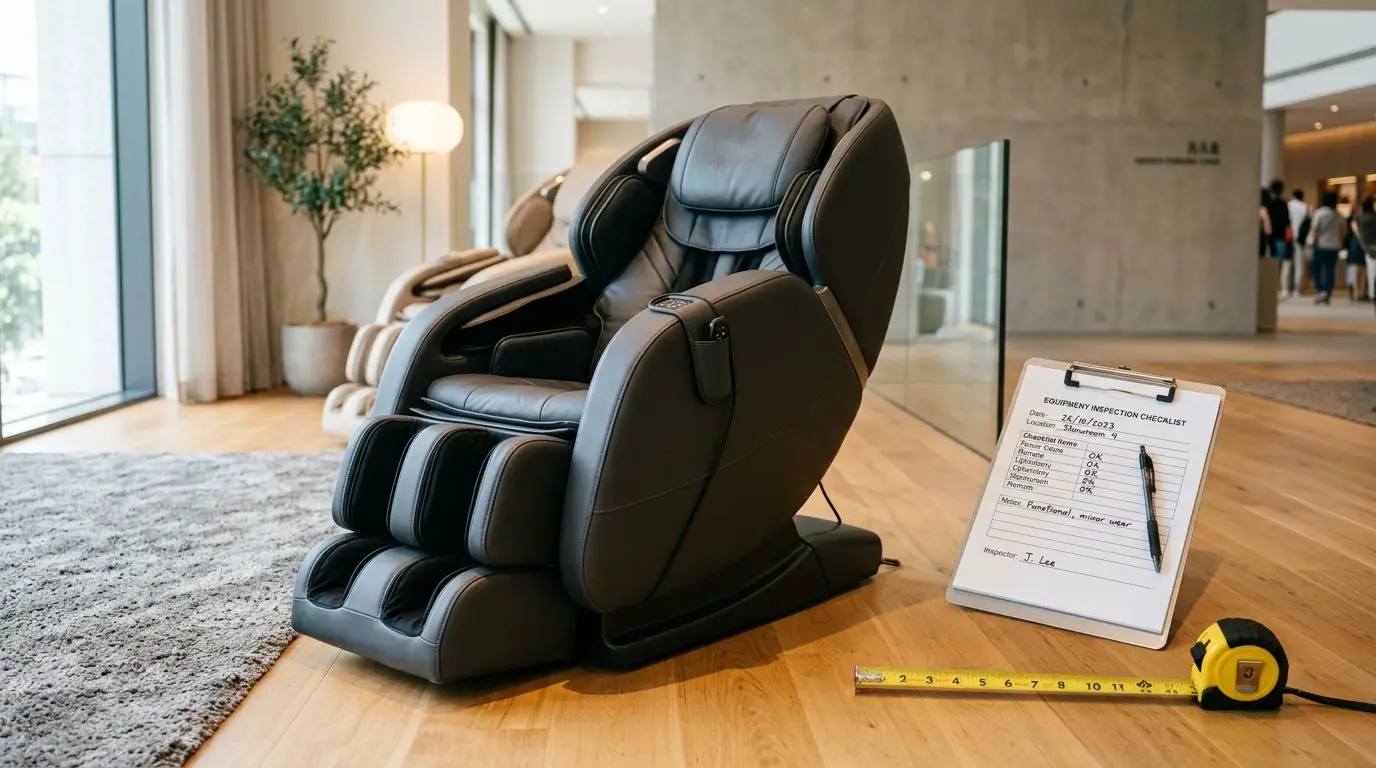
- Measure the doorway. Many massage chairs need about 30 to 36 inches of clear doorway width, though exact needs vary by chair design and removable parts.
- Measure the full recline area. A chair may be about 55 to 65 inches long upright but need more front-to-back clearance when reclined. Space-saving recline can reduce rear clearance to a few inches, but the footrest still needs room.
- Check the user fit range. Compare the published height and weight limits with every regular user. Using a chair outside those limits can affect comfort and warranty eligibility.
- Confirm the outlet. Use a grounded outlet that matches the chair instructions. Avoid improvised extension cord setups unless the manual specifically permits them.
- Plan for service access. Leave enough room around the sides and back for panels to open. A chair wedged tightly between a wall and cabinet is harder to repair.
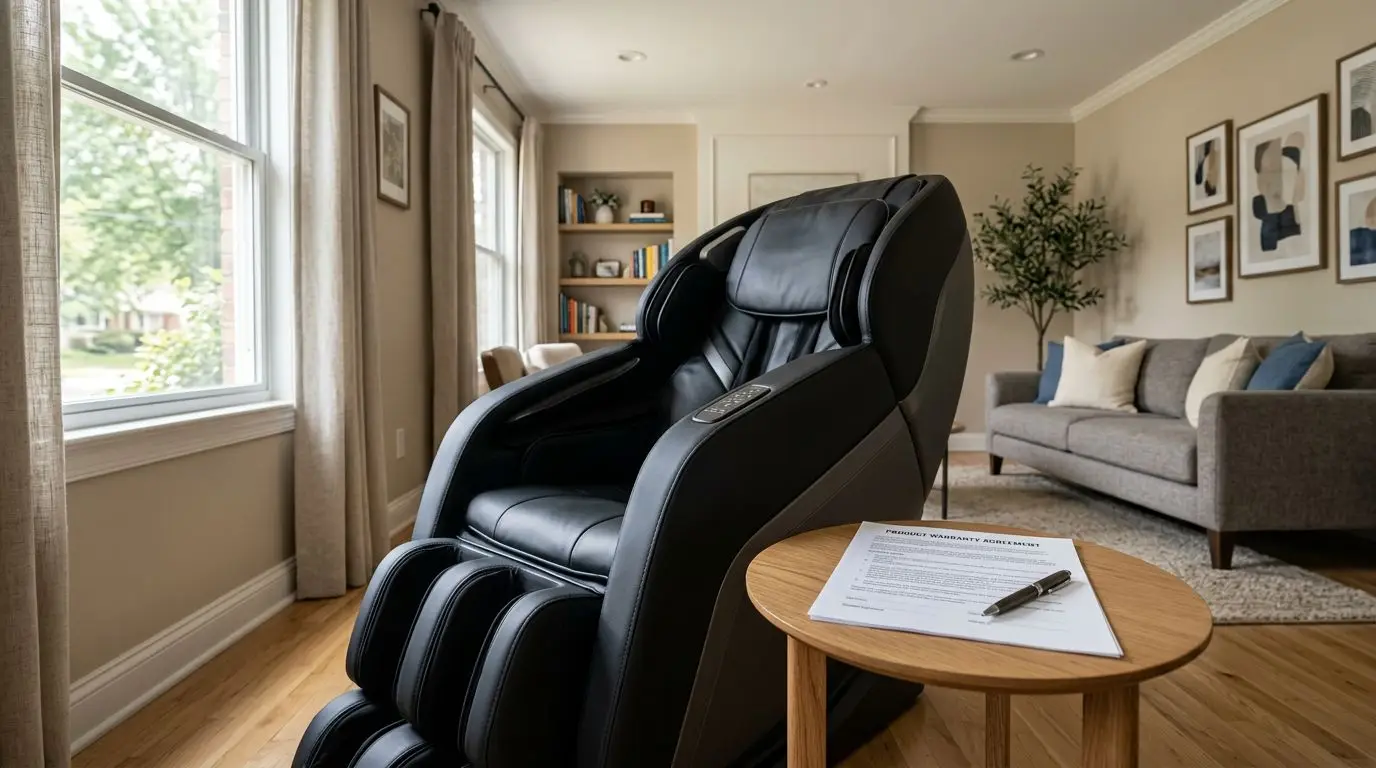
- Save the documents. Keep the invoice, serial number, delivery paperwork, warranty PDF, and plan certificate in one folder.
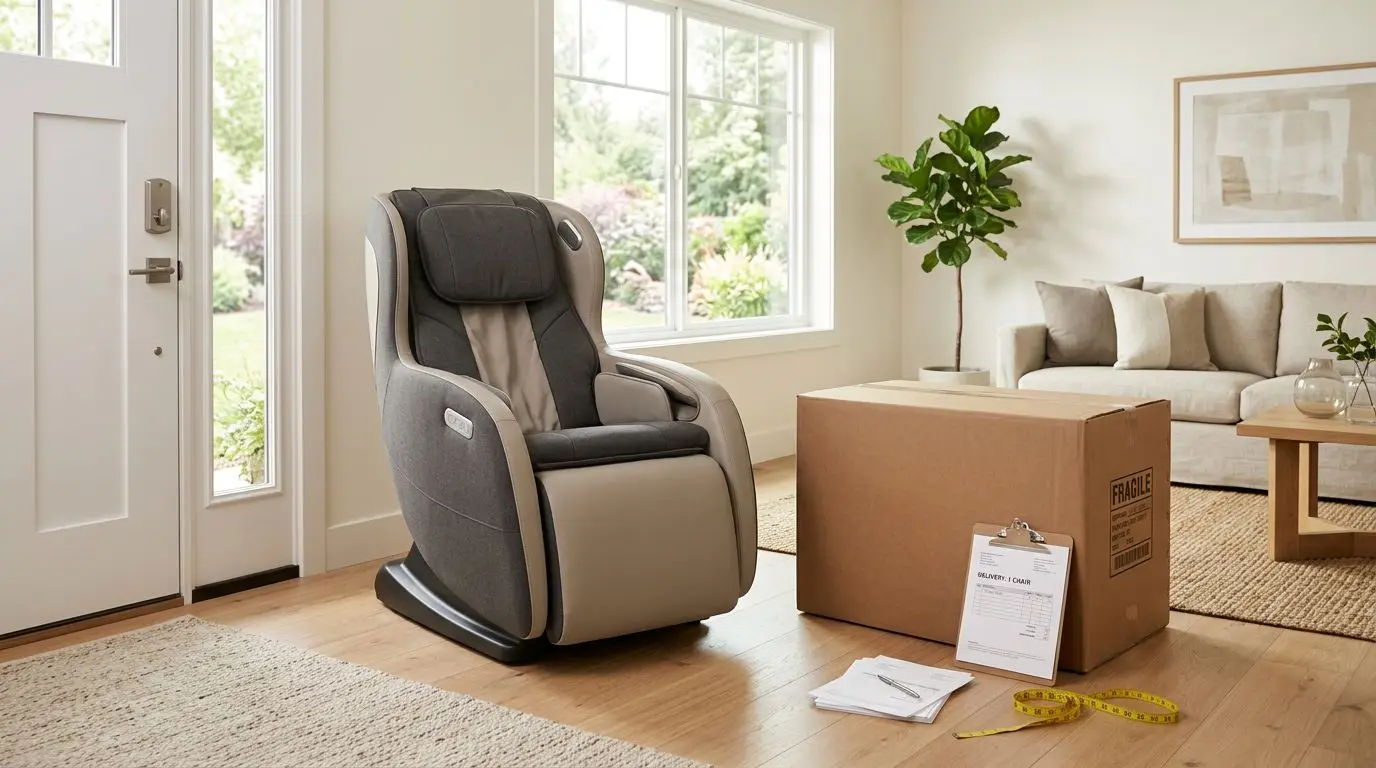
- Inspect during delivery. Photograph the carton and chair before and after setup. Report dents, tears, missing parts, or error messages immediately, ideally within 24 to 48 hours.
Also consider whether the chair is appropriate for the household. People who are pregnant, have a pacemaker or other implanted cardiac device, have a history of blood clots or take anticoagulants, have osteoporosis, a recent fracture or surgery, spinal disc problems, neuropathy, or uncontrolled hypertension should ask their physician before using a massage chair. A warranty does not address personal safety or suitability.
Manufacturer warranty vs retailer plan: 5 contract details to compare
The manufacturer warranty and the retailer or third-party protection plan may be administered by different companies. That means different claim rules, phone numbers, documentation requirements, and repair decisions.
Compare these 5 contract details side by side before paying extra:
- Start date: Does the plan start on the purchase date, delivery date, or after manufacturer coverage ends?
- Coverage type: Is it parts only, parts and labor, in-home service, replacement, or reimbursement?
- Deductible or service fee: Is each claim free, or is there a per-visit charge?
- Transferability: Can the plan transfer if you sell the chair, and is there a fee?
- Cancellation: Can you cancel within 30 days or later for a prorated refund?
Pay attention to the phrase repair or replace. It sounds simple, but the administrator usually decides which option applies. Replacement may mean a comparable product, store credit, or reimbursement up to the original purchase price, minus taxes, delivery, or prior claims depending on the contract.
One more point: ask how long parts remain available. A warranty is stronger when parts support is realistic. If a plan cannot explain how repairs are handled after a component is discontinued, you do not have the full picture.
Red flags in massage chair protection plans: 8 phrases to question
Some warranty language deserves a closer look. These 8 phrases are not automatic deal breakers, but they should prompt follow-up before you sign.
- Limited lifetime: Limited to what, exactly? It may apply only to the frame.
- Service at our discretion: Ask who decides repair, replacement, or denial.
- Customer responsible for shipping: Freight on a large chair can be complicated.
- Excludes normal mechanical wear: This can narrow coverage on moving parts.
- Cosmetic components excluded: Ask whether upholstery, airbags, and exterior panels are considered cosmetic.
- Proof of maintenance required: Make sure maintenance steps are realistic and documented.
- Authorized use only: Confirm whether home office, guest use, or short-term rental use changes coverage.
- No lemon policy: If repeated repairs happen, ask whether replacement is ever available after 2 or 3 failed repair attempts.
Good coverage is specific. It names what is covered, how claims are filed, how service is performed, and what the customer may owe. Vague reassurance is not the same as a usable contract.
A simple decision rule: pay for coverage that removes real risk
Here is a practical way to decide. Pay extra only when the plan removes a risk you would not want to handle yourself.
If the plan extends in-home labor from 1 year to 3 years on a large, complex chair, it may be worth serious consideration. If it only adds frame coverage from year 3 to year 5, the value is weaker. If it covers power surge damage and replacement parts but excludes labor, it may still help, but you should budget for technician costs.
For a basic chair used lightly, the included manufacturer warranty may be enough. For a premium chair used every day by multiple people, a well-written extended plan can protect the purchase from expensive inconvenience, especially if it includes in-home service and clear repair-or-replace language.
The best choice is rarely the longest warranty on the sign. It is the clearest warranty on paper.
FAQ: 5 warranty questions shoppers ask before buying
Is a massage chair extended warranty worth it?
It can be worth it for a higher-priced, full-size chair with many features, daily use, or a location that makes service difficult. It is less worthwhile if the plan overlaps the manufacturer warranty and does not add labor, in-home service, or meaningful replacement coverage.
What is the most important massage chair warranty coverage?
Parts and labor are the core. In-home service is especially important for large chairs that weigh 200 pounds or more. A long frame warranty is nice, but electronics, motors, rollers, airbags, and controls are usually more relevant to everyday service concerns.
Does a warranty cover peeling or worn upholstery?
Often, no. Many warranties exclude cosmetic wear, peeling, stains, cracking, stitching issues, or upholstery damage unless the issue is clearly tied to a covered defect and reported within a short window. Always check the upholstery section separately.
What can void a massage chair warranty?
Common causes include commercial use under a home-only warranty, unauthorized repair, using the chair outside published height or weight limits, improper electrical setup, damage during moving, and failure to follow the manual.
Should I keep the box for warranty service?
If you have space, keeping the box for at least 30 to 90 days is smart in case of early delivery issues or return requirements. After that, ask whether future service is in-home or whether shipping materials would be required.
Frequently asked questions
Is a massage chair extended warranty worth it? +
It can be worth it for a higher-priced, full-size chair with many features, daily use, or a location that makes service difficult. It is less worthwhile if the plan overlaps the manufacturer warranty and does not add labor, in-home service, or meaningful replacement coverage.
What is the most important massage chair warranty coverage? +
Parts and labor are the core. In-home service is especially important for large chairs that weigh 200 pounds or more. A long frame warranty is nice, but electronics, motors, rollers, airbags, and controls are usually more relevant to everyday service concerns.
Does a warranty cover peeling or worn upholstery? +
Often, no. Many warranties exclude cosmetic wear, peeling, stains, cracking, stitching issues, or upholstery damage unless the issue is clearly tied to a covered defect and reported within a short window. Always check the upholstery section separately.
What can void a massage chair warranty? +
Common causes include commercial use under a home-only warranty, unauthorized repair, using the chair outside published height or weight limits, improper electrical setup, damage during moving, and failure to follow the manual.
Should I keep the box for warranty service? +
If you have space, keeping the box for at least 30 to 90 days is smart in case of early delivery issues or return requirements. After that, ask whether future service is in-home or whether shipping materials would be required.
Related guides
Massage Chair Warranty and Return Policy Buying Guide: What U.S. Shoppers Should Check
15 min read
Is an Extended Warranty Worth It for a Massage Chair? Coverage, Repair Risk, and Break-Even Scenarios
12 min read
Should You Repair or Replace a Massage Chair? Common Problems, Costs, and Safety Signs
14 min read
Massage Chair Repair Guide: Problems, Parts, Service Calls, and Warranty Tips
14 min read
The Hidden Costs of Buying a Massage Chair: Delivery, Setup, Repairs, and Moving
15 min read