Disclosure: We may earn a commission when you buy through links on this page, at no extra cost to you. We buy nothing, sell nothing and accept no payment for coverage — commissions never decide what we recommend. How we make money.
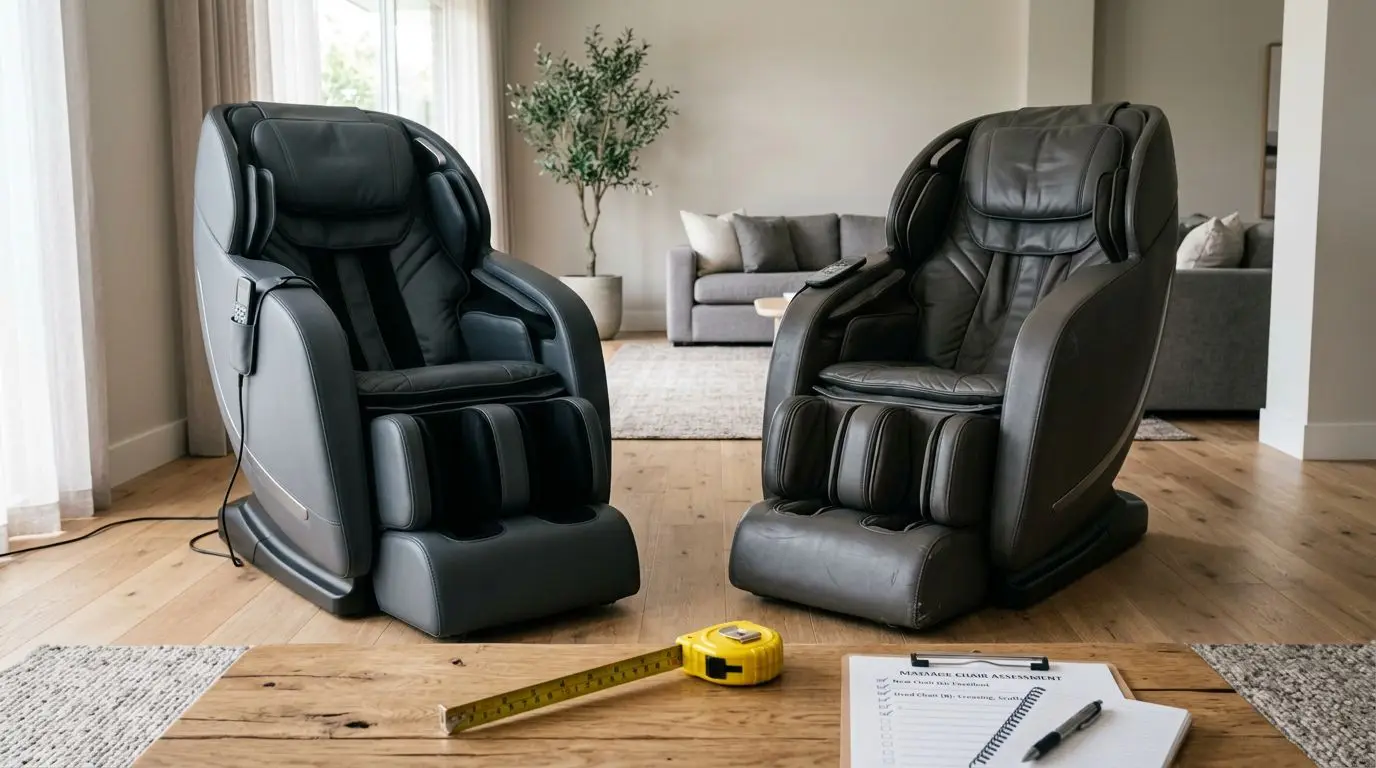
A used massage chair can be a smart buy when it is clean, fully functional, easy to move, and priced low enough to make up for limited warranty coverage. A new chair usually costs more upfront, but it gives you a cleaner ownership history, stronger return options, and fewer unknowns about motors, rollers, airbags, and electronics.
For cost-conscious buyers, the best choice is not simply new or used. It is whether the total cost after delivery, setup, possible repairs, and warranty risk still fits the way you plan to use the chair.
New vs. used at a glance: the 30-second decision
If you want the lowest possible upfront price, used will usually win. If you want predictable support, easier delivery, and fewer surprises during the first 12 months, new is the safer path.
Massage chairs are complex, furniture-sized appliances. A full-size chair may weigh 150 to 300 pounds and include multiple electric motors, moving rollers, air pumps, heat elements, control boards, and reclining mechanisms. That is why buying one used is different from buying a used side table. It may look fine in a listing photo and still have costly hidden wear.
| Buying path | Best advantage | Main risk | Good fit |
|---|---|---|---|
| New chair | Full warranty and clean history | Higher upfront cost | Buyers who want support, delivery options, and fewer unknowns |
| Used private sale | Lowest purchase price | Little or no return option | Hands-on buyers who can inspect and move the chair safely |
| Open-box or floor sample | Discount with some seller accountability | Unknown demo hours or cosmetic wear | Buyers who want savings but prefer a retailer involved |
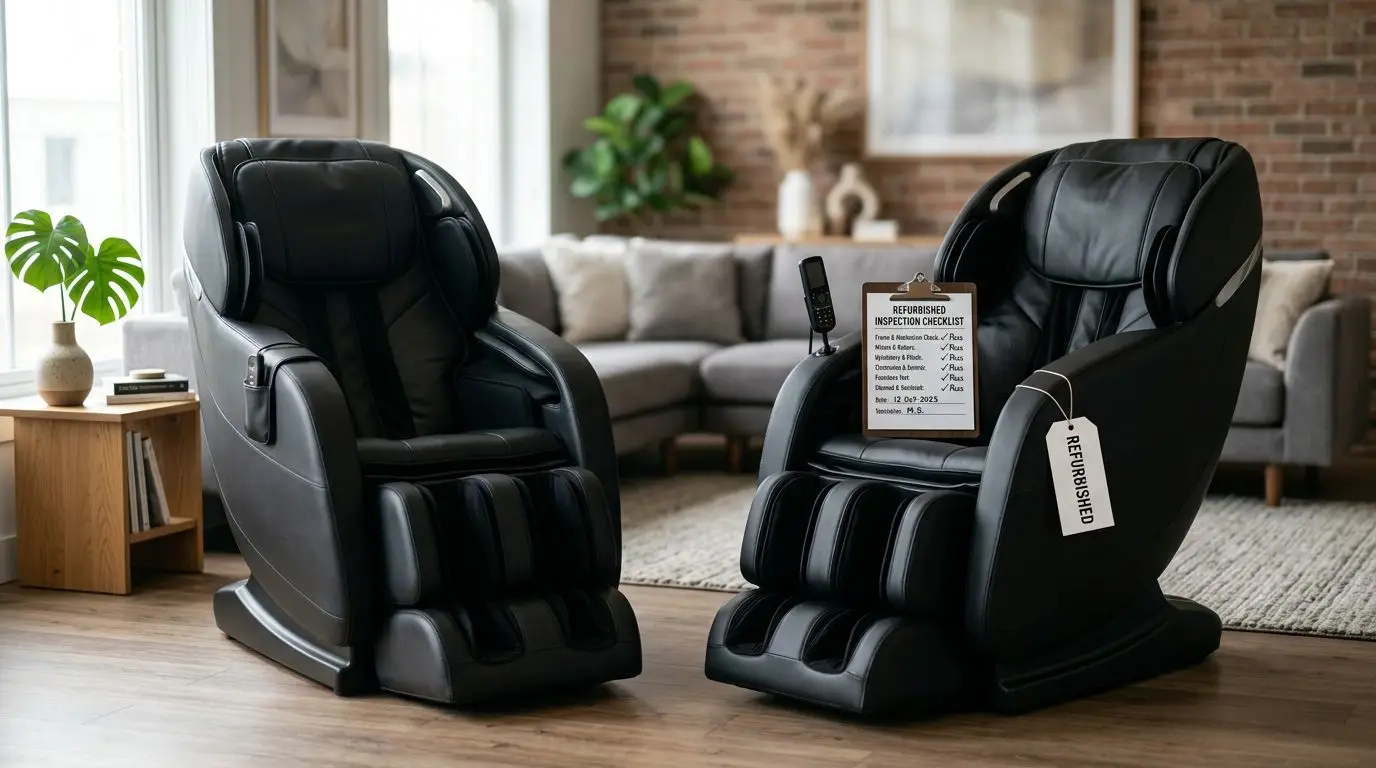
| Refurbished chair | Some inspection before resale | Refurbishment quality varies | Buyers who can verify what was serviced and what warranty remains |
The more you need delivery, upstairs placement, a return window, or service help, the more valuable a new or professionally resold chair becomes. If you can inspect, transport, and troubleshoot the chair yourself, a used private-sale option may make more sense.
What savings really look like: a 5-year cost example
Used listings can look dramatically cheaper than new chairs, but the sticker price is only one part of the decision. A $1,500 used chair is not automatically half the cost of a $3,000 new chair if you pay for movers, replace worn parts, or lose the chair after a failed control board.
Use a simple total-cost view. Include purchase price, delivery, setup, likely service calls, replacement parts, and the value of any warranty or return option. Even rough numbers can make the comparison clearer.
| Cost item | New chair example | Used chair example |
|---|---|---|
| Purchase price | $3,000 | $1,500 |
| Delivery or moving | Included or paid at checkout | $200 to $500 if hiring movers |
| Return option | Often available, terms vary | Usually none in a private sale |
| Warranty value | Typically strongest in year 1 | Often expired or nontransferable |
| Possible repair allowance | Lower early risk | Set aside $300 to $800 if older or heavily used |
Those figures are examples, not promises. Local labor rates, chair design, part availability, and seller policies can change the math quickly.
A useful rule: the less proof you have about age, service history, and working condition, the larger the discount should be. If the used chair is only modestly cheaper than a comparable new chair, the risk may not be worth it.
Who a used massage chair is best for: 4 buyer profiles
A used chair is best for buyers who can tolerate some uncertainty and feel comfortable checking mechanical and electronic functions before paying. It is not the right path for everyone.
1. The bargain hunter with ground-floor access
If the chair is going into a garage, den, or first-floor room with a wide doorway, used buying is easier. Moving a 250-pound recliner-style machine upstairs can erase your savings quickly.
2. The occasional user
If you expect to use the chair a few times per week for 10 to 20 minutes, a well-kept used chair may provide enough comfort and coverage. Heavy daily use puts more demand on motors, tracks, rollers, and upholstery.
3. The mechanically patient buyer
Some owners are fine replacing a remote, tightening panels, cleaning tracks, or arranging service. Others want a chair that simply arrives, works, and has a support path if something fails.
4. The buyer who can inspect before pickup
Never buy a used massage chair based only on photos if you can avoid it. A 15- to 20-minute test session tells you far more than a polished listing description.
Buy new if you need predictable delivery, want the newest control layout, prefer untouched upholstery, or cannot lift, move, or inspect a heavy chair safely. New also makes more sense when the user has very specific fit needs, such as a tall frame, narrow shoulders, or limited room behind the chair.
Wear points to check after 2,000 hours of use
Most private sellers will not know the exact number of hours on a massage chair. Still, wear follows patterns. A chair used 30 minutes a day for 4 years has seen more than 700 hours of operation; a household with multiple users can multiply that quickly.
Start with the roller system. Listen for grinding, skipping, thumping, or uneven movement along the back track. A good roller pass should feel consistent from the upper back area down through the lower back area, depending on the track design. Some intensity changes are normal by body area. Sharp jolts, dead zones, or one-sided pressure are warning signs.
Check the track type as well. An S-track generally follows the curve of the back. An L-track extends under the seat area. An SL-track combines a curved back path with longer lower-body coverage. Longer tracks create more coverage, but they also mean more moving distance for rollers and related parts.
| Component | What to test | Warning sign |
|---|---|---|
| Back rollers | Run a full automatic program and a manual up-down pass | Grinding, skipping, or hard impact at one spot |
| Recline motor | Move from upright to fully reclined and back | Slow movement, clicking, or stopping midway |
| Air compression zones | Test shoulders, arms, calves, and feet if included | One side inflates and the other does not |
| Footrest | Extend, retract, and test calf or foot features | Binding, scraping, or uneven extension |
| Remote or touchscreen | Cycle through menus for 3 to 5 minutes | Unresponsive buttons or flickering display |
| Upholstery | Inspect seams, headrest, seat, arm wells, and foot wells | Peeling, cracking, odors, or exposed padding |
Cosmetic wear is not automatically a deal-breaker, but upholstery damage around high-contact areas can become uncomfortable. It can also point to heavy use, poor cleaning habits, or storage in heat, humidity, or direct sun.
Warranty, returns, and repair risk in the first 12 months
Warranty coverage is one of the biggest differences between new and used. Many warranties are written for the original purchaser and may not transfer to a second owner. Even when some coverage remains, labor, in-home service, shipping, or specific parts may have separate terms.
Ask for the original receipt, purchase date, warranty documents, and any service records. If the seller cannot provide them, assume the chair has no usable warranty until you verify otherwise in writing with the seller or service provider.
Private sales are usually final. That means no 7-day comfort trial, no 30-day return process, and no easy exchange if the chair feels too intense, too narrow, or too large for the room. A retailer, outlet, or refurbisher may offer limited return terms, but read the fine print carefully. Return freight on a heavy chair can be expensive.
Repairs are not always simple, either. Some chairs use proprietary parts, and older parts may be hard to source. A small remote problem may be manageable. A failed main board, lift motor, air pump, or roller mechanism can become a much bigger decision, especially if local service is limited.
Before buying used, search for generic parts availability for the chair type, not a sales pitch. Ask who services full-size massage chairs in your area and whether they make house calls. One phone call before purchase can prevent a 250-pound problem later.
How to inspect a used chair in 20 minutes
Bring a phone charger if the seller has misplaced the remote charger or needs power nearby, plus a flashlight, a tape measure, and clean socks if you will test foot features. Plan on at least 20 minutes. Rushing is how buyers miss expensive problems.
- Confirm power-up. The chair should turn on without error codes, repeated resets, or unusual beeps.
- Run one full automatic program. A 10- to 15-minute program lets you hear motors, feel roller travel, and test transitions.
- Use manual controls. Move the rollers up, down, wider, narrower, stronger, and softer if the chair allows it.
- Test recline and return. Go fully back, pause for 30 seconds, then return upright.
- Check every air zone. Arm, shoulder, calf, and foot airbags should inflate and release evenly.
- Try the footrest. Make sure it extends, retracts, and fits your leg length without forcing your knees.
- Inspect heat settings. If heat is included, it should feel gently warm, not hot or uneven.
- Look underneath. Use a flashlight to check for frayed wires, missing covers, pet hair buildup, or signs of liquid spills.
- Smell the chair. Strong smoke, mildew, pet, or chemical odors can be difficult to remove from padding and foot wells.
- Ask why it is being sold. Moving, downsizing, or underuse is different from intermittent faults.
Take a short video of the chair working if the seller allows it. Record the recline, roller movement, and remote screen. If a dispute comes up before pickup or delivery, you will have a clear reference.
How to measure your room and delivery path to the nearest inch
Fit problems are common with both new and used chairs. A massage chair that works perfectly is still a bad purchase if it cannot get through the door or recline in the room.
Measure the chair in three positions: upright, reclined, and, if possible, with the footrest extended. Full-size chairs often need a door opening around 30 to 36 inches wide, but shapes vary. Some chairs have removable side panels or footrests; others do not. Do not assume.
- Door width: Measure the narrowest point, including trim and hinges.
- Hallway turns: Measure both hallway width and turning clearance at corners.
- Stairs: Count steps and note landings, railings, and ceiling height.
- Room footprint: Measure width, depth, and recline space.
- Wall clearance: Some space-saving recline designs need only several inches; others need much more.
- Outlet location: Avoid stretching cords across walking paths.
Ask for the chair’s approximate weight before arranging pickup. If it weighs 200 pounds or more, two strong adults may still not be enough for stairs or tight turns. Professional movers cost money, but they can be cheaper than damaged walls, strained backs, or a dropped chair.
For a used chair, also ask whether it can be disassembled safely for transport. Keep screws, covers, and cables labeled. Take photos before unplugging anything.
Safety check: ask a physician in these 7 situations
A massage chair is a consumer wellness product designed for comfort, pressure, warmth, and relaxation-style use. It is not a medical device. If you have a health condition or medical concern, do not rely on a chair listing, salesperson, or online guide for personal advice.
Ask your physician before using a massage chair if you are pregnant; have a pacemaker or other implanted cardiac device; have a history of blood clots or take anticoagulants; have osteoporosis; recently had a fracture or surgery; have spinal disc problems; have neuropathy; or have uncontrolled hypertension. Stop using the chair if it causes pain, dizziness, numbness, unusual discomfort, or any sensation that feels wrong for your body.
Fit matters for safety and comfort. If the rollers hit directly on bony areas, the neck position feels forced, or the leg wells squeeze too tightly, choose a softer setting or do not use that feature. Used chairs may lack current safety labels or manuals, so be more cautious when you cannot confirm proper operation.
Negotiating a used chair purchase: 6 checks before paying
A good used-chair deal should leave room for risk. If the seller wants near-new pricing but cannot provide warranty status, a receipt, or a working demo, keep shopping.
- Verify ownership. Ask for the original purchase proof if available.
- Confirm included items. Remote, power cord, manuals, pads, headrest, and accessories should be present.
- Price based on condition. Deduct for peeling upholstery, missing parts, weak air zones, or noisy motors.
- Plan pickup before payment. Know who is moving it, when, and through which exit.
- Avoid pressure tactics. A chair you cannot test is not a bargain.
- Use a traceable payment method when practical. Keep messages, receipts, and photos.
For open-box, floor sample, or refurbished chairs, ask different questions. How long was it on display? Was it serviced, cleaned, or inspected? Which parts were replaced? What return window applies? Is labor included if something fails in the first 30 or 90 days?
Do not let one attractive discount override basic fit and function. The best used massage chair is the one you can test, move, use comfortably, and afford to repair if needed.
Feature comparison: 8 options worth paying for new or used
Some massage chair features matter more than others when buying used. Focus first on fit, roller feel, track coverage, controls, and mechanical condition. Decorative lighting or audio extras should not drive the decision.
| Feature | Why it matters | Used-chair caution |
|---|---|---|
| S-track, L-track, or SL-track | Determines the roller path and body coverage | Longer tracks add more moving parts to inspect |
| 2D, 3D, or 4D rollers | Affects depth and intensity control | Test low and high settings for smooth adjustment |
| Body scan | Helps position rollers for the user | Make sure it detects shoulder height reasonably well |
| Air compression | Adds squeezing pressure at arms, calves, feet, or shoulders | Airbags and hoses can leak or inflate unevenly |
| Foot and calf unit | Important for taller or shorter users | Check extension range and cleanliness closely |
| Heat | Adds gentle warmth in selected areas | Uneven heat or hot spots are red flags |
| Space-saving recline | Reduces wall clearance needs | Test recline near a wall before committing |
| Simple controls | Makes daily use easier | Hard-to-read screens can be expensive to replace |
Newer is not always better if the chair does not fit you. Sit in it. Let the rollers travel through a complete cycle. Make sure the shoulder area, lower back area, seat, calves, and feet feel comfortable at the lowest setting before trying stronger pressure.
FAQ: 5 common questions before buying new or used
Is a used massage chair worth buying?
Yes, if it is fully functional, clean, priced well below a comparable new chair, and easy to move into your home. It is less attractive if the warranty is gone, the seller will not allow a full test, or repair support is unclear.
How old is too old for a used massage chair?
Age matters less than condition, but caution increases after several years of regular use. Ask for the purchase date, service history, and reason for selling. If parts are no longer available or the chair has noisy roller movement, walk away.
Should I buy a floor sample instead of a private used chair?
A floor sample may cost more than a private-sale chair, but it can come with clearer seller accountability, cleaning, delivery options, or limited coverage. Ask how long it was displayed and what warranty or return terms apply.
Can I move a massage chair myself?
Sometimes, but be careful. Many full-size chairs weigh 150 to 300 pounds and are awkward to lift. Measure doors, stairs, and turns first. Hire movers if the path includes stairs, tight corners, or a long carry.
What should make me walk away from a used chair?
Walk away from error codes, grinding rollers, failed recline, uneven air compression, missing remote, strong odors, peeling upholstery, no test opportunity, or a seller who cannot answer basic questions. Another chair will come along.
Frequently asked questions
Is a used massage chair worth buying? +
Yes, if it is fully functional, clean, priced well below a comparable new chair, and easy to move into your home. It is less attractive if the warranty is gone, the seller will not allow a full test, or repair support is unclear.
How old is too old for a used massage chair? +
Age matters less than condition, but caution increases after several years of regular use. Ask for the purchase date, service history, and reason for selling. If parts are no longer available or the chair has noisy roller movement, walk away.
Should I buy a floor sample instead of a private used chair? +
A floor sample may cost more than a private-sale chair, but it can come with clearer seller accountability, cleaning, delivery options, or limited coverage. Ask how long it was displayed and what warranty or return terms apply.
Can I move a massage chair myself? +
Sometimes, but be careful. Many full-size chairs weigh 150 to 300 pounds and are awkward to lift. Measure doors, stairs, and turns first. Hire movers if the path includes stairs, tight corners, or a long carry.
What should make me walk away from a used chair? +
Walk away from error codes, grinding rollers, failed recline, uneven air compression, missing remote, strong odors, peeling upholstery, no test opportunity, or a seller who cannot answer basic questions.
Related guides
The Hidden Costs of Buying a Massage Chair: Delivery, Setup, Repairs, and Moving
15 min read
Buying a Massage Chair Online vs. In Store: Price, Testing, Delivery, and Return Trade-Offs
14 min read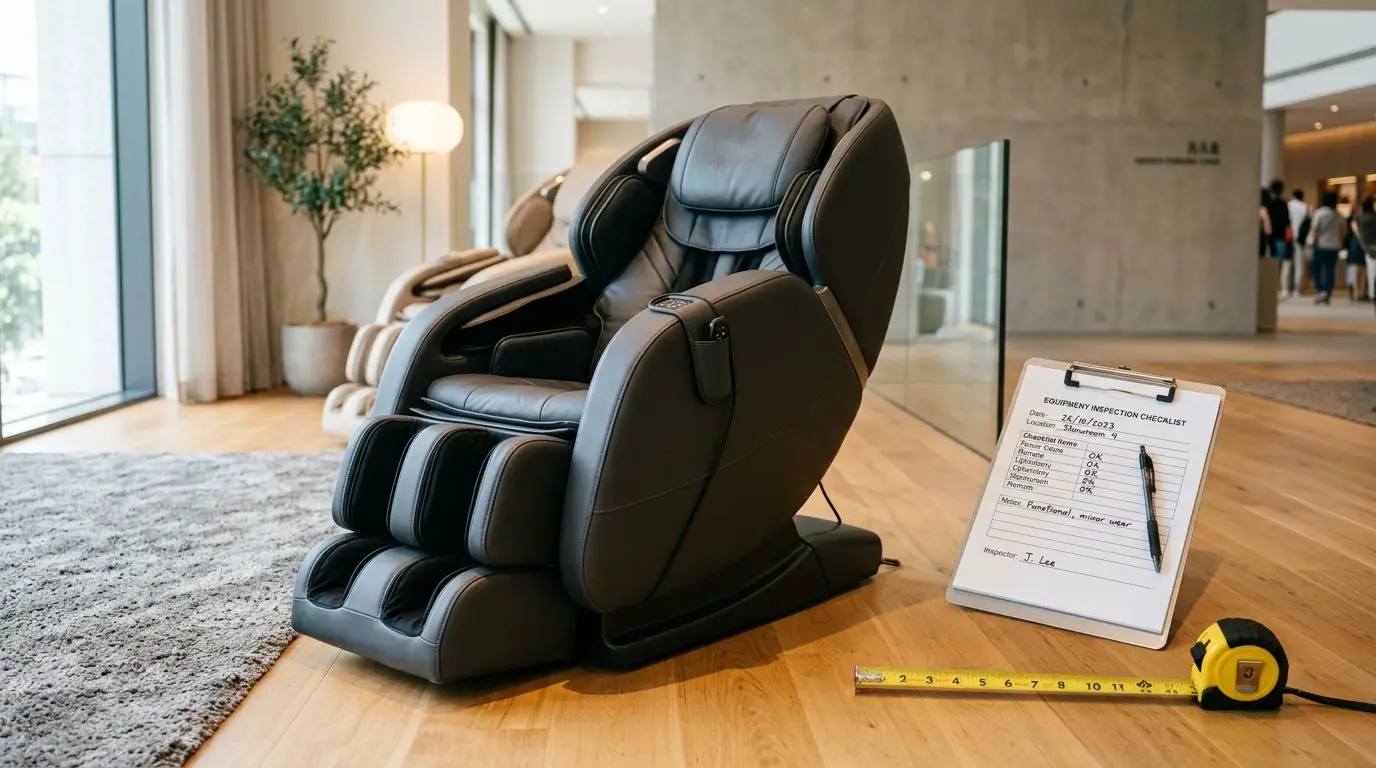
Open-Box, Floor-Model, and Clearance Massage Chairs: When the Discount Is Actually Worth It
12 min read
Where to Buy a Massage Chair Near You: Showroom Testing and Dealer Questions to Ask
12 min read
Are Massage Chairs Good or Bad for You? Benefits, Risks, and Safe Use Guidelines
13 min read