Disclosure: We may earn a commission when you buy through links on this page, at no extra cost to you. We buy nothing, sell nothing and accept no payment for coverage — commissions never decide what we recommend. How we make money.
Buying a massage chair online usually gives you the widest selection and the easiest way to compare prices. Buying in store gives you the best chance to test fit, intensity, and comfort before you pay. The smarter choice comes down to 4 trade-offs: price transparency, hands-on testing, delivery setup, and return risk. If you can test locally and then compare policies carefully, you can make a confident purchase either way.
Searches like massage chairs for sale or massage chairs near me often bring up a mix of local showrooms, furniture stores, warehouse-style sellers, and online-only shops. The chair may look similar on a screen, but the buying experience can change a lot once you factor in freight delivery, doorway clearance, trial periods, and restocking fees.
Online vs. in store at a glance: 4 buying trade-offs
A full-size massage chair is not a small parcel item. Many weigh 150 to 300 lb, ship in 1 to 3 cartons, and may need 30 to 36 inches of doorway clearance depending on how the chair is packed. That makes where you buy almost as important as the feature list.
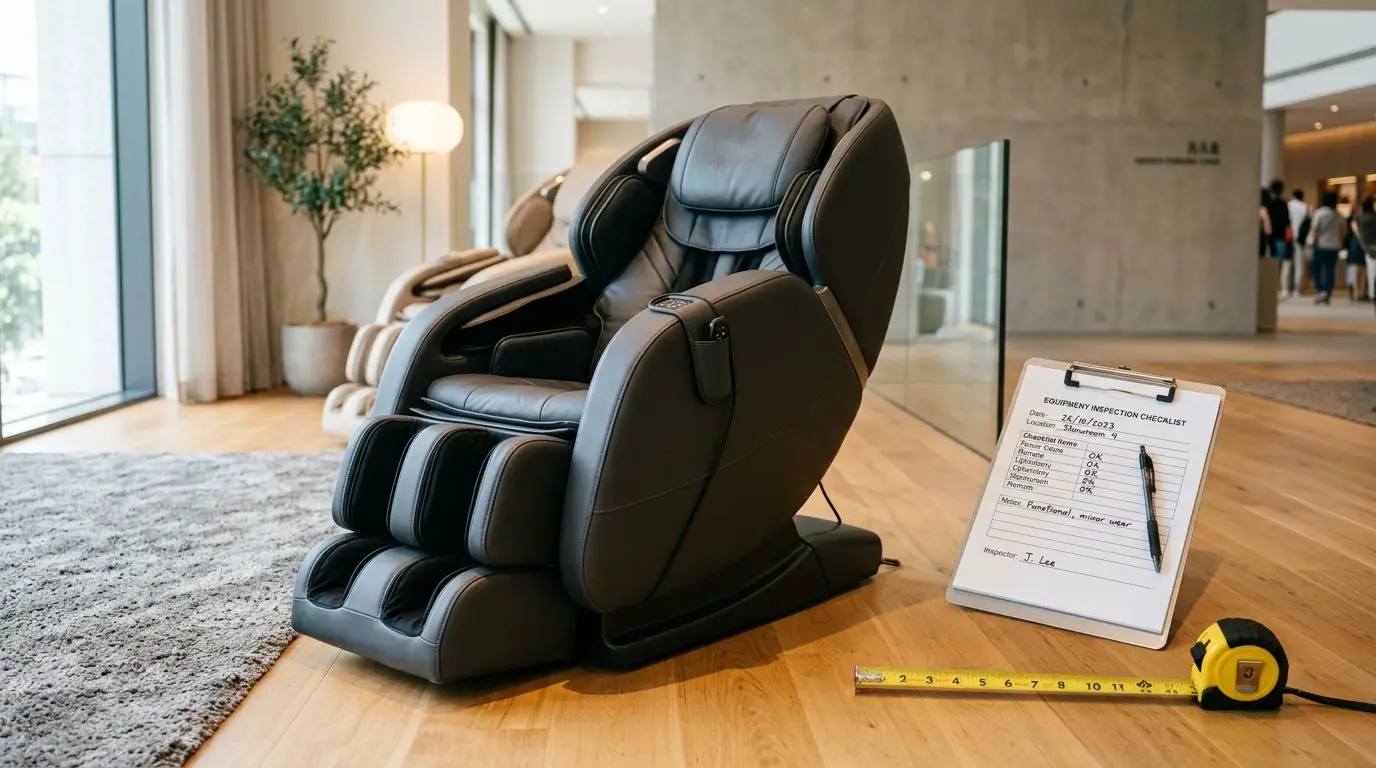
Online shopping works best when you want to compare track types, roller styles, dimensions, and owner feedback across many chairs in one sitting. In-store shopping is strongest when you want to feel the roller pressure, check shoulder width, hear the air pump noise, and confirm that your feet reach the foot rollers comfortably.
| Buying path | Best advantage | Main trade-off | What to verify before paying |
|---|---|---|---|
| Online | More choices and faster comparison | You cannot feel the chair first | Return window, freight cost, setup level, dimensions |
| In store | You can test fit and intensity | Selection may be limited | Written price, delivery terms, floor model condition |
| Hybrid | Test locally, compare online details | Takes more time | Same features, same warranty terms, same included services |
The hybrid method is often the most practical. Try 2 or 3 chair types locally if you can, note what felt comfortable, then use those notes to judge online listings more accurately.
Price and selection: online often shows more chairs in 10 minutes
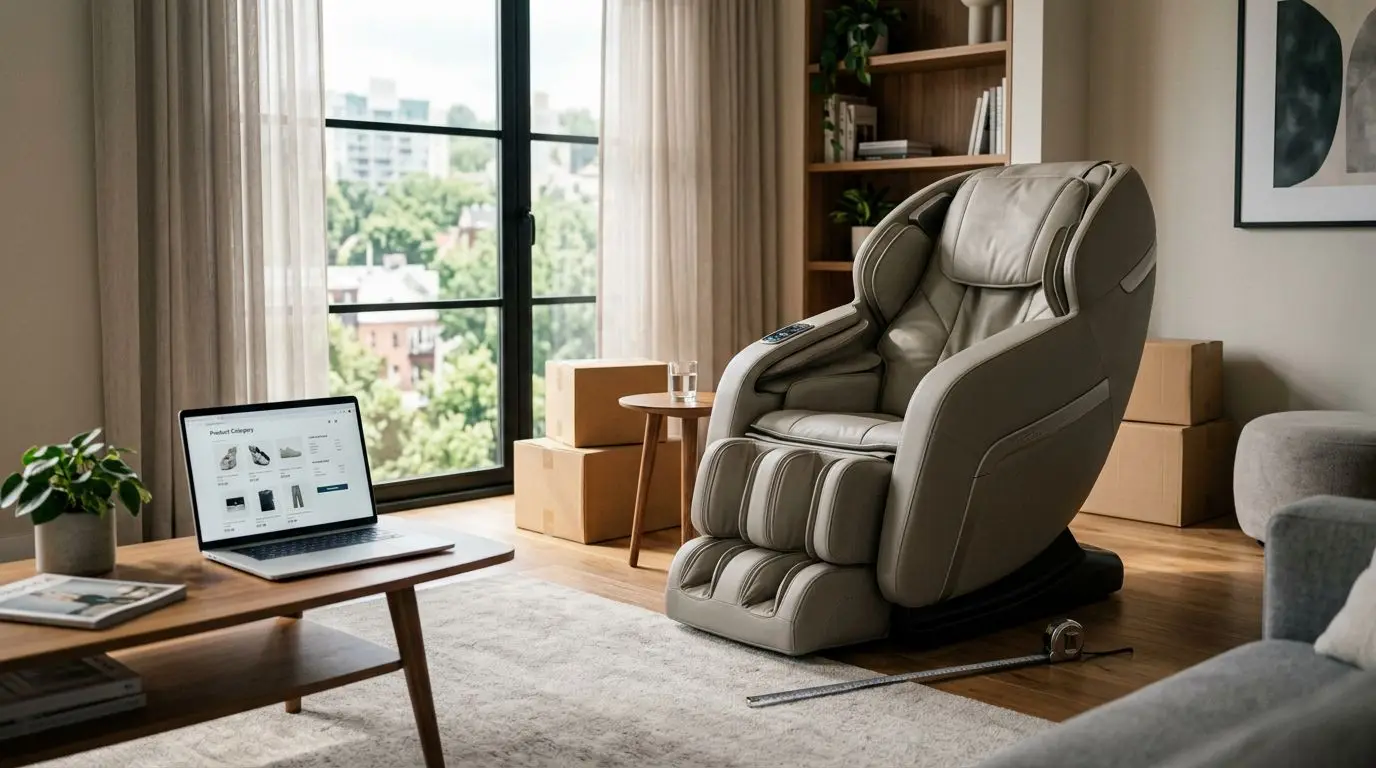
Online shopping makes price comparison easier because you can review dozens of chairs, feature lists, and delivery policies in 10 or 15 minutes. You may see compact chairs, 2D roller chairs, 3D or 4D roller chairs, SL-track designs, zero-gravity recliners, and chairs with heated areas side by side. In a store, you may only be able to try 3 to 8 chairs on the floor.
The catch is that the lowest visible price is not always the lowest total cost. A chair advertised with free shipping may only include curbside freight, meaning the carton is delivered to the driveway or building entrance. Room-of-choice delivery, stair carry, packaging removal, and assembly may cost extra, or may not be available at all in some ZIP codes.
In a store, the posted price may be less transparent at first, but the sales quote might bundle delivery and setup. Ask for a written out-the-door total that lists the chair price, taxes, delivery, setup, old chair removal if offered, and any return pickup fee. For a large item, a $200 delivery difference can matter as much as a small discount on the chair.
Online pricing strengths
- You can compare many feature sets without driving to multiple locations.
- Specifications such as upright depth, reclined depth, chair width, and user height range are easier to save and compare.
- Seasonal promotions are visible quickly, though the details still need careful reading.
In-store pricing strengths
- You can ask what is included in delivery and setup before committing.
- You can inspect a floor model if it is being sold at a reduced price.
- You can sometimes compare similar chair types directly in the same visit.
Testing comfort: 15 minutes in a chair can reveal more than 50 reviews
A massage chair is highly personal. Two chairs with the same track shape can feel very different because of roller width, roller protrusion, padding thickness, airbag pressure, recline angle, and how the footrest adjusts. A 15-minute test session can tell you whether the chair feels relaxing, too intense, too narrow, too upright, or awkward around the neck and shoulders.
When you test in store, do not judge the chair in the first 60 seconds. Let the body scan run if the chair has one, then try at least one automatic program and a manual roller adjustment. Move the rollers up and down the back. Test the lowest and middle intensity settings before deciding whether the chair is too strong.
Pay close attention to fit. If the shoulder rollers land too high, the chair may feel like it is pressing into the neck. If the seat is too narrow, the hip airbags may feel cramped. If the footrest does not extend enough, the calf and foot areas may not line up comfortably. These issues are hard to judge from photos alone.
Online buyers can still reduce the risk. Look for clear dimensions and diagrams, not just lifestyle photos. Read owner comments specifically about height, shoulder width, foot size, noise, and intensity. A review saying it is a great chair is less useful than one saying the user is 6 feet 1 inch tall and the footrest extension feels short.
| Feature to test | What it changes | Simple test |
|---|---|---|
| 2D rollers | Basic up, down, inward, and outward movement | Check whether pressure feels too light or too direct |
| 3D or 4D rollers | More control over roller depth and rhythm | Try at least 2 intensity levels |
| S-track | Follows the curve of the back | Notice neck and lower-back contact |
| SL-track | Extends coverage from back into the seat area | Confirm the seat pressure feels comfortable |
| Air compression | Creates squeezing pressure at arms, legs, shoulders, or hips | Start on low and raise slowly |
| Foot rollers | Adds rolling pressure under the feet | Make sure it can be reduced or turned off if too intense |
Delivery and setup: measure 3 paths, not just the room
Before buying any full-size massage chair, measure 3 things: the path into your home, the final chair space, and the clearance needed when the chair reclines. A chair that is 32 inches wide may still arrive in wider packaging, and a tight hallway turn can stop delivery even if the doorway itself is wide enough.
Start at the curb or lobby and follow the exact path to the room. Measure exterior doors, interior doors, stair width, elevator depth, hallway turns, and the final placement area. If stairs are involved, ask whether stair carry is included, limited to a certain number of flights, or unavailable.
In the room, measure width, upright depth, and reclined depth. Some space-saving recline designs need only a few inches behind the chair, while other chairs may need 12 inches or more from the wall. Leave walking space around the chair too, so it does not block a doorway, closet, or emergency path.
Minimum measurements to write down
- Narrowest doorway width, in inches
- Hallway width and any 90-degree turns
- Stair width, landing depth, and number of flights
- Elevator door width and interior depth, if applicable
- Room width and depth where the chair will sit
- Distance from the wall when fully reclined
- Nearby outlet location; avoid relying on long extension cords
Online orders often require you to choose a delivery level during checkout. In-store purchases may allow more discussion about the route and possible obstacles. Either way, give the seller accurate measurements before delivery day. A failed delivery can lead to rescheduling fees or a return process you did not expect.
Returns and trial periods: read the 30-day details carefully
Return policies are where online and in-store shopping can differ sharply. A listing may advertise a 30-day return window, but the fine print may require original packaging, customer-paid freight, a restocking fee, or a pickup charge. For a 200 lb chair, return freight can be a serious expense.
In-store returns can also be limited. Some stores treat massage chairs as special-order furniture once delivered. Floor models, clearance items, and open-box chairs may be final sale or may have a shorter return window. Do not rely on a verbal promise; ask for the return policy on the receipt or invoice.
Look for 5 specific items before you buy: the number of days you have, who pays return shipping, whether setup fees are refundable, whether original packaging is required, and whether the chair must be in like-new condition. If the chair is delivered and assembled by a crew, ask how a return pickup would work if you decide it is not a good fit.
Warranty terms are separate from returns. A return policy covers whether you can send back a chair you do not want. A warranty covers defects or failures under stated conditions. Read both, because a chair can be non-returnable but still covered by a limited warranty, or returnable for a short period with separate service rules later.
Who online buying is best for: 5 shopper profiles
Buying online makes sense for many shoppers, especially if you are comfortable comparing specifications and have measured your space carefully. It is also useful if you live more than 30 or 50 miles from a showroom with a meaningful selection.
- Specification-focused shoppers: You want to compare track type, roller depth, chair dimensions, and program options side by side.
- People with limited local selection: If nearby stores only carry 1 or 2 chair styles, online shopping may show a broader range.
- Shoppers with standard access: Ground-level delivery, wide doors, and no tight stair turns reduce delivery risk.
- Patient comparison shoppers: You are willing to read policies, measure carefully, and contact the seller with questions.
- Buyers replacing a chair: If you already know the roller intensity and track style you prefer, buying online can be more predictable.
Online buying is less ideal if you are sensitive to pressure, unsure about fit, or buying for someone whose height, shoulder width, or comfort preferences are hard to predict. In those cases, testing matters.
Who in-store buying is best for: 6 reasons to test first
In-store buying is best when comfort, fit, and delivery confidence matter more than seeing the largest possible selection. If two adults will share the chair and they differ by 8 inches in height or more, testing becomes especially useful.
- You are new to massage chairs: A showroom visit helps you learn the difference between light, medium, and firm roller pressure.
- You are tall, short, broad-shouldered, or petite: Fit varies by chair, and published user ranges are only a starting point.
- You dislike strong foot pressure: Foot rollers can feel surprisingly intense, so test whether they adjust or turn off.
- You have a difficult delivery route: Stairs, elevators, narrow halls, and tight turns are easier to discuss in person.
- You are considering a floor model: You can inspect upholstery, controls, and mechanical noise before buying.
- You want help comparing features: A good salesperson can explain differences, but you should still verify claims in writing.
Do not let an in-store test turn into a rushed decision. Spend at least 10 to 15 minutes in each serious contender, wear normal everyday clothing, and test the controls yourself rather than only watching a demonstration.
How to choose and measure: a 12-point checklist
Use a simple checklist before you buy online or in store. It takes about 20 minutes at home and can prevent the most common regrets: wrong size, wrong intensity, surprise delivery costs, and unclear returns.
- Decide who will use the chair most often and write down each person’s height.
- Measure shoulder width if fit is a concern, especially for narrow chair designs.
- Measure the route from delivery point to final room.
- Confirm the chair’s upright and fully reclined dimensions.
- Check the required wall clearance in inches.
- Choose the track style you prefer: S-track for back-focused coverage or SL-track for extended coverage into the seat area.
- Choose roller intensity: 2D for simpler pressure, 3D or 4D if you want more depth adjustment.
- Decide whether foot rollers are wanted, optional, or a deal-breaker.
- Check whether heat is limited to the back, calves, or another specific area.
- Compare delivery levels: curbside, threshold, room-of-choice, or white-glove setup.
- Read the return policy and warranty before payment.
- Save the product page, invoice, policy page, and delivery confirmation.
When comparing chairs, do not count features only by number. A chair with 20 automatic programs is not automatically more comfortable than one with 8. Fit, adjustability, and pressure control usually matter more than a long menu.
Safety and comfort: ask a physician in these 8 situations
A massage chair is a consumer wellness product designed for comfort, pressure, and relaxation-style use; it is not a medical device. If you are pregnant, have a pacemaker or other implanted cardiac device, have a history of blood clots or take anticoagulants, have osteoporosis, have had a recent fracture or surgery, have spinal disc problems, have neuropathy, or have uncontrolled hypertension, ask your physician before using a massage chair.
Use caution with intensity as well. Start with the shortest program, often 10 to 15 minutes, and choose the lowest roller and air settings until you know how the chair feels. More pressure is not automatically better. If a setting feels sharp, pinching, or uncomfortable, stop using that program and lower the intensity or avoid that feature.
Be careful with claims in product listings. Some manufacturers may make broad statements about wellness or physical benefits, but shoppers should treat those as marketing unless the seller provides appropriate support. For practical buying, focus on what you can verify: fit, coverage, adjustability, build quality, delivery terms, and return rules.
Online, in store, or hybrid: the best buying plan in 3 steps
The best plan for most shoppers is a 3-step process: research online, test in person if possible, then compare the final total cost and written policies. This gives you the broad view of online shopping without losing the comfort information that only a test sit can provide.
First, narrow the field by chair type. Decide whether you want a compact recliner-style chair, a full-size chair with an S-track, or a larger SL-track chair with more body coverage. Second, test a few examples locally if there are stores nearby. You do not need to find the exact chair to learn whether you prefer lighter 2D rollers or deeper adjustable rollers.
Third, compare the final candidates on paper. Include the delivered price, setup level, return cost, warranty terms, dimensions, track type, roller adjustability, footrest fit, and noise level if you tested it. If two chairs are close, choose the one with the clearer policy and better fit, not the one with the longest feature list.
For online buyers, the safest purchase is usually the one with complete specifications, clear delivery choices, responsive pre-sale answers, and a return policy you can live with. For in-store buyers, the safest purchase is the one you have personally tested, measured for your home, and received in writing with all fees listed. Either path can work well when you treat the chair as a large furniture-and-comfort purchase, not an impulse buy.
FAQ: 5 common questions before you buy
Is it cheaper to buy a massage chair online or in store?
Online prices are often easier to compare, but cheaper does not always mean lower total cost. Add delivery, setup, taxes, return freight, and any restocking fee before deciding. In-store quotes may include services that an online listing treats as add-ons.
Should I buy a massage chair without trying it first?
You can, but it carries more fit and comfort risk. If you buy without testing, study dimensions, user height guidance, roller type, return rules, and comments from owners with a similar body size. Make sure the chair can be returned at a cost you accept.
How long should I test a massage chair in a store?
Plan on 10 to 15 minutes per serious chair. Let the body scan finish, try at least one automatic program, adjust the roller position manually, and test low and medium intensity settings. A quick 1-minute sit is not enough.
What delivery option should I choose for a full-size chair?
If the chair is heavy or your route includes stairs, tight turns, or an elevator, room-of-choice delivery or white-glove setup may be worth considering. Curbside delivery can be fine for an easy ground-level home if you have capable help, but it may leave a large carton outside your door.
Can I return a massage chair if I do not like the feel?
Sometimes, but policies vary. Check the return window, who pays freight, whether original packaging is required, whether setup fees are refundable, and whether a restocking fee applies. Get those terms in writing before you buy.
Frequently asked questions
Is it cheaper to buy a massage chair online or in store? +
Online prices are often easier to compare, but the lowest chair price may not be the lowest total cost. Add delivery, setup, taxes, return freight, and any restocking fee before deciding.
Should I buy a massage chair without trying it first? +
You can, but it increases fit and comfort risk. If you buy online, review dimensions, roller type, delivery terms, return costs, and owner comments from people with a similar height or build.
How long should I test a massage chair in a store? +
Spend about 10 to 15 minutes in each serious option. Let the body scan finish, try an automatic program, adjust the rollers manually, and test more than one intensity level.
What should I measure before ordering a massage chair? +
Measure the narrowest doorway, hallways, stair turns, elevator depth, final room space, reclined chair depth, and wall clearance. Also confirm the chair’s packed dimensions when available.
Can I return a massage chair if it feels uncomfortable? +
It depends on the seller’s policy. Check the return window, return freight responsibility, original packaging requirement, restocking fee, and whether delivery or setup fees are refundable.
Related guides

Where to Buy a Massage Chair Near You: Showroom Testing and Dealer Questions to Ask
12 min read
The Hidden Costs of Buying a Massage Chair: Delivery, Setup, Repairs, and Moving
15 min read
New vs. Used Massage Chairs: Savings, Risks, and What to Check Before You Buy
13 min read
Are Massage Chairs Good or Bad for You? Benefits, Risks, and Safe Use Guidelines
13 min read
Best Massage Chair Features to Look For Before You Buy
13 min read