Disclosure: We may earn a commission when you buy through links on this page, at no extra cost to you. We buy nothing, sell nothing and accept no payment for coverage — commissions never decide what we recommend. How we make money.
A noisy massage chair is not always a problem. A soft roller hum, gentle clicking when direction changes, pulsing from the air pump, and light vinyl or leatherette creaks are usually normal, especially during a 10 to 30 minute massage cycle. Stop using the chair and arrange service if you hear loud grinding, repeated hard clunks, burning smells, scraping metal, or a new noise that gets worse with each session.
The goal is to separate normal mechanical sound from signs of wear, obstruction, loose hardware, or a failing component. Use the guide below to pinpoint where the sound is coming from, run a safe 15 minute check, and decide whether you are dealing with a simple setup issue or a service call.
Quick sound check: identify the noise in 5 minutes
Start with a short test before taking anything apart. Sit near the chair, not in it, and run a basic automatic program for about 5 minutes. Listen from the front, both sides, and the back, keeping your ear at least 12 inches away from moving parts.
A massage chair has several sound sources: rollers moving on a track, motors changing position, airbags inflating, a compressor or pump, foot rollers, reclining actuators, and upholstery flexing under body weight. A noise that appears only when the chair reclines may have a very different cause from one that happens every time the back rollers pass the shoulder area.
| Sound | Common source | Usually normal? | What to do first |
|---|---|---|---|
| Low hum or whir | Roller motor, recline motor, air pump | Often normal | Compare in 2 programs |
| Soft click at intervals | Rollers changing direction or air valves | Often normal | Note whether it repeats evenly |
| Squeak during recline | Upholstery, hinge area, floor contact | Sometimes normal | Check clearance and level floor |
| Grinding or scraping | Track, roller assembly, obstruction | Not normal | Stop and inspect safely |
| Hard clunk | Loose part, actuator, frame shift | Concerning if repeated | Stop if it happens more than once |
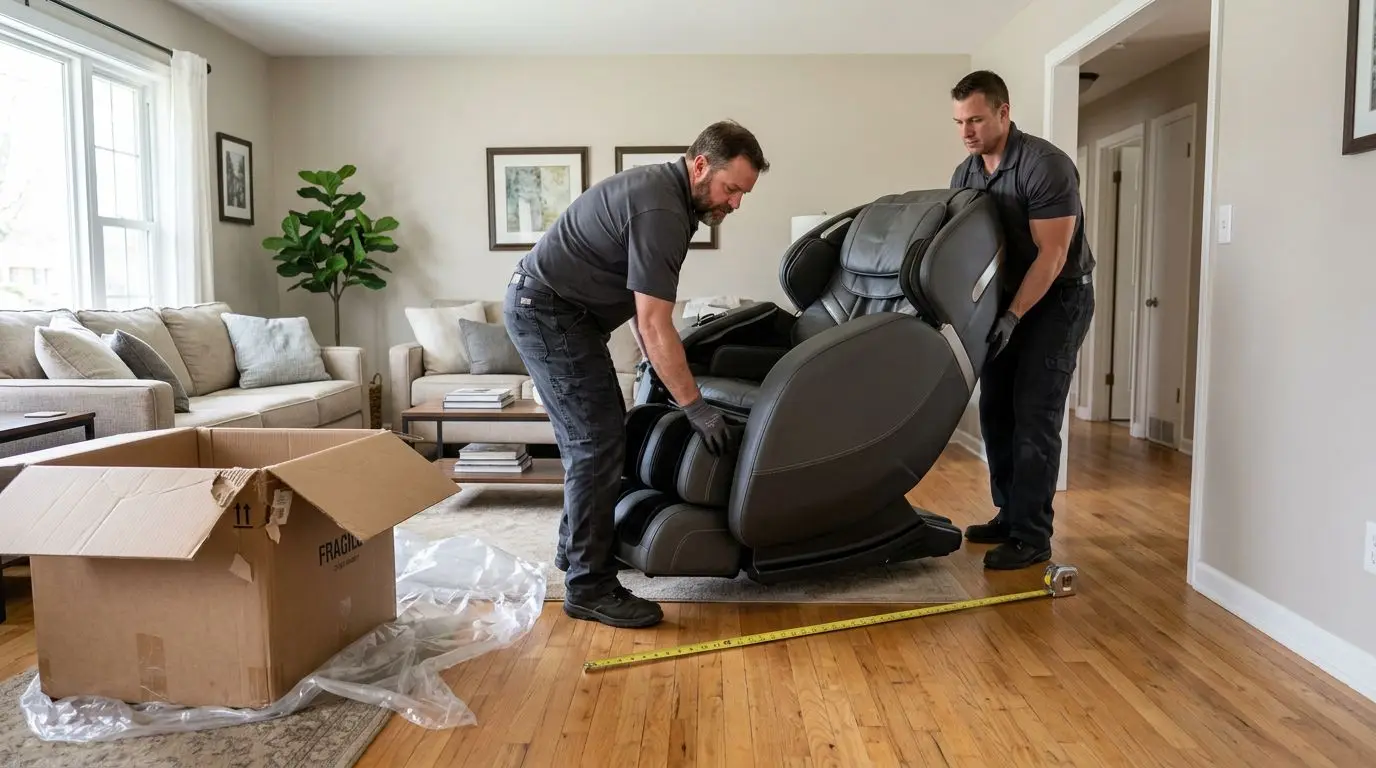
Keep the first test simple. Do not remove panels unless the owner manual specifically allows it. Many chairs weigh 150 to 300 pounds, and a moving backrest or leg unit can pinch fingers or damage flooring if handled casually.
Normal massage chair sounds during a 10 to 30 minute session
Some noise is expected because a massage chair is a motorized appliance. During a typical 10, 15, or 30 minute session, rollers travel up and down the back track, airbags inflate and release, and the chair may recline or adjust the leg rest. Even a well-built chair will not be silent.
Roller noise is often a steady mechanical hum or muted rolling sound. It may become slightly louder when the rollers move over the upper back area because the mechanism is changing angle and pressure. If the chair uses 3D or 4D-style roller control, you may also hear a small motor adjust how far the rollers protrude.
Air compression noise is common too. The pump may make a buzzing or pulsing sound, and air valves may click as zones inflate or deflate. In a compression-heavy program, that can happen every few seconds. This is similar to the way a blood pressure cuff uses air, though a massage chair system is built for comfort rather than medical measurement.
Light upholstery creaks are usually harmless. Synthetic leather, padding, and plastic trim can flex when you shift your weight or when the chair changes recline angle. This is more noticeable in a quiet room, at night, or on hard flooring that reflects sound.
Foot and calf massagers can sound more active than the back mechanism. Foot rollers are close to the floor, often under thinner padding, and may create a rhythmic rolling or tapping sensation. If the sound stays consistent and does not include grinding, it is usually part of normal operation.
Noises that are not normal after 30 seconds of use
A new or harsh sound deserves attention if it continues for more than about 30 seconds, gets louder under body weight, or appears with a change in massage strength. Stop the program, return the chair upright if it can do so smoothly, and unplug it before inspecting around the base or leg rest.
Grinding is the clearest warning sign. It can mean a moving part is rubbing where it should not, a roller is struggling on the track, or debris is caught in the mechanism. Do not keep running the chair to see if the noise goes away. If there is a track or gear problem, extra use can make the repair more difficult.
A sharp scraping sound is also concerning. Look for a blanket, power cord, toy, pet item, or rug edge caught near the lower backrest, side panels, or footrest. Many noise complaints come from objects touching the chair while it reclines or returns upright.
Repeated hard clunks are different from a single click. One soft click during a direction change can be normal; a loud clunk every time the rollers reach the same point is not. The pattern matters. A once-per-cycle thud in the same 2 inch area of travel may point to a track, roller, or mounting issue.
Burning smells, visible smoke, flickering power, or a hot electrical odor are stop-now situations. Unplug the chair and do not use it until qualified service has checked it. Massage chairs are comfort products, not emergency devices, so there is no good reason to push through an electrical warning sign.
Safe troubleshooting you can do in 15 minutes
You can solve many noise issues with a careful 15 minute inspection. The key is to avoid opening sealed motor areas, forcing the backrest, or lubricating parts the manual does not identify as user-serviceable. Random sprays can stain upholstery, attract dust, or interfere with belts and sensors.
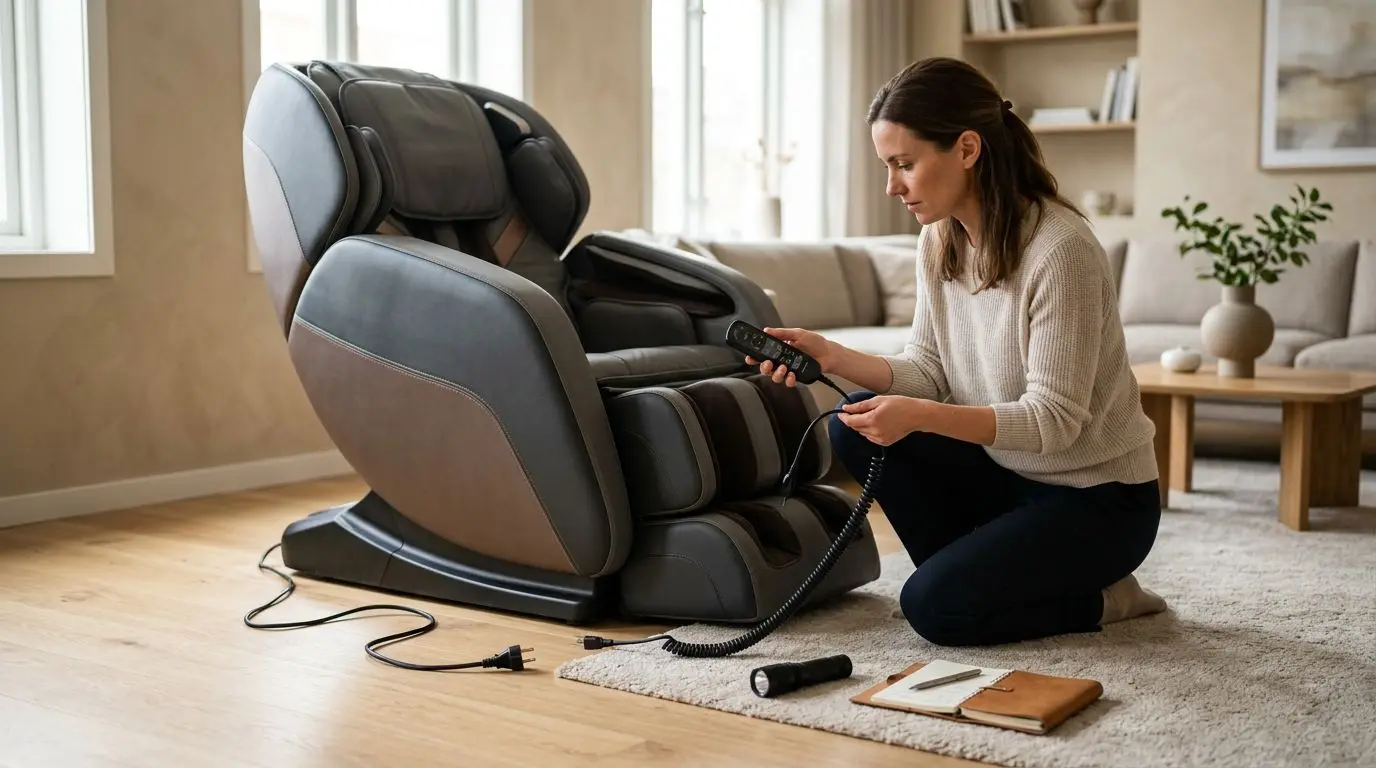
- Power down first. Stop the program, return the chair to its neutral position if possible, then unplug it for 60 seconds.
- Clear the area. Leave at least 2 to 4 inches behind and beside the chair, or more if the manual calls for it. Zero-clearance designs still need room around trim and cables.
- Check the floor. A chair on uneven tile, thick carpet, or a rug edge can creak or vibrate. Make sure all contact points sit flat.
- Inspect visible gaps. Look around the footrest, calf wells, side panels, and rear base for cords, clothing, packaging foam, coins, or small objects.
- Run one function at a time. Test recline only, airbags only, foot rollers only, then back rollers. Use 1 to 2 minutes per function if the controls allow it.
- Listen without body weight. A chair that is quiet empty but noisy with a person seated may be reacting to load, posture, floor flex, or a pressure setting.
If the chair has removable cushions or pads, reseat them. A loose back pad can make a flapping or rubbing sound that mimics a mechanical problem. Also confirm that zippers, hook-and-loop strips, and pillow straps are not hanging into a moving area.
Avoid tilting a heavy chair alone. If the base needs inspection from underneath, use the instructions in the manual or wait for service. A 200 pound chair can shift quickly once its center of gravity changes.
Squeaks, clicking, grinding, and buzzing compared by feature type
Different features create different noise patterns. A back roller system does not sound like an airbag system, and a recline actuator does not sound like a foot roller. Comparing the noise with the active feature is often the fastest way to narrow the cause within 2 or 3 test cycles.
| Feature type | Normal sound | Warning sound | Likely next step |
|---|---|---|---|
| S-track or L-track rollers | Steady rolling, soft hum, light direction clicks | Grinding, scraping, loud thud at same point | Stop use and request service if repeated |
| 3D or depth-adjusting rollers | Small motor adjustment, brief pitch change | Stalling, chatter, sudden harsh vibration | Lower intensity and test; call if unchanged |
| Airbags and valves | Pump buzz, short hiss, light valve clicks | Very loud pump, no inflation, constant leak hiss | Check air settings; service if a zone fails |
| Recline and leg actuators | Slow motor whir for 5 to 20 seconds | Clunking, uneven movement, stuck position | Clear obstacles and stop if motion is jerky |
| Foot rollers | Rhythmic rolling under the feet | Cracking, grinding, one-sided knocking | Check for debris in foot wells |
| Heat panels | Usually silent | Buzzing with odor or flicker | Unplug and arrange service |
Clicking is the most misunderstood sound. A controlled click from a relay, valve, or direction change can be normal. Rapid clicking that sounds like skipping teeth, especially when rollers try to climb the back track, is more concerning.
Squeaks can be mechanical or cosmetic. If the squeak happens only when you move your shoulders or shift in the seat, it may be upholstery friction. If it happens at the exact same point during automatic movement, treat it as a possible hinge, trim, or track issue.
Air pump noise and vibration: what is acceptable in 1 cycle
Air massage systems are rarely silent. In 1 compression cycle, the pump may run for a few seconds, the airbags may tighten around the shoulders, arms, calves, or feet, and then valves release air with a soft hiss. That pattern is normal if the pressure feels even and the sound is steady.
Air pump noise becomes suspicious when it changes suddenly. A pump that used to make a low buzz but now sounds strained, rattly, or much louder may be working harder than it should. If one air zone no longer inflates while the pump keeps running, there could be a disconnected tube, leak, valve problem, or control issue.
Vibration can travel through flooring. A chair on hardwood, laminate, or a second-floor room may sound louder than the same chair on a dense mat. Placing a stable furniture mat under the base can reduce transferred vibration, but do not block ventilation openings or make the chair unstable.
Check what is touching the chair. A side table 1 inch from the armrest, a power cord against the rear cover, or a wall contact point can amplify a normal pump buzz into an annoying rattle. Leave clear space around moving panels before assuming the pump is failing.
How to measure the noise and choose the next step within 3 feet
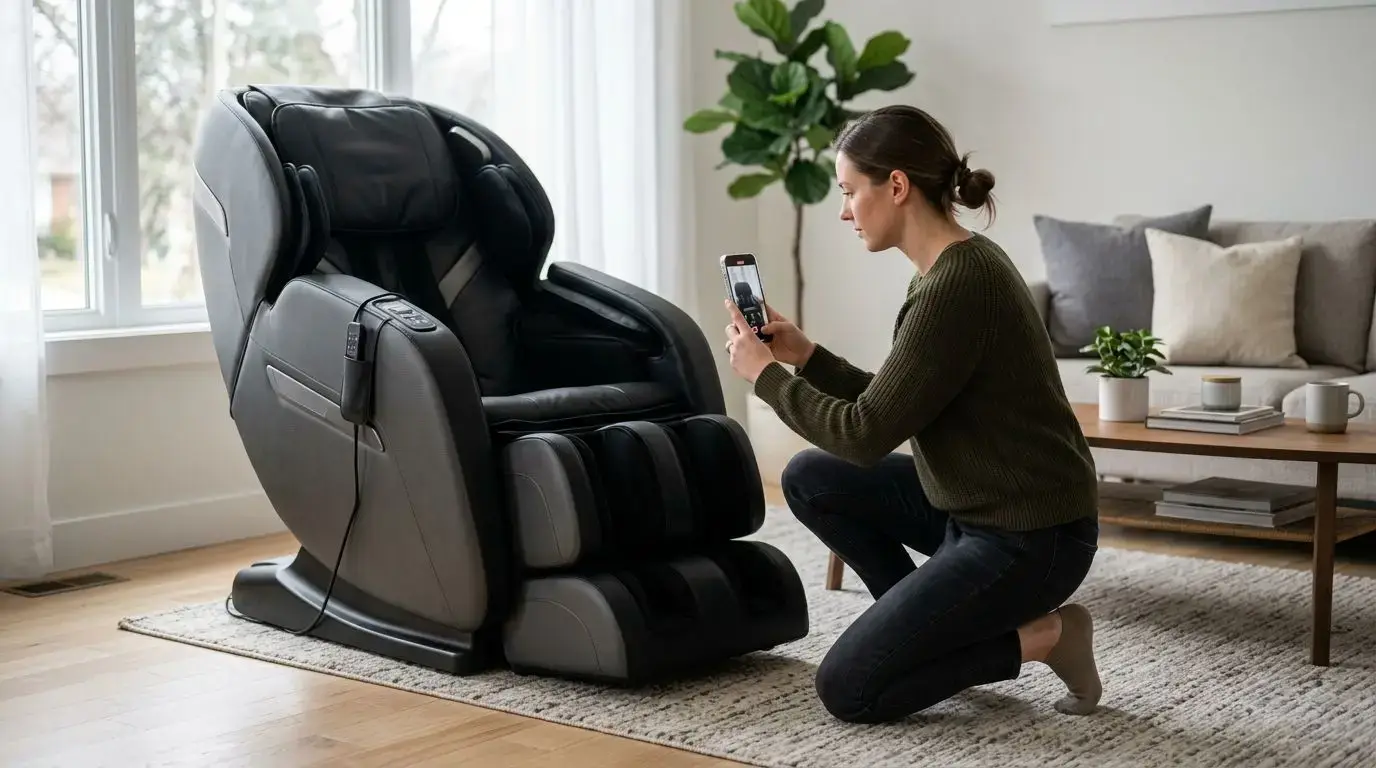
Good documentation helps you avoid vague service conversations. Use your phone to record a 20 to 30 second video from about 3 feet away, then another close enough to show the active area without putting your hand near moving parts. Capture the control screen if it shows the active function.
Write down the program name or function, approximate minute of the session, body position, intensity setting, and whether the chair was loaded or empty. For example: back rollers only, medium intensity, noise at shoulder height after 4 minutes, happens with and without user seated. That is much more useful than saying the chair is loud.
If you use a basic sound meter app, treat it as a rough reference, not a lab measurement. Room acoustics, phone microphone limits, and distance can change the reading. Still, measuring from the same 3 foot position before and after moving the chair can show whether floor vibration is part of the issue.
Choose your next step based on repeatability. If the sound disappears after clearing an object or leveling the chair, monitor it for the next 3 sessions. If the same harsh noise returns in the same location, stop using that function and contact service. If the chair is under warranty, do not attempt internal repairs that could create a warranty dispute.
Who DIY troubleshooting is best for and who should call service within 1 day
DIY troubleshooting works best for owners dealing with setup-related sounds, loose cushions, floor vibration, light squeaks, or air pump noise that still follows a normal on-off cycle. If you can identify the sound without opening the chair and resolve it in under 15 minutes, a service visit may not be necessary.
Service is the better path when the sound is harsh, repeated, electrical, or tied to movement problems. Call within 1 business day if the chair grinds, smells hot, stops mid-recline, shows an error code, or makes a loud clunk under normal use.
| Owner situation | Best next step | Why |
|---|---|---|
| New chair squeaks on a thick rug | Level it and test on stable flooring | Base flex can create noise |
| Airbags click every few seconds | Usually monitor | Valves often click during compression |
| Grinding along the back track | Stop and call service | Continued use may worsen damage |
| Footwell rattles after vacuuming nearby | Inspect for debris | Small objects can enter open areas |
| Burning smell with buzzing | Unplug and call service | Electrical symptoms need inspection |
People with limited mobility should be especially cautious about self-inspection. Do not crawl behind or under a powered chair if getting back up is difficult. Ask another adult to help with visual checks, or go straight to service.
How to prevent new noises with a 5 minute monthly check
A simple 5 minute monthly check can prevent many annoying sounds. Vacuum around the base and foot wells using a soft attachment, confirm the power cord is routed away from moving parts, and make sure the chair has not inched closer to a wall.
Keep blankets, pet toys, charging cables, and loose clothing away from the recline path. Many massage chairs move several inches as they recline, even when marketed as space-saving designs. If the chair is in a tight room, recheck clearance after guests, cleaning, or furniture moves.
Use the chair within the limits listed in its manual, including user weight, session length, and rest periods between sessions. Running back-to-back high-intensity cycles for an hour may create more heat and wear than a standard 15 or 20 minute program. The manual is the authority for your specific chair.
Do not add lubricant unless the manual instructs you to do so. Many roller tracks, bearings, bushings, and gears are not meant to be user-lubricated. The wrong product can damage plastic, degrade upholstery, or collect grit.
FAQ: 5 common noise questions from massage chair owners
Why does my massage chair click when the rollers move?
Soft clicking can be normal when rollers change direction, adjust width, or switch techniques. It is more concerning if the clicking is rapid, loud, or paired with skipping, jerking, or a repeated thud at the same point on the track.
Is air pump noise normal?
Yes, some pump noise is normal during air compression. A steady buzz, short hiss, and valve clicks are expected. A sudden loud rattle, constant leak sound, or pump that runs while one zone never inflates should be checked.
Can I use lubricant to stop a squeak?
Only use lubricant if the owner manual specifically tells you where and what type to use. Spraying general lubricant into a massage chair can stain materials, attract dust, or damage components.
Should I keep using the chair if it grinds only once per session?
No. A grinding sound, even once per session, is a reason to stop that function and inspect for visible debris. If nothing obvious is caught, contact service before the next use.
Why is my chair louder after moving it to another room?
The new floor may transmit more vibration, or the chair may be closer to a wall, table, or trim piece. Recheck clearance, level contact, and cord routing before assuming a mechanical failure.
Frequently asked questions
Why does my massage chair click when the rollers move? +
Soft clicking can be normal when rollers change direction, adjust width, or switch massage techniques. It is concerning if the clicking is rapid, loud, or paired with jerking, skipping, or a repeated thud at the same point.
Is air pump noise normal in a massage chair? +
Yes. A steady pump buzz, brief hiss, and light valve clicks are normal during air compression. A loud rattle, constant leak sound, or a pump that runs while an air zone does not inflate should be checked.
Can I lubricate my massage chair to stop squeaking? +
Only if the owner manual specifically says to do so and identifies the correct lubricant and location. General sprays can stain upholstery, attract dust, or damage plastic and moving parts.
Should I keep using a massage chair that makes a grinding noise? +
No. Stop using that function, unplug the chair, and check only for visible obstructions. If the grinding continues or nothing obvious is caught, arrange service before using it again.
Why did my massage chair get louder after I moved it? +
A different floor can transmit more vibration, and the chair may now be closer to a wall, table, rug edge, or power cord. Check level flooring, clearance, and anything touching the chair.
Related guides
Massage Chair Not Working? Troubleshooting Power, Remote, Rollers, Heat, and Air Compression
13 min read
Massage Chair Maintenance Checklist: Weekly, Monthly, and Yearly Tasks
13 min read
Massage Chair Repair Guide: Problems, Parts, Service Calls, and Warranty Tips
14 min read
Are Massage Chairs Good or Bad for You? Benefits, Risks, and Safe Use Guidelines
13 min read
Massage Chair Won’t Turn On? What to Check Before Calling for Service
13 min read