Disclosure: We may earn a commission when you buy through links on this page, at no extra cost to you. We buy nothing, sell nothing and accept no payment for coverage — commissions never decide what we recommend. How we make money.
The hidden costs of buying a massage chair usually come from delivery, in-home setup, room fit, future repairs, and moving the chair later. A chair that looks affordable online can become harder to budget for if it weighs 200 to 350 pounds, needs stair service, requires a technician visit, or cannot fit through a 30-inch doorway. The safest way to shop is to price the chair as a total ownership decision, not as one checkout number.
That does not mean a massage chair is a bad purchase. It means the quote should reflect real life: your doorway width, your floor plan, your outlet location, your warranty terms, and whether you might move within the next few years. Use the sections below as a practical checklist before you order.
What the sticker price usually leaves out: 5 cost categories
The advertised price often covers the chair itself and not much more. Depending on the seller, freight may be included, partially included, or added at checkout. In some cases, delivery stops at the curb, leaving you responsible for getting a 200-plus-pound boxed item into the house.
Think of total cost of ownership in five buckets: delivery, setup, home readiness, repairs, and future moving. Each one can be simple or complicated. A ground-floor room with a wide entry door is very different from a second-floor bedroom reached by a tight staircase.
| Cost category | What to check before buying | Concrete example |
|---|---|---|
| Delivery | Where the carrier leaves the chair | Curb, threshold, room of choice, or white-glove service |
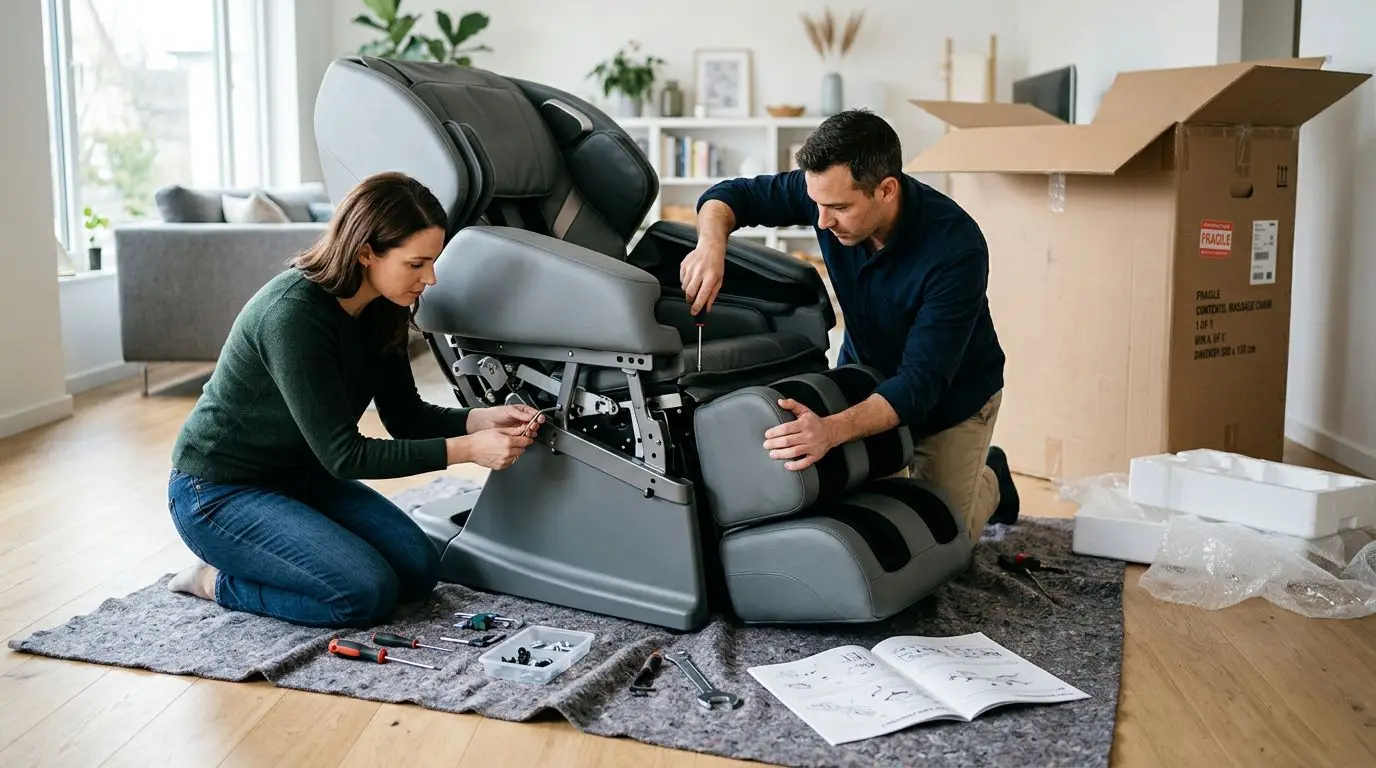
| Setup | Who unboxes, assembles, and removes packaging | Carton may be over 30 inches wide and require 2 adults |
| Home fit | Doorways, hallways, stairs, ceiling height, recline clearance | Some rooms need several inches behind the backrest, even with space-saving recline |
| Repairs | Parts, labor, in-home service, and warranty exclusions | Airbags, rollers, motors, remotes, and power components may have different coverage periods |
| Moving | Disassembly, transport, reassembly, and risk of damage | A chair that weighs 250 pounds is not a casual weekend move |
The key is not to guess. Ask the seller to define each service in writing, including what happens if the chair does not fit, arrives damaged, or requires a return pickup.
Delivery: curbside, threshold, room-of-choice, and white-glove service
Delivery wording matters. “Free shipping” may only mean freight to your address, not placement inside your living room. For a large chair in the 200 to 350 pound range, curbside and white-glove delivery are not minor variations. One can mean a pallet at the driveway; the other can mean a chair positioned where you can actually use it.
| Delivery type | What it usually means | What may not be included |
|---|---|---|
| Curbside freight | Carrier drops the boxed chair near the curb, driveway, or loading area | Bringing it inside, stairs, unboxing, assembly, debris removal |
| Threshold delivery | Box is brought just inside the first accessible door | Placement in a specific room, upstairs delivery, setup |
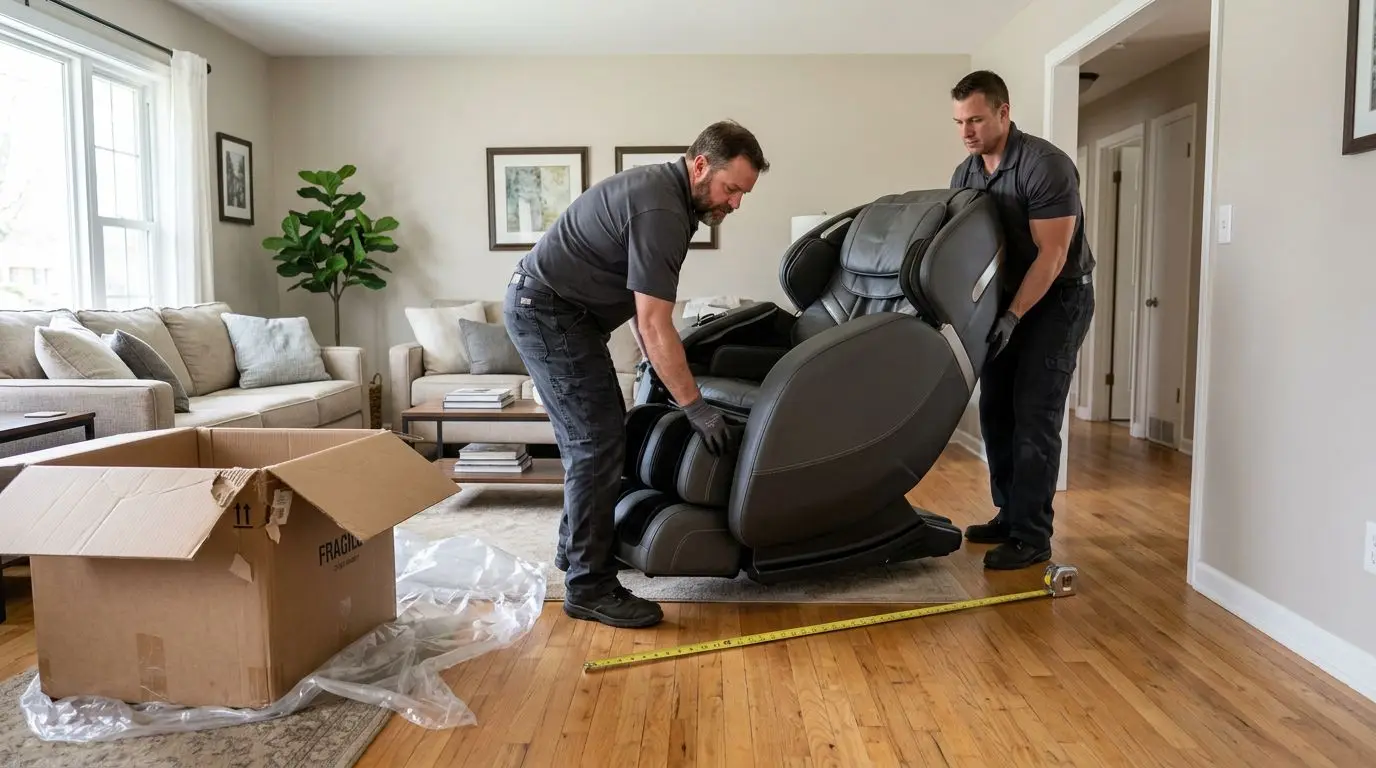
| Room-of-choice delivery | Chair is moved to a selected room if access is clear | Assembly, packaging removal, difficult stairs, narrow turns |
| White-glove setup | Delivery team brings the chair in, assembles basic parts, positions it, and may remove packaging | Electrical work, wall mounting, doorway modification, unusual disassembly |
Before you order, ask whether the delivery team will climb stairs, how many flights are included, and what counts as an “obstruction.” A 90-degree turn in a hallway can matter as much as doorway width. If your front door is 32 inches wide but the chair carton is wider, the team may need to remove packaging outside or refuse the placement.
Ask about appointment windows, too. Freight delivery often requires an adult to be home for a multi-hour window, and missed appointments can create rescheduling headaches. If the chair arrives on a pallet, confirm whether the carrier takes the pallet away. Many freight services do not.
Setup and room fit: measure before a 250-pound chair arrives
A massage chair is furniture, electronics, and a moving recliner in one product. Fit problems are common because shoppers measure the room but forget the path to the room. Measure doors, hallways, stair landings, elevator openings, and the final space before you commit.
Start with doorways. Many interior doors in US homes are about 28 to 32 inches wide, while larger exterior doors are often about 36 inches wide. The usable opening can be smaller once hinges, trim, handles, and storm doors are considered. If a chair’s shipping carton is too large, a delivery team may need to remove the chair from the carton, which can affect damage handling and return eligibility.
Next, measure recline clearance. Some massage chairs use a space-saving recline design that slides the base forward as the backrest leans back. Others need more open space behind the chair. Even with a wall-hugging design, leave practical room for movement, ventilation, and access to the power cord.
- Measure the narrowest doorway, not the widest one.
- Measure hallway width at baseboards, not just shoulder height.
- Check stair turns, railings, low ceilings, and landing depth.
- Confirm the chair’s upright and fully reclined dimensions.
- Leave walking clearance around the footrest and side panels.
Packaging is another hidden issue. A large massage chair carton can leave you with bulky cardboard, foam, plastic wrap, straps, and sometimes a pallet. If packaging removal is not included, you may need a plan for disposal or recycling. That is easy in some neighborhoods and inconvenient in others.
Electrical and home prep: plan for a standard 120-volt outlet
Most residential massage chairs sold for US homes are designed for a standard 120-volt outlet, but you should still read the specifications before buying. Do not assume an extension cord is acceptable. Many manuals advise plugging directly into a grounded outlet, and the power cord may only be several feet long.
Outlet location can affect where the chair can sit. If the cord crosses a walkway, it becomes a trip point. If the outlet is behind the chair, you need enough room to access the plug without pinching the cord during recline. Power strips, loose outlets, and overloaded circuits are not worth gambling with on a large motorized product.
Home prep can also include floor protection. A heavy chair on small contact points can mark soft flooring over time, especially if the chair is moved for cleaning. On hardwood, laminate, or vinyl plank, consider a stable protective mat rated for furniture weight. On thick carpet, make sure the chair sits level and the footrest can extend without dragging.
Noise is another practical factor. Rollers, air cells, pumps, and reclining motors all make some sound. In a quiet apartment at 11 p.m., normal operating noise may feel more noticeable than it did in a showroom. If you share a wall or floor with neighbors, ask about motor noise and vibration during the return window before you discard the packaging.
Repairs and warranties: read the 1-year, 3-year, and 5-year language carefully
Warranty coverage is one of the biggest ownership-cost variables. Many massage chairs include separate terms for parts, labor, and structural components, and those terms may not last the same length of time. A warranty that sounds long at first glance may provide in-home labor for a shorter period than parts coverage.
Read the warranty line by line. Look for who pays for diagnostic visits, shipping on replacement parts, labor after the first coverage period, and service in your ZIP code. If the company ships a part to you but does not cover installation, you may still need a technician.
| Component or issue | Why it matters | Question to ask |
|---|---|---|
| Roller mechanism | Controls the main back massage motion and track travel | Are rollers, motors, and track components covered together or separately? |
| Air cells and hoses | Used for compression feel at shoulders, arms, calves, or feet | Are leaks, valves, and pumps covered? |
| Remote or control panel | Needed for programs, intensity, recline, and heat settings | Is the controller considered an electronic part with limited coverage? |
| Upholstery | High-contact areas can wear before mechanical parts fail | Is peeling, cracking, or cosmetic wear excluded? |
| In-home labor | Large chairs are difficult to ship back for service | How long is in-home labor included, and who schedules it? |
Keep the purchase receipt, serial number, and delivery paperwork. Take photos when the chair arrives, especially if the carton is damaged. If you need service later, clear photos and a written timeline can make the process simpler.
Returns deserve the same attention. Some sellers require original packaging. Others may charge return freight, inspection fees, or restocking fees, depending on policy and condition. A chair that felt good for 10 minutes in a store may feel too intense at home, so understand the return window before the box is gone.
Moving a massage chair: stairs, trucks, and 2-person lifting are real issues
Massage chairs are not easy to move. Even if a chair has small wheels at the rear, those wheels are usually meant for short repositioning on a flat surface, not for hauling across gravel, down stairs, or into a moving truck. Many full-size chairs require at least 2 capable adults and careful lifting technique.
If you rent, expect to move, or like rearranging rooms often, this should influence the type of chair you buy. A compact chair may be easier to place in an apartment than a large full-body chair with an extended footrest. A chair with removable side panels or a detachable footrest can be easier to maneuver, but do not assume those parts are designed for repeated disassembly unless the manual says so.
Professional movers may handle the chair, but not all movers understand powered recline mechanisms, air hoses, or control wiring. Ask whether they have moved massage chairs before and whether they will protect the footrest, arm openings, remote, and side panels. If the chair is still under warranty, check whether damage during a move is excluded. It often is.
Storage also creates cost and risk. A massage chair should be stored indoors in a dry, temperature-stable space. Garages, storage units, and basements can expose upholstery and electronics to humidity, dust, pests, or temperature swings. If the chair must be stored, keep it upright, protected, and away from heavy items that could press into the padding or footwell.
Who it is best for: owners who will use it 3 to 5 times a week
A massage chair makes the most financial sense for someone who has the space, will use it regularly, and is comfortable owning a large powered recliner for several years. If you expect to sit in it 3 to 5 times per week for 15 to 20 minutes, the delivery and setup effort may be easier to justify. If you only want occasional use, a smaller massage device or a basic recliner with heat may be a better fit.
It is also best for a household that can leave the chair in one place. Frequent moving increases the chance of scratches, wiring issues, lost parts, or damage that is not covered by warranty. A first-floor family room with a clear path from the front door is ideal. A third-floor walk-up is not.
Body size and comfort preferences matter, too. Chairs vary in shoulder width, seat depth, calf opening, footrest length, and roller reach. A tall user may care about an extended track and longer leg adjustment. A smaller user may prefer gentler air compression and a narrower shoulder fit. If multiple people will use the chair, look for adjustable intensity, roller width options, and a body scan feature designed to adapt the roller path.
Safety comes first. If you are pregnant, have a pacemaker or other implanted cardiac device, have a history of blood clots or take anticoagulants, have osteoporosis, a recent fracture or surgery, spinal disc problems, neuropathy, or uncontrolled hypertension, ask your physician before using a massage chair. A consumer massage chair is a wellness product, not a medical device, and it should not be used as a substitute for medical advice.
How to choose and measure: an 8-step ownership-cost checklist
Use this checklist before you click buy. It takes about 30 minutes, and it can prevent expensive surprises on delivery day.
- Measure the full delivery path. Record the width of the front door, interior doors, hallway turns, stairs, landings, and elevator openings.
- Compare boxed and unboxed dimensions. Ask for both. A chair may fit unboxed but not in its carton.
- Check the final room layout. Include upright size, fully reclined size, footrest extension, side clearance, and access to the outlet.
- Confirm delivery level in writing. Curbside, threshold, room-of-choice, and white-glove are not interchangeable.
- Ask about stairs. Get clear terms for 1 flight, 2 flights, narrow turns, and elevator buildings.
- Read the warranty by category. Parts, labor, frame, electronics, upholstery, and in-home service may differ.
- Review return conditions before unboxing. Check the return window, packaging requirement, pickup process, and who pays return freight.
- Plan for the next move. If you may move within 12 to 24 months, favor easier access, removable components, and professional handling.
A simple worksheet helps. Write down the chair price, quoted delivery service, setup service, packaging removal, floor protection, any needed electrical work, extended coverage if offered, and likely moving cost later. Leave blank lines for anything the seller cannot confirm. Those blanks are not free; they are unknowns.
When comparing chair types, do not focus only on the longest feature list. More features can mean more motors, hoses, sensors, and parts to diagnose later. That may be worth it for comfort and coverage, but it should be a deliberate choice.
| Chair type or feature | Ownership advantage | Possible hidden cost |
|---|---|---|
| Compact massage chair | Easier fit in apartments and smaller rooms | May offer less leg or shoulder coverage for larger users |
| Full-size chair with extended footrest | More body coverage and a more reclined feel | Heavier, harder to move, and more demanding on room space |
| Zero-gravity recline design | Positions the body in a deeply reclined posture | Needs careful clearance checks behind and in front |
| L-track or SL-track design | Rollers travel farther down the back and under the seat area than a short back-only track | More mechanism length can add weight and service complexity |
| Air compression zones | Creates a squeezing pressure feel at areas like arms, calves, or feet | More air cells, hoses, and valves to inspect over time |
| Heated zones | Adds warmth to selected contact areas | Electronics and wiring should be covered clearly in the warranty |
Total cost planning: use a 3-year or 5-year view
A massage chair is not a disposable small appliance. It is closer to buying a powered recliner with specialized moving parts. A 3-year or 5-year view gives you a more honest comparison between a simple chair that is easy to place and a feature-rich chair that may be heavier, more complex, and harder to service.
Build your budget with quoted numbers, not assumptions. If delivery is included, write down what type. If setup is included, write down whether packaging removal is included. If the warranty is 5 years, write down how long labor is covered and whether the company offers in-home service in your area.
Consider your housing plans as well. If you own a single-story home and plan to keep the chair in the same room, moving costs may be minimal. If you rent, expect a job relocation, or live in a building with stairs, future transport should be part of the buying decision from day one.
The best purchase is not always the chair with the lowest checkout price. It is the chair that fits your body, your room, your delivery path, your support expectations, and your future plans with the fewest expensive surprises.
FAQ: hidden massage chair costs, delivery, setup, and repairs
Can one person move a massage chair?
Usually, no. Many full-size massage chairs weigh more than 200 pounds and are awkward to grip because of the side panels, footrest, and reclining base. Even if the chair has small rear wheels, plan on 2 capable adults or professional movers for anything beyond short repositioning on a flat floor.
Is white-glove delivery worth it?
It can be worth it if the chair is heavy, the room is not near the entrance, or you need unboxing and placement handled for you. Confirm exactly what is included: stairs, assembly, room placement, debris removal, and what happens if the chair does not fit.
Do massage chairs need special electrical wiring?
Most home massage chairs are designed for a standard grounded 120-volt outlet in the US, but always check the product specifications. Avoid routing cords across walkways, pinching cords behind the chair, or relying on extension cords unless the manual specifically allows it.
What part of a massage chair is most expensive to repair?
It depends on the chair design and warranty, but roller tracks, motors, electronics, pumps, and control systems are the areas to ask about. The important question is not only the part cost; it is whether in-home labor and diagnostics are covered.
Should I keep the packaging?
Keep it at least through the return window if you have space. Some sellers require original packaging for returns, and a large chair can be difficult to protect without the original carton and foam inserts.
What should I ask before buying if I live upstairs?
Ask whether stair delivery is included, how many flights are covered, whether tight turns are allowed, and whether the team can refuse delivery if the path is unsafe. Measure stair width, railing clearance, landing depth, and ceiling height before ordering.
Frequently asked questions
Can one person move a massage chair? +
Usually, no. Many full-size massage chairs weigh more than 200 pounds and are awkward to handle. Plan on 2 capable adults or professional movers for anything beyond short repositioning on a flat floor.
Is white-glove delivery worth it for a massage chair? +
It can be worth it if the chair is heavy, the room is far from the entrance, or stairs are involved. Confirm whether room placement, assembly, debris removal, and stair service are included.
Do massage chairs need special electrical wiring? +
Most home massage chairs in the US are designed for a standard grounded 120-volt outlet, but you should always check the specifications and avoid pinched cords or cords across walkways.
What warranty details matter most? +
Look at parts, labor, in-home service, electronics, upholstery, and return freight separately. A long warranty may still limit labor or require you to pay for certain service costs.
Should I keep the massage chair packaging? +
Yes, at least through the return window if space allows. Some return policies require original packaging, and the carton and foam inserts help protect the chair if it must be shipped back.
What should upstairs buyers check before ordering? +
Measure stair width, railing clearance, landing depth, ceiling height, and doorway openings. Also ask the seller whether stair delivery is included and what happens if the delivery team decides the path is unsafe.
Related guides
Buying a Massage Chair Online vs. In Store: Price, Testing, Delivery, and Return Trade-Offs
14 min read
New vs. Used Massage Chairs: Savings, Risks, and What to Check Before You Buy
13 min read
Where to Buy a Massage Chair Near You: Showroom Testing and Dealer Questions to Ask
12 min read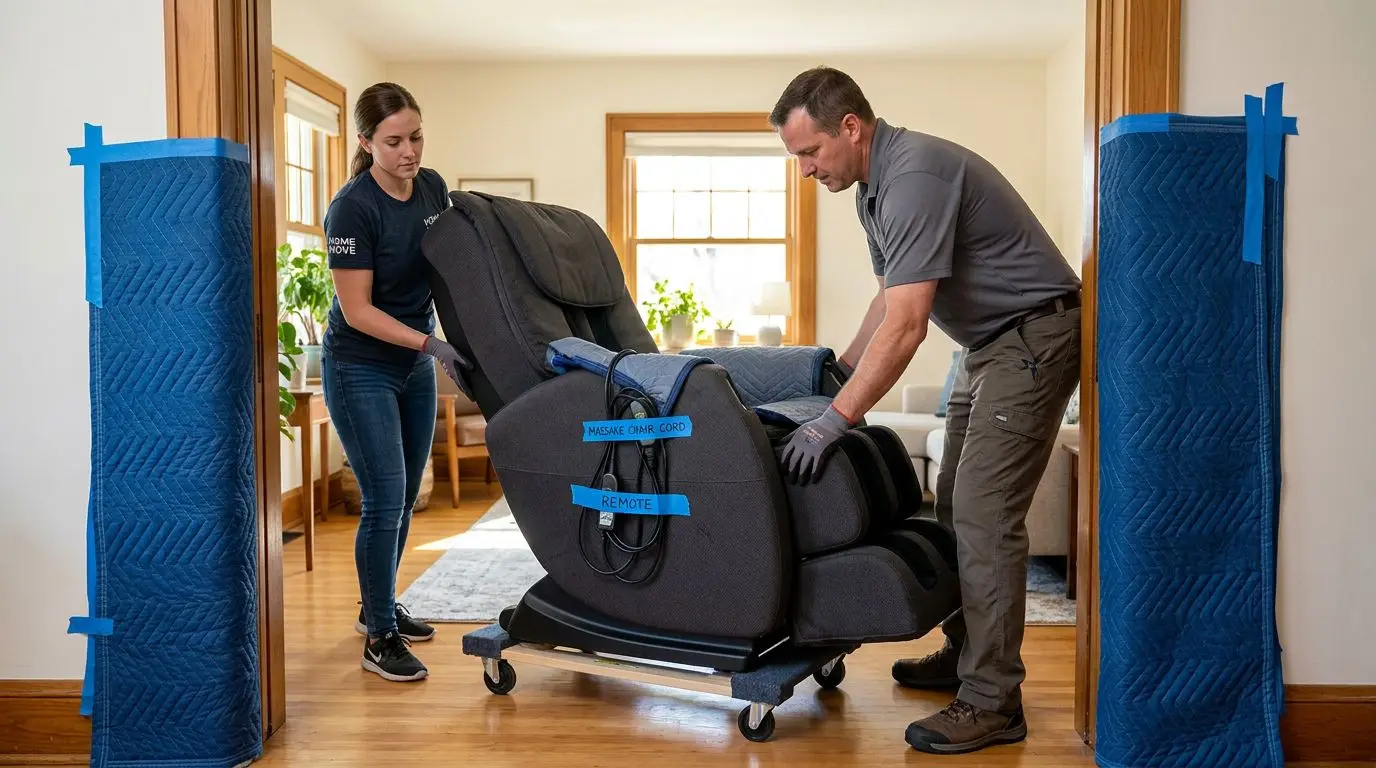
How to Move or Disassemble a Massage Chair Without Damaging It
14 min read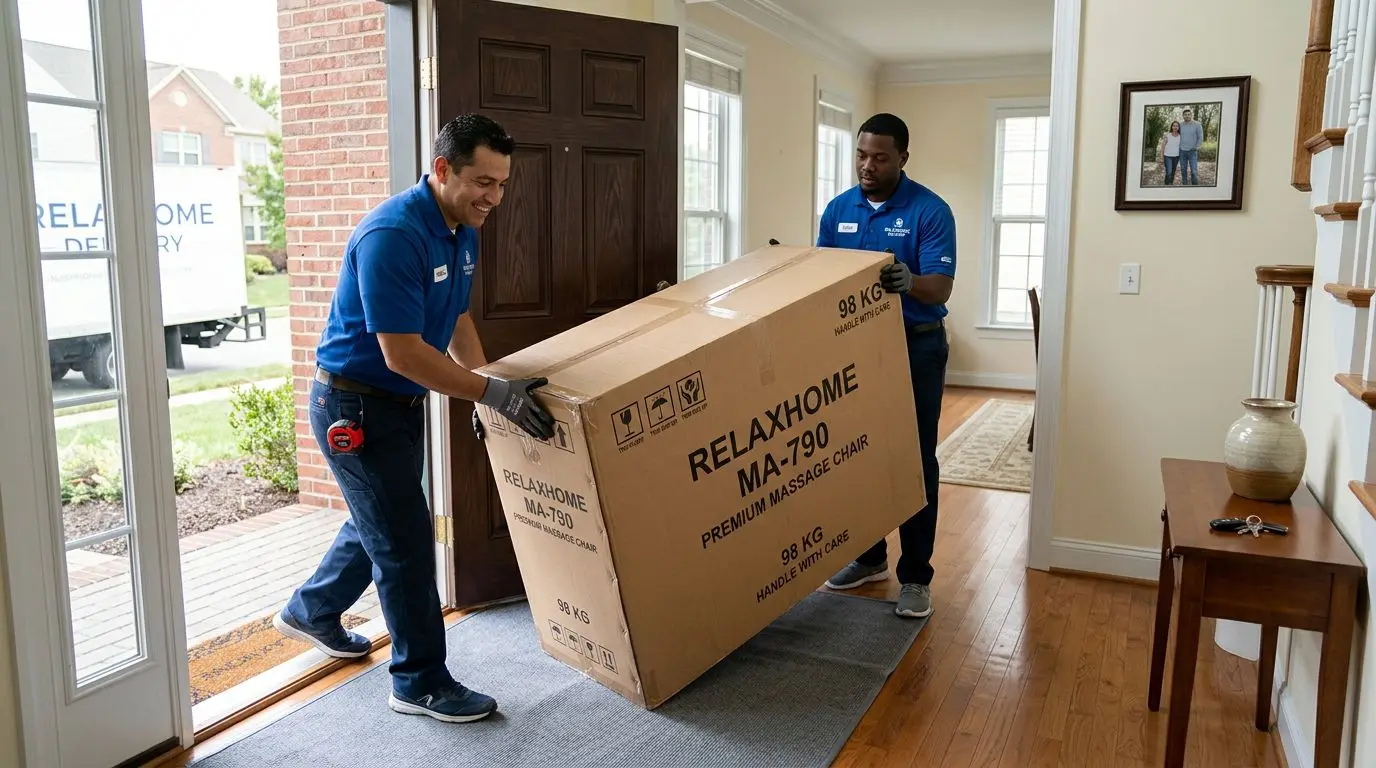
Massage Chair Delivery and Setup Guide: Threshold Delivery, White-Glove Installation, Stairs, and Assembly
14 min read