Disclosure: We may earn a commission when you buy through links on this page, at no extra cost to you. We buy nothing, sell nothing and accept no payment for coverage — commissions never decide what we recommend. How we make money.
The best place to buy a massage chair near you is a local showroom or dealer that lets you test several chair types for at least 15 to 20 minutes, explains delivery in writing, and gives you clear return, warranty, and service terms before you pay. Start with furniture stores, specialty wellness showrooms, local appliance or home retailers, warehouse clubs with display floors, and regional dealers that offer in-home delivery and setup.
A showroom visit is not just about finding the strongest massage. It is where you can judge fit, noise, roller coverage, footrest length, control layout, upholstery feel, and whether the seller can actually support a 200- to 350-pound chair once it reaches your home.
Where to buy locally: 5 realistic places to start
Most shoppers can find at least 2 or 3 local options within a reasonable driving radius, even without a dedicated massage chair store nearby. Focus on places with chairs plugged in and ready to test, not just boxed inventory or online-only listings.
| Local buying option | What it is good for | What to verify before visiting |
|---|---|---|
| Specialty massage chair showroom | Largest range of tracks, roller systems, and intensity levels | How many chairs are on the floor and whether appointments are needed |
| Furniture store | Seeing how a chair looks with home furnishings | Whether the chairs are powered and fully functional |
| Home wellness or fitness retailer | Testing chairs alongside other recovery-style products | Delivery area, setup fees, and service process |
| Warehouse club or membership store | Occasional floor displays and straightforward purchasing | Whether the exact displayed chair is available locally |
| Local dealer with online inventory | Local delivery plus a wider selection shown online | Whether you can test a comparable chair before ordering |
Call before you drive. Ask how many chairs are available to try, whether they are plugged in, and whether a salesperson can demonstrate body scanning, recline, heat, air compression, and manual roller positioning. A 5-minute call can save a 40-minute trip.
Be careful with pop-up displays, temporary mall kiosks, and event-only sales where you cannot get a written service contact. A chair may feel appealing during a short demo, but ownership depends heavily on delivery, parts access, warranty administration, and post-sale support.
Who buying from a local showroom is best for: 6 common shopper types
Local buying helps most when fit and comfort are uncertain. A massage chair is not one-size-fits-all; a chair that suits a 5-foot-4 user may feel poorly placed for someone who is 6-foot-2, even if both fall within the listed height range.
- First-time buyers: You can compare 2D, 3D, and 4D-style roller feel in person instead of guessing from photos.
- Households with multiple users: A showroom lets each person try shoulder position, calf fit, and intensity before deciding.
- Tall or short users: Footrest travel, shoulder detection, and neck roller placement are easier to judge in person.
- Apartment and condo residents: Local dealers can explain elevator, hallway, and threshold limits before delivery day.
- Shoppers sensitive to pressure: You can test the lowest intensity setting and see whether padding and programs feel comfortable.
- Buyers who want setup help: Many chairs weigh roughly 200 to 350 pounds, so professional placement can matter.
Buying local is less important if you have already tested the same chair type extensively, have a simple delivery path, and are comfortable handling service by phone or email. Even then, local support can be useful if the chair needs adjustment, inspection, or pickup.
How to test a massage chair in a showroom: use a 20-minute routine
A quick sit-down tells you very little. Plan on 15 to 20 minutes per serious contender, because the first 2 minutes can feel impressive on almost any chair. Comfort issues usually appear after the rollers repeat a path, the footrest extends, or the chair reclines fully.
1. Start upright for 3 minutes
Sit in the chair without starting a program. Check whether your head, shoulders, hips, calves, and feet land naturally. Your knees should not feel jammed upward, and your feet should not dangle unsupported when the legrest is extended.
2. Run an automatic program for 8 to 10 minutes
Use a standard full-body program at a medium setting. Notice the roller path across the neck, shoulders, back, glutes, and thighs if the chair has an L-track or SL-track. A good fit feels consistent, not as if the rollers are missing your shoulders or pressing into the wrong spots.
3. Try manual controls for 5 minutes
Move the rollers to one area, then adjust width, speed, and intensity if available. This is where 3D-style depth control can matter, because some users want a lighter glide while others prefer more pronounced pressure. Do not assume more intensity is better.
4. Check the foot and calf section for 2 minutes
Foot rollers and calf air cells can feel great to one person and too firm to another. Try the lowest setting first. If the footwell is narrow, ask whether liners are removable or washable, and confirm the maximum shoe size or foot length guidance if the dealer has it.
5. Listen and look
Recline the chair fully and listen for motor noise, air pump cycling, and frame movement. Some operating sound is normal, but grinding, scraping, or uneven motion on a floor model is worth questioning. Also check how easy it is to use the remote while reclined.
Compare chair types before you compare stores: 4 core design choices
Local shopping gets easier when you know what you are testing. The biggest differences are usually track shape, roller depth, recline design, and lower-body coverage. Two chairs can look similar but feel completely different after 10 minutes.
| Feature type | Common options | What you should feel for |
|---|---|---|
| Track design | S-track, L-track, SL-track | S-track follows the back; L- and SL-style tracks usually extend under the seat area |
| Roller movement | 2D, 3D, 4D-style controls | 2D moves up, down, and side to side; 3D adds depth; 4D-style systems vary rhythm or speed |
| Recline | Standard recline, zero gravity-style recline | Whether your body feels supported and whether entry and exit are easy |
| Lower-body features | Calf compression, foot rollers, extendable legrest | Whether your calves and feet fit without pinching or overextension |
| Space use | Standard clearance, wall-hugging design | Some chairs need several inches behind them; space-saving designs may need about 2 to 6 inches |
Do not get distracted by a long feature list if the chair does not fit. A chair with many programs, lights, speakers, and app controls is still the wrong purchase if the shoulder rollers land too high or the footrest cannot adjust to your legs.
Dealer questions to ask before you buy: 14 details to get in writing
Once you find a chair that feels right, slow down. A massage chair purchase includes the chair, the delivery path, the warranty, and the store policy. Ask direct questions and request written answers on the receipt, invoice, or email confirmation.
- 1. Is the chair sold new, open-box, floor sample, or refurbished? Floor samples may have many hours of use, so ask how the warranty is handled.
- 2. What is included in the posted price? Confirm whether delivery, in-room placement, assembly, haul-away, and sales tax are separate.
- 3. What delivery method is included? Curbside delivery is very different from white-glove in-room setup.
- 4. How much does the chair weigh? Many full-size chairs are roughly 200 to 350 pounds before packaging.
- 5. What are the carton dimensions? A boxed chair can be harder to move than the chair itself.
- 6. Can it be moved through a 30- to 36-inch doorway? Ask whether side panels or the legrest can be removed if needed.
- 7. Who handles service calls? Is it the store, a regional technician, the distributor, or the manufacturer?
- 8. What parts and labor are covered? Separate frame, motor, roller, electronics, labor, and upholstery terms.
- 9. Who pays shipping for warranty parts? Small parts and large components may be treated differently.
- 10. What is the return window? Common retail windows vary, and massage chairs may have stricter rules than smaller items.
- 11. Are return shipping or pickup fees charged? A return can be expensive if the chair must be freighted back.
- 12. Is there a restocking fee? Ask for the percentage or flat amount.
- 13. What happens if the chair arrives damaged? Know whether you should refuse delivery, photograph damage, or sign with exceptions.
- 14. Is financing tied to final delivery? Understand when payments begin and what happens if delivery is delayed.
A trustworthy dealer should answer these questions without pressure. If the salesperson avoids policy details and keeps steering you back to a limited-time offer, pause the purchase.
How to measure your home before delivery: 7 numbers you need
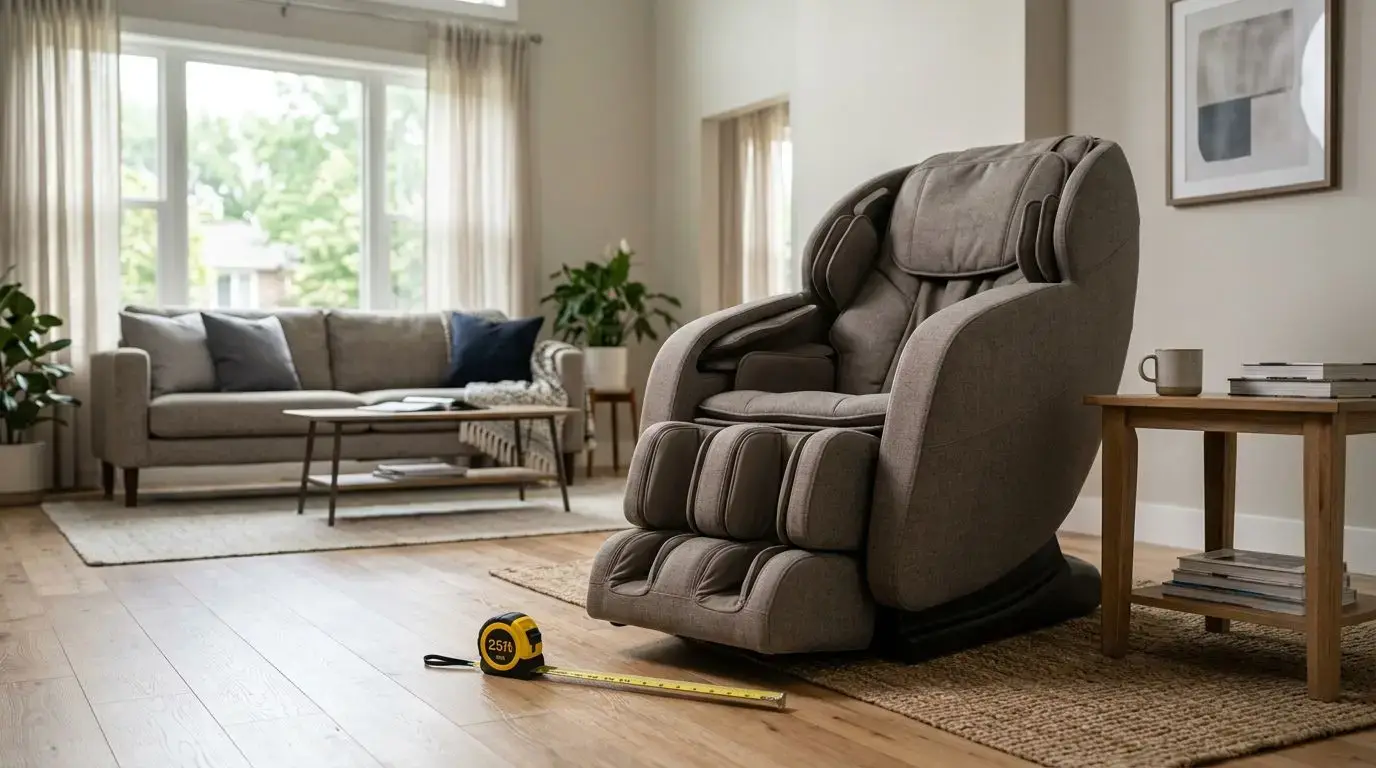
Measure before you pay, not after the truck arrives. Write down 7 numbers: doorway width, hallway width, stair width, ceiling height on stairs, elevator depth, room space, and distance to an outlet. Photos and a quick phone video of the delivery path can also help the dealer spot problems.
- Doorways: Measure the narrowest clear opening with the door open 90 degrees. Many interior doors are about 30 to 32 inches wide, but trim and hinges reduce usable space.
- Hallways: Measure width and note tight turns. A 90-degree turn can be harder than a straight narrow hall.
- Stairs: Measure stair width, landing depth, and overhead clearance. Tell the dealer if there are more than 1 or 2 steps outside.
- Elevator: Measure door opening, interior depth, and interior height. Check building rules for freight elevator reservations.
- Room footprint: Measure chair width, full recline length, and rear clearance. Some chairs need only a few inches behind them; others need much more.
- Outlet location: Most chairs use a standard household outlet, but extension cords may not be recommended. Ask for the electrical guidance in the manual.
- Floor surface: Note hardwood, tile, carpet, or vinyl. A protective mat can help reduce dents and scuffs under a heavy chair.
If the chair will go upstairs, be especially careful. A team may decline delivery if the path is unsafe, too narrow, or not disclosed in advance. That can lead to rescheduling fees or a curbside drop-off you did not expect.
Delivery options compared: curbside, threshold, and white-glove setup
Delivery language matters. A single phrase can determine whether a 250-pound chair is left at the driveway or placed in your living room. Ask the dealer to define the service level instead of just saying delivery is included.
| Delivery type | Where the chair usually goes | Best for | Watch-outs |
|---|---|---|---|
| Curbside freight | Driveway, curb, or building entrance | Buyers with help, tools, and an easy path | You may handle unboxing, moving, and packaging disposal |
| Threshold delivery | Just inside the main entrance | Garages, first-floor entries, simple homes | Not the same as room placement |
| Room-of-choice delivery | Specified room | Heavy chairs in single-family homes or apartments | May exclude stairs, assembly, or packaging removal |
| White-glove setup | Placed, assembled, powered on, debris removed | Most buyers who want fewer surprises | Confirm stair limits, appointment windows, and damage procedure |
Before signing for delivery, inspect the carton. If you see crushed corners, punctures, wet cardboard, or broken strapping, take photos. Ask the dealer in advance whether you should refuse delivery or sign noting visible damage.
Return policies and warranties: compare at least 3 written terms
Return and warranty terms can matter as much as the chair itself. Compare at least 3 written details: the return window, the cost to send or pick up the chair, and who coordinates service after the sale.
Massage chairs are large freight items, so returns are not always simple. A store may offer a short return window but require original packaging, charge a restocking fee, or deduct return freight. That does not automatically make the policy unfair, but it should be clear before you buy.
For warranties, separate coverage into parts, labor, in-home service, and structural components. A long parts warranty with only a short labor period can still leave you paying for a technician visit later. Ask what documentation you will receive and whether registration is required within a set number of days.
Also ask about floor models. A discounted floor unit can be reasonable if the price reflects use and the warranty is clear, but you should inspect upholstery, remote buttons, legrest operation, air cells, zippers, and roller noise. Take photos at the store so the condition is documented.
Safety and comfort checks: 8 situations that call for a physician first
A massage chair is a consumer wellness product designed for comfort, pressure, and relaxation-style routines. It is not a medical device. If you have a health concern, ask your physician before using one, especially if strong pressure, heat, recline, or leg compression could be an issue.
Speak with your physician before buying or using a massage chair if you are pregnant; have a pacemaker or other implanted cardiac device; have a history of blood clots or take anticoagulants; have osteoporosis; recently had a fracture or surgery; have spinal disc problems; have neuropathy or reduced sensation; or have uncontrolled hypertension.
In the showroom, start low. Use the lightest intensity, shortest program, and no heat at first if you are unsure. Stop the session if the pressure feels sharp, pinching, numbing, or uncomfortable in a way that does not quickly pass after adjustment.
Red flags when shopping locally: 9 warning signs
Most local dealers are straightforward, but high-ticket furniture purchases can attract pressure tactics. Watch for signs that the seller is more focused on closing today than helping you live with the chair for years.
- No written return policy is available before payment.
- The salesperson cannot explain the difference between curbside and in-room delivery.
- You are told not to worry about measurements, even with stairs or narrow doors.
- The chair on display is not functional, but you are pushed to order anyway.
- The warranty is described only in vague phrases.
- Service is outsourced, but no contact process is provided.
- The seller discourages you from testing lower intensity settings.
- There is no clear damage procedure for freight delivery.
- A limited-time discount requires immediate payment before you can review terms.
A fair deal should survive a night of thought. If a store will not let you measure, compare, or read the paperwork, keep shopping.
A simple 1-page showroom checklist to bring with you
Print this checklist or keep it on your phone. Using the same questions at 2 or 3 stores makes the comparison much cleaner.
- Test each serious chair for 15 to 20 minutes.
- Try at least 1 automatic program and 1 manual roller adjustment.
- Check fit for every regular user in the household.
- Measure your doorway, hallway, stair, elevator, and room space before buying.
- Ask for chair weight, carton size, and rear clearance needs.
- Confirm delivery level: curbside, threshold, room-of-choice, or white-glove setup.
- Get return window, restocking fee, and pickup or freight cost in writing.
- Confirm parts, labor, in-home service, and who coordinates warranty work.
- Ask what to do if the carton arrives damaged.
- Do not buy based only on the strongest setting or a short demo.
The right local purchase should feel almost boringly clear: the chair fits your body, fits your home, and comes with policies you understand. That is the goal.
Frequently asked questions
Should I buy a massage chair locally or online? +
Buy locally if fit, intensity, delivery access, or setup are uncertain. A showroom lets you test the chair for 15 to 20 minutes and confirm delivery details. Online buying can work if you already know the chair type you want and the return and freight policies are clear.
How long should I test a massage chair in a showroom? +
Plan on at least 15 to 20 minutes per chair you are seriously considering. Try one automatic program, then use manual controls to check shoulder placement, back coverage, recline comfort, calf fit, and foot pressure.
What measurements do I need before delivery? +
Measure doorway width, hallway width, stair width, stair landing depth, elevator opening and depth, room footprint, rear recline clearance, and outlet distance. Also note tight turns, steps, and floor surfaces.
Is white-glove delivery worth it for a massage chair? +
Often, yes, especially for full-size chairs that may weigh around 200 to 350 pounds. White-glove service can include room placement, setup, power-on testing, and packaging removal, but you should confirm exactly what is included.
What should I ask about the return policy? +
Ask for the return window, restocking fee, pickup or return freight cost, packaging requirements, and whether opened or assembled chairs are eligible. Get the answers in writing before paying.
Who should ask a physician before using a massage chair? +
Ask your physician first if you are pregnant; have a pacemaker or other implanted cardiac device; have a history of blood clots or take anticoagulants; have osteoporosis; recently had a fracture or surgery; have spinal disc problems; have neuropathy or reduced sensation; or have uncontrolled hypertension.
Related guides
Buying a Massage Chair Online vs. In Store: Price, Testing, Delivery, and Return Trade-Offs
14 min read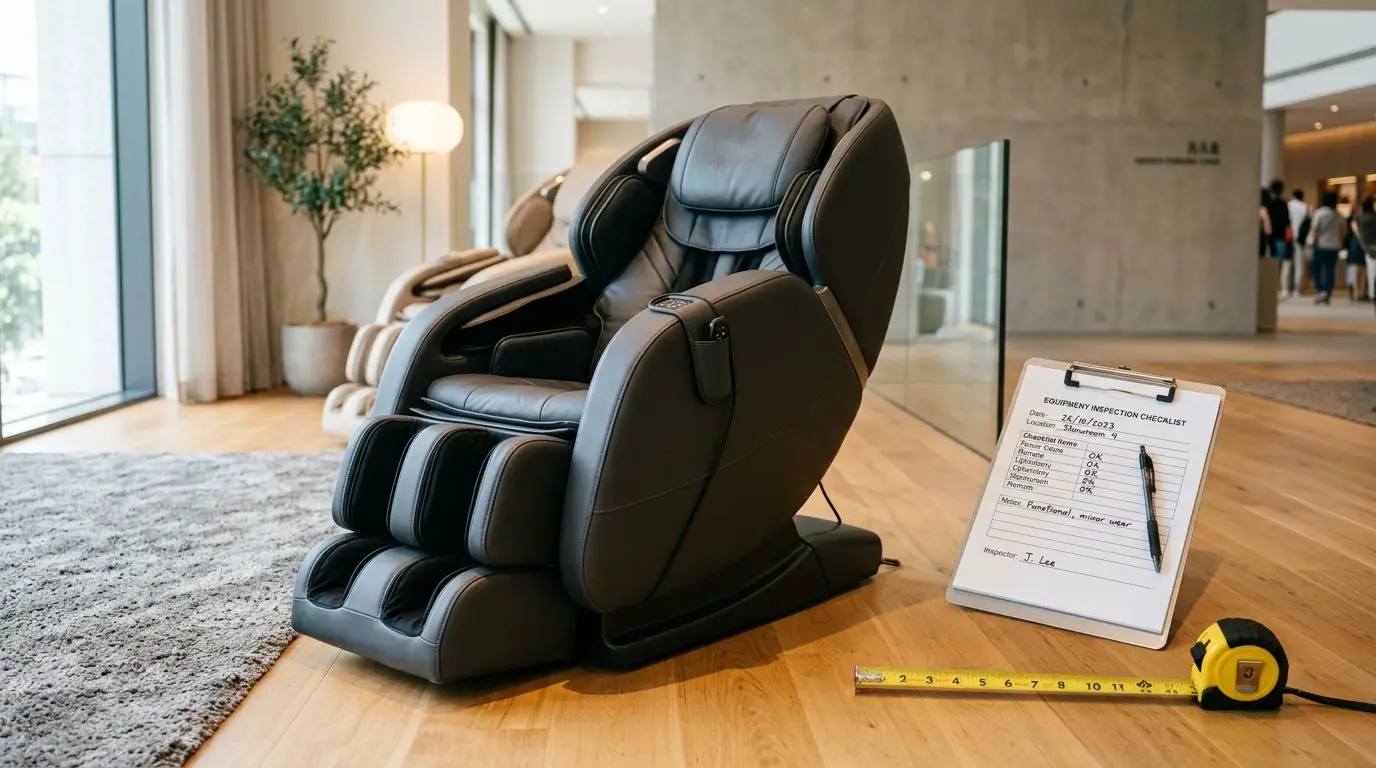
Open-Box, Floor-Model, and Clearance Massage Chairs: When the Discount Is Actually Worth It
12 min read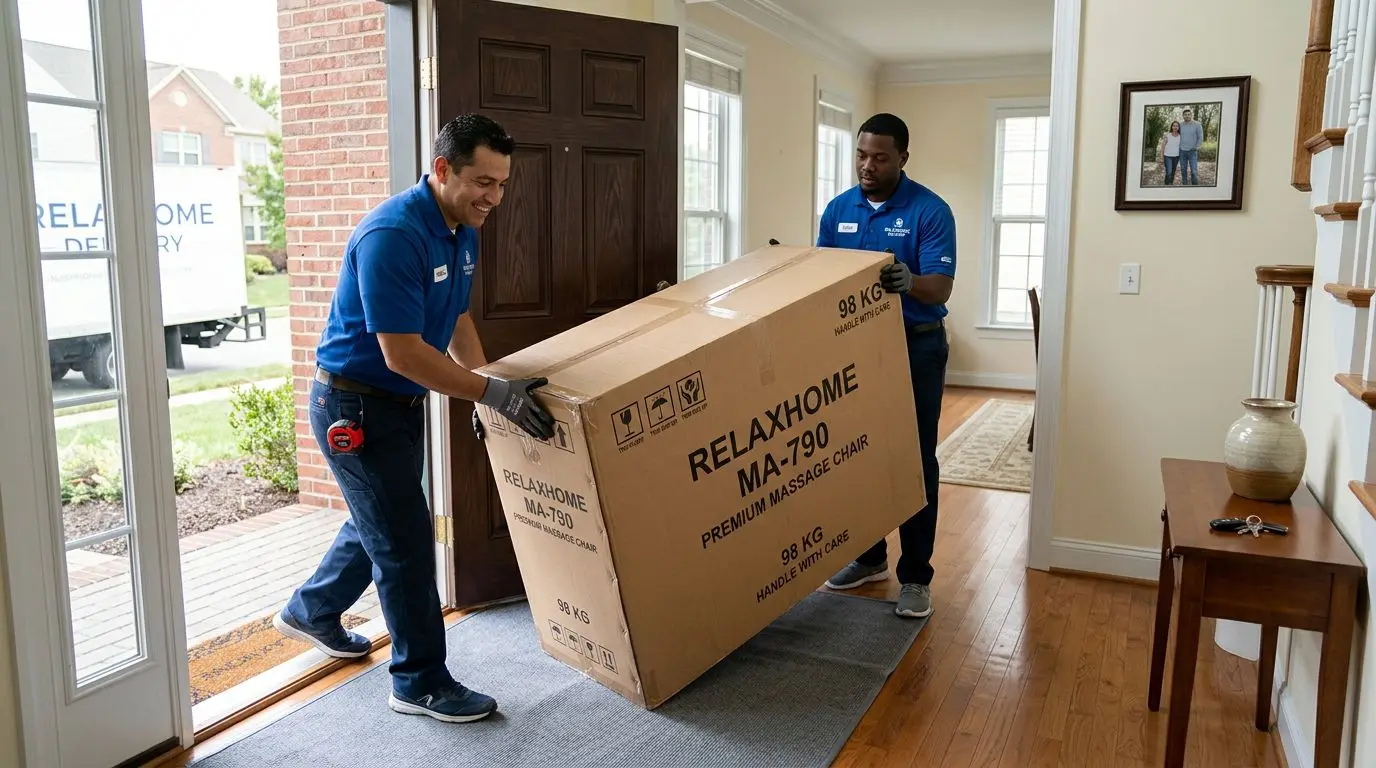
Massage Chair Delivery and Setup Guide: Threshold Delivery, White-Glove Installation, Stairs, and Assembly
14 min read
The Hidden Costs of Buying a Massage Chair: Delivery, Setup, Repairs, and Moving
15 min read
Massage Chair Warranty and Return Policy Buying Guide: What U.S. Shoppers Should Check
15 min read