Disclosure: We may earn a commission when you buy through links on this page, at no extra cost to you. We buy nothing, sell nothing and accept no payment for coverage — commissions never decide what we recommend. How we make money.
To maintain a massage chair, give it a quick wipe-down and visual check every week, do a deeper cleaning and function test every month, and complete a full inspection of cords, upholstery, rollers, airbags, and clearances once or twice a year. The goal is simple: keep dirt out of seams and moving areas, catch small wear early, and avoid stressing motors, tracks, and upholstery through poor placement or harsh cleaning products.
A good maintenance routine does not need to be complicated. Most owners can finish the weekly checklist in about 10 minutes, the monthly checklist in 30 to 45 minutes, and the yearly review in under 1 hour unless the chair needs service.
Weekly 10-minute massage chair maintenance checklist
Weekly care keeps the chair clean, dry, and free of small issues that can become bigger problems. If 2 or more people use the chair, or if someone uses it daily after workouts or in work clothes, treat this as a true weekly task rather than an occasional wipe-down.
- Power the chair off before cleaning. Use the main power switch if the chair has one, and do not clean around moving parts while a program is running.
- Wipe touch points. Clean the headrest, back pad, armrests, footrest, remote, and side panels with a soft microfiber cloth. These areas collect skin oils, hair products, dust, and fabric dye.
- Check seams and creases. Look along the seat edge, calf wells, arm openings, and head pillow zipper. Crumbs and grit in seams can abrade upholstery over time.
- Vacuum gently. Use a soft brush attachment around the seat, footrest, and lower back pad. Keep suction light near fabric mesh, zipper edges, and airbag openings.
- Look for loose objects. Remove coins, hair pins, charging cables, small toys, and pet hair before they slide into the track or footrest mechanism.
- Run a short listen test. During the first 2 minutes of a basic program, listen for new scraping, grinding, repeated clicking, or uneven air pump sounds.
- Check the remote and cord path. Make sure the remote cable, power cord, and any controller cradle are not pinched under the base or stretched across a walkway.
Use only a lightly damp cloth unless the chair’s manual says a cleaner is safe for that upholstery. Avoid soaking the surface. Liquid that seeps into seams, buttons, speakers, heaters, or the remote can cause electrical problems or staining.
One practical rule: if the cloth drips when you squeeze it, it is too wet. For most routine cleaning, the cloth should feel damp, not saturated.
Monthly 30- to 45-minute deep check
Monthly maintenance adds a closer inspection of areas that are easy to overlook. Set aside 30 to 45 minutes, especially if the chair has a foot-and-calf massager, arm airbags, heat, Bluetooth speakers, or a space-saving recline mechanism.
- Clean removable pads. If the head pillow, back pad, or foot liners are removable, take them off and clean both sides according to the owner’s manual. Let them dry completely before reinstalling.
- Inspect upholstery under pressure points. Look at the upper back, seat front edge, calf wells, and arm openings. These areas see repeated bending and rubbing during use.
- Test each major program type. Run at least 1 auto program and 1 manual setting for the back rollers, airbags, foot rollers, heat, and recline if available.
- Check airbag inflation. Airbags should inflate and deflate evenly. A delayed or weak section may signal a loose hose, a blocked area, or normal variation depending on the design.
- Inspect the footrest movement. Extend and retract the footrest fully. Make sure it moves smoothly and does not scrape flooring, rugs, or nearby furniture.
- Wipe ventilation areas. Dust around vents, base openings, and fan areas with a dry cloth or soft vacuum brush. Heat buildup is harder on electronics.
- Check fasteners you can safely see. If a visible screw or trim piece is loose, note it. Do not open the chair’s internal panels unless the manual specifically allows it.
Monthly is also a good time to review usage. Many chairs are designed around sessions of about 15 to 30 minutes, and some include an automatic shutoff timer. Repeated back-to-back use can make motors, pumps, and upholstery work harder, especially in a busy household.
If the chair has user memory settings, check that they still match the people using the chair. A roller position that feels right for one person may press too high, too low, or too firmly for another.
Yearly 60-minute inspection for lifespan and repair prevention
Once a year, do a slow, top-to-bottom inspection. If the chair is used daily, shared by several adults, or kept in a dusty room, consider doing this every 6 months instead of every 12 months.
- Inspect the power cord end to end. Look for cuts, flattened sections, heat marks, loose plugs, or damage near the strain relief. Stop using the chair if the cord is damaged.
- Check the outlet and surge protection. A chair should be plugged into a properly grounded outlet. If you use a surge protector, confirm that it is rated for the load described in the chair manual and is not overloaded with several other devices.
- Confirm wall clearance. Recline the chair fully and make sure it does not touch the wall, windowsill, curtains, or furniture. Some space-saving designs need only a few inches; others need much more.
- Inspect the floor under the chair. Look for scuffs, compressed carpet, loose rug edges, or casters that have shifted. A chair that rocks or sits unevenly can feel louder and less stable.
- Review the manual’s service notes. Some chairs have filters, foot liners, or exterior panels that require specific cleaning steps. Follow the manual over generic advice.
- Update your maintenance log. Record date, issues noticed, cleaning products used, and any support calls. A 5-line note can be useful if you need service later.
Do not lubricate the track, rollers, or mechanical parts unless the manual says to do so. Many consumer massage chairs use enclosed mechanisms, and adding oil or grease in the wrong place can attract dust, stain upholstery, or interfere with parts that were not designed for homeowner lubrication.
This is also the time to decide whether a professional service visit makes sense. New electrical smells, frequent error codes, a roller that stops in the same spot, or a footrest that will not retract fully are not cleaning problems. They are service problems.
How chair type changes maintenance in 5 common designs
Not every massage chair needs the same care. A compact recliner with back rollers has fewer cleaning zones than a full-body chair with arm airbags, foot rollers, heat, speakers, and an extended track. Use the table below to adjust the checklist to your chair’s design.
| Chair type or feature | Maintenance focus | What to check | Suggested frequency |
|---|---|---|---|
| S-track back roller chair | Back pad, neck area, roller path | Listen for new noise along the curved back track and inspect fabric over the rollers | Weekly wipe-down; monthly function test |
| L-track or extended-track chair | Back, seat, and glute-area upholstery | Check the seat crease and lower track area for grit, hair, or fabric wear | Weekly vacuum; monthly upholstery inspection |
| Chair with foot and calf unit | Foot wells, liners, zippers, rollers | Remove debris and check for odor, pet hair, sock lint, and liner wear | Weekly if used barefoot or daily |
| Chair with airbags | Arm, shoulder, calf, and hip air cells | Watch for uneven inflation, twisting, or fabric caught in an air chamber | Monthly test of all air zones |
| Chair with heat or speakers | Electrical controls, vents, wiring areas | Keep liquids away, dust vents, and stop use if there is a burning smell | Monthly check; immediate action for odor |
Track style matters because it changes where upholstery bends. An S-track mainly follows the backrest curve, while an extended L-style track continues under the seat area. That lower seat section often collects more grit because people sit down with keys, denim rivets, belts, and textured clothing.
Foot and calf units need extra attention. They sit close to the floor, collect lint quickly, and often have narrow seams where debris hides. If the chair has removable foot liners, cleaning them every 2 to 4 weeks is a practical habit for frequent users.
How to choose cleaning supplies and measure placement with 2 inches of clearance
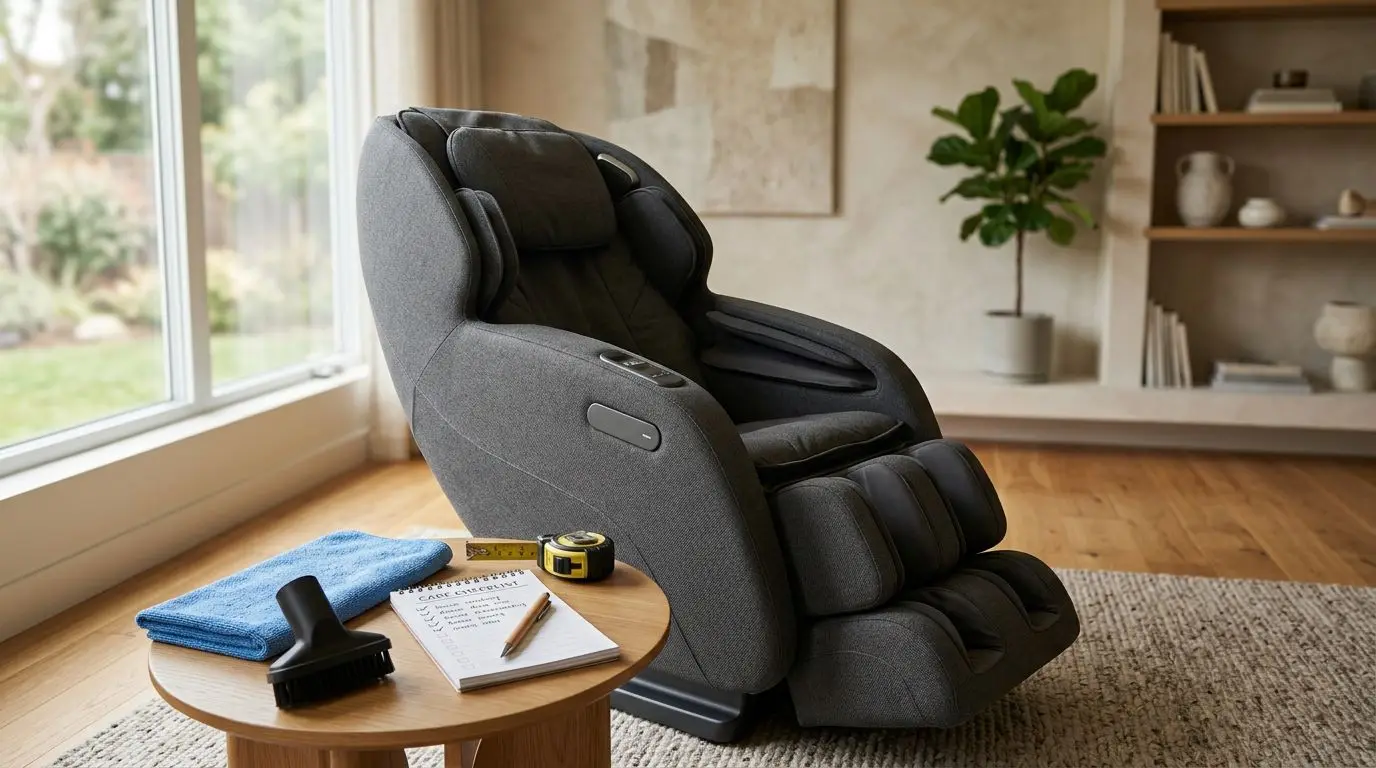
The safest cleaning kit is simple: 2 microfiber cloths, a soft brush vacuum attachment, a small bowl of clean water, and a cleaner approved by the chair’s manual for the exact upholstery type. If the manual does not approve alcohol, bleach, acetone, ammonia, abrasive powders, leather conditioners, or silicone sprays, do not use them.
Massage chair upholstery is commonly synthetic leather, coated fabric, mesh, or a mix of materials. These surfaces can look durable but still react poorly to harsh cleaners. Strong products may remove the finish, create shine spots, dry out the surface, or weaken stitching.
| Supply | Use it for | Avoid | Decision tip |
|---|---|---|---|
| Dry microfiber cloth | Dusting remote, panels, headrest, armrests | Paper towels on glossy screens | Keep 1 cloth just for electronics |
| Lightly damp microfiber cloth | Routine upholstery wipe-down | Soaking seams or zippers | Wring until no water drips |
| Soft brush vacuum tool | Seat cracks, foot wells, lower base | Hard crevice tools pressed into fabric | Use low suction near mesh |
| Manual-approved cleaner | Spots or body oil buildup | Unlisted household cleaners | Test on a hidden area first |
| Small flashlight | Inspecting track openings and footrest seams | Poking inside with metal tools | Look, then call service if something is lodged |
Placement is maintenance, too. Measure the chair in its upright and fully reclined positions. Leave enough clearance behind and around it so the backrest, footrest, and side panels never hit walls or furniture. If the chair manual calls for a specific rear clearance, use that number. If you do not have the manual, test slowly and leave at least 2 inches beyond the farthest moving point as a safety buffer.
Measure traffic space as well. A power cord stretched across a walkway is a trip hazard and a repair risk. If you need an extension cord, check the manual first; many manufacturers discourage them because an undersized cord can overheat. When in doubt, use a properly located grounded outlet instead.
Warning signs to stop using the chair within 1 session
Some issues are normal aging; others mean you should stop using the chair right away. If a warning sign appears during a session, end the program, return the chair upright if it is safe to do so, power it off, and unplug it before inspecting anything external.
- Electrical warning signs: burning smell, smoke, sparking, hot plug, flickering power, repeated breaker trips, or liquid spilled into controls.
- Mechanical warning signs: loud grinding, a roller stuck in one position, footrest jammed open, recline mechanism moving unevenly, or a new scraping sound that repeats every cycle.
- Upholstery warning signs: torn fabric exposing internal parts, a zipper that has opened near moving components, or padding shifted into a roller path.
- Control warning signs: unresponsive stop button, remote errors that return after restart, or a program that starts without a clear command.
Do not keep testing a chair that has a hot smell or damaged power cord. Unplug it and contact the seller, manufacturer, or a qualified repair technician. If the chair is still under warranty, unauthorized repair attempts can create a separate problem, so document the issue with photos and dates before calling support.
Take personal safety situations seriously, too. If you are pregnant, have a pacemaker or other implanted cardiac device, have a history of blood clots or use anticoagulants, have osteoporosis, a recent fracture or surgery, spinal disc problems, neuropathy, or uncontrolled hypertension, ask your physician before using a massage chair. A massage chair is a consumer wellness product, not a medical device, and it should not be treated as a substitute for medical advice.
Who benefits most from a 3-part maintenance routine
A weekly, monthly, and yearly schedule is useful for nearly every owner, but it matters most in homes where the chair sees heavy use. If the chair runs 5 or more days per week, small amounts of dust, lint, sweat, and upholstery wear build up much faster than they do in a guest room chair used twice a month.
- Daily users: A weekly wipe-down keeps oils and grit from building up on the headrest, back pad, seat edge, and foot wells.
- Shared households: Multiple body sizes and clothing types mean more roller adjustments, more footrest movement, and more surface contact.
- Pet owners: Hair can collect in seams, foot wells, and base openings. Keep pets off the chair and vacuum the surrounding floor often.
- Home offices: Chairs near desks often sit close to cords, snacks, pens, and rolling office chairs. Clear the area before reclining.
- Small rooms: Tight wall clearance can strain recline parts if the chair bumps furniture repeatedly.
- Humid or sunny rooms: Direct sun and moisture can age upholstery faster. Place the chair away from windows when possible.
If children or guests use the chair, keep the remote out of casual reach and explain the basics: sit normally, keep hands away from moving gaps, remove hard objects from pockets, and do not climb on the footrest. Many preventable problems come from rough handling rather than normal massage use.
A simple 12-month maintenance log you can actually keep
A maintenance log does not need an app or spreadsheet, though either can work. A note on your phone with 12 monthly entries is enough. The point is to notice patterns before the chair fails at the worst possible time.
| When | Task | What to record |
|---|---|---|
| Every week | Surface wipe, seam check, quick listen test | New noises, stains, loose items found |
| Every month | Deep clean, function test, vent dusting | Programs tested, weak airbag zones, upholstery wear |
| Every 6 months | Clearance and cord review | Wall distance, outlet condition, floor changes |
| Every 12 months | Full inspection and manual review | Photos, service calls, parts replaced, warranty notes |
Photos help. Take 4 quick pictures once a year: the headrest and upper back, the seat crease, the foot wells, and the power cord. If wear appears later, you will have a reference point instead of guessing whether it changed recently.
Keep purchase paperwork, warranty terms, and service contact information in the same place as the log. If a repair is needed, clear notes can shorten the support conversation and help you describe the issue accurately.
FAQ: Massage chair maintenance questions answered in 5 quick checks
How often should I clean my massage chair?
For normal home use, wipe high-touch areas once a week and do a deeper check once a month. If the chair is used daily, shared by several people, or used barefoot, clean the foot wells and headrest more often.
Can I use leather cleaner on a massage chair?
Only if the manual says the upholstery is real leather and approves that type of cleaner. Many massage chairs use synthetic leather or coated fabric, and some leather products can leave residue, discolor the surface, or soften the finish.
Should I lubricate the rollers or track?
Do not lubricate internal parts unless the owner’s manual specifically instructs you to do so. Many roller and track systems are enclosed, and the wrong lubricant can attract dust or interfere with parts.
What should I do if the chair starts making a grinding noise?
Stop the session, return the chair upright if it can move safely, power it off, and unplug it. Check only for visible external obstructions, then contact support or a qualified technician if the sound continues.
How much space should I leave behind a massage chair?
Use the clearance listed in the manual because recline designs vary. If you do not have that number, recline the chair slowly and leave at least 2 inches beyond the farthest moving point, with no curtains, cords, or furniture in the path.
Frequently asked questions
How often should I clean my massage chair? +
Wipe high-touch areas weekly and do a deeper cleaning and function check monthly. Clean foot wells and headrests more often if the chair is used daily or by multiple people.
Can I use leather cleaner on a massage chair? +
Only use leather cleaner if the owner’s manual says the upholstery is real leather and approves that cleaner type. Many chairs use synthetic leather or coated fabric that can be damaged by the wrong product.
Should I lubricate the rollers or track? +
Do not lubricate rollers, tracks, or internal parts unless the manual specifically tells you to. Many systems are enclosed and can be harmed by the wrong lubricant.
What should I do if my massage chair makes a grinding noise? +
Stop the session, power the chair off, unplug it, and check only for visible external obstructions. If the noise continues, contact the seller, manufacturer, or a qualified repair technician.
How much space should I leave behind a massage chair? +
Follow the clearance number in the manual. If you do not have it, recline the chair slowly and leave at least 2 inches beyond the farthest moving point.
Related guides
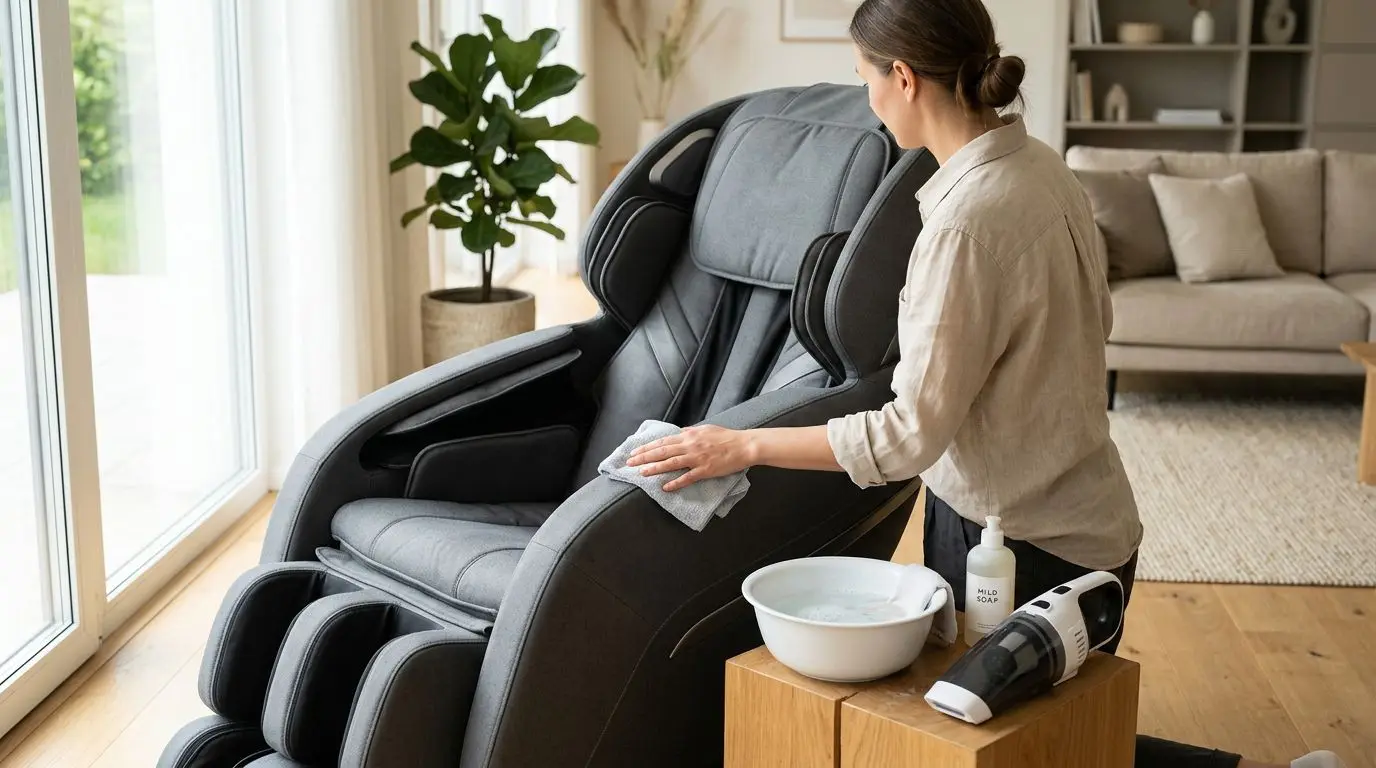
How to Clean a Massage Chair: Upholstery, Foot Wells, Airbags, and Remote Care
14 min read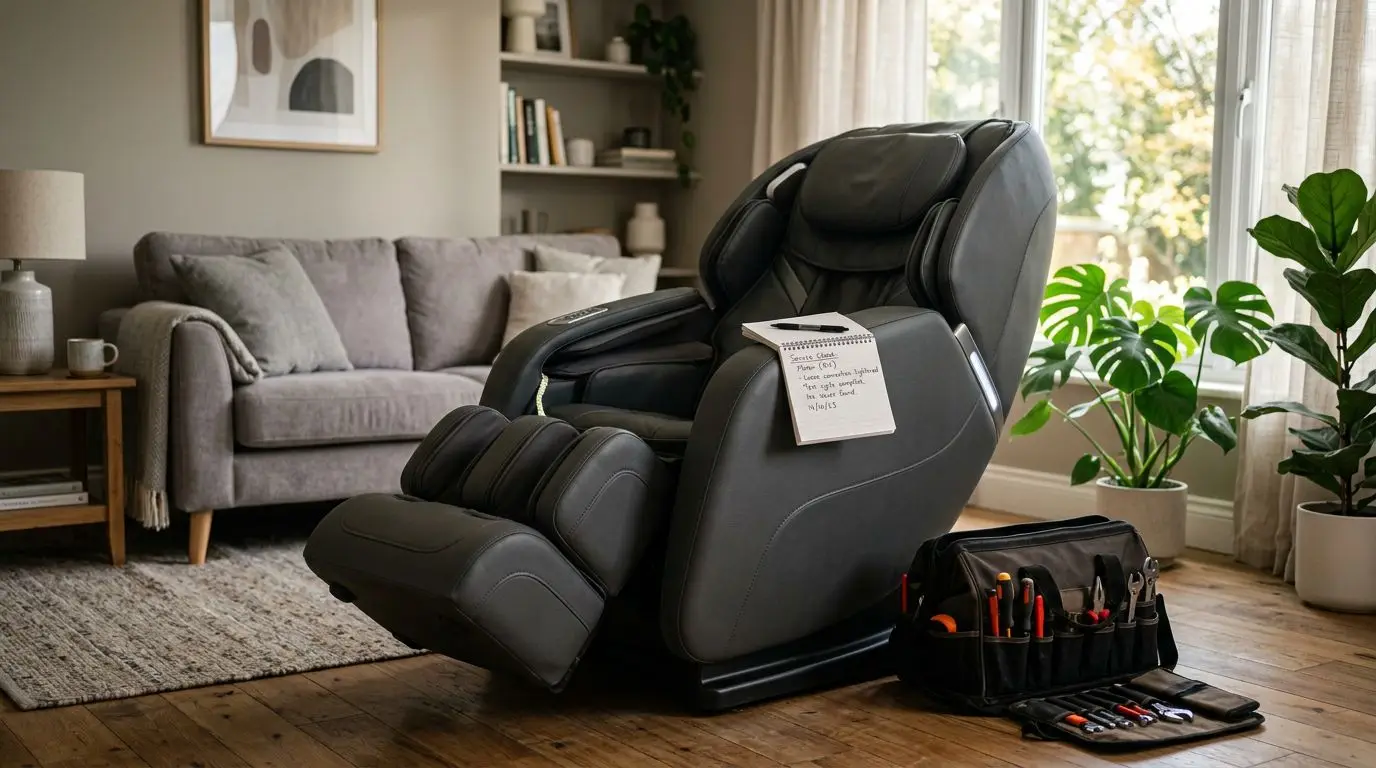
Massage Chair Repair Guide: Problems, Parts, Service Calls, and Warranty Tips
14 min read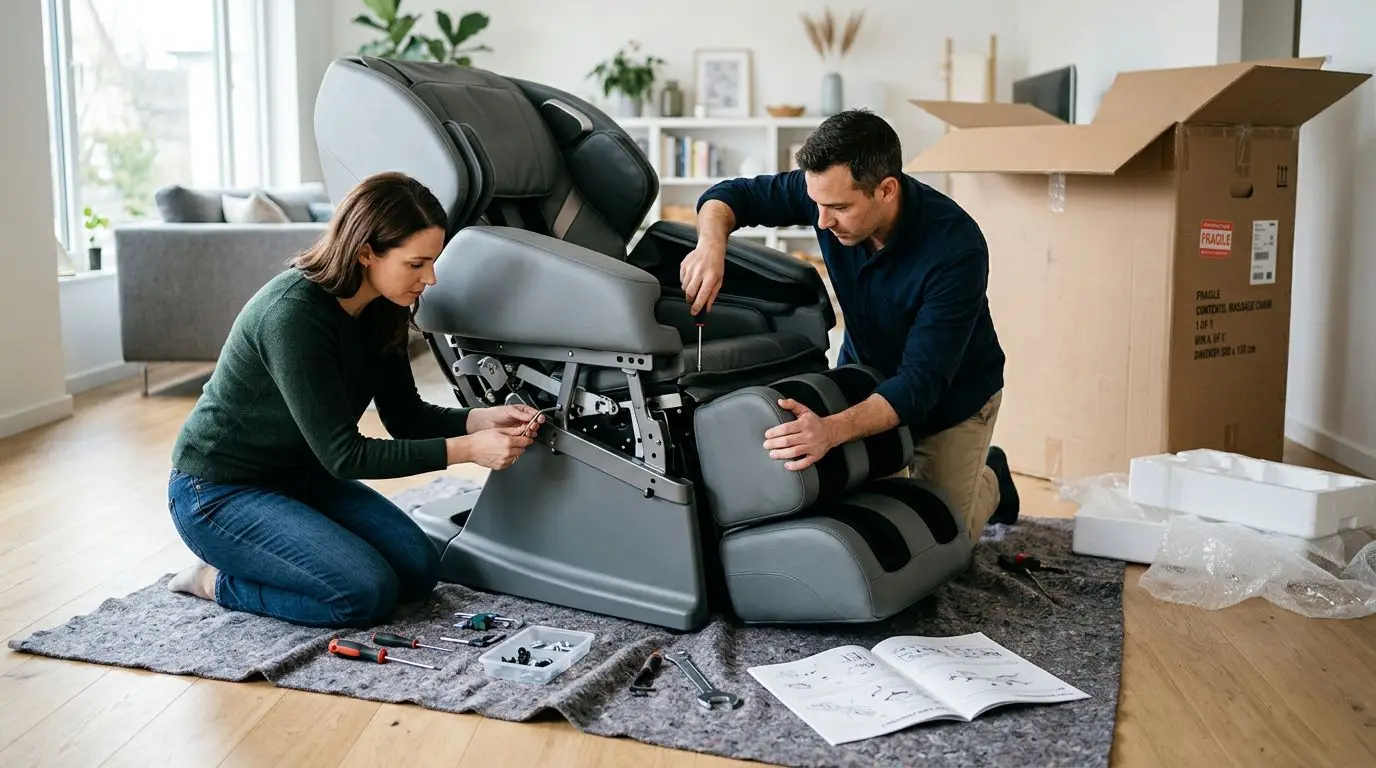
Massage Chair Assembly and Disassembly: What to Expect Before Setup or Moving
13 min read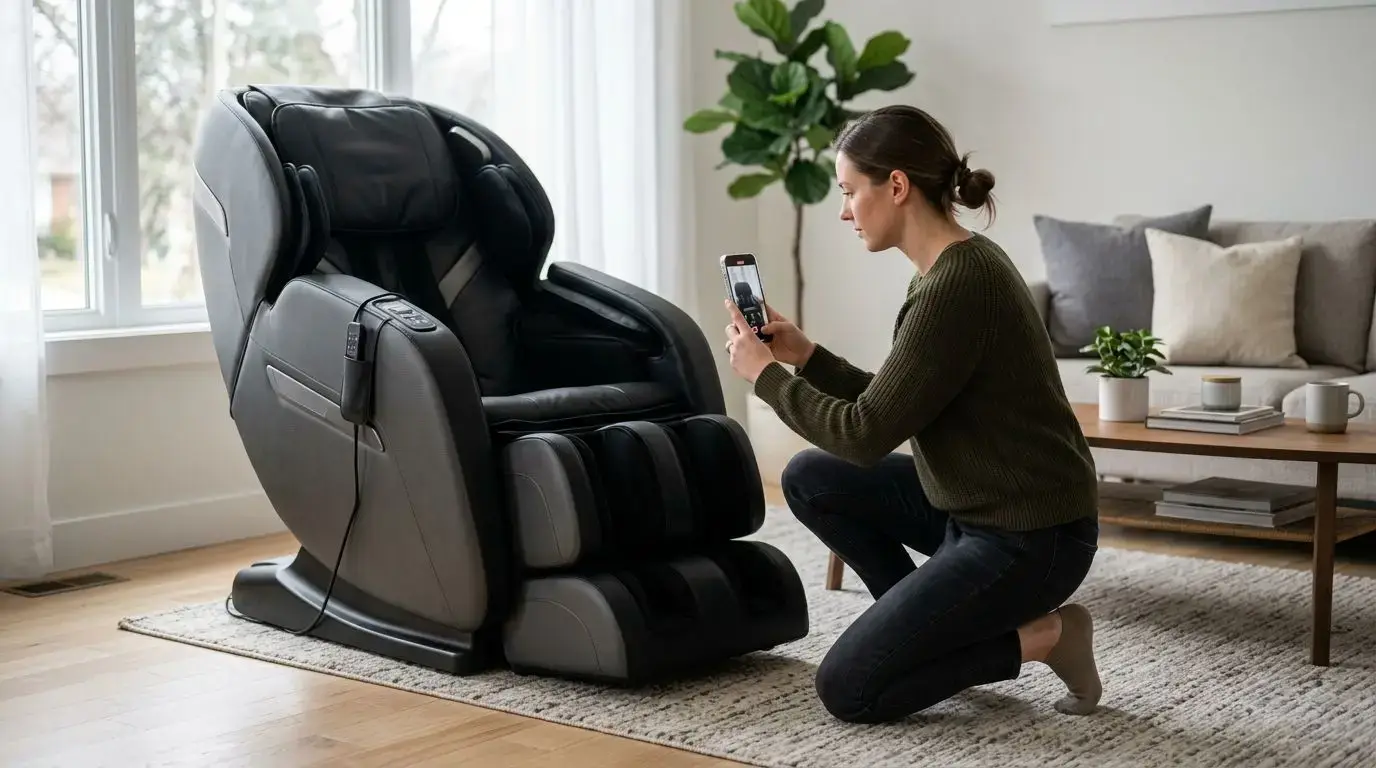
Massage Chair Making Noise? What Sounds Are Normal and When to Get It Serviced
13 min read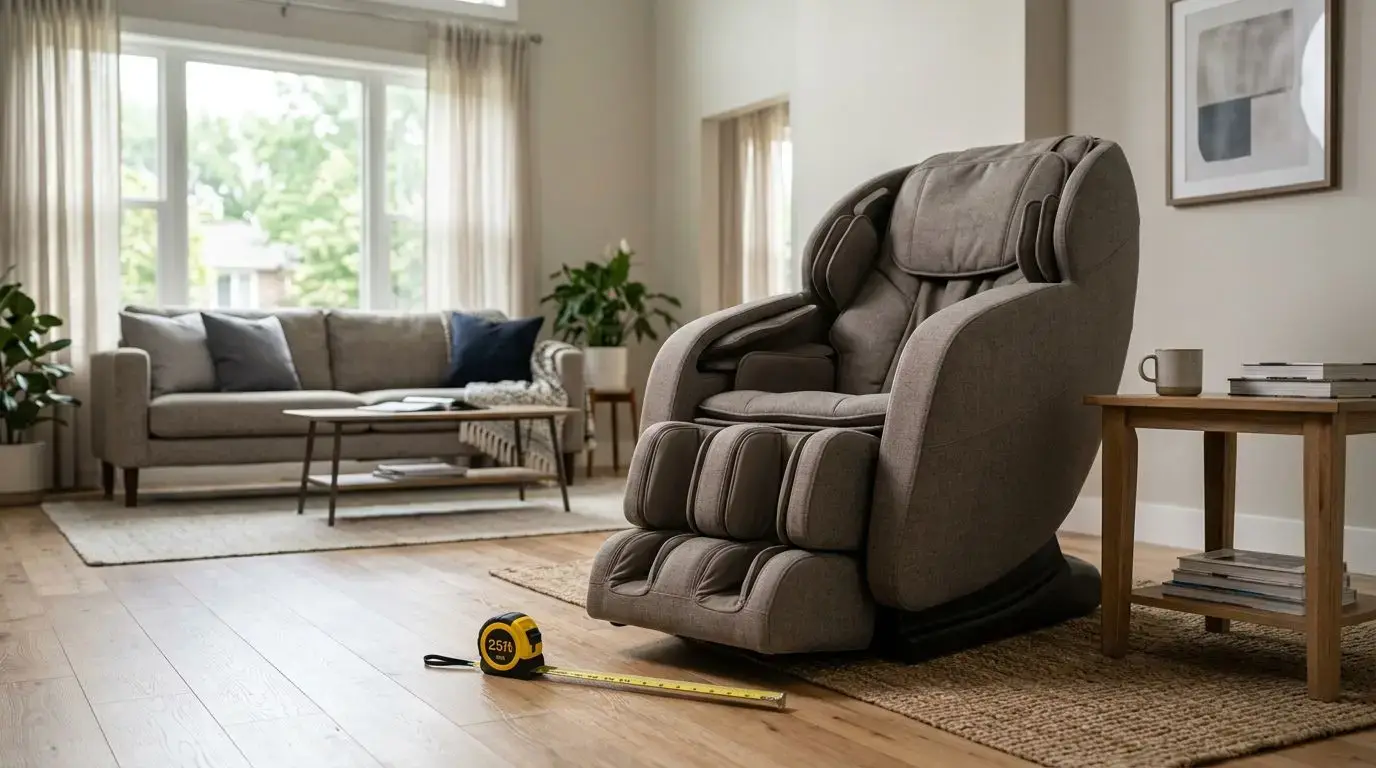
How to Choose a Massage Chair for Home Use
14 min read