Disclosure: We may earn a commission when you buy through links on this page, at no extra cost to you. We buy nothing, sell nothing and accept no payment for coverage — commissions never decide what we recommend. How we make money.
A refurbished massage chair can be worth buying when the savings are meaningful, the seller clearly explains what was inspected or replaced, and the return and warranty terms are strong enough to protect you. A new chair is usually the safer choice if you want the longest coverage, the least uncertainty, and a straightforward return path if the chair does not fit your body or your room.
The best decision is not simply new versus cheaper. It is whether the lower refurbished price makes up for the added risk around condition, parts availability, delivery damage, warranty limits, and your ability to try the chair at home for at least a short period.
The 30% question: what “refurbished” usually means
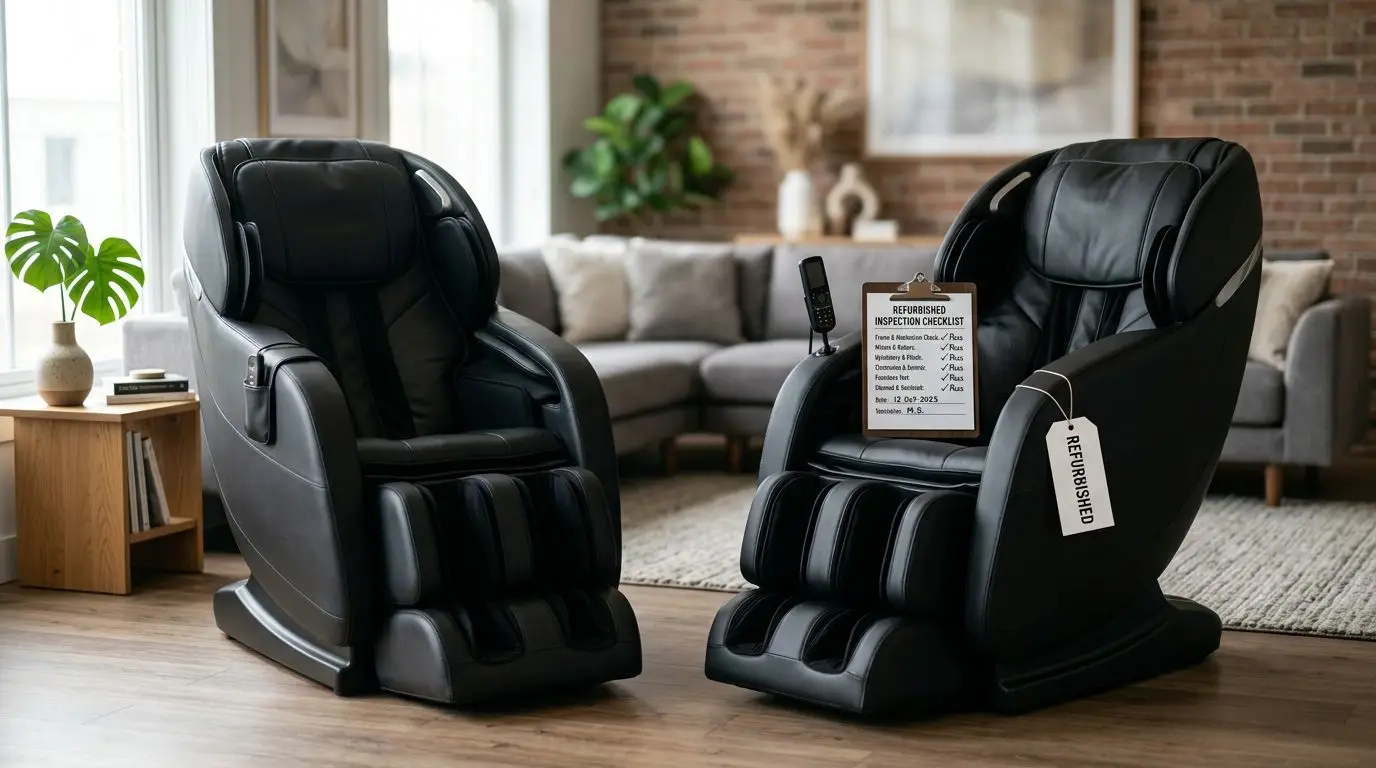
In the massage chair market, “refurbished” does not refer to one universal condition grade. One seller may use it for a returned chair with fewer than 30 days of home use, while another may use it for a chair that needed roller, air pump, upholstery, remote, or control board work before resale.
That difference matters because a massage chair is not a simple recliner. It has motors, rollers, airbags, sensors, wiring, a control panel, upholstery, and often a foot-and-calf assembly. A chair can look clean in photos and still have uneven roller pressure, noisy reclining movement, weak air compression, or a remote that fails intermittently.
For budget-conscious shoppers, a useful first filter is the 30% question: “Am I saving enough to accept a shorter warranty, possible cosmetic wear, and more homework before purchase?” If the refurbished discount is small, the trade-off may not be worth it. If the savings are substantial and the seller provides written condition details, parts documentation, delivery terms, and a fair return window, refurbished can be a practical way to get stronger features for less.
Also separate “refurbished” from “used.” A used chair may simply be a private resale with no inspection, no parts support, and no return right. A refurbished chair should have gone through a documented process, even if that process is limited. Ask for specifics, not labels.
New chairs: less uncertainty and warranties that may run 1 to 5 years
A new massage chair generally gives you the cleanest ownership path. You should receive an unused chair, full documentation, standard accessories, current packaging, and the manufacturer’s normal warranty terms. Depending on the chair category and seller, coverage may be split among parts, labor, and structural frame protection, and those periods may differ.
The biggest advantage is predictability. If the remote, footrest, roller track, or air system has a problem soon after delivery, a new-chair warranty is usually easier to use than a refurbished warranty. New chairs also tend to come with clearer return policies, though you still need to read the fine print. Some sellers charge return freight, restocking fees, or both, especially for large freight items.
New is also the better choice if you are buying sight unseen and are particular about intensity. A chair with a 2D roller system may feel too gentle for one person and too firm for another, while 3D or 4D roller systems can add intensity adjustment that changes the feel considerably. A return window matters because body fit, shoulder height, seat depth, and calf well length cannot be fully judged from a spec sheet.
Choose new if you want the lowest hassle, plan to keep the chair for 5 years or more, need dependable customer support, or are buying for a household where several people will use the chair daily. The upfront cost is higher, but the risk is usually lower.
Refurbished chairs: 20% to 50% savings can be real, but the details decide
Refurbished massage chairs are often appealing because the discount can be large. Depending on age, condition, seller, and features, refurbished pricing may be advertised at roughly 20% to 50% less than a comparable new chair. That range is not a promise. It is a reason to compare carefully.
The best refurbished candidates are chairs that were lightly used, returned quickly, inspected by trained technicians, cleaned, tested across all major functions, and sold with a written warranty. The riskiest are older chairs with vague descriptions such as “works great,” no documented inspection, no parts list, and no realistic return option after freight delivery.
Pay close attention to parts that move or touch the body. Roller noise, track alignment, calf massager operation, airbag inflation, heat panels, recline motors, footrest extension, and remote buttons should all be checked. Upholstery matters too. Small scuffs may be acceptable if disclosed. Peeling synthetic leather, cracked headrest pads, torn calf liners, or sticky control buttons can turn a bargain into a project.
Refurbished can make sense if you care more about features than perfect cosmetics. For example, you may accept a few visible marks to get an L-track or SL-track chair, adjustable roller intensity, body scanning, foot rollers, or space-saving recline. It is less appealing if you expect a chair to look untouched in a main living room.
New vs. refurbished comparison: 8 risks to weigh before checkout
Use this table to compare the real buying issues, not just the headline price. A massage chair commonly weighs well over 150 pounds, and some full-size models are much heavier, so reversing a bad purchase can be expensive and inconvenient.
| Decision point | New massage chair | Refurbished massage chair |
|---|---|---|
| Upfront cost | Highest initial cost for that chair type and feature set. | Often meaningfully lower, especially on returned or previous-generation units. |
| Condition certainty | Should arrive unused, with original parts and packaging. | Depends on inspection quality, prior use, replaced parts, and seller honesty. |
| Warranty | Usually the longest available coverage for parts and support. | Often shorter, limited, or seller-backed rather than manufacturer-backed. |
| Return rights | Typically clearer, though freight return fees may still apply. | Can be restrictive; some sales may be final after delivery acceptance. |
| Cosmetic appearance | Expected to be clean and blemish-free on arrival. | May have scuffs, fabric impressions, small scratches, or prior handling marks. |
| Parts availability | Better odds of current parts and service information. | More important to verify if the chair is older or discontinued. |
| Delivery risk | Original packaging may reduce transit issues. | Repacked freight needs careful inspection at delivery. |
| Best fit | Buyers wanting low uncertainty and long ownership. | Buyers who can inspect terms and accept measured risk for savings. |
The table shows why a refurbished chair should not be judged by price alone. A lower checkout number can be wiped out by one denied warranty claim, one missing part, or one return freight bill.
Who refurbished is best for: 3 buyer profiles
Refurbished is not automatically risky, and new is not automatically smart. The right choice depends on your tolerance for uncertainty and how you plan to use the chair.
1. The feature-maximizer on a fixed budget
If your budget points you toward a basic new chair, a refurbished unit may let you consider features such as a longer track, adjustable roller depth, more air cells, or a better foot-and-calf system. This buyer should accept minor cosmetic wear but insist on function testing and written warranty terms.
2. The careful shopper who reads every policy
Refurbished buying rewards detail-oriented people. If you are willing to request photos, ask what parts were replaced, compare warranty exclusions, and inspect freight before signing, you reduce your odds of disappointment. Ten minutes of questions before purchase can prevent weeks of frustration later.
3. The secondary-room buyer
A refurbished chair can be a reasonable fit for a basement, home office, guest room, or media room where a small scratch matters less than function. If the chair will sit in a formal living area, cosmetic condition may matter more.
Refurbished is usually not ideal for buyers who need a perfectly clean appearance, want the longest coverage available, dislike troubleshooting, or cannot handle the possibility of a return process involving freight pickup.
How to inspect a refurbished chair in 15 minutes
If you can inspect the chair in person, use a short, structured check instead of just sitting through one preset program. Fifteen minutes is enough to catch many obvious issues.
- Listen during recline: Recline the chair fully and bring it back upright. Grinding, clicking, or hesitation can signal worn moving parts or alignment problems.
- Run the rollers from neck to glutes: Check whether pressure feels even from left to right and whether the rollers move smoothly along the track.
- Test intensity controls: If the chair has 3D or 4D adjustment, move from the lowest setting to a higher setting and confirm the change is noticeable.
- Inflate the airbags: Test shoulders, arms, hips, calves, and feet if included. One weak zone may point to a leak, valve issue, or pump problem.
- Check the footrest: Extend and retract it. Make sure spring-loaded or motorized adjustment moves cleanly and fits your leg length.
- Inspect contact surfaces: Look closely at the head pillow, back pad, arm wells, calf liners, and foot wells. These areas show real use quickly.
- Use the remote for every major command: Sticky buttons, dim displays, lag, or connection errors are warning signs.
- Smell the chair: Heavy fragrance, smoke odor, mildew smell, or chemical odor can be hard to remove from upholstery and padding.
If you are buying online, ask the seller for recent photos or video of those same checks. A 60-second video showing recline, roller travel, air compression, and the remote screen is more useful than a polished product image.
How to measure fit, delivery path, and room space in 5 steps
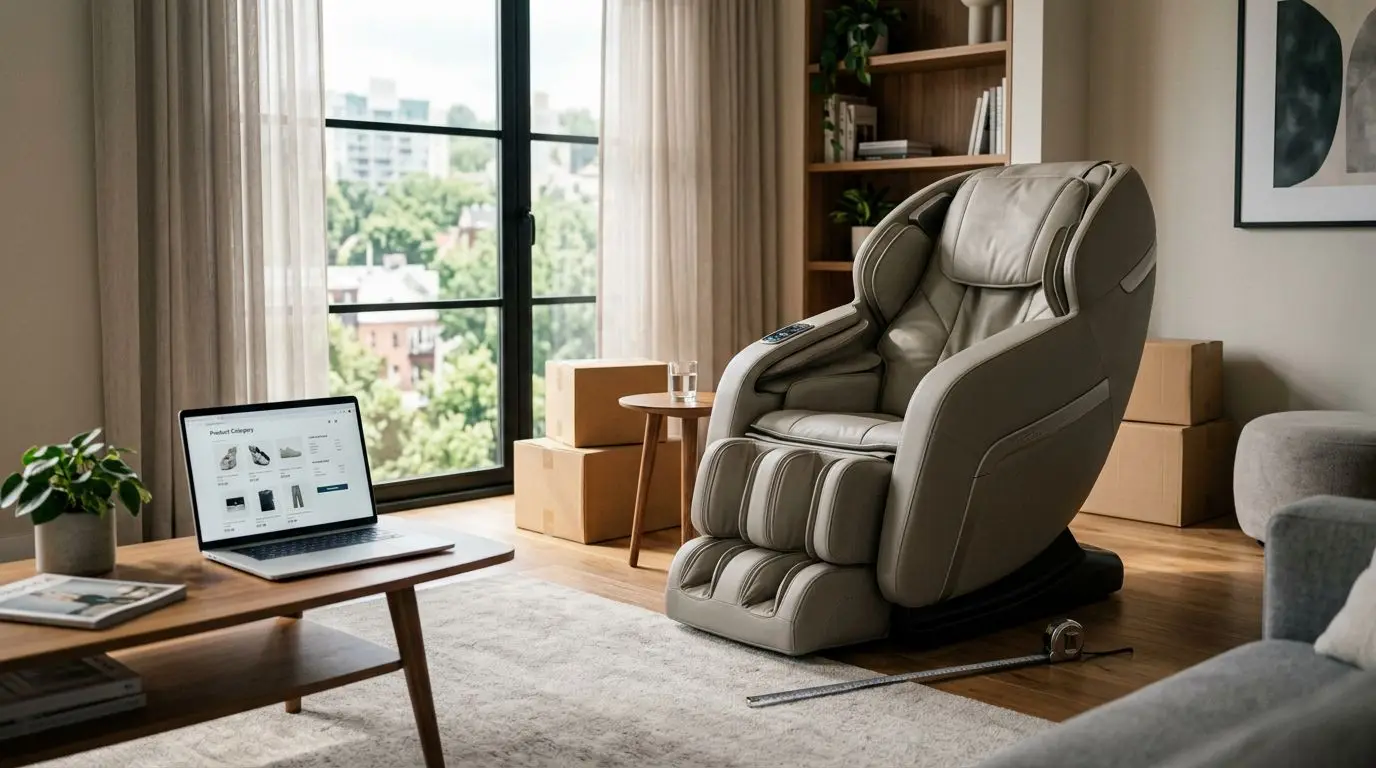
A good deal becomes a bad deal if the chair does not fit your body or your home. Full-size massage chairs can be bulky, and many require careful planning before delivery day.
- Measure the room: Check the chair’s upright and reclined footprint. Some space-saving designs may need only a few inches behind the chair, while others need much more rear clearance.
- Measure doorways: Many interior doorways are about 30 to 32 inches wide. Compare that with the chair’s shipping width and ask whether any parts can be removed for delivery.
- Check stairs and turns: A narrow stair landing can stop delivery even when the doorway is wide enough. Measure tight turns, railings, and ceiling height.
- Confirm user height range: A chair that fits someone 5 feet 4 inches may not fit someone 6 feet 2 inches the same way. Shoulder detection, roller reach, and calf length all affect comfort.
- Plan floor protection: Use a mat or furniture sliders if the chair sits on hardwood, vinyl plank, or other mark-prone flooring. The weight is concentrated through the base.
Also consider electrical placement. Most chairs need a standard household outlet nearby, and the cord should not cross a walkway. Avoid extension cords unless the chair documentation allows them and the cord rating is appropriate.
Warranty, returns, and parts: 6 questions to ask in writing
Refurbished warranty language can be narrow. Before paying, ask these 6 questions and keep the answers in writing, either by email, invoice notes, or a downloadable policy page.
- Who backs the warranty? Is it the original manufacturer, the retailer, a refurbisher, or a third-party plan?
- How long is coverage? Separate parts, labor, in-home service, and structural coverage. A 1-year parts warranty is not the same as 1 year of in-home labor.
- What is excluded? Upholstery wear, airbags, remote controls, shipping damage, accessories, and cosmetic issues may be handled differently.
- What parts were replaced? Ask whether the rollers, air pump, control board, remote, upholstery panels, heat elements, or power supply were tested or replaced.
- What happens if parts are unavailable? Some older chairs may be difficult to repair if a proprietary component fails.
- What are the return costs? Ask about the return window, restocking fee, original freight, return freight, packaging requirements, and pickup scheduling.
Do not rely on a verbal promise for a large freight item. If the listing says “refurbished,” the invoice should match that condition. If the seller says “fully tested,” ask what that includes. A vague answer is not always a deal-breaker, but it should lower the price you are willing to accept.
Safety and comfort: start with 15 minutes and know when to ask a physician
A massage chair is a consumer wellness product designed to provide mechanical pressure, movement, warmth, and a structured sitting experience. It is not a medical device, and you should not buy one expecting it to treat, cure, prevent, or manage any health condition.
For comfort, start with a short session of about 15 minutes on a lower intensity setting, especially with a refurbished chair you have not used before. Pay attention to pressure points at the neck, shoulder blades, low back, hips, calves, and feet. Stronger is not always better; the right setting should feel controlled, not like you are bracing against the chair.
Ask your physician before using a massage chair if you are pregnant; have a pacemaker or other implanted cardiac device; have a history of blood clots or take anticoagulants; have osteoporosis; recently had a fracture or surgery; have spinal disc problems; have neuropathy; or have uncontrolled hypertension. This is especially important with chairs that use firm rollers, strong calf compression, heat, or deep foot pressure.
If several people will use the chair, save individual preferences if the chair allows it, or write down the settings each person finds comfortable. A setting that feels mild to one user may feel too intense to another.
Final buying checklist: 10 yes-or-no items before you decide
Before choosing new or refurbished, run through this 10-point checklist. If you answer “no” to several refurbished items, the lower price may not be enough.
- Is the refurbished discount large enough to justify added risk?
- Does the seller explain the chair’s prior status, such as return, floor sample, open box, or repaired unit?
- Are cosmetic flaws shown in real photos?
- Are major functions tested: rollers, recline, airbags, heat, remote, footrest, and body scan?
- Are replaced parts listed clearly?
- Is the warranty written and easy to understand?
- Does coverage include labor or only parts?
- Can you return the chair within a defined window?
- Do you know who pays return freight if you dislike the fit?
- Have you measured the room, doorway, stairs, and user height range?
If the refurbished chair passes most of those checks and the savings are substantial, it can be a sensible budget move. If the seller cannot answer basic questions, the condition is unclear, or the return policy is thin, a new chair is usually the cleaner decision.
5 FAQs about new and refurbished massage chairs
Is a refurbished massage chair the same as an open-box chair?
Not always. Open-box often means the packaging was opened or the chair was returned quickly, while refurbished suggests the chair was inspected, cleaned, tested, or repaired before resale. Ask the seller which applies.
How much should I save to consider refurbished?
There is no single required discount, but many shoppers start paying attention when savings are around 20% to 30% or more. Smaller discounts may not justify shorter coverage, cosmetic wear, or stricter return terms.
What is the biggest risk with a refurbished massage chair?
The biggest risk is unclear condition combined with limited warranty support. A chair can look good but still have problems with rollers, airbags, wiring, recline motors, or the remote.
Should I buy refurbished if returns are not allowed?
Only if you can inspect the chair in person, test every major function, and accept the possibility that you will own it even if the fit or feel is not ideal. For online purchases, no-return refurbished sales are high risk.
What parts matter most on a refurbished chair?
Focus on the roller system, track movement, recline mechanism, airbags, air pump, remote, power supply, footrest, and upholstery in high-contact areas. These affect both feel and long-term usability.
Frequently asked questions
Is a refurbished massage chair the same as an open-box chair? +
Not always. Open-box often means the packaging was opened or the chair was returned quickly, while refurbished suggests the chair was inspected, cleaned, tested, or repaired before resale. Ask the seller which condition applies.
How much should I save to consider a refurbished massage chair? +
There is no single required discount, but many shoppers start paying attention when savings are around 20% to 30% or more. Smaller discounts may not justify shorter coverage, cosmetic wear, or stricter return terms.
What is the biggest risk with a refurbished massage chair? +
The biggest risk is unclear condition combined with limited warranty support. A chair can look good but still have problems with rollers, airbags, wiring, recline motors, or the remote.
Should I buy refurbished if returns are not allowed? +
Only if you can inspect the chair in person, test every major function, and accept that you will own it even if the fit or feel is not ideal. For online purchases, no-return refurbished sales are high risk.
What parts matter most on a refurbished massage chair? +
Focus on the roller system, track movement, recline mechanism, airbags, air pump, remote, power supply, footrest, and upholstery in high-contact areas. These affect both feel and long-term usability.
Related guides
Open-Box, Floor-Model, and Clearance Massage Chairs: When the Discount Is Actually Worth It
12 min read
Massage Chair Warranty and Return Policy Buying Guide: What U.S. Shoppers Should Check
15 min read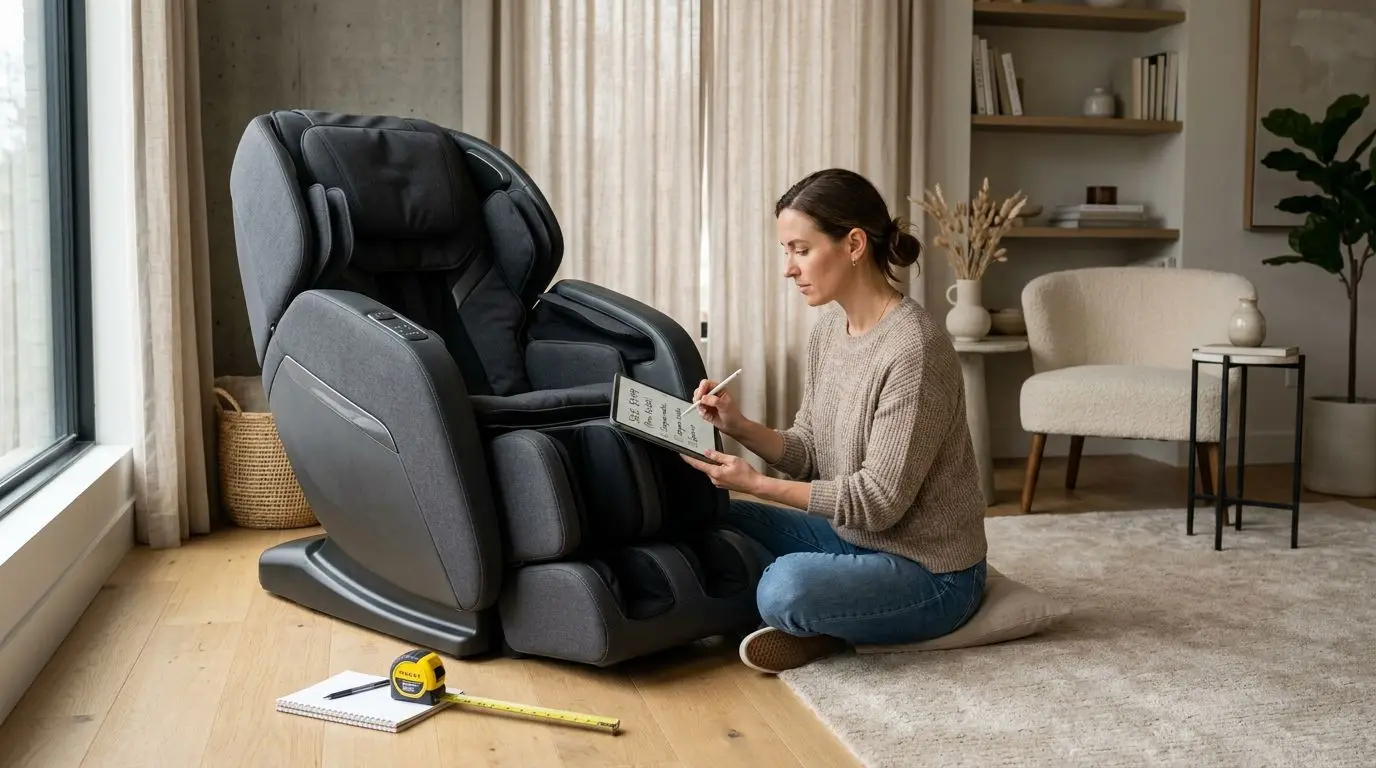
Massage Chair Sale Prices: How to Tell a Real Deal From a Fake Discount
12 min read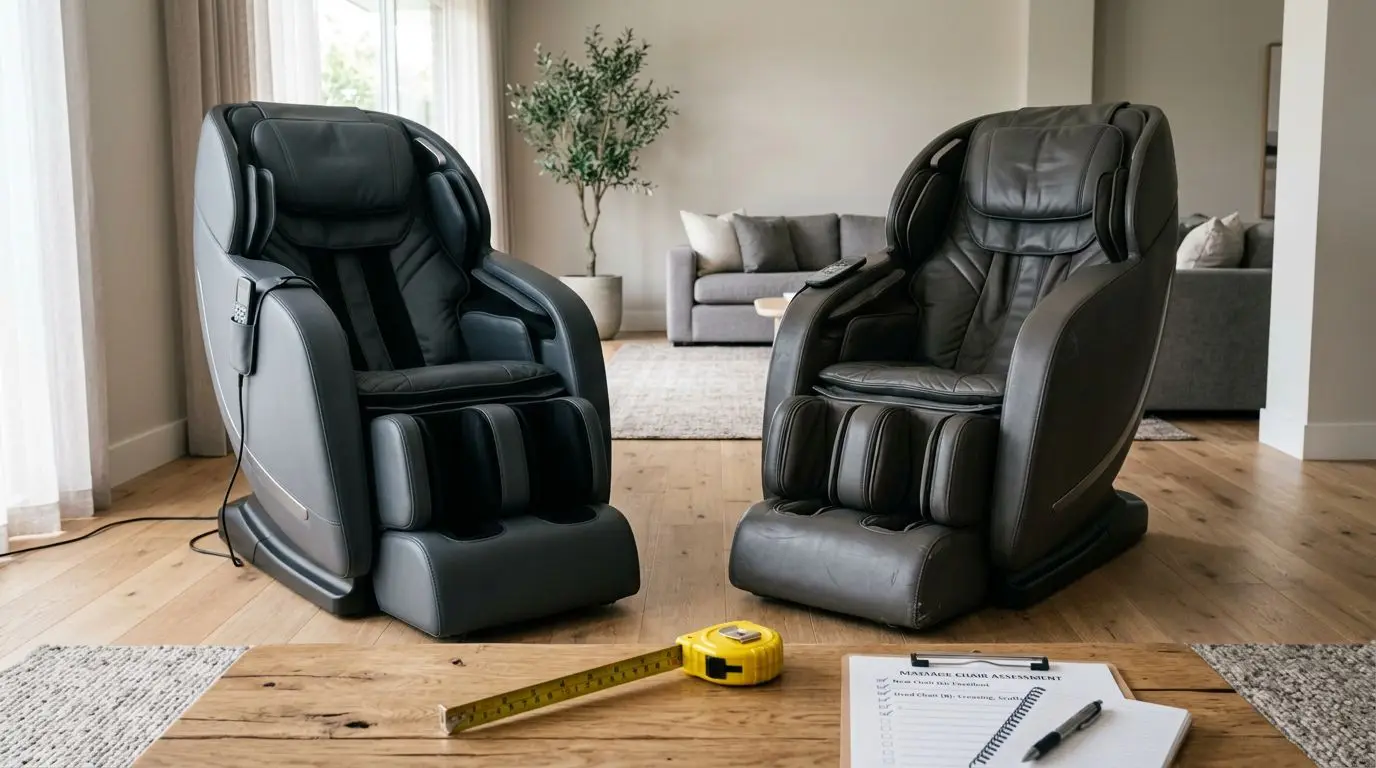
New vs. Used Massage Chairs: Savings, Risks, and What to Check Before You Buy
13 min read
Where to Buy a Massage Chair Near You: Showroom Testing and Dealer Questions to Ask
12 min read