Disclosure: We may earn a commission when you buy through links on this page, at no extra cost to you. We buy nothing, sell nothing and accept no payment for coverage — commissions never decide what we recommend. How we make money.
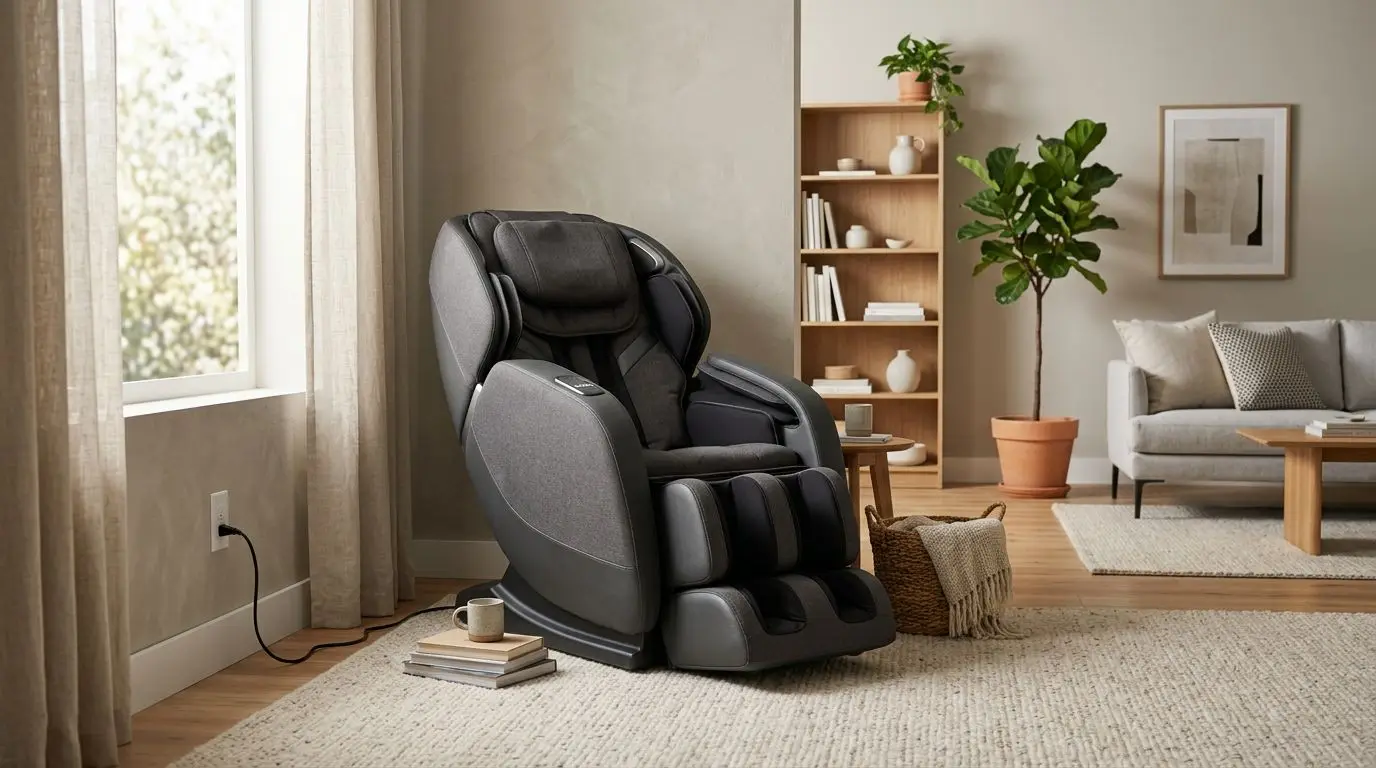
The best place for a massage chair is a dry, level, low-traffic spot with a grounded outlet nearby, enough room to recline, and a clear walking path around it. In many homes, the living room or bedroom is the easiest fit. A home office works for short breaks, while basements and home gyms require closer attention to moisture, flooring, and everyday convenience.
Before delivery, measure the chair’s upright and fully reclined footprint, the doorway path, and the space behind the chair. A good location should make the chair easy to use every week, not just easy to squeeze into the house on delivery day.
Start with the 5 measurements that matter before delivery
Most full-size massage chairs are large pieces of furniture, often weighing about 200 to 350 pounds before anyone sits in them. Placement should start with measurements, not décor. If the chair cannot fit through the door, recline safely, or sit near power without an extension cord, the room is not ready.
Write down five numbers before choosing the room: the chair’s upright width, the fully reclined depth, the required rear clearance, the doorway width, and the walking path around the chair. Many chairs need a doorway around 30 inches wide or more, although the exact requirement depends on whether parts can be removed for delivery. Some space-saving recline designs may need only a few inches behind the chair, while other designs may need 12 to 24 inches.
How to measure the spot
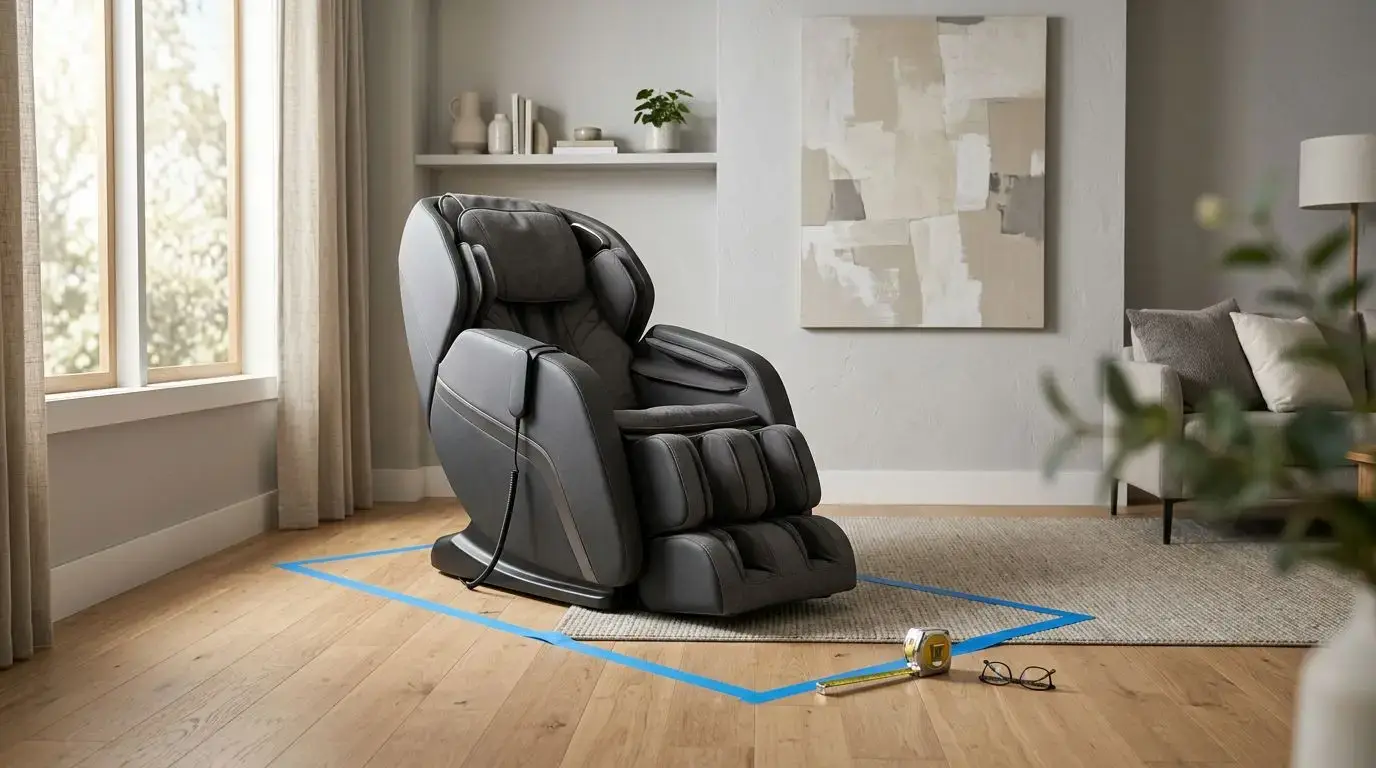
- Measure the full recline zone. Use painter’s tape on the floor to mark the chair’s fully reclined length, including the footrest.
- Leave a walking lane. Aim for at least 30 to 36 inches of clear path where people need to pass.
- Check the outlet. Place the chair close enough to plug directly into a grounded wall outlet, without a cord crossing a walkway.
- Measure delivery turns. Hallways, stair landings, and door swings matter as much as the room itself.
- Confirm floor strength and levelness. The floor must support the chair plus the user, and the chair should sit flat without rocking.
Think about the user’s height as well. A chair with an extending footrest may need extra space at the front, especially for taller users. If several people will use it, measure for the tallest regular user, not the average user.
Living room placement: best for shared use in a 10-by-12-foot or larger room
A living room is often the most practical place for a massage chair because it is already a relaxation area. It usually has outlets, comfortable lighting, and enough open floor space to position the chair while still letting people move around it.
Who it is best for: families, couples, and buyers who want the chair to be used often rather than hidden away. If the chair is in the same room as the TV or reading area, it is more likely to become part of a normal evening routine.
The main challenge is traffic flow. Do not place the chair where the footrest opens into a walkway, doorway, or coffee table. In a typical seating group, keep at least 18 inches between the chair and a coffee table when upright, and more if the footrest swings forward. If the reclined chair blocks the main path from the kitchen to the hallway, it will quickly become frustrating.
Corner placement can work well, especially with a space-saving recline design. Leave enough room on one side for the user to get in and out without twisting around an end table. If the chair has side controls, a side pocket, or a wired remote, keep that side accessible.
Living rooms also bring up style. Massage chairs look functional, and many are taller than standard recliners. To make one feel intentional, treat it like a dedicated lounge seat: add a small table for glasses or a book, keep cords hidden behind the chair, and avoid surrounding it with clutter.
Bedroom placement: best for quiet use if you can keep a 36-inch path
A bedroom can be a strong choice when privacy and quiet matter. It is also convenient for people who want a slower wind-down routine at the end of the day. The key is making sure the chair does not crowd the bed, dresser drawers, or closet doors.
Who it is best for: solo users, couples with separate relaxation preferences, and anyone who wants a calmer space away from the TV or household activity.
Start by checking circulation around the bed. A common goal is about 30 to 36 inches of walkway on the sides you use daily. If the massage chair turns that path into a narrow squeeze, it may look fine on day one but feel intrusive by week two. Make sure drawers can open fully, too; a dresser drawer may need 18 to 24 inches of pull-out space depending on its depth.
The best bedroom spots are usually near a window wall, in an unused reading nook, or across from the foot of the bed if the room is large enough. Avoid placing the chair so the footrest opens toward the bed unless you have measured the fully reclined length. A chair that looks compact upright can take up much more floor space when reclined.
Noise is another consideration. Massage chair motors and air pumps are not silent. If one person sleeps while another uses the chair, the bedroom may not be ideal. A carpet or rug under the chair can soften vibration noise and protect hard flooring, as long as the chair remains stable.
Home office placement: best for 10-to-20-minute breaks, not cramped corners
A home office can be a smart location if you want the chair for short, scheduled breaks during the workday. It can also keep the chair out of shared living spaces. The tradeoff is space: many offices are built around a desk, chair, shelves, and file storage, leaving less room for a large reclining product.
Who it is best for: remote workers, hybrid workers, and people who prefer quiet breaks away from household traffic.
Measure the office with the desk chair pulled out, not tucked in. A desk chair often needs about 36 inches behind the desk for comfortable movement. If the massage chair competes with that space, the room will feel crowded. Do not place the massage chair where its recline path overlaps with a rolling desk chair, printer stand, or closet door.
Consider work boundaries as well. The chair should support a real break, not become another place to answer emails. If possible, angle it away from the monitor. A side wall placement often works better than putting it directly behind the desk.
Office flooring can be carpet, vinyl, or hardwood. On hard floors, use a stable mat designed for heavy furniture to reduce sliding and protect the surface. On thick carpet, check that the chair sits level and that moving parts do not rub the floor when the footrest opens.
Basement or bonus room placement: best when the space stays dry year-round
A finished basement or bonus room can offer the best space-to-noise ratio. These rooms often have open floor plans, fewer formal furniture rules, and enough distance from bedrooms for sound control. They are a good fit when the environment is clean, dry, and comfortable.
Who it is best for: households with a media room, game room, guest space, or a dedicated relaxation area that people actually visit.
The number to watch is moisture. If your basement regularly feels damp, has condensation, or needs a dehumidifier running most of the year, be cautious. Electronics and upholstery do better in a stable indoor environment. Many homeowners aim to keep indoor relative humidity around 30% to 50% for comfort and home maintenance, but follow the chair maker’s environment guidance if it is available.
Flooring matters on lower levels. Concrete under carpet or vinyl can feel cooler, and uneven floors can make a heavy chair rock. Before delivery, place a level on the planned spot. If the floor slopes noticeably toward a drain, choose another area.
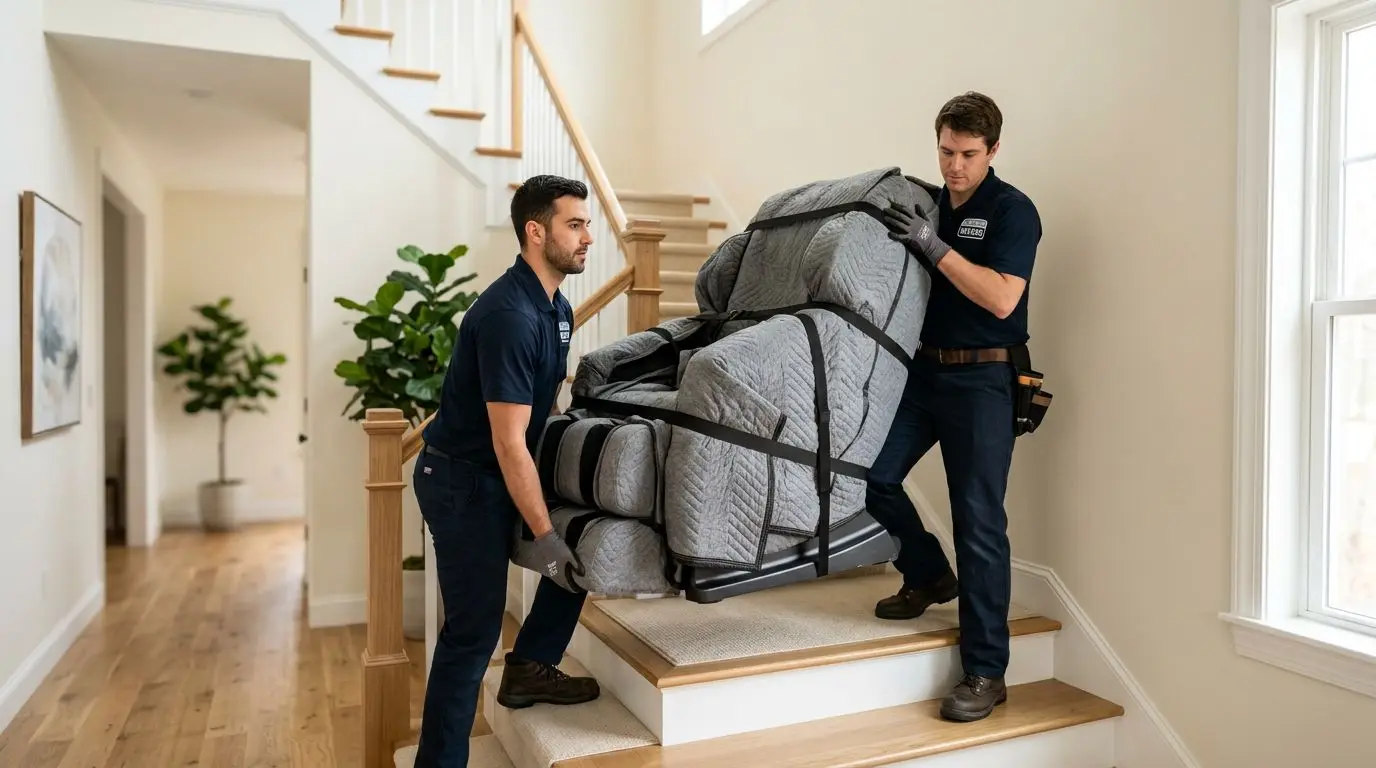
Basements can also complicate delivery. A 90-degree stair turn, low ceiling, or narrow landing can stop a chair before it reaches the room. Measure the stair width, landing depth, ceiling clearance, and door at the bottom. Ask the retailer or delivery provider what dimensions they need for safe placement.
Home gym placement: workable with a 3-foot dry zone around equipment
A home gym sounds convenient, but it is not always the best location. The room may have sweat, rubber flooring, free weights, vibration, and limited outlets. A massage chair can work there if you create a clean, dry, protected zone for it.
Who it is best for: people with a spacious, climate-controlled gym room who want one dedicated chair outside the main living area.
Keep the chair at least 3 feet away from treadmills, racks, benches, and free-weight areas. That buffer helps reduce accidental contact with moving equipment or dropped items. Do not place the chair where resistance bands, jump ropes, or weight plates can hit it.
Ventilation and cleanliness matter. Wipe down gym equipment before sweat reaches the chair upholstery, and do not sit in the chair with wet clothing. If the room has rubber mats, confirm the chair is stable and does not sink unevenly. A heavy chair on soft foam tiles can leave dents or tilt slightly, which may affect comfort and moving parts.
Timing is personal. Some people like a seated, relaxing break after exercise, while others prefer to cool down first, shower, and change. Use common sense: the chair is designed for comfort and pressure, not as a substitute for professional fitness, medical, or recovery advice.
Compare rooms side by side before you commit
If two rooms could work, compare them based on daily use rather than square footage alone. A chair that fits perfectly in a remote room may be used less than a slightly more visible chair that fits well enough. Use this table as a practical scoring guide, then measure your real space.
| Room | Best fit | Watch-outs | Useful number |
|---|---|---|---|
| Living room | Shared use, TV area, family access | Footrest blocking walkways or coffee tables | Keep 30 to 36 inches of main walking path |
| Bedroom | Quiet, private routines | Crowding the bed, dresser, or closet | Preserve about 30 to 36 inches beside the bed |
| Home office | Short workday breaks | Competing with desk chair movement | Allow about 36 inches behind a desk chair |
| Basement | Media rooms and larger open spaces | Dampness, stairs, uneven concrete | Aim for roughly 30% to 50% indoor humidity when possible |
| Home gym | Dedicated wellness corner in a large gym | Sweat, dropped weights, soft mats | Keep a 3-foot buffer from exercise equipment |
For most buyers, the best choice comes down to two questions: where will you use it three or more times per week, and where can it recline without making the room harder to live in? If a room fails either test, keep looking.
Match chair features to the room: 6 placement details that change the fit
Massage chairs vary widely in how they move. Two chairs with similar upright widths can require very different room layouts once the back reclines, the footrest extends, or a nearby door needs to swing open. Do not rely on photos alone.
| Feature or type | What it changes | Placement tip |
|---|---|---|
| Space-saving recline | May slide forward as it reclines | Still measure the front clearance; the chair gains space behind but needs room ahead |
| Traditional recline | Back moves farther toward the wall | Plan for about 12 to 24 inches behind unless the manual says otherwise |
| S-track | Back-focused roller path | Often easier to place than longer track designs, but the recline footprint still matters |
| L-track or extended track | Longer roller coverage through the seat area | May have a longer base; measure depth carefully |
| Full leg and foot section | Footrest extends forward | Keep the front clear of tables, beds, and gym equipment |
| Heat feature | Designed to add warmth in selected zones | Keep away from damp areas and follow the manual for safe use duration |
Check the controls, too. If the remote is wired, the user should be able to reach it without twisting. If the chair has side panels with air compression, give the user enough elbow room to sit down easily. A tight corner can make a feature-rich chair feel awkward.
Safety and comfort checks: a 7-point placement list
Placement is not only about fit. A massage chair has moving parts, electrical components, pinch zones, and a reclining body position. A quick safety check can prevent everyday frustrations.
- Use a grounded outlet. Avoid extension cords across walkways. If the room lacks a nearby outlet, ask an electrician about options.
- Keep children and pets clear. Moving footrests and side panels can pinch. Do not let kids play on or under the chair.
- Leave ventilation space. Do not wedge the chair tightly against curtains, bedding, or stored boxes.
- Protect the floor. Use a suitable furniture mat on delicate hard floors, and confirm stability on carpet or rubber flooring.
- Keep liquids away. A side table is useful, but do not place open drinks where they can spill into controls or seams.
- Mind session length. Many built-in programs run about 10 to 30 minutes. Follow the product manual and your own comfort level.
- Make exit easy. The user should be able to stand up without stepping over cords, tables, or gym gear.
Some people should ask a physician before using a massage chair, especially during pregnancy or if they have a pacemaker or other implanted cardiac device, a history of blood clots or use of anticoagulants, osteoporosis, a recent fracture or surgery, spinal disc problems, neuropathy, or uncontrolled hypertension. If a chair causes pain, numbness, dizziness, or unusual discomfort, stop using it and seek appropriate guidance.
Best room by household type: 6 common scenarios
The right room is personal, but patterns can help. If you are choosing before delivery, pick the room that balances access, clearance, and the likelihood of regular use over the next 12 months.
| Household situation | Best starting location | Why it works |
|---|---|---|
| One primary user | Bedroom or home office | Privacy and control over timing |
| Two or more regular users | Living room | Easy shared access without scheduling the room |
| Open floor plan | Living room corner | Good visibility, but still out of the main path |
| Small apartment | Bedroom nook or main room wall | Fewer delivery turns and simpler outlet access |
| Finished basement media room | Basement | More space and less sound transfer to bedrooms |
| Large climate-controlled gym | Gym corner | Works if it stays dry and protected from equipment |
If you are torn between two rooms, tape the footprint on the floor for 48 hours. Walk around it, open drawers, move chairs, and live with the outline. This simple test reveals problems that a floor plan can miss.
FAQ: 5 placement questions buyers ask before delivery
Can I put a massage chair against a wall?
Sometimes, but only if the chair is designed for low-clearance reclining. Some chairs need just a few inches behind them, while others need 12 to 24 inches. Measure the fully reclined position instead of guessing from the upright position.
Is carpet or hard flooring better for a massage chair?
Either can work. Hard flooring is easier to clean but may need a protective mat to reduce sliding or marks. Carpet can soften vibration, but very thick carpet may make the chair less stable.
Can a massage chair go upstairs?
Often yes, if the stairs, landing, and doorway can handle the delivery path and the floor can support the combined chair and user weight. Measure stair width, turns, and ceiling clearance before scheduling delivery.
Should I put a massage chair near a TV?
It can work well if the TV area is where you naturally relax. Just keep the chair out of the main walkway and make sure the reclined footrest does not block coffee tables, media cabinets, or other seats.
How much room do I need around a massage chair?
Plan for the chair’s full reclined footprint, plus at least 30 to 36 inches where people need to walk. Side clearance should allow the user to sit down, reach controls, and stand up without bumping furniture.
Frequently asked questions
Can I put a massage chair against a wall? +
Sometimes, but only if the chair is designed for low-clearance reclining. Some chairs need just a few inches behind them, while others need 12 to 24 inches. Always measure the fully reclined position.
Is carpet or hard flooring better for a massage chair? +
Either can work. Hard flooring is easier to clean but may need a protective mat. Carpet can soften vibration, but very thick carpet may make the chair less stable.
Can a massage chair go upstairs? +
Often yes, if the stairs, landing, doorway, and floor support the delivery and use. Measure stair turns, ceiling clearance, and door widths before scheduling delivery.
Should I put a massage chair near a TV? +
A TV area can be a good location if that is where you naturally relax. Keep the reclined footrest out of walkways and away from coffee tables or media cabinets.
How much room do I need around a massage chair? +
Plan for the full reclined footprint and preserve at least 30 to 36 inches in any main walking path. Also leave enough side space to sit down, reach controls, and stand up comfortably.
Related guides
What Size Massage Chair Do You Need? Dimensions, Clearance, and Fit Guide
11 min read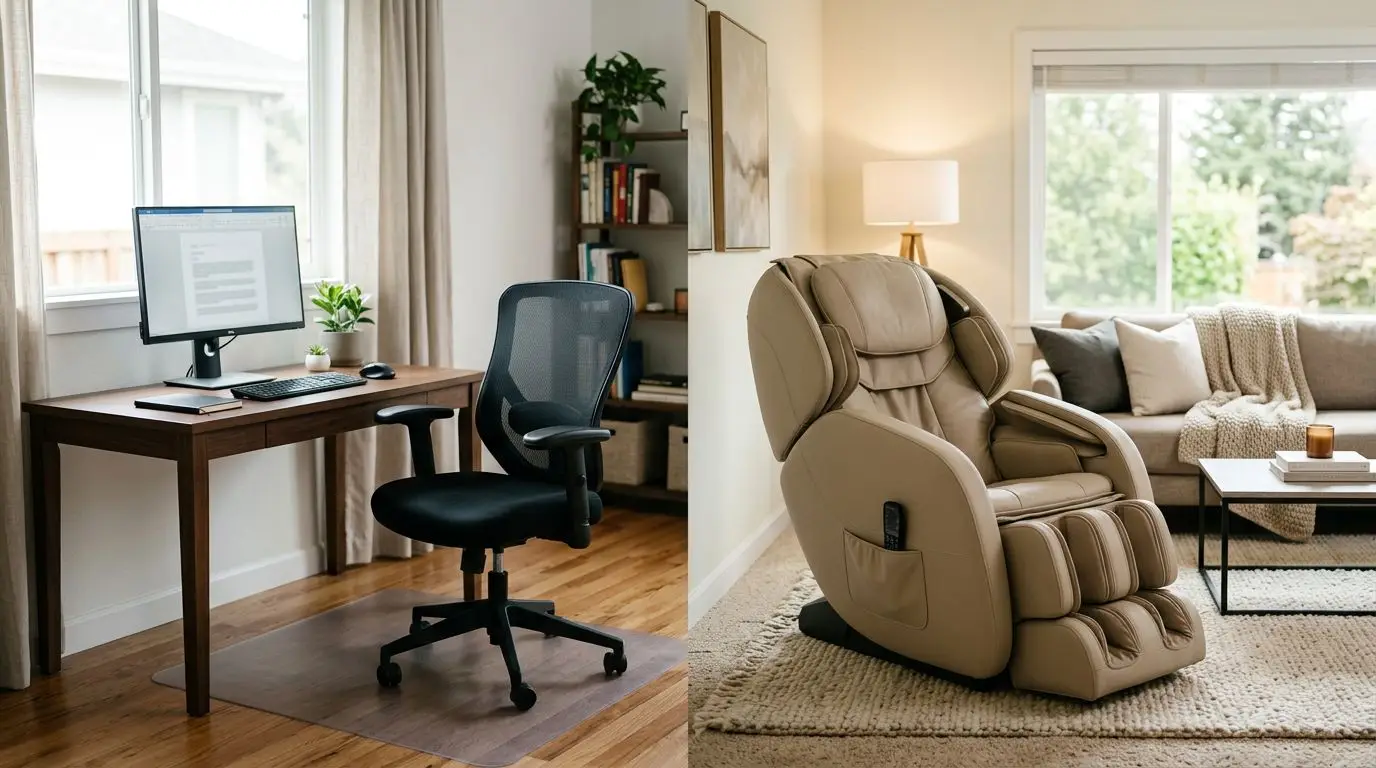
Office Massage Chairs vs. Home Massage Chairs: Key Differences Before You Buy
13 min read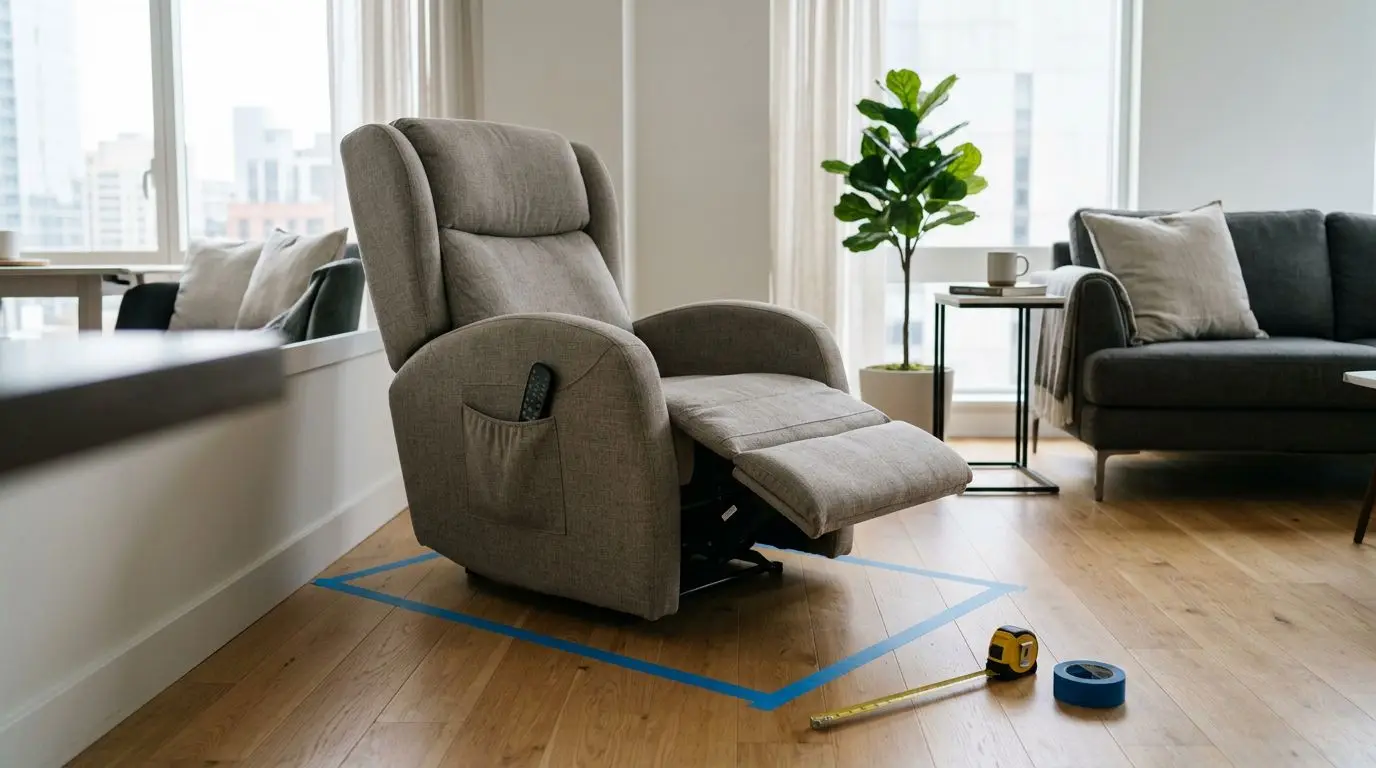
Space-Saving Massage Chairs Explained: How Wall-Hugger Recline Works in Real Homes
13 min read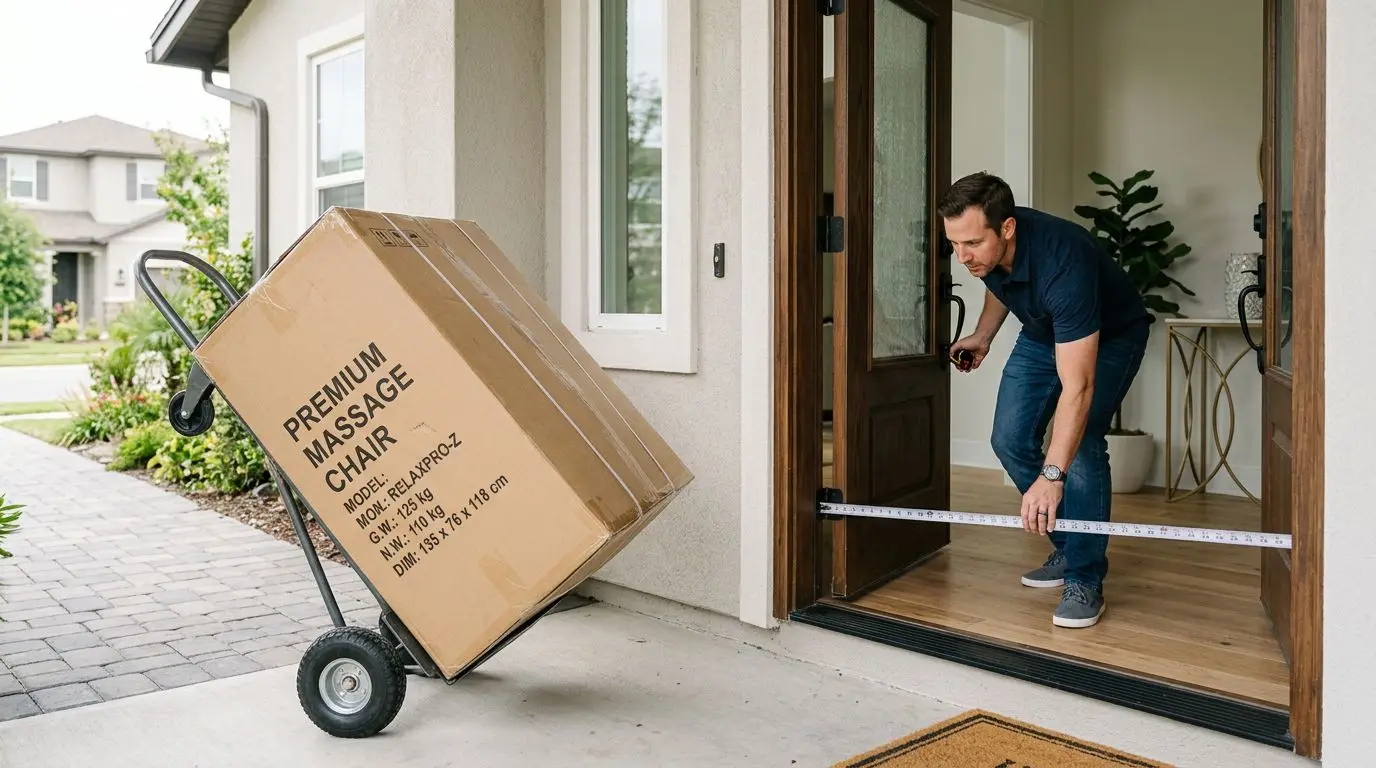
Will a Massage Chair Fit Through Your Door? Measuring Doorways, Hallways, Stairs, and Elevators
13 min read
How to Choose a Massage Chair for Home Use
14 min read