Disclosure: We may earn a commission when you buy through links on this page, at no extra cost to you. We buy nothing, sell nothing and accept no payment for coverage — commissions never decide what we recommend. How we make money.
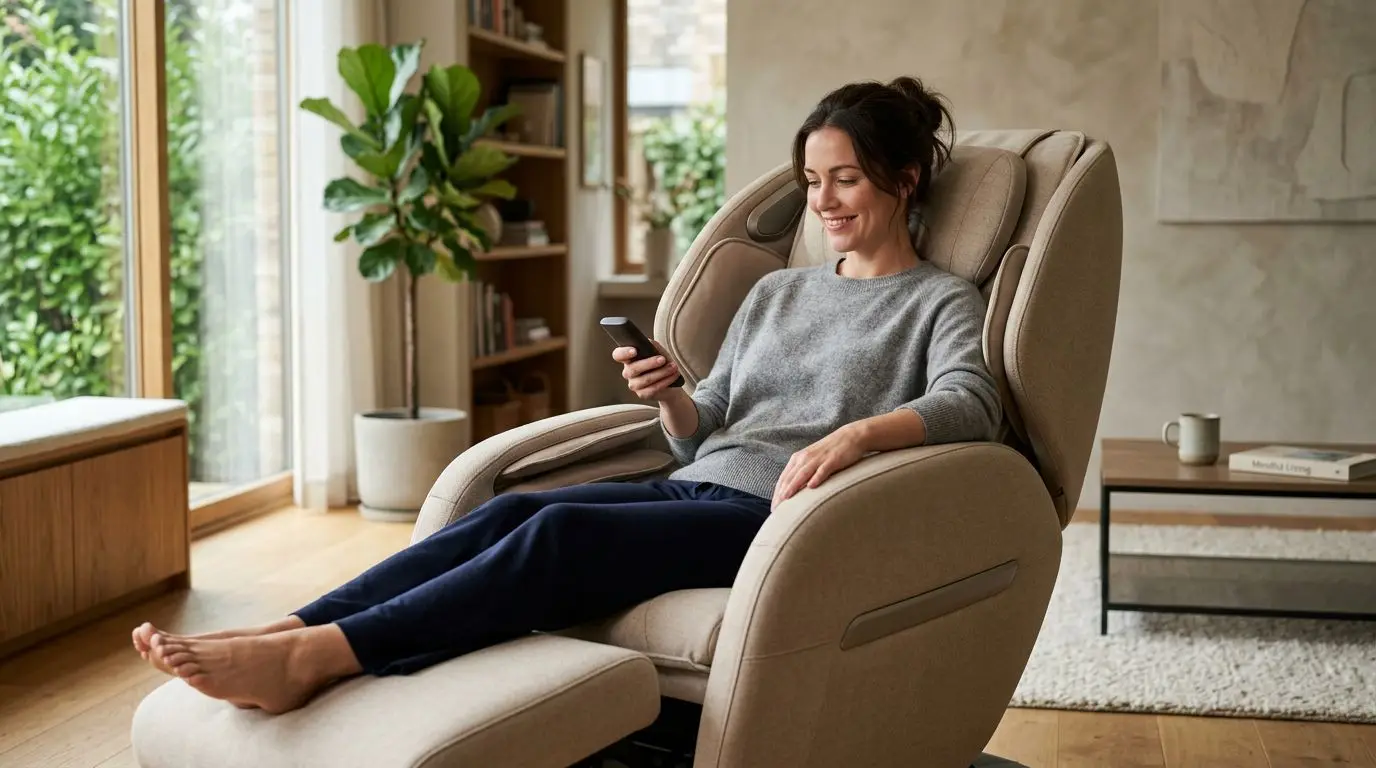
Yes, some pregnant people can use a massage chair, but only with medical clearance and conservative settings. Keep sessions short, avoid intense pressure and overheating, and stop right away if you feel pain, dizziness, contractions, bleeding, or unusual discomfort. If your pregnancy is high risk or you have specific complications, skip the chair unless your healthcare provider says it is appropriate for you.
A massage chair is not the same as prenatal massage from a trained professional. Chairs use rollers, airbags, vibration motors, and heat pads to apply mechanical pressure, so it is safest to treat them as a comfort tool, not a medical treatment.
Is a massage chair safe during pregnancy? Start with these 3 rules
The safest answer depends on the individual. Someone at 14 weeks with an uncomplicated pregnancy may receive different advice than someone at 32 weeks with high blood pressure, placenta concerns, or a history of preterm labor. Before using a massage chair, ask your obstetrician, midwife, or maternal-fetal medicine specialist whether mechanical massage, heat, recline, and foot or calf compression are appropriate for your situation.
Use these 3 baseline rules. First, get clinical clearance before your first session, especially if you are in the 1st trimester or have any pregnancy complication. Second, keep the first session to 5 to 10 minutes on the lowest intensity. Third, avoid anything that significantly raises body temperature or creates strong pressure across the abdomen, low back, pelvis, calves, or feet.
Most massage chairs are designed for general adult comfort, not pregnancy-specific positioning. Rollers usually move along the back on a track, while airbags may squeeze the shoulders, arms, calves, or feet. Some chairs also include vibration, heating pads, body scanning, and deep-kneading programs. Those features can feel good, but they also make it harder to predict exactly how much pressure your body receives.
Do not use a massage chair to treat swelling, back pain, sciatica, headaches, nausea, or pelvic pain without medical guidance. These symptoms are common in pregnancy, but they can also overlap with conditions that need evaluation. A chair may help you relax for a few minutes, but it should not delay care when something feels different or severe.
Who it is best for, and who should avoid it: 6 common pregnancy scenarios
A massage chair is most reasonable for someone with an uncomplicated pregnancy who wants brief, gentle relaxation and can get in and out of the chair safely. It is less appropriate when the pregnancy is medically complex, symptoms are new, or the chair’s pressure points cannot be controlled.
| Situation | Massage chair guidance | Why it matters |
|---|---|---|
| Uncomplicated pregnancy with clinician approval | May be acceptable for 5 to 15 minutes on gentle settings | Short, low-intensity use reduces unnecessary pressure and overheating risk |
| High-risk pregnancy | Avoid unless your provider specifically approves | Conditions such as preeclampsia risk, placenta problems, or preterm labor history need personalized advice |
| Vaginal bleeding, fluid leakage, or regular contractions | Do not use; contact your care team | These are not comfort symptoms to manage with a chair |
| Severe swelling, one-sided calf pain, redness, or warmth | Do not use leg or foot massage; seek medical guidance promptly | These symptoms may need evaluation for a blood clot |
| Dizziness, fainting, shortness of breath, or chest pain | Skip the chair and get medical advice | Reclining, heat, or compression could worsen symptoms |
| Difficulty standing up from a deep recline | Use only with help nearby, or avoid | Late pregnancy changes balance and core strength |
The “best for” group is narrow: healthy pregnancy, provider approval, gentle settings, a short session, and an easy exit. If you need intense pressure to feel relief, a massage chair is probably not the right tool during pregnancy. Prenatal positioning, pillows, stretching, warm showers, and care from a licensed prenatal massage therapist may be safer options to discuss with your clinician.
Safety by trimester: 1st, 2nd, and 3rd trimester considerations
Pregnancy changes quickly, so the same chair setting may feel different at 9 weeks, 22 weeks, and 36 weeks. Use trimester as a starting point, then follow your provider’s advice and your own symptoms.
1st trimester: weeks 1 to 13
Many people are cautious in the first trimester because miscarriage is more common early in pregnancy, even though most miscarriages are not caused by daily activities. There is no good evidence that a gentle massage chair session causes miscarriage in an uncomplicated pregnancy, but that does not mean every feature is automatically safe for every person. If you have cramping, bleeding, significant nausea, dehydration, or a history of pregnancy loss, ask before using the chair.
Keep heat off or very low. Avoid long sessions. If you are exhausted or nauseated, a short rest in a regular chair may be better than a mechanical program with rolling, squeezing, and vibration.
2nd trimester: weeks 14 to 27
The second trimester is often when back, hip, and leg discomfort become more noticeable. A gentle back program may feel helpful, but avoid lying flat for long periods if it makes you lightheaded or short of breath. Many massage chairs recline deeply, and some zero-gravity positions place the torso back and legs up. If that position makes you feel dizzy, return upright immediately.
Side-lying is often preferred for prenatal massage, but most massage chairs do not allow true side-lying. That practical limitation matters. If the chair forces your belly, hips, or ribs into an uncomfortable angle, do not try to push through it.
3rd trimester: weeks 28 to birth
In the third trimester, the main concerns are comfort, circulation, balance, and labor-related symptoms. Getting out of a deep recline can be awkward, especially when the chair has a low seat or the footrest lifts high. If you are unsteady, use a session only when another adult is nearby.
Skip strong calf compression unless your provider has cleared it. Leg swelling is common, but sudden swelling, one-sided calf pain, or warmth can be a warning sign. A chair should never be used to “massage out” symptoms that could need urgent evaluation.
Settings to use and avoid: a 5 to 15 minute session guide
If your provider approves massage chair use, start lower than you think you need. A reasonable first session is 5 minutes. If you feel well afterward, future sessions can be 10 to 15 minutes, with breaks between sessions and no need to use the chair daily.
| Feature | Lower-risk use | Use caution or avoid |
|---|---|---|
| Back rollers | Gentle rolling or light kneading on the upper and mid back | Deep tissue, strong tapping, or intense low-back pressure |
| Heat | Off, or very mild heat for a short time if approved | High heat, long heat cycles, or any use that makes you feel flushed or overheated |
| Foot rollers | Light pressure only if comfortable and approved | Hard reflexology-style pressure or painful arch scraping |
| Calf airbags | Low compression, short duration, and only if cleared | Strong squeezing, especially with swelling, varicose veins, or calf pain |
| Vibration | Low intensity and brief use if it feels soothing | Strong vibration across the pelvis, abdomen, or low back |
| Recline | Semi-reclined with easy breathing and easy exit | Deep recline that causes dizziness, breathlessness, or pressure |
Keep the abdomen free from pressure. Massage chairs usually do not massage the front of the body, but how you sit still matters. Your belly should not be compressed by armrests, tight body positioning, or an aggressive recline. If the chair has a body-scan function, do not assume it understands pregnancy anatomy. Manual control is often safer than a full automatic program because you can limit the area, intensity, and duration.
Stop the session for any red flag: contractions, pelvic pressure, bleeding, fluid leakage, headache that feels severe or unusual, visual changes, chest pain, shortness of breath, faintness, or new swelling. When in doubt, call your healthcare provider.
How to choose and measure a massage chair during pregnancy: 2 inches, 30 inches, and easy exit
If you already own a massage chair, the question is not which chair is “best for pregnancy.” It is whether your chair can be adjusted gently enough and whether you can use it without strain. If you are shopping while pregnant, prioritize fit, control, and safe entry over the longest feature list.
Start with clearance. Many full-size massage chairs need open space behind or in front of the chair to recline, and some wall-hugging designs still need about 2 to 6 inches behind the backrest. Doorways in many US homes are about 30 to 36 inches wide, while massage chairs can be bulky and heavy. Before buying or moving one, measure the doorway, hallway turns, stair path, and the chair’s widest point.
Measure your body fit, too. Sit with your back supported and feet placed naturally in the footrest. Your knees should not be forced too high, your belly should not press into the chair structure, and your shoulders should not be squeezed by fixed side panels. Check the listed height range and weight capacity, then leave a margin rather than using the chair at its limit during pregnancy.
- Choose manual controls that let you turn off foot, calf, heat, and vibration features separately.
- Look for at least 3 intensity levels, with the lowest level truly gentle.
- Favor an easy-to-reach remote or side control so you can stop the chair quickly.
- Check seat height. A very low seat can be hard to exit in the 3rd trimester.
- Confirm the footrest retracts smoothly and does not trap your legs.
- Keep the chair near a stable surface, not in a cramped corner.
Do a dry run before starting a program. Sit down, recline slightly, return upright, and stand up. If that sequence is difficult without the rollers moving, it will not be easier during a massage cycle.
Possible benefits after a 10-minute gentle session, with realistic expectations
A gentle massage chair session may help some pregnant people feel more relaxed, temporarily ease muscle tightness, or unwind at the end of the day. Those are comfort benefits. They are not guarantees, and they are not substitutes for medical care, physical therapy, prenatal massage, or evaluation of pain.
Back discomfort is common during pregnancy because posture, weight distribution, ligaments, and sleep position all change. A light upper-back or mid-back rolling pattern may feel pleasant for 10 minutes, especially if you have been sitting at a desk or standing for a long time. Some people also like mild shoulder compression because tension often builds around the neck and upper back.
Leg and foot comfort is more complicated. Feet may ache from normal weight changes and fluid retention, but leg symptoms deserve caution. Gentle foot massage may feel soothing when approved by your provider, yet strong calf compression is not something to use casually during pregnancy. If your goal is swelling relief, ask your clinician about safer options such as walking, hydration, side-lying rest, or properly fitted compression socks.
Sleep support is another realistic goal. A short relaxation session before bed may help you transition away from screens and daily stress. Keep it brief and low heat. If you fall asleep in the chair, you may stay in one position longer than intended, so set a timer for 10 or 15 minutes.
Questions to ask your healthcare provider: a 7-point checklist
Bring specific information to your appointment or patient portal message. “Can I use a massage chair?” is helpful, but “Can I use a gentle back-only program for 10 minutes with heat off?” is much easier for your provider to answer.
- Is my pregnancy considered low risk or high risk right now?
- Should I avoid mechanical massage during the 1st trimester or later in pregnancy?
- Are heat, vibration, foot rollers, or calf compression safe for me?
- Do I have any conditions that make leg compression a bad idea?
- What symptoms should make me stop immediately and call your office?
- Is a semi-reclined position okay, or should I avoid lying back for more than 5 to 10 minutes?
- Would prenatal massage, physical therapy, stretching, or another option be better for my symptoms?
If your provider says no, take that seriously. It does not mean massage chairs are dangerous for everyone; it means your specific situation calls for a different approach. Pregnancy care is personal, and the safest advice is the advice that accounts for your history, medications, symptoms, and stage of pregnancy.
FAQ: 5 common questions about massage chairs and pregnancy
Can a massage chair cause labor?
There is no strong evidence that a gentle massage chair session starts labor in a healthy pregnancy. Still, avoid intense foot, ankle, calf, low-back, or pelvic pressure unless your provider approves it. If you have contractions, pelvic pressure, bleeding, or fluid leakage, do not use the chair; contact your care team.
Is heat in a massage chair safe while pregnant?
Heat should be used cautiously. The main concern is overheating, especially with long sessions or high heat. If your clinician allows heat, keep it mild, limit the session to about 10 minutes, and stop if you feel flushed, dizzy, sweaty, or uncomfortable.
Can I use the foot and calf massage features?
Only if your healthcare provider says it is appropriate for you. Gentle foot massage may be acceptable for some people, but strong calf compression should be avoided when there is significant swelling, one-sided calf pain, redness, warmth, varicose vein concerns, or clot risk.
What is the safest position in a massage chair during pregnancy?
A semi-reclined position that lets you breathe normally, keeps pressure off your abdomen, and allows you to stand up easily is usually more practical than a deep recline. If you feel lightheaded, short of breath, or trapped, return upright and stop.
How long can I sit in a massage chair while pregnant?
With medical clearance, start with 5 minutes. Many people who tolerate it well keep sessions around 10 to 15 minutes on gentle settings. Longer is not necessarily better, and daily use is not required.
Frequently asked questions
Can a massage chair cause labor? +
There is no strong evidence that a gentle massage chair session starts labor in a healthy pregnancy. Avoid intense pressure on the feet, calves, low back, or pelvis unless your healthcare provider approves it, and call your care team if you have contractions, bleeding, pelvic pressure, or fluid leakage.
Is massage chair heat safe during pregnancy? +
Use heat cautiously and only if your clinician says it is okay for you. Keep heat mild, limit sessions to about 10 minutes, and stop if you feel flushed, dizzy, sweaty, or overheated.
Can I use foot rollers or calf airbags while pregnant? +
Ask your healthcare provider first. Gentle foot massage may be fine for some pregnancies, but strong calf compression should be avoided with significant swelling, one-sided calf pain, redness, warmth, varicose vein concerns, or clot risk.
How long should a massage chair session be during pregnancy? +
If your provider approves it, start with 5 minutes on the lowest setting. If you tolerate that well, many people keep sessions to 10 to 15 minutes with heat off or very low.
Who should not use a massage chair during pregnancy? +
Avoid massage chair use unless cleared by your provider if you have a high-risk pregnancy, bleeding, fluid leakage, regular contractions, severe swelling, one-sided calf pain, preeclampsia concerns, placenta problems, or a history of preterm labor.
Related guides
Are Massage Chairs Good or Bad for You? Benefits, Risks, and Safe Use Guidelines
13 min read
Morning, Afternoon, or Night: When Is the Best Time to Use a Massage Chair?
14 min read
How to Use a Massage Chair at Home: A Simple First-Week Routine for Comfort and Consistency
10 min read
Massage Chair vs. Physical Therapy or Chiropractic Care: What Each Can and Can’t Do
13 min read
Massage Chair Use Before or After a Workout: Which Is Better for Recovery?
13 min read