Disclosure: We may earn a commission when you buy through links on this page, at no extra cost to you. We buy nothing, sell nothing and accept no payment for coverage — commissions never decide what we recommend. How we make money.
Most home users should use a massage chair for 10 to 20 minutes per session, up to once a day if it feels comfortable and there is no medical reason to avoid it. Occasional use, such as 2 to 4 times per week, is also perfectly reasonable; the right schedule is the one that leaves you feeling comfortable afterward, not tender, bruised, lightheaded, or overly fatigued. If you are pregnant, have an implanted cardiac device, take anticoagulants, have a history of blood clots, osteoporosis, recent fracture or surgery, spinal disc problems, neuropathy, or uncontrolled hypertension, ask your physician before using a massage chair.
A massage chair is a consumer wellness product, not a medical device. Think of it as a powerful recliner with moving rollers, airbags, heat, and preset programs: helpful for relaxation and daily comfort, but still something to use thoughtfully.
Daily Use vs. Occasional Use: 10 to 20 Minutes Is the Practical Range
For most healthy adults, a single 10- to 20-minute session is the sweet spot. That is enough time to experience the chair's rolling, kneading, tapping, air compression, and recline features without turning a pleasant session into too much pressure.
Daily use can make sense when the chair is set to low or medium intensity and the session feels good during and after. Occasional use can be just as reasonable, especially if you prefer stronger roller depth, foot rollers, or full-body air compression. More is not automatically better.
| Use pattern | Typical frequency | Best fit | Watch for |
|---|---|---|---|
| Occasional | 1 to 2 sessions per week | People who want a relaxing reset after long days or workouts | Choosing too intense a program because use feels infrequent |
| Regular | 3 to 4 sessions per week | Most home users who enjoy routine chair time | Repeating the same high-pressure setting every time |
| Daily light use | 1 session per day, 10 to 15 minutes | Users who prefer gentle rollers, air massage, or heat | Ignoring tenderness or fatigue afterward |
| Daily intense use | 20 minutes or more most days | Only for people who tolerate deep pressure well | Bruising, soreness, numbness, or feeling drained |
If you are new to massage chairs, start below the maximum. A 10-minute session on a gentle setting teaches you more than a 30-minute first run on the deepest option. Use the first week to learn how your body responds to the chair's pressure and movement.
Why Session Length Matters After 15 Minutes
Massage chairs can feel mild at first and more intense as the session continues. Rollers may repeat over the same section of the back for several minutes, airbags may compress the calves and arms in cycles, and foot rollers can focus pressure on a small area. After about 15 minutes, those repeated movements may feel stronger than they did at minute 3.
Most built-in auto programs run roughly 10 to 20 minutes. That is not an accident. It gives the chair time to scan the back, move through several techniques, recline, and complete a sequence without keeping the user in an overly long session.
Longer sessions are not automatically unsafe for every person, but stacking programs back-to-back can be too much, especially with 3D or 4D rollers, strong calf airbags, or aggressive foot rollers. If you want more chair time, it is usually better to split it into 2 shorter sessions separated by several hours instead of sitting for 40 continuous minutes.
- First-time users: start with 5 to 10 minutes.
- Most routine users: stay around 10 to 20 minutes.
- Deep-pressure users: consider 10 to 15 minutes, then reassess.
- Older adults or smaller-framed users: begin with the lowest intensity and shorter programs.
Let how you feel afterward be the deciding factor. Comfortable warmth, relaxation, or a sense that the chair felt pleasant is different from lingering tenderness, bruising, tingling, or feeling unsteady when you stand up.
Who It Is Best For: 5 Common Home-Use Scenarios
A massage chair works best when the schedule fits the person using it. Two people can own the same chair and still need completely different routines because height, weight, pressure tolerance, activity level, and health history all matter.
1. The daily desk sitter
If you sit for 6 to 8 hours most workdays, a gentle 10- to 15-minute evening program may feel comfortable. Choose moderate recline, low roller depth, and light air compression at first. The goal is not to punish your back for sitting all day; it is to use the chair in a way that feels easy to repeat.
2. The occasional relaxation user
If you mainly want a quiet break, 2 or 3 sessions per week may be plenty. Many people in this group prefer a zero-gravity recline, heat on the back, and light airbags rather than maximum roller strength.
3. The deep-pressure enthusiast
If you like firm rollers, use less time. A 12-minute deep-kneading program can feel more intense than a 20-minute gentle air-focused session. Look for adjustable roller depth and use the lowest setting that still feels satisfying.
4. The shared household
In a 2- to 4-person household, the chair may be used daily, but each user should have an individual limit. A taller adult using an L-track program for 20 minutes and a smaller adult using a 10-minute upper-back program are not having the same experience.
5. The sensitive user
If you bruise easily, dislike firm pressure, or feel uncomfortable with tight calf or arm airbags, use the chair less often and keep sessions shorter. Start with 5 minutes, skip the strongest features, and increase only if the next day feels normal.
How to Choose Your Frequency and Measure Fit in 4 Steps
The best schedule starts with fit. A chair that does not line up with your body can make even a short 10-minute session feel awkward. Before deciding on daily use, check whether the rollers, headrest, seat, calf wells, and footrest match your body size.
Step 1: Measure your seated shoulder height
Sit against a wall and measure from the seat surface to the top of your shoulders. Many chairs use an automatic body scan, but the scan still needs a reasonable physical fit. If the rollers consistently land too high on the neck or too low below the shoulders, reduce intensity and adjust your position.
Step 2: Check seat width and hip comfort
Measure across your hips while seated and compare it with the chair's interior seat width when available. A difference of even 1 to 2 inches can matter if the chair has fixed side panels or strong hip airbags. You should not feel wedged in place.
Step 3: Check calf and foot placement
Foot and calf sections vary widely. If your knees are sharply bent, your heels do not reach the foot rollers, or the calf airbags squeeze the wrong spot, shorten the session and lower the air intensity. Taller users should look for an extending footrest; smaller users may need to slide slightly forward or use a gentler program.
Step 4: Plan the room around the chair
Many full-size massage chairs need about 2 to 6 inches behind the backrest if they have a space-saving recline, while some designs need more. Doorways in many US homes are roughly 30 to 36 inches wide, so the delivery path matters too. A chair cramped against a wall can limit recline and make users sit at an awkward angle.
Once fit is dialed in, choose frequency with a simple rule: if a 10-minute low-intensity session feels good during use and the next day, you can add time or days gradually. Add one variable at a time. Do not increase duration, roller depth, air compression, and frequency all in the same week.
Feature Intensity: Why a 10-Minute Foot Roller Session Can Feel Strong
Not all massage chair minutes are equal. A 20-minute gentle air-compression program may feel easier than 8 minutes of strong foot rollers or a deep 3D back program. Base frequency on the feature mix, not just the timer.
| Feature | How it is designed to feel | Frequency note |
|---|---|---|
| 2D rollers | Roll up and down, often with kneading or tapping | Often suitable for regular use when intensity is moderate |
| 3D or 4D rollers | Move in and out for deeper, more pronounced pressure | Use shorter sessions, especially at high depth settings |
| S-track | Follows the curve of the back from neck to lower back | Good for users focused on back coverage |
| L-track or extended track | Continues under the seat toward the glutes or upper hamstrings | May feel stronger because coverage area is larger |
| Airbags | Inflate and deflate around shoulders, arms, hips, calves, or feet | Lower intensity if compression feels tight or distracting |
| Foot rollers | Apply concentrated pressure under the feet | Start with 5 to 10 minutes if you are sensitive |
| Heat | Adds surface warmth, often in the back area | Use caution if you have reduced temperature sensation |
If a chair allows manual control, use it. You might run a 15-minute full-body program one day, then a 10-minute shoulder or lower-back-focused program the next. Alternating lighter and stronger sessions is often more comfortable than repeating the same intense preset every day.
Recovery Time: When to Take 24 to 48 Hours Off
Your body gives useful feedback after a massage chair session. If you feel tender, bruised, unusually tired, numb, tingly, or uncomfortable later that day or the next morning, take 24 to 48 hours off and restart with a shorter, gentler program.
That break is not a failure. It is how you find your personal limit. Some users can sit in a chair daily with light settings and feel fine; others do better with every-other-day use because the rollers feel intense on their frame.
Reduce frequency if you notice any of these signs:
- Bruising or skin marks that last beyond normal temporary redness.
- Sharp, pinching, burning, or electric-feeling sensations.
- Numbness or tingling during or after a session.
- Discomfort that is stronger the next day.
- Feeling dizzy, lightheaded, or unsteady when standing.
- Calf compression that feels painful rather than snug.
Stop the session immediately if something feels wrong. Do not wait for the timer to finish. Most chairs have a power button, pause button, or remote control stop function; know where it is before reclining fully.
Safety Check: 8 Situations Where You Should Ask a Physician First
Massage chairs are built for consumer comfort, but they are not right for every situation. Ask your physician before using one if any of the following apply, even if you plan to use only a 10-minute gentle setting.
- Pregnancy: body position, heat, and compression may not be appropriate for every pregnancy.
- Pacemaker or other implanted cardiac device: ask about vibration, magnets, electrical components, and reclined positioning.
- Blood clots or anticoagulant medication: compression and deep pressure deserve medical guidance.
- Osteoporosis: strong rollers and recline positions may be unsuitable depending on severity.
- Recent fracture or surgery: wait for your physician's clearance before applying pressure near the area.
- Spinal disc problems: deep rollers, twisting sensations, and aggressive back programs may not be appropriate.
- Neuropathy or reduced sensation: you may not accurately feel pressure, heat, or pinching.
- Uncontrolled hypertension: ask your physician before using strong compression, heat, or long reclined sessions.
Be careful with heat as well. If the chair has a heated back pad or warm rollers, start with a short cycle and keep clothing between your skin and the chair. People with reduced heat sensitivity should avoid using heat unless their physician says it is appropriate.
Sample Schedules: 7-Day Plans for New and Regular Users
A written plan helps prevent overdoing it. Use these 7-day examples as starting points, then adjust based on comfort, chair intensity, and your own health considerations.
| User type | Day 1 | Day 2 | Day 3 | Day 4 | Day 5 | Day 6 | Day 7 |
|---|---|---|---|---|---|---|---|
| New user | 5-10 min gentle | Off | 10 min gentle | Off | 10 min moderate | Off | 10-15 min gentle |
| Regular light user | 15 min | 10 min | Off | 15 min | 10 min | Off | 15 min |
| Daily relaxation user | 10 min | 10 min | 10 min | 10 min | 10 min | 10 min | Off or 10 min |
| Deep-pressure user | 10-12 min | Off | 10-12 min | Off | 10 min | Off | Optional gentle 10 min |
If two people share a chair, keep separate preferences. One user might save a low-air, low-roller program for daily use, while another uses stronger rollers only 2 times per week. Preset memory, if available, is helpful because it prevents accidental jumps to a setting that belongs to someone else.
How to Make Each 15-Minute Session More Comfortable
Small setup choices can make a massage chair feel better without increasing intensity. Before starting a 15-minute program, empty your pockets, remove bulky belts or hard hair clips, and sit centered with your hips all the way back. Let the chair scan your body if it has that function, then fine-tune the shoulder position manually if needed.
- Use clothing as a pressure buffer: a sweatshirt or folded towel can soften strong rollers.
- Start upright: recline gradually if full zero-gravity feels too intense.
- Lower air compression first: airbags can feel restrictive at high settings.
- Limit foot rollers: if they feel sharp, turn them off or use thick socks.
- Do not multitask with alcohol: you want clear feedback from your body.
- Stand up slowly: take 10 to 20 seconds before walking away.
Hydration, stretching, or rest can be part of your personal routine if they feel good, but a chair does not require a special aftercare ritual. The most important step is noticing whether the session left you comfortable enough to repeat.
FAQ: 5 Common Questions About Massage Chair Frequency
Can I use a massage chair every day?
Many healthy adults can use a massage chair daily for 10 to 15 minutes on a gentle or moderate setting, as long as they feel comfortable afterward. If daily use leaves tenderness, bruising, numbness, tingling, or fatigue, reduce frequency and intensity.
Is 30 minutes too long in a massage chair?
For many users, 30 minutes is longer than necessary, especially with deep rollers or strong air compression. If you want more time, split it into 2 shorter sessions on the same day rather than one long continuous session.
Should I use the chair before or after exercise?
Either can be comfortable, depending on your preference. Keep sessions short, around 10 to 15 minutes, and avoid high intensity if your body already feels sensitive from activity. Do not use the chair to push through sharp discomfort.
How often should older adults use a massage chair?
Older adults should start conservatively, such as 5 to 10 minutes, 1 to 3 times per week, using low intensity. A physician should be asked first if there is osteoporosis, an implanted cardiac device, anticoagulant use, neuropathy, recent surgery, or other relevant health concerns.
When should I stop using a massage chair?
Stop immediately if you feel sharp pain, numbness, tingling, dizziness, unusual pressure, or a trapped position. Take at least 24 to 48 hours off if soreness or bruising appears, and ask a physician if symptoms are concerning or persistent.
The bottom line is simple: use the least intensity and time that still feels good. For most home users, that means 10 to 20 minutes per session, anywhere from a few days per week to once daily, with extra caution for strong rollers, foot rollers, heat, compression, and any health condition that calls for medical guidance.
Frequently asked questions
Can I use a massage chair every day? +
Many healthy adults can use a massage chair daily for 10 to 15 minutes on a gentle or moderate setting if it feels comfortable during and after use. Reduce frequency if you notice tenderness, bruising, numbness, tingling, dizziness, or unusual fatigue.
How long should a massage chair session be? +
Most home users should stay in the 10- to 20-minute range. First-time users, sensitive users, and people using strong rollers or foot rollers should start closer to 5 to 10 minutes.
Is it better to use a massage chair daily or only a few times per week? +
Neither is automatically better. Daily light use can be fine for some people, while 2 to 4 sessions per week may be better for users who prefer deeper pressure or need more time between sessions.
When should I take a break from my massage chair? +
Take 24 to 48 hours off if you feel bruised, tender, numb, tingly, dizzy, or uncomfortable after a session. Restart with a shorter, gentler program only if you feel normal again.
Who should ask a physician before using a massage chair? +
Ask your physician first if you are pregnant, have a pacemaker or other implanted cardiac device, take anticoagulants, have a history of blood clots, osteoporosis, recent fracture or surgery, spinal disc problems, neuropathy, or uncontrolled hypertension.
Related guides

Morning, Afternoon, or Night: When Is the Best Time to Use a Massage Chair?
14 min read
How to Use a Massage Chair at Home: A Simple First-Week Routine for Comfort and Consistency
10 min read
Massage Chair Use Before or After a Workout: Which Is Better for Recovery?
13 min read
Are Massage Chairs Good or Bad for You? Benefits, Risks, and Safe Use Guidelines
13 min read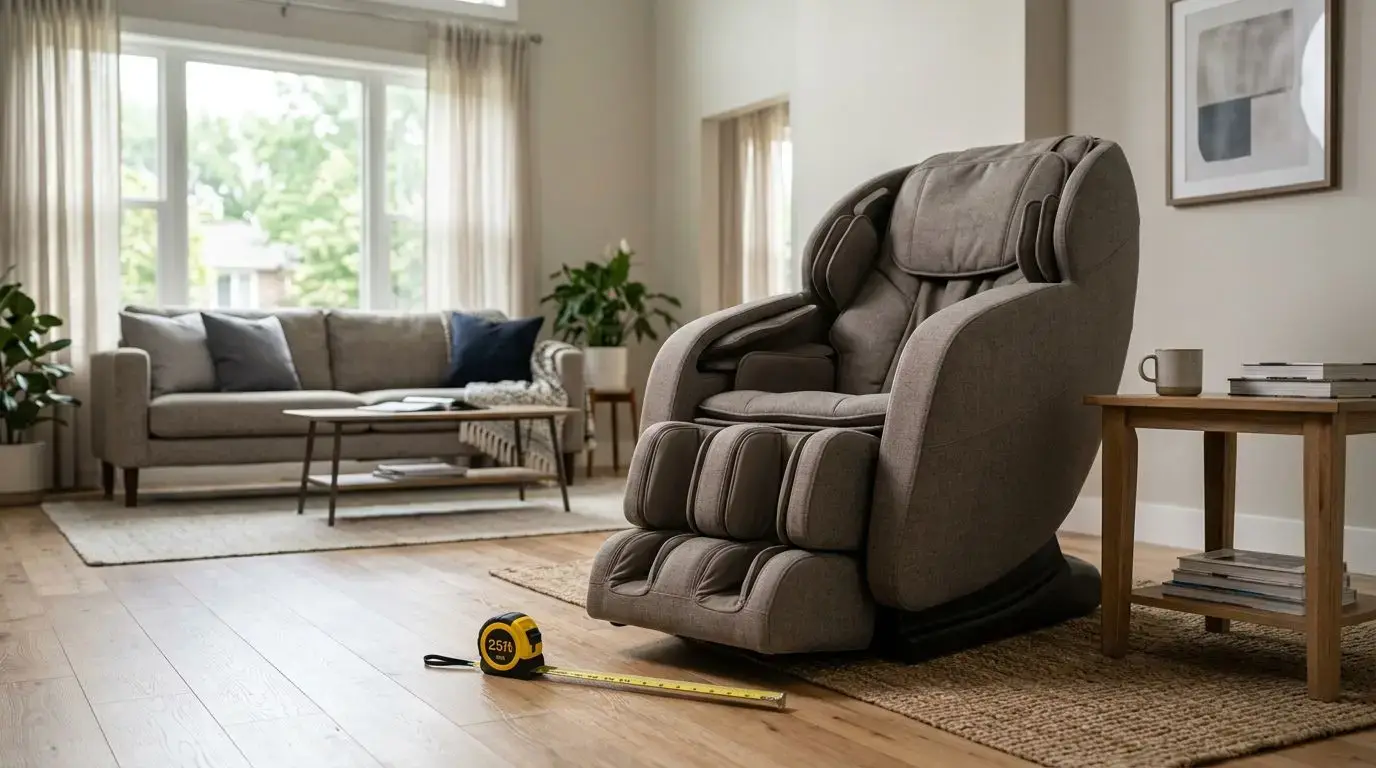
How to Choose a Massage Chair for Home Use
14 min read