Disclosure: We may earn a commission when you buy through links on this page, at no extra cost to you. We buy nothing, sell nothing and accept no payment for coverage — commissions never decide what we recommend. How we make money.
Yes, a massage chair can go upstairs in many homes, but only if the chair, stairway, turns, and upstairs floor can handle both the move and the final setup. The biggest obstacles are usually weight, tight landings, and bulky chair sections, not everyday use after placement. Measure first, check the total load, and use professional movers or white-glove delivery when the chair is over about 250 lb or the stairs are narrow.
For homeowners considering an upstairs bedroom, loft, or bonus room, the question is not only, “Will it fit?” It is, “Can it get there without damaging the chair, walls, stairs, or the people moving it?” A massage chair is awkward: dense in the base, wide through the arms, and often top-heavy when tilted. The guide below covers the key measurements, weight concerns, moving choices, and placement details to review before committing to an upstairs location.
Know these 3 numbers first: chair weight, narrowest width, and stair turn
Before anyone lifts the chair, write down three numbers: the chair’s packed or unpacked weight, the narrowest point on the route, and the tightest turn on the stairs. Many full-size massage chairs weigh roughly 180 to 350 lb, while large feature-heavy chairs can be heavier. That is before adding packaging, moving blankets, or a dolly.
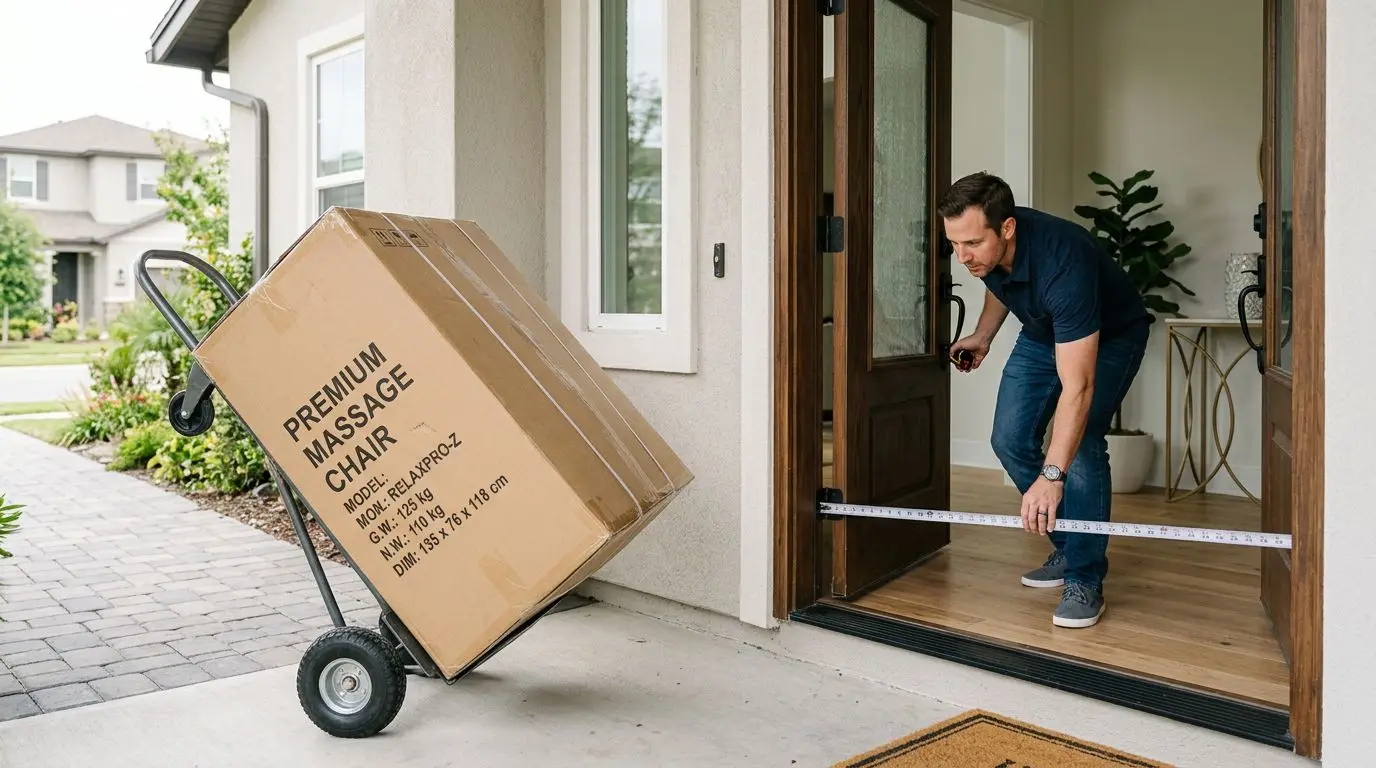
The second number is route width. Measure the narrowest usable opening, not just the door label. A “32-inch door” often has less usable space once the door slab, hinges, trim, and handrail are considered. Removing the door from its hinges can sometimes gain about 1 to 1.5 inches, which may be the difference between an easy pass and a scratched arm panel.
The third number is turn clearance. Stairs with a straight run are easier. A 90-degree landing, switchback staircase, or tight upstairs hallway can stop a chair that technically fits through the front door. If the chair has removable arm panels, calf sections, or side covers, that may help, but do not assume every chair breaks down the same way.
Upstairs weight: plan for a 180–350 lb chair plus a seated adult
Once the chair is upstairs, the floor must support the chair, the user, and the dynamic movement of reclining, rollers, airbags, and footrest adjustments. A typical residential room is commonly designed around a live load such as 40 lb per square foot, but homes vary by age, framing, span, and renovation history. That number is a building-design reference, not a guarantee for your specific room.
Think in total load, not chair weight alone. A 300 lb chair with a 220 lb user creates a 520 lb combined load concentrated over the chair’s footprint. If the chair sits on four small feet or narrow glides, pressure points can be higher than they look. A wide base or protective mat helps spread contact and can reduce dents in carpet or softer wood flooring.
Most modern upstairs bedrooms can accommodate heavy furniture such as beds, dressers, treadmills, or large desks, but a massage chair is different because it has mechanical motion and a concentrated base. If the room is in an older home, over a long unsupported span, above a garage, or in a converted attic or bonus room, ask a qualified contractor or structural professional before moving a heavy chair upstairs.
Also consider the people who will use it. Many chairs list a maximum user weight and height range in the manual. Respect those limits. They relate to fit, motor strain, frame design, and comfort, not just whether the chair turns on.
Stair clearance: 29–36 inches of usable space makes a big difference
Stair width is the measurement that most often determines whether the move is realistic. Many interior stairways have about 36 inches of framed width, but the usable moving path may shrink to 31 or 32 inches after handrails, trim, wall angles, and newel posts. Older homes may be tighter. Basement-style or attic-style stairs can be tighter still.
Measure the chair’s widest non-removable point. On many chairs, that is the outside width across the arm panels, often in the upper-20-inch to mid-30-inch range. If the arms or side panels come off, the base may be much easier to handle, but check the manual or manufacturer guidance before removing anything connected to wiring, airbags, or sensors.
Here is a practical rule: you want at least 2 inches of extra clearance beyond the chair’s narrowest moving orientation, and 4 inches is more comfortable. If the chair is 30 inches wide at the narrowest movable angle, a 32-inch clear path is possible but stressful. A 34- to 36-inch clear path gives movers more room to protect corners and adjust grip.
Height can matter too. A tall backrest may need to be tilted, rotated, or carried upright. Measure ceiling height over the stairs and at the landing, especially if there is a sloped ceiling. An 80-inch hallway ceiling may be fine, while a low stairwell with a sharp turn can force the chair into an angle that no longer clears the handrail.
Compare upstairs-friendly chair types by 2 key limits: bulk and breakdown
Massage chairs vary widely in shape. The feature list is not the only thing that matters upstairs; the physical layout matters just as much. A compact chair with fewer external components may be far easier to place in a loft than a large chair with wide arm sections, enclosed calf hardware, and a long recline path.
| Chair type or feature | Typical upstairs advantage | Potential upstairs issue |
|---|---|---|
| Compact S-track chair | Often shorter front to back and lighter than feature-heavy designs | May provide less seat and glute coverage than longer tracks |
| L-track or SL-track chair | Roller path usually extends from back into the seat area for broader coverage | Longer internal frame can add bulk and weight |
| 2D roller system | Usually simpler and may be lighter | Intensity adjustment may be more limited |
| 3D or 4D roller system | Designed to vary roller depth and feel more noticeably | Can add mechanism weight and cost, depending on design |
| Full-body airbag coverage | Designed to create squeezing pressure at areas such as arms, calves, or shoulders | Arm and leg modules can widen the chair and complicate turns |
| Zero-gravity recline | Positions the body in a reclined angle many users find comfortable | Needs rear and sometimes front clearance when reclining |
If the upstairs route is tight, do not shop by features alone. Ask whether major sections are removable, whether the chair can be moved on its side, and what the minimum doorway requirement is. A chair that looks reasonable in a showroom can feel very different when it has to rotate around a 36-inch landing.
How to measure the route in 20 minutes before delivery day
You can do a useful route check in about 20 minutes with a tape measure, painter’s tape, and a notepad. Start at the curb or garage and follow the exact path the chair will take: entry door, foyer, stairs, landing, upstairs hall, room door, and final position. Measure the narrowest width, lowest overhead clearance, and each turning area.
Measure in this order:
- Entry door clear width: open the door 90 degrees and measure the actual passable space.
- Hallway width: include trim, light fixtures, console tables, and wall-mounted items.
- Stair width: measure between the handrail and opposite wall, not wall to wall.
- Landing depth: measure the flat area where movers must turn the chair.
- Ceiling height: check the stairs and the upstairs hallway, especially under slopes.
- Room door swing: decide whether the door should be removed before movers arrive.
- Final footprint: tape out the chair’s upright and reclined space on the floor.
For the final room, leave walking space. A chair that technically fits but blocks a closet, dresser, or bathroom door will become frustrating quickly. Many reclining chairs need several inches behind them, and some need more than a foot depending on the recline geometry. Wall-hugging designs may need less rear clearance, but they still need front space for the footrest and for the user to step in and out.
Do not forget the power cord. Most massage chairs use a standard household outlet, but the cord route should not cross a walkway or pinch under the base. Avoid extension cords unless the chair manual specifically allows them and the cord is properly rated.
Who an upstairs massage chair is best for: quiet rooms, 15-minute routines, and private space
An upstairs placement makes sense when the room supports how you will actually use the chair. If you prefer a quiet 15- or 20-minute session away from the TV, kitchen, or family traffic, an upstairs bedroom or loft can be ideal. It can also work well in a bonus room used for reading, stretching, or low-noise downtime.
It is less ideal if the chair will be shared by several people throughout the day. Stairs create friction. A downstairs location near a living room or den may get more use, especially for households with guests, older adults, or anyone who dislikes going upstairs for a short session.
An upstairs chair is best for homeowners who can meet most of these conditions:
- The chair can reach the room without forcing a risky stair turn.
- The upstairs floor is conventional living space, not a lightly built storage attic.
- The room has enough space for upright, reclined, and entry positions.
- Noise from motors, airbags, and footrest movement will not disturb someone below.
- The user can comfortably get in and out without the chair crowding nearby furniture.
Noise is usually modest, but it is not silent. Rollers, air pumps, reclining motors, and calf mechanisms can be noticeable in a room below, especially at night. Area rugs and floor protection can reduce vibration transfer, but they will not make the chair disappear acoustically.
Safe moving plan: when 2 people are not enough for a 250 lb chair
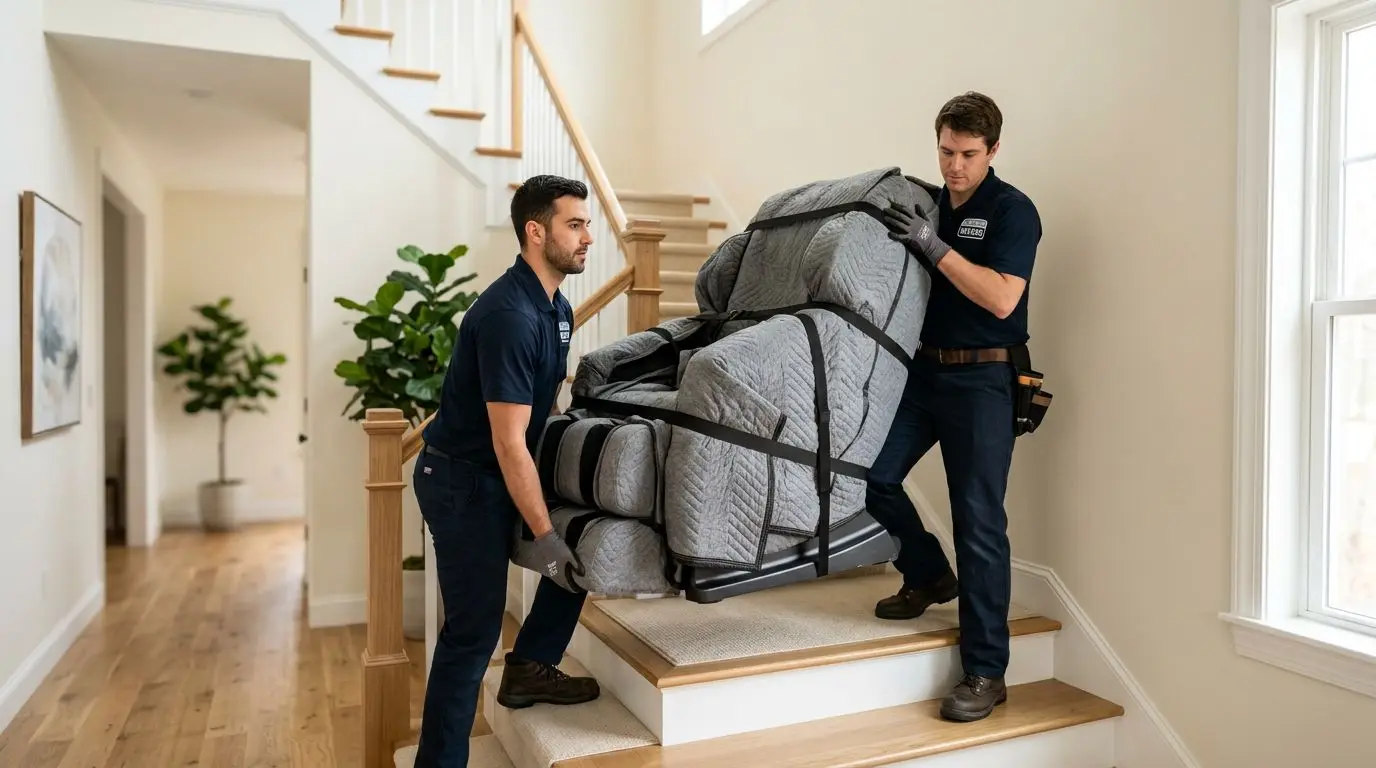
A massage chair is not just heavy; it is awkward. Two strong people may be able to move a lighter compact chair on a straight route, but a 250 lb or heavier chair on stairs usually calls for a larger crew, proper equipment, or professional movers. The risk is not only dropping the chair. It is also crushed fingers, strained backs, damaged stair treads, torn upholstery, and broken wiring.
Before moving day, remove loose accessories and secure any parts that can swing. Check the manual for transport instructions. Some chairs have built-in caster wheels for short flat moves, but those wheels are not meant for stair climbing. Never lift by the footrest, calf massager, arm airbags, tablet holder, or decorative side panels unless the manual identifies them as lift points.
A safer stair move usually includes:
- At least 3 or 4 capable adults for a heavy full-size chair, or trained movers.
- Moving straps rated for the load.
- Thick moving blankets on walls, railings, and the chair surface.
- A plan for who leads, who spots, and where the chair will rest on landings.
- Closed-toe shoes and clear communication, such as “stop,” “down,” and “tilt.”
If the move requires tipping the chair on its side, confirm that this is allowed. Some chairs contain oil-free mechanisms and enclosed electronics that tolerate careful tilting, while others may have parts that should not bear weight. When in doubt, use professional delivery and ask for the manufacturer’s moving guidance in writing.
Upstairs placement: allow 24 inches of walkway and protect the floor
Once the chair reaches the room, placement matters. Keep at least 24 inches of clear walking space where someone needs to pass, and more if the room is used by people with limited mobility. The user should be able to sit down and stand up without stepping over the footrest or twisting around a nightstand.
Check the recline envelope. Some chairs slide forward as they recline, while others need more space behind the backrest. Tape the footprint before delivery, then add the manufacturer’s rear and front clearance requirements. If you do not have those numbers, plan conservatively and leave extra space until you can test the chair.
Floor protection is useful upstairs. On carpet, a firm chair mat can reduce deep indentations and make small positioning adjustments easier. On hardwood, vinyl plank, or laminate, use a mat or furniture cups that will not stain the finish. Avoid dragging the chair, even a few inches. Small feet under a 300 lb chair can leave marks quickly.
Place the chair near an outlet but away from heat registers, direct dampness, and windows where strong sunlight can age upholstery. Keep a few inches around vents so airflow is not blocked. If the room has a sloped ceiling, test head clearance when the chair is fully upright and fully reclined.
Delivery choices: standard threshold, room-of-choice, or white-glove setup
Delivery terms matter because “delivered” can mean very different things. A threshold delivery may leave the box at the garage or front door. Room-of-choice delivery may bring the chair to an upstairs room but not assemble or test it. White-glove service often includes placement and basic setup, but the exact scope depends on the seller and delivery company.
| Delivery option | What it may include | Best for upstairs placement when |
|---|---|---|
| Threshold delivery | Drop-off at the first dry area, such as porch, garage, or entry | You have your own experienced movers and a clear route |
| Room-of-choice delivery | Moving the chair to a selected room, sometimes including one flight of stairs | The stair route is simple and the delivery terms clearly include stairs |
| White-glove setup | Placement, unpacking, basic assembly, and debris removal, depending on terms | The chair is heavy, the route is tight, or you want less risk |
| Professional local movers | Moving from one room or home to another, often with stair equipment | You already own the chair or need a relocation after delivery |
Always ask how many flights of stairs are included, whether tight turns can trigger refusal, and whether the crew is allowed to remove doors or handrails. Some delivery teams will not take a chair upstairs if they judge the route unsafe. That can be frustrating, but it is better than forcing a move that damages the home or chair.
If the chair arrives boxed, measure the box too. Packaging can add several inches to width and depth. In some cases, unpacking downstairs is necessary, but only do this if the delivery terms allow it and you can protect the chair during the move.
Health and use cautions: ask a physician before the first 15-minute session if these apply
A massage chair is a consumer wellness product designed for comfort, pressure, and relaxation-style experiences. It is not a medical device, and it should not be treated as a substitute for medical advice. Start with a short session, such as 10 to 15 minutes, and use lower intensity until you know how the chair feels on your body.
Ask your physician before using a massage chair if you are pregnant; have a pacemaker or other implanted cardiac device; have a history of blood clots or take anticoagulants; have osteoporosis; recently had a fracture or surgery; have spinal disc problems; have neuropathy or reduced sensation; or have uncontrolled hypertension. Do the same if any pressure, heat, vibration, or reclined positioning is uncomfortable or has been restricted by your clinician.
Heat features, strong calf squeezing, deep roller settings, and aggressive stretch programs can feel intense. That does not make them better. Choose settings by comfort, not by the highest number on the remote.
FAQ: 5 common upstairs massage chair questions
Can movers take a massage chair up one flight of stairs?
Often, yes, if the route is wide enough and the delivery terms include stairs. For a chair over about 250 lb, professional movers or a delivery crew with stair experience is usually the safer choice.
What stair width do I need for a massage chair?
There is no universal number, but many upstairs moves are much easier with 34 to 36 inches of usable clearance. Tight routes around 30 to 32 inches may work only if the chair is compact or can be partially disassembled.
Will a massage chair damage an upstairs floor?
It can leave dents or marks if its weight rests on small feet, especially on softer wood, vinyl, or thick carpet. Use a protective mat or furniture cups, and avoid dragging the chair after placement.
Can a massage chair be taken apart for moving?
Some chairs allow removal of arm panels, side covers, or leg sections, while others are not designed for much disassembly. Use the manual and avoid disconnecting wiring, airbags, or sensors unless the instructions clearly allow it.
Is an upstairs bedroom a good place for a massage chair?
It can be a good location if the floor is appropriate, the room has recline clearance, and the chair will be used there regularly. If several people will share it, a downstairs den or living area may be more practical.
Frequently asked questions
Can a massage chair go upstairs? +
Yes, many massage chairs can go upstairs if the stairway, landing, doorway, and upstairs room have enough clearance and the floor is suitable for the total load. Measure the full route before delivery.
How heavy is a typical massage chair? +
Many full-size massage chairs weigh roughly 180 to 350 lb, with some large designs weighing more. Add the user’s weight when thinking about upstairs floor load.
What stair width is needed for a massage chair? +
It depends on the chair, but 34 to 36 inches of usable stair clearance is much easier than a tight 30- to 32-inch route. Turns and landings matter as much as straight stair width.
Should I hire movers for an upstairs massage chair? +
For a heavy chair, tight staircase, or any move above about 250 lb, professional movers or white-glove delivery is usually the safer option. The chair is bulky and can be difficult to control on stairs.
Can a massage chair be disassembled to fit upstairs? +
Some chairs have removable arm panels, side covers, or leg sections, but designs vary. Follow the manual and do not disconnect wiring, airbags, or sensors unless the instructions specifically allow it.
Related guides
Can You Put a Massage Chair Upstairs or in an Apartment?
11 min read
Where Should You Put a Massage Chair at Home? Room-by-Room Placement Guide
13 min read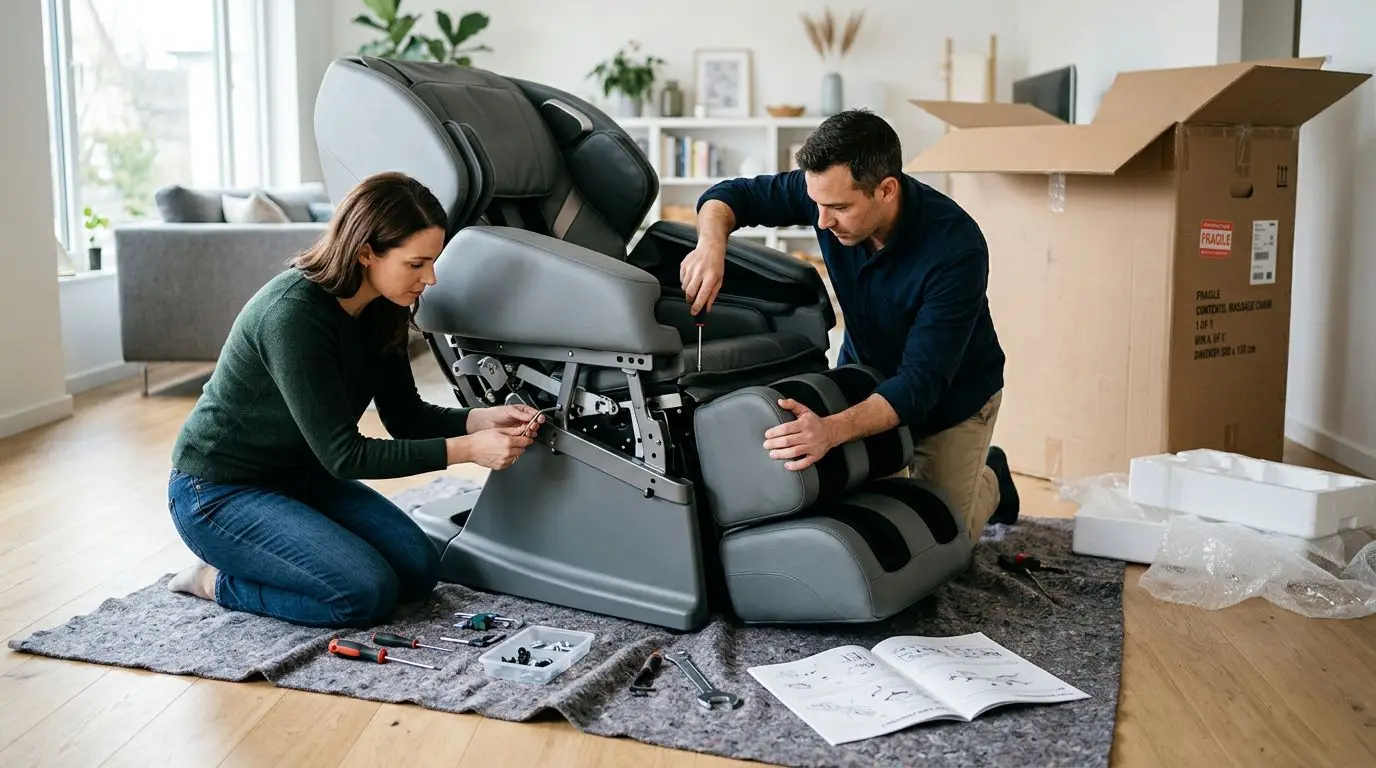
Massage Chair Assembly and Disassembly: What to Expect Before Setup or Moving
13 min read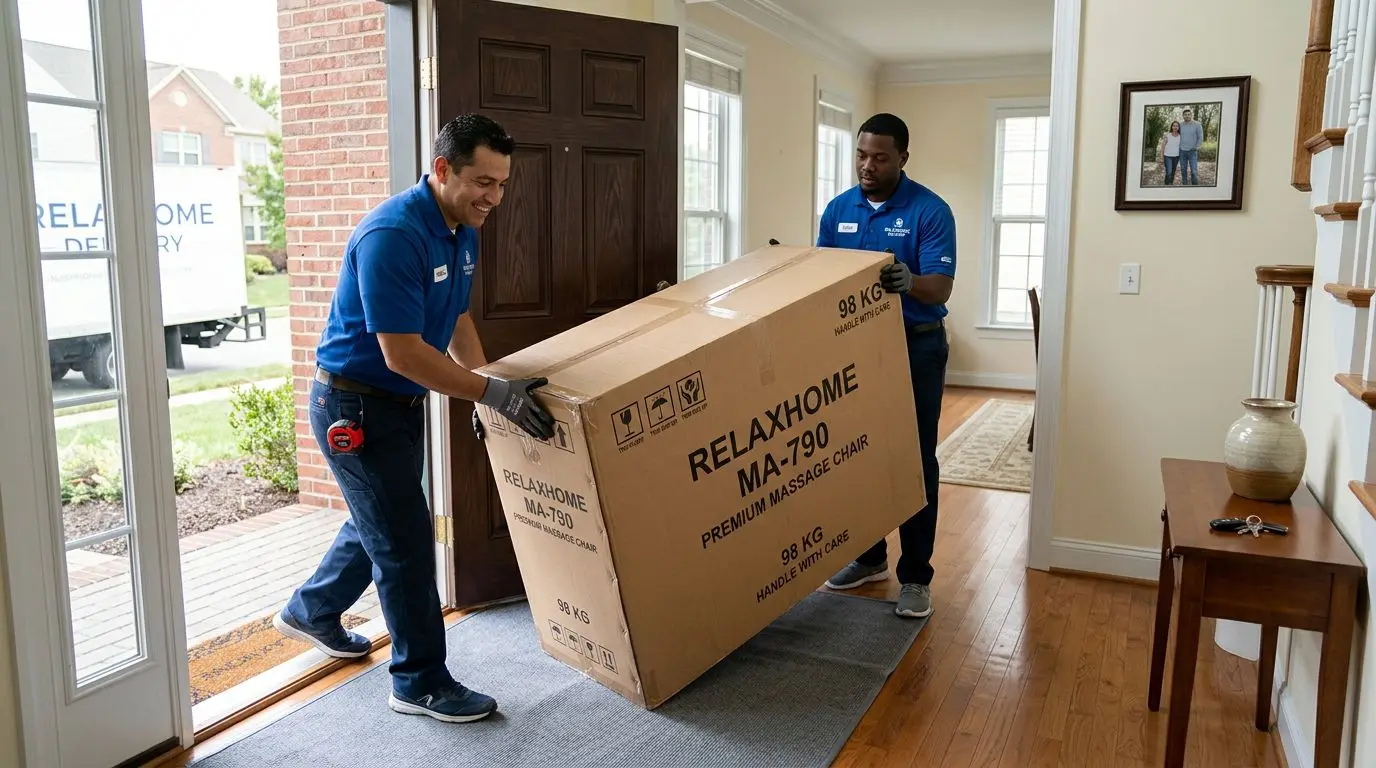
Massage Chair Delivery and Setup Guide: Threshold Delivery, White-Glove Installation, Stairs, and Assembly
14 min read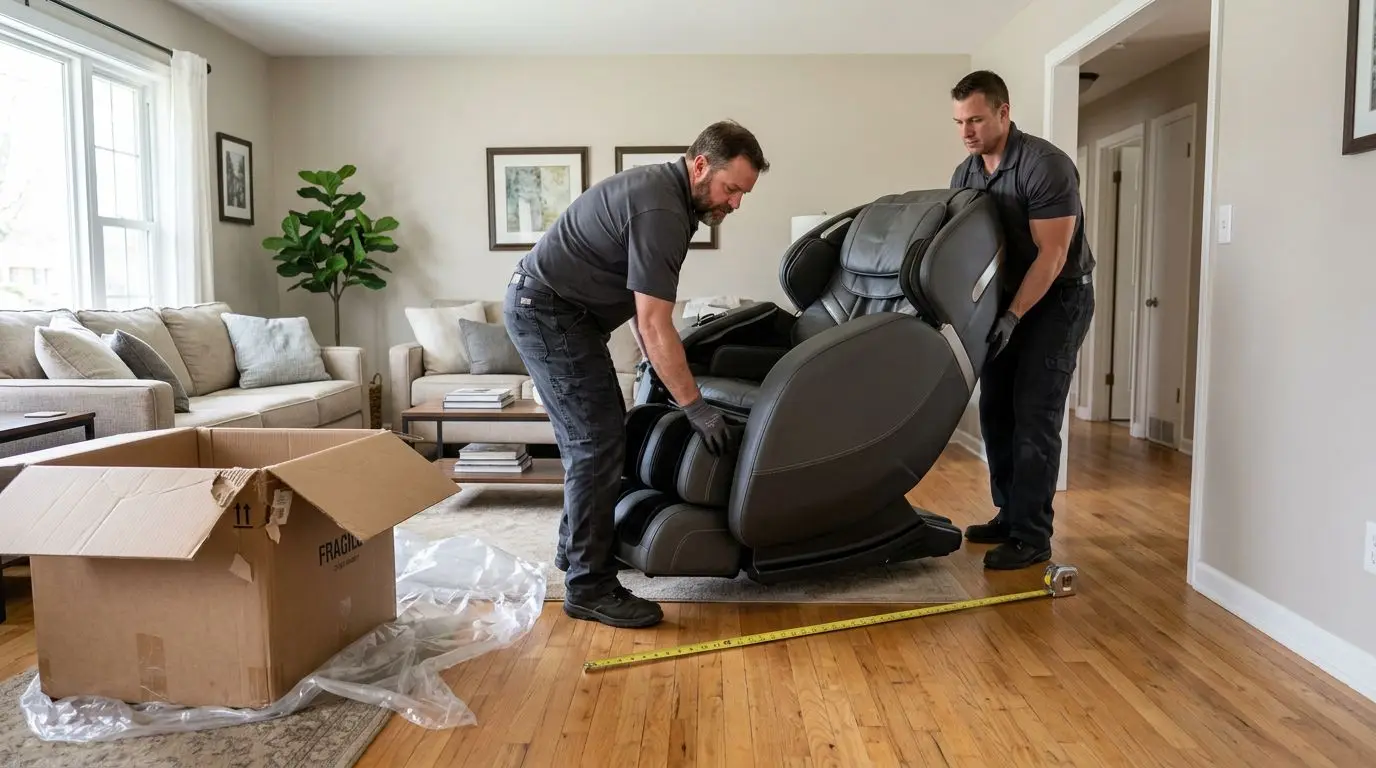
The Hidden Costs of Buying a Massage Chair: Delivery, Setup, Repairs, and Moving
15 min read