Disclosure: We may earn a commission when you buy through links on this page, at no extra cost to you. We buy nothing, sell nothing and accept no payment for coverage — commissions never decide what we recommend. How we make money.
Yes, you can often put a massage chair upstairs or in an apartment, but first check the total loaded weight, the delivery path, and your building rules. Most standard residential floors can handle a typical chair plus an adult when the load is placed sensibly, but older buildings, narrow stairs, small elevators, and noise transfer can make some setups impractical.
The safest approach is to treat the chair like a heavy recliner with moving parts: measure everything, confirm weight limits, protect the floor, and choose a location that will not disturb neighbors below or beside you. If the building is old, damaged, unusually constructed, or governed by a strict lease or condo association, ask the landlord, property manager, or a qualified professional before delivery day.
Can an upstairs floor support a 200- to 350-pound massage chair?
Many full-size massage chairs weigh roughly 200 to 350 pounds before anyone sits in them. Add a 180- to 250-pound user, and the loaded weight can reach about 380 to 600 pounds. That sounds like a lot, but the key issue is how the weight is distributed across the chair base and floor.
In many US homes, living areas are commonly designed around a residential live load of about 40 pounds per square foot, though actual capacity depends on the building, joist span, age, condition, and local code at the time of construction. A chair with a 3-by-5-foot footprint covers about 15 square feet. A 500-pound combined load over that footprint averages about 33 pounds per square foot, but the chair may still press more heavily at its feet, rails, or casters.
Placement matters for that reason. Set the chair on a flat, stable floor, not on a soft platform, weak loft, balcony, or visibly sagging area. A spot near a load-bearing wall can be safer than the middle of a long, unsupported span. If you are dealing with a very heavy chair, an older house, a converted attic, or any visible floor movement, get a professional opinion instead of guessing.
| Load example | Approximate numbers | What it means |
|---|---|---|
| Compact chair plus adult | 180 lb chair + 180 lb user = 360 lb | Often manageable if the floor is sound and access is adequate |
| Full-size chair plus adult | 280 lb chair + 220 lb user = 500 lb | Check placement, floor condition, and delivery path carefully |
| Large chair plus larger adult | 350 lb chair + 300 lb user = 650 lb | Worth confirming with the building owner or a qualified pro |
Chair weight, footprint, and who an upstairs setup is best for
Massage chairs vary widely. A smaller recliner-style chair may weigh around 130 to 200 pounds, while a large zero-gravity chair with an extended track, leg unit, and multiple motors may weigh 250 to 350 pounds or more. Many full-size chairs are around 28 to 34 inches wide, 45 to 65 inches long when upright, and longer when reclined.
An upstairs or apartment setup works best for people who can place the chair on a stable interior floor, have a measured delivery route, and can use it at reasonable hours. It is less ideal for walk-up apartments with tight turns, very old floors, strict noise rules, or a room directly above a neighbor's bedroom.
| Chair type | Typical weight range | Apartment fit | Best for |
|---|---|---|---|
| Compact massage recliner | About 130-200 lb | Easier through doors and stairs | Smaller rooms, lighter use, tighter spaces |
| Standard full-body chair | About 200-300 lb | Possible with good access | Users who want back, seat, and leg coverage |
| Large zero-gravity chair | About 275-350+ lb | Needs careful measuring | Roomier layouts and ground-floor or elevator access |
| Extended-track chair | About 220-340 lb | Depends on frame size | Users who want roller coverage from upper back toward glutes or hamstrings |
Do not shop by weight alone. A lighter chair can still be difficult to move if it has a bulky, rigid shell. A heavier chair may be manageable if the leg unit or side panels can be removed for delivery. Before buying, look for the packaged dimensions, unpacked dimensions, and whether the chair ships in one box or multiple cartons.
How to measure stairs, doors, hallways, and elevators before delivery
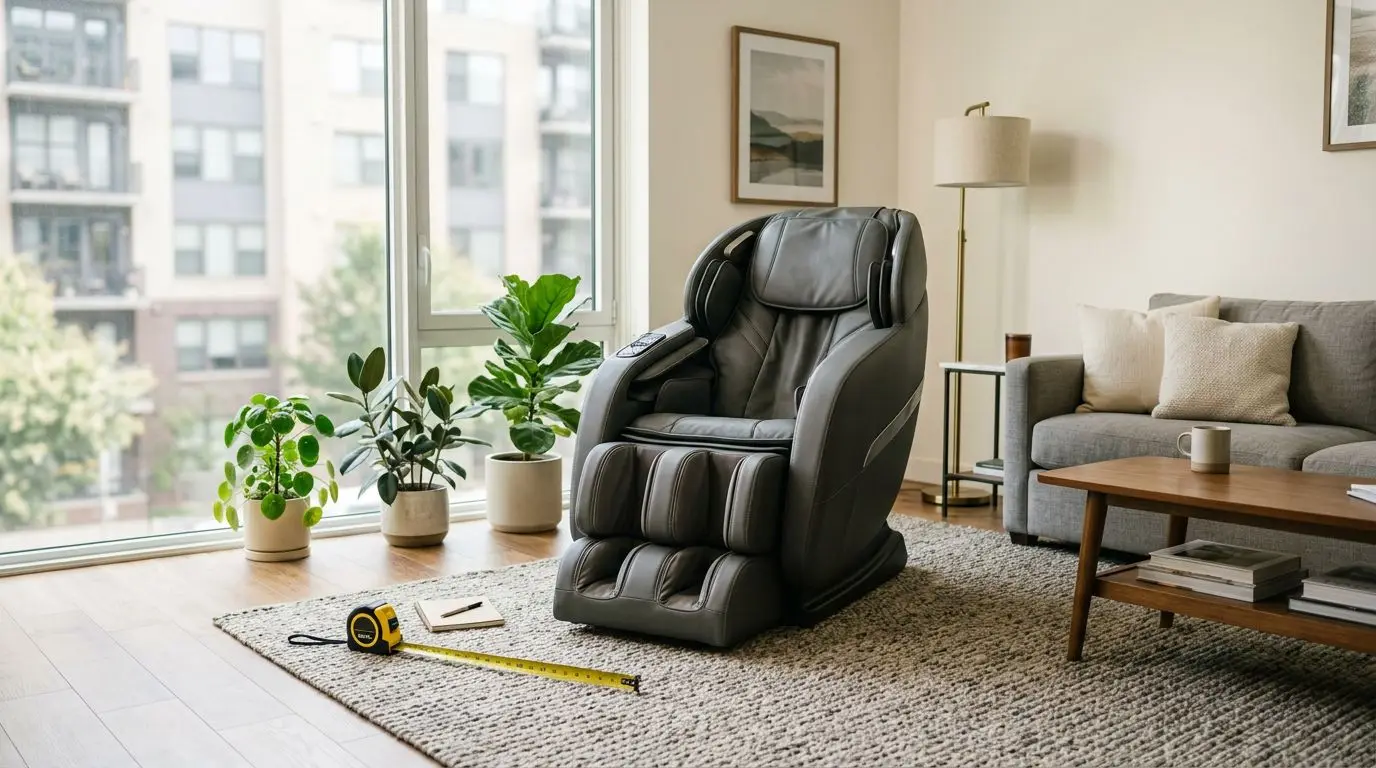
Measure the entire route, not just the room. A chair that fits in a 12-by-12-foot bedroom can still get stuck at a 29-inch doorway, a 36-inch stair landing, or an elevator that is too shallow for the shipping carton.
Start with the narrowest doorway. Many interior doors are about 28 to 32 inches wide, while many exterior doors are about 32 to 36 inches wide. Measure the actual clear opening with the door open, not the size printed on a floor plan. Door hinges, trim, railings, and light fixtures can steal an inch or two.
- Measure doorway clear width at the narrowest point.
- Measure hallway width, especially at corners.
- Measure stair width between railings, not wall to wall.
- Measure landing depth and height clearance.
- Measure elevator door width, cab depth, and cab height.
- Compare measurements with both the carton size and the chair size after any removable parts are detached.
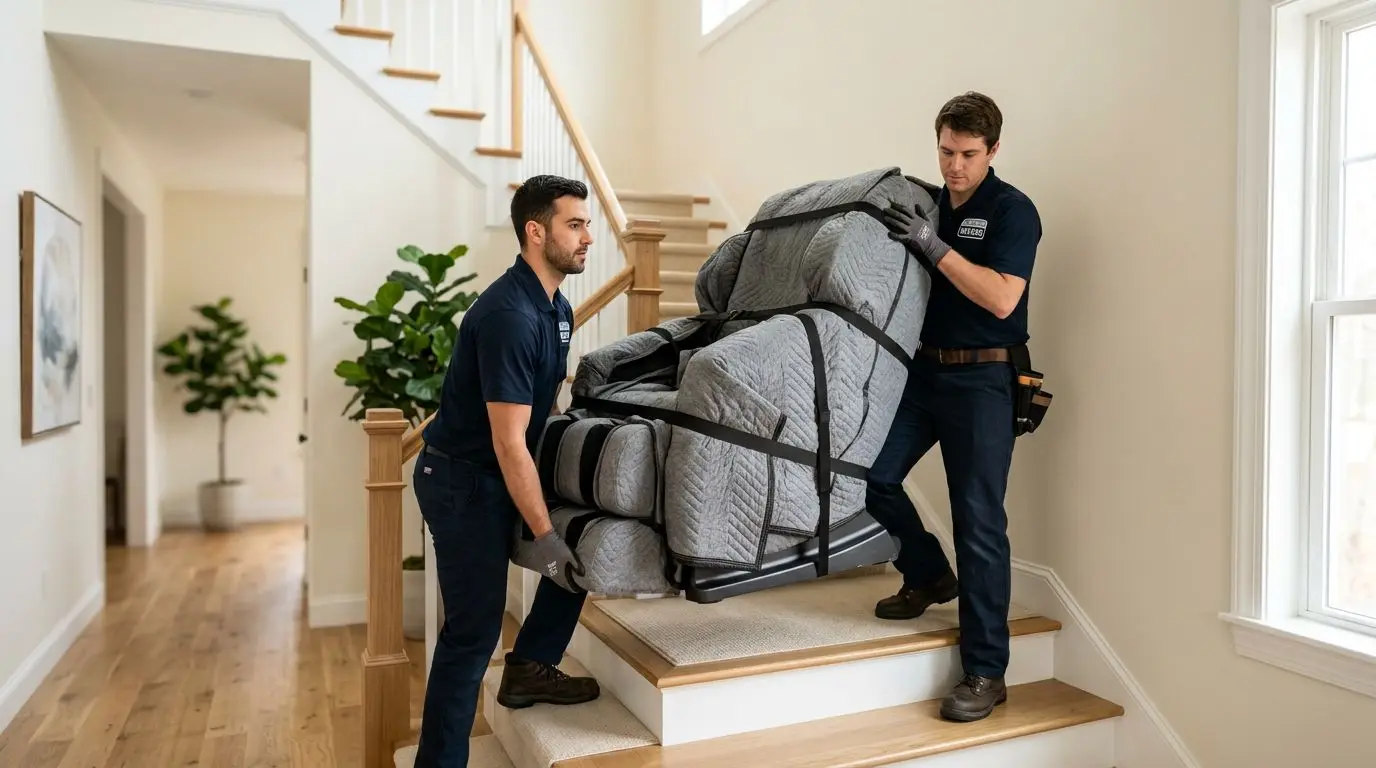
For stairs, the turn is often the challenge. A straight 36-inch-wide staircase is very different from a staircase with a tight 90-degree landing. If the chair arrives fully assembled and weighs 250 pounds, even professional movers may struggle on a narrow walk-up. Ask the seller or delivery company whether stair carry is included, whether there is a floor limit, and whether extra fees apply for 2nd-, 3rd-, or 4th-floor delivery.
Elevators need the same careful check. A typical passenger elevator may have enough height for people but not enough depth for a long carton. If the chair ships in a box over 55 or 60 inches long, confirm that it can stand or angle safely inside the cab without blocking the door sensors.
Noise and vibration in apartments: what neighbors may hear through 1 floor
Massage chairs are not silent. Rollers, air pumps, motors, and foot rollers can create a low mechanical hum, clicking, tapping, or rhythmic vibration. The sound in your room may be modest, but the floor below can transmit vibration differently, especially in wood-frame apartments.
Airbag compression is usually a soft pumping sound. Roller mechanisms can be more noticeable because they move along a track. Foot rollers and tapping-style programs can create the most neighbor-sensitive vibration because the motion is repetitive and close to the floor.
A few practical steps can help. Place the chair on a dense rug, a 1/4- to 1/2-inch rubber mat, or a furniture pad designed for heavy equipment. Avoid placing it directly over a downstairs bedroom, nursery, or home office if you have another option. Keep sessions to reasonable hours; many apartment quiet hours run roughly 10 p.m. to 7 a.m., though your lease may differ.
| Feature | Noise or vibration risk | Apartment tip |
|---|---|---|
| Back rollers | Moderate mechanical sound | Use lower intensity late at night |
| Airbags | Low to moderate pump sound | Usually neighbor-friendlier than tapping programs |
| Foot rollers | Higher floor vibration | Place on a dense mat and avoid overnight use |
| Tapping or percussion-style motion | Higher repetitive vibration | Use during daytime or early evening |
| Voice prompts or beeps | Low but noticeable | Turn sound off if the chair allows it |
If you are unsure, run a simple test after setup. Use the chair for 10 minutes, then ask a downstairs neighbor or building staff member whether they hear a hum or tapping. That conversation is much easier before there is a complaint.
Landlord, HOA, and lease issues to check before a 300-pound delivery
Apartment buildings and condos may have rules that matter more than the chair itself. Some properties require move-in reservations, elevator pads, proof of insurance from movers, or delivery windows limited to weekdays between set hours such as 9 a.m. and 5 p.m.
Check your lease or HOA rules for heavy furniture, floor protection, noise, and delivery procedures. A massage chair may be treated like any other large recliner, but the delivery can be more complex because the item is heavy, motorized, and sometimes shipped on a pallet.
- Ask whether freight deliveries are allowed at the main entrance.
- Reserve the service elevator if the building has one.
- Confirm whether movers must provide insurance paperwork.
- Ask if stair delivery is allowed or restricted.
- Use floor protection in hallways if required.
- Keep packaging until you confirm the chair works and fits.
Be realistic about return logistics. Returning a large chair from a 3rd-floor walk-up can cost more and take longer than returning a small appliance. If the product is curbside delivery only, that may mean the carrier leaves it at the building entrance, not inside your apartment. Clarify this before the truck arrives.
Best upstairs locations: allow 2 to 24 inches behind the chair
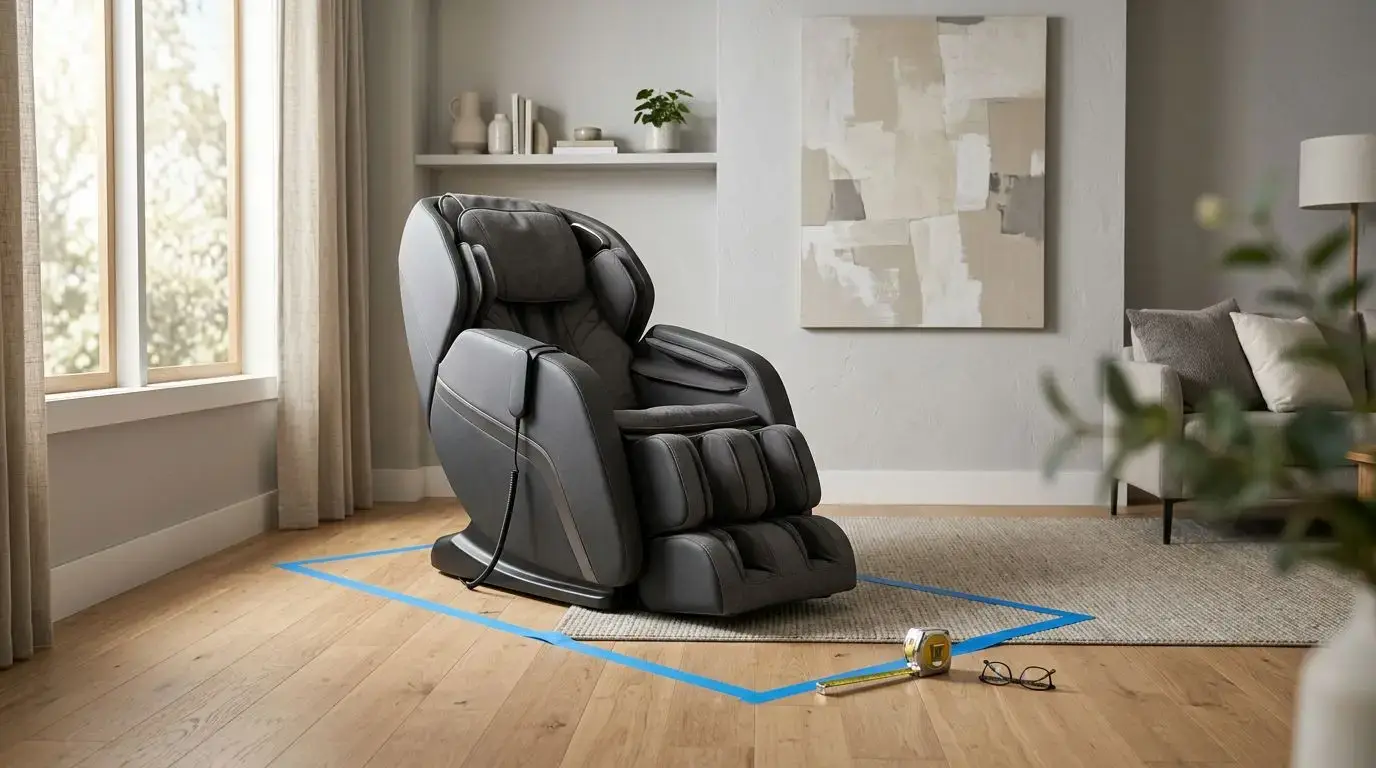
Massage chairs need room to recline. Wall-hugging designs may need only about 2 to 6 inches behind the backrest, while standard reclining designs may need 12 to 24 inches or more. You also need space in front for the leg rest to extend, often another 18 to 30 inches depending on the chair and user height.
Choose an interior room with a level floor and a grounded 120-volt outlet nearby. Avoid extension cords if the manual advises against them. Do not place the chair where it blocks a bedroom door, a hallway, a window used for emergency egress, or an electrical panel.
Good upstairs locations include a primary bedroom sitting area, a den, a bonus room, or a quiet corner of a living room. Less ideal locations include balconies, loft edges, rooms with bouncy floors, or spaces directly above a neighbor's sleeping area. If you have hardwood or vinyl floors, use a non-marking mat or furniture cups under the base to reduce scuffs and distribute pressure.
Leave service access as well. A chair wedged tightly between a wall and a bed may be hard to inspect, unplug, clean, or move later. Even 6 inches of side clearance can make routine care easier.
Safety and personal fit: check 15- to 20-minute session guidance
A massage chair is a consumer wellness product, not a medical device. It is designed to provide mechanical pressure, rolling, kneading, squeezing, heat, and reclining comfort, but it should not be used as a substitute for medical advice.
Ask your physician before using a massage chair if you are pregnant or if you have a pacemaker or other implanted cardiac device, a history of blood clots, use anticoagulants, have osteoporosis, a recent fracture or surgery, spinal disc problems, neuropathy, or uncontrolled hypertension. Also ask if you have any condition where pressure, heat, compression, or a reclined position may not be appropriate.
Fit matters. Many chairs publish a recommended height range, often somewhere around 5 feet to 6 feet 3 inches, and a user weight limit commonly around 250 to 300 pounds, though ranges vary. If you are near the top or bottom of the stated range, check seat width, shoulder position, calf opening, and footrest extension before committing.
Many automatic programs run about 15 to 20 minutes, which is a useful starting point. Begin with lower intensity, especially in an apartment where vibration can travel, and stop using the chair if the pressure feels sharp, pinching, or uncomfortable.
Upstairs and apartment decision guide: 6 checks before you buy
Use this final checklist before placing an order. If you cannot confidently answer all 6 items, pause and gather the missing information.
| Check | Good sign | Red flag |
|---|---|---|
| Floor support | Sound floor, no sagging, reasonable total load | Old or damaged floor, balcony, converted attic |
| Chair weight | Under about 300 lb and delivered in sections | Very heavy one-piece chair with no stair plan |
| Door and stair access | Clear openings measured at 30+ inches where needed | Tight turns, narrow landings, unknown carton size |
| Elevator access | Cab depth and door width confirmed | Small elevator or no freight delivery rules |
| Noise control | Dense mat, daytime use, not over bedroom | Thin floor, quiet building, frequent late-night use |
| Building rules | Delivery window and mover requirements confirmed | No approval, curbside-only delivery surprise |
For many buyers, the best apartment-friendly choice is not the largest chair available. It is the chair that fits the room, fits the route, stays within user limits, and can be used without annoying the people around you.
FAQ: putting a massage chair upstairs or in an apartment
Will a massage chair be too heavy for a second floor?
Not usually in a sound modern home, but it depends on the chair, user weight, floor condition, and placement. A 250-pound chair with a 220-pound user is about 470 pounds total. If the floor is old, damaged, sagging, or unusually built, ask a qualified professional before placing a heavy chair upstairs.
Can movers carry a massage chair up stairs?
Often, yes, but only if the stair width, landing size, chair dimensions, and delivery policy allow it. A 250- to 350-pound chair may require 2 or more trained movers, and some delivery services charge extra for stairs or refuse tight walk-ups.
Will my downstairs neighbor hear the chair?
They might, especially with foot rollers, tapping motions, or wood-frame floors. A dense rug or 1/4- to 1/2-inch rubber mat can reduce vibration, and daytime use is more neighbor-friendly than late-night sessions.
Can I put a massage chair in a small apartment bedroom?
Yes, if you have enough clearance. Check upright size, fully reclined length, leg rest extension, and rear clearance. Some chairs need only 2 to 6 inches behind them, while others need 12 to 24 inches or more.
Do I need landlord approval?
For many rentals, a chair is just furniture, but you should still check rules for heavy deliveries, elevator reservations, quiet hours, and floor protection. Approval is especially wise for walk-ups, older buildings, or large freight deliveries.
Frequently asked questions
Will a massage chair be too heavy for a second floor? +
Not usually in a sound modern home, but it depends on the chair, user weight, floor condition, and placement. If the floor is old, damaged, sagging, or unusually built, ask a qualified professional before placing a heavy chair upstairs.
Can movers carry a massage chair up stairs? +
Often, yes, but only if the stair width, landing size, chair dimensions, and delivery policy allow it. Heavy chairs may require two or more trained movers, and stair delivery can cost extra.
Will my downstairs neighbor hear the massage chair? +
They might, especially with foot rollers, tapping motions, or wood-frame floors. Use a dense rug or rubber mat, avoid late-night sessions, and place the chair away from bedrooms below when possible.
Can I put a massage chair in a small apartment bedroom? +
Yes, if you have enough clearance for the upright chair, full recline, leg rest extension, and rear movement. Some wall-hugging designs need only a few inches behind them, while others need much more.
Do I need landlord approval for a massage chair? +
Check your lease or building rules. You may need approval for freight delivery, elevator use, hallway protection, quiet hours, or unusually heavy furniture.
Related guides
Can a Massage Chair Go Upstairs? Weight, Stair Clearance, and Safe Moving Considerations
14 min read
The Hidden Costs of Buying a Massage Chair: Delivery, Setup, Repairs, and Moving
15 min read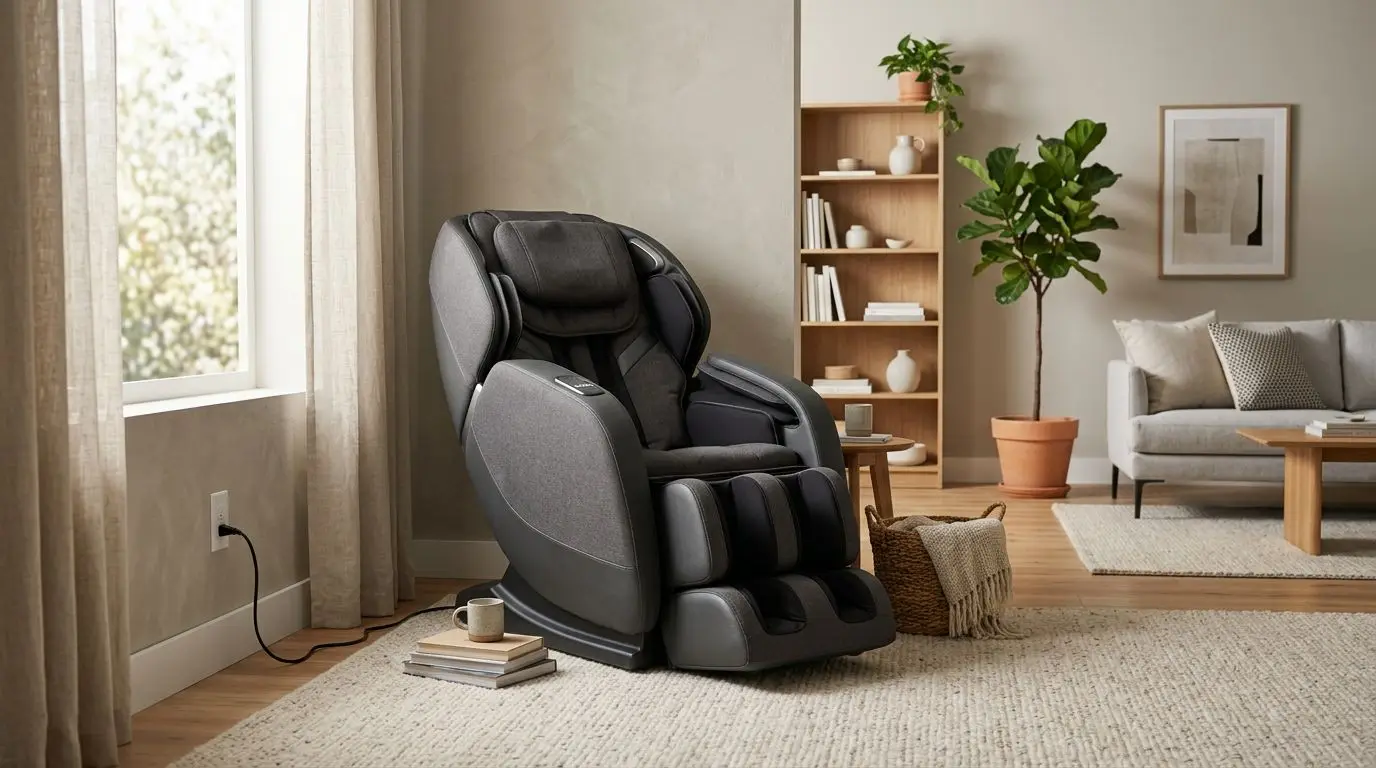
Where Should You Put a Massage Chair at Home? Room-by-Room Placement Guide
13 min read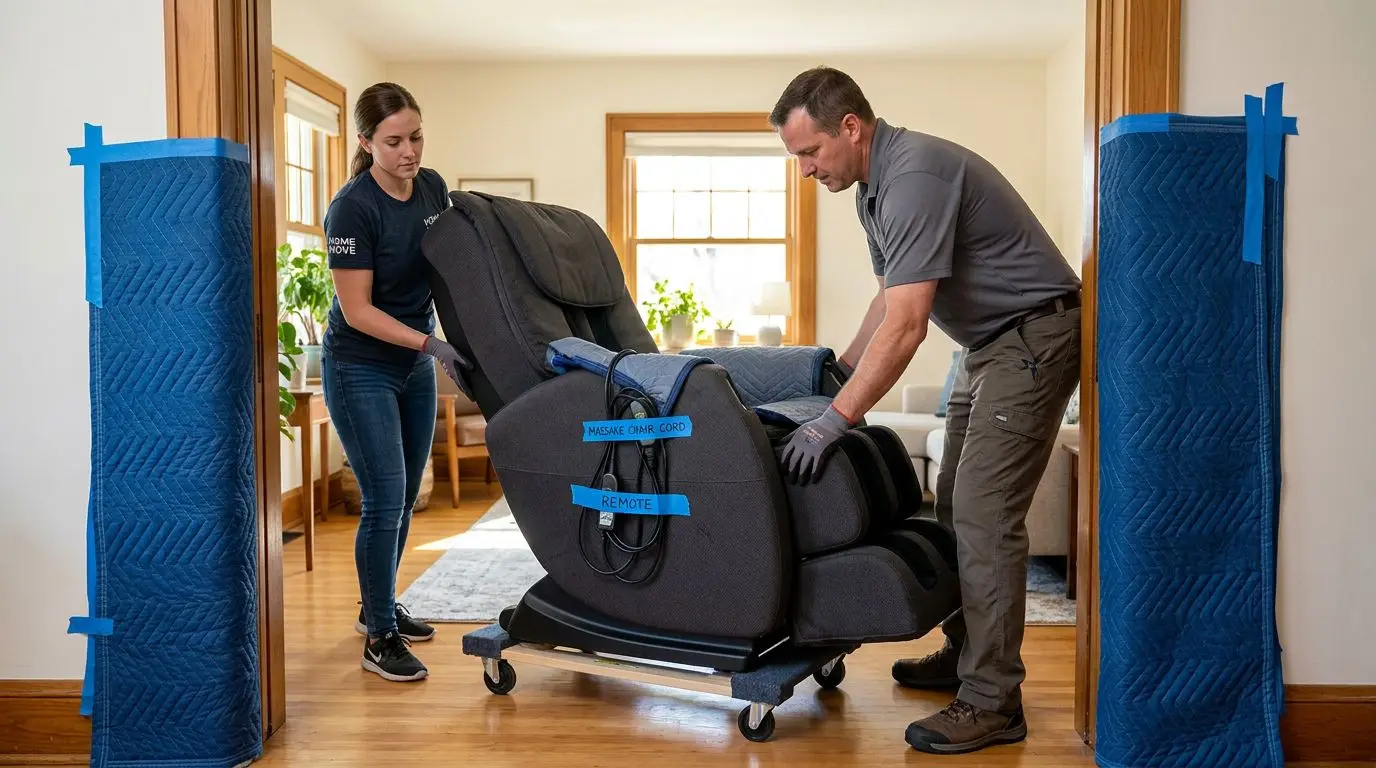
How to Move or Disassemble a Massage Chair Without Damaging It
14 min read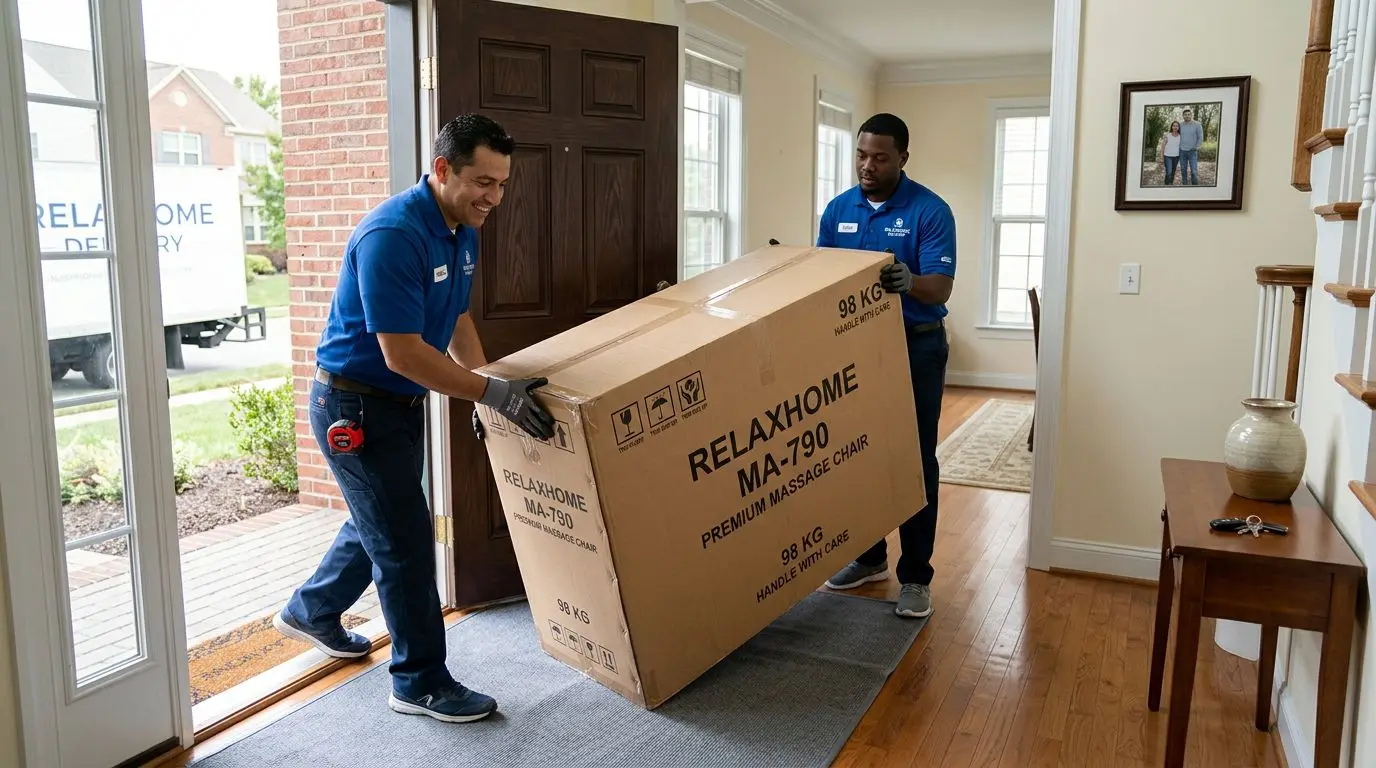
Massage Chair Delivery and Setup Guide: Threshold Delivery, White-Glove Installation, Stairs, and Assembly
14 min read