Disclosure: We may earn a commission when you buy through links on this page, at no extra cost to you. We buy nothing, sell nothing and accept no payment for coverage — commissions never decide what we recommend. How we make money.
The best way to protect massage chair upholstery is to keep sweat, body oils, sunlight, pet claws, and harsh cleaners off the surface before damage begins. Wipe it gently after sessions, clean with mild soap only when needed, keep the chair out of direct sun, and use a breathable cover that does not block rollers, airbags, heat panels, or vents.
Most massage chairs use synthetic leather or another coated upholstery material instead of thick furniture leather. That surface can last for years, but it is vulnerable to drying, abrasion, trapped moisture, and repeated flexing in high-contact areas such as the headrest, back pad, arm wells, and calf sections.
Know what you are protecting: 5 high-wear upholstery zones
Massage chair upholstery works harder than standard recliner fabric. It bends around moving rollers, compresses over airbags, and gets repeated contact from clothing, skin, hair products, and socks. The 5 areas that usually wear first are the head pillow, upper back pad, seat, arm pockets, and calf or foot sections.
Many chairs use polyurethane synthetic leather, often called PU, or vinyl-based synthetic upholstery. Some premium chairs may use genuine leather only in selected contact panels, while the sides and rear are usually synthetic. The care approach is similar: avoid aggressive chemicals, prevent long moisture exposure, reduce sun exposure, and limit scratching.
| Material type | How it typically feels | Main risk | Best protection habit |
|---|---|---|---|
| PU synthetic leather | Soft, smooth, flexible | Peeling or surface cracking from oils, sweat, heat, or age | Wipe after use and avoid alcohol-based cleaners |
| Vinyl or PVC-based upholstery | Slightly firmer and more wipeable | Stiffening or cracking when exposed to sun and heat | Keep 3 feet or more from strong window sun and heat vents |
| Fabric inserts or mesh zones | Breathable and textured | Hair, lint, stains, and trapped odor | Vacuum weekly with a soft brush attachment |
| Genuine leather panels | Natural grain and softer break-in | Drying, discoloration, and staining | Use only cleaners approved for finished upholstery leather |
Before buying any cleaner or cover, check the care label or owner manual. If the manual says not to use conditioner, polish, solvent, or leather oil, follow that instruction even if a general furniture guide says otherwise.
Stop cracking and peeling with a 2-minute after-use habit
Sweat and skin oils start as small problems, then build through repetition. A 2-minute wipe-down after each use is one of the simplest ways to slow surface breakdown, especially if the chair is used daily.
Use a clean microfiber cloth that is barely damp, not wet. Wipe the headrest, neck area, back pad, seat, arm wells, calf rests, and foot rollers or liners if accessible. Finish with a dry cloth so moisture is not trapped in seams or creases.
For most homes, plain water on a microfiber cloth is enough for daily care. If the surface feels sticky or cloudy, use a tiny amount of mild dish soap diluted in water, then wipe again with a cloth dampened with clean water. Do not spray liquid directly onto the chair. Spray the cloth instead.
- Use 2 cloths: one lightly damp and one dry.
- Keep moisture away from remote controls, side panels, speakers, USB ports, and seams.
- Let the chair dry for at least 15 minutes before closing footrests or placing a cover back on.
- Do not sit in the chair with wet hair, wet workout clothes, or damp towels.
Peeling often begins where the coating has weakened and then flexed again and again. Once the top layer separates, a cover can hide the area but cannot truly restore the original surface. Prevention matters more than repair.
Use the right cleaner: a 5-minute routine and a 30-minute dry time
A practical cleaning schedule is simple: a quick wipe after use, light cleaning every 1 to 2 weeks, and a deeper inspection once a month. A full routine should take about 5 minutes, plus 30 minutes of air-drying before the chair is used again.
Start by unplugging the chair if you are doing more than a light surface wipe. Remove loose cushions if the design allows it. Vacuum crumbs, pet hair, and grit from seams with a soft brush attachment, because small particles can act like sandpaper when the chair reclines or inflates.
Mix a small bowl of lukewarm water with a drop or two of mild soap. Dip a microfiber cloth, wring it until it is barely damp, and wipe one section at a time. Follow right away with a clean damp cloth to remove soap residue, then dry with a towel.
| Do use | Avoid | Why it matters |
|---|---|---|
| Microfiber cloths | Scrub pads or stiff brushes | Abrasive tools can dull or scratch coated upholstery |
| Diluted mild soap | Bleach, ammonia, acetone, or solvent cleaners | Harsh chemicals can weaken the top coating |
| Cleaner applied to the cloth | Spraying directly onto the chair | Liquid can enter seams, controls, or moving parts |
| Air drying for 30 minutes | Hair dryers or space heaters | Concentrated heat can dry and stiffen the surface |
| Spot testing in a hidden area | Using a new product on the whole chair first | A 1-inch test spot can reveal discoloration or tackiness |
Be careful with leather conditioners, protectant sprays, and shine products. Many are made for car seats, shoes, or finished leather furniture, not flexible massage chair upholstery. Some leave a slick film that transfers to clothing or makes the seating area slippery.
Choose a massage chair cover that protects without blocking 3 key functions
A cover can help, but it should not interfere with 3 core chair functions: roller movement, airbag compression, and heat or ventilation features. A thick blanket may look protective, yet it can bunch under the back, reduce the feel of the rollers, or block airflow around the chair.
For day-to-day protection, choose a cover style that is thin, breathable, washable, and easy to remove. Cotton-blend throws, fitted furniture protectors, and purpose-sized seat-and-back covers can work if they stay flat and do not get pulled into the reclining or legrest mechanisms.
Avoid plastic sheeting for regular use. It traps heat and moisture, feels noisy, and can create a damp layer between the user and the upholstery. If you need temporary protection for a spill-prone situation, remove the plastic right after and let the chair air out.
| Cover type | Best for | Watch out for | Typical care |
|---|---|---|---|
| Thin washable throw | Light sweat and hair protection | Can slide during recline | Wash weekly if used often |
| Fitted seat and back cover | Daily users who want consistent coverage | May not fit wide arm pods or extended head pillows | Wash every 1 to 2 weeks |
| Pet furniture cover | Homes with cats or dogs | May be too thick over airbags or rollers | Vacuum every few days |
| Water-resistant pad | Short-term spill protection | Can trap warmth and moisture | Remove after use and dry both sides |
| Full dust cover | Long storage periods of 30 days or more | Not meant for sitting in the chair | Use only when chair is off and dry |
If your chair has body-scanning rollers or a sensitive recline mechanism, keep the cover thin enough that the chair can still detect the user shape and move normally. When in doubt, test one short 10-minute session while watching for bunching, slipping, or pressure points.
Protect against sweat, hair products, and clothing dye in 3 common situations
The toughest upholstery stains often come from ordinary habits: using the chair after exercise, resting hair products on the head pillow, or sitting in dark new denim. These can mark upholstery in a single session, especially on lighter colors.
If you use the chair after a workout, place a clean cotton towel over the head, back, and seat areas, then remove it immediately after the session. Do not leave a damp towel on the chair for hours. Moisture trapped against coated upholstery can soften the surface and encourage peeling over time.
Hair oils, leave-in conditioner, gels, and sprays tend to collect on the headrest and neck area. Use a washable headrest towel or pillow cover if multiple people use the chair. Wash that fabric often, since a dirty cover can transfer residue back to the chair.
- Wait until lotions or sunscreen are fully absorbed before sitting down.
- Be careful with dark jeans, especially during the first 3 washes of the garment.
- Use light-colored towels on light upholstery to avoid dye transfer.
- Keep snack foods and drinks at least 2 feet from the arm wells and remote area.
For a fresh spill, blot rather than rub. Rubbing spreads liquid and pushes it toward seams. Use a dry white towel first, then a barely damp cloth if needed.
Pet-proof the chair for claws, hair, and a 50-pound jumper
Pets can damage massage chair upholstery quickly because claws concentrate weight into tiny pressure points. A 50-pound dog jumping onto a raised footrest can stress seams, scuff the surface, or bend a part designed for supported legs rather than leaping impact.
The best rule is also the simplest: pets should not use the chair as a bed. Keep the chair upright and closed when not in use, because an extended footrest looks inviting and is easier for pets to climb. If your chair has a power switch, turn it off when unattended.
For cats, the risk is often scratching and kneading. A thick cover can protect the surface while the chair is idle, but remove or flatten it before use so it does not interfere with the rollers. Put a scratching post within 3 to 6 feet of the chair to give the cat a better target in the same room.
- Trim pet nails regularly to reduce sharp edges.
- Vacuum seams and fabric zones at least once a week in pet homes.
- Use a lint roller on headrests and calf areas before hair gets embedded.
- Keep chew toys away from remote cords, side pockets, and footwell liners.
Pet covers should be washable and grippy on the underside. If a cover slides every time the chair reclines, it can create more abrasion than it prevents.
Limit sunlight and heat: aim for 3 feet of clearance from windows and vents
Sunlight is one of the main reasons upholstery fades, dries, or cracks early. If possible, place the chair at least 3 feet away from a sunny window, radiator, fireplace, or forced-air heat vent.
Direct UV exposure can make synthetic upholstery more brittle, especially on headrests, arm tops, and shoulder panels. Even if the room feels cool, a chair sitting in a sunbeam for 4 hours a day can get much warmer on the surface than the surrounding air.
Use blinds, curtains, UV-filtering window film, or a light dust cover when the chair is not in use. Leave a few inches of space around the back and sides for airflow, particularly if the chair has built-in heat elements, speakers, motors, or ventilation openings.
Humidity matters, too. Very dry rooms can make materials feel stiffer, while damp rooms can encourage odor in fabric and foam zones. A comfortable indoor range for many homes is roughly 30% to 50% relative humidity. The goal is not laboratory precision; it is simply avoiding extremes.
How to measure and choose a cover in 6 steps
Before buying or sewing a massage chair cover, measure the chair in the positions you actually use. A chair can change shape by 10 inches or more when it reclines and the footrest extends, so measuring only the upright position can lead to a poor fit.
- Measure the backrest height. Start at the top of the head pillow and measure to the seat crease.
- Measure the seat width. Measure between the inner arm areas, not the outside shell.
- Measure the seat depth. Go from the back crease to the front edge of the seat.
- Measure the arm contact areas. Include arm wells if your hands slide into enclosed pods.
- Measure the legrest length. Measure from the front seat edge to the end of the calf or foot section when extended.
- Check moving clearances. Recline the chair and confirm the cover will not touch wall areas, hinges, tracks, or floor clearance points.
Choose a cover based on fit, fabric, thickness, and how often you want to wash it. A cover that takes 10 minutes to install will probably stay in a closet. A simple washable layer that goes on in 30 seconds is more likely to become a real habit.
| Feature to choose | Good target | Why it helps |
|---|---|---|
| Fabric | Breathable cotton blend, microfiber, or smooth polyester | Reduces sweat contact without trapping too much heat |
| Thickness | Thin to medium | Protects the surface while preserving roller feel |
| Backing | Non-slip but not rubbery or sticky | Helps prevent bunching and abrasion |
| Washability | Machine washable in cold or warm water | Makes weekly cleaning realistic |
| Coverage | Head, back, seat, and leg contact zones | Covers the areas most exposed to oils, sweat, and friction |
Do not cover sensors, remotes, side controls, fans, power cords, or ventilation openings. If a fabric edge gets close to a hinge or moving track, stop using that cover and resize it.
Who it is best for: 4 protection plans by household type
The right upholstery protection plan depends on how often the chair is used and what it is exposed to. A single adult using the chair 3 times a week does not need the same routine as a family of 5 with pets and daily use.
| Household type | Best protection plan | Cleaning rhythm |
|---|---|---|
| Solo or light use | Microfiber wipe after use and sun control | Light clean every 2 weeks |
| Daily user | Thin washable head, back, and seat cover | Wipe after each session and wash cover weekly |
| Family use | Assigned towel or washable cover for each frequent user | Vacuum and inspect seams weekly |
| Pet household | Idle-time pet cover plus no-pet-use rule | Vacuum every few days and wash cover weekly |
For light-use homes, location may matter more than accessories. Keeping the chair away from a bright window and wiping the headrest can do a lot. For busy households, a cover is less about looks and more about creating a barrier that can be washed instead of scrubbing the chair itself.
Fix small problems early: inspect seams every 30 days
Set a monthly reminder to inspect the chair for 5 minutes. Look for shiny worn spots, tacky patches, loose stitching, small nicks, color transfer, or areas where the surface feels stiff.
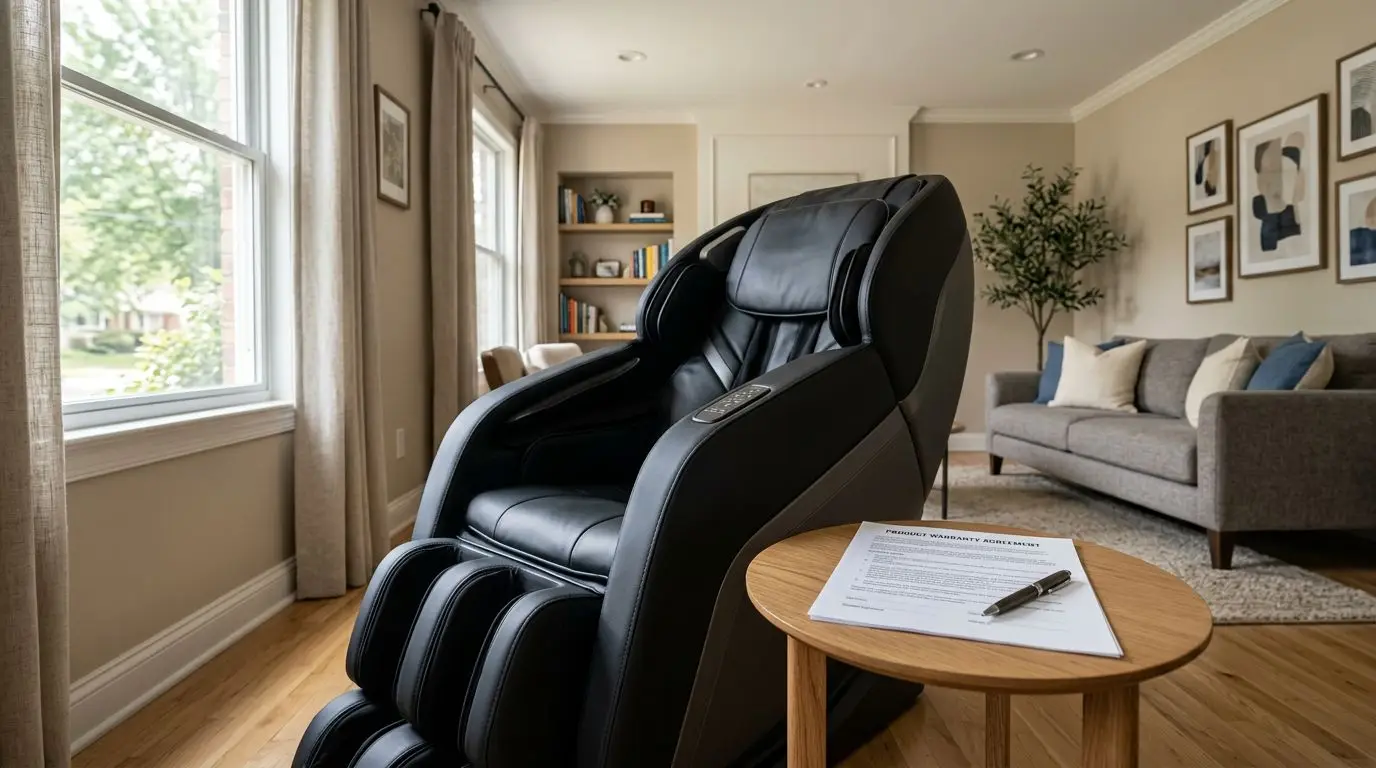
If you find a small nick, do not pick at it. Picking turns a small edge into a peeling flap. Clean gently around the area, let it dry, and contact the seller or manufacturer if the chair is still under warranty. Some warranties exclude cosmetic wear, pet damage, or damage from unapproved cleaners, so take clear photos before trying any repair product.
For an older chair with visible peeling, a removable cover may be the most practical cosmetic solution. Adhesive patches can work for limited spots, but they may feel different under rollers or peel at the edges if placed on a high-flex area. Avoid thick repair pads on the backrest where rollers travel.
Common mistakes that shorten upholstery life by months or years
Most upholstery damage is not caused by one dramatic spill. It comes from repeated small mistakes over 6 to 24 months: sunlight every afternoon, sweat left overnight, a sliding blanket, or a cleaner that slowly dries the surface.
- Using disinfecting wipes every day. Many contain alcohol or strong cleaning agents that can dry coated upholstery.
- Leaving the chair in direct sun. UV exposure can fade and stiffen the surface.
- Using oily conditioners. Oils may soften, stain, or leave a residue on synthetic materials.
- Covering the chair while damp. Trapped moisture can create odor and surface tackiness.
- Letting pets climb on the footrest. Claws and impact can damage upholstery and moving sections.
- Ignoring seams. Crumbs, grit, and hair collect there first and abrade the surface during movement.
A massage chair is a consumer wellness product with motors, upholstery, electronics, and moving parts packed into one piece of furniture. Treat it like both a recliner and an appliance: keep it clean, dry, shaded, and clear of anything that can snag, soak, or scrape.
FAQ: massage chair upholstery protection in 5 practical answers
Can I put a regular recliner cover on a massage chair?
Sometimes, but only if it fits without bunching and does not block rollers, airbags, vents, heat areas, controls, or moving joints. Test it during a short 10-minute session and stop using it if it shifts into hinges or creates pressure lumps.
How often should I clean massage chair upholstery?
Wipe high-contact areas after each use if you sweat or use the chair daily. For most homes, a light cleaning every 1 to 2 weeks and a 30-day seam inspection is a realistic schedule.
What should I do if the upholstery is already peeling?
Clean it gently, avoid picking at loose edges, and check your warranty before applying repair products. A thin removable cover is often the cleanest solution for cosmetic peeling in high-flex areas.
Are leather conditioners safe on synthetic massage chair upholstery?
Not always. Many massage chairs use coated synthetic upholstery, and some conditioners can leave residue, discolor the surface, or make it slippery. Follow the chair manual and test any approved product on a hidden 1-inch area first.
Is sunlight really that bad for a massage chair?
Yes, repeated direct sun can fade, dry, and stiffen upholstery. Place the chair at least 3 feet from strong window sun when possible, or use blinds, UV-filtering film, or a dust cover while the chair is not in use.
Frequently asked questions
Can I use a regular furniture cover on a massage chair? +
Yes, if it stays flat and does not block rollers, airbags, vents, controls, heat areas, or moving joints. Test it during a short session before regular use.
What cleaner is safest for massage chair upholstery? +
A barely damp microfiber cloth is best for routine care. For light cleaning, use a small amount of mild soap diluted in water, then wipe with clean water and dry.
How do I protect a massage chair from sweat? +
Use a clean washable towel or thin cover during use, especially after exercise, then remove it right away. Wipe the chair and let it dry before covering it again.
How can I stop pets from damaging the chair? +
Keep the chair closed when not in use, use an idle-time pet cover, vacuum hair often, and do not let pets jump on the footrest or knead the upholstery.
Can cracked or peeling upholstery be repaired? +
Small spots may be covered or patched, but high-flex areas are hard to restore permanently. Check the warranty first, avoid picking, and consider a thin removable cover.
Related guides
Do You Need a Massage Chair Cover? How to Protect Against Sweat, Pets, Sunlight, and Wear
15 min read
How to Clean a Massage Chair: Upholstery, Foot Wells, Airbags, and Remote Care
14 min read
Massage Chair Maintenance Checklist: Weekly, Monthly, and Yearly Tasks
13 min read
The Hidden Costs of Buying a Massage Chair: Delivery, Setup, Repairs, and Moving
15 min read
Are Massage Chairs Good or Bad for You? Benefits, Risks, and Safe Use Guidelines
13 min read