Disclosure: We may earn a commission when you buy through links on this page, at no extra cost to you. We buy nothing, sell nothing and accept no payment for coverage — commissions never decide what we recommend. How we make money.
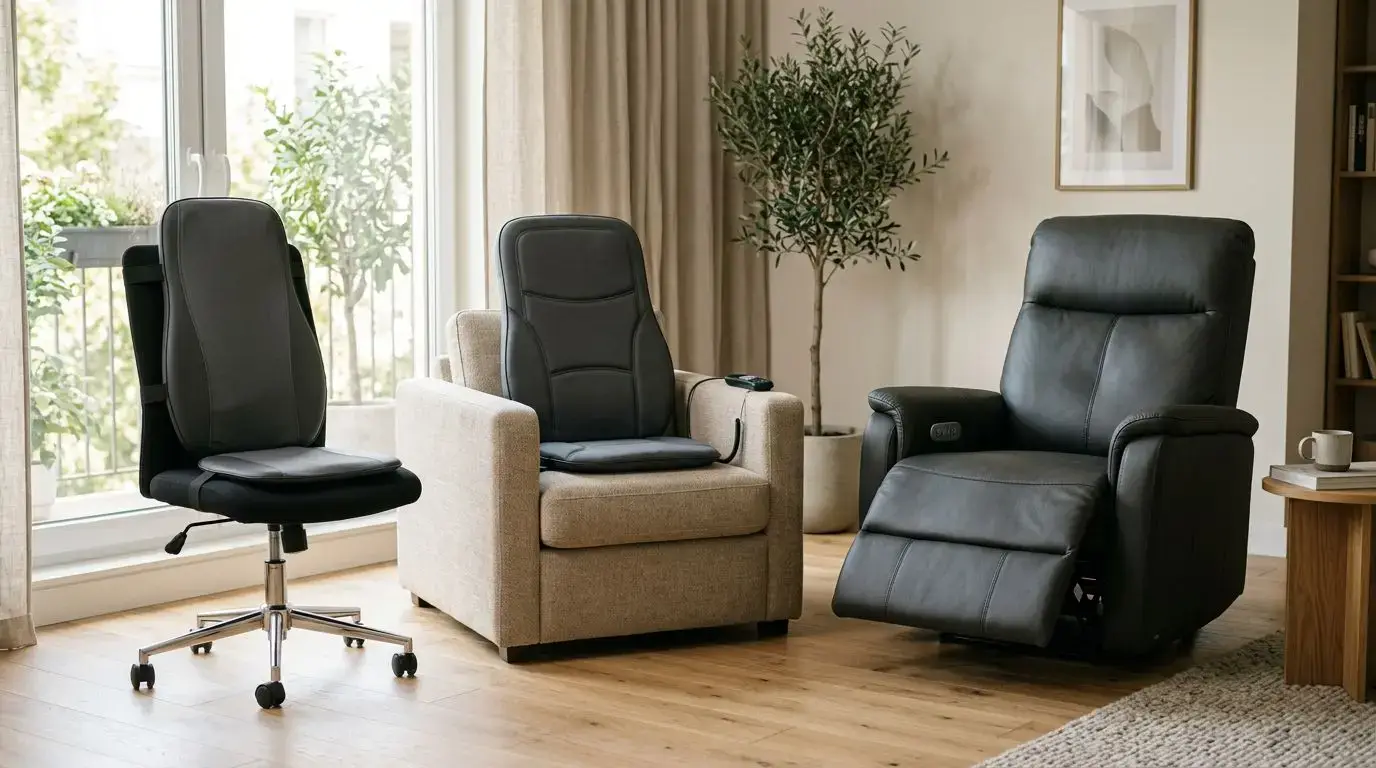
You need a massage chair cover if your chair gets frequent use, sits in direct sunlight, is shared by multiple people, or is exposed to pets, sweat, hair products, or food. A good cover can cut down on surface staining and everyday wear, but it has to fit without blocking rollers, airbags, heat panels, vents, or moving parts.
If your chair is used only once or twice a week in a clean, shaded room, a full-time cover may be optional. In that case, a simple washable headrest towel or seat liner may offer enough protection without changing how the chair feels.
What a massage chair cover can protect in 15- to 30-minute sessions
Most massage chair sessions last about 15 to 30 minutes. That is enough time for body heat, sweat, lotions, sunscreen, hair products, denim dye, and pet hair to transfer to the upholstery. One session is not the real issue. The problem is repeated contact in the same areas: headrest, shoulder area, arm wells, seat, calf area, and foot wells.
Massage chair upholstery is usually synthetic leather, vinyl, polyurethane-based material, fabric, or a blend. These materials are made for comfort and flexibility, not for the kind of abrasion a sofa may get from jeans rivets, pet claws, or daily snacking. Over time, repeated friction can dull the finish, and moisture can leave marks if it is not wiped away promptly.
A cover serves as a sacrificial layer. You wash or replace the cover instead of scrubbing the chair. That is especially useful in high-contact zones where skin, hair, and clothing touch the chair every time.
| Risk | Common contact area | What a cover helps with | What it cannot do |
|---|---|---|---|
| Sweat and body oils | Headrest, back pad, seat | Reduces direct moisture and oil transfer | Cannot fix existing cracking or peeling |
| Pets | Seat, arms, leg rest | Catches hair and light dirt | Cannot stop determined scratching or chewing |
| Sunlight | Outer arms, back, head area | Shields surfaces when the chair is not in use | Cannot prevent heat buildup in a sunny room |
| Daily wear | Seat edge, shoulders, calves | Reduces rubbing from clothing and skin | Cannot protect parts that must move freely |
Who it is best for: homes with 3 or more users, pets, or sunny rooms
A cover is most helpful when the chair gets more exposure than a typical single-user recliner. If 3 or more people use the chair during the week, the upholstery comes into contact with different clothing fabrics, hair products, skin oils, and sitting habits. Shared use is one of the strongest reasons to add washable protection.
It is also a smart choice for homes with cats or dogs, even if the pet is not supposed to sit on the chair. Hair settles into seams, dander collects in foot wells, and claws can scrape surfaces during one quick jump. A removable cover will not make the chair pet-proof, but it can reduce cleanup time and help protect the most visible panels.
Sun exposure is another clear reason to use one. If the chair sits within about 3 feet of a window that gets strong afternoon light, the exposed side may age faster than the shaded side. A cover used while the chair is idle can reduce direct UV exposure and keep the surface temperature more stable than bare upholstery.
Best candidates for a cover
Households where the chair is used daily or by several people.
Homes with pets, especially if the chair is in a shared living space.
Owners who use hair gel, lotion, sunscreen, or body oil before sitting down.
Chairs placed near bright windows, skylights, or sliding glass doors.
Anyone who wants to avoid deep cleaning the headrest and seat every few days.
A cover may matter less if the chair is in a low-traffic room, away from sunlight, and used by one person in clean indoor clothing. Even then, a washable headrest cloth is inexpensive protection for the area that usually soils first.
Cover types compared: 4 practical options for different chairs
There is no universal cover that works perfectly on every massage chair. A compact chair with an L-track can have very different moving zones than a larger chair with shoulder airbags, arm wells, and a powered footrest. The right option depends on what you want to protect and whether the chair needs to operate with the cover in place.
| Cover type | Best use | Fit notes | Main drawback |
|---|---|---|---|
| Headrest towel or pad | Sweat, hair products, makeup | Usually covers the top 12 to 24 inches | Does not protect seat or arms |
| Seat and back liner | Daily body contact | Should sit flat over the back and seat without bunching | May shift if it has no straps |
| Full dust cover | Sunlight, dust, pet hair when idle | Used when the chair is turned off, often covers the entire shell | Must be removed before use unless designed otherwise |
| Pet-resistant throw | Hair and light paw dirt | Works best when tucked loosely, not tightly into mechanisms | Not a substitute for training pets to stay off moving parts |
For many owners, the best setup is a 2-part approach: a washable headrest pad during use and a full dust cover when the chair is not being used. This protects the areas that soil fastest while keeping fabric away from rollers, airbags, and the footrest during operation.
Use thick blankets carefully. A plush blanket may feel comfortable, but it can soften roller pressure, interfere with body scanning, and bunch in the seat or calf area. If you want extra softness, use a thin, smooth liner and test the chair on the lowest intensity first.
How to choose and measure a cover in 6 steps
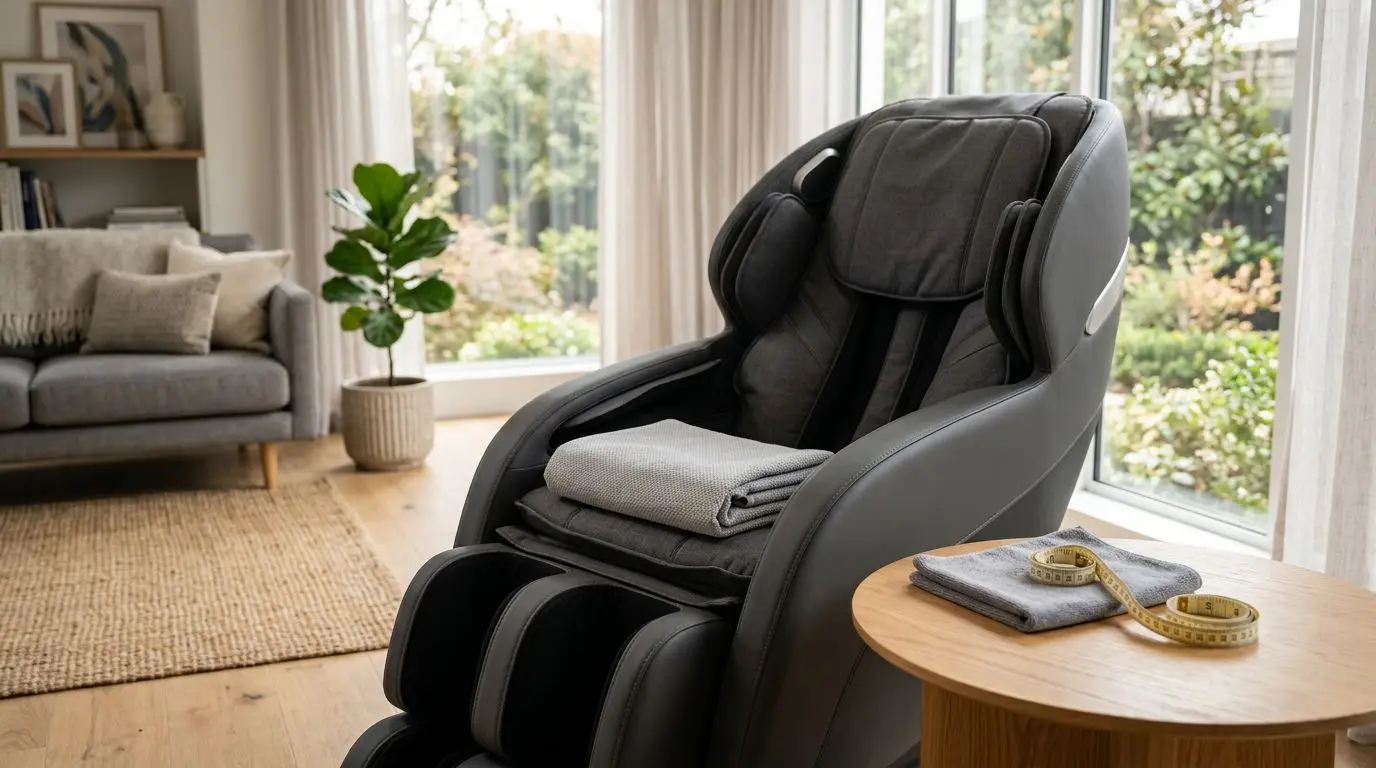
Before buying or sewing any protective cover, measure the chair while it is upright and unplugged. Use a soft tape measure, and write down the measurements in inches. A 1-inch mistake may not matter on a loose dust cover, but it can matter around arm openings, the headrest, and the footrest.
Measure overall height. Measure from the floor to the highest point of the chair in its upright position. Many full-size chairs are roughly 45 to 55 inches tall, but designs vary.
Measure overall width. Measure the widest point, usually arm to arm. Also measure the seat width between the arms so you know whether a liner will sit flat.
Measure depth upright and reclined. If you want a storage cover, measure front to back while upright. If the cover stays nearby during reclining, make sure it will not touch the moving backrest or leg rest.
Find moving zones. Identify airbags, roller paths, heating areas, body-scan sensors, arm wells, calf wells, and the footrest track. Covers should not be tucked into these areas.
Check the controller and ports. Leave access to the wired remote, side controls, charging ports, power switch, and ventilation openings. A cover that hides the remote can lead to awkward pulling and fabric stress.
Confirm wash size. If the cover is washable, make sure it fits your washer. A bulky full cover may need a large-capacity machine, while a headrest towel can be washed with regular linens.
Fit should be secure, not tight. Elastic edges, ties, or straps can help, but they should attach around fixed frame areas only. Do not run straps across an opening, under a moving footrest, through arm massage sections, or around a reclining hinge.
Materials that make sense: thin cotton, microfiber, and breathable blends
For a cover used during a 20-minute session, thinner is usually better. Thin fabric preserves more of the chair’s intended pressure and movement, while thick padding can make rollers feel vague or uneven. Breathability matters, too, because trapped heat and moisture can make the chair feel sticky.
| Material | Good for | Use caution if | Care notes |
|---|---|---|---|
| Cotton towel fabric | Headrest, sweat, hair products | It shifts easily without a strap or tuck point | Wash often; dry fully before reuse |
| Microfiber | Pet hair, light dust, daily wiping | Very smooth fabric may slide on synthetic upholstery | Shake outdoors, then wash as directed |
| Breathable polyester blend | Seat and back liners | Low-quality fabric pills or snags | Use gentle wash settings when possible |
| Water-resistant fabric | Short-term spill protection when chair is off | It traps heat during operation | Remove before use unless very thin and approved for that purpose |
Avoid plastic drop cloths, adhesive films, and rubber-backed mats directly on upholstery. Plastic can trap moisture, stick to warm surfaces, or leave impressions over time. Adhesives are especially risky because residue can damage the finish and may be difficult to remove from textured material.
Color matters as well. Dark denim and heavily dyed throws can transfer color, especially when damp. If the chair has light upholstery, choose a white, gray, tan, or colorfast cover. Wash a new cover separately at least 1 time before placing it on the chair to reduce lint and loose dye.
Sweat, lotions, and stains: a 5-minute after-use routine
A cover works best when paired with quick cleaning. After a sweaty session, take 5 minutes to remove the headrest pad or liner, shake it out, and wipe exposed upholstery with a soft, slightly damp cloth. Dry the surface with a clean towel before you close the leg rest or place a dust cover back on the chair.
Do not spray cleaner directly onto the chair. Spray the cloth first, then wipe. Direct spraying can push liquid into seams, buttons, vents, zippers, arm wells, or foot rollers. If the chair’s manual lists approved cleaners, follow that guidance. If you cannot find guidance, start with plain water on a microfiber cloth and test any mild cleaner on a hidden spot.
Lotions, sunscreen, and massage oils are harder on upholstery than ordinary dry clothing contact. If you use those products, put a washable barrier where your skin touches the chair. Pay close attention to the calf and foot areas, where residue from bare legs or socks can build up.
Use a dedicated headrest cloth and wash it every 2 to 4 uses, or sooner if damp.
Let damp covers dry completely before storing them to prevent odor.
Keep food and drinks at least 3 feet away from the chair when possible.
Do not use bleach, harsh solvents, abrasive pads, or steam unless the manual specifically allows it.
Stains are easier to prevent than remove. A small towel in the right place often does more than a heavy full cover used inconsistently.
Pets and claws: protect the chair when it is off, not moving
If you have pets, the safest approach is to cover the chair when it is off and keep animals away when it is operating. A massage chair has moving sections, including a reclining back, leg rest, foot wells, airbags, and rollers. Even a small pet can be startled or caught near a moving part.
For pet hair, a smooth microfiber throw or fitted dust cover is usually easier to clean than a fuzzy blanket. Hair clings to deep pile and can move into seams. Shake the cover outdoors, vacuum the chair’s outer shell with a soft brush attachment, and check the foot wells before each use.
For claws, no fabric cover is guaranteed protection. A determined cat can puncture fabric and upholstery. A dog jumping onto the seat can scrape the front edge, especially if the leg rest is extended. The cover is backup protection, not the first line of defense.
Pet-safe habits
Remove pets from the room before starting the chair.
Check under and around the footrest before reclining.
Use a full cover only when the chair is powered off.
Do not tuck fabric into calf wells, foot rollers, hinges, or under the base.
Vacuum pet hair weekly if the chair is in a living room.
A chair that smells like pets or holds visible hair is usually harder to keep looking new. Regular light cleaning works better than an occasional deep clean.
Sunlight and room placement: move the chair 12 inches at a time
Sunlight can affect how upholstery ages, especially on the side facing a window. If your room allows it, move the chair at least 12 inches away from direct sun paths and watch the light pattern during the brightest part of the day. Even a small shift can keep sunlight off the headrest or arm panel.
A cover helps when the chair is idle, but placement still matters. A dark cover in direct sun can get hot, and trapped heat is not ideal for upholstery or electronics. If the chair must sit near a window, use window coverings during peak sun hours and leave space around vents so heat can escape.
Also consider clearance. Many chairs need several inches behind them to recline, while space-saving designs may need less. Do not solve a sunlight problem by pushing the chair so close to a wall that the backrest, shell, or cover rubs during reclining.
Keep the chair out of direct afternoon sun when possible.
Use a breathable dust cover when the chair is off.
Do not store a damp cover on a warm chair.
Leave ventilation areas uncovered, especially near the base and side panels.
If one side of the chair is always brighter than the other, that side should get extra protection. The same applies to rooms with skylights, glass doors, or reflective floors.
What not to cover: rollers, airbags, vents, heat, and sensors
A massage chair is not a standard recliner. It may have 20 or more airbags, a long roller track, body-position sensors, heat panels, and a motorized footrest. Covering the wrong area can change the feel of the chair or interfere with movement.
Never force fabric into seams or openings. If the chair uses shoulder airbags, arm slots, calf airbags, foot rollers, or a sliding footrest, fabric needs to stay clear of those parts. Thick covers can also mute roller intensity or prevent the chair from reading body position as intended.
Use caution with heated seats or back areas. Thin cotton or microfiber may be acceptable for light protection, but heavy waterproof layers can trap heat. If the cover feels hot, smells unusual, or changes texture, stop using it during heated programs.
A protective cover also does not make every user or every setting appropriate. If you are pregnant, have a pacemaker or another implanted cardiac device, have a history of blood clots or take anticoagulants, have osteoporosis, a recent fracture or surgery, spinal disc problems, neuropathy, or uncontrolled hypertension, ask your physician before using a massage chair. Do not rely on a cover, low intensity setting, or extra padding to make use suitable for you.
Simple care schedule: daily, weekly, and monthly protection
A chair that gets 5 uses a week needs a routine. The goal is not complicated detailing; it is removing sweat, dust, and hair before they settle into seams. A few minutes at regular intervals protects the appearance better than waiting until the upholstery looks dirty.
| Schedule | Task | Why it helps |
|---|---|---|
| After each use | Remove damp towels or liners and wipe contact areas | Reduces moisture and residue sitting on upholstery |
| Weekly | Wash headrest covers and vacuum pet hair from seams | Keeps buildup from becoming harder to clean |
| Monthly | Inspect seat edges, arm wells, foot wells, and the back pad | Finds early wear, loose stitching, or rubbing spots |
| Every 3 to 6 months | Review room placement and sun exposure | Adjusts for seasonal light changes |
If you notice cracking, peeling, sticky texture, or color transfer, stop using any cover or cleaner that may be contributing to the problem. Take photos, check the owner’s manual, and contact the seller or manufacturer for care guidance if the chair is still under warranty.
Warranty terms often exclude damage from misuse, pets, spills, harsh cleaners, or unauthorized accessories. That does not mean you cannot use a cover, but the cover should be non-adhesive, non-abrasive, breathable, and easy to remove.
Bottom line: choose light protection that does not change the chair
A massage chair cover is worth it when the chair faces predictable messes: sweat, hair products, pet hair, sunlight, or heavy shared use. For many homes, the smartest combination is a washable headrest pad during sessions and a breathable full cover when the chair is off.
Choose protection that is thin, clean, colorfast, and easy to remove. Measure the chair, keep fabric away from moving parts, and use covers to preserve the upholstery’s appearance rather than alter the chair’s function. The best cover is the one you will actually wash and use correctly.
FAQ: massage chair covers and upholstery protection
Can I use a regular blanket as a massage chair cover?
You can use a regular blanket as a dust cover when the chair is off, but avoid running the chair with a thick blanket tucked into the seat, leg rest, arm wells, or foot area. Thick fabric can bunch, slide, block moving parts, or change how the rollers feel.
Should I cover my massage chair every day?
Cover it daily if it sits in sunlight, a pet area, or a dusty room. If the chair is in a clean, shaded room and used lightly, a washable headrest towel plus weekly wiping may be enough.
What is the best fabric for a massage chair cover?
For use during sessions, thin cotton, microfiber, or a breathable polyester blend usually makes the most sense. For storage, a breathable dust cover is better than plastic because it is less likely to trap moisture against the upholstery.
Can a cover protect a massage chair from cat claws?
Only to a point. A cover can reduce light surface contact and catch hair, but it will not reliably stop scratching, punctures, or chewing. Keep pets off the chair, especially when it is moving.
Will a cover affect heat or roller intensity?
It can. Thick or waterproof covers may reduce roller feel and trap heat. If you use heat, choose a thin breathable layer, avoid bunching, and stop using the cover if the chair feels unusually hot or the fabric changes texture.
Frequently asked questions
Can I use a regular blanket as a massage chair cover? +
You can use a regular blanket as a dust cover when the chair is off. Avoid operating the chair with a thick blanket tucked into the seat, arm wells, leg rest, or foot area because it can bunch, slide, or interfere with moving parts.
Should I cover my massage chair every day? +
Daily covering is useful if the chair is near sunlight, pets, dust, or frequent shared use. In a clean, shaded room with light use, a washable headrest towel and regular wiping may be enough.
What fabric is safest for a massage chair cover? +
Thin cotton, microfiber, and breathable polyester blends are practical for contact areas because they are washable and do not add much bulk. Avoid adhesive films, plastic sheets, and heavy waterproof layers during operation.
Can a cover protect a massage chair from pets? +
A cover can catch pet hair and reduce light dirt, but it cannot make the chair pet-proof. Keep pets away from the chair when it is operating and do not allow fabric or paws near moving sections.
Will a cover change how the massage chair feels? +
Yes, especially if it is thick. Extra padding can soften roller pressure, interfere with body scanning, and trap heat. Use a thin, smooth cover and test the chair on a low setting first.
Related guides
How to Protect Massage Chair Upholstery from Cracking, Peeling, Sweat, Pets, and Sunlight
14 min read
How to Clean a Massage Chair: Upholstery, Foot Wells, Airbags, and Remote Care
14 min read
Massage Chair Maintenance Checklist: Weekly, Monthly, and Yearly Tasks
13 min readBest Flooring for a Massage Chair: Carpet, Hardwood, Tile, Mats, and Floor Protection
13 min read
Morning, Afternoon, or Night: When Is the Best Time to Use a Massage Chair?
14 min read