Disclosure: We may earn a commission when you buy through links on this page, at no extra cost to you. We buy nothing, sell nothing and accept no payment for coverage — commissions never decide what we recommend. How we make money.
A wall-hugger massage chair saves space by moving the seat and base forward as the backrest reclines, allowing the chair to sit closer to a wall. Many designs need about 2 to 6 inches behind the chair instead of the 12 to 24 inches a conventional recliner may require. Still, you should measure the full reclined footprint, width, doorway path, and side clearance before you buy.
That difference can determine whether a chair works in a bedroom corner, apartment living room, home office, or finished basement. The key is not only the advertised rear clearance. It is how the whole chair moves in your actual room, on your actual floor, with your outlet, rug, door swing, and walking path in mind.
How wall-hugger recline works with 2 to 6 inches behind the chair
A standard reclining chair usually leans its backrest backward into open space. A wall-hugger massage chair uses a different motion: as the backrest reclines, the seat carriage slides forward on a track or linkage inside the base. The back still tilts, but the chair shifts its center of motion forward, which reduces the space needed behind it.
That is why product specifications may list a wall clearance such as 2 inches, 4 inches, or 6 inches. The number usually means the minimum distance between the rear of the upright chair and the wall when the chair completes its automatic recline cycle. It does not always account for thick baseboards, uneven flooring, a raised rug edge, or the extra space needed to plug in a power cord safely.
The motion feels different from a regular recliner. Rather than simply tipping back, the chair may glide forward first, then recline. In a small room, that forward travel matters. If the footrest extends 18 to 24 inches and the base moves several inches forward, the chair can still occupy a long rectangle when fully reclined.
Think of it this way: wall-hugger recline reduces rear clearance, not total chair size. It solves the space problem behind the chair, but it does not remove the need for open space in front and around it.
Room dimensions: measure 3 footprints before buying
Before comparing features, measure three footprints: upright, fully reclined, and usable walking clearance. A typical full-size massage chair may be around 30 to 36 inches wide, 45 to 55 inches deep when upright, and 65 to 75 inches long when fully reclined with the footrest out. Compact designs can be smaller, but the reclined length is still the number that often surprises people.
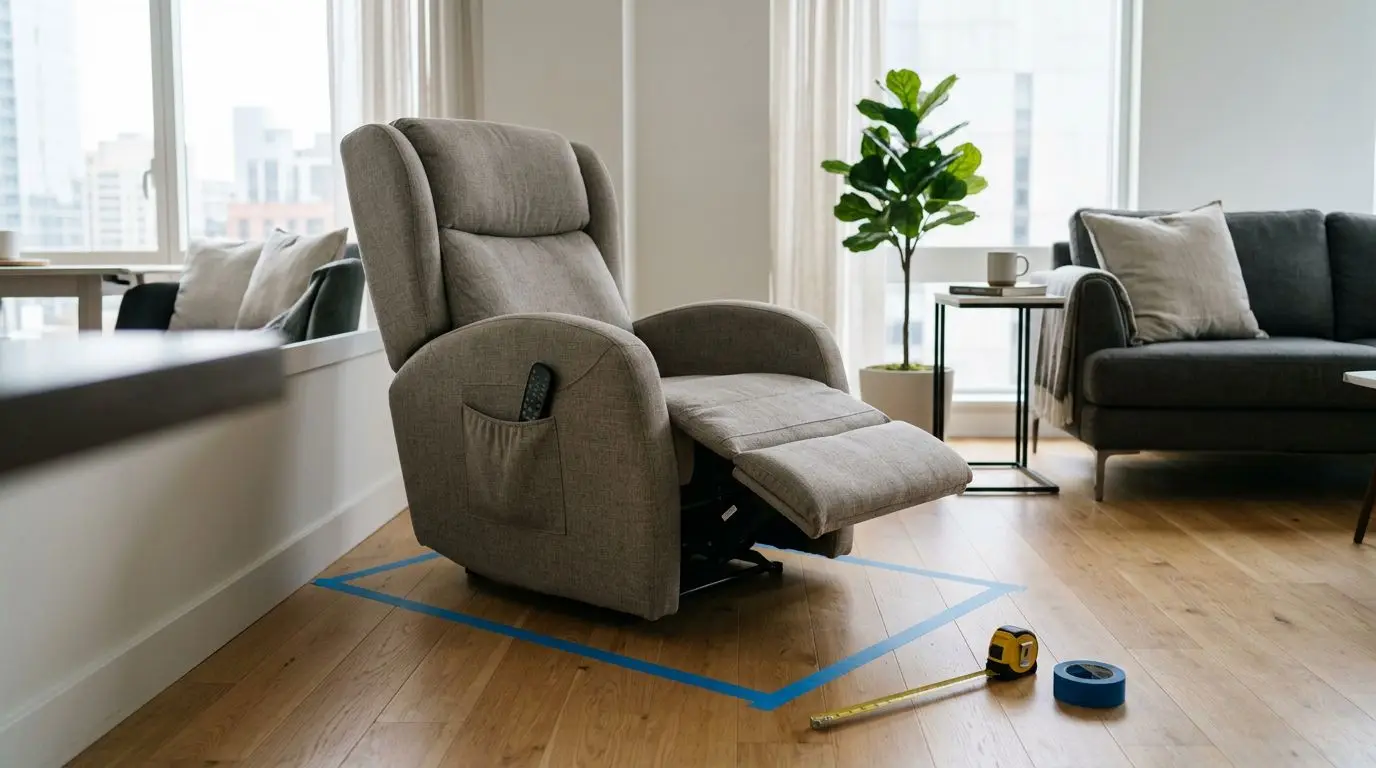
Use painter's tape on the floor. Tape out the chair's upright footprint first, then extend the tape to the published reclined length. If the listed depth is 50 inches upright and 72 inches reclined, tape both shapes. Stand in the room and ask whether you can still open the door, walk past the chair, and reach the outlet without stepping over cords.
| Measurement | What to check | Why it matters |
|---|---|---|
| Rear clearance | Usually 2 to 6 inches for many wall-hugger designs | Prevents the backrest from rubbing the wall during recline |
| Reclined length | Often about 65 to 75 inches on full-size chairs | Shows how far the footrest and moving base extend into the room |
| Chair width | Commonly about 30 to 36 inches | Helps with doorways, side tables, and arm clearance |
| Walking path | Allow about 24 to 30 inches where people pass regularly | Keeps the room usable after the chair is installed |
| Doorway path | Measure every doorway, turn, and stair landing | A chair that fits the room still has to get into the room |
Doorways are easy to overlook. Interior doors in US homes are often around 28 to 32 inches wide, though many entry doors are wider. Some chairs arrive in a box or with detachable parts, while others are harder to maneuver. Measure the narrowest point, including trim and tight hallway turns.
Who a space-saving design is best for in rooms under 12 feet wide
Wall-hugger recline is most useful when the chair has to sit near a wall and the room is not especially large. In an 11-by-12-foot spare bedroom, saving 12 to 18 inches behind the chair can leave enough room for a dresser drawer, closet door, or walkway. In a larger open living room, rear clearance may matter less than upholstery style, noise level, or overall comfort.
A space-saving chair can make sense for:
- Apartments and condos: Rear clearance is valuable when one room handles TV, reading, work, and guests.
- Bedrooms: A wall-hugger design can fit beside a bed or opposite a dresser where a traditional recliner would block movement.
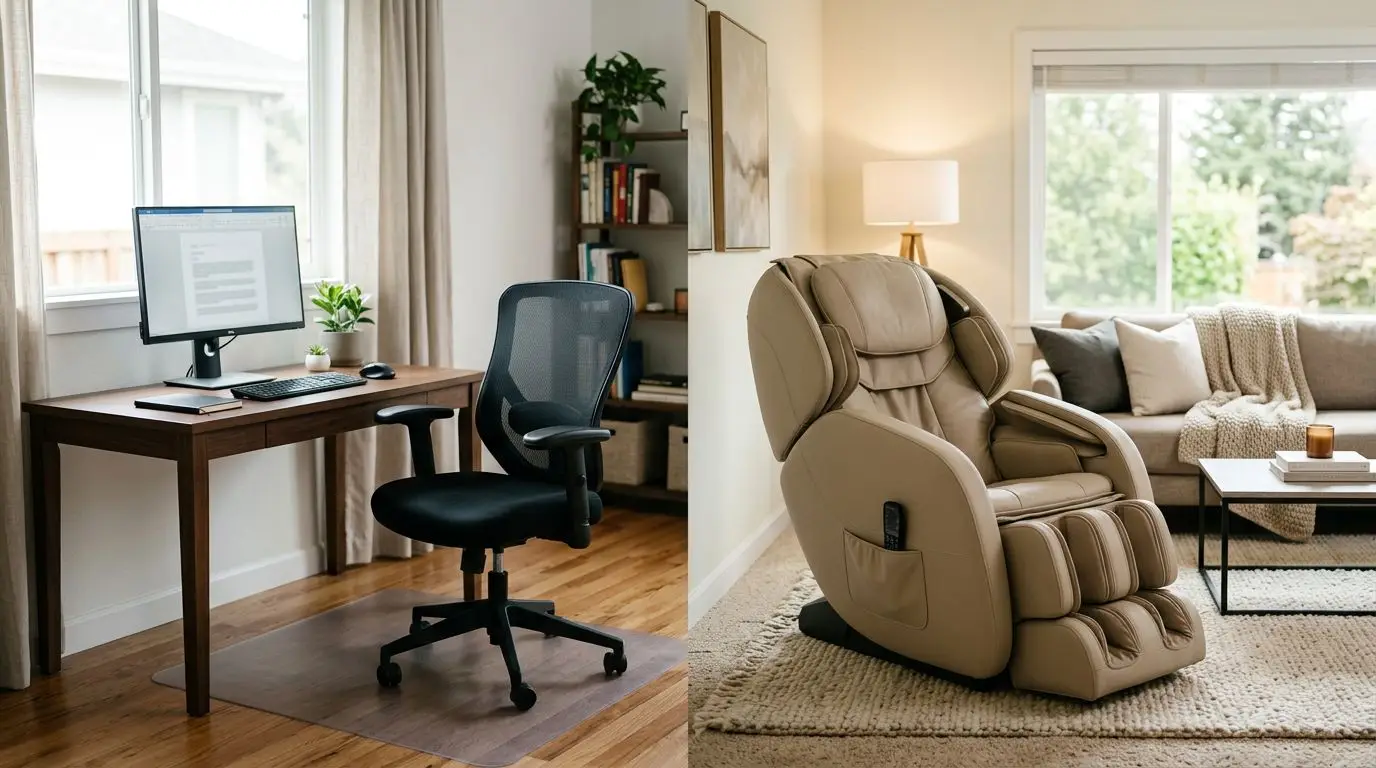
- Home offices: If a desk chair already claims 36 inches of rolling space, a forward-gliding recline can help keep the room functional.
- Finished basements: Low ceilings may not be the issue, but stair access, posts, and tight corners often are.
- Shared living rooms: Keeping the chair close to a wall can reduce the visual bulk in a family space.
It may not be the right priority for everyone. If you have a large room and want the longest possible leg extension, widest shoulder area, or most open seating position, a compact wall-hugger design may feel restrictive. Space-saving does not automatically mean more comfortable. It simply means the recline mechanism is designed to use less rear clearance.
Types and features compared: 2-inch clearance is not the whole story
Massage chairs vary by track shape, roller system, recline type, and lower-body design. A chair that needs only 2 inches behind it may still be too long when reclined, too wide for a hallway, or too upright for someone who wants a deeper recline position. Compare the entire design, not just the wall number.
| Design type or feature | Typical space impact | Best fit | Tradeoff to check |
|---|---|---|---|
| Standard recline | May need 12 to 24 inches behind the chair | Larger rooms with open rear space | Can be hard to place against a wall |
| Wall-hugger recline | Often needs about 2 to 6 inches behind the chair | Small rooms, apartments, bedrooms | Forward travel can reduce front clearance |
| Compact frame | May reduce width by several inches | Narrow rooms and tighter doorways | Seat, shoulder, or calf fit may feel snug |
| Long track design | Track may extend from neck area toward the glutes or upper hamstrings | People who want broader roller coverage | Chair body may be longer and heavier |
| Extended footrest | Can add 18 to 24 inches in front when open | Taller users and leg coverage preferences | Needs clear space in front of the chair |
| Zero-gravity style recline | Often changes the full reclined length | Users who like a tilted-back, weight-distributed position | May require testing for comfort and entry ease |
Track design also changes how the chair feels. An S-track generally follows the curve of the back. An L-track or similar extended track continues farther under the seat area, which can make the chair's internal frame larger. Roller mechanisms vary as well. Some focus on kneading and tapping motions; others add more adjustable roller depth or width. These differences affect intensity and coverage, not just size.
Air compression zones can add bulk to the arms, calves, and shoulders. If a chair has large side panels, measure the widest outside dimension rather than assuming the seat width tells the whole story. A chair with a 21-inch seat opening may still be 34 inches wide at the arms.
How to choose and measure in 15 minutes
You can do a useful fit check in about 15 minutes with a tape measure, painter's tape, and the chair's published dimensions. If you do not have the exact chair in front of you, use the largest numbers listed for width, upright depth, reclined length, and required wall clearance.
Step 1: Find the chair's maximum reclined length
Look for a full recline or fully extended measurement. If the upright depth is 50 inches and the reclined length is 72 inches, use 72 inches for floor planning. Do not plan around the smaller number.
Step 2: Add breathing room
Add at least 2 inches beyond the stated rear clearance and about 3 to 6 inches near walls, side tables, or bookcases. This extra space helps account for baseboards, slight movement, and normal household clutter.
Step 3: Tape the footprint
Put tape on the floor for the full reclined rectangle. Include the footrest. Then sit in a regular chair inside that taped area and imagine standing up, turning, and walking out. If the taped footprint blocks a closet, cabinet, or pet path, the placement will become annoying after the novelty wears off.
Step 4: Check the delivery route
Measure the front door, hallway, stairway, and room entry. A 32-inch doorway can still be difficult if there is an immediate 90-degree turn. Check stair landings and handrails, not just door width.
Step 5: Confirm the outlet
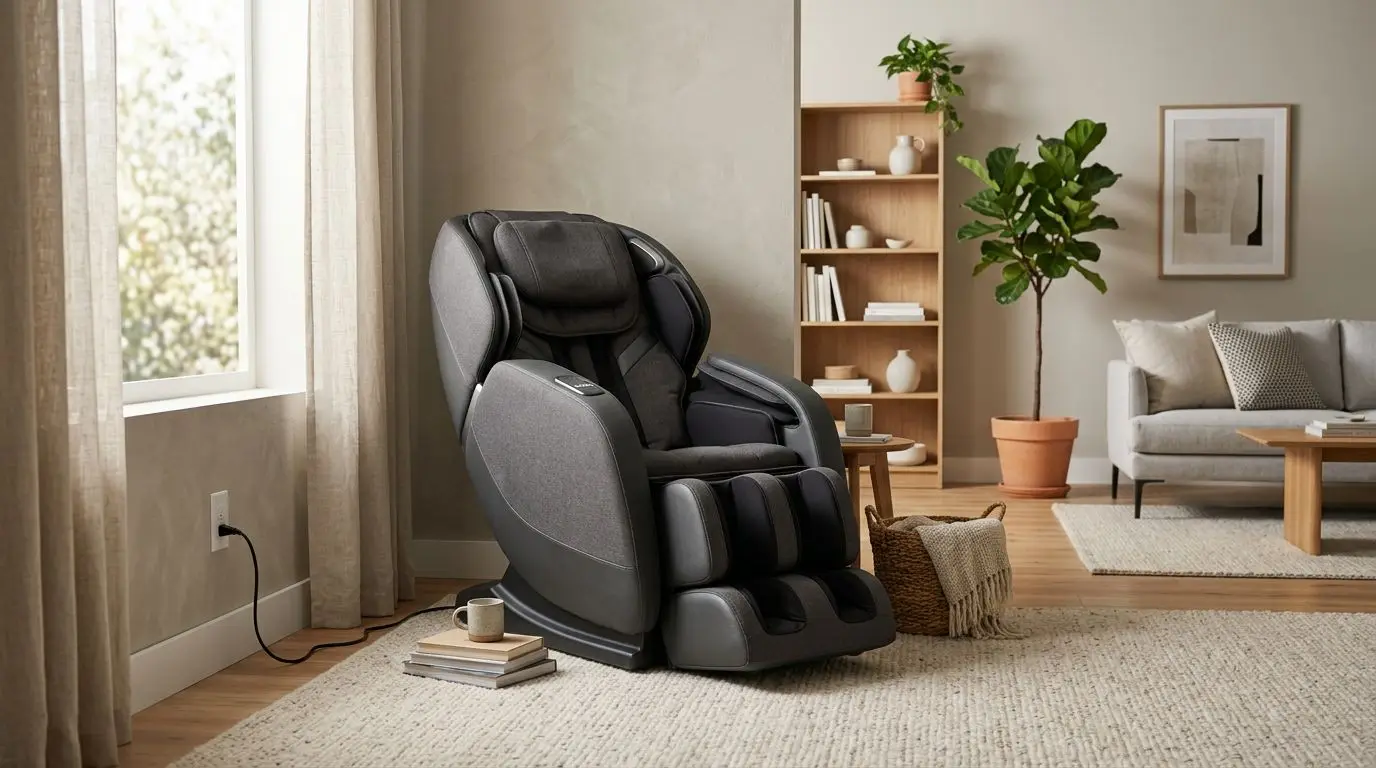
Most electric massage chairs need a standard household outlet nearby. Avoid running a cord across a walking path. If the outlet is 6 feet away and the cord crosses the room, the layout is not finished yet.
If two possible locations seem close, choose the one with the cleaner walking route. A chair that is easy to reach and easy to get out of is more likely to be used comfortably.
Placement details: floors, outlets, doors, and 30-inch walking paths
Real homes are not empty rectangles. A chair can clear the wall and still interfere with a rug, side table, floor vent, lamp cord, sliding door, or TV sightline. Aim for a 24-inch minimum walking path in low-traffic areas and closer to 30 inches where people pass often.
Flooring matters. On hardwood, vinyl plank, or laminate, a heavy chair can leave impressions or slide slightly during use if it is not stable. Use a large, flat protective mat designed for furniture weight, not a thin decorative rug that bunches under the base. On carpet, check whether the chair reclines smoothly without dragging or tilting. Thick carpet can change the feel of the mechanism.
Do not block vents or returns. A floor vent under the chair can reduce airflow to the room, and heat buildup around electronics is never ideal. Leave open space around the power connection so you can unplug the chair without moving a 200-pound object. Many full-size massage chairs are heavy; depending on design, they can weigh well over 150 pounds, so placement should not rely on frequent repositioning.
Consider sound as well. Rollers, air pumps, and motors are normal parts of the experience, but they are not silent. If the chair backs up to a shared bedroom wall or an apartment neighbor's wall, try to place it on an interior wall or use it during reasonable hours. A small area rug under the chair may reduce vibration transfer, as long as it does not interfere with movement.
Comfort and safety checks before a 15-minute first session
Start with a short session, such as 10 to 15 minutes, and choose a lower intensity setting until you know how the chair feels. Strong rollers, tight calf sections, and firm shoulder air cells can feel more intense than expected, especially in a compact chair where the body position is more fixed.
A massage chair is a consumer wellness product, not a medical device. It is designed to provide mechanical pressure, rolling, kneading, tapping, stretching sensations, heat warmth in some areas, and a reclined place to sit. It should not be used as a substitute for medical advice or care.
Ask your physician before using a massage chair if you are pregnant; have a pacemaker or other implanted cardiac device; have blood clots or take anticoagulants; have osteoporosis; recently had a fracture or surgery; have spinal disc problems; have neuropathy; or have uncontrolled hypertension. If any position, pressure, heat, or leg compression feels uncomfortable, stop using the chair and reassess the settings or placement.
Fit is also a safety issue. Your feet should sit naturally in the footrest without forcing your knees upward. Your shoulders should not be jammed into side panels. You should be able to reach the controls, stop button, or power control easily. If getting in or out requires twisting around a table or stepping over the footrest, the chair is in the wrong location.
Common mistakes to avoid with 4-inch wall clearance claims
The biggest mistake is treating the rear clearance number as the only measurement that matters. A 4-inch wall clearance sounds small, but the chair may still need 70 inches of length when fully reclined. In a 10-foot room, that can leave only about 50 inches for everything else along the same line.
Another mistake is forgetting about baseboards. If a chair's rear housing curves outward near the bottom, a thick baseboard can reduce the true space behind the chair by half an inch or more. Place the chair based on the closest point of contact, not the drywall surface above the trim.
People also underestimate side clearance. Arm panels may need enough room for your hands to enter comfortably, and some chairs have doors, zippers, or removable pads that are easier to access with a few inches on each side. If the chair is wedged tightly between a wall and a cabinet, normal cleaning becomes harder.
Finally, do not forget the view. If the chair will face a TV, measure the sightline when reclined. Your head may sit several inches lower and farther back than expected. That can be comfortable for resting, but awkward if the screen is mounted too high or off to the side.
FAQ: 5 wall-hugger questions homeowners ask before delivery
Can a wall-hugger massage chair actually touch the wall?
No. Even if a specification lists 2 inches of clearance, do not place the chair directly against the wall. Leave at least the stated clearance, and consider adding another 1 to 2 inches for baseboards, slight movement, and safe cord routing.
How much space do I need in front of the chair?
Plan around the fully reclined length, not just the footrest. Many full-size chairs reach about 65 to 75 inches long when reclined. Tape that length on the floor and keep a usable path around it.
Are space-saving massage chairs smaller inside?
Not always, but some are. A chair can have wall-hugger recline and still be full-size, while a compact design may have a narrower seat or shoulder area. Compare both outside width and inside seating dimensions when available.
Can I put one on carpet?
Often, yes, but check stability and recline movement. Thick carpet may make the base less stable or cause dragging. A firm furniture mat can help if it is large enough for the chair's full footprint.
Does zero-gravity style recline require more space?
It depends on the mechanism. Some zero-gravity style positions are built into wall-hugger designs, while others need more front or rear clearance. Always use the published fully reclined dimensions instead of assuming one recline label tells the whole story.
The best space-saving massage chair setup is the one that fits twice: once on paper and once in daily life. Measure the wall clearance, full reclined length, doorway route, outlet location, and walking path before delivery. If those numbers work, wall-hugger recline can make a chair much easier to place in a real home without giving the room over to a single piece of furniture.
Frequently asked questions
Can a wall-hugger massage chair actually touch the wall? +
No. Even if the specification lists 2 inches of rear clearance, leave the stated space plus an extra 1 to 2 inches when possible for baseboards, movement, and safe cord routing.
How much space do I need in front of a wall-hugger massage chair? +
Use the fully reclined length, which is often about 65 to 75 inches on full-size chairs. Tape that length on the floor before buying and make sure you still have a usable walking path.
Are space-saving massage chairs always smaller inside? +
No. Wall-hugger recline describes the motion of the chair, not the seat size. Some are full-size, while compact designs may have narrower shoulder, seat, or calf areas.
Can I put a wall-hugger massage chair on carpet? +
Often, yes. Check that the base stays stable and the recline mechanism moves freely. Thick carpet may require a firm furniture mat sized for the full chair footprint.
Does zero-gravity style recline need more room? +
It depends on the chair mechanism. Some zero-gravity style positions are included in wall-hugger designs, but you should always plan around the published fully reclined dimensions.
Related guides
Where Should You Put a Massage Chair at Home? Room-by-Room Placement Guide
13 min read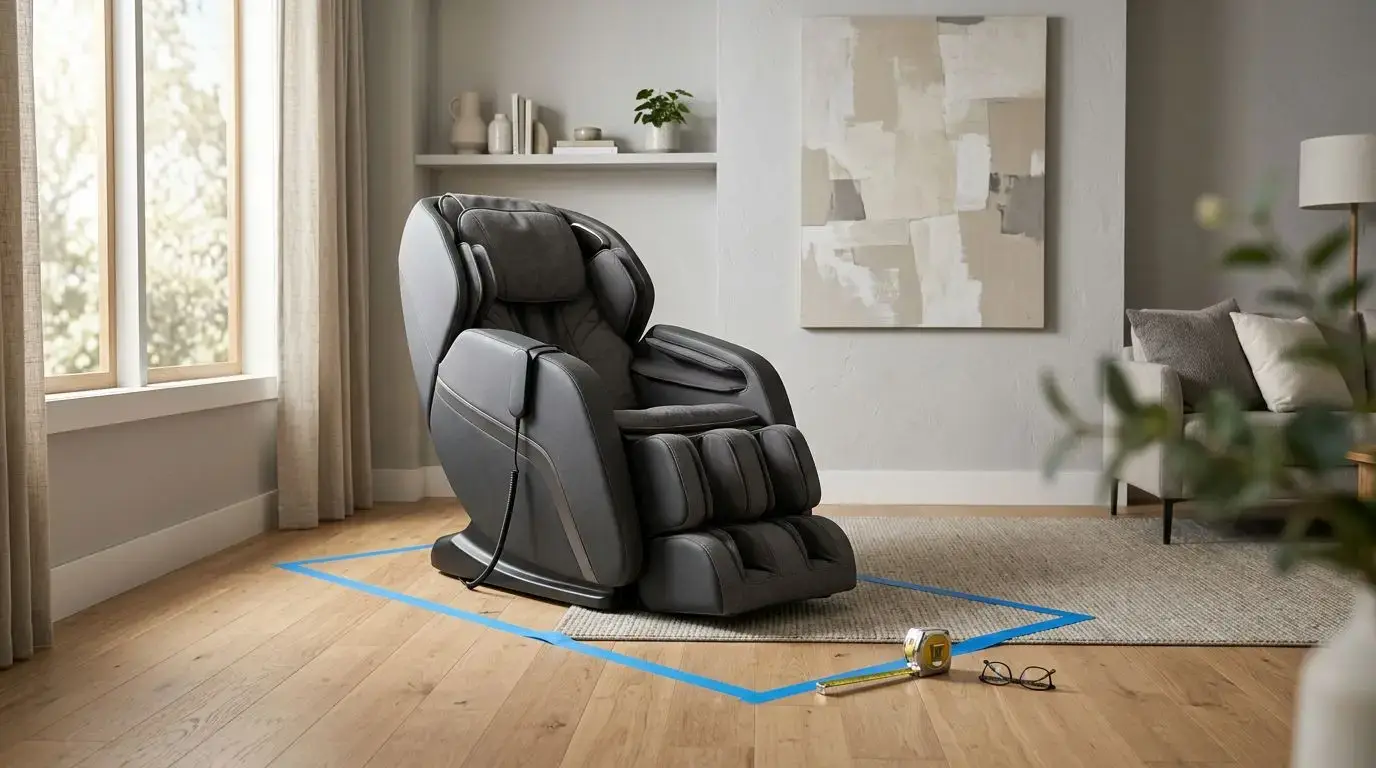
What Size Massage Chair Do You Need? Dimensions, Clearance, and Fit Guide
11 min read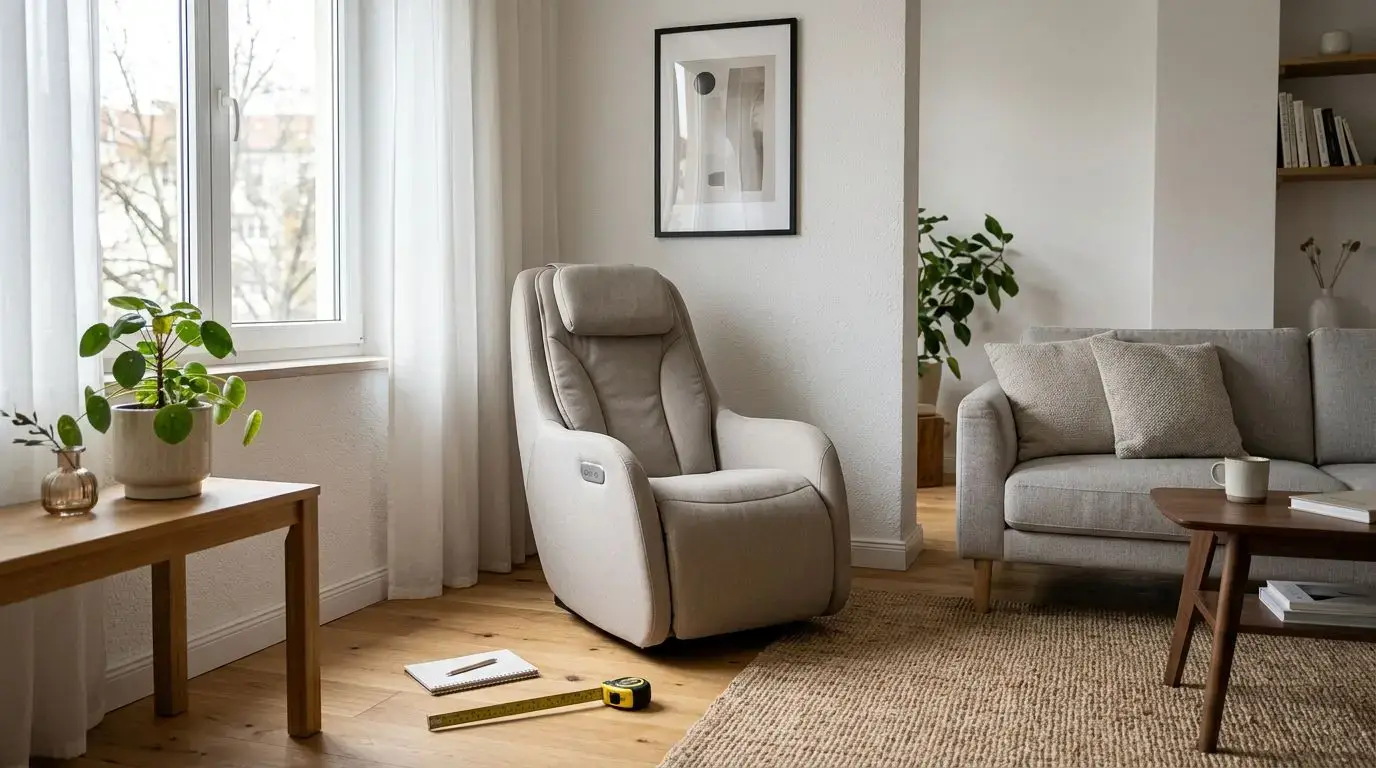
Compact Massage Chairs for Small Spaces: What to Know Before Buying
12 min read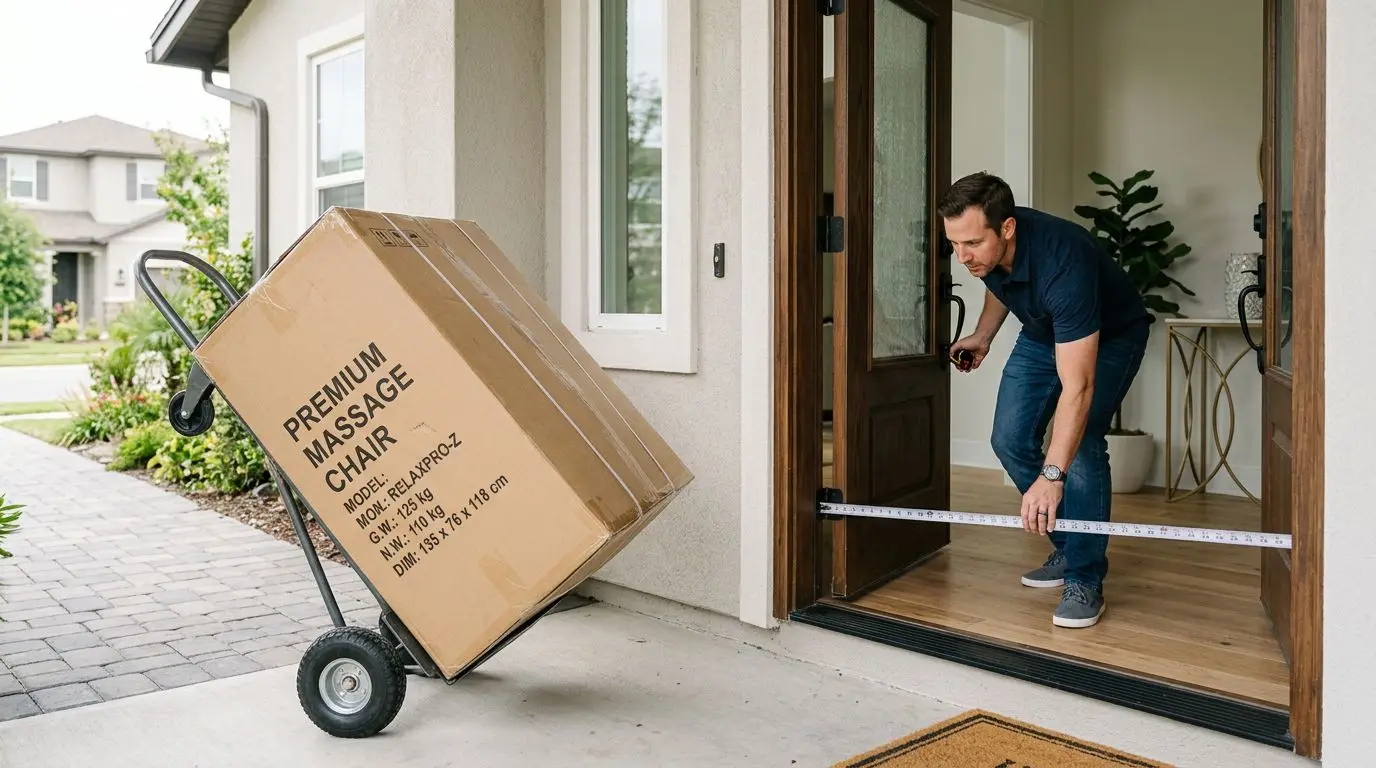
Will a Massage Chair Fit Through Your Door? Measuring Doorways, Hallways, Stairs, and Elevators
13 min read