Disclosure: We may earn a commission when you buy through links on this page, at no extra cost to you. We buy nothing, sell nothing and accept no payment for coverage — commissions never decide what we recommend. How we make money.
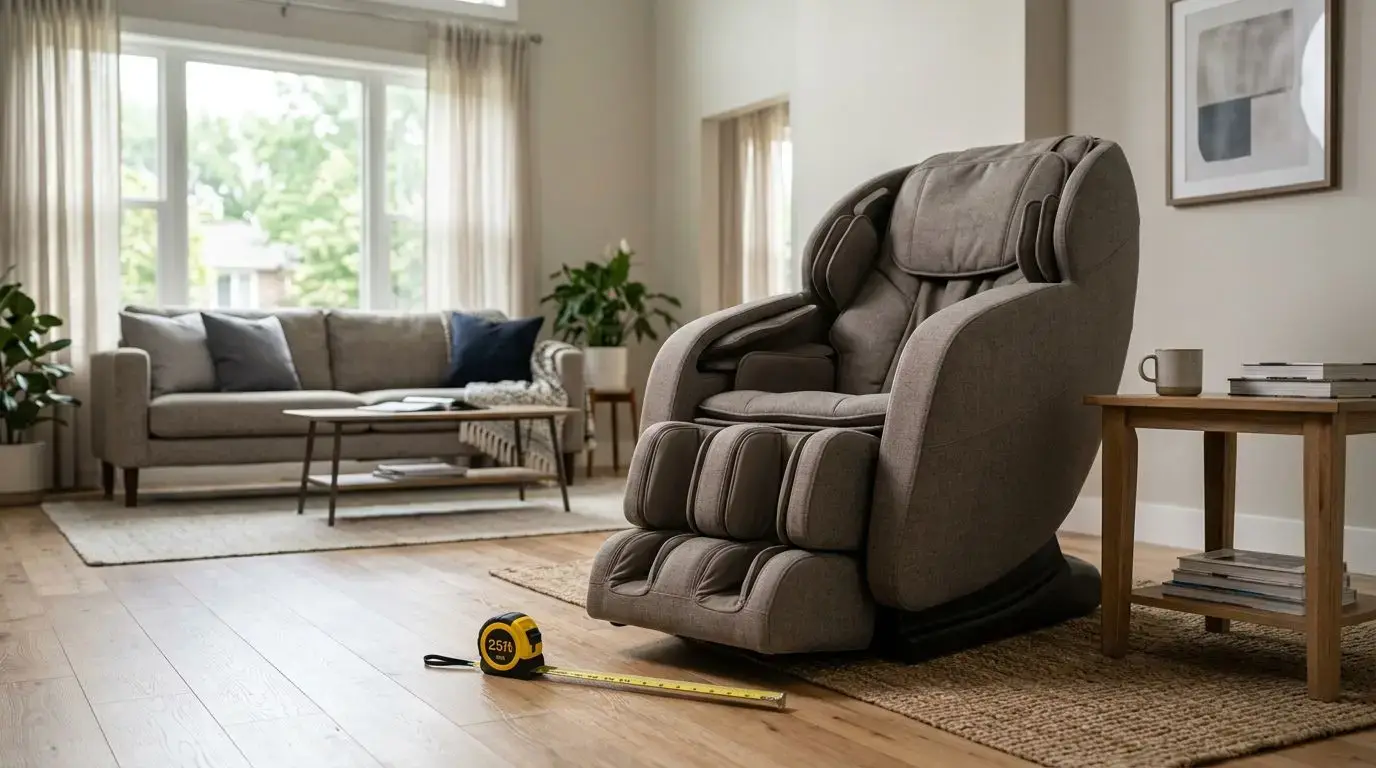
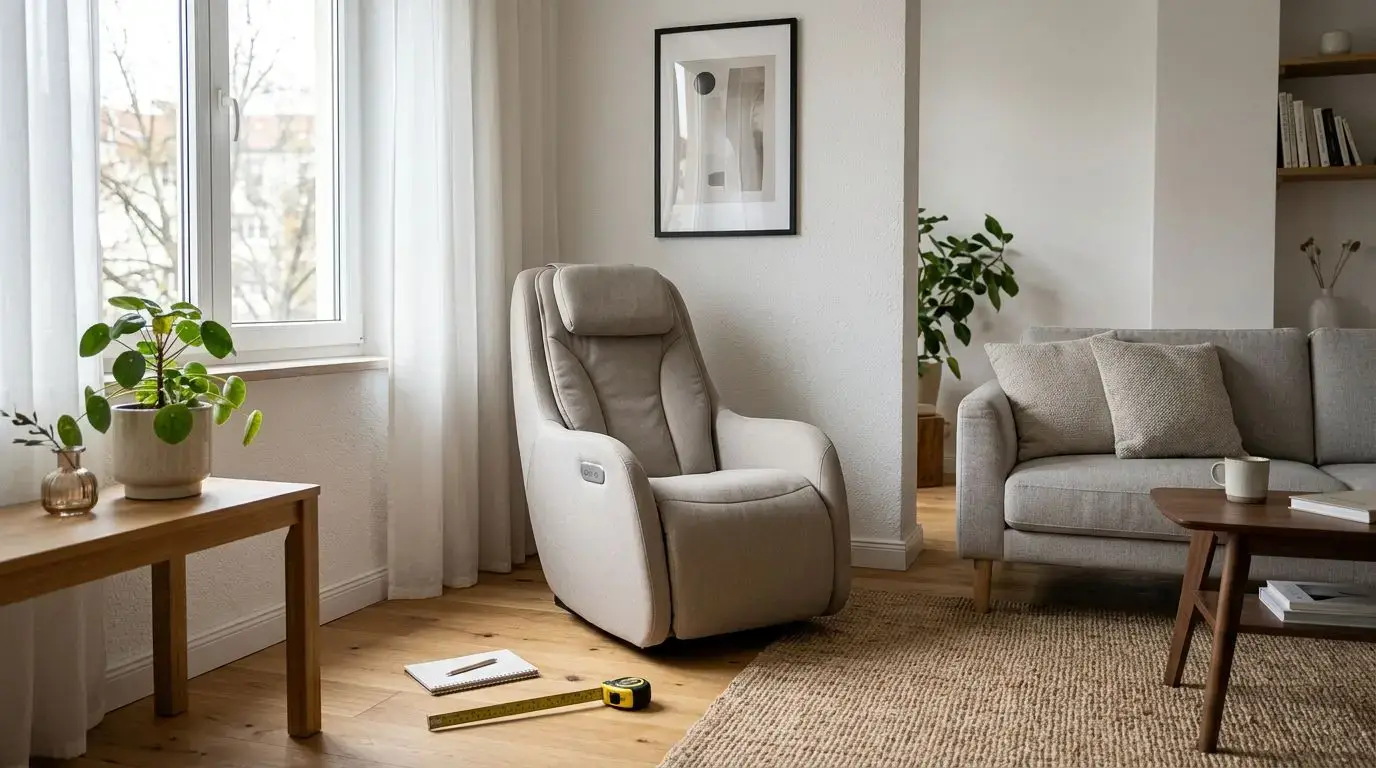
A compact massage chair can work well in an apartment, bedroom, or home office if you measure the chair’s footprint, recline clearance, and delivery path before you buy. The best small-space option is usually a wall-hugging or space-saving design that needs only about 2 to 6 inches behind the chair while still offering core features such as back rollers, adjustable intensity, heat, and a footrest if you have room.
The goal is not simply to buy the smallest chair. It is to choose the smallest chair that fits your body, your doorway, and your daily routine without turning the room into an obstacle course.
What Counts as a Compact Massage Chair? Start With 30–36 Inches of Width
Most full-size massage chairs are large pieces of furniture. A compact massage chair is usually narrower, shorter, lighter, or built to recline forward so it can sit closer to a wall. A practical small-space target is a chair that measures roughly 30 to 36 inches wide, though some slim designs may be a little narrower and some feature-rich chairs may be wider.
Depth matters just as much as width. A chair may look manageable when upright at 45 to 55 inches deep, then extend to 65 to 75 inches when fully reclined with the footrest out. That difference can determine whether the chair fits in front of a bed, desk, closet door, or TV stand.
Height also affects placement. Many massage chairs stand about 42 to 52 inches tall when upright. If you plan to place one under a sloped ceiling, loft bed, wall shelf, or window ledge, check the total height in the reclined position, not only the showroom-style upright measurement.
Compact does not always mean basic. Many smaller chairs still include an S-track or SL-track roller system, heat in the back or calves, air compression, zero-gravity recline, and automatic programs lasting 10 to 30 minutes. The trade-off is that you may get fewer airbags, a shorter footrest range, a smaller shoulder area, or less intense roller depth than you would in a large chair.
Compact Massage Chair Types Compared: 4 Common Small-Space Options
Small-space shoppers usually choose among four categories: upright compact chairs, wall-hugging recliners, compact zero-gravity chairs, and portable massage seats. Each type solves a different space problem. A 600-square-foot apartment, a 10-by-12-foot bedroom, and a shared home office may all need different designs.
| Type | Typical space advantage | Common features | Best fit | Main trade-off |
|---|---|---|---|---|
| Upright compact massage chair | Often around 30–34 inches wide | Back rollers, heat, limited air compression | Bedroom corners and small living rooms | May need more rear clearance to recline |
| Wall-hugging massage chair | Usually needs about 2–6 inches from the wall | Recline, body scan, leg rest, automatic programs | Apartments and rooms with narrow walking paths | Can still be deep when fully extended |
| Compact zero-gravity chair | Uses recline angle to distribute weight | Zero-gravity position, back rollers, foot/calf massage on some units | Shoppers who want deeper relaxation in less space | May be heavier and taller than basic compact chairs |
| Portable massage seat or pad | Stores in a closet; often under 25 pounds | Vibration, rolling nodes, heat on some pads | Home offices, dorms, multipurpose rooms | Not a true full-body massage chair |
If you want the smallest permanent furniture footprint, start with a wall-hugging compact chair. If you need something that disappears after use, a portable seat pad is more practical, although it will not match the coverage or structure of a dedicated chair.
For many apartment shoppers, the sweet spot is a compact wall-hugging chair with an SL-track and a modest footrest. It offers more coverage than a back-only pad but requires less planning than a full-size luxury chair.
How to Measure Your Room in 15 Minutes
Before comparing features, take a tape measure and map the space. This takes about 15 minutes and can prevent a costly return. Measure the room as you actually use it, with the bed, desk chair, coffee table, file cabinet, side table, and laundry basket in their normal places.
1. Measure the chair zone
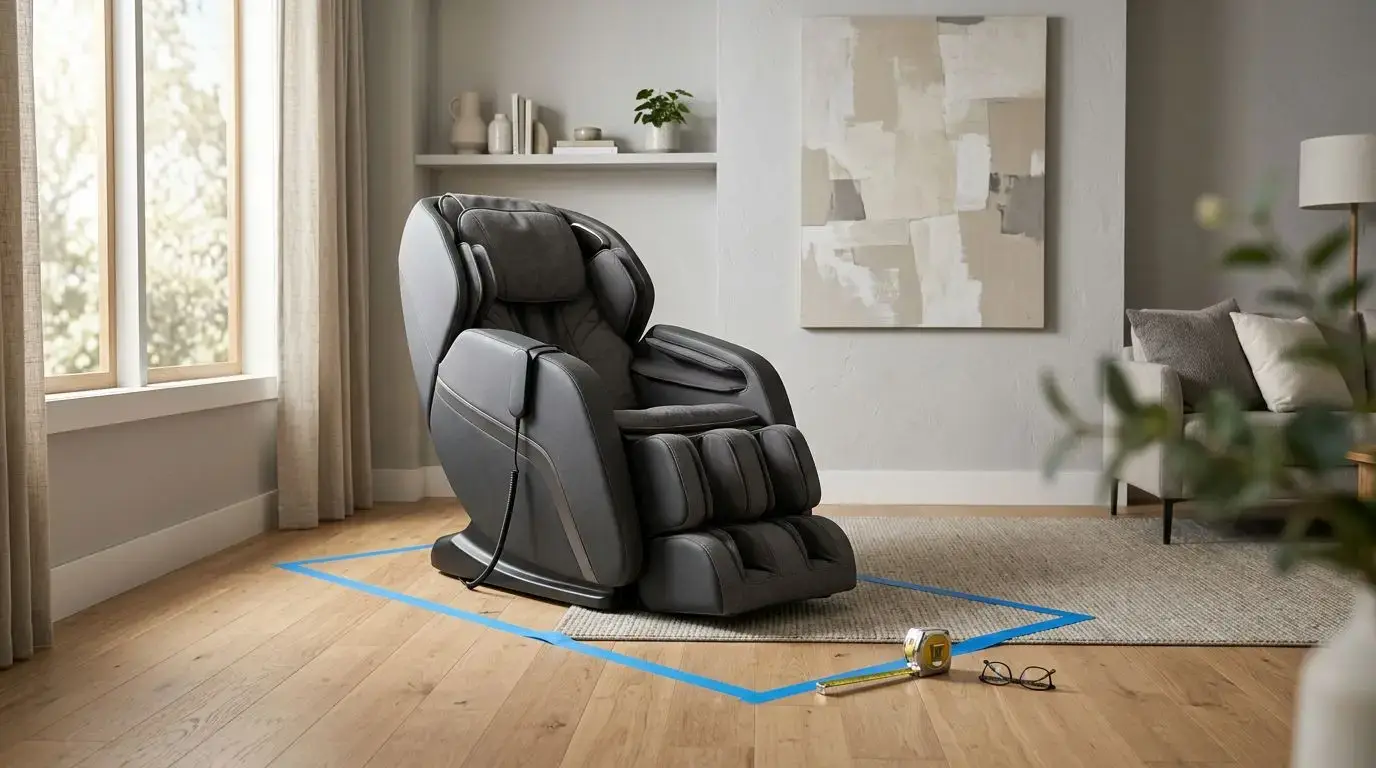
Mark a rectangle on the floor with painter’s tape or folded towels. Use the chair’s listed upright width and depth first, then mark the fully reclined depth. If the chair is 33 inches wide and 72 inches deep when reclined, your taped area should show that larger reclined footprint.
2. Leave a walking path
Try to keep at least 24 inches of walkway in front of or beside the chair. Thirty inches is more comfortable if two people share the room or if the chair sits near a closet, bathroom door, or office desk. In a tight bedroom, the walking path often matters more than an extra feature.
3. Check wall and front clearance
A wall-hugging chair may need only 2 to 6 inches behind it, but the footrest still moves forward. Leave enough room for the leg rest to extend without hitting a dresser, ottoman, or desk. If the manufacturer lists both upright and reclined dimensions, use the reclined number for planning.
4. Measure doorways and turns
Measure the narrowest doorway, hallway, stair turn, and elevator opening on the delivery route. Many interior doors are around 28 to 32 inches wide, and some massage chairs arrive in large cartons that are wider than the chair itself. If the chair has removable side panels or a detachable footrest, confirm that before assuming it will fit.
Essential Features Worth Keeping in a Chair Under 36 Inches Wide
Small-space shopping is a lesson in priorities. You may not get every premium feature, but you should not give up the basics that make the chair useful. For most buyers, the essentials are a good roller track, adjustable intensity, a comfortable recline, a usable remote, and enough body fit adjustment for the people who will use it.
| Feature | Why it matters | Small-space buying note |
|---|---|---|
| S-track | Follows the curve of the neck, back, and lower back | Good baseline for compact back-focused chairs |
| SL-track | Extends farther under the seat toward the glutes or upper hamstrings | Usually better coverage, but can add size and cost |
| 2D rollers | Move up/down and side-to-side | Often enough for lighter, routine massage |
| 3D rollers | Add in/out depth adjustment | Helpful if multiple users prefer different intensity levels |
| Heat | Adds gentle warmth, often in the back or calves | Look for automatic shutoff and simple controls |
| Air compression | Uses airbags around shoulders, arms, calves, or feet | More airbags can make the chair bulkier |
| Zero-gravity recline | Tilts the body to reduce pressure points and spread weight | Check full recline depth before buying |
If your budget or room size forces a choice, prioritize roller quality and fit over a long list of extras. A compact chair with a well-designed S-track or SL-track and adjustable intensity will usually be more satisfying than a crowded feature list with poor ergonomics.
Pay attention to user height ranges. Some compact chairs fit users from roughly 5 feet to 6 feet 2 inches, while others feel cramped for taller users or too broad for shorter users. If two people will share the chair and differ by 8 inches or more in height, body scan adjustment and movable footrests become more important.
Who Compact Massage Chairs Are Best For: Apartments, Bedrooms, and Offices Under 150 Square Feet
Compact massage chairs are best for shoppers who want a dedicated massage experience but cannot give up the floor space required by a full-size recliner. They are especially useful in rooms under about 150 square feet, where every inch competes with storage, seating, and walking space.
Apartment shoppers
A compact wall-hugging chair can make sense in a one-bedroom apartment or studio when it replaces another chair instead of adding one. If your living room already has a sofa, coffee table, media console, and dining corner, a massage chair should serve as real seating when not in use. Check whether the upright position looks and feels acceptable for reading, watching TV, or taking a phone call.
Bedroom shoppers
Bedrooms create a different challenge: doors, drawers, and bed clearance. A chair at the foot of the bed may block movement if it extends past the bed frame by more than 12 to 18 inches. A corner placement can work better, but only if you can still open closet doors and reach outlets safely.
Home-office shoppers
A home office may be the easiest room for a compact chair if it doubles as a reset spot during the day. A 10- to 20-minute automatic program can fit between meetings, and a wall-hugging design may sit beside a bookcase or filing cabinet. Still, avoid placing the chair where the footrest collides with a rolling desk chair.
Who should consider a larger chair
Compact is not ideal for everyone. If you are very tall, broad-shouldered, or want strong foot rollers, extensive arm massage, and full calf coverage, a larger chair may feel better. The right choice is the chair that fits your body first and your room second; if it fails either test, keep looking.
Trade-Offs to Expect in a Smaller Chair: 2–4 Features May Be Reduced
A compact massage chair can be excellent, but it usually involves compromises. Expect two to four areas to be scaled back compared with a full-size chair. That might mean fewer airbags, a shorter track, less shoulder width, a smaller footwell, or fewer manual adjustment controls.
Foot and calf massage is often the first area to shrink. A full-size chair may have enclosed foot rollers, calf airbags, and an extending leg rest, while a compact chair may offer only calf compression or a shorter footrest. If foot massage is your main reason for buying, sit in the chair or carefully check the footrest length and adjustability.
Shoulder coverage can also change. Smaller chairs may have narrower shoulder zones or less aggressive upper-back roller reach. If you carry tension between the shoulder blades, look for adjustable roller width or targeted upper-back programs rather than assuming every chair will reach the same areas.
Noise is worth considering in small spaces. Many massage chairs are reasonably quiet, but rollers, airbags, pumps, and motors can still be noticeable in a 100-square-foot office or a bedroom with someone sleeping nearby. If you share walls with neighbors, place the chair on a rug or mat to reduce vibration transfer.
Weight is another practical issue. Compact chairs can still weigh 100 to 250 pounds depending on construction and features. If you live in a walk-up apartment, ask about delivery options, packaging dimensions, and whether assembly is required. A lighter chair is easier to move later, but it still needs to feel stable during recline.
Delivery, Power, and Placement: Plan for 1 Outlet and a 28–32 Inch Doorway
A massage chair is not like a throw pillow or desk lamp. It needs a delivery path, a grounded outlet, and a permanent spot where the cord will not become a tripping hazard. Most chairs need one standard household outlet, and you should avoid running cords across a walkway.
Start with the doorway. Many US interior doors are around 28 to 32 inches wide, while exterior doors are often wider. Measure the actual clear opening with the door open, including trim and hinges. A chair that is 31 inches wide may not pass through a 30-inch clear opening unless parts can be removed.
Think about the floor. On carpet, the chair may feel more stable and quieter, but it can be harder to slide for cleaning. On hardwood, laminate, or vinyl, use a furniture pad or rug large enough to cover the chair’s contact points. A rug that extends at least 6 inches beyond the base can help protect flooring and soften vibration.
Leave access around the chair for maintenance. You do not need a huge service zone, but a few inches on each side makes it easier to clean dust, reach the power switch, or inspect the cord. If the chair will sit in a corner, confirm that the remote or side controls are on the accessible side.
Also consider sight lines. In a small living room, a chair that is 50 inches tall can block a window or make the room feel crowded. Lower-profile compact chairs may look better in multipurpose spaces, even if they have fewer features.
Buying Checklist: 10 Measurements and Specs to Confirm Before Ordering
Use this checklist before you buy. It is short enough to complete in one evening, and it covers the most common small-space mistakes.
- Upright dimensions: width, depth, and height in inches.
- Fully reclined dimensions: total depth with the footrest extended.
- Wall clearance: the required space behind the chair, often 2 to 6 inches for space-saving designs.
- Doorway clearance: the narrowest door, hallway, elevator, or stair turn on the route.
- Carton dimensions: packaging can be larger than the assembled chair.
- Chair weight: important for apartments, stairs, and future moves.
- User height range: compare it with every regular user in the home.
- Track type: S-track for back coverage, SL-track for extended seat-area coverage.
- Intensity control: at least 2 or 3 levels are useful for shared households.
- Return and delivery terms: check restocking fees, pickup requirements, and assembly details.
One more test helps: place a regular chair in the planned spot and sit there for 10 minutes. Can someone walk by? Can you see the TV or monitor? Can you reach a drink, remote, or side table? If the answer is no, a massage chair will not fix the layout.
FAQ: 5 Small-Space Massage Chair Questions
Are compact massage chairs as good as full-size massage chairs?
They can be very good for routine relaxation, back massage, and general comfort, but they usually give up some coverage or adjustability. A compact chair may have fewer airbags, a smaller footrest, or a narrower shoulder area than a full-size chair.
How much wall clearance does a compact massage chair need?
Many wall-hugging designs need about 2 to 6 inches behind the chair, but standard recliners may need much more. Always use the listed reclined dimensions, not just the upright footprint.
Can I put a massage chair in a bedroom?
Yes, if you leave enough clearance for drawers, closet doors, and walking paths. Try to maintain at least 24 inches of walkway and make sure the footrest does not block the bed or door when extended.
Is a portable massage pad better for a small apartment?
A portable massage pad is better if you need storage flexibility or cannot dedicate floor space. A compact massage chair is better if you want structured recline, a built-in frame, and more consistent roller positioning.
Do compact massage chairs help with back pain?
They may help some people relax tight muscles and feel more comfortable, but they are not a medical treatment. If you have ongoing pain, an injury, nerve symptoms, or a medical condition, ask a qualified healthcare professional before using intense massage.
Frequently asked questions
Are compact massage chairs as good as full-size massage chairs? +
They can be very good for routine relaxation, back massage, and general comfort, but they usually give up some coverage or adjustability. A compact chair may have fewer airbags, a smaller footrest, or a narrower shoulder area than a full-size chair.
How much wall clearance does a compact massage chair need? +
Many wall-hugging designs need about 2 to 6 inches behind the chair, but standard recliners may need much more. Always use the listed reclined dimensions, not just the upright footprint.
Can I put a massage chair in a bedroom? +
Yes, if you leave enough clearance for drawers, closet doors, and walking paths. Try to maintain at least 24 inches of walkway and make sure the footrest does not block the bed or door when extended.
Is a portable massage pad better for a small apartment? +
A portable massage pad is better if you need storage flexibility or cannot dedicate floor space. A compact massage chair is better if you want structured recline, a built-in frame, and more consistent roller positioning.
Do compact massage chairs help with back pain? +
They may help some people relax tight muscles and feel more comfortable, but they are not a medical treatment. If you have ongoing pain, an injury, nerve symptoms, or a medical condition, ask a qualified healthcare professional before using intense massage.
Related guides
What Size Massage Chair Do You Need? Dimensions, Clearance, and Fit Guide
11 min read
Office Massage Chairs vs. Home Massage Chairs: Key Differences Before You Buy
13 min read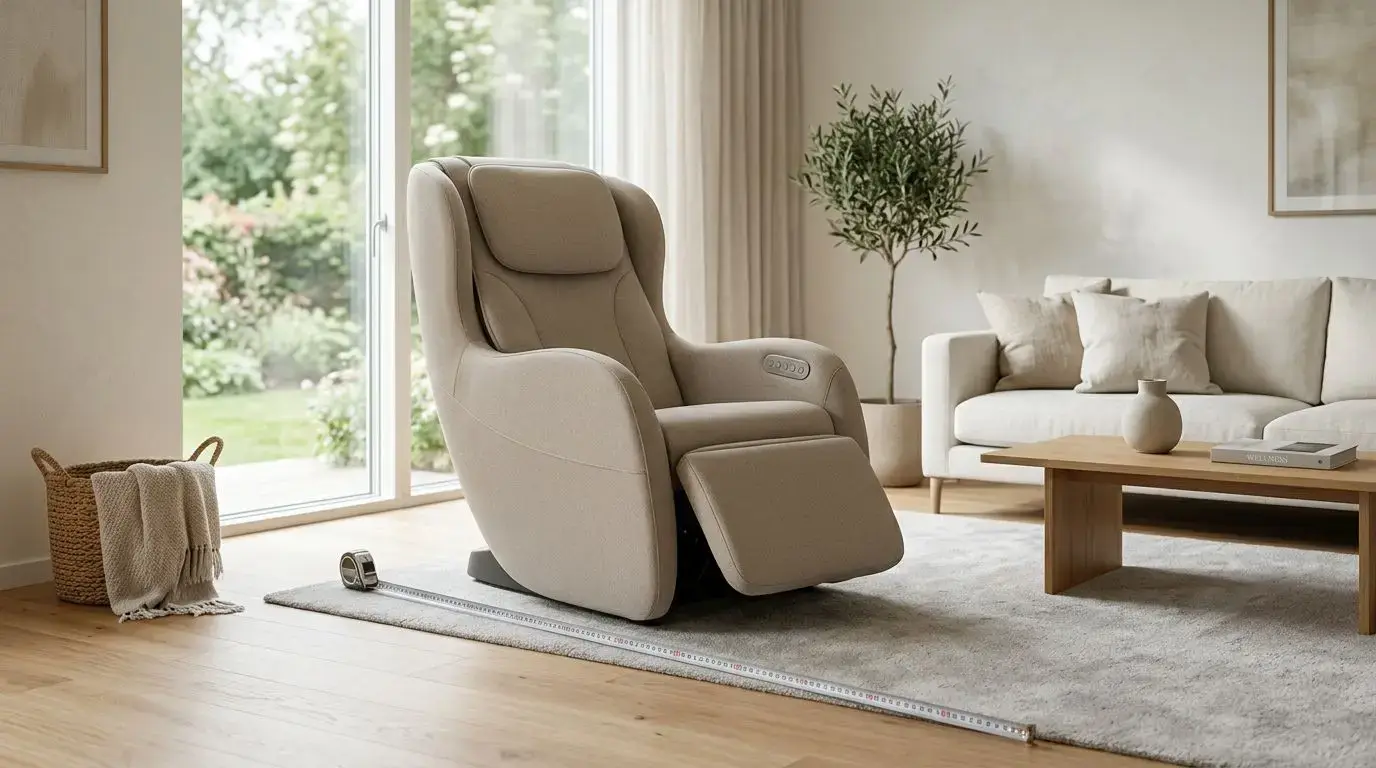
Is a Massage Chair Worth It? Benefits, Limitations, and Who Should Buy One
13 min read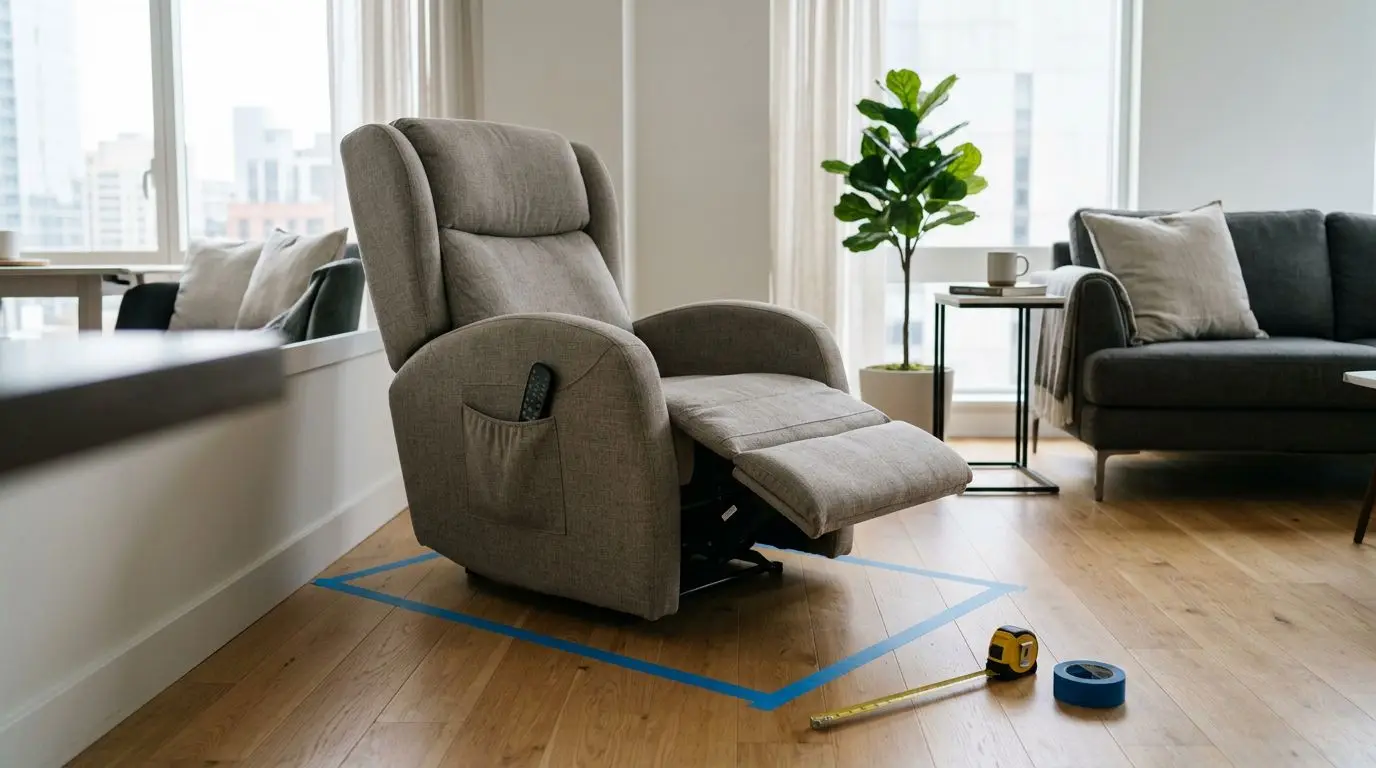
Space-Saving Massage Chairs Explained: How Wall-Hugger Recline Works in Real Homes
13 min read
Where Should You Put a Massage Chair at Home? Room-by-Room Placement Guide
13 min read