Disclosure: We may earn a commission when you buy through links on this page, at no extra cost to you. We buy nothing, sell nothing and accept no payment for coverage — commissions never decide what we recommend. How we make money.
Choose a massage chair if you want a hands-free, full-body comfort routine with pressure, rolling, air compression, and often heat in one seat. Choose a heating pad for simple warmth on one area, a TENS unit if you specifically want an electrical tingling sensation and will follow the device label, or a stretching routine if your goal is low-cost daily movement and flexibility practice.
The best choice depends less on which tool is most advanced and more on your goal, time, space, and safety needs. A 20-minute chair program, a 15-minute heat session, a labeled TENS session, and a 10-minute stretching routine all feel different, so matching the tool to the job matters.
At a glance: 4 at-home options compared in under 2 minutes
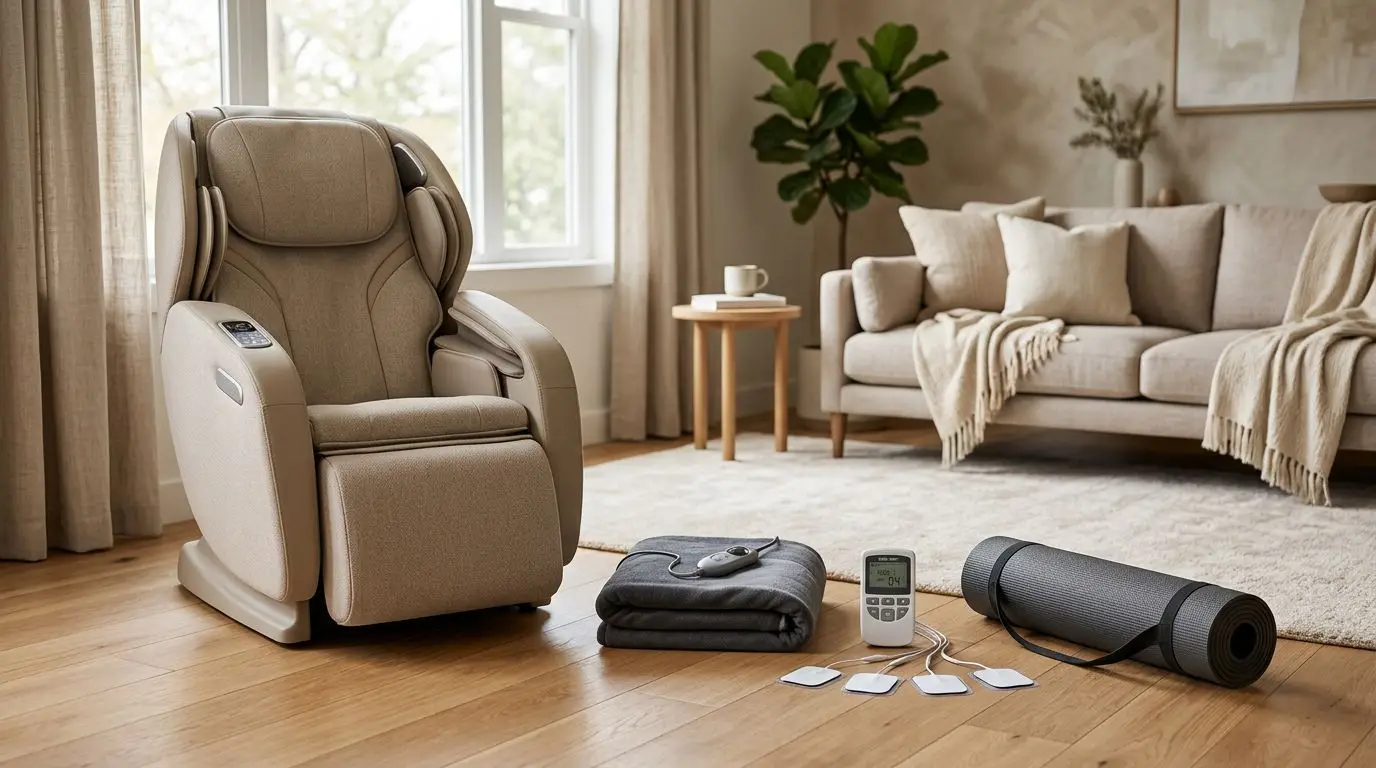
These four options overlap, but they are not interchangeable. A massage chair is a large furniture-style wellness product, while a heating pad may fit in a drawer, a TENS unit may fit in a pocket, and stretching needs only about 6 by 3 feet of floor space for many basic moves.
| Option | Best fit | What it is designed to feel like | Typical time and space | Main watch-outs |
|---|---|---|---|---|
| Massage chair | Hands-free pressure over the back, neck, hips, calves, or feet, depending on the chair | Rolling, kneading, tapping, compression, vibration, warmth, and recline | Auto programs often run 10 to 30 minutes; many chairs need a footprint around 30 to 36 inches wide | Large, heavy, more expensive than small devices, and intensity can be too much for some users |
| Heating pad | Localized warmth on one area while sitting or lying down | Steady heat, usually with low, medium, and high settings | Often used for 15 to 20 minutes; stores in a drawer or basket | Burn risk, especially during sleep or with reduced skin sensation |
| TENS unit | Targeted electrical stimulation sensation on a labeled body area | Tingling, buzzing, pulsing, or tapping-like electrical sensation through adhesive pads | Small handheld controller with 2 to 4 pads on many consumer kits; follow the session time on the label | Not for people with pacemakers or certain implanted devices unless a physician says it is appropriate |
| Stretching routine | Low-cost movement practice and body awareness | Gentle lengthening, position changes, breathing, and controlled range of motion | Can be 5 to 20 minutes; a mat-sized area is usually enough | Pushing too hard can feel sharp or aggravating; technique matters |
A massage chair does the most at once. That is its advantage, but it is also why it takes the most space, the most setup planning, and the clearest expectations.
Who each option is best for: 5 common goals
If your main goal is a daily reset after desk work, start with session length. Many people can realistically keep up with 10 minutes per day, while a 30-minute routine may only happen a few nights a week.
Best for hands-free full-body pressure: massage chair
A massage chair fits people who want to sit down, press a button, and let the chair handle the sequence. The strongest candidates are shoppers who want repeated pressure patterns across multiple zones, such as the neck and shoulders, mid-back, low back, glutes, calves, and feet, depending on the chair layout.
Chairs with longer tracks offer broader coverage. An S-track generally follows the curve of the back, while an L-track continues under the seat area. An SL-track combines both concepts. Roller width adjustment, intensity levels, foot rollers, calf airbags, and shoulder airbags all change the feel, even before you consider heat or recline.
Best for simple warmth on one spot: heating pad
A heating pad is the simplest tool here. It works best when you want warmth while reading, watching TV, or resting for 15 to 20 minutes. It will not knead, compress, scan your back, or adjust to your body shape, but that may be exactly the point. It is low effort and easy to store.
Look for an automatic shutoff, washable cover, flexible fabric, and clearly marked heat levels. A larger pad can cover more of the back, while a small pad is easier to position on a shoulder or lap. Avoid sleeping on it or trapping heat under heavy blankets.
Best for an electrical stimulation sensation: TENS unit
A TENS unit is different from massage or heat. It uses adhesive electrode pads connected to a small controller, creating a pulsing or tingling sensation at the skin. Some over-the-counter units are sold with labeled uses for temporary comfort claims; follow the label exactly and do not treat the device as a general-purpose gadget.
TENS is best for someone comfortable placing pads correctly, reading instructions, and adjusting intensity slowly. It is not a full-body relaxation product. It is targeted, technical, and more rule-bound than a chair or heating pad.
Best for low-cost daily movement: stretching
A stretching routine is the most affordable and flexible option. You can do 5 minutes of neck, chest, hip, and hamstring movements in work clothes, or build a 20-minute evening routine with a mat. The key is consistency and restraint. Gentle tension is not the same as sharp pain.
Stretching is also the easiest option to customize by time of day. A morning routine might focus on easy mobility and posture changes. An evening routine might emphasize slower holds of 15 to 30 seconds, paired with relaxed breathing.
Best for shared households: combine tools carefully
In a household with 2 or more adults, the best answer may be more than one option. One person may like a chair at low intensity, another may prefer a heating pad, and someone else may want a short stretching sequence. Shared use is where adjustable settings matter most. A chair with multiple intensity levels or a pad with 3 heat settings is easier to share than a one-intensity product.
How the options feel: pressure, warmth, pulses, and movement
The biggest mistake is comparing these tools only by purpose. Compare the sensation first. If you dislike firm pressure, a powerful chair may sit unused. If you dislike electrical tingling, a TENS unit will not become more appealing after 3 sessions.
| Feature or sensation | Massage chair | Heating pad | TENS unit | Stretching routine |
|---|---|---|---|---|
| Pressure | Moderate to strong roller pressure, depending on padding, body size, and intensity setting | None, unless you lean on it | Not pressure; electrical pulsing sensation | Body-weight and position-based tension |
| Warmth | Common in the back or calves, but usually not as broad as a full heating pad | Main feature; often 3 or more settings | Usually none unless combined with a separate product | Body warmth from movement, not powered heat |
| Coverage | Can cover neck to glutes with the right track; some include calves and feet | One area at a time | Pad placement area only, often 2 to 4 electrodes | Any area you know how to move safely |
| Control | Preset programs plus some manual zone controls on many chairs | Heat level and time | Mode, intensity, pad location, and time per label | Position, hold time, depth, and breathing |
| Learning curve | Low after setup; remote may take 1 to 2 sessions to learn | Very low | Moderate; pad placement and precautions matter | Moderate; form and restraint matter |
Massage chair intensity depends on more than the motor. Your height, shoulder width, back shape, and how deeply you recline all affect how the rollers feel. A chair that feels mild to a 220-pound user may feel strong to a 125-pound user because the body sits differently against the roller path.
Heat is more predictable, but it still deserves care. The comfortable setting is not always the highest setting. Start low for the first 5 minutes and check your skin, especially if you are using the pad over thin clothing.
How to choose and measure: 6 checks before you buy or start
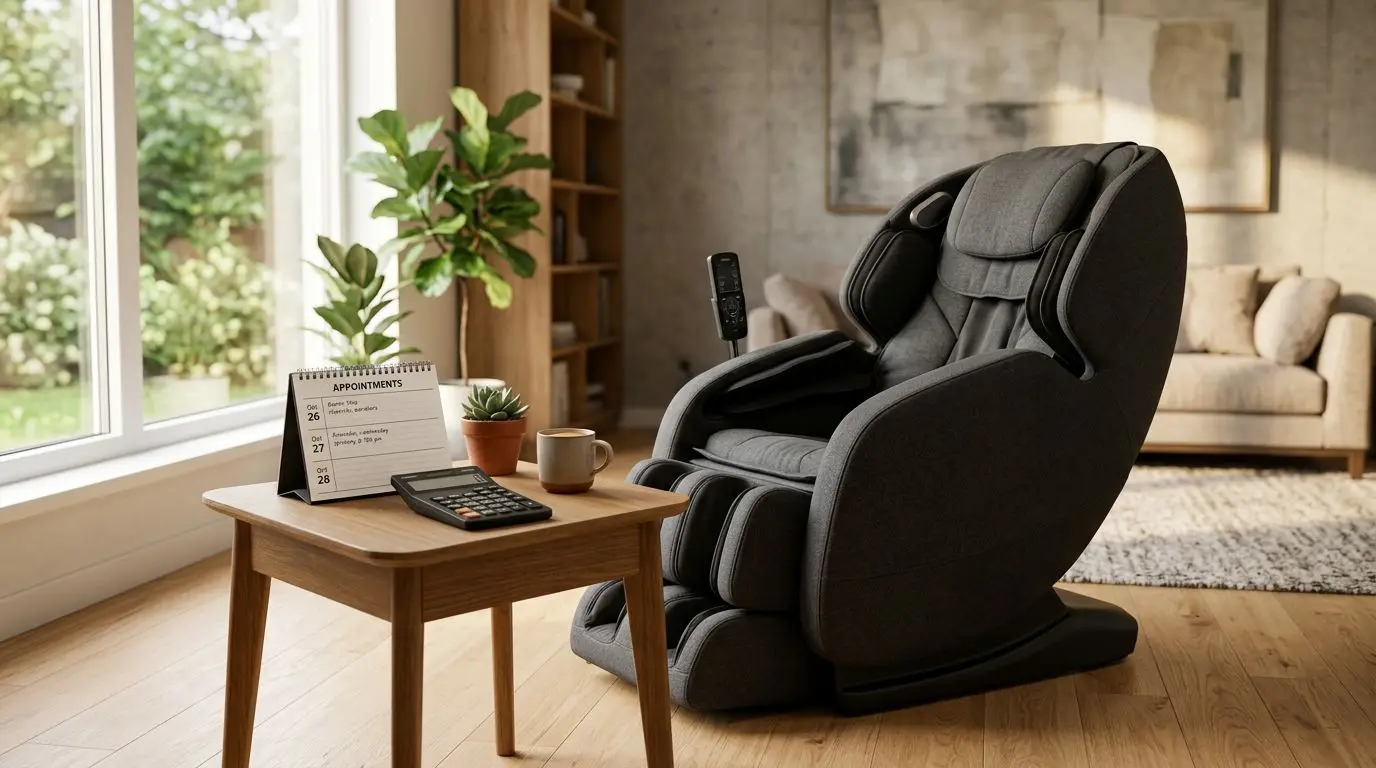
Before choosing any at-home option, measure the real-world routine around it. For a massage chair, that means doorway width, floor space, ceiling and recline clearance, user height range, and the path from delivery point to final room. Many full-size chairs weigh well over 150 pounds, so planning is not optional.
1. Match the tool to your primary goal
If you want broad pressure without doing the work, look at a massage chair. If you want warmth while staying still, choose a heating pad. If you want the distinct pulsing feel of electrical stimulation and can follow instructions, consider a TENS unit. If you want movement skill and flexibility practice, stretching is the better base habit.
2. Measure space in inches, not guesses
For a massage chair, measure the room with the chair reclined, not just upright. Many chairs are roughly 30 to 36 inches wide and may need 55 to 65 inches or more in length when reclined, though space-saving designs can reduce wall clearance to a few inches. Also measure doorways, stair turns, and hallway corners before delivery.
3. Check body fit
Chair comfort depends on fit. Look at stated user height and weight ranges, shoulder width room, footrest extension, and whether the neck rollers land where your neck actually sits. If 2 users differ by 10 inches in height, fit adjustability becomes much more important.
4. Decide how much setup you will tolerate
A heating pad has almost no setup. A stretching routine needs memory and discipline. A TENS unit requires pad placement, clean skin, wires or wireless modules, battery charging, and a careful read of the safety instructions. A massage chair requires the most delivery planning but the least daily setup once installed.
5. Look for controls you will actually use
A simple remote with 3 to 5 well-labeled programs may be better than a feature-heavy panel you find confusing. Useful chair controls include intensity, roller position, air compression strength, heat on or off, recline, footrest position, and a pause button. For a heating pad, clear heat settings and auto shutoff are more important than a long feature list.
6. Consider floor protection and noise
A chair can leave marks on soft flooring, so use a sturdy mat on vinyl, wood, or delicate surfaces. Leave space for ventilation and access to the power cord. Noise varies, but rollers, airbags, and foot mechanisms are not silent. If you plan to use a chair at 10 p.m. in an apartment, sound matters.
Safety: 8 situations where you should ask a physician first
A massage chair is a consumer wellness product, not a medical device. A heating pad, TENS unit, or stretching routine can also be inappropriate for some people. If any of the following 8 situations apply, ask your physician before using a massage chair, TENS unit, heat, or new stretching routine: pregnancy, pacemaker or other implanted cardiac device, history of blood clots or use of anticoagulants, osteoporosis, recent fracture or surgery, known spinal disc problems, neuropathy or reduced skin sensation, or uncontrolled hypertension.
Do not bury safety under convenience. TENS units are especially important to discuss if you have an implanted device, heart rhythm concerns, epilepsy, or if you are unsure where pads can be placed. Never place electrodes across the chest, on the front of the neck, on the head, over broken skin, or anywhere the instruction manual warns against.
Heat also needs limits. Use a timer, avoid sleeping with a heating pad, and do not use high heat on skin you cannot feel normally. Check skin after 5 to 10 minutes. Redness, blistering, numbness, dizziness, sharp pain, or unusual symptoms are signs to stop and seek appropriate guidance.
Stretching should feel controlled, not forced. Avoid bouncing into end range. If a position creates sharp, electric, numb, or unstable sensations, back off. With any chair, pad, TENS unit, or stretch, more intensity is not automatically better.
Sample weekly plans: 10, 20, and 30-minute routines
The right tool works only if it fits your week. These sample routines are not prescriptions; they are practical ways to organize comfort-focused habits. Start with the lowest intensity for the first 3 sessions whenever you try a new device.
If you have 10 minutes
- Massage chair: Use a short back or neck-and-shoulder program at low to medium intensity.
- Heating pad: Use low or medium heat on one area while seated, with a timer.
- TENS unit: Use only according to the labeled program time and pad placement instructions.
- Stretching: Pick 4 movements and hold each for about 20 to 30 seconds per side.
If you have 20 minutes
- Massage chair: Run a full auto program, then spend 2 minutes noting whether any area felt too intense.
- Heating pad: Use heat for 15 minutes, then stand up and move gently for 5 minutes.
- TENS unit: Follow the manual, keep intensity comfortable, and remove pads carefully.
- Stretching: Use 6 to 8 movements, such as chest opener, seated twist, hip flexor stretch, hamstring stretch, calf stretch, and gentle neck movements.
If you have 30 minutes
- Massage chair plus stretching: Use a 15 to 20-minute chair program, then do 5 to 10 minutes of gentle movement.
- Heat plus stretching: Use warmth first, then easy stretches; do not push deeper just because the area feels warm.
- Chair plus heat pad: Use caution. If the chair already has heat, do not stack high heat from another device in the same area.
- TENS plus other tools: Avoid layering devices on the same area unless the instructions and your physician say it is appropriate for you.
For most households, the sustainable plan is simple: pick one main tool and one backup. A chair can be the main evening routine, with stretching on travel days. A heating pad can be the weekday option, with a longer stretching routine on Sunday. The best plan is the one you will still use after 4 weeks.
FAQ: 5 practical questions before you decide
Is a massage chair better than a heating pad?
It depends on what you want to feel. A massage chair is better for hands-free rolling pressure, recline, air compression, and multi-zone coverage. A heating pad is better for simple, localized warmth, lower cost, and easy storage. If you only want heat on one area for 15 minutes, a chair may be more than you need.
Can a TENS unit replace a massage chair?
Usually no. A TENS unit creates an electrical pulsing sensation through pads placed on the skin, while a massage chair uses mechanical rollers, airbags, recline, and sometimes heat. They feel completely different and have different precautions. Follow the TENS label and ask a physician if you have an implanted device or any safety concern.
Should I stretch before or after using a massage chair?
Either can work for a general wellness routine. Some people prefer 5 minutes of gentle movement before sitting down, while others like light stretching after a 15 to 20-minute chair program. Keep stretches easy and controlled; do not use the chair as a reason to push harder.
How much space do I need for a massage chair?
Plan for more than the upright footprint. Many full-size chairs are about 30 to 36 inches wide and may extend to 55 to 65 inches or more when reclined. Measure the reclined length, wall clearance, doorways, stair turns, and the final room before you buy.
Which option is best for an apartment?
A heating pad or stretching routine is easiest in a small apartment because both are quiet and compact. A TENS unit is also compact but requires careful use. A massage chair can work if you have enough recline clearance, a suitable outlet, floor protection, and neighbors who will not be bothered by roller and air-pump noise.
Frequently asked questions
Is a massage chair better than a heating pad? +
It depends on the sensation and coverage you want. A massage chair is better for hands-free rolling pressure, air compression, recline, and multi-zone coverage, while a heating pad is better for simple localized warmth and easy storage.
Can a TENS unit replace a massage chair? +
Usually no. A TENS unit creates an electrical pulsing sensation through adhesive pads, while a massage chair uses mechanical rollers, airbags, recline, and sometimes heat. They feel different and have different safety precautions.
Should I stretch before or after using a massage chair? +
Either can work for a general wellness routine. Some people like 5 minutes of gentle movement before sitting, while others prefer light stretching after a 15 to 20-minute chair program. Keep the movement easy and controlled.
How much space do I need for a massage chair? +
Measure the chair while reclined, not just upright. Many full-size chairs are about 30 to 36 inches wide and may extend to 55 to 65 inches or more when reclined, though space-saving designs vary.
Which option is best for a small apartment? +
A heating pad or stretching routine is usually easiest because both are compact and quiet. A TENS unit is also compact but requires careful label-following. A massage chair can work if you have enough clearance, floor protection, and acceptable noise levels.
Related guides
Heated Massage Chair vs. Heating Pad: Which Is Better for Sore Muscles?
14 min read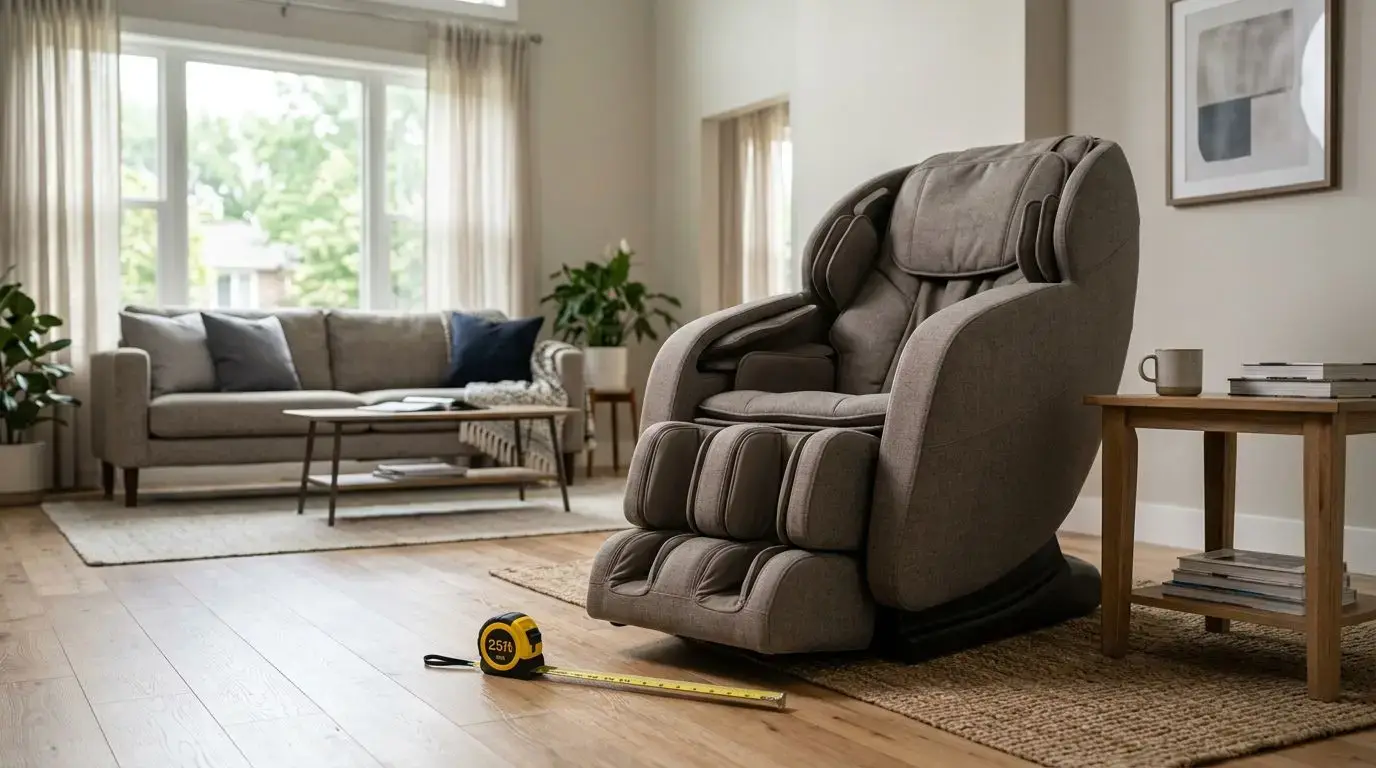
How to Choose a Massage Chair for Home Use
14 min read
Massage Chair Pad, Cushion, or Full-Size Chair: Which Type Should You Choose?
15 min read
Is a Massage Chair Worth It? Benefits, Limitations, and Who Should Buy One
13 min read
Morning, Afternoon, or Night: When Is the Best Time to Use a Massage Chair?
14 min read