Disclosure: We may earn a commission when you buy through links on this page, at no extra cost to you. We buy nothing, sell nothing and accept no payment for coverage — commissions never decide what we recommend. How we make money.
Heat therapy in a massage chair adds gentle surface warmth that can help you relax and make stiff areas feel looser during a typical 15- to 30-minute session. It matters most where your body tends to hold tension, usually the lower back, calves, feet, or shoulders. Chair heat, though, is not the same as medical heat treatment or a deep heating pad. For buyers focused on stiffness and relaxation, the priority is matching the heat zone to the area you actually want warmed.
Heated massage chairs do not all work the same way. Some warm only the lumbar area, some add calf or foot heat, and a smaller group uses multiple heating zones across the back, seat, arms, legs, or footwell. The best choice depends less on the longest feature list and more on where you feel tight after work, driving, standing, exercise, or long periods at a desk.
How massage chair heat works in a 15- to 30-minute session
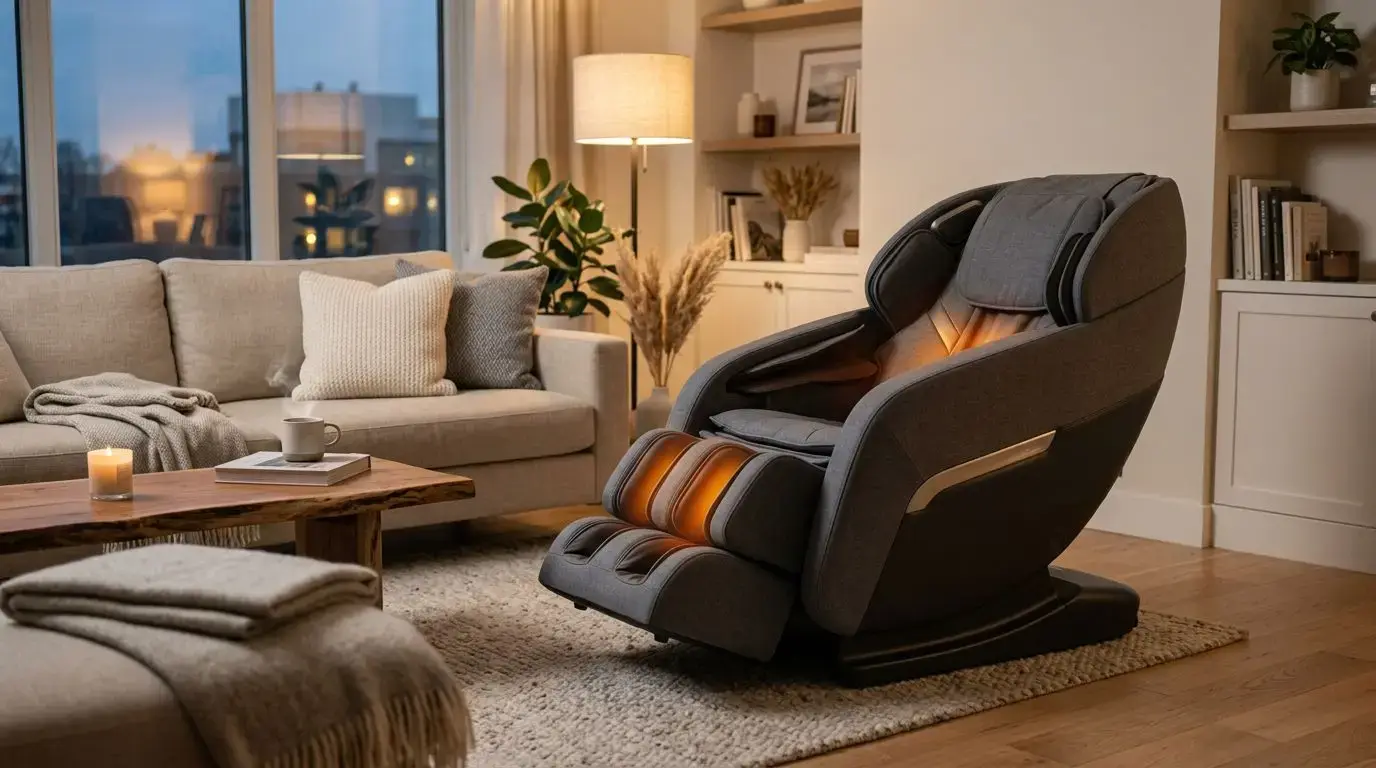
Most massage chairs use built-in electric heating elements placed behind upholstery, near the back pad, seat, calf wells, foot rollers, or other contact points. During a 15- to 30-minute massage program, those elements slowly warm the surface area touching your body. The sensation is usually mild to moderately warm, not hot.
That gradual ramp-up matters. Many chairs do not feel warm the instant you press the heat button. It can take 3 to 10 minutes for warmth to pass through padding, clothing, and air gaps. If you are wearing thick sweatpants or sitting slightly away from the backrest, the heat may feel weaker.
In practical terms, heat in a massage chair supports comfort in three ways. First, warm upholstery can make the massage feel less abrupt and easier to settle into. Second, it may help you mentally relax, which can make kneading, tapping, or rolling feel smoother. Third, it can make stiff muscles feel more comfortable during movement, especially in areas that tighten after hours of sitting or standing.
Keep expectations realistic. Massage chair heat is generally surface warmth. It is not a medical device, should not be used to treat an injury without professional guidance, and should not replace care for persistent pain, swelling, numbness, or sudden symptoms.
Where heat matters: 4 common zones buyers should compare
The biggest difference between heated massage chairs is not simply whether they have heat. It is where the heat is located. A chair with 1 lumbar pad can feel excellent for low-back stiffness but do very little for cold feet or tight calves. A chair with 4 or more heated areas may feel more enveloping, but only if those areas line up with your body.
| Heat zone | Where it warms | Best for | What to check |
|---|---|---|---|
| Lumbar heat | Lower back, often around the waist and upper hip area | Desk sitting, driving stiffness, general back relaxation | Whether the warm area reaches your actual low back when reclined |
| Back or full-back heat | Lower, mid, and sometimes upper back | People who feel tight across more than 1 back area | Whether heat is limited to panels or spread through the backrest |
| Calf heat | Calf wells or leg massager area | Standing jobs, walkers, runners, people with tired lower legs | Whether your calves contact the heated surface without a gap |
| Foot heat | Footwell, sole area, or around the toes and arches | Cold feet, foot fatigue, relaxation before sleep | Whether shoe size and foot height fit comfortably in the footwell |
Lumbar heat is the most common and often the most useful single zone because the lower back is a frequent tension point. If you spend 6 to 8 hours a day at a computer or in a vehicle, a heated low-back area may matter more than arm heat or decorative lighting.
Calf and foot heat are more specialized, but they can still be meaningful. People who stand on hard floors, climb stairs, walk long distances, or train regularly may appreciate warmth around the lower legs once the massage rollers or air cells start working. Foot heat can also make a chair feel more relaxing in colder homes, especially in the evening.
Lumbar heat versus full-body heat: 1 zone is not always worse than 6
A chair with 6 heated zones sounds more capable than one with 1 or 2, but more zones do not automatically mean better comfort. Heat quality depends on placement, contact, padding thickness, controls, and whether the zones can be turned on independently.
| Heat setup | Typical coverage | Strengths | Trade-offs |
|---|---|---|---|
| Single-zone lumbar heat | Lower back only | Simple, useful for a common stiffness area, often easy to understand | No warmth for legs, feet, shoulders, or arms |
| Dual-zone back heat | Lower back plus mid-back or upper back | Better for broad back tension than lumbar-only heat | May still miss calves and feet |
| Calf and foot heat | Lower legs and footwell | Helpful for tired legs and cold feet | Less useful if your main issue is back stiffness |
| Multi-zone or full-body heat | Back, seat, calves, feet, and sometimes arms | More immersive warmth for full-body relaxation | May cost more, use more controls, and still depend on fit |
For many buyers, lumbar heat plus good roller coverage is a better value than full-body heat with poor ergonomics. For others, especially people who mainly want evening relaxation rather than a deep back-focused massage, broader heat coverage may be worth prioritizing.
Look for control flexibility. A useful heated chair lets you run heat with a manual massage mode, not only during one preset program. If the chair has 3 heated areas but only one all-on setting, you may not be able to warm your feet without also warming your back.
Who heat therapy is best for, and who should be cautious after 20 minutes
Heat features work best for people who want comfort, relaxation, and a softer-feeling massage experience. They are especially practical for adults who feel stiff after sitting for 4 or more hours, standing through a work shift, driving long distances, or exercising hard enough to feel generally tight the next day.
- Best for desk workers: Lumbar or back heat can make the transition from work posture to reclined rest feel easier.
- Best for standing jobs: Calf and foot heat can add comfort after long shifts on tile, concrete, or warehouse floors.
- Best for relaxation routines: Gentle warmth during a 15-minute evening massage can help signal downtime without needing a separate heating pad.
- Best for cold rooms: Foot or full-body heat may make winter use more pleasant, especially in basements or drafty rooms.
Some users should be more careful. If you have reduced sensation, neuropathy, diabetes-related circulation concerns, active inflammation, recent surgery, a skin condition, swelling, fever, or an implanted medical device, ask a qualified clinician before using heat. Pregnant users should also get medical guidance before using heated massage features, especially around the back or abdomen area.
Do not use chair heat on broken skin, numb areas, or areas where you cannot clearly judge temperature. A smart safety habit is to start with 10 to 15 minutes, wear normal indoor clothing, and stop if the warmth feels uncomfortable, prickly, burning, or unusual.
How to choose and measure for heated areas in 5 practical steps
Fit is the detail buyers often overlook. A heat feature only helps if the heated surface touches the right body area. Before comparing chairs, take 5 simple measurements or fit checks at home so you know what needs to line up.
1. Mark your target stiffness area
Sit upright and place your hand on the area you most want warmed. For low-back stiffness, that may be 3 to 6 inches above the seat surface. For mid-back tension, it may be closer to the lower ribs or shoulder blades. This gives you a real target instead of relying on a product phrase like back heat.
2. Measure seat-to-lumbar height
Use a tape measure from the seat surface to the center of your low-back curve while seated. If your target is 7 inches above the seat and the chair warming pad sits much higher or lower, the feature may feel misplaced.
3. Check calf contact
Measure from the back of your knee to the bottom of your heel. Compare that with the leg rest range if dimensions are available. People with short or long legs can miss the strongest calf heat if their legs do not settle into the wells correctly.
4. Check footwell space
If you wear a larger shoe size or have high arches, foot heat can feel less effective when your feet are squeezed or hovering. You want contact without pressure. A half-inch of cramped space can make a footwell feel irritating during a 20-minute program.
5. Confirm room and power placement
Heat features need electricity, and massage chairs also need reclining clearance. Many chairs require several inches behind the backrest, while wall-hugging designs may need less. Measure the floor space, outlet location, and path through doors before focusing on heat zones.
If you can test a chair in person, run heat long enough to judge it. Two minutes is not enough. Try at least 10 minutes in the recline position you expect to use at home.
What to expect from daily use: warmth, timing, clothing, and limits
During normal daily use, chair heat should feel like a gradual warming layer, not a blast of heat. Many users notice the strongest comfort in the second half of a 20-minute session, after the upholstery and clothing have warmed.
Clothing changes the experience. Thin cotton pants and a light shirt transfer heat better than thick fleece, denim, or layered winter clothing. Bare skin is not usually necessary and may increase irritation risk, so normal indoor clothing is the safer default.
Massage intensity also affects how heat feels. When rollers press firmly into the back, a heated pad may feel more noticeable because your body is pushed closer to the surface. In a lighter air-compression program, the same heat may feel subtle. Neither is wrong; it is a fit and contact issue.
Do not expect chair heat to fix a poorly fitting massage. If the rollers hit too high on your neck, the footwell pinches, or the shoulder airbags hold you awkwardly, heat will not make the chair comfortable. Fit, roller path, recline angle, and program control should come first.
It is also normal for heat to cycle or feel uneven. Padding, seams, body position, and sensor programming can create warmer and cooler spots. What matters is whether the warmth feels comfortable and repeatable over a full session.
Buying checklist: 8 heat questions to ask before you pay
Use this 8-point checklist to separate useful heat from vague marketing language. It works for online research, showroom testing, or comparing specifications side by side.
- Which exact zones are heated? Lumbar, back, seat, calves, feet, arms, and full-body are not interchangeable.
- Can zones be controlled separately? Independent controls are better if 2 people with different preferences will use the chair.
- How long does heat take to feel noticeable? Test for 10 minutes when possible.
- Does heat work in manual mode? Some users prefer a custom roller position with heat rather than a preset routine.
- Is there an auto shutoff? A 15- to 30-minute timed session helps prevent accidental overuse.
- Does the chair fit your height and leg length? Heat zones must contact the right body parts.
- Can you use heat without maximum massage intensity? Relaxation users may want gentle rollers plus warmth.
- What does the warranty say about heating elements? Heat parts should be covered clearly, not hidden in vague accessory language.
When in doubt, prioritize the heat zone you will use at least 3 times a week. A feature that sounds impressive but targets an area you rarely care about is not a practical upgrade.
Common heat features compared in 3 buyer scenarios
These 3 scenarios show how the right choice changes by routine. The same chair will not serve every household equally.
| Buyer scenario | Most useful heat feature | Why it matters | Lower priority |
|---|---|---|---|
| Desk worker with low-back stiffness | Lumbar or dual-zone back heat | Targets the area most affected by long sitting | Arm heat, decorative comfort features |
| Retail, healthcare, warehouse, or service worker on feet 6 to 10 hours | Calf and foot heat | Adds warmth where legs and feet feel tired | Upper-back-only heat |
| Shared family relaxation chair | Multi-zone heat with simple controls | Different users can enjoy different areas | Overly complex settings without clear buttons |
If your household has mixed needs, controls become more important than zone count. A chair that lets one person use lumbar heat only and another use foot heat only is easier to live with than a chair that forces every heat zone on together.
FAQ: 5 quick answers about massage chair heat
Does heat make a massage chair more effective?
Heat can make the massage feel more comfortable and relaxing, especially over a 15- to 30-minute session. It should be viewed as a comfort feature, not proof that the chair provides medical treatment.
Is lumbar heat enough?
Lumbar heat is enough if your main complaint is low-back stiffness or you want a simple relaxation feature. If your legs or feet are the main issue, look for calf or foot heat instead.
Should I choose full-body heat?
Full-body heat can be worthwhile if you want a more immersive relaxation experience or if several people will use the chair. It is less important if only one area, such as the lower back, needs warmth.
How long should I use heat in a massage chair?
Many chair programs run 15 to 30 minutes. If you are new to heat, start closer to 10 or 15 minutes and stop if your skin feels irritated or overheated.
Can I use massage chair heat every day?
Many healthy adults use gentle chair heat daily as part of a relaxation routine. If you have medical conditions affecting skin sensation, circulation, pregnancy, swelling, or recent injury, ask a clinician first.
Bottom line: match the heat zone to your 1 main stiffness area
The best heated massage chair feature is the one that warms the body area you care about most. For many buyers, that is lumbar heat. For people on their feet all day, calf and foot heat may matter more. For shared relaxation use, 2 to 6 controllable zones can make the chair more flexible.
Shop by fit, contact, and control rather than by the biggest heat claim. A well-placed warm lumbar panel used 4 nights a week can be more valuable than broad heat coverage that misses your body or feels complicated to operate.
Frequently asked questions
Does heat make a massage chair more effective? +
Heat can make a massage feel more comfortable and relaxing during a 15- to 30-minute session. It is best treated as a wellness comfort feature, not a medical treatment.
Is lumbar heat enough in a massage chair? +
Lumbar heat is often enough if your main goal is low-back comfort after sitting or driving. If your calves or feet feel stiff or cold, look for lower-leg or foot heat instead.
Is full-body heat worth it? +
Full-body heat can be worth it for shared family use or a more enveloping relaxation experience. It is less important if you only need one targeted area warmed.
How long should I use heat in a massage chair? +
Many massage chair sessions last 15 to 30 minutes. New users should start around 10 to 15 minutes and stop if the heat feels uncomfortable.
Who should avoid or be careful with massage chair heat? +
People with reduced skin sensation, neuropathy, circulation concerns, pregnancy, swelling, recent surgery, fever, or active skin irritation should ask a clinician before using heat.
Related guides
Heated Massage Chair vs. Heating Pad: Which Is Better for Sore Muscles?
14 min read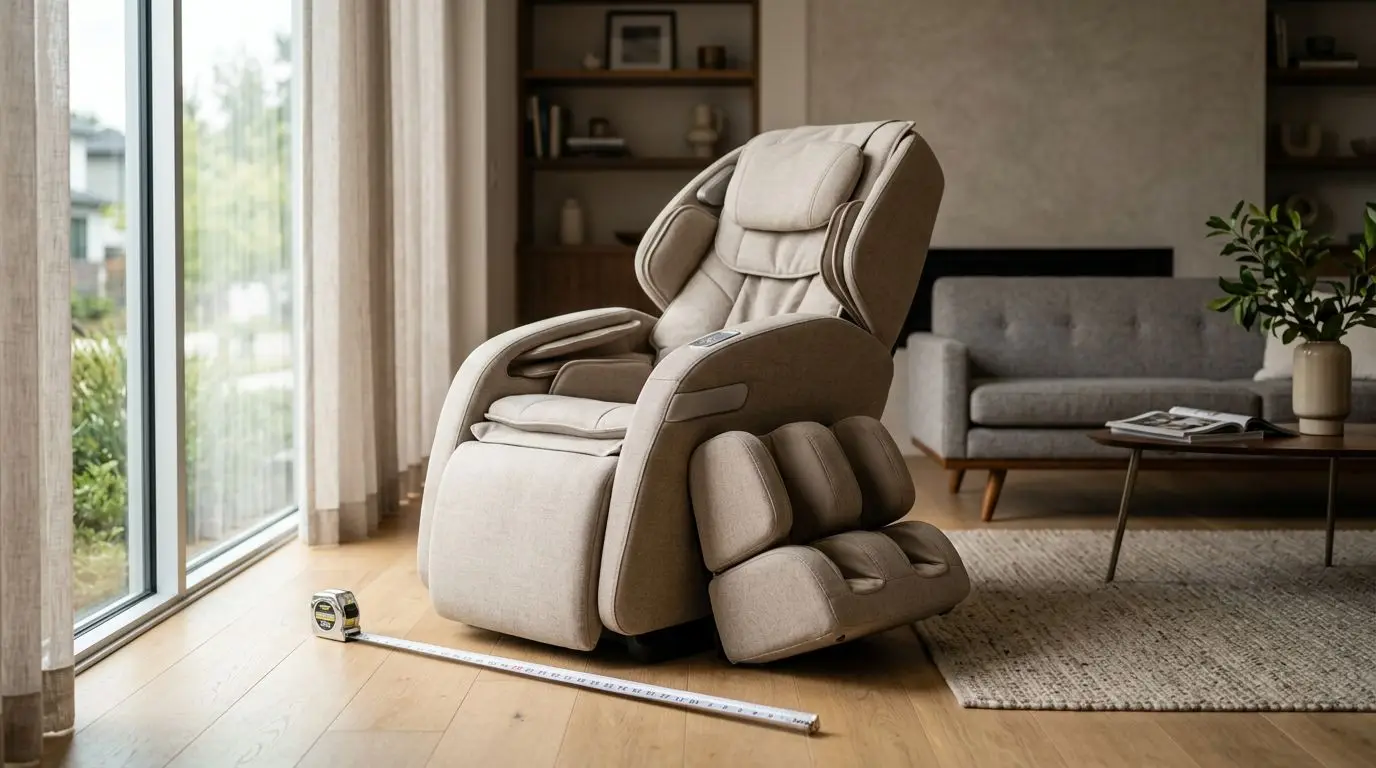
How to Compare Massage Chair Features: 2D, 3D, 4D, L-Track, SL-Track, Heat, and Airbags
13 min read
Best Massage Chair Features to Look For Before You Buy
13 min read
How to Choose a Massage Chair for Home Use
14 min read
Are Massage Chairs Good or Bad for You? Benefits, Risks, and Safe Use Guidelines
13 min read